About 24 hours before a Manhattan jury made Donald Trump the first-ever former president to become a convicted felon — a person going by the name “Michael Anderson” made a little-noticed Facebook comment.
“Thank you for all your hard against the MAGA crazies!” he wrote in a comment on an unrelated post on the official page of theNew York State Unified Court System.
“My cousin is a juror on Trumps criminal case and they’re going to convict him tomorrow according to her. Thank you 🙏 New York courts!!!! ❤️”
In a Friday afternoon letter, New York Supreme Court Justice Juan Merchan, who presided over the trial, alerted prosecutors and Trump’s defense lawyers about the comment.
“Today, the Court became aware of a comment that was posted on the Unified Court System’s public Facebook page and which I now bring to your attention,” Merchan wrote.
A portion of the Friday filing from New York Supreme Court Justice Juan Merchan.
New York courts
But it’s far from clear that the comment is genuine.
Anderson — if that is his real name — claims to be a troll.
Business Insider located the Facebook comment, which was timestamped 4:39 p.m. on May 29, a day before the jury verdict. It was made in response to an unrelated Facebook post about a program from the New York state court system to promote diversity.
“Now we are married ❤️ 😁,” he posted in response to another Facebook comment, which criticized his purported cousin.
A screenshot of Michael Anderson’s Facebook comment.
Facebook
On his Facebook page, Anderson describes himself as “Transabled & a professional shit poster.” His profile picture is an image claiming his account is restricted. His cover photo broadcasts the slogan: “Facebook: Wasting peoples lives since 2004.”
Few posts are publicly visible on Anderson’s page. Visible ones appear to be food videos and comedic Reels, a product from Facebook owner Meta that seeks to emulate TikTok videos.
Michael Anderson’s Facebook page describes him as a “professional shitposter.”
Facebook
“As appropriate, the Court informed the parties once it learned of this online content,” Al Baker, a spokesperson for the New York State Unified Court System, told Business Insider, declining to comment further on the incident.
Trump lawyers Todd Blanche and Susan Necheles, as well as representatives for the Manhattan District Attorney’s office, did not immediately respond to requests for comment from Business Insider.
Anderson did not immediately respond to a request for comment from BI sent through Facebook, but in a public post added to his profile shortly after BI reached out, he wrote, “Take it easy, I’m a professional shitposter,” along with a laughing emoji and the Wikipedia definition of shitposting.
While it remains unclear how significant the Facebook post will become during the proceedings leading up to Trump’s sentencing, it could complicate things.
Neama Rahmani, a former federal prosecutor, told BI that the social post, though apparently trolling, could raise questions about whether outside influences managed to find their way into the jury deliberation room, which is one of the few times the defense could use jury deliberations as grounds to appeal for a new trial.
However, he said, the burden for a new trial is high and would require the defense to show an outside influence prejudiced the jury enough that the outcome may have been different without exposure to it.
“A stray comment on social media is not enough for a new trial,” Rahmani said. “But if the defense can get a declaration from a juror that they discussed the case with family members, then Judge Merchan would hold an evidentiary hearing to examine the juror to determine whether the improper influence and prejudice took place. I don’t think a statement from the family member is enough if it’s not supported by a juror affidavit.”
When you buy through our links, Business Insider may earn an affiliate commission. Learn more
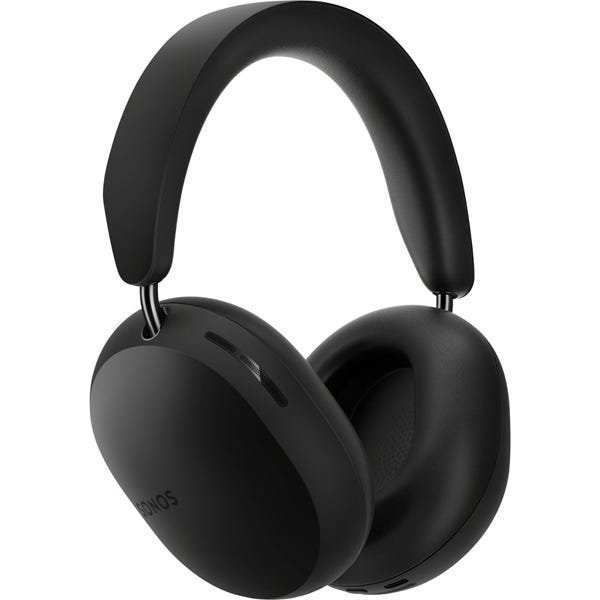
Rumors of a pair of Sonos-branded headphones have been swirling for nearly as long as the company has been a household name. After all, Sonos sells many popular wireless speakers and soundbars, so why not add a pair of headphones to the mix?
Following years of speculation, Sonos’ long-awaited headphones have arrived. They’re called the Sonos Ace ($449), and they perform great for a pair of flagship Bluetooth headphones. But the keyword there is Bluetooth. Many fans hoped the brand’s first headphones would work like its portable Roam and Move speakers, which use Bluetooth on the go but also support WiFi to stream music at home and group with other Sonos audio gear. However, WiFi streaming on the Ace turned out to be wishful thinking.
Don’t get us wrong, the Ace still stack up well against the best over-ear headphones from Bose, Sony, and Apple. But they don’t do a lot to stand out from the pack. The biggest difference, on paper anyway, is the Ace’s ability to pair with a Sonos Arc soundbar for private listening, but we could not get this feature to work with our setup. We also ran into an issue with some faint signal noise with transparency mode engaged.
Still, despite some hiccups, it’s no small feat that Sonos’ first headphones offer performance that rivals many top competitors. Even with their quirks, the Ace’s mix of great sound, fantastic noise-canceling, and an incredibly comfy fit results in a formidable pair of high-end Bluetooth headphones.
The Sonos Ace are the comfiest headphones we’ve reviewed. They also offer great noise-canceling and audio quality that rival top models from the competition. On the downside, they lack full integration with other Sonos products, and we ran into some software bugs. However, we expect Sonos will iron out those glitches in future firmware.
The Ace headphones are well-designed and easy to use
The case is stylish and functional.
Ryan Waniata/Business Insider
Apart from the issues we encountered with the headphones’ TV Swap feature (more on that below), the Ace’s setup experience is as slick and smooth as you’d expect from a brand of Sonos’ pedigree.
Opening the box reveals a fuzzy gray case made from 75% recycled plastic bottles. Unzip it, and you’ll find a minimalist pair of matte headphones in black or Soft White wrapped around a bean-shaped pouch. Designed to harbor the Ace’s dual USB-C cables for wired playback and charging, the pouch attaches via a strong magnet at the case’s center, efficiently utilizing the space. The whole layout feels equally aimed at style and substance.
The headphones themselves borrow aesthetic touches from rivals like the Bose QuietComfort Ultra and Apple AirPods Max but with a Sonos twist, bearing the same elegantly stripped-down design cues found across all Sonos products. From the Ace’s sleek rounded ear cups and laser-etched logo to their steel arms and cushy, vegan-leather pads, this is a familiar package that still manages to strike its own chord.
On the right ear cup are dual control buttons, including a multi-function “content key” for playback and volume via a mix of taps and slides. There’s also an adjacent key to swap between noise canceling and transparency modes. The two keys are easily distinguishable by touch for error-free control in nearly any setting. On the left cup is the power/pairing key and a USB-C input for charging and wired playback.
Downloading the Sonos app helps you quickly pair the headphones to your mobile device and add them to your list of Sonos devices where you can monitor status and battery life. Tapping the Settings icon lets you adjust features like bass and treble, head tracking for spatial audio effects, and multi-point audio to pair the headphones to a second device like a laptop or tablet.
The flexible band and fluffy pads give the Ace an edge in comfort
The Ace are incredibly comfortable to wear.
Ryan Waniata/Business Insider
Comfort is always subjective, but we can say without hesitation that the Ace are the most comfortable noise-canceling headphones we’ve encountered, beating out favorites like Bose’s QuietComfort Ultra and the Sony WH-1000XM5. After a week of wearing the Ace nearly all day, every day, we rarely experienced an inkling of discomfort.
Frankly, we’re not sure how Sonos did it. At 313 grams, the Ace are lighter than Apple’s AirPods Max, but still outweigh both Bose and Sony’s top models by a good 60 grams. You can definitely feel the heft as you swing your head around, but somehow between their ultra-soft pads and taut yet judicious clamping force, they manage to pull off the proverbial headphone trick of nearly disappearing on your head over time.
The fit is also quite stable, staying put even on light hikes and other semi-rigorous activities. Without an IP certification for water resistance, we wouldn’t recommend the Ace for sweaty jogs or gym regimens, but they’re excellent companions for nearly any other task.
The sound is rich, smooth, and detailed
Audio performance is on par with other top wireless headphones in this price range.
Ryan Waniata/Business Insider
The Ace offer a smooth and mellow sound signature. They have a penchant for digging up lush and vivid instrumental timbres, all spread across a deep and expansive soundstage. The overall performance stacks up well with some of the best-sounding headphones in their class.
The Ace do exhibit a darker tonal color than you’ll find in rivals like the spritely Bose QuietComfort Ultra. But this doesn’t affect the Ace’s talent for exposing fine details. Horns are breathy and full. Strings are smooth and lush. Acoustic guitars ring with a golden sheen. The ability to precisely place all these instruments in the mix may be the Ace’s most impressive sonic feature, allowing you to explore each instrument independently or simply sit back and let them wash over you.
There’s some sparkle in the treble for pristine clarity in high-flying percussion and loads of definition in instruments like buzzy synths and distorted electric guitars. At the other end, bass is full and punchy without being overwhelming. Unlike many headphones we test, the bass is fairly balanced by default, though we still dropped it down a notch or two in the EQ settings to clear up space in the soundstage. We also turned off the Loudness setting, which tended to make things sound a bit boomy.
On occasion, we wished for a bit more presence and clarity in vocals and dialogue, particularly when listening to podcasts, but we never struggled to hear minute details like vocal fry or room echos, allowing us to notice sounds we’d missed in previous listens. Hardwiring the Ace via a USB-C-to-3.5mm cable offers even better definition, including support for lossless audio at up to 16-bit/48Hz resolution.
The Ace supports head tracking for stereo content, which keeps the sound anchored when you turn your head to mimic the effect of listening to speakers positioned in a fixed location. This is also supported with Dolby Atmos 3D audio when synced with an Arc soundbar, but we couldn’t get that feature to work. However, with stereo content, head tracking works similarly to rivals, effectively simulating a home theater environment.
Noise-canceling and transparency modes are phenomenal, aside from one hiccup
The Sonos Ace (left) next to a pair of Bose QuietComfort Ultra headphones (right).
Ryan Waniata/Business Insider
The Ace’s incredible noise canceling is a triumph worth celebrating. This is top-tier cancellation that stacks up with some of the best pairs available, seeming to suck the air out of the world and plant you in an isolation chamber of solace.
We tested the feature indoors with studio speakers playing sound effects as well as outdoors on hikes and dog walks, where it was most impressive. Tapping the button can almost extinguish the world, from city din to chirping birds. Even traffic-laden streets glide into a soft whisper.
In head-to-head tests, only Bose’s mighty QuietComfort Ultra outpowered them, reducing sounds like keystrokes and drone effects to an even lower murmur. Even so, the Ace’s ability to offer such stark silence without a modicum of added white noise makes them a contender for one of the best noise-canceling headphones you can buy.
The Ace also have an excellent transparency mode that’s designed to let in environmental sounds to keep you aware. This mode is vividly clear and natural. It’s so good that we were able to wear them virtually all day without skipping a beat, similar to Apple’s latest AirPods. Though we weren’t able to test the Ace directly against the AirPods Max, based on previous listening, we’re confident you won’t find a more natural-sounding transparency mode on the market.
However, there is one notable caveat to our praise. With this mode engaged, we occasionally heard mild connection noise in the right earcup. Sonos sent us two models to test and this issue was present on both. It’s not enough to be a nuisance in most scenarios (it’s audible only when connecting for a call or between songs in a quiet room), but it’s still disappointing from headphones this pricey.
That said, it’s not uncommon for debut products to arrive with a few bugs, so this could be ironed out with firmware.
The Ace’s lack of WiFi streaming is disappointing, and we couldn’t get TV Swap to work
The Ace’s TV Swap feature is supposed to let you send audio from an Arc soundbar to the headphones.
Ryan Waniata/Business Insider
The Ace have many top features you’d expect from flagship noise-canceling headphones, like multi-point pairing, sensors to pause audio when you take them off, and various other settings from within the Sonos app. Their battery life of up to 30 hours per charge is highly competitive, and we could use them all day for multiple days without the need to charge.
However, the Ace’s inability to group with other Sonos speakers to stream music and other audio sources over WiFi is something of a letdown, even if it would have been unique among their peers. It’s not particularly surprising at this price — we would have expected another $100 or so added in to get seamless support for both WiFi and Bluetooth — but it does put the Ace in a somewhat siloed position within the Sonos ecosystem.
The consolation prize for the Sonos faithful is the ability to wirelessly switch audio between the Ace headphones and a Sonos Arc soundbar (and eventually the Beam and Ray). This is handled via a TV Swap button in the Sonos app, currently for iOS users only. This means you can hear movies and TV shows privately through the headphones without disturbing others. And this mode supports Dolby Atmos, so you can get a surround sound effect through the headphones. But even with an iPhone and a new Sonos Arc soundbar on hand, no matter how many times we tried, we couldn’t get either pair of Ace headphones Sonos sent us to sync with the Arc.
Sonos’ support team told us “You’ve encountered a rare bug that our team is aware of and working to address in a future release.” The headphones use a 5GHz connection for this feature (despite their lack of full WiFi support), so it’s possible our network played a part. But the fact that we could easily group the Arc with a Sonos Era 100 and Era 300 speaker for multi-room playback made the issue all the more curious (and frustrating).
We expect a firmware update to address this — this is Sonos, after all — and we’ll update this review with any changes as we continue to test.
Should you buy the Sonos Ace?
There are some kinks to work out, but the Sonos Ace are impressive wireless headphones.
Ryan Waniata/Business Insider
The Sonos Ace’s many talents, from their fabulous noise canceling and transparency modes to their comfortable fit and sweet sound, instantly put them in the conversation with other top wireless headphones on the market. From that perspective, they’re worth considering for those with an ample budget.
That said, their lack of full WiFi compatibility with the Sonos ecosystem may disappoint some ardent Sonos fans, not to mention the troubles we encountered, like their mild connection buzz and refusal to sync with the Arc soundbar over our network.
We still recommend putting the Sonos Ace on your shortlist — they’re just too damn comfortable and well-armed not to be — but we’ll wait until Sonos addresses the issues we encountered before giving them our full seal of approval.
Ryan Waniata
Freelance Writer
Ryan is a professional writer, editor, video host, and product reviewer. Since transitioning from audio engineering in Nashville in 2012, his portfolio has spanned the gamut, from entertainment op-eds and trends pieces to gadget how-tos and reviews on TVs, audio gear, smart home devices, and more. The author of hundreds of articles, his work can be seen on Business Insider, Reviewed, How to Geek, Digital Trends, and others. While writing and editing are his primary gigs, he’s also a seasoned video host and podcaster, having shot and written dozens of videos. In 2016 he created the entertainment podcast, Between the Streams, which ran for 150 episodes. Since becoming a product reviewer, he’s been on a constant quest to find the perfect product (which he has yet to do). He feels a deep responsibility to find readers and viewers of his work the absolute best tech for their money, whatever the budget. When he’s not writing, editing, or evaluating the latest gadget, Ryan can be found singing and playing guitar or adventuring in the lush green forests and sandy beaches of the Pacific Northwest.
Hidden off the US Western shore, beneath the Pacific Ocean, is the Cascadia Subduction Zone. This fault is capable of generating earthquakes larger than magnitude 8 that can be felt hundreds of miles away, and a recent study has pinpointed the most dangerous segment along its 700-mile-long stretch.
The results will help scientists assess earthquake and tsunami risk for this region, including one particularly vulnerable state: Washington.
“This has been a subduction zone that’s been under-studied with the kinds of tools that we have available now,” geophysicist Suzanne Carbotte, a Bruce Heezen Lamont research professor at Columbia University, told Business Insider.
Armed with state-of-the-art technology that can probe deep beneath the ocean floor and create images, Carbotte and her team produced the first comprehensive survey of Cascadia’s complex, below-ground composition. They published their work today in the peer-reviewed journal Science Advances.
The researchers discovered that Cascadia is broken up into at least four segments, which had been suggested by previous studies but never confirmed, Carbotte said.
The picture “before our study was a smooth surface with no obvious relationship to this segmentation,” Carbotte said. “But that smooth surface was based on very, very sparse data. And in places, no data.”
This new picture provides a much more accurate view of Cascadia’s complexity, and of the risk it poses to the US West Coast.
How the Cascadia Subduction Zone causes earthquakes
In the Cascadia Subduction Zone, the Juan de Fuca plate is slowly subducting under North America. As these two tectonic plates move against each other, it could trigger a giant earthquake.
USGS/Wikimedia commons
Cascadia is essentially the border between two tectonic plates: the massive North American continent, and the smaller Juan de Fuca plate.
The Juan de Fuca plate is gradually sliding (or subducting) eastward beneath the North American plate, which creates a megathrust fault: a place where tectonic plates move against each other in a dangerous way.
The stress that’s driving the Juan de Fuca plate under North America is continuous, Carbotte explained, but the plate’s movement is not. Sometimes, it gets stuck.
When locking up like this, the plates can only absorb stress for so long before they finally rupture, triggering an earthquake, she said.
This is what scientists think happened about 300 years ago when the zone ruptured offshore and the resulting earthquake formed a massive tsunami that slammed into the coast of Japan.
While Cascadia hasn’t produced a great earthquake since 1700, it’s only a matter of time.
Scientists can’t predict earthquakes but they can get a better idea of risk by understanding the fault’s complex structure deep below ground.
Carbotte and her team have moved the needle significantly on that front.
Zeroing in on risk
A partially collapsed building in Gaziantep, Turkey, after a 7.8 magnitude earthquake rocked the city. The Cascadia Subduction Zone can produce even larger, more dangerous quakes.
Chris McGrath/Getty Images
Carbotte and her team found lots of variability in the megathrust’s structure, which likely means that the hazard varies at different locations along the fault, said Janet Watt, research geophysicist at US Geological Survey Santa Cruz who was not involved in the study.
“It’s not a one-size-fits-all answer, but it gives us an appreciation for that complexity,” Watt, speaking about Carbotte’s results, told BI.
Additionally, understanding that Cascadia is broken up into segments is key to assessing earthquake hazard, Watt said. That’s because this segmentation means that the megathrust could rupture in pieces, rather than all at once. This could impact the size of future earthquakes, because shorter ruptures trigger smaller quakes.
What’s more, the unique characteristics of each of these segments means each one poses a different level of risk. Another key finding from Carbotte’s study is that one of Cascadia’s segments is probably more likely to produce a great earthquake than the others.
This particularly dangerous segment essentially spans the coast of Washington, running from the northern Oregon border to southern British Columbia. It’s flatter and smoother than the other segments, meaning it could trigger the largest earthquakes, Carbotte told BI in an email.
Plus, this segment likely extends further into the US than the others, which is bad news for the state of Washington. If this segment ruptured, Washington’s coastal communities could face the most extreme shaking, although the quake would extend far beyond state borders, Carbotte wrote.
Knowing that could help this state prepare for the worst-case scenario. “I think this is an example of a study that will lead to action in the future in terms of building resiliency along the coastline. And it’ll be exciting to see where the science takes us,” Watt said.
Carbotte’s research emerges in the context of many other studies that are currently working to bring our picture of Cascadia into sharper focus.
“This is one particular study of a larger community effort that is going on to [understand] the system, and then communicate what that means to communities on the coastline and inland, and how we can actually turn science into action,” Watt said.
A Washington DC developer was forced to build a skinny home — six feet wide at its narrowest point.
Zoning laws made it hard to build any bigger on the 0.02-acre property, the listing agent said.
The narrow home listed for $799,900 in July 2023, but the price just dropped further to $570,265.
Thanks for signing up!
Access your favorite topics in a personalized feed while you’re on the go.
A real-estate developer in Washington, DC, had a small canvas to build a modern home.
Now there’s a 10-foot-wide, one-bedroom skinny home on what used to be a driveway.
It’s for sale for $570,265 — an almost 29% price reduction from the $799,900 it was asking when it first hit the market in July 2023.
Jennifer Young, the home’s listing agent with Keller Williams Chantilly Ventures, said zoning laws changed shortly after developer Nady Samnang purchased the 0.02-acre property, so they had to either scrap the idea of building a home or tighten their floor plan.
This story is available exclusively to Business Insider
subscribers.
Become an Insider
and start reading now. Have an account? .
“It literally came down to sometimes a centimeter of getting the exact measurements right to both comply with DC zoning and build a really nice home that was functional,” Young told Business Insider.
Samnang, a contractor bought it in 2021 for $200,000, according to the Zillow listing.
Samnang, tasked with figuring out how to build a narrow home on a driveway in between two alleys, told The Washington Post that the design went through many iterations and took nearly seven months to get approved by the city’s permit office.
“I wanted to quit so many times,” he told the Post.
The skinny house has drawn interest from people across the country.
“It’s one of the most-viewed homes on Zillow that I’ve ever seen in my career,” Young said. “We do have quite a bit of looky-loos, but we have a lot of first-time buyers looking and investors — people that want to Airbnb it or rent it to college kids.”
A US Air Force B-52 bomber crew received an award for pulling off an exceptional recovery during a life-threatening emergency.
“All the systems kicked off at once, and the aircraft went completely dark, engines flamed out, and controlling the aircraft became a battle,” Capt. Matthew Walls, one of three aircrew members aboard the B-52H Stratofortress bomber at the time, described in a Thursday press release.
As the heavy bomber’s crew was navigating around severe thunderstorms on their way to Barksdale Air Force Base in Louisiana on December 13, 2022, the aircraft, Scout 94 went into an uncontrolled roll.
Two of the plane’s electrical generators were off, four of the bomber’s engines gave out, and the aircraft was descending quickly while decelerating below normal approach speed.
Walls recalled that the emergency, which happened as they were making preparations to land the plane, “was sudden and caused brief but extreme disorientation to myself and the other crew members.”
Capt. Charles Powell, 11th Bomb Squadron director of staff, Lt. Col. John Conway, Air Combat Command TRSS Detachment 13 commander, and Capt. Matthew Walls, 343 Bomb Squadron unit deployment manager, stand for their photo in front of a B-52H Stratofortress June 3, 2024 at Barksdale Air Force Base, La.
Airman 1st Class Rhea Beil
Capt. Charles Powell attempted to restart the engines and managed to bring back two of the four that had given out.
Lt. Col. John Conway, another crew member, said “the reason Captain Powell was able to recover the aircraft safely is because he has trained to a six-engine approach many times and holds himself to a high standard when he trains.”
He added that “Capt. Powell and Capt. Walls both performed admirably and with immense poise that day.”
The bomber lost its engines on one side. Shortly after the two engines restarted, the crew was able to make an unusual turn back against the roll, declare an emergency, and achieve a safe landing with assistance from air traffic control.
The crew’s actions were significant, as they successfully recovered the unwieldy aircraft at a low altitude of just 1,200 feet while flying over a populated area in Bossier City.
“The Scout 94 crew overcame multiple catastrophic failures to safely land the aircraft, averting potential disaster in the air and on the ground,” the Air Force said.
During the 2023 Air Force Global Strike Command Operations Awards, the B-52 crew received the Air Force Global Strike Command General Curtis E. LeMay Award in the outstanding bomber crew category.
“I’m very proud of how we handled the situation,” Walls said of the emergency that lasted only minutes but required a quick response. “It was fast and intense, and there wasn’t time for discussion, just action. In my opinion, everyone fell into their role and did what was required.”
We used to be a country that was founded on the immutable principles of freedom of life, liberty, and the pursuit of happiness.
Now, you can’t even shoot fireworks at a Lamborghini from a helicopter for a YouTube video without the nanny state getting involved!
Federal authorities arrested YouTuber Alex Choi on Thursday on charges stemming from a Fourth of July video he posted last summer. In the video, two women shoot fireworks from a helicopter at a blue Lamborghini set to Miley Cyrus’s song “Party in the USA.”
Choi, a car influencer with 1 million subscribers to his YouTube channel, typically posts videos of various stunts with sports cars, like using his Lamborghini to tow other cars or filming passenger reactions as he rapidly accelerates while driving on streets.
The video, “Destroying a Lamborghini with Fireworks,” which contained a paid promotion, has been removed from YouTube (a mirror of it exists on Instagram).
A criminal complaint filed by the US Attorney’s office in California’s Central District states that Choi violated the law during the filming of his video, “Destroying a Lamborghini with Fireworks.” He faces one count of causing the placement of an explosive or incendiary device on an aircraft. He also filmed on Bureau of Land Management land without a permit or insurance and used fireworks on BLM land, according to charging documents.
The charging papers also say the FAA investigated the video, which was filmed in the El Mirage Dry Lakebed in San Bernadino, California. The agency revoked the helicopter pilot’s license in December 2023.
The AP reported that Choi appeared in court Thursday and was released on a $50,000 bond. He’ll be arraigned July 2.
This isn’t the first time a YouTuber has gotten in trouble for a stunt.
Choi did not immediately respond to a request for comment from Business Insider sent to his management agency.
Now, sure, the stunt was wildly dangerous not just to the Lamborghini driver — recklessly setting off illegal fireworks in California comes with a risk of wildfire. (In case it’s not clear we’re speaking in jest, seriously: Don’t do this.)
But the spirit and creativity of this stunt? Our founding fathers would be proud.
The former publisher of Sports Illustrated has filed a $200 million legal counterpunch against the magazine’s new publisher and the owner of its intellectual property.
In late 2023, the Arena Group lost the rights to publish SI, its best-known brand, after the 5-Hour Energy creator Manoj Bhargava took over Arena and missed a licensing payment to Authentic Brands Group. ABG awarded the publishing license to Minute Media and sued Bhargava for $49 million, accusing him of acting like a “gangster” in their negotiations.
On Friday, Bhargava and his company hit back — and they’re seeking $200 million for what they claim was a plot by ABG and Minute Media to string the Arena Group along while making copies of its websites and laying the groundwork to poach its employees and biggest spenders.
“ABG deceived Arena by promising to work with Arena in good faith to renegotiate Arena’s license so as to allow Arena to continue to operate Sports Illustrated,” the complaint says, adding, “Privately, ABG and Minute had been partnered for weeks, conspiring to steal Arena’s code and publisher relationships.”
The countersuit also took aim at CVC Capital Partners and BlackRock, investors in ABG, though they weren’t named as parties to the lawsuit. In the complaint and in a statement, Steve Janisse, a spokesman for Arena and Bhargava, said it was unethical for them to have assisted in what Arena and Bhargava characterized as ABG’s sham negotiations.
“It’s amazing that CVC Capital and BlackRock would condone this type of corporate behavior,” Janisse said. “To be honest, we’re surprised they aren’t calling for a change of leadership at ABG.” An executive at CVC didn’t immediately respond to emails, and a representative for BlackRock declined to comment.
Bhargava has a history of aggressive legal action. A 2012 Forbes profile noted that he had already filed more than 90 lawsuits. Bhargava, who made his billions selling 5-Hour Energy drinks, showed the Forbes reporter a “cemetery” bookcase in his office, lined with energy-shot bottles from competitors his company had sued or legally bullied out of the market, calling them the gravestones of his vanquished rivals.
Bhargava’s lawsuit adds to the morass of legal actions that have formed around the Arena Group. In early April, ABG sued Arena and Bhargava over the missed licensing payment and a $45 million termination fee.
Arena, whose stock trades for less than half of what it did at the start of 2024, included that $45 million fee in a loss of nearly $91 million that it recorded in connection with the loss of the SI brand last quarter.
Ross Levinsohn, the Arena CEO who was fired in 2023 when Bhargava took over, has also sued Arena, claiming he was retaliated against. Shortly thereafter, Levinsohn, who became the CEO of Arena in 2020, became the target of a lawsuit filed by Arena’s founders, who claim he mounted a “fraudulent coup” to enrich himself at the expense of Arena and other shareholders, according to Front Office Sports.
ABG and Minute Media didn’t immediately reply to requests for comment.
Doug Duncan, chief economist of the government-sponsored mortgage finance giant, noted the challenging environment for first-time homebuyers, with mortgage rates hovering near 20-year highs and a dearth of inventory keeping home prices elevated.
“Supply-constrained,” Duncan said of the housing market, speaking to Yahoo Finance on Thursday. “That’s been a theme for several years, it’s kind of repeating the story, but it’s the story.”
Duncan outlined his top tips for homebuyers in today’s market:
1. Have a good credit score
Mortgage rates are elevated, and having a poor credit score makes borrowing costs even steeper, Duncan said.
“No matter who you talk to, there’s different kinds of lenders. All of them are going to look, first of all, at what’s your credit? Do you have a good credit score?” he said. “They want to know, what’s your risk profile?”
Real estate economists say mortgage rates likely won’t come down significantly anytime soon. Mortgage rates are influenced by real interest rates in the economy, and Fed officials aren’t in a rush to cut rates while inflation remains above their target and the economy remains strong.
2. Shop around with multiple lenders
Homebuyers should talk to multiple lenders before locking in their mortgage. Buyers who shop around tend to score better deals and more affordable rates, Duncan said.
“Make them compete. They don’t make money if they don’t make a loan to you, so they have an interest in satisfying you, just like you have an interest in getting a good deal. So shop around for sure,” he added.
3. Don’t try to time the market
You be in the market for a home because you can afford it at the moment — not because you’re waiting for prices or mortgage rates to come down, Duncan said.
“What I always give people as advice when they ask, ‘Is now a good time to buy a house?’ is if you have a family budget or a household budget. That’s the most important clause, because any lender is going to ask you things that’s going to come out of that budget, and if you can budget it all out, you know how to immediately answer those questions and you’ll get a better deal at the end of the day,” Duncan said.
People betting that mortgage rates or home prices will come down soon are taking a gamble. Some homebuyers can afford to speculate on the market, but most first-time homebuyers cannot, Duncan noted.
“You want to take a well-educated financial management approach to that decision because you’d like to be able to sustain it,” he said.
First-time homebuyers accounted for 32% of all home sales in 2023, well below the historical average of 38%, according to data from the National Association of Realtors.
The good news is that some real estate experts see a recovery slowly forming for the housing market. Supply is expanding and home prices are starting to fall in key metros, Charles Schwab said in a recent note.
I’m working hard to build wealth, and I want to make sure it lasts forever.
My estate plan is designed to maintain my assets and ensure I don’t leave any surprise debt behind.
This article is part of “My Financial Life,” a series helping people live and spend better.
Thanks for signing up!
Access your favorite topics in a personalized feed while you’re on the go.
Estate planning is a fancy way of saying you’re planning for the future — a time when you’ll be unable to manage your health and wealth.
Many people focus on financial planning, but not as many think about the broader picture. However, the process doesn’t need to be complicated — it’s a matter of creating legal documents appointing people to speak and act for you.
I’m an estate-planning attorney, and I’ve seen how important this process is and where some people’s plans fall short.
I want to continue helping others after I’m physically unable to do so. A 2017 study by the Institute for Policy Studies looking at long-term projections for the racial wealth gap found that median Black household wealth could reach zero by 2053. That means my long-term goals need to factor into my estate plan to secure generational wealth.
I want to thrive today and help my future beneficiaries avoid conflicts, excessive taxes, financial burdens, and disputes that could cost time and money.
My financial plan and my estate are intertwined
I considered several questions about my estate when deciding on my financial goals:
When I reflect on the wealth I have — and the wealth I’m building — what do I want done with it when I die?
Who is or will be capable of managing my assets?
What will happen to my digital legacy — my online accounts, digital files, pictures, and investments?
What tax consequences will my choices have now and in the future?
How will I keep my estate plan and financial plan updated as my life changes?
My estate plan consists of a financial power of attorney, an advance directive, a guardian nomination, a will, and a trust. As an estate-planning attorney, I frequently encounter families who created a trust but didn’t understand how it works and don’t have a plan for its upkeep.
My estate plan is designed to support all the assets I leave behind and ensure the financial moves I’m making now stay on track. For example, if I buy a house, I have to make sure there’s a plan so my trust (and the trustees I leave in charge) can continue paying for the house. I’m accounting for a mortgage, maintenance and remodeling costs, and property taxes. In one case I saw property taxes go from $3,000 to $11,000 a year following a property transfer.
I want to minimize the debt my trust will have to pay off
If your estate plan is set up correctly, some debts cannot be collected after death. I’ve chosen to save, invest, and pay down debts to minimize the bills my estate and trust would be responsible for. Considering my estate plan early in life will help me figure out which debts I should pay off first.
When it comes to my plans, the most important part is educating the people around me about my moves and my wishes. It’s easy for your plan to fail when the people you leave in charge don’t know what to do or how to do it. Having financial conversations and being transparent is the best way to ensure my financial and estate plans remain on track.
My goal is to create a comprehensive financial road map that will address my current needs and future aspirations. I’ve thought about my financial stability at every stage of life. I’ve found it helps to think about your long-term goals and values first. Then you can ask yourself the big questions — the who, what, why, and how — and get the ball rolling.
The internet is full of interior design aesthetics — Scandinavian, Boho, Country House, Maximalist — each complete with its own set of experts and influencers explaining what must-haves you need to best accomplish the trend.
From quirky pastel candles and oblong mirrors to designer couches and industrial curtain rods, it’s no wonder Americans spend an average of $1,599 on home decor annually, per a 2024 Opendoor survey.
But LA-based content creators Robert Gigliotti and Ethan Gaskill have taken a different approach to interior design influencing.
The friends and collaborators have garnered more than 3.5 million views on TikTok sharing their most disliked interior design and home decor trends in a series called “home decor icks.”
Gigliotti and Gaskill are not designers but have self-taught eyes for design fostered by family experiences.
Gigliotti told Business Insider that his mother flipped houses while he was growing up in Connecticut and he became “tired of them all being builder gray,” so he got involved in helping pick out tiles and other finishes.
Meanwhile, Gaskill was raised in North Carolina and drew inspiration from his father, a custom home builder, and his mother, a real-estate agent.
“My mom was always around the house and really ingrained in my brain the idea of keeping a tidy space and making sure your space is a kind of reflection of who you are, in the way that it sort of impacts your mind,” he said.
Gigliotti and Gaskill said their opinions have resonated with audiences online partly because they’re calling out mistakes they’ve made or seen themselves.
“It’s all things that people kind of agree on or relate to in a way, that they can kind of laugh about,” Gaskill said.
Gigliotti added, “The second anything becomes too serious, it’s not fun anymore, so it’s not like we would actually go in someone’s home and be like, ‘This is disgusting.’ Honestly, it’s amazing effort if you painted everything pink and did your statement wall of floral wallpaper. At least you’re having fun. If you love it, we like it.”
Business Insider spoke with Gigliotti and Gaskill to hear more about what they think you should avoid when decorating each room of your home, from “cringey” art prints and DIYs to overly curated shelving.