Stop-calling-everything-a-flop-It-was-a-good-year.jpeg

Stop calling everything a flop: It was a good year for the movies.

Every December, cinephiles ask: Was this a good year for movies? By the end of 2025, I knew my answer instantly: Yes.

The box office told a different story. Before the COVID-19 pandemic, annual box-office grosses routinely reached $10 to $11 billion. This year, totals are expected to fall short of $9 billion.

“It looks like it’s going to be two years in a row that the industry flatlined,” Alamo Drafthouse COO Michael Sherrill told Variety.

But if you look beyond the box-office numbers, you’d see the year was packed with wonderful movies. And it’s just one reason we should be paying less attention to what the box office tells us.

Underrated gems were everywhere

Not every year has a “Barbenheimer,” which together raked in $2.4 billion at the box office in 2023, but that doesn’t mean there weren’t plenty of five-star films in 2025.

Some of the best movies of the year included “28 Years Later,” “Blue Moon,” “Sentimental Value,” “Splitsville,” “Hamnet,” “If I Had Legs I’d Kick You,” “Black Bag,” and “Mission: Impossible — The Final Reckoning,” and all but two made less than $11 million worldwide.

“The Final Reckoning,” which grossed $598 million at the box office, was still unable to become profitable due to ballooning production costs, according to The Hollywood Reporter.

Another, “Black Bag,” was a slick thriller starring Michael Fassbender and Cate Blanchett as a pair of married spies who are pitted against each other when a mole is discovered. This film was visually stunning, featured strong performances, and the tension never let up.


Michael Fassbender holding a book wearing sunglasses

“Black Bag.”

Focus Features


When it was released in March, “Black Bag” earned $44 million at the box office, likely because it catered to, for lack of a better term, “adults.” Yet Gen Z and Gen Alpha are the generations “sort of single-handedly keeping film alive” more than any others, according to reports from CinemaUnited and the National Research Group, suggesting there may be a ceiling on how far adult-focused theatrical releases like “Black Bag” can go today. By comparison, another Soderbergh-directed thriller, “Out of Sight,” made nearly double that in 1998.

Another great 2025 film, “Sorry, Baby,” was a movie written by, directed by, and starring Eva Victor in their directorial debut. Victor played a college professor grappling with the aftermath of a sexual assault. It was simultaneously heartbreaking, funny, and uplifting.

It also only made $3 million at the box office — a respectable total for a small indie film with a reported budget of $1.5 million and a very limited theatrical run, but not a smash by any means.

Another movie that made $3 million? “Splitsville,” which made me laugh harder than almost anything else I saw this year.


splitsville

“Splitsville.”

Neon


What I learned from these movies: Don’t let the “flop” label or a small box-office number scare you. Just because it didn’t have “Avengers: Endgame”-level marketing, fanfare, and box-office take-home, it doesn’t mean it’s not worth your time.

The new normal

In fact, even some of the biggest hits of the year could be considered flops by Old Hollywood standards.

Movies like “Superman,” “The Fantastic Four: First Steps,” and “Captain America: Brave New World” each earned hundreds of millions of dollars globally but fell far short of the blockbuster heights superhero films once enjoyed.

Arguably the best superhero movie of the year, “Thunderbolts*,” made $382 million worldwide, making it a superhero flop according to outlets like Variety and Screen Crush.


In

“Thunderbolts*.”

Marvel Studios


Over the last decade, viewers’ habits have changed; more people stay home and stream their favorite films, rather than head to theaters.

With the advent of streaming, fewer people are interested in going to cinemas. A US Kagan Consumer Insights survey, released in October, found that the percentage of frequent movie-goers dropped by 22% between 2019 and 2025.

Meanwhile, in July 2025, Netflix reported its best-ever numbers during an earnings call. Free streaming services like YouTube and Tubi increased viewership by 53% between 2023 and 2024, and Peacock gained 3 million subscribers in just the first week of the Olympics.

The era when every major release was expected to make a billion dollars is over.

We should all know less about marketing budgets

This comes as there’s more focus on the theater box office and studio budgets. Over the past decade, trade publications have leaned into coverage of how much money a movie needs to earn “to make its money back.”

This reporting only opens up films like Ryan Coogler’s “Sinners,” a record-breaking, singular film that depicts an area of the country rarely shown on screen, to bad-faith criticism, as viewers use data to tear a movie down, regardless of quality.


A still of

“Sinners.”

Eli Adé


It not only ignores creative value but also obscures other stories, such as how Coogler secured a rights deal to own the rights in 2050, which could set a new precedent for how creatives take ownership of their work.

Instead, the narrative was about how this film, which grossed over $360 million on a $90 million budget, per IndieWire, wasn’t close to making its money back.

It leads to things like this:

This phenomenon isn’t completely new. In Nancy Meyers’ “The Holiday,” a film released almost 20 years ago, a character complains we shouldn’t be tracking box-office returns like baseball scores: “Now a picture has to make a killing the first weekend or it’s dead. This is supposed to be conducive to great work?”

Still, with movies like “Sinners” and “Black Bag” in our rear-view mirrors, we should remind ourselves that box-office success shouldn’t matter to us cinema lovers — we should only care about how the movies are making us feel and think.

So, as 2026 begins, stop worrying and love the bomb — and an entire world of cinema will be opened up to you.





Source link

The-Pentagon-says-China-has-fielded-a-new-long-range-missile.jpeg

The Pentagon says China has fielded a new long-range missile. Here’s why the DF-27 is unusual.

China appears to have fielded a new intercontinental ballistic missile, the DF-27, which can range the continental US and, unlike other ICBMs, serve a mix of missions, including targeting ships, a new Pentagon report says.

The Department of Defense’s annual report on the Chinese military, the latest of which came out last week, is the first public assessment that the missile is operational. The missile is said to have a land-attack and anti-ship role.

The latter role is unusual for an intercontinental-range ballistic missile, as is its conventional strike role documented in the new Pentagon report. ICBMs are primarily for nuclear strike.

The latest report offers little on the new missile beyond a map showing China’s “fielded conventional strike.” The DF-27, identified as an ICBM with a range of 5,000 to 8,000 km, shorter than some other systems built for strategic nuclear strike, is a new addition to that map showing Chinese missile ranges.

That range completely covers Hawaii and Alaska, and it also extends into parts of the continental US. The exact reach might vary depending on the launch site, but broadly, the weapon puts naval forces and US military installations across the Pacific at risk in a new way.

A “long-range” DF-27 missile was first mentioned in the 2021 Pentagon report. It said that indications on the range hinted at either an intercontinental- or intermediate-range missile. That uncertainty persisted until the 2025 report identified it as an ICBM.

The 2024 Pentagon report notably offered the most detail, stating that the DF-27 had been “deployed” to the Rocket Force. It added that this weapon likely has an option for an HGV, a hypersonic glide vehicle, “as well as conventional land-attack, conventional antiship, and nuclear capabilities.” The 2025 report, however, did not put the weapon under “fielded nuclear capabilities.”

According to the Missile Defense Advocacy Alliance, the DF-27 carries potentially significant strategic implications.

In an early assessment of the Chinese missile published two years ago, the group cited a leaked intelligence briefing indicating the missile was tested in February 2023 and warned that it could give China another means to hold targets at risk beyond the second island chain, with a high likelihood of being able to penetrate US ballistic-missile defenses and the potential to serve as a “carrier killer.”

China has not publicly commented on the DF-27, though local media have at times approached the topic indirectly.


A map showing estimated ranges of Chinese missiles outside of the mainland and towards other regions.

The estimated ranges of Chinese missiles across the region and towards the US.

US Department of Defense


Fielding the new DF-27 makes China the first to have an operational, conventionally armed ICBM. The US and Russia have not fielded similar capabilities; however, both have been pursuing new intermediate-range capabilities since the collapse of the Intermediate-Range Nuclear Forces Treaty, which the US walked away from in 2019 after accusing Russia of non-compliance.

The DF-27 is the latest example of China’s efforts to develop and field varied, flexible strike options for a potential conflict. The missile branch of its military, called the People’s Liberation Army’s Rocket Force, has grown exponentially, and Chinese military doctrine emphasizes the need for it to possess the ability to quickly, precisely, and, in some cases, preemptively strike targets.

With the new DF-27 ICBM, “China became the first to field an analogous capability: a conventional ICBM—with an ASBM variant—that can conduct rapid, long-range precision strikes out to intercontinental distances, including against its ‘strong enemy’s’ homeland and its naval forces at sea,” Andrew Erickson, a professor at the US Naval War College’s China Maritime Studies Inistitute, wrote last week.

Since the Pentagon’s annual reports cover only developments from the previous year, the newest one doesn’t include other notable missile developments in China from this year. An important development in September was Beijing’s reveal of the DF-61 and DF-31BJ, both ICBMs, at a military parade.

It’s unclear whether those missiles are operational, but even if they’re still in development, the implications of the presentation in the Chinese capital are that these missiles will eventually be additions to China’s already sizable land-based ICBM arsenal.


Source link

Im-a-dietitian-on-the-Mediterranean-diet-who-loves-Costco.jpeg

I’m a dietitian on the Mediterranean diet who loves Costco. Here are the 10 best things I bought there this year.

  • I’m a dietitian, and some of the best Mediterranean-diet staples I got this year came from Costco.
  • Kirkland Signature blueberries and PuraVida fire-roasted root veggies were freezer staples for me.
  • My favorite Costco buys this year included the Ithaca x Graza hummus and Safe Catch yellowfin tuna.

As a dietitian and devoted follower of the Mediterranean diet, my love for Costco runs deep.

An eating pattern rooted in fresh, whole foods, and a warehouse store famous for its bulk buys may seem like an odd pairing, but hear me out.

The Mediterranean diet is all about nutrient-dense staples like olive oil, nuts, whole grains, legumes, fresh produce, lean proteins, and other heart-healthy fats.

It’s a flexible, flavorful way of eating that prioritizes balance and sustainability — values that align surprisingly well with some of Costco’s offerings.

In my experience, Costco is a goldmine for high-quality, affordable staples that make sticking to this lifestyle not only easier but also more delicious (and at times, more affordable).

Here are some of the best things I bought there this year.

Safe Catch yellowfin tuna is great for quick meals.

At Costco this year, I was able to buy six-packs of 5-ounce cans of Safe Catch tuna.

Lauren Manaker

I get Safe Catch canned yellowfin tuna in bulk at Costco to use in easy, nutrient-packed meals, like salads or grain bowls.

Tuna is a solid source of protein and omega-3 fatty acids, which help support heart and brain health. Though I love enjoying a piece of fresh fish, on busy days, the canned stuff is exactly what I need.

I like buying from Safe Catch because the brand says it tests every fish’s mercury levels to ensure they are well below the FDA action limit.

I heat up a Red’s Egg’Wich for a quick breakfast without bread.


Red's turkey sausage egg-wich

I heat up a turkey-sausage Egg’Wich when I’m in a rush but want a breakfast with protein.

Lauren Manaker

Even dietitians have busy days where cooking meals from scratch isn’t an option.

Found in Costco’s frozen section, Red’s Egg’Wiches are my go-to for a quick breakfast with protein. Each turkey-sausage sandwich has 17 grams of protein and uses two cage-free egg patties instead of a traditional bun.

I like to pair one of these with fresh fruit whenever I’m having a hectic morning but need a balanced breakfast.

Pompeian Smooth & Fruity extra-virgin olive oil is perfect for everyday cooking.


Back of Pompeian olive oil bottle

I grabbed a 2-liter bottle of Pompeian Smooth & Fruity extra-virgin olive oil at Costco this year.

Lauren Manaker

A good extra-virgin olive oil is non-negotiable in a Mediterranean kitchen, and the limited-edition Pompeian Smooth & Fruity EVOO I picked up at Costco has been a standout this year.

Its smooth, fruity flavor makes it incredible for drizzling over salads, finishing roasted vegetables, or using as a dip with crusty bread.

High-quality olive oil provides antioxidants and “good” monounsaturated fats; this one also delivers an exceptional taste.

Pop & Bottle chocolate-pistachio lattes were one of the best ways I got my caffeine fix this year.


Pop and bottle dubai-style chocolate drink

The Pop & Bottle almond-milk lattes have a satisfying, decadent flavor.

Lauren Manaker

These Dubai-style lattes from Pop & Bottle have been perfect for when I want a decadent, satisfying treat that also gives me a caffeine boost.

Each 11-ounce bottle has 5 grams of fiber and 5 grams of protein, which is impressive for a ready-to-drink beverage. I also like that they’re made with quality whole ingredients, including almond milk, pistachio butter, and cacao.

PuraVida’s fire-roasted mix made it easier to eat more vegetables this year.


Pura Vida fire-roasted root vegetables

Vegetables are a key part of any balanced diet.

Lauren Manaker

I’ve been keeping this 64-ounce bag of sweet potatoes, parsnips, carrots, and onions from Costco in my freezer to use as a quick side dish alongside fish or chicken.

They’re simply seasoned with salt, pepper, and olive oil — and the fire-roasting process brings out a wonderful, deep flavor in the root vegetables.

This is definitely one of my favorite buys from Costco this year for creating a balanced meal with minimal effort.

Pure Flavor Poco Bites cucumbers are crunchy, fresh, and versatile.


Small cucumbers in bag

Poco Bites are small, crunchy cucumbers.

Lauren Manaker

Fresh, crunchy cocktail cucumbers are a staple in my kitchen.

Mostly water, they’re a hydrating, low-calorie way to add volume and nutrients (like Vitamin K) to any meal. I use them in everything from refreshing salads and hearty grain bowls to summery sandwiches and simple snack platters.

Costco usually has these Poco Bites at a great price point — $7.37 for a 1 ½-pound bag at the time of writing — so they’re easy for me to keep on hand.

POM Wonderful pomegranate juice is delightfully simple.


Bottle of POM pommegranite juice

I use POM Wonderful in cocktails and marinades.

Lauren Manaker

Pomegranates are a source of powerful antioxidants, and I use POM Wonderful’s juice to easily incorporate them into my diet.

Each bottle contains just the juice of whole-pressed pomegranates — no added sugars or fillers.

I love grabbing 64-ounce bottles of it at Costco because I know I’ll use it up, whether I’m mixing it in marinades to add a tangy, slightly sweet flavor to various proteins or pouring it into my favorite 3-ingredient cocktail.

My freezer has stayed stocked with Kirkland Signature frozen organic blueberries.


Kirklans Signature frozen organic blueberries

I often pick up frozen fruit, like Kirkland Signature organic blueberries, at Costco.

Lauren Manaker

Throughout the year, I’ve enjoyed the frozen Kirkland Signature organic blueberries, a solid source of fiber and antioxidants that are perfect for adding to oatmeal, yogurt, or smoothies.

Frozen fruit can be just as nutritious as fresh, and sometimes even more so since it’s typically picked and preserved at peak ripeness.

Plus, their shelf life is significantly longer than that of their fresh counterpart, which helps me avoid food waste.

I reached for Wonderful’s shelled sweet-cinnamon pistachios all year long.


Wonderful pistachios b

The fact that these Wonderful pistachios are pre-shelled is a convenient bonus.

Lauren Manaker

Finding a 22-ounce bag of this limited-edition Wonderful pistachio flavor at Costco was a delightful surprise.

Pistachios are a nutrient-dense nut, offering healthy fats, protein, and fiber. They’re one of the few plant-based protein sources that provide all nine essential amino acids your body can’t make on its own.

Plus, these pistachios have a pleasant hint of cinnamon that satisfies my sweet tooth, and their pre-shelled convenience makes them a perfect snack.

The Ithaca x Graza hummus tastes homemade and goes with everything.


Ithaca x Graza hummus with olive oil and sea salt

I snagged a 26-ounce container of the Ithaca x Graza hummus at Costco this year.

Lauren Manaker

Hummus is a classic Mediterranean dip, and this collaboration between Ithaca and Graza is exceptional.

I give this hummus bonus points for not containing any unnecessary fillers or artificial flavors. Made with high-quality ingredients, like Graza olive oil and chickpeas, it has a rich, smooth texture and bright, zesty flavor.

It’s a delicious way to add plant-based protein and healthy fats to my diet, whether I’m using it as a dip for fresh vegetables, spreading it into sandwiches, or scooping it onto grain bowls.


Source link

3-successful-job-seekers-share-how-they-used-LinkedIn-to.jpeg

3 successful job seekers share how they used LinkedIn to stand out and land new roles

Finding a job on LinkedIn can feel overwhelming as some roles draw hundreds — or even thousands — of applicants within hours or days. The challenge for job seekers using the platform is standing out among the crowd.

Some LinkedIn users, however, have successfully done so. Whether by using overlooked job filters, crafting a targeted cold outreach, or intentionally sharing their work, people have found ways to secure new jobs on the platform.

Below are three people who strategically landed their roles through LinkedIn. They shared with Business Insider how they did it. Quotes have been edited for length and clarity.

Using a strategic filter on LinkedIn helped me find a new role


Lauren Young headshot.

Lauren Young used the “under 10 applicants” filter to enhance her chances of securing a new job on LinkedIn.

Photo courtesy of Lauren Young


Lauren Young is a 28-year-old continuing education specialist in Indiana.

Last spring, I was becoming increasingly unhappy and stressed out at work, so I started applying to multiple jobs a day. Even within the short time that I was back in the job market, from March to June, it was getting worse, and I started to panic. I was having no luck landing a new role.

I live outside Chicago, and some of the jobs that would come up would be at huge Fortune 500 corporations. Even if the role was posted within the last day or the last hour, hundreds of applicants still applied immediately. I started experimenting with LinkedIn filters, trying to be more strategic about how I spent my time searching for work.

That’s when I found the “under 10 applicants” filter. It’s one of the last options under the function that says “all filters,” pretty close to the bottom. Once I started using it, I saw roles at small businesses that didn’t have a huge following on LinkedIn.

My role now is to help medical professionals who are seeking different educational opportunities or want to pursue further licensing. I didn’t think I would be a top applicant since I’d never worked in the medical industry, but the posting had just been posted and had very few applicants. I landed my first interview at the end of May and received my offer letter in mid-June.

My new role has been completely life-changing. I work primarily remotely and visit the office about once a month. The company offers excellent benefits, a generous PTO policy, and a great work-life balance.

A well-crafted cold outreach helped me land my job at OpenAI


Sophie Rose

Sophie Rose’s cold outreach on LinkedIn led to a job offer within five weeks of sending her message.

Photo courtesy of Sophie Rose


Sophie Rose is an OpenAI employee in her late 20s based in San Francisco.

In 2023, I joined OpenAI to build out what was then the associate team. I noticed that a leader on the go-to-market team had posted on LinkedIn that she was hiring a founding account associate, so I directly messaged her about the opportunity. Within five weeks of sending that message, I had an offer in hand.

I constructed my note by congratulating the lead on her role and said I saw she was hiring for this founding account associate job. I added that I’d love to learn more, plan to apply, and would be willing to relocate for the opportunity. I also asked if she could hop on a call.

In her response, she said she couldn’t jump on a call but would push my résumé through the initial screening. I applied the next day and immediately followed up with her, thanking her and saying I looked forward to exploring the opportunity with OpenAI.

There are two things I would warn people against doing: asking for time right away and rushing the follow-up.

I asked for time in my note, which I wouldn’t have done in hindsight. If you do ask for time, be very clear about why you need it. Also, try not to send that generic follow-up. Wait — maybe three weeks later — or look for something new that the person you’re reaching out to is posting or talking about.

For many of my peers, their OpenAI job started with a cold outreach to someone they might have heard of or had a mutual connection with. I think that’s how you can ultimately get ahead or pivot in your career.

Posting on LinkedIn brought the recruiters straight to my inbox


Dhyey Mavani headshot

Dhyey Mavani strategically posted online to attract recruiters and mentors and grow his professional network.

Photo courtesy of Dhyey Mavani


Dhyey Mavani is a 21-year-old software engineer at LinkedIn, based in Sunnyvale, CA.

I moved to the US from India in 2021 to attend Amherst College, where I triple-majored in computer science, mathematics, and statistics.

I started posting because people on campus were reaching out and asking to chat through ideas and career advice. I wanted to share my resources, so I decided to document my learnings and my progress and share them online for everyone. Since I started posting, I’ve significantly expanded my network to over 500 connections and more than 6,000 followers.

I posted about a research paper I wrote, and in the post walked through a short summary about my research, how I got there, what the key accomplishments were, and what things I’m still looking into for future work. That gained some traction with over 45,000 post impressions on LinkedIn. I had people working in research labs at Princeton and other universities reach out to me.

It’s helpful to phrase the posts you share in a value-first manner, where you provide some of your own perspective and explain why you stand by it. When I share my work online, I like to walk readers through why I pursued this project, what it entails, and who it impacts.

I also try to engage with content I see to increase visibility and expand my network. I recently commented on a post about Google, sharing my thoughts on the company’s strategy, and my comment had over 100,000 impressions.

After seeing my work online in 2023, a recruiter at LinkedIn contacted me directly on the platform to discuss an internship opportunity, which ultimately led to my current full-time position as a software engineer at the company.

I realized that there are opportunities that arise from organic posting and genuinely engaging with other people’s content. I wouldn’t have the job options, the reach, the network for mentorship, and other opportunities if I hadn’t started sharing my journey online strategically.

Do you have a story to share about LinkedIn strategies? Contact this editor, Agnes Applegate, at aapplegate@insider.com.


Source link

Tom Carter headshot

Tesla just made an ‘unusual’ move — and it could mean a rough end to the year

Tesla had a surprise Christmas present for investors this year: more bad news about its EV business.

Elon Musk’s automaker published a press release on Monday with a consensus of analyst predictions for the company’s latest quarterly sales, the first time it has publicly given Wall Street such a heads-up.

The delivery consensus, which is a compilation of predictions from analysts selected by Tesla, estimated that the EV giant sold 422,850 vehicles in the last three months of 2025, around 14.6% fewer than the same period last year.

That’s lower than Wall Street’s wider expectations. Analysts were expecting Tesla to sell 440,907 EVs, according to data compiled by Bloomberg.

It’s also a surprising move from Tesla, which typically does not issue public communications ahead of critical sales announcements.

Tesla, which is expected to report its latest quarterly sales as soon as Friday, did not respond to a request for comment.

“This is highly unusual for Tesla to send out a press release with quarterly consensus delivery estimates,” said Gary Black, managing partner at Future Fund, which sold its Tesla holdings in May.

Black wrote in the Tuesday post on X that the release suggested Tesla’s Q4 sales were lower than the Bloomberg consensus and were, in his view, likely closer to 420,000.

Investors remain bullish

Tesla’s stock price hit a record high this month amid investor optimism over the company’s robotaxi push, but the Cybertruck maker’s core EV business has had a difficult year.

Tesla was hit hard by the collapse in electric car sales after the $7,500 federal tax credit expired in September.

The company’s US sales reportedly fell to their lowest level since 2022 in November, despite the launch of cheaper versions of Tesla’s bestselling Model 3 and Y EVs.

Things haven’t gone much better outside the US. Tesla has been buffeted by fierce competition from local rivals in China, where an army of EV startups has rolled out high-tech electric vehicles at rock-bottom prices.

In Europe, meanwhile, the US automaker’s sales have collapsed nearly 30% so far this year amid backlash over Musk’s political interventions.

The slump has left Tesla facing a race against time to avoid its second consecutive annual sales decline.

Tesla has rolled out a range of incentives in the US and is pushing to introduce its Full Self-Driving tech in China and Europe, but the surprise delivery consensus estimated that Tesla will end the year having sold over 100,000 fewer EVs than in 2024.


Source link

Ayelet Sheffey

What to know about changes for parents taking out student loans for their kids

Parents could see big student-loan changes in the new year.

Beginning July 1, 2026, the Department of Education will begin implementing President Donald Trump’s student-loan repayment overhaul, which he signed into law in his “big beautiful” spending legislation.

The overhaul includes new income-driven repayment plans and lower borrowing caps — including for the Parent PLUS program, which allowed parents to borrow up to the full cost of attendance for their kids’ educations. The department is planning to impose a $65,000 lifetime borrowing limit per dependent student, or $20,000 per year, which will limit parents’ ability to use federal financing to help send their children to college.

The new borrowing cap would apply to parents taking out new loans in 2026. Existing Parent PLUS borrowers who took out loans before July 1, 2026, can continue borrowing at their existing terms until 2028.

Additionally, parents who take out loans after July 1 will only have access to the standard repayment plan and will not be able to enroll in the new Repayment Assistance Plan, which the Department of Education is rolling out to replace existing income-driven repayment plans.

A September analysis from the Brookings Institution said that, based on data from the National Postsecondary Student Aid Survey and the College Scorecard, 7.7% of undergrad students had parents who took out Parent PLUS loans at an average amount of $16,272 in the 2019-2020 school year. Higher-income families borrowed higher amounts: the analysis said that among families earning more than $130,000 annually, 46% took out more than $20,000 in Parent PLUS loans each year.

“However, these patterns mask a crucial insight: While lower-income families borrow smaller absolute amounts, they face significantly higher debt-to-income ratios,” the analysis said, meaning that the repayment burden tends to be greater for lower-income families despite borrowing at lower amounts.

Parent PLUS loans also tend to have the highest interest rates among federal student loans, currently standing at 8.94%. Still, the analysis said, they have several advantages, including access to more flexible repayment options and interest deductions on federal taxes.

The new limits could leave parents looking for alternative options to help pay for their kids’ educations, including turning to private lending, which tends to have higher interest rates with riskier terms. They come as the department is also eliminating the Grad PLUS loan program and placing new borrowing caps for graduate and professional students, with the goal of curbing excessive student-loan borrowing.


Source link

What-is-Manus-the-Chinese-founded-AI-startup-Meta-is-buying.jpeg

What is Manus, the Chinese-founded AI startup Meta is buying for over $2 billion?

Manus is back in the spotlight.

The Chinese-founded artificial intelligence startup is being acquired by Meta in a deal reported to be worth more than $2 billion — one of the most high-profile instances of a US tech giant buying an Asian AI company.

Manus grabbed headlines in March when it unveiled an AI agent designed to autonomously execute tasks like résumé screening and stock analysis.

The startup was founded in China and moved its headquarters to Singapore in mid-2025.

What does Manus do?

Launched in March by the Chinese AI product studio Butterfly Effect, Manus has been pitched by its creators as the world’s first “general” AI agent — a system designed to carry out tasks independently.

Since its launch, the startup has continued to expand what the agent can do, rolling out features that allow users to use Manus for design work, slide creation, and completing tasks directly through a web browser.

Manus can independently execute complex tasks, such as market research, coding, and data analysis, Meta said when it announced the acquisition on Monday.

Business Insider tested the tool in its early stages in March and found it ambitious but uneven in execution, including instances where it hallucinated data.

Earlier this month, Manus said it had surpassed $100 million in annual recurring revenue, with its total revenue run rate — including usage-based fees and other income streams — exceeding $125 million.

The company in April raised $75 million in funding led by Benchmark, at a valuation of about $500 million, Bloomberg reported. Manus said in an update this month that it now employs about 105 people across Singapore, Tokyo, and San Francisco, and plans to open a Paris office soon.

Who are its founders?

Manus was founded by Xiao Hong, a Chinese entrepreneur and software engineer who is also the CEO of Butterfly Effect.

Known as “Red” in China’s tech circles, Xiao was born in 1992 and studied software engineering at Huazhong University of Science and Technology in central China.

After graduating, Xiao founded Nightingale Technology in 2015, where he developed enterprise productivity tools, including the Yi Ban assistant for WeChat, which gained millions of users in China.

In 2022, he launched Butterfly Effect and rolled out Monica, an AI-powered browser extension that aggregates multiple large language models. Following the acquisition, Xiao will take on a vice president role at Meta.

Xiao was joined at Manus by co-founder Ji Yichao, also known as “Peak Ji,” who was chief scientist at Butterfly Effect. Ji leads technical and infrastructure development at Manus.

The 32-year-old Ji was the public face of Manus at launch, introducing the AI agent in its debut video in March. Ji has a long track record of building consumer technology products, and was named to MIT Technology Review’s Innovators Under 35 list this year.

The founding team also includes Zhang Tao, who leads product at Manus. He was head of global product at ByteDance from 2022 to 2023 and has held multiple product roles, including serving as a product manager at Tencent, according to his LinkedIn profile.

Why did Meta buy Manus?

Meta said the acquisition is part of its effort to scale general-purpose AI agents across its apps and services.

The company said in its announcement on Monday that it plans to keep Manus running as a stand-alone product while integrating its technology into Meta’s wider AI offerings.

Manus said the deal would not be disruptive for its customers and that it would continue to sell and operate its subscription service. The company will also continue to operate from Singapore.

“Joining Meta allows us to build on a stronger, more sustainable foundation without changing how Manus works or how decisions are made,” said Xiao.

Buying Manus could give Meta an AI revenue boost and give it a distribution advantage, Business Insider’s Hugh Langley wrote.

What about Manus’ ties to China?

Manus’s links to China have drawn scrutiny.

In May, Sen. John Cornyn questioned US investment in Manus in a post on X. He asked whether American capital should back AI companies with ties to China as competition with Beijing intensifies.

In a statement to Business Insider on Tuesday, a Meta spokesperson said the deal would fully sever Manus’s remaining ties to China.

“There will be no continuing Chinese ownership interests in Manus AI following the transaction, and Manus AI will discontinue its services and operations in China,” the spokesperson told Business Insider. This includes shutting down the AI assistant, Monica, and relocating relevant employees.

Manus employees who join Meta will not have access to customer data, and Meta will continue to geo-block access to its AI models, the spokesperson added.


Source link

Business-leaders-from-Palmer-Luckey-to-David-Sacks-react-to.jpeg

Business leaders from Palmer Luckey to David Sacks react to California’s proposed billionaire tax

  • Bill Ackman, Palmer Luckey, Garry Tan, and more are sharing their opinions on a California wealth tax proposal.
  • State labor groups proposed a 5% tax for California residents whose assets exceed $1 billion.
  • Ackman called for a “fairer tax system”; Tan wrote that he would consider opening Y Combinator programs in other cities.

Some of the biggest names in business are speaking up about California’s billionaire tax proposal.

The measure proposed a one-time 5% tax for California residents whose assets exceed $1 billion. If the proposal receives enough signatures, it would appear on the state ballot in November.

If the proposal passes, the tax would apply retroactively to all California residents as of January 1, 2026.

Proposed by the Service Employees International Union-United Healthcare Workers West labor union, the bill attempts to fill a projected multibillion-dollar state budget deficit.

California is home to some of the biggest companies — in both value and prestige — in the US. The state boasts Hollywood and Silicon Valley, although some of the industries’ key players have relocated.

In a letter to Gov. Gavin Newsom obtained by Business Insider, attorney Alex Spiro wrote that his clients would “permanently relocate” if the tax becomes law. Spiro has previously represented billionaires and celebrities.

Here’s how several business leaders and politicians have reacted to the tax proposal:

Bill Ackman

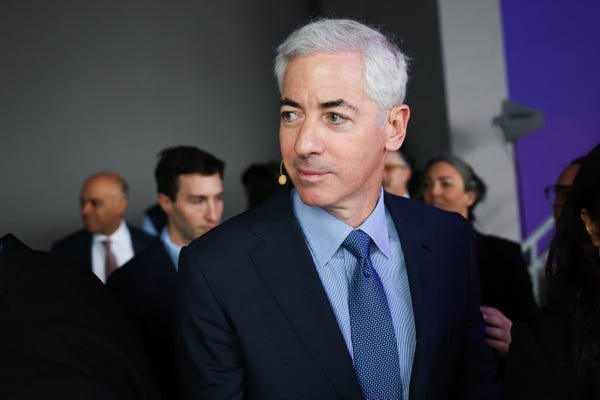
Bill Ackman wrote in favor of a “fairer tax system,” but not a wealth tax.

PATRICK T. FALLON/AFP via Getty Images

The billionaire CEO of Pershing Square Holdings wrote Monday on X that he was “opposed to wealth taxes because they effectively represent an expropriation of private property,” which can have “unintended and negative consequences.”

However, he said he’s in favor of a “fairer tax system.”

For example, Ackman wrote that an individual who had amassed a billion dollars or more in wealth could pay no personal income tax by living off loans secured by stock in their company. A change in the tax code could fix that problem, he wrote.

“One shouldn’t be able to live and spend like a billionaire and pay no tax,” Ackman wrote.

As for California’s “budget problems,” Ackman wrote that the issue wasn’t a lack of tax revenue — it was about “how the money is being spent.”

David Sacks


White House crypto czar David Sacks is pictured.

David Sacks analogized California’s tax increases to a frog in boiling water.

Chip Somodevilla/Getty Images

The White House AI and crypto czar took aim at California’s government in an X post on Sunday.

Red states like Texas and Florida don’t employ state income taxes, let alone wealth taxes, Sacks wrote. “Democrats steal everything, then blame job creators for their ‘greed,'” he wrote.

Sacks said in an October episode of the “All-In” podcast, which he cohosts, that a wealth tax “always backfires,” because tax benefits are outweighed by wealthy residents leaving.

Sacks threatened to leave the state, analogizing steady tax increases to boiling a frog on the podcast.

“I’m going to have to jump out of the pot with this,” he said.

Ro Khanna


Representative Ro Khanna is pictured.

Ro Khanna said Nvidia would be built all over again in California, even with the wealth tax.

Tom Williams/CQ-Roll Call, Inc via Getty Images

The Congressman for California’s 17th district, which covers much of Silicon Valley, said that the proposal was “good for American innovation.”

After receiving thousands of comments on a Friday post bidding a sarcastic goodbye to those threatening to leave the state, Khanna explained his support in a seven-paragraph X post on Saturday.

He wrote that Nvidia would be built all over again, even with the wealth tax.

“Jensen [Huang] wasn’t thinking I won’t start this company because I may have to one day pay a 1% tax on my billions,” Khanna wrote. “He built here because the talent is here.”

Khanna argued that innovation would be further stifled by the “political dysfunction and social unrest” that comes with wide wealth gaps.

In a statement to Business Insider, Sarah Drory, a spokesperson for Rep. Khanna, wrote that the representative has “always supported a modest wealth tax on billionaires to deal with staggering inequality and to make sure people have healthcare.”

“He has advocated for common sense workarounds for startup founders whose companies are not profitable and who have illiquid stock,” Drory wrote.

Palmer Luckey


Palmer Luckey is pictured.

Palmer Luckey wrote that the wealth tax would force startups to pivot to profit.

PATRICK T. FALLON/AFP via Getty Images

The Oculus founder and Anduril cofounder wrote in a Sunday X post that the tax would force founders to “sell huge chunks of our companies.”

Luckey wrote that he made money from Oculus — which he sold to Facebook in 2014 — and paid millions in taxes on it. Then he used the “remainder” to start Anduril, he wrote.

“Now me and my cofounders have to somehow come up with billions of dollars in cash,” Luckey wrote.

Luckey also wrote that the policy made no provision for companies that funnel revenue back to research and development, rather than paying cash incomes sizable enough to cover the tax.

“You are effectively forcing companies to immediately pivot into profit obsession over mission or long-term sustainability,” he wrote.

Garry Tan


Y Combinator CEO Garry Tan is pictured.

Garry Tan wrote that the wealth tax would “kill little tech in California.”

Seb Daly/Web Summit via Getty Images

The CEO of startup accelerator Y Combinator wrote in a Saturday X post that the tax would “kill little tech in California.”

Unicorn startup founders become a “paper billionaire” — as in, having cash on hand — around the $5 billion valuation point, Tan wrote.

The proposed tax is on unrealized gains, meaning founders would be put on the line even before their wealth is liquid, Tan wrote.

If the tax passed, Tan wrote that Y Combinator would consider opening Austin or Cambridge programs.

Bernie Sanders


Senator Bernie Sanders is pictured.

Bernie Sanders wrote in support of wealth taxes on X.

Heather Diehl/Getty Images

The Vermont senator has long been a proponent of taxes on the wealthy, introducing a bill in 2019 that aimed to halve the wealth of billionaires over a 15-year period.

While Sanders didn’t explicitly comment on the California proposal, he posted Monday on X broadly supporting wealth taxes.

“We can respect innovation & entrepreneurship, but we cannot respect the extraordinary greed that now exists,” Sanders wrote. “We need a wealth tax.”

Elon Musk


Elon Musk at the US-Saudi Investment Forum at the John F. Kennedy Center for the Performing Arts in Washington, DC, on November 19, 2025.

Elon Musk wrote that he was a “maker,” not a “taker.”

BRENDAN SMIALOWSKI/AFP via Getty Images

The Tesla CEO reposted another user’s X post that commented on the tax, saying that his stocks weren’t wealth.

Musk wrote in his Tuesday post that his “wealth” was mostly tied up in Tesla and SpaceX shares.

“This means my ‘wealth’ can only increase due to producing more products and services for the public,” he wrote.

While not directly commenting on the California tax, Musk wrote that he was a “maker,” unlike “taker” politicians like Sanders.

Musk said in 2020 that he had moved from California to Texas.

Gavin Newsom


California governor Gavin Newsom is pictured.

Gavin Newsom said that California had to stay competitive with other states.

David Dee Delgado/Getty Images for The New York Times

The governor of California has spoken against the wealth tax. At The New York Times’ Dealbook conference in December, Newsom said that California had to stay competitive with other states.

“People of that status, they already have two or three homes outside the state,” he said. “You’ve got to be pragmatic about it.”

If the tax passes as a ballot measure, Newsom would not have the ability to veto it.


Source link

Meet-the-newest-generation-of-the-Kennedy-family-Americas-most.jpeg

Meet the newest generation of the Kennedy family, America’s most famous political dynasty

Schlossberg, 32, is the youngest son of Caroline Kennedy, the former US ambassador to Japan and the only surviving child of John F. Kennedy, and Edwin Schlossberg, a designer and author.

In November, he announced would be campaigning for a congressional seat in New York City’s 12th district.

“I’m not running because I have all the answers to our problems,” he said in a video announcing his candidacy. “I’m running because the people of New York 12 do. I want to listen to your struggles, hear your stories, amplify your voice, go to Washington, and execute on your behalf.”

He was born in New York City and graduated from The Collegiate School, an all-boys private school in Manhattan, the New York Post reported. He later attended Yale University as an undergrad, and he graduated from Harvard in 2022. In 2023, Schlossberg told People he had passed the New York State Bar exam.

Schlossberg makes frequent media appearances and has written for publications, with op-eds in The New York Times and The Washington Post.

“I’m inspired by my family’s legacy of public service,” Schlossberg said in his first live television interview on “Today” in 2017. “It’s something that I’m very proud of.”

However, Schlossberg has been criticized in recent years for his out-there videos on social media, with even some family members criticizing his “trolling,” particularly of his cousin Robert F. Kennedy, online, The New York Post reported.

“I hope he gets the help he needs,” Kennedy’s daughter, Kathleen “Kick” Kennedy, told The Post in February.


Source link

New-Pentagon-maps-show-the-reach-of-Chinas-expanding-missile.jpeg

New Pentagon maps show the reach of China’s expanding missile force

China’s missile arsenal is expanding rapidly, and new maps and data from the Pentagon show its size and reach.

China’s missile branch, known as the People’s Liberation Army Rocket Force, has seen substantial growth in recent years as Beijing builds new platforms for conventional and nuclear strike. Its capabilities threaten US, allied, and partner forces.

The latest Pentagon report on China’s military offers estimates for the number of launchers and missiles in the Chinese arsenal, including the country’s intercontinental ballistic missiles, key parts of its nuclear deterrent.

Chinese ICBMs include missiles like the DF-5 and DF-41. The Pentagon estimates China has 550 ICBM launchers and 400 missiles with estimated ranges beyond 5,500 km, the threshold for classification as an ICBM.


A chart showing the estimated ranges, missile numbers, and launcher numbers based on each system and class of China's missiles.

Estimated numbers of missiles and launchers for Chinese missiles, specifically ground-launched cruise missiles (GLCMs), short-range ballistic missiles (SRBMs), medium-range ballistic missiles (MRBMs), intermediate-range ballistic missiles (IRBMs), and ICBMs.

US Department of Defense


For China’s medium-range ballistic missiles, such as China’s DF-21s or hypersonic DF-17, the Pentagon assesses that China has 300 launchers for 1,300 missiles with ranges between 1,000 and 3,000 km. The report also documented increases in the number of launchers and missiles for some notable systems. China’s intermediate-range ballistic missiles, like the DF-26 missile, jumped from 250 launchers in last year’s report to 300 this year, and the number of IRBMs total went from 500 to 550.

These figures illustrate how heavily Beijing has invested in a powerful, diverse missile arsenal. The Pentagon highlighted in its report that the Rocket Force could play an important role in a Chinese invasion of Taiwan or other regional conflict.

According to the latest report, China’s rocket force “is prepared to conduct missile attacks against high-value targets, including Taiwan’s C2 [command and control] facilities, air bases, and radar sites” as well as deter or delay the US or its allies and partners from coming to Taiwan’s aid.

The Pentagon said that the Rocket Force has continued to rehearse strikes in recent military exercises, including 2024 drills simulating an invasion or blockade of Taiwan.


A map showing missile ranges in the Taiwan Strait.

The estimated ranges of Chinese missiles relevant to a Taiwan fight.

US Department of Defense


One map in the report shows the estimated reach of Chinese missiles that could be particularly relevant in a fight over Taiwan, weapons such as ship- and shore-launched surface-to-air missiles for knocking out hostile aircraft, as well as anti-ship cruise missiles fired from naval platforms like Chinese destroyers and land-based close- and short-range ballistic missiles.

Another Pentagon map shows the estimated reach of China’s conventional strike missiles, including the DF-17 and DF-21 MRBMs, the DF-26 IRBM, and the newly fielded DF-27 ICBM, which, like the DF-26 and some DF-21s, has an anti-ship role in addition to land attack.

Many of these systems can reach across the first island chain, which includes Japan, Taiwan, and the Philippines, while longer-range missiles extend toward the second island chain and beyond.

The DF-26 is concerning for US planners. The weapon, nicknamed the “Guam Express,” can be armed with either conventional or nuclear warheads and reach US installations on Guam. It can target US aircraft carriers and other surface ships as well.

Bombers, like China’s H-6, carrying CJ-20 cruise missiles could threaten parts of Alaska. And then the ICBMs can range significantly further. The DF-27 can, for instance, range parts of the continental United States.


A map showing estimated ranges of Chinese missiles outside of the mainland and towards other regions.

The estimated ranges of Chinese missiles with regional reach.

US Department of Defense


The Department of Defense report also looks at China’s nuclear strike options, such as land-based ICBMs and submarine-launched ballistic missiles.

China test-launched an ICBM, specifically a DF-31B missile, in September 2024, firing it from a position on Hainan Island into the Pacific. The test was the first beyond the country’s borders since the 1980s and allowed China to verify ICBM performance. The Department of Defense suspects weapons tests like these may become more regular.

This year, at a military parade in Beijing, China unveiled new, previously unseen ICBMs, shocking China watchers. Those weapons, including the new DF-61 and DF-31BJ, are not included in the Pentagon’s assessments.

China also continues to bolster its nuclear warhead count, estimated at over 600 warheads. Although 2024 saw a slower rate of production than previous years, the Pentagon still assesses that the Chinese military is on its way to 1,000 warheads by 2030, only a fraction of the US and Russian stockpiles.


A map showing the estimated ranges of China's missiles from Asia over the North Pole.

The estimated ranges of Chinese nuclear missiles.

US Department of Defense


A Pentagon map estimating the ranges of Chinese missiles available for nuclear strike indicates that three — the DF-5, DF-41, and DF-31 — all have the continental US well within range, while the submarine-launched JL-3 missile can hit most of it from waters near China. On a submarine positioned farther out, more targets could be within striking distance.

Despite these continued advancements, questions remain on the differences in quality and capabilities of Chinese weapons and training compared to the US. The Pentagon also believes China is still navigating the impacts of a vast anti-corruption campaign in the military that has particularly targeted PLARF officials.

The campaign could be detrimental if driven by political agendas, or it could deliver long-term improvements if it addresses actual problems within the force. At this point, it’s unclear how the changes will affect it.


Source link