Under-threat-Ukraines-drone-schools-are-going-to-great-lengths.jpeg

Under threat, Ukraine’s drone schools are going to great lengths to stay off Russia’s radar

The leaders of several drone schools training Ukraine’s operators for the fight against Russia say they’re targets and they have to act accordingly — tightly protecting information and even moving around.

Throughout its invasion of Ukraine, Russia has launched huge drone and missile barrages at factories, training sites, and civilian infrastructure across the country, often far from the fighting in the east, straining Ukrainian defenses and serving as a constant reminder that nowhere in the country is completely safe.

Drones are prolific on the battlefield in Ukraine. Operators are priority targets. It stands to reason the schools training them for war would be too. Officials from three drone schools told Business Insider that they take steps to avoid getting hit.

Tetyana, a Ukrainian veteran who goes by the call sign “Ruda” and is now the head of R&D for Dronarium, a drone training school with sites in Kyiv and Lviv, said that it must follow strict safety rules because “the entirety of Ukraine is not safe, missile-wise, drone-wise.”

Dmytro Slediuk, head of the education department at Dronarium, told BI the safety measures, including not disclosing publicly exactly where its training centers are located and also changing their location “from time to time,” are necessary to prevent Russia from interfering with its training

To keep certain location data from getting out, the school doesn’t allow photos and videos that might reveal where its facilities are based.

The school has been mentioned by Russia’s military bloggers, influential pro-war accounts that often circulate operational details and commentary to large audiences. Though they are typically in favor of the war, they are also sometimes critical of Russia’s performance and dispute some of its defense ministry’s claims.


Two figures stand in an open field beside a launcher with a grey winged drone in the air

Drone schools say they’re targets for Russia.

Ivan Antypenko/Suspilne Ukraine/JSC “UA:PBC”/Global Images Ukraine via Getty Images


Rybar, a media outlet with 1.5 million Telegram subscribers, listed Dronarium as an example of Ukraine’s drone training efforts. The UK has sanctioned Rybar, initially presented as a milblogger but actually a partially Russian government-sponsored information warfare operation, and the US has offered up to $10 million for information.

Tetyana said Russian outlets have been writing about the school since 2022, the year Russia started its full-scale invasion. “As long as they write and talk about us, it means that they are afraid of us,” she said. But it also means that they’re on Russia’s radar.

She said the school and its attendees strictly adhere to a set of critical cybersecurity rules, and said there are also general safety rules in place. “When the air raid siren is on, all training activities, all the work, everything gets suspended, and we deconcentrate and get into safe shelters.” She said no one is complacent.

Vitalii Pervak, CEO of another training school, Karlsson, Karas & Associates, said that safety steps are crucial because “the Russians are constantly hunting for places where military personnel gather.”

Ukrainian officials have confirmed that Russia has hit some Ukrainian military training sites, killing personnel. It’s the kind of thing air defenses can try to prevent, but Ukraine has suffered shortages throughout the war. Ukraine has also successfully hit Russian bases and gatherings of Russian personnel.

The key is to prevent Russia from gaining sufficient knowledge of the school to target it. Its steps include “everyone who works at KK&A, including the cleaners,” having to do a polygraph security interview.

He said they don’t share any information about the location of the training center or about the appearance of the instructors or cadets.

“Some of our employees may have relatives or acquaintances in occupied territories who could be tortured by Russians for indirect contact with someone who opposes Russia,” Pervak said. “This secrecy also protects the instructors and cadets themselves, as well as their relatives, from attacks by Russian agents.”

He said that while the added security “hinders publicity to some extent — good things should be spoken about loudly — war dictates its own conditions. We are well aware that failing to observe the principles of secrecy may result in the death of staff or cadets.”

Viktor Taran, the CEO of the Kruk Drones UAV training center, said that “Russia is interested in destroying us.”

“Thanks to God and air defence, we’re still operating.”


Source link

Im-61-with-16-grandkids-Instead-of-downsizing-we-bought.jpeg

I’m 61 with 16 grandkids. Instead of downsizing, we bought a bigger vacation home to finally make family trips work.

This as-told-to essay is based on a conversation with 61-year-old Doug Beachy, a Cincinnati-based business owner who bought a vacation home with Pacaso in 2022. Pacaso is a platform for fractional ownership of luxury vacation homes. The company allows multiple individuals to co-own a second home and share ownership of the property. This conversation has been edited for length and clarity.

I’ve been married to my wife, Jamie, for 37 years. We have four married children and 16 grandchildren. Our oldest grandchild is 12, and our youngest isn’t quite one yet.

Once our kids started having children, they all moved back closer to home in Cincinnati, where we live. We own a five-bedroom home that’s about 4,000 square feet. We’re empty nesters, so there’s plenty of space for us, but when the whole family is over, everyone is on top of each other.

We’ve converted one room into a kids’ playroom and another into a nursery, and we have a finished basement where the kids can play, but family gatherings are still a bit hectic.

In the past, to bring everyone together, we would either rent a large beach house or book a cabin-style retreat in the woods here in Ohio.

We did that about every other year because it’s hard to coordinate everyone’s schedules — especially with grandkids in school — and seasonal rates for a large home are expensive. It was a big chunk of money for just a week’s experience.

We bought a vacation home

Hilton Head Island has always been a fun family destination for us. It’s an island in the Lowcountry of South Carolina, just outside Savannah, Georgia, with about 12 miles of pristine beaches.

There’s so much to do here from a family activity standpoint, in addition to simply soaking up the sun and going to the beach — it’s just a great place to relax and unwind.

Homes here can be expensive, though. The average home is priced in the upper $700,000s, and properties can sell for as much as $10 million. For a while, I thought about buying a second, larger home here, but I’m not retired yet, and I realized that putting that much money into a house where I don’t live full time just didn’t make sense.


An aerial view of homes along the shore in Hilton Head.

Hilton Head Island, South Carolina.

EyeEm Mobile GmbH/Getty Images


In early 2022, I started exploring different homeownership options, including shared or fractional ownership. That’s when I found Pacaso online and saw they had some homes available in Hilton Head.

We ultimately settled on an about 5,000-square-foot home with six spacious suite-like bedrooms — five with king-sized beds, large walk-in closets, and private bathrooms, and one with several bunk beds for the children — and seven and a half bathrooms.

As you can imagine, taking 20 people out to eat all the time is not exactly fun, so we wanted a house with a large, well-stocked kitchen. Our kitchen almost occupies the entire second floor and, by my last count, it can seat 19 or 20 people. It also has a beautiful ocean view.

Co-ownership was the best fit for us

When we bought the home, it was valued at over $5 million. We own a 1/8 share — we made a 50% down payment on our portion of the home — and there are seven other owners, whom we don’t know.

Our friends will say, “It sounds like a timeshare.” But I think it’s much more transparent than a traditional timeshare. There are no extra markups or mystery fees added on top.

I also feel that, unlike a timeshare, which can leave you feeling stuck and lose value over time, this is a long-term investment. Of course, everything depends on the real-estate market, but I feel fairly confident this is an appreciating asset.


Doug Beachy's vacation home.

The Beachy vacation home.

Courtesy of Pacaso


I think going this route, instead of buying another second or vacation home, has eliminated all the concerns I had about upsizing — like having to maintain the home ourselves or deal with high HOA fees. We wanted a place we could share with family, and this setup works well for us at this stage of our lives.

We spend more time together as a family

Pacaso provides a house manager who handles everything. It’s essentially a concierge service — the home is clean when we arrive and fully stocked with towels, linens, soaps, and disposable items, such as paper towels and paper plates.

When we go, the only thing we really need to think about is what food we want to buy, depending on what we plan to cook — and we have a lot of good cooks in the family.

We have the home reserved for 44 nights a year, and we use nearly all of that time. Not everyone in the family is there for every stay, but they come as they please.

Our family gets together more often now, about twice a year. In the summer, during the high season when the kids are out of school, we typically reserve the house for a couple of weeks at a time.


Doug Beachy and his granddaughter.

Beachy and his granddaughter.

Courtesy of Doug Beachy


The grandkids look forward to each trip and talk about it all the time. Many of them are around the same age, and they love the opportunity to spend time with their cousins.

The house came with six beach cruiser bikes, which is perfect because there are plenty of biking trails on the island. It also has a private pool and hot tub, and the grandkids love that it’s fully stocked with games and puzzles.

Our favorite things to do with them are spending time in the pool, watching the sunrise, and hanging out on the beach. We also take a lot of bike rides and play pickleball. We just love how much more quality time we’re spending together as a family.


Source link

The-best-albums-of-2025.jpeg

The best albums of 2025

Since 2018, the year his debut studio album dropped, Bad Bunny’s upward trajectory has appeared unstoppable. He’s released hits with Cardi B, J Balvin, Drake, Dua Lipa, Travis Scott, and The Weeknd. In 2022, “Un Verano Sin Ti” became the first all-Spanish album to be nominated for album of the year at the Grammys, and his tours grossed $435 million, breaking a single-year record. Last year, he was named Billboard’s Top Latin Artist for the sixth time.

So what does an artist like Bad Bunny do when he’s got the world in the palm of his hand? Well, he releases an album heavily inspired by traditional Puerto Rican music and launches a 10-week residency in San Juan where locals get first dibs on tickets. Naturally.

Where other superstars may have played it safe and pandered to the global market, “Debí Tirar Más Fotos” is unlike anything else in Bad Bunny’s discography, ignoring pop trends in favor of salsa, plena, jibaro, and other distinctly Puerto Rican flavors. Its thematic focus on cultural preservation has been hailed by Latino music critics as unprecedented and revolutionary.

Bad Bunny himself has said this is his “most Puerto Rican album ever” — a deliberate homecoming for an artist who’s made a lot of money by reaching non-Spanish-speaking audiences. There’s a streak of defiance that runs through the tracklist, deftly balanced by dapples of joy, pride, and intergenerational camaraderie.

“What is the purpose of me being here, in this position? What’s next? You die and that’s it. There’s no, like, ‘Oh you were the most streamed artist’ — so what?” Bad Bunny told The New York Times when the album was released. “I was thinking on that and said, ‘I should do something where I can plant a seed.'”

Of course, it helps if you’re able to do both. The album’s seed has already yielded many fruits, including a headlining slot at the Super Bowl halftime show in February, another Grammy nomination for album of the year, and record-breaking sales for Bad Bunny’s 2026 stadium tour. Imagine the fruits that will continue to ripen over time.

Best songs: “Nuevayol,” “Baile Inolvidable,” “Bokete,” “Turista,” “DTMF”


Source link

To-build-muscle-you-need-a-de-load-week-Heres-how.jpeg

To build muscle, you need a ‘de-load’ week. Here’s how a powerlifting doctor strategizes rest for maximum gains.

Working hard in the gym without seeing results?

A short rest may help you break that plateau, according to a doctor who set state and national records in powerlifting.

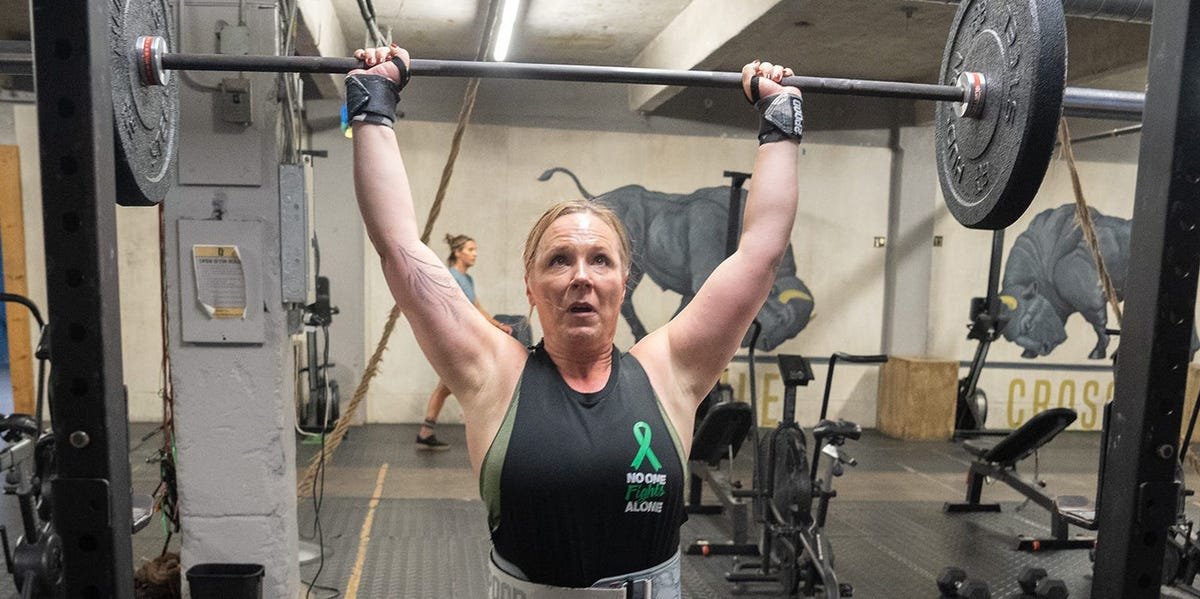
Dr. Shernan Holtan, a hematologist and busy mom of two, has been lifting weights for over a decade. She hits the gym at 5:30 a.m. for an hour of training before heading to her day job as chief of blood and marrow transplant at Roswell Park Comprehensive Cancer Center.

Her key to avoiding physical burnout and keeping up gains: Every four to six weeks, she eases up on her training to let her body recover and build back stronger.

“You give yourself a break. Come back, lower the weight drastically for a week, and really just let your body soak up all of the stress that you just put it through to let it repair and heal,” she told Business Insider.

The strategic break is commonly referred to in the fitness world as a “de-load week.” It’s an evidence-backed way to smash through plateaus, reduce the risk of injury, and boost muscle and strength gains for everyone from elite powerlifters and bodybuilders to everyday athletes.


Dr. Shernan Holtan performing weighted lunges in the gym

Building weights is about challenging your muscles, then resting and recovering.

Roswell Park Comprehensive Cancer Center


For Holtan, deloads have enabled her to maintain steady progress for years, gradually building up the strength to squat 225 pounds (or more) for reps. In that time, she’s also started running and CrossFit, in addition to hiking, biking, and going to the gym (sometimes with her teenage daughter).

“I exercise every day, but I’m not doing crazy stuff every day,” she said.

Here’s how to know if you should take a deload, and the right way to rest for better fitness.

Why resting helps you build more muscle

Unless you’re a pro athlete, less can be more when it comes to exercise.

That’s because muscle and strength gains only happen during the rest periods between gym sessions. A good gym session can break down muscle fibers, prompting them to grow back stronger, but only if you provide them with the time and resources (energy in the form of sufficient calories and protein) to recover.

Holtan said to think of it as a slow and steady effort over time, rather than going all-out at the gym (and being too sore to come back).

“It’s little micro adjustments, tiny increases in weight, a few extra reps,” she said.

Then, over the weeks and months of training, a de-load can help your body to reset and keep making progress.

A de-load can also be a full rest from exercise, and can be a good idea during a vacation or holiday, so you can fully enjoy the time off.

When to take a de-load

The right time to take a rest can vary depending on your training and goals. Trainers typically recommend taking a break every four to 12 weeks.

The length of the rest can vary too.

If you’re consistently in the gym three times a week, you may only need a day or two to deload, and can go two or three months between breaks. Competitive athletes who train five or more days a week might benefit from longer breaks every month or two.

Holtan focuses on a specific goal for four to six weeks, then rests and repeats with a slightly different goal.


Dr Shernan Holtan lifting weights in the gym performing an overhead barbell press

Dr. Holtan said her training schedule prioritizes a specific rep range for four to six weeks, then she takes a break to recover.

Roswell Park Comprehensive Cancer Center


For instance, she might spend a month or so building up to a heavy one-rep max deadlift, bench press, and squat. After her deload week, she might focus on lifting moderate weight for more reps.

This is a type of training cycle known as periodization, which can help prevent athletes from overtraining or getting stuck in a rut.

Listening to your body can also signal that a rest might be beneficial.

If you’re just not enjoying the gym, struggle to finish a workout ,or need to foam roll the pain away, an extra rest day might be just what you need.


Source link

Henry Chandonnet is pictured

I worked at Tesla and Waymo. Here are the leadership lessons I bring to my startup.

This as-told-to essay is based on a conversation with Spencer Penn, the 33-year-old founder of LightSource, who lives in San Francisco. It’s been edited for length and clarity.

I moved to California 10 years ago, back when Tesla was a boutique car business. We were making 1,000 vehicles a week.

My friends and family were telling me it was a big career mistake to work at Tesla. They said it would never be someone’s main car, that it’s a tech toy, that it’s an iPad with wheels on it. But I was just excited to see what this Elon guy was up to.

My interactions with Elon were always very positive, but I’m not a fanboy. There were some things that were very notable about his leadership style.

Tesla is a very flat organization. When I was there, even relatively young and out of college, it was two levels between Elon and me. That’s very unusual to have such close proximity so early in your career.

Just because it’s a flat org structure, doesn’t mean it’s a horizontal power dynamic. Elon is the king. What he says goes. If you wanted to get something done, you really did have to go through Elon.

The drawbacks were that the guy didn’t have that much time. In 2017, he was running three different companies: Tesla, SpaceX, and Neuralink. He was just getting started with OpenAI. He had two and a half days a week to really focus on Tesla exclusively. You’d have to get things approved in that period of time.

But he was also very focused on the product. He would get involved in the way that things felt. If you wanted to change a texture on a paint, you’d want to get his buy-in.

Many CEOs go the opposite direction. They let themselves get so far removed from the product. Elon always felt the product was the thing, and the innovation would be what drives the company forward.

I like to embody that here at our company. I still do demos. If you take your hands off the wheel, things might veer in a direction you don’t like.

Elon has a knack for setting overly ambitious goals. There are benefits and drawbacks. Sometimes, you lose credibility. Certain products like the new Roadster were unveiled back when I was an employee, and they’ve yet to be delivered.

But there are certain things where you shoot for the moon and you do hit the stars. Nobody thought Starlink would be as successful as quickly as it has been.

If you apply the right amount of pressure, you can see where the leaks are. That kind of ambition is everything.

That’s the final thing Elon does: he’s really a risk taker. He’s bet the company multiple times; he always keeps putting the chips back on red. I think about that a lot. Sometimes it can be hard for professional management to take the risks they need to. Sometimes you can sleepwalk into a long-term, uncompetitive position.

There was some internal signaling. People knew that Elon was in the factory. They knew that he was going to stay there until the issues were fixed. Elon works about as hard as any human on earth possibly can.

There’s a hotel right across the street from the Fremont factory. Part of me always felt like, instead of setting up pillows in a conference room, I would like our CEO to be well-rested and go to the hotel five minutes away. But the signaling was very potent.

I try to embody that to some degree here, too. I like to come into the office five days a week. I want people to know that I’m coming in early and I’m staying late. I unload the dishwasher in the office. I’m assembling IKEA furniture.

How I found Waymo compared

Waymo was a very different organization. It’s a very vertical org structure. Google is a large organization with lots of levels, and that translated directly to Waymo, which is a much smaller business.

Even though it’s a very vertical org structure, it’s a horizontal power structure. It’s like it’s rotated 90 degrees from Tesla.

Some people compared the org to slime mold. It starts to spread and find all the crevices on its own. Individual contributors could construct their own ideas.

There are benefits and drawbacks. There is the possibility that there are duplicative teams doing the same things in different ways. But it also leads to a lot of creativity.

At Tesla, it was very clear that Elon and his lieutenants were driving a lot of the decisions. The decisions that the more junior people made would be incremental. At Google, I found that a lot of the best ideas come from the individual folks in the business, because they’re given the freedom to roam.

In a startup, you have limited resources. You have to be focused, but a lot of the best ideas come from experimentation.

We had an engineer who asked if he could move his start date by a month. He was like, “I want to spend a month before I get into work catching up on everything that’s happening in AI.” He came to the table, and he had so deeply immersed himself that he had a lot of new and fresh ideas. Many of those ideas have become product features.

I have to delegate innovation to folks on the team to find those opportunities. That’s something I learned from Google.


Source link

These-8-beauty-fashion-and-lifestyle-items-are-already-shaping.jpeg

These 8 beauty, fashion, and lifestyle items are already shaping the 2026 aesthetic

  • Skinny shoes, digital cameras, and clean-girl makeup reigned supreme in 2025.
  • We doomscrolled on TikTok to see what the cool kids are spending their money on, going into 2026.
  • TikTok’s top picks include the Rhode Pocket Blush, Alo’s Suit Up Trousers, and the Canon G7x Mark III.

TLDR: Digital cameras and K-Beauty are here to stay in 2026.

We took a scroll through TikTok and the websites of top-selling beauty retailers to see which shoes, bags, makeup products, skincare brands, and clothing items got top billing.

There were eight products that kept popping up. So if you want to look cool in 2026, here’s what you need on your shopping list.

Rhode Pocket Blush

Rhode’s Pocket Blush is the top on our list.

Elf Beauty

Hailey Bieber’s Rhode was acquired by Elf Beauty for $1 billion in May. The brand’s minimalist packaging and focus on the “glazed skin” look have proven hugely popular on social media.

Rhode’s $20 Peptide Lip Tint also had a viral moment on TikTok, paired with Rhode’s silicon phone case, which features a slot for the lip tint.

TikTok is a big fan of the Rhode Pocket Blush, a $25 cream blush stick that creators say leaves a soft, dewy tint on the skin. The blush is at the top of Sephora’s bestseller list for makeup.

There are similar-looking viral blushes out there, too. If you’re a fan of K-beauty, check out beauty brand Banila Co.’s “Romantic Blush” range.

Hanyul toner pads


A view of Mediheal's toner pads on the shelf.

Mediheal’s toner pads in multicolored boxes were flying off the shelves at Olive Young when news editor Cheryl Teh visited its Seongsu store in Seoul in September.

Cheryl Teh

Toner pads are a big deal on TikTok now, from South Korean brands such as Medicube and Torriden.

The crescent moon-shaped Yuja Brightening Toner Pads by South Korean skincare brand Hanyul, which contain Vitamin C and Niacinamide, are a top recommendation on skincare TikTok. A standard pack of 60 pads retails for $26 at Sephora.

K-Beauty’s rise to fame in the US is just starting. Major beauty retailers like Sephora and Ulta Beauty are stocking their stores with K-beauty brands ahead of South Korean retailer Olive Young’s debut in the US in 2026.

Ulta Beauty executives said in a December earnings call that the company’s K-beauty assortment “continues to resonate and drive skincare sales.”

Adidas Tokyo sneakers


A guest is seen wearing Adidas Originals Tokyo low Sneaker in dark green; pink shiny stockings during Copenhagen Fashion Week day four on August 7, 2025 in Copenhagen, Denmark.

Adidas’ Tokyo sneakers are popular on TikTok.

Moritz Scholz/Getty Images

Slim, narrow sneakers have defined 2025. Think Puma’s Speedcats or the Onitsuka Tiger Mexico 66.

If you’re still holding onto Adidas Sambas or Gazelles, don’t fret — they’re still in style and remain on Adidas’ bestsellers list. If you’re looking for a new hot shoe, TikTokers are opting for the Adidas Tokyo sneakers, a compact shoe with a thin sole.

It retails for about $90 on Amazon.

JW Pei Hana bag


Screengrab of the JW Pei Hana tote bag.

TikTok loves JW Pei’s Hana tote bag.

Screengrab/Tanya Ro’s YouTube channel

In 2025, the cool kids are all about affordable luxury, a trend we expect to continue into 2026. For bags, that means buying secondhand or scouting for mid-range brands, such as Los Angeles-based fashion brand JW Pei.

JW Pei’s “Hana” bag has made its rounds on TikTok. It was featured on TikTok by fashion creator Beatrice Salazar, showcasing her top picks for affordable, quiet luxury bags. The video has 1.6 million views to date.

The bag, which has an inverted trapezoid shape and a Birkin-esque front clasp, retails at $157 for the medium size and $112 for the mini size on JW Pei’s website.

Alo Suit Up Trousers


Alo Suit Up Trousers on a YouTuber.

Alo’s Suit Up Trousers are a fan favorite on TikTok.

Screengrab/Scaciose’s YouTube channel

TikTok’s current athleisure obsession is Alo’s Suit Up Trousers, a loose-fit pair of pants that retail for $148.

The pants, which have a slight pleated detail at the top, are recognizable because of their distinct “boxer-style” elastic Alo-branded waistband. Creators on TikTok have called them the “perfect airport pants.”

Fashion YouTuber Shaciose said in a review of the trousers that they gave her a “clean girl vibe” and said it was a “wardrobe staple.”

The pants are on Alo’s Women’s bestsellers list.

Owala


The Owala Freesip bottles.

The Owala Freesip bottles remain hot on TikTok.

Trove Brands

The Owala Freesip has retained its spot on the water bottle podium, with its bottles continuing to trend on TikTok.

The drinkware company releases its popular bottle in different colorways, keeping the product fresh. The colorway “Black Cherry,” featuring a dark berry body and pink cap, is particularly hot on TikTok — and only available on Amazon.

The 32-ounce bottles retail for $34.99 on the brand’s website.

HydroJug


A HydroJug Coffee Traveler bottle

The HydroJug Coffee Traveler bottle is giving Stanley Cups a run for their money.

HydroJug

A competitor to Owala and the Stanley Cup has emerged: HydroJug.

HydroJug’s Traveler bottle is structurally similar to the Stanley Cup, but creators on TikTok say the HydroJug doesn’t leak as often. The term “HydroJug” surged in popularity in November, according to Google Trends.

As with the Owala, its colors are its top selling point. TikTok, in particular, loves the Espresso model, a brown body with a delicate floral lace pattern.

The 32-ounce bottle retails on HydroJug’s website for $39.99.

Canon G7x Mark III digicam


The Canon G7X Mark III is one of TikTok's favorite digicams.

The Canon G7X Mark III is one of TikTok’s favorite digicams.

Canon

Are you even an “It Girl” without a digicam in 2026? Small, pocket-sized digital cameras made their comeback in recent years and don’t appear to be leaving the zeitgeist anytime soon.

One of TikTok’s top camera picks du jour is the Canon G7x Mark III, a compact camera featuring a 4x optical zoom lens with a bright f/1.8 to f/2.8 aperture, perfect for sunset-by-the-beach outfit pictures.

A TikTok by creator Victoria Lightfoot, filming the camera’s unboxing, has notched 10.9 million views and 1 million likes.

It retails on Amazon for about $1,400. However, a cheaper alternative that has made its rounds on TikTok is the Kodak Pixpro FZ55, available on Amazon for about $140.


Source link

cherylt_headshot

She went from a fan on Twitch to showrunner of Critical Role’s Amazon-backed ‘The Mighty Nein.’ This is how she did it.

Tasha Huo and I don’t make it a minute into our conversation before we start gushing about wizards — and that’s how I know I’m talking to a true Critical Role fan.

Huo is the showrunner of “The Mighty Nein,” Critical Role’s second animated series with Prime Video. “The Mighty Nein” follows the success of “The Legend of Vox Machina,” the series for which Critical Role raised over $11.3 million in Kickstarter seed funding in 2019. Now, Huo, a longtime viewer of the show, is the series’ creative writing powerhouse.

Nerding out over ‘D&D’

Huo, who’s based in Los Angeles, said she first started playing “Dungeons & Dragons” as a kid, but hadn’t touched the game for years. In her adult life, a friend wanted her to join his “D&D” campaign and recommended a Twitch stream that he said would help her understand how the game worked.

That turned out to be Critical Role. At the time, the company’s eight cofounders were in the midst of their second long-running campaign. And the stream that Huo watched, so many years ago now, has taken on an animated series form in “The Mighty Nein.”

“I was absolutely hooked. I was like, this is all I can watch now, and it’s all I can listen to in the car. And I binged it, which took years,” Huo said of the 141-episode campaign.

Several industry contacts recommended Huo to Critical Role in 2021 when they were looking for a showrunner.

Huo started work on the show in November 2022 as part of the Prime Video team and oversaw its writing until its release this fall, working 9-to-5 daily with three other writers and a writer’s assistant. She has an MFA in screenwriting from Boston University and has written for other shows, including “The Witcher: Blood Origin,” released in 2022, and “Tomb Raider: The Legend of Lara Croft,” released in 2024.

“It started with me having a lot of conversations with Critical Role. I met with Sam Riegel first, and then Travis Willingham and Matt Mercer, and we all just nerded out,” Huo said. Riegel, a cofounder, oversees much of Critical Role’s animation business alongside the team’s CEO, Willingham. Mercer is the crew’s chief creative officer.

“It was kind of like coming home. It was just all these pieces coming together that started over a love of ‘D&D,'” Huo added

Inside the writer’s room


Marisha Ray, Sam Riegel, Tasha Huo, Liam O'Brien, Taliesin Jaffe, Matthew Mercer, Laura Bailey, Ashley Johnson, and Travis Willingham attend

Huo and the eight cofounders of Critical Role.

Anna Webber/Getty Images for Prime Video


Huo said conversations in the Critical Role writer’s room involved many talks with the eight cofounders about their campaign characters. She wanted to find the best way to condense the hundreds of hours of campaign stream time into eight, 44-minute episodes.

“The conversations always started with all of us in a room talking about the characters, talking about why they felt the way they did or why they did the thing they did,” Huo said.

Huo says these character conversations helped her figure out what the first season’s arc would be.

“Every day we would come into the Critical Role offices. And we had a giant whiteboard up with magnets, and we’d come up with ideas of like, ‘Okay, if we know what the season arc is, now let’s start thinking about some turning points within the episode,'” Huo said.

Making tough choices

Having so many hours of source material also meant that Huo and the writing team had to make tough decisions about what to focus on in the first season. Huo said it quickly became clear to them that the plotline for cofounder Liam O’Brien’s character, the wizard Caleb Widogast, needed to be covered first for the rest of the show to make sense.

“A lot of his backstory is really linked to a larger story that we were telling,” Huo said.

The season’s final cut also included several tidbits of information that were not in the original Twitch stream.

Huo also got to live the Critical Role fan dream and suss out all the juicy details from Mercer that had never aired on stream — including the ins and outs of how the season’s key antagonists, the Volstrucker wizards, worked.


The cast of Critical Role in their LA studio

The cast of Critical Role in their studio in Los Angeles.

Critical Role


“We get to tell a side spy show within ‘The Mighty Nein,’ and that’s really gratifying because you sit Matt down and he has all the answers already, so you just mine from all of the great stuff that he has and fill the story up with all of those things,” Huo said.

How to get your dream writing gig

I asked Huo how one might go about landing a dream writing job, and she had two tips.

“I would say the first thing is to dedicate yourself to the craft. Always be writing, even when there’s negativity and there’s rejection, just keep going. I think the number one reason people don’t make it is because they give up before someone else,” Huo said.

As for her second piece of advice for writers: “Don’t be afraid of what you love.”

“I remember when I met with Sam Riegel, I was so embarrassed. I thought, ‘Oh no, I fangirled too much when I talked to him,'” Huo said. “And it turns out that’s exactly what they wanted to hear, from someone who really, really loved the show.”

Do you work on the Critical Role franchise and have a story to share? Get in touch with this reporter at cteh@businessinsider.com.


Source link

Google-warns-some-visa-employees-not-to-leave-the-US.jpeg

Google warns some visa employees not to leave the US due to ‘significant’ return delays of up to a year

Google has advised some employees on visas not to travel outside the US due to delays at embassies, Business Insider has learned.

The company’s outside counsel BAL Immigration Law sent an email on Thursday advising staff who require a visa stamp to re-enter the US not to leave the country because visa processing was taking longer than usual, according to a copy of the memo reviewed by Business Insider.

“Please be aware that some US Embassies and Consulates are experiencing significant visa stamping appointment delays, currently reported as up to 12 months,” the memo read. It was recommended that employees avoid international travel as they would “risk an extended stay outside the US.”

American consulates and embassies around the world are seeing delays with routine visa appointments following the introduction of a new social media screening requirement, which applies to H-1B visa workers and their dependents, as well as students and exchange visitors.

On Friday, a spokesperson for the Department of State told Business Insider it was conducting “online presence reviews for applicants.” The department said it may move appointments as resources change, with applicants able to request expedited slots on a case-by-case basis.

“While in the past the emphasis may have been on processing cases quickly and reducing wait times, our embassies and consulates around the world, including in India, are now prioritizing thoroughly vetting each visa case above all else,” the State Department spokesperson said. Appointments in Ireland and Vietnam have also been postponed, according to immigration firm Reddy Neumann Brown PC.

Google’s lawyers said in the memo that the delays were affecting H-1B, H-4, F, J, and M visas. The advisory did not specify what anyone on a visa already outside the country with a postponed appointment should do.

A Google spokesperson declined to comment.

How enhanced visa vetting can complicate a routine trip abroad

Google’s warning echoes a wave of internal travel advisories that swept through corporate America in September, as the Trump administration imposed a $100,000 fee on new H-1B visas.

The H-1B visa typically lasts up to three years and can often be extended. If someone needs a new H-1B visa stamp, they typically must apply at a US embassy or consulate in their home country or a country where they have lawful residence.

As a general matter, said immigration attorney Jason Finkelman, who focuses on employment and family immigration, foreign nationals should be able to return to the US after travel abroad if they have a valid visa stamp and aren’t subject to any entry restrictions, including the Trump administration’s expanded travel ban, which the White House says takes effect January 1.

That’s where enhanced vetting can complicate an otherwise routine trip. If an H-1B worker leaves the US to get a new visa stamp and their consular appointment is canceled or delayed — sometimes by months — they can be stuck abroad until the visa is issued.

“My advice to clients is that if travel isn’t essential right now, better to stay put,” Finkelman said.

A spokesperson for the Department of State said consular officers “do not issue a visa unless the applicant can credibly demonstrate they meet all requirements under US law — including that they intend to engage only in activities consistent with the terms of their visa.”

The H-1B program, which is capped at 85,000 new visas a year, serves as a core pipeline for employers hiring skilled foreign workers. Tech giants have long been among the largest users of the visa, with companies such as Amazon, Google, Microsoft, and Meta topping the lists of approved new H-1B petitions in recent years. 

Under the Trump administration, the program has become a political flash point, with the White House framing H-1Bs as a threat to American jobs and rolling out measures that critics and employers say make it harder and more expensive to hire new workers.


Source link

Epstein-files-live-updates-DOJ-releases-new-documents-—-heres.jpeg

Epstein files live updates: DOJ releases new documents — here’s what we’re seeing so far

New Epstein files released — Here’s the latest

The Justice Department has officially released documents on Jeffrey Epstein, the well-connected financier who killed himself in jail while awaiting trial on sex-trafficking charges in 2019.

Friday’s disclosure is the first of what are expected to be several rounds of document releases over the coming weeks as the DOJ scrambles to comply with the Epstein Files Transparency Act, which President Donald Trump signed into law in November.

The documents contain a trove of photos, some of which feature famous names such as former President Bill Clinton, Michael Jackson, and singer Diana Ross.

While a past relationship with Epstein is no indication of wrongdoing, his victims and other members of the public have pushed for the disclosure in hopes that the DOJ’s records might shed light on those connections and law enforcement’s handling of the case.

So what else do the latest Epstein files contain? Business Insider reporters have begun looking through the documents and photos and we’ll be reporting out highlights as they’re discovered.

Follow along for the latest:


Source link

I-tried-on-coats-at-Gap-Banana-Republic-and-Old.jpeg

I tried on coats at Gap, Banana Republic, and Old Navy. The experience reminded me that a great piece is worth investing in.

  • I tried on similar black peacoats at Gap, Banana Republic, and Old Navy.
  • I compared each winter coat based on the design, fabric, price, and overall quality.
  • I wasn’t a fan of how the Gap coat felt, but really loved the option from Banana Republic.

I recently moved from Southern California to the more chilly and gloomy Bay Area. In other words, I was in dire need of a good winter coat.

So, I turned to three trusted Gap Inc. retailers — Gap, Banana Republic, and Old Navy — to find a one that’ll keep me warm throughout this season and beyond.

I compared similar styles based on the design, fabric, price, and overall quality. Here’s how it went.

I started my day with a trip to Gap.

I had no trouble finding what I was looking for at Gap.

Chloe Caldwell

I started my search for a stylish and well-constructed peacoat at Gap.

When I walked in, I appreciated that the store was easy to navigate and neatly organized. Plus, I found the coat I was looking for almost immediately.

However, I wasn’t blown away by this option.


Chloe wears a long black peacoat in a fitting room.

I thought this coat looked a bit like a bathrobe.

Chloe Caldwell

I tried on the wool-blend wrap coat and could tell right away that it offered a nice shape and structured fit that would fit easily over layers.

I liked the thick-notch lapels, and thought the material (52% recycled wool, 40% recycled polyester, 8% other) felt warm without being overly bulky. However, the wool blend felt a bit itchy, especially around the neck area where it directly touched my skin.

Plus, there were no buttons and the pockets were hidden, making it look somewhat like a bathrobe.

Although it was a good, basic option, I wanted something with a little more flair. I also had a hard time justifying the price of $248 for a coat that was 40% polyester.

Next, I went to Banana Republic.


Coats, jeans, and shirts hanging at Banana Republic.

The Banana Republic store I visited was well-organized.

Chloe Caldwell

After striking out at Gap, I decided to try Banana Republic for another option. The store was neatly organized, and I was able to locate a black peacoat easily.

This coat was pricey, but I think it would be worth the investment.


Chloe wears a long black peacoat in a fitting room.

The coat was made of a blend of wool and cashmere.

Chloe Caldwell

When I saw the $550 price tag on the Italian-wool cashmere wrap coat, I thought, “There is absolutely no way I would pay that much for a coat.” But after trying it on, I reconsidered.

I could immediately tell that the quality of the material (made with 91% wool, 6% cashmere, and 3% other materials) was thick and warm, with no polyester in sight. The inside lining was also silky and smooth, and the overall fabric felt soft and comfortable without itching.

I also loved the overall design of this coat. The pointed collar and large pockets added chic touches that were flattering yet functional.

This try-on reminded me that it’s important to invest in pieces that will actually last a long time. I know this coat is something I would wear every winter for years.

I made one last stop at Old Navy before heading home.


Racks of coats, pants, and dresses on display at Old Navy.

It took me a few minutes to find a peacoat at Old Navy.

Chloe Caldwell

I’m a big fan of Old Navy because it offers both basic and trending styles for an approachable price.

However, my local Old Navy was less organized than the other stores I visited, so it took me a bit longer to find a black peacoat. Thankfully, I was able to find one and brought it to the fitting room.

I didn’t love how the Old Navy option felt.


Chloe wears a long black peacoat in a fitting room.

I wish this coat had a waist tie to add some shape to it.

Chloe Caldwell

The first thing I noticed when trying on the oversized twill overcoat is that it didn’t have a waist tie, which, to me, feels like a must for adding shape and style to any peacoat.

The coat was also made of 100% recycled polyester, so I’m not sure how warm it would actually keep me during winter. The fabric also felt less flexible than the others I tried on, leaving less room for layers underneath.

I did like the overall style, though — it had a spread lapel and the buttons featured an eye-catching texture.

This was my least favorite coat out of the three, but for $90, I think it’s a solid option for anyone shopping on a budget.

I’d be most likely to buy the coat from Banana Republic.


A composite image of Chloe wearing three different long black peacoats.

The Banana Republic coat checked all my boxes.

Chloe Caldwell

Overall, the Banana Republic coat impressed me most, thanks to its durable fabric blend, comfortable fit, and elegant design.

This shopping day reminded me that high-quality staple pieces are worth investing in.


Source link