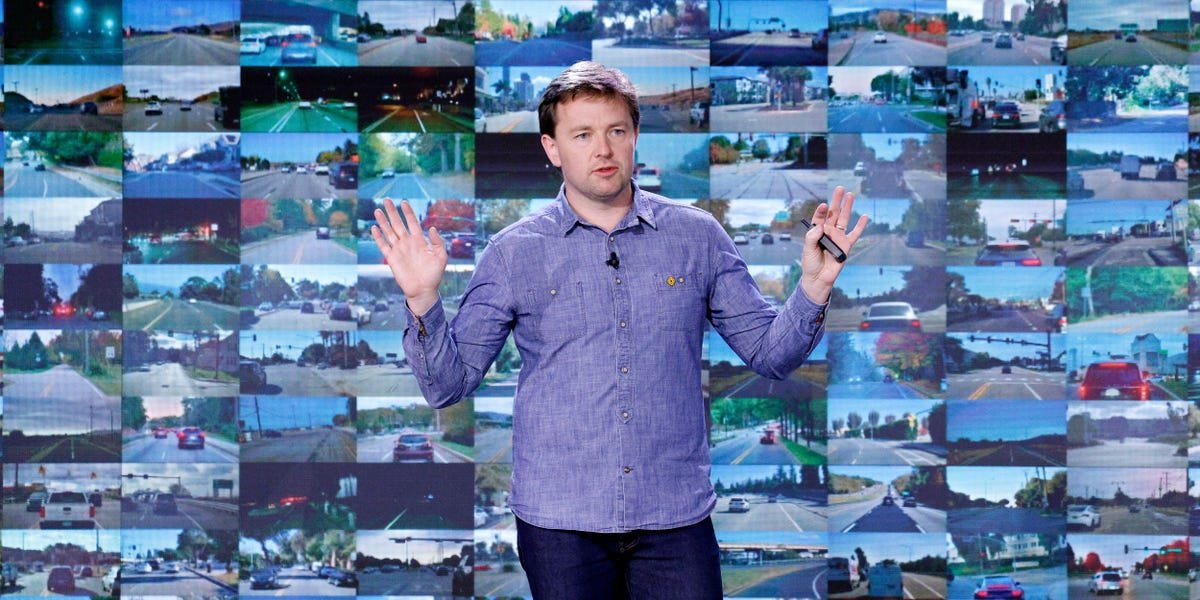
For Rivian’s chief of autonomy, the decision to put in lidar for the EV company’s coming R2 SUV was obvious.
James Philbin, Rivian’s VP of autonomy and AI, told Business Insider that the price of lidar has decreased significantly enough in recent years to be able to put the sensor inside a personally-owned, mass-production vehicle.
“It’s been on this incredible cost curve, where 10 years ago, it would be just unimaginable that you could put a lidar on a consumer vehicle. And now it’s getting into that price point, kind of in the range of a radar,” Philbin said. Radar, a sensor that uses radio waves, is commonly seen in modern cars that have an advanced driver-assistance system (ADAS) or blind spot detection.
Lidar is a sensor that uses laser light to measure depth. While it’s historically been used for topography, the sensor has gained more visibility in the automotive world with the advent of self-driving cars.
Most notably, Waymo’s robotaxis have multiple lidar sensors, including the spinning lidar on the roof of the vehicle. Waymo has said that lidar provides additional safety to the vehicle’s AI driver.
On Thursday, Rivian announced a road map to fully autonomous driving, which includes building an in-house chip and installing a lidar sensor in the company’s coming SUV, the R2.
Philbin, who previously worked at Zoox and Waymo, told Business Insider that lidar makes an autonomous system “more robust” and can help the company get to its self-driving goal “faster.”
“It’s very affordable,” he said. “The performance it gives you for that cost is really amazing. And so to me, it’s kind of a no-brainer that you would want more sensors and more modalities for something that’s so safety critical.”
Using lidar diverges from the strategy of Rivian’s main EV competitor, Tesla, which has taken a strong stance on pursuing self-driving with cameras only.
Tesla CEO Elon Musk once called lidar an expensive “crutch.”
In the late 2000s, during the days of the Google Self-Driving Car Project, a single lidar unit could come with a five-figure price tag. Today, industry leaders say a similar unit could cost a few hundred dollars.
Rivian employees, including Philbin, did not disclose the cost of the lidar unit in the R2 when asked by Business Insider.
R2 will first be launched without the sensor in early 2026. It’s slated to be Rivian’s cheapest car to date, with a starting price of $45,000. The company aims to launch an R2 with lidar in late 2026.
When asked what the cost difference was to put a lidar in the R2, Philbin declined to comment but said that it was “not a significant consideration.”
A humanoid robotics startup in Silicon Valley appears to have an acceptance rate lower than any Ivy League university.
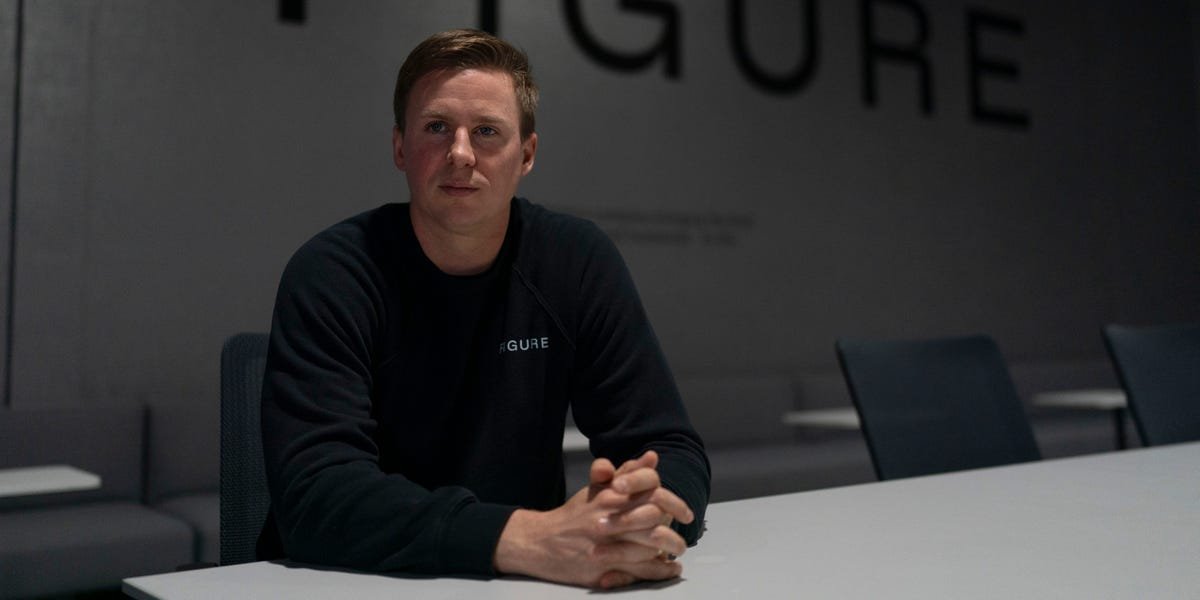
Figure AI has been flooded with résumés since its founding in 2022, according to the startup’s founder and CEO, Brett Adcock.
“Just checked, 176,000 job applications at Figure the last 3 years,” he wrote in an X post on Saturday. “We’ve hired ~425 people.”
That amounts to a hiring rate of about .24% within the three years. Adcock wrote that most of the submissions were “slop.”
The spread of the 176,000 applications over the three years is unclear. Adcock did not immediately respond to a request for comment.
Even if the number of applications were divided equally among the years Figure AI was operating — just under 59,000 applications a year — the acceptance rate would still be lower than that of the hardest university to get into. Caltech had the lowest acceptance rate of 3%, according to US News & World Report’s rankings list.
Adcock wrote in the comments of his X post that the review process has been a slog.
“We go through these one by one like a monkey — it’s incredibly time consuming,” he wrote.
According to the CEO, the “ATS” or applicant tracking system — a software employers use to sift through résumés — can’t save a lot of time if a company is being barraged with hundreds of thousands of applications.
“In the ATS it takes at least 20 seconds of button clicks per submission even if it’s garbage,” he wrote.
Adcock did not immediately respond to a request for comment.
A company like Figure AI sits right in the intersection of two trends within the job market.
Today’s job candidates aren’t applying to just a handful of roles. Business Insider’s chief correspondent Aki Ito reported that the average job opening saw 242 applications, citing data from Greenhouse, a leading ATS platform.
“Applying to a job in 2025 really is the statistical equivalent of hurling your résumé into a black hole,” Ito wrote.
On the other hand, Figure AI operates in one of the hottest spaces of the tech industry, that is, robotics and artificial intelligence.
Top tech firms like Meta and OpenAI are in the midst of an AI talent war, offering up to seven- to nine-figure pay packages just to poach superstar AI researchers.
Even tech startups are scrapping for AI talent, floating higher equity packages and other perks that may not come as easily at a big company, such as a co-founding title or more time for research.
Figure AI happens to be one of the leading names in the humanoid robotics space.
The company recently raised more than $1 billion in its Series C funding round — with backing from Parkway Venture Capital, Brookfield Asset Management, and Nvidia, among others — for a $39 billion valuation.
Adcock said on X that he may need to find another way to sift through résumés.
“Need a model to do this for us better, maybe I’ll work on one,” he wrote.
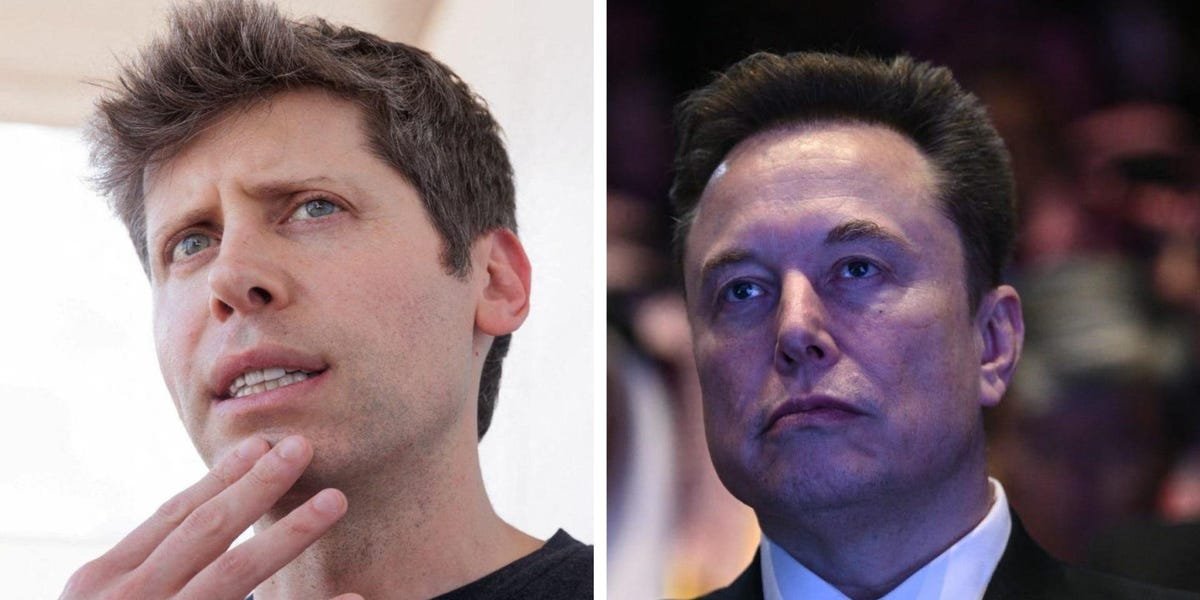
If Elon Musk and Sam Altman like each other, they hide it well.
In the latest turn in the rivalry, the two are battling over the top spot on the list of the world’s most valuable private companies.
While the two cofounded OpenAI together back in 2015, the partnership has frayed spectacularly since.
Musk left OpenAI in 2018 and later founded rival startup, xAI. Musk or his company, xAI, has filed lawsuits against OpenAI.
OpenAI held a secondary share sale in October that valued it at $500 billion, taking the lead from Musk’s SpaceX by a cool $100 billion.
Not one to cede ground to a rival, Musk is now planning his own secondary share sale at SpaceX, according to an internal letter to employees seen by multiple outlets. It would value the company at a whopping $800 billion. If that happens soon, it means Musk would have only let Altman hold the mantle for a couple of months.
Musk also confirmed on X this week that the company is exploring a blockbuster initial public offering, which might be the only way OpenAI can regain its lead as a private company. OpenAI this year restructured its business, which would allow it to also pursue its own eye-watering IPO in the future.
While this valuation battle between the two billionaires is maybe cringeworthy theater for the average earner, it underscores a significant shift: investors are pouring unprecedented money into technologies once viewed as speculative science projects.
SpaceX, which aims to make life multi-planetary and colonize Mars, and OpenAI, which seeks to develop a theoretical AI that can reason like humans, are two of the most visible examples, but they are part of a broader surge in frontier-tech valuations. AI, robotics, and defense tech startups have all notched multibillion-dollar valuations in the past year — bubble be damned.
Dick Van Dyke, the larger-than-life comedian, is now a centenarian.
Van Dyke celebrated his 100th birthday on Saturday, marking a new chapter in his already storied life and career.
He became a household name in the 1960s while starring on the CBS sitcom, “The Dick Van Dyke Show,” which won 15 Emmys and two Golden Globes. Van Dyke’s star rose even higher when he headlined “Mary Poppins” alongside Julie Andrews in 1964 and “Chitty Chitty Bang Bang” with Sally Ann Howes in 1968.
Dick Van Dyke and Julie Andrews in “Mary Poppins.”
Silver Screen Collection/Getty Images
In addition to an extensive filmography, Van Dyke also won a Tony Award in 1961 for his role as Albert Peterson in “Bye Bye Birdie.”
As Van Dyke grew older, he has often shared insights and advice on living a long life. Here are three tips Van Dyke follows.
Van Dyke exercises three times a week
During an appearance on actor Ted Danson’s podcast, “Where Everybody Knows Your Name,” in January, Van Dyke said he exercises several times a week.
“I’ve always exercised,” Van Dyke said. “Three days a week, we go to the gym. I think that’s why I’m not stove-up like my equals.”
Danson recalled seeing Van Dyke at the gym and being impressed by his routine.
“I would go to the same gym you did, and if I got there early enough, I would see you, literally, work out on some weight machine,” Danson said. “And then, almost like you were doing circuit training, you would not walk to the next machine, you’d dance. You literally danced to the next machine.”
Danson said he later asked Van Dyke about his workout routine.
“You said you would come to the gym and work out for whatever hour, whatever it is, then you would go home. You would swim laps and then get back into bed and take a nap.”
Van Dyke said these days, he’s doing a lot of stretching and yoga.
Van Dyke stays mentally fit by watching “Jeopardy!”
Dick Van Dyke at the 2021 Kennedy Center Honors.
CBS Photo Archive/CBS via Getty Images
In his new book, “100 Rules for Living to 100: An Optimist’s Guide to a Happy Life,” Van Dyke wrote that his short-term memory is “shot,” but he still has “his marbles.”
“I used to do the crossword religiously for years (in pen), and now it’s ‘Jeopardy!’ that keeps me sharp, though Arlene always has the answer before I do,” Van Dyke wrote, referring to his wife, Arlene Silver.
Van Dyke and Silver, 54, tied the knot in 2012. In his book, Van Dyke wrote that his job as an entertainer required him to have a good memory.
“For my whole career, I had to memorize pages and pages of lines and a ton of songs, backward and forward, so I was able to say or sing them without even thinking,” he wrote. “When I sing with The Vantastix, it’s often songs from shows and movies I’ve done, and those are right at the front of my brain.”
He added: “I can still pick up new material easily, too, though it might take three or four more run-throughs than it used to be before the lyrics feel like second nature.”
Van Dyke also wrote that cutting alcohol out of his diet likely played a part in his good brain health.
Keeping a positive mindset is essential, Van Dyke said
In his book, Van Dyke recalled his former roles, including a series of old men, like Mr. Dawes Sr. in “Mary Poppins.”
“I’m not playing super-old anymore. I am super old. Speaking now from this position of centenarian authenticity, I can look back on my old man roles and say that some stuff I got right,” he wrote.
Dick Van Dyke at the 76th Creative Arts Emmy Awards.
Variety/Variety via Getty Images
Van Dyke wrote that it’s “frustrating to feel diminished in the world, physically and socially,” in addition to navigating the uncertainty of current global events.
However, Van Dyke said keeping a positive outlook on life is key.
“I’ve made it to one hundred, in no small part, because I have stubbornly refused to give in to the bad stuff in life: failure and defeats, personal losses, loneliness and bitterness, the physical and emotional pains of aging. Because, as I see it, to do that would be to throw in the towel on life itself.”
Instead, Van Dyke said, “for the vast majority of my years, I have been in what I can only describe as a full-on bear hug with the experience of living. Being alive has been doing life — not like a job, but rather like a giant playground.”
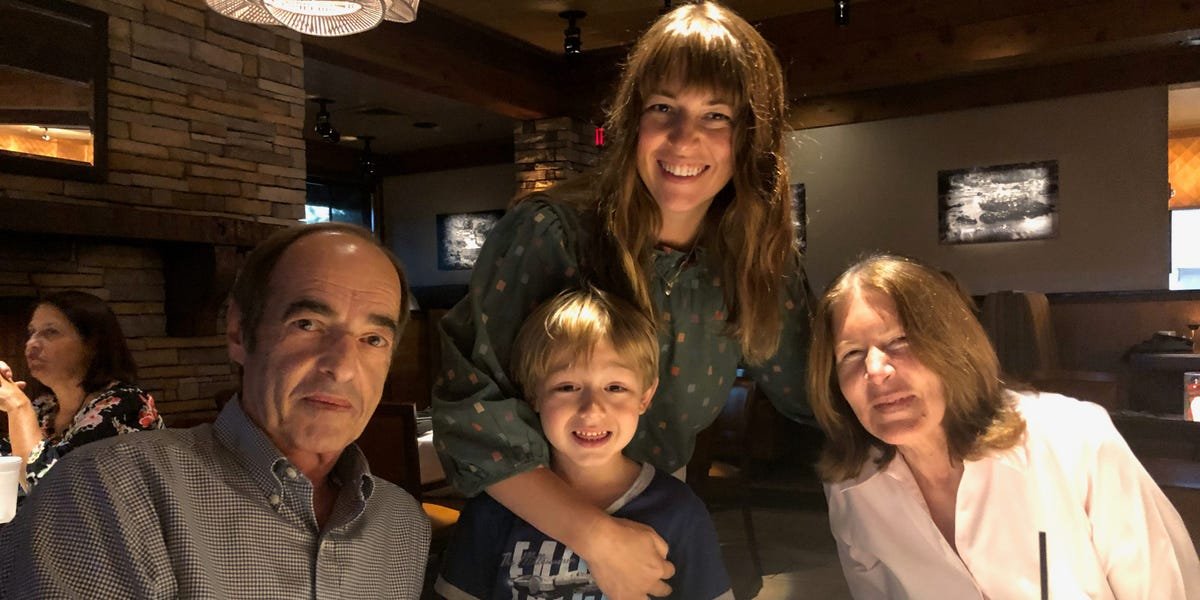
Sitting across from the funeral director, I held my husband’s hand. I needed to feel something real while my body moved between sadness and shock. I glanced at my mom to steady her and at my husband for support. There was one person noticeably missing from our group: my dad.
The day before, I wouldn’t have guessed I’d be spending my afternoon at a funeral home. I had talked to my dad that night and made plans for our weekly dinner. When I hung up the phone, I had no clue that was the last time I’d speak to him. There was no inner hunch that doom was on the horizon, and nothing that said he wasn’t feeling well. So, the next morning, when the ER doctor told my mom, husband, and me that they tried to revive him and failed — I didn’t know how to process the information. Dying of a heart attack made no sense. I thought we had plenty of time.
Throughout my life, we had relied on him to answer the hard questions, and we desperately needed him now. It had only been three hours since his unexpected passing, and here we were planning his funeral. I had no idea what he wanted.
He was healthy and active
I recall sitting at my parents’ dinner table with my then-9-year-old son. He drank his milk while my dad gestured to the desk behind him. The white stack of papers (the size of a small novel) stood out against the stack of magazines. “Do you want to read my will?” my dad asked with a wink.
The author’s dad was healthy and active before he died.
Courtesy of the author
I paused.
Not really what I’d call an uplifting dinnertime read. At 71 years young, he was active and in good shape — a recent retiree ready to travel and spend time with his grandkids. I didn’t want to think about his potential decline — my dad was invincible.
He never caught the colds and stomach flus I brought home from school. He rarely missed work, and I figured I wouldn’t have to deal with this anytime soon. My grandparents lived well into their 80s — my great-grandmother until 100. I did the quick math — that was at least another 10 years or more.
I politely declined the read, telling him there’d be plenty of time to cover that another day. “That’s all right,” he began with a smirk,” I fell asleep when I tried to proofread it.” And that was that. There was no talk of caskets or whether he preferred The Beatles or the Rolling Stones to be played at his funeral.
No reason to discuss his death when he was so full of life. That night, we finished our hamburgers, and his will stayed on the desk, gathering dust, for the next year. And then time ran out.
Not knowing what my father wanted made it hard to grieve
This memory ran through my mind as I tried to answer the questions the funeral director asked. It was hard to concentrate with this huge lump in my stomach. Mostly, I wanted to cry and run away. Even hiding under the covers right now sounded like a good option.
I concentrated on the warmth of my husband’s hand and answered some basic questions, such as where my dad was born and his age. I failed when asked for his Social Security number. My mom tried to take over, but she was so distressed that her answers were slow and hard to access. I wanted to talk to my dad. I wish I had. This would be so much easier.
Looking at my husband, I immediately thought about my son sitting in a similar seat for us. My shoulders tensed. My tears started again, but this time because I imagined an older version of my kid stumbling through unknown answers with no space to feel his feelings. I did not want this overwhelming ordeal for him. If I could make it easier or eliminate this step completely, I would.
My husband and I made plans so my son doesn’t have to
Later that night, when my husband and I had a quiet moment alone, I told him I wanted to write out our death details for our son. He looked surprised and whispered, “We have plenty of time.” I’m sure that was meant to reassure me, but it was exactly what I said to my dad not that long ago. My mom heart would do anything to protect our son’s space to grieve. I wanted cozy childhood memories to comfort him when one of us couldn’t — not images of his mom or dad in a casket.
A few weeks later, as I processed my dad’s passing, my husband and I talked about our own. We created a checklist of what we wanted, including which funeral home and cemetery to contact. My husband and I added doodles and love notes to the list and made sure our will was in order, too. Instead of freaking my 9-year-old with more morbid information, we told trusted family members where to find all the papers. Fingers crossed, it will sit in my desk drawer gathering dust for many more years to come.
SpaceX is planning a secondary share sale, according to an internal message to employees seen by multiple outlets, which would value the company at $800 billion, reclaiming the top spot among the world’s most valuable private companies from OpenAI.
OpenAI executed its own secondary share sale in October, valuing the company at $500 billion.
The letter to employees also says SpaceX is exploring an initial public offering to “raise a significant amount of capital,” The Wall Street Journal and other outlets reported. It would be the largest IPO in history.
“The thinking is that if we execute brilliantly and the markets cooperate, a public offering could raise a significant amount of capital,” SpaceX Chief Financial Officer Bret Johnsen told staff in the December 12 message.
Musk also hinted at an IPO earlier this week.
After journalist Eric Berger published an op-ed arguing that SpaceX is likely to go public soon, Musk replied, “as usual, Eric is accurate.”
The company is aiming to raise more than $25 billion through an initial public offering, a move that could push its valuation above $1 trillion, Reuters reported.
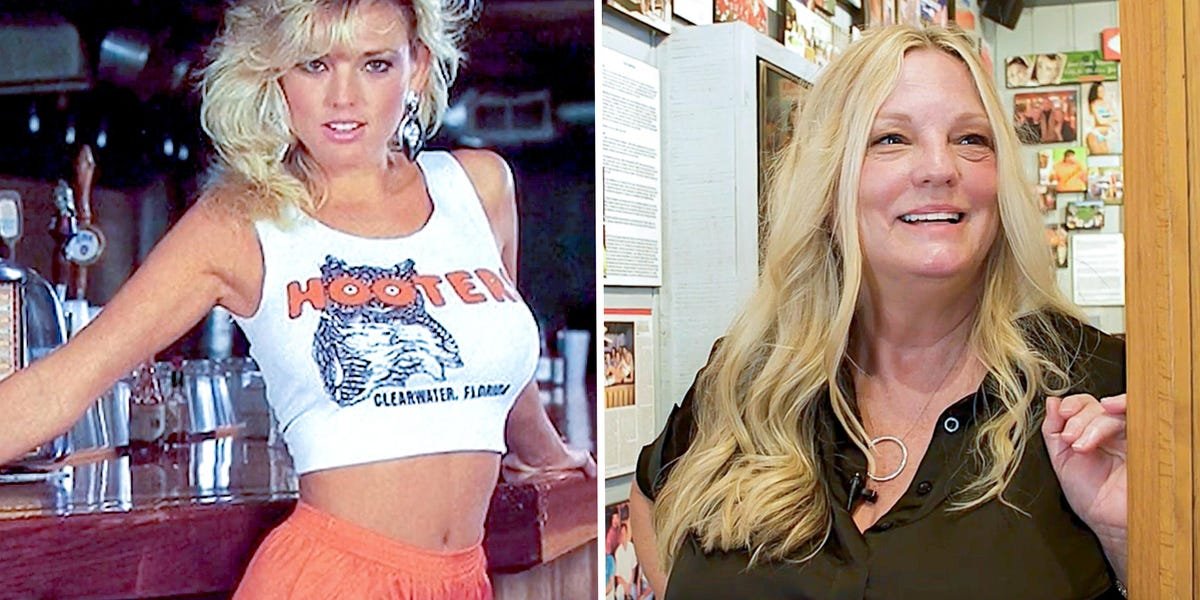
This as-told-to essay is based on conversations between Business Insider’s Liz Rowley and Jess Orwig with Lynne Austin, 64, the original Hooters Girl and a 42-year veteran of the company. It has been edited for length and clarity.
I’ve been proud to be the original Hooters Girl since day one, when we didn’t even know we would be what we are today.
I got involved with Hooters in 1983. I was 22, working as a telephone operator and doing bikini contests as a side gig. After winning a contest on Clearwater Beach, the secretary of Ed Droste, one of Hooters’ founders, approached me and said I’d be a perfect billboard girl for a restaurant that Ed and his partners were ready to open.
Photo of Lynne Austin winning the bikini contest that got her the gig as the original Hooters Girl.
Steven Nye / Business Insider
I thought, “I don’t even know what a billboard girl is.” Instead, I told her, “Sure, OK.” I took his card, went home, and forgot all about it. Two months later, I was driving to another bikini contest, and I saw a construction sign: “Coming soon: Hooters.” I made a hard right toward the parking lot, and that turn changed my life.
Watch Lynne, Ed, and other famous Hooters names recall the early days and how the company has evolved over more than four decades:
I initially scrubbed fridges
I was totally into the idea of being the Hooters Girl, wearing the uniform, and posing for pics. What I wasn’t so wowed by was the idea of quitting my job and becoming a waitress, but Ed persuaded me with talk about “world fame,” so I figured, why not give it a shot?
Little did Austin know just how famous she’d become.
Steven Nye / Business Insider
I quit my job in July 1983 because Hooters was supposed to open around the first week of August. Then September rolled around, and we still weren’t open due to some licensing issues, and I was getting nervous because I wasn’t making any money.
I told Ed I needed a job, and he pointed me to one of the owners, Gil DiGiannantonio, who told me to come down and they’d find something for me. He put me to work scrubbing refrigerators, stoves, and other kitchen appliances for the restaurant for $5 an hour until we finally opened in October. That was a long September.
The Hooters I first started working at was very different from today’s establishments
The original Hooters restaurant in Florida in 1984.
Gandy Photographs
The atmosphere at Hooters in the beginning was very different from what it is now. People didn’t know what to expect when they came in, and honestly, we didn’t know what to expect day to day.
I remember one time Gil told me we had to let a waitress, Brenda, go because she was wasting too much product. She would grab the paper towels on a spool from the back and drag them all the way through the restaurant if someone asked for a napkin. I was like, “She’s making people laugh. This is what we are, we’re fun! Please, don’t fire her.” He didn’t.
Austin became the face of Hooters.
Hooters
It was barely controlled chaos, but it was a blast. That said, we initially weren’t generating any revenue. I was pulling double shifts, sometimes three in a row, just to scrape by. We were winging it, doing anything we could to get customers.
Then, around spring break of ’84, about six months after opening, it was like a switch. We were suddenly seeing hourslong lines out the door. It was something else. People couldn’t get enough. I’d never seen a meteoric rise like that before or since.
I’d never seen such a meteoric rise
A capsized boat that became a publicity stunt for Hooters.
Hooters
Hooters’ success is largely due to its off-the-wall marketing. Ed was the brains behind a lot of it, willing to do anything and everything to try and get publicity.
We’d be at the restaurant at 5:30 a.m. to pick up a platter of freshly prepared wings and bring it to the local radio stations for a chance to promote ourselves on the radio. We got a lot of doors shut in our faces, at first.
A young Ed Droste painting “Hooters” on the side of a capsized boat.
Hooters
Ed and Brenda — yes, paper towels Brenda — painted “Hooters” in bright orange on a capsized boat along the busy Courtney Campbell Causeway connecting Tampa to Clearwater.
Ed would even stand outside the restaurant in a chicken suit to try and get people in. We posted a billboard of me in the now-iconic orange shorts and white t-shirt. I also modeled for Playboy, which got us more publicity.
A recent photo of Ed Droste sitting next to the chicken suit he used to wear.
Steven Nye / Business Insider
It was all marketing.
I had no idea that the billboard of me would bloom into what the brand has become. Eventually, it felt like my face was everywhere — on taxis and the side of the semis that brought in our food. It never ceased to thrill me.
Hooters is my family
As we grew and expanded, I had more opportunities, such as helping to open new restaurants and contributing to the annual calendar and pageant.
Yes, sex appeal is part of the Hooters concept.
Business Insider
A couple of my favorite moments were when I dropped the flag on the Hooters 500 and when I marched on Washington in 1995, protesting the sex bias case against Hooters.
Yes, sex appeal was part of the Hooters concept. However, Hooters and its waitresses are so much more than the restaurant. After 42 years, they’ve become my family.
The Hooters Girls are my sisterhood. Some of those women were my bridesmaids and attended the birth of my children. We’ve been each other’s support system through highs and lows, and I still stay in touch with some of them, including Brenda.
Early photo of four Hooters women.
Hooters
I worked as a waitress and guest bartender for Hooters for about seven years until I branched out and took on other roles, including in radio and local TV, where I continued to promote the brand.
Looking back, I hope that I was an integral part of shaping Hooters. I still participate in events, such as judging the annual pageant and selecting the calendar. It has been the ride of my life, besides, of course, being a mom to my four kids.
Gen Z is embracing one decades-old phenomenon: Trading card games like Pokémon.
Collectible card games were the most-purchased secondhand product category for Gen Z in the US on eBay so far this year, according to data from the e-commerce platform.
The trend was especially clear among Gen Z men, who collectively shifted spending from electronics to trading cards and other collectibles, according to eBay. Trading cards were also the top secondhand sales category among Gen Z women on the platform, followed by books and cameras.
While trading cards for franchises such as Pokémon and Yu-Gi-Oh! initially became popular with kids and teens in the US in the late 1990s and early 2000s, the data shows that the cards remain popular, even among those who were born as they were taking off.
Part of the enduring popularity is because those people who grew up with trading cards are now passing the interest on to their own kids, Aaron Ottensmann, a 29-year-old who runs card sales business SassyTCG, told Business Insider.
“You’re starting to see people like me having kids, and they’re picking up starter decks and playing with their kids,” Ottensmann said.
Aaron Ottensmann sells collectible trading cards through eBay.
Aaron Ottensmann
While Ottensmann said he sources cards from distributors, the business has become competitive enough that some newer sellers buy cards at retailers like Walmart and Costco, then resell them.
Other customers are after high-dollar cards, with some turning to trading cards as an alternative to investing in the stock market.
In early December on Ottensmann’s eBay shop, shoppers could find about two dozen cards or packs of cards priced over $1,000. His most expensive sale over the past year, a set of 127 early Yu-Gi-Oh! cards, sold for about $75,000 through eBay.
Trading cards are one part of the broader secondhand sales market, which eBay said is expanding in a report released last month.
About 82% of survey respondents said they planned to spend more on secondhand items this holiday season than they did in 2024, according to the company’s Recommerce Report.
Shopping secondhand has gained popularity this year, especially as President Donald Trump’s tariffs have raised the price of some goods and added costs to items ordered from outside the US.
Do you have a story idea? Reach out to this reporter at abitter@businessinsider.com.
The most valuable EV company in the world is based in the US, but Americans are buying fewer battery-powered vehicles.
EV sales in North America fell 1% this year compared to 2024, according to data from supply chain data firm Benchmark Mineral Intelligence. The dip comes as the US has faced a combination of policy changes, tariffs, and supply chain upheavals this year.
There were 1.7 million EVs sold in North America between January and November — far behind the 11.6 million sold in China and below the 3.8 million sold in Europe.
US automaker execs have been sounding the alarm bells on sales. In September, Ford CEO Jim Farley predicted that the EV market share in the US would nearly halve to around 5% in the near term.
Benchmark Mineral Intelligence cited the $7,500 EV tax credit ending in September as a reason for “subdued” sales in the US, along with the Trump administration relaxing rules for automakers designed to encourage the transition to EVs and hybrids.
Elon Musk’s Tesla has had a rocky year in almost all of its biggest markets, but it weathered the October drop-off better than its rivals, according to separate data from Cox Automotive. The world’s most valuable car company, however, is facing a race against time to avoid a second consecutive year of declining sales.
Other US EV makers have been hit by slowing demand, with GM and Rivian both announcing layoffs in recent months.
China’s overall EV sales were up 19%. While BYD, the country’s biggest EV maker, hit a rough patch in its home market amid rising competition from local startups, it set a record for EV exports in October.
Globally, EV sales were up 21% compared to last year, the Benchmark Mineral Intelligence data showed.
“Overall, EV demand remains resilient, supported by expanding model ranges and sustained policy incentives worldwide,” said Charles Lester, data manager for Rho Motion, the Benchmark subsidiary behind the report.
This story is available exclusively to Business Insider
subscribers. Become an Insider
and start reading now. Have an account? .
Tesla has introduced a wave of incentives to shift as many EVs as it can before the end of the year.
The incentives include free paint jobs and financing deals.
Elon Musk’s automaker is racing to avoid another decline in annual sales after a difficult year.
Tesla is piling on incentives for buyers as it aims to end a rocky year on a high.
Elon Musk’s automaker has introduced a smorgasbord of discounts and deals in the US, with Tesla facing a race against time to avoid a second consecutive year of declining sales.
Tesla is offering 0% APR financing for up to 72 months on select Model Y Standard purchases and is also advertising the option to lease a Model Y without a down payment on its website.
Buyers can also trade in a gas car to receive 2,000 miles of free supercharging, and Tesla is offering complimentary upgrades, including premium paint jobs, tow hitches, and 19-inch “Nova” wheels valued at up to $1,500 on select inventory vehicles.
Tesla often offers more incentives toward the end of the year. But this time, the company is racing to avoid another year of declining sales, following Tesla’s first-ever year-over-year fall in sales in 2024.
Repeating that pattern would provide more evidence that Tesla’s momentum is stalling after years of rapid growth.
In October last year, Musk predicted Tesla sales would grow 20-30% in 2025. Tesla needs to sell 555,000 EVs in the final three months of the year — more than it’s ever sold in a quarter — just to match its sales figures from last year.
That’s a tall order, with Tesla facing difficulties in all its main markets. The Cybertruck maker’s sales have cratered in Europe amid backlash over Musk’s politics. In China, Tesla has been squeezed by a wave of competition from local rivals.
Tesla also faces major headwinds in the US after the Trump administration scrapped the $7,500 tax credit for new EVs in September. Tesla’s US sales fell 35% between September and October after the tax credit disappeared, according to data from Cox Automotive.
It comes as Musk has increasingly shifted Tesla’s focus toward AI and robotics. The billionaire has described the steering wheel-less Cybercab and Tesla’s Optimus robot as the future of the company, with both set to enter production next year.