How-a-lesser-known-Swedish-private-equity-giant-plans-to-win.jpeg

How a lesser-known Swedish private equity giant plans to win over US retail investors

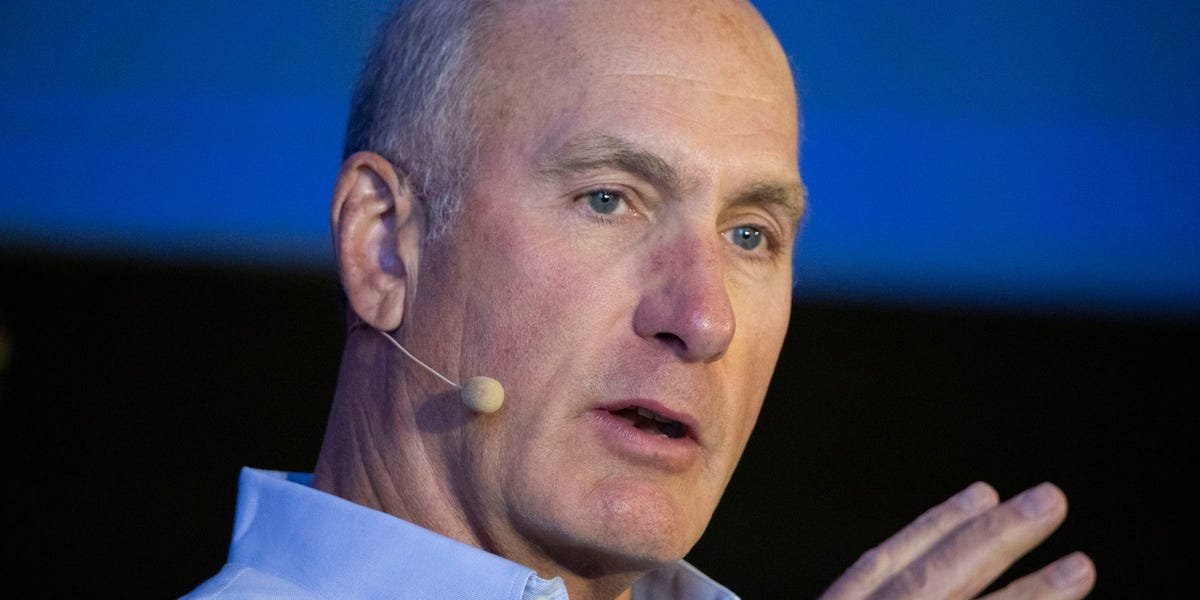
EQT is one of the largest private equity investors in the world — yet most wealthy Americans have barely heard of it. That’s the uphill battle facing Peter Aliprantis, the Swedish firm’s head of private wealth in the Americas, as EQT tries to pitch in a market dominated by Wall Street brands with plenty of CNBC airtime.

“Most people in the United States are not familiar with us, and the way we say it, we’re the best-kept secret,” Aliprantis told Business Insider.

Private Equity International ranked the firm as the second-largest private equity firm, with $312 billion of assets under management. It raised more than $113 billion in third-party private equity capital from 2020 to the end of 2024, putting it ahead of Blackstone, and just behind KKR so far this decade.

Like many of its competitors, it’s turning to private wealth as the newest source of growth. The industry’s change of fundraising focus comes as private equity firms are slow to return cash to investors, and over-allocation among institutional investors means that institutional funding is slowing.

But the same reasons that the firm isn’t as well-known in America are actually an advantage, Aliprantis said.

In a world where debt-heavy buyouts are proving more difficult and an increasingly concentrated American private market is pushing some to invest internationally, a global industrialist approach can be attractive.

EQT has returned capital at a normal pace, with $23 billion in distributions for the year ending June 2025. The firm has also been building a private wealth business for the past four years, which accounts for 10% of its current assets. The firm has a goal to reach between 15-20% during its current $100 billion fundraising cycle, according to its second-quarter report.

Aliprantis walked Business Insider through the firm’s pitch to financial advisors and private wealth distribution networks, explaining why its global reach is a significant advantage in 2025.

The key for EQT, Aliprantis said, is for the firm to offer individual investors the “exact same deals” it gives institutional investors.

EQT’s industrialist, international advantage

EQT was founded in 1994 as a spin-off from industrial holding company Investor AB, but the firm’s history stretches back to Sweden’s Wallenberg family. The Wallenbergs, called the “Rockefellers of Europe,” have created an empire of business holdings including massive stakes in Sweden’s biggest firms, like ABB, AstraZeneca, or Saab.

“The Wallenberg family has a 160-year heritage of owning and developing companies,” Aliprantis said. “We’re not financial engineers. We don’t add a lot of leverage to what we do, and we’re very, very different from what a lot of our peers on Wall Street are doing.”

Aliprantis’s comments echo a larger change in the industry, which is running out of easy money-making deals and cheap financing and now has to extract returns by actually building stronger companies.

But the firm’s biggest advantage, Aliprantis said, is its global nature.

Only 35% of its assets are based in North America, and the firm has 26 global offices where its deal teams invest in local private equity, infrastructure, and real estate deals.

“A lot of our colleagues based in New York will fly deal team partners over to different places around the world to do the deal and then get on a plan and fly home,” Aliprantis said. “Our deal teams are pretty much based in the locations where they do deals.”

This means the firm “gets the call” when local companies are looking to sell, and keeps them from larger “bake-offs” where the price might be bid-up.

This has also meant the firm can continue to provide distributions to its clients even if the market is slow in one locale.

“If you’re a US-based domicile private markets firm that has 70 to 80% of your assets in the US, guess what? If the US IPO market is slowing, you’re going to have a problem exiting,” Aliprantis said.

“Here in the US, it’s always been too much money chasing too few deals. You know what? That’s a US thing,” Aliprantis said.” If you go to Europe and you go to Asia, it’s the opposite.”

For example, Bain estimates there’s about $480 billion in dry powder for European private funds, including venture capital, compared to Pitchbook’s $914.5 billion for US-focused private equity firms, not including VC. Apollo’s Marc Rowan also recently told the Wall Street Journal that as an industry, they find themselves short ideas rather than capital.

Aliprantis said investors’ biggest reason to diversify away from the US market is its concentrated bet on AI.

“Their concern is that the Mag Seven is roughly 37% of the S&P right now, and valuations are stretched,” Aliprantis said. “Is AI really going to work? Is it not? How additive is it going to be to the bottom line? We don’t know.”

How to keep retail investors happy

Across the spectrum, Aliprantis said, the “biggest concern” is that retail investors are getting a set of less attractive deals, while institutional investors are getting a “separate set of deals.”

Aliprantis said that the firm’s six evergreen vehicles are composed of the “exact same deals” that its institutional clients invest in.

The key to doing that, and to being a responsible investor or retail capital, is “size and scale,” Aliprantis said.

Size also helps with the balance sheet necessary to launch a private wealth business. It can cost millions of dollars to hire the necessary staff to start selling to financial advisors and other wealth management channels before any revenue is returned to investors.

EQT was able to use its balance sheet, as a public company in Sweden, to build its private wealth team and now has 70 private wealth professionals globally, with 20 based in the US.

That’s not to say that smaller funds won’t succeed, but it will be much harder, Aliprantis said. With so many investors competing for retail capital, consolidation is inevitable.

“The race is on in the industry right now,” Aliprantis said.


Source link

Women-at-the-top-are-exhausted-and-burned-out-according.jpeg

Women at the top are exhausted and burned out, according to a McKinsey and Lean In report

Women are hitting the top of the corporate ladder only to find something waiting for them: exhaustion.

According to a report published Tuesday by McKinsey and LeanIn.org, a nonprofit founded by Sheryl Sandberg, burnout among senior-level women is the highest it has been in the past five years.

Around 60% of these women said they have frequently felt burned out at work in the past few months, compared with 50% of senior-level men, per numbers from the “Women in the Workplace” 2025 study.

Women who are newer to leadership roles are feeling the strain more acutely. Among senior-level women who have been at their companies for five years or less, 70% reported frequent burnout, and 81% said they are concerned about their job security.

“These high levels of concern align with research that shows women often face extra scrutiny when they’re new to organizations and have to work harder to prove themselves,” the report said, adding that Black women in leadership face exceptionally high burnout and job insecurity. “In contrast, when women and men in leadership have longer tenures, their levels of burnout and job security are quite similar.”

The report, an annual study of women in corporate America, surveyed 9,500 employees across 124 companies between July and August. The study also includes interviews with 62 HR executives and company-reported data from 124 organizations that together employ about 3 million people.

LeanIn.org launched a study with McKinsey in 2015 to track how women progress through the corporate pipeline and where companies fall short. The group is named after Sandberg’s 2013 book “Lean In,” which sparked a national debate about women’s ambition, leadership, and workplace equality.

This year’s findings paint a bleak picture for women at the top. Senior-level women who are hesitant to advance their careers say they see a steeper path forward compared to their male counterparts. Eleven percent of senior women who don’t want to advance say they don’t see a realistic route to promotion, compared with 3% of senior men. And 21% say more senior-level people look burned out or unhappy, nearly double the share of men who say the same.

It’s not because women are less committed — the report found that women and men are equally locked in. What differs is the desire to keep climbing, per the report.

The data shows a clear ambition gap: 80% of women want to be promoted to the next level, compared with 86% of men. That gap is widest at the beginning and the top of the pipeline — 69% vs. 80% at the entry level, and 84% vs. 92% among senior leaders.

This is the first time in the report’s 11-year history that women have shown lower interest in promotion than men, it said.

This gap in ambition to advance falls away “when women receive the same career support that men do,” the report added. In other words, companies are responsible for creating the burnout problem for women.

“This is only happening in the companies that aren’t doing the right thing when women get the full support and the same stretch opportunities. They’re not leaning out at all,” Sandberg said in a Tuesday interview with Bloomberg Television.

“What’s happening is that women face more barriers at every level of the career,” she added.

More companies are cutting back on DEI and support for women

Even as companies say they are committed to diversity and inclusion, at least one in six have reduced the teams or resources behind those efforts, the report said.

About 13% of employers have pulled back or eliminated women-focused career-development programs, and another 13% have cut formal sponsorship programs, which play a key role in helping employees advance, it added.

“Women overall are less likely to have sponsors — and this really matters. Employees with sponsors are promoted at nearly twice the rate of those without,” the report said.

The report also found that companies are rolling back remote and flexible work options, which can hinder women’s ability to stay and advance in their careers. One in four has scaled back remote or hybrid work arrangements, and 13% have reduced flexible working hours over the past year.

At the same time, the report said that women who work remotely most of the time are “less likely to have a sponsor and far less likely to have been promoted in the last two years than women who work mostly on-site.” Meanwhile, men receive more similar levels of sponsorship and promotions regardless of their work arrangement.

At the entry level, a stage where advocacy and visibility are essential, women are also less likely than men to receive stretch assignments and other opportunities, the report added.

Last year, the “Women in the Workplace” study found that more women were advancing to senior leadership roles. By 2024, women held 29% of C-suite roles, up from 17% in 2015.

However, progress fades at the entry and management levels, per the report. “For every 100 men promoted to manager in 2018, 79 women were promoted. And this year, just 81 women were,” it added.


Source link

Rivians-CEO-said-theres-a-shocking-lack-of-choice-for.jpeg

Rivian’s CEO said there’s a ‘shocking lack of choice’ for EVs in the US

Rivian’s CEO and founder, RJ Scaringe, said the US needs a lot more cheap electric vehicles.

Speaking at the Fortune Brainstorm AI conference in San Francisco on Tuesday, Scaringe said a lack of choices was the reason for low EV penetration in the US.

He said that electric vehicle adoption in the US, at 8%, is significantly lower than in the rest of the world.

“I really think the constraint isn’t the demand side, I think it’s the supply side,” Scaringe said. “I think there’s a shocking lack of choice, that there are much better choices in Europe. And by far, there’s the most choice in China.”

He said that for consumers interested in EVs, there were “well under five great choices” at a price point close to the average price of a new car in the US.

He added that, within a price range of $50,000, there was only one compelling choice of EV: a Tesla. In October, Tesla unveiled its most affordable models to date: the $36,990 Model 3 Standard and the $39,990 Model Y Standard.

“And that’s not a reflection of a healthy market with lots of choice,” Scaringe said. “If you think of it as a consumer, you have 300 different internal combustion engine choices at that price or lower, and you have maybe one highly compelling EV choice.”

Rivian is working to provide cheaper EV alternatives. It is gearing up to start production on its cheapest EV to date, the R2 model, a $45,000 SUV.

In the interview, Scaringe also said he agrees with the Trump administration’s push to bring manufacturing back to the US.

“I think the push to industrialize in the United States is appropriate, and it’s something we’re very aligned with the administration on,” he said.

The US EV industry comprises Rivian, Tesla, Ford, General Motors, Hyundai, BMW, and Kia, among others.

Brands like Volkswagen, BMW, Mercedes-Benz, and Tesla dominate the EV market in Europe. Chinese brands like BYD, NIO, and MG also sell on the continent.

Meanwhile, the EV industry in China is seeing fierce competition. BYD, Tesla’s biggest global rival, saw its sales fall 12% in October compared to the same period a year earlier, as it faces a tough fight from local EV startups Xpeng, Nio, and Leapmotor.

Other players, such as smartphone manufacturer-turned EV maker Xiaomi, are also seeing success in the country with strong sales.


Source link

ATT-CEO-says-he-made-a-mistake-in-how-he.jpeg

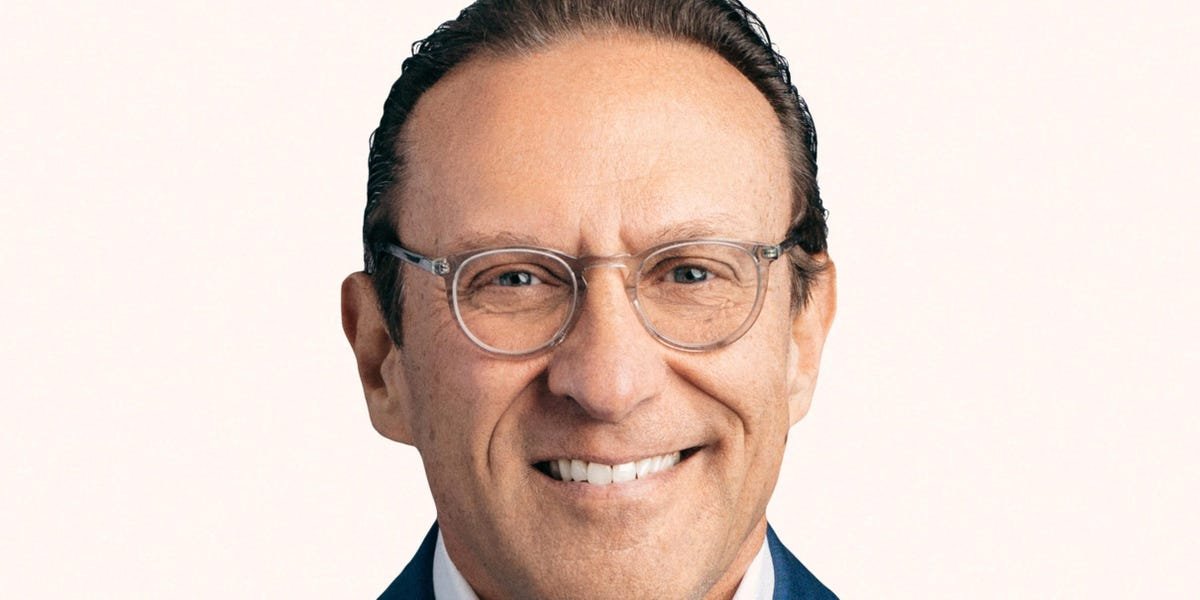
AT&T CEO says he made a mistake in how he went about fixing company culture — but the viral memo wasn’t it

CEO John Stankey said he made some missteps in addressing company culture at AT&T — and shed some new light on his internal memo that went viral.

The lengthy memo, which was first reported by Business Insider in August, described how the company was moving to a “more market-based culture,” setting off discourse about the state of workplace loyalty.

Stankey gave some insight into the goal behind the memo during a conversation at the Wall Street Journal CEO Council Summit on Tuesday.

When asked to name a mistake he’s made, Stankey said he was too slow to tackle the “culture evolution” that was needed. He said he put it among several areas of focus for the company and that instead he should’ve put it at the forefront and forced specific actions to make it happen.

Alan Murray, president of the WSJ Leadership Institute, suggested that was why Stanley sent that memo this year, rather than sooner.

“The memo shouldn’t be over-rotated on. It’s one of a series of steps in trying to put a framework out there and remove excuses for leaders to lead,” Stankey said, adding the memo gave context on the framework he was building for the business.

“That memo outlined my point of view on it, and it gives leaders that want to lead all the air cover in the world they need to go and execute around that framework,” he said.

AT&T has undergone a number of changes as a company in the past year, including a return-to-office mandate of five days a week.

In the memo to employees, Stankey effectively said they should get on board with changes to the company culture, or get out.

“We run a dynamic, customer-facing business, tackling large-scale, challenging initiatives,” Stankey said in the memo. “If the requirements dictated by this dynamic do not align to your personal desires, you have every right to find a career opportunity that is suitable to your aspirations and needs.”

At the event on Tuesday, Stankey also outlined how AT&T is pushing employees to adopt AI. He said the company has tutorials and other educational tools for employees to upskill with AI, and that he’s paying attention to who is using them.

“I want to see who’s building their skill set, where they’re building, and this is just the next set of skills that people are going to have to have,” he said.


Source link

Walmart-just-doubled-down-on-the-Christmas-delivery-wars.jpeg

Walmart just doubled down on the Christmas delivery wars

As Christmas approaches, Walmart is giving shoppers something pretty much everyone can use: a little more time.

Imagine you’re just arriving to Christmas Eve dinner with your in-laws and your niece says she’s been wanting a talking plush Bluey doll.

You find it in your Walmart app, place the order in a tap, and by the time dessert is ready, your gift is at the doorstep. (You can even get the whipped cream you forgot to bring for the pie, too.)

Such last-minute shopping options are becoming increasingly possible as major retailers make a big push into ultrafast delivery.

Case in point: Walmart told Business Insider exclusively that its shoppers will be able to place store-fulfilled express delivery orders as late as 5 p.m. local time on Christmas Eve — a full hour later than last year.

“More people are using Express Delivery to get their items faster, and December is when it truly shines,” Walmart’s chief e-commerce officer David Guggina said in a statement. “No one delivers for customers like Walmart, from the first Holiday deal to the final gift on Christmas Eve.”

The retail giant can now reach 95% of US households in three hours or less, and the company has said that more than a third of shoppers opt to pay extra for three-hour-or-less delivery.

Those express delivery numbers jump by 2.5X in December compared with the year’s average, the company said.

The company also told Business Insider that it recently rolled out a new “Get it Now” option in the Walmart app, which shows shoppers an estimated number of minutes to receive an item, and lets them place the order in one tap.

Walmart said earlier this month that it fulfilled its fastest Black Friday order in 10 minutes, with big increases in both the volume and speed of deliveries fulfilled from its stores.

But Walmart isn’t the only player in the ultrafast delivery game: Amazon and Target are also racing to offer last-minute fulfillment options on Christmas Eve.

Target says customers can get orders within two hours via curbside or in-store pickup, or opt for same-day delivery for a $9.99 fee, with stores closing at 8 p.m. on Christmas Eve.

And Amazon will show an “Arrives before Christmas” message on items that can be delivered as late as Christmas Eve via delivery or one of the company’s 25,000 pickup locations.

Correction, December 9, 2025 — An earlier version of this story misstated the delivery category that more than a third of Walmart shoppers opt to pay for — it is three-hours-or-less delivery.


Source link

Heres-how-the-worlds-most-expensive-color-is-made.jpeg

Here’s how the world’s most expensive color is made

Ultramarine blue, or “true blue,” was once more valuable than gold. In 1824, a synthetic version called French ultramarine made the color more accessible. But ultramarine blue made from real lapis lazuli can sell for over $60 an ounce today.

Lapis lazuli is a bright blue semiprecious stone mined primarily in Afghanistan. When Business Insider visited the world’s largest lapis lazuli mine there, its future was up in the air. So, how is the world’s most expensive color made, and why are people paying for it?


Source link

I-went-on-a-Mediterranean-cruise-in-the-winter-and.jpeg

I went on a Mediterranean cruise in the winter and was pleasantly surprised. It’s the best season for this kind of travel.

When I found out that Windstar Cruises had begun winter sailings to the Mediterranean, I couldn’t book fast enough.

I’d visited France, Italy, and Greece during the summer months before, and I had grown increasingly disillusioned each year as Mediterranean Europe became more crowded, expensive, and uncomfortably hot.

It seemed like a January cruise would help me avoid a lot of my past grievances, so I booked Europe’s Winter Riviera eight-day itinerary on Windstar, sailing from Barcelona to Rome with stops in Nice, Genoa, and Livorno, the port city for excursions to Florence, Pisa, and Lucca.

After a week of seeing these iconic destinations in a whole new light, I went home with the conviction that winter is the absolute best time to take a Mediterranean cruise.

I loved feeling like I had the Mediterranean to myself


A wide shot of the Colosseum.

There weren’t too many crowds when we visited the Colosseum in Rome.

Rebecca Deurlein


Rather than stumbling through hordes of tourists filling Barcelona’s streets, trying to find towel space on a beach in Nice, or waiting hours in lines to enter the Vatican museums, I felt like I had a lot of memorable places to myself.

That’s probably because I visited during what Windstar calls the “Local Season,” the time between late fall and early spring, when this area typically welcomes far fewer tourists.

Fewer crowds and shorter lines meant I could see more of each city I visited throughout the cruise. I took all the time I liked exploring each place and capturing it all without having to erase throngs of people from my photos.

On one excursion, my small group climbed the medieval village of Èze on the French Riviera — a popular spot often filled with cruise passengers and tourists — and never saw another person. I loved taking in the sweeping views of the sea, unobstructed by massive cruise ships.

In Florence, no more than 20 people circled Michelangelo’s famous David statue. And in Rome, my husband and I purchased tickets to the Colosseum 15 minutes before our scheduled entry time and were allowed to enter even earlier.

We felt like VIPs with special access to the best of the region — quite different from the summer months when we had to wait for hours just to get close to an attraction.

Though we had to adapt to the weather, the special winter experiences were worth it


A wide shot of a port in Nice, France.

The weather was chillier than what we were used to at home, but it was easy to adapt.

Rebecca Deurlein


We may have escaped the sweltering heat the Riviera is famous for in the summer, but we did experience some chilly weather.

By our hometown of Houston’s standards, it was cold, with morning temperatures dipping into the 40s and afternoons hovering in the 50s — and we were not prepared. Luckily, hats and scarves were readily available and cost about 10 Euros, so we managed.

And, we had to give up some usual summer fun, including relaxing on the ship’s deck, which meant spending a bit more time indoors.

I really didn’t mind, though, especially since sailing during this season came with some special seasonal activities and spots.

Some winter itineraries include cities Windstar only visits (or spends extra time in) during winter, when there are typically fewer crowds and ships.

Another perk of cruising during the winter is the opportunity to experience seasonal events and activities.

For example, while docked in Nice, France, cruisers can travel less than an hour from the port to visit Menton’s Fête du Citron (Lemon Festival), held annually starting in mid-February. The two-week festival features giant floats and structures made of fruit, as well as performances, parades, markets, and more.

All in all, I think winter is the absolute best time to visit

As an added bonus, our winter sailing was hundreds of dollars cheaper than a similar one at peak season in June and July.

Of course, if your dreams of the Mediterranean include sunbathing on the beach or swimming in the sea, this isn’t the vacation for you.

But for me, the positives far outweighed the negatives. We got to see so much more than we could have during the summer months, without the crowds — and for that, I’ll pack a cozy hat and gloves any day.


Source link

Will-Amazon-and-Walmarts-push-for-30-minute-delivery-actually-pay.jpeg

Will Amazon and Walmart’s push for 30-minute delivery actually pay off? We debate.

The ultrafast delivery wars are heating up.

Amazon said last week that it’s testing a 30-minute delivery option in Seattle and Philadelphia, while Walmart said it managed to fulfill a Black Friday order in 10 minutes and is expanding its drone service to the Atlanta area.

The race is on to get online orders to shoppers’ doorsteps as fast as possible, but we can’t help but wonder as companies pour money into the infrastructure to support it: Is 30-minute delivery overhyped or under-appreciated?

Business Insider’s senior retail reporters Alex Bitter, who primarily covers gig work apps and groceries, and Dominick Reuter, who mainly covers big box stores, sat down to hash it out.

Dominick: I’d say 30-minute delivery is the future. Are you saying it’s an already-failed past?

Alex: The fundamentals are not there. Unless there’s some massive other piece that we’re not seeing, I don’t get why Amazon is doing this.

Dominick: I definitely think it only works as part of a larger strategy where this service builds and strengthens customer relationships. It does not fly on its own.

Alex: A few years ago, we saw some startups try to do something very similar. You had companies like Gorillas — a German grocery delivery concept — pop up to deliver items in 15 minutes.

It was the same pitch: Is there an ingredient or two that you forgot for dinner tonight? No problem. We’ll deliver it to your door, fast.

Now, though, many of those startups either no longer exist or have scaled back significantly. Getir, an ultrafast delivery company from Turkey, left the US. Gopuff is still around and raising money, though reportedly at a lower valuation than it did during the height of the pandemic.

Grocery is already one of the lowest-margin categories in retail. With delivery this fast, you’re making it even less profitable.

To be fair, Amazon has a lot more money and experience than those startups did. But that does not change the fundamental truth that this is a challenging business model.

Dominick: Scale is everything here — the biggest players have a shot at making this successful. Even though it didn’t work out for the startups, their very existence shows the consumer demand for fast service.

But it takes such an astonishing volume of inventory to support that speed of fulfillment. Companies like Amazon or Walmart already have that inventory, which eliminates one of the biggest hurdles to making 30-minute delivery work.

It’s working in China, it’s working in India, and it’s gaining momentum in other global markets. The big challenge in the US is suburbia, but that’s solvable.

Although I will say 15 minutes is wildly unrealistic.

Alex: When we reported on the ultrafast delivery startups a few years ago, an analyst told me that a 30-minute delivery promise is more reasonable than a 15-minute one.

But Amazon already has fairly fast delivery. Not 30 minutes, obviously, but you can get orders from Amazon Fresh or Whole Foods in as little as a few hours.

Also, this is yet another grocery offering for Amazon. It feels like it has too many now. Consider Whole Foods Daily Shop, a small-format grocery store that’s designed for the same kind of fill-in trips that Amazon seems to be targeting with its 30-minute delivery option.

Dominick: When it comes to adding more stores and fulfillment centers, that’s exactly what Amazon needs to be doing, and it needs to get people going to those brick-and-mortar stores and counting on Amazon-exclusive products.

Walmart and Target are proving that having lots of physical locations can get you way closer to making these ultrafast deliveries successful. Walmart has 4,600 stores, Target has 2,000 — that counts for a whole lot.

There are 25,000 Amazon drop boxes, but those obviously can’t contain what’s in a typical Supercenter. Amazon is working on it, though.

Alex: Maybe this is Amazon figuring out how it can compete with Walmart — and Albertsons and Kroger, for that matter — without having the same store footprint. This also puts it in more direct competition with Uber Eats, DoorDash, and Instacart.

Many US consumers live in smaller towns or suburbs. I don’t think 30-minute delivery works well in those areas. People drive themselves to stores — something the retailers love because it’s cheaper for them than making deliveries.

Amazon is not yet in a lot of those areas, like it is in the densest cities in America.

I could see this 30-minute idea working in Manhattan, though people in such densely populated urban areas already have lots of options for a quick grocery run (bodegas, anyone?).

Amazon has been trying for years to boost its market share in grocery. I’m not sure this is it.

Dominick: The last thing I’ll say is I see ultrafast delivery as a key complement to the marketplace strategy that Amazon and Walmart are leaning on.

When customers need something now, that lets the company serve up an ad or some other exposure to the marketplace for a later purchase.

If Amazon and Walmart can get you to check their app first to get that missing ingredient, they could also sell you on some higher-margin product that might take a couple of days to arrive.

Alex: You need toothpaste, onions, and eggs right now, but that Christmas gift you’ve been meaning to buy can come this weekend.

Dominick: That, I think, is the reason it’s going to be these two giants driving this shift: you need to be very big to offer 30-minute delivery in the first place, and then you need to be very big to see any benefit from it as well.


Source link

Kalshis-CEO-compared-his-companys-net-positive-rivalry-with-Polymarket.jpeg

Kalshi’s CEO compared his company’s ‘net positive’ rivalry with Polymarket to Tom Brady and Eli Manning

Kalshi’s CEO says his company’s rivalry with Polymarket has parallels to two sets of sporting legends.

In an episode of the “20VC” podcast released on Monday, Tarek Mansour explained how prediction market rival Polymarket has encouraged his company to work harder.

“What I’m learning over time is that an industry truly becomes an industry when there’s a rivalry, because that rivalry will push you beyond the limits of what you thought you could get to,” Mansour said.

He compared the companies to National Football League quarterbacks Tom Brady and Eli Manning.

“When Tom Brady kind of reflected on that back in the day, he’s like, ‘You know, we were like the most ferocious on the field, and we fought each other,'” Mansour said. “But then over time, he became grateful for that because he realized that without Manning being in there and vice versa, he would have never achieved what he achieved.”

“I think that’s happening in prediction markets,” he added.

Kalshi, founded in 2018, lets users bet on the outcome of events such as elections, sports matches, and economic indicators. Last week, it announced partnerships with media giants CNN and CNBC, and said that it raised $1 billion at a valuation of $11 billion.

Polymarket, its blockchain-enabled competitor, was founded in 2020 and offers similar services. It was last valued at $13.5 billion in November, per PitchBook.

The popularity of prediction platforms has exploded since a legal victory for Kalshi in the US last fall. Now, users can bet on questions ranging from the popularity of Labubu dolls to Elon Musk’s net worth.

Last year, Mansour said in an interview that his employees asked social media influencers to promote memes about an FBI raid on the home of Polymarket CEO Shayne Coplan. On Monday’s podcast, Mansour called the move a “mistake” and said he “made clear to the team: ‘Don’t ever do this again.'”

Mansour also compared the two companies to soccer stars Lionel Messi and Cristiano Ronaldo, and said that it was not a coincidence that the two “greatest” players exist in the same era.

“Without Polymarket, we wouldn’t have pushed our marketing and pushed our product as hard,” he said. “That sort of infighting is going to push both of us to scale this industry and reach heights that we honestly wouldn’t have been able to otherwise, which long-term is actually net positive for the customer.”

Polymarket did not immediately respond to Business Insider’s request for comment about Mansour’s comparisons.


Source link

nicole berardi headshot

How much are Luke Combs tickets? We’ve found all of the cheapest seats to see the singer live

Following several days of teasing on social media, Luke Combs officially announced his 2026 concert series, titled the “My Kinda Saturday Night” world tour. With the announcement first being sent to his “Bootleggers” fan club members and then to the general public, fans are eagerly anticipating the chance to see Combs live. With all venues in stadiums and a long roster of opening acts scheduled to join the star, it’s no wonder tickets are already in high demand.

Luke Combs has been praised for his dedication to his fans, and releasing the tour announcement and presale first to his Bootleggers fans has been specifically applauded. The “Fast Car” singer has been quoted as saying he is happy for the chance to promote country music in places where it is not typically found, and his 10 international stops can attest to that effort as well.

If seeing Luke Combs in concert next year sounds like your kind of Saturday night, we’ve got you covered. We’ve broken down everything Luke Combs and the My Kinda Saturday Night world tour, including purchasing details and price comparisons between ticket vendors. You can also browse concert and ticket specifics at your convenience on StubHub or Vivid Seats.

Luke Combs’ 2026 tour schedule

The My Kinda Saturday Night tour will kick off in Las Vegas next March, followed by several shows across the continental US and Canada. From July, Combs will embark on a tour of Europe and the UK. The My Kinda Saturday Night tour is scheduled to wrap up on August 2 in London.

North America


International

*Indicates an event that Luke Combs will be performing at in addition to other artists.


How to buy tickets for Luke Combs’ 2025 concert tour

Original tickets for the My Kinda Saturday Night tour went on presale on October 15, followed by general sale on October 17, with tickets available for purchase on Ticketmaster. As of writing, all dates still have limited availability for original tickets, and can still be purchased on Ticketmaster.

Tickets are also available for purchase from verified resale vendor sites such as StubHub and Vivid Seats. Many popular tour stops, such as Las Vegas, have limited remaining seating options; in such cases, you may find more ideal options on resale sites instead.

How much are Luke Combs tickets?

With shows still having yet to sell out, ticket prices between the original and resale options are somewhat similar, with resale options leaning slightly more affordable for certain dates. Original standard ticket prices vary depending on the venue and location, but currently tend to fall within the average range of $100 to just over $300. Many locations even offer pit options under $300 (Knoxville and South Bend, for example), which is very reasonable compared to other artists whose pit tickets can easily exceed $1,000.

As of writing, for the resale option, Vivid Seats has prices ever so slightly below those of StubHub, with the most affordable options ranging from $71 for the May 2 tour stop in Knoxville to $176 for the May 30 tour stop in Montreal. StubHub ranges from $79 for the same Knoxville show to $244 for the Green Bay performance on May 16. The biggest difference right now is that Vivid Seats has fewer international location options, which is somewhat common for the site in general.

Luke Combs has a guest appearance at Alan Jackson’s event in Nashville on June 27, and prices for this are considerably higher than his own headlining tour’s stops. This is due to the event being large, with several artists performing.

There are no VIP packages for The My Kind Of Saturday Night tour available for purchase on Ticketmaster.

Who is opening for Luke Combs’ tour?

Several artists have been confirmed to join Luke Combs on his upcoming 2026 world tour. For North American shows, Dierks Bentley, Ty Myers, The Castellows, and Thelma & James have been tapped as supporting artists. Europe will continue to see Ty Myers and the Castellows perform, with The Script also joining them for shows in Sweden, the Netherlands, and Ireland. The Teskey Brothers have been announced as an opening act for the Edinburgh show, and Thomas Rhett will also be supporting the London concert.

Will there be international tour dates?

The My Kinda Saturday Night tour has 10 international dates currently scheduled. The tour will head to Sweden in July, followed by shows in France, the Netherlands, and Ireland, and will conclude in the UK with five performances in Edinburgh and London.

Who is Luke Combs?

Luke Combs is an American country singer from North Carolina who first emerged on the scene in 2014 with his debut EP, “The Way She Rides”. He has since gone on to win several Billboard Music and Country Music awards, and also has his own polarized sunglasses and hat company called Blue Otter Polarized. Luke Combs married Nicole Hocking in 2020.

You can purchase logo and accolade licensing to this story here.

Disclosure: Written and researched by the Insider Reviews team. We highlight products and services you might find interesting. If you buy them, we may get a small share of the revenue from the sale from our partners. We may receive products free of charge from manufacturers to test. This does not drive our decision as to whether or not a product is featured or recommended. We operate independently from our advertising team. We welcome your feedback. Email us at reviews@businessinsider.com.


Source link