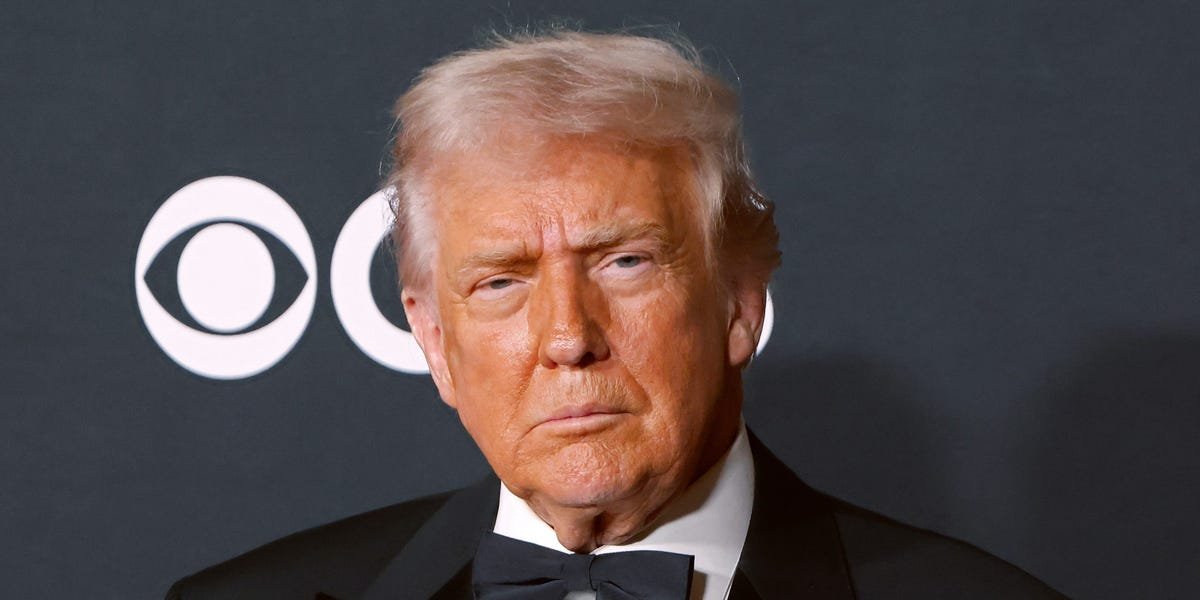
Nvidia just scored a win from President Donald Trump.
In a post on Truth Social on Monday, Trump said he told Chinese leader Xi Jinping that the US would allow Nvidia to sell its H200 chips to “approved customers” in China.
“This policy will support American Jobs, strengthen US Manufacturing, and benefit American Taxpayers,” Trump said in the post.
Trump said, “$25% will be paid to the United States of America.” He has previously proposed having the US take a cut of chip sales to China.
Nvidia’s stock was up in after-hours trading following Trump’s announcement.
“We applaud President Trump’s decision to allow America’s chip industry to compete to support high paying jobs and manufacturing in America,” a spokesperson for Nvidia said in a statement to Business Insider. “Offering H200 to approved commercial customers, vetted by the Department of Commerce, strikes a thoughtful balance that is great for America.”
Nvidia’s powerful H200 chips have been in high demand as AI models become more powerful.
While Nvidia was already able to sell some of its other chips to China, the US government has limited its ability to sell some powerful chips due to national security concerns. Sales of its H20 chips to China during Q3 were “insignificant,” CFO Colette Kress said on its latest earnings call.
“While we were disappointed in the current state that prevents us from shipping more competitive data center compute products to China, we are committed to continued engagement with the US and China governments and will continue to advocate for America’s ability to compete around the world,” Kress said during the Q3 earnings call.
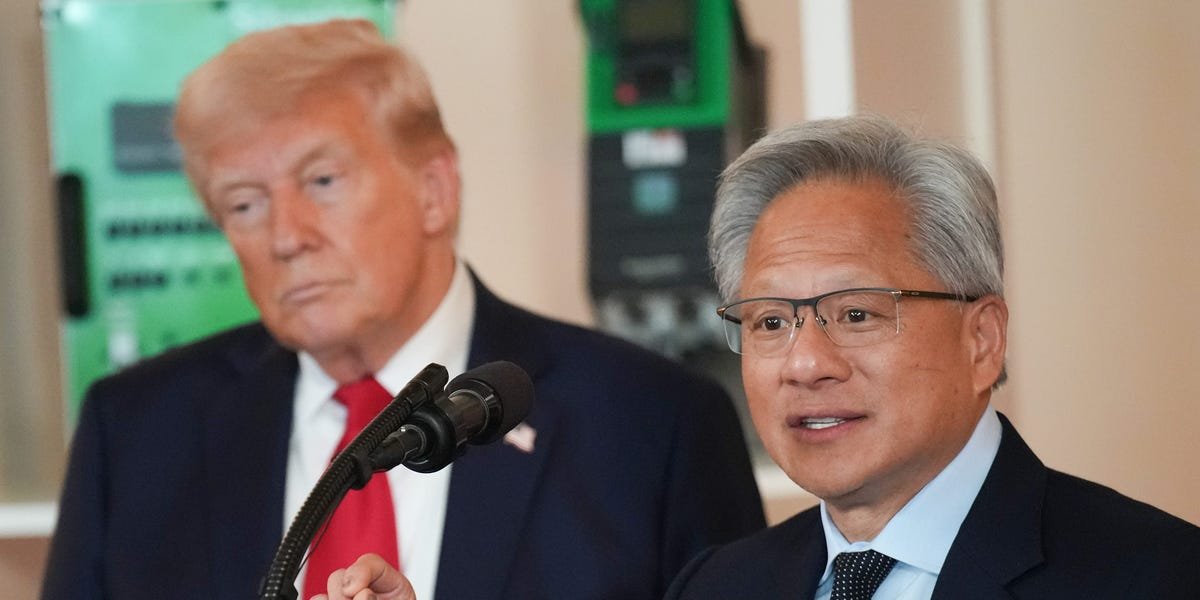
Nvidia CEO Jensen Huang met with Trump last week to discuss export controls on chips.
“I’ve said repeatedly that we support export control, that we should ensure that American companies have the best and the most and first,” Huang told reporters last week.
Before Netflix made its winning bid for Warner Bros., its co-CEO pitched President Donald Trump directly on the merits of the deal.
The pair found common ground, Netflix co-CEO Ted Sarandos said.
“The president’s interests in this are the same as ours, which is to create and protect jobs,” Sarandos said of Trump at the UBS media conference on Monday afternoon.
Sarandos said he’d talked to Trump “many times since the election about the different challenges facing the entertainment industry.”
“The president cares deeply about the entertainment industry, and he loves the entertainment industry,” Sarandos continued.
Trump praised Sarandos on Sunday, calling him a “great person” who he said had done “one of the greatest jobs in the history of movies.” Still, Trump said Netflix’s “big market share” in the streaming space “could be a problem” as it tries to buy Warner Bros. Discovery’s streaming and studio assets.
The Netflix-Warner Bros. deal reached on Friday is worth $82.7 billion, including $72 billion in equity. WBD’s TV networks like CNN or HGTV, aren’t in the proposal.
Rival suitor Paramount Skydance responded on Monday with a hostile bid in the form of a $30-per-share, all-cash offer for all of WBD, including the declining TV networks. Netflix’s offer is $27.75 per share, comprising mostly cash and some stock. There’s debate among analysts about whether Netflix’s or Paramount’s renewed offer is more attractive, as it depends on the value of WBD’s TV networks.
Paramount CEO David Ellison, who Trump has publicly praised, went on CNBC on Monday morning to tout his company’s offer as “pro-consumer, pro-creative talent,” and “pro-competition.” Ellison said his company’s offer had “faster regulatory certainty to close” than Netflix’s. Ellison’s father, Oracle cofounder Larry Ellison, is a longtime Trump ally and one of the richest people on the planet.
However, Netflix also seems to be building rapport with Trump. That could help explain why Netflix’s Sarandos and fellow co-CEO Greg Peters are optimistic about their deal.
“We are very confident that regulators should, and will, approve it,” Peters said of the WBD deal.
Sarandos pitched the streaming giant’s proposed acquisition as a net positive for the labor market, despite the concerns of many in Hollywood. He also said the company is “deeply committed” to releasing movies from Warner Bros. in theaters, “exactly the way they’ve released those movies today.”
That overture could help ease Trump’s concerns. Sarandos pitched Netflix as a great job saver.
“What the president has been interested in, in this deal, has been: To what extent does it protect and create jobs in America?” Sarandos said.
Sarandos warned that Ellison would implement lots of layoffs if his bid won and said the Paramount CEO promised about $6 billion in cost savings from a WBD deal. Those so-called “synergies,” in analyst jargon, translate to a smaller workforce, Sarandos said.
“Where do you think synergies come from? Cutting jobs,” Sarandos said. “We’re not cutting jobs — we’re making jobs.”
Netflix has promised investors $2 billion to $3 billion in its own cost savings from its Warner Bros. deal, however.
This story is available exclusively to Business Insider
subscribers. Become an Insider
and start reading now. Have an account? .
The best-selling country artists of all time include Elvis Presley, Tim McGraw, and Shania Twain.
We used RIAA’s data to compile this list based on total album units sold in the US.
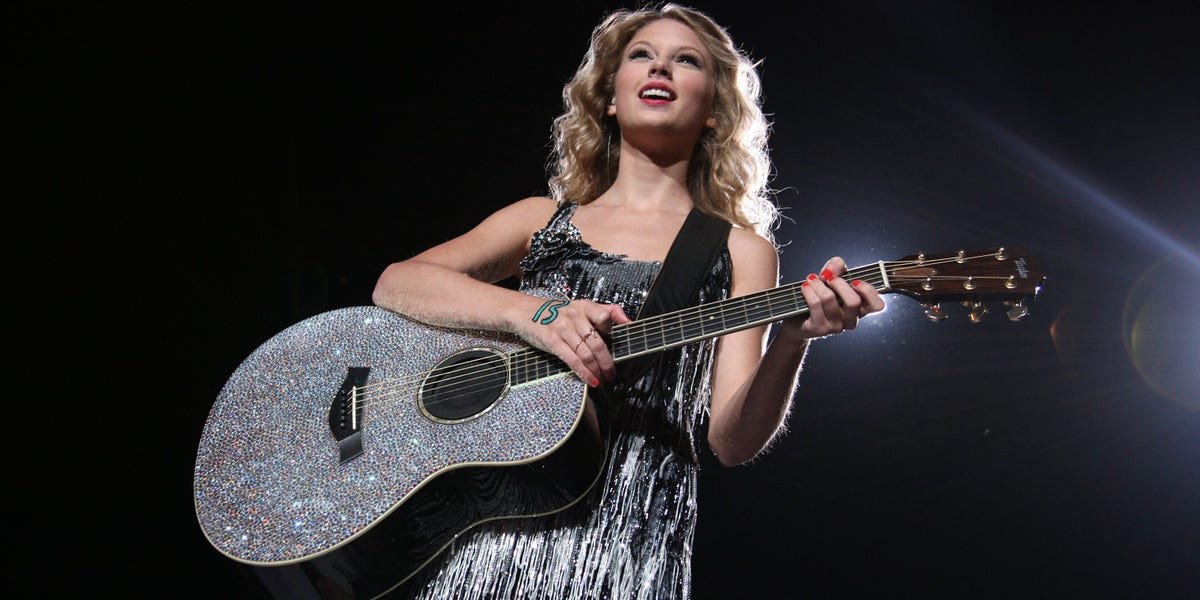
Only three artists on this list debuted in the 2000s: Carrie Underwood, Taylor Swift, and Luke Bryan.
Did you know two of the top three best-selling musicians of all time are country music artists?
Elvis Presley and Garth Brooks trail only the Beatles in record sales.
Country music is one of the most popular genres in music, with its own set of stars, award shows, and hall of fame.
We used the Recording Industry Association of America’s (RIAA) list of best-selling artists, ranked by albums sold, to pick out the top 25 most successful country musicians of all time.
To qualify as a country star, a musician’s output had to primarily appear on country charts, or the artist had to be inducted into the Country Music Hall of Fame, nominated in the country genre at the Grammys, or have received nominations at country award shows like the CMAs or the ACM Awards.
This story is available exclusively to Business Insider
subscribers. Become an Insider
and start reading now. Have an account? .
Donald Trump has brought his love of maximalism and gold furnishings to the White House
He added gold embellishments to the walls and ceiling of the Oval Office and Cabinet Room.
He has also renovated the Rose Garden and demolished the East Wing to build a ballroom.
The Oval Office is looking a little bit different lately.
Every US president makes new interior design choices upon entering the White House, often reflecting their personal tastes or political views.
In his second nonconsecutive term, President Donald Trump has incorporated his love of maximalism and gold furnishings into the Oval Office.
More White House renovations are in the works. The East Wing was demolished in October to make way for the construction of a $200 million, 90,000-square-foot state ballroom.
Take a look inside Trump’s redecorated White House to see the changes he’s made since former President Joe Biden left office.
The White House did not respond to a request for comment.
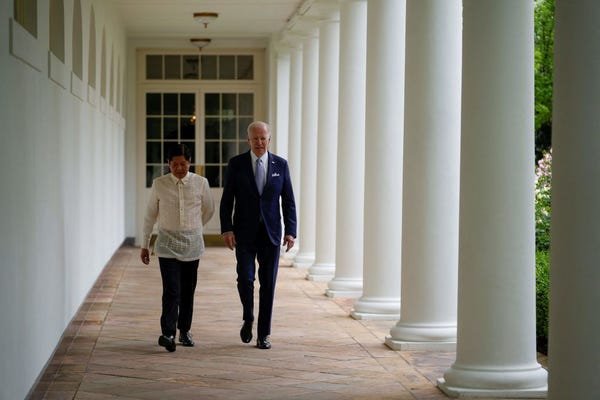
The West Wing Colonnade was unadorned during the Biden years.
Philippine President Ferdinand Marcos Jr. and Joe Biden in the West Wing colonnade. CAROLYN KASTER/POOL/AFP via Getty Images
President Joe Biden walked through the West Colonnade alongside Philippine President Ferdinand Marcos Jr. in May 2023.
Trump added a “Presidential Walk of Fame” where Biden was depicted with a photo of an autopen producing his signature.
The “Presidential Walk of Fame” along the West Wing Colonnade. Demetrius Freeman/The Washington Post via Getty Images
Trump has criticized Biden’s use of an autopen and sought to invalidate Biden’s pardons and commutations that were signed with the device.
The Palm Room, which connects the White House Residence to the West Colonnade, was previously furnished with plants, green benches, and a tile floor.
The Palm Room of the White House in 2023. BRENDAN SMIALOWSKI/AFP via Getty Images
The Palm Room leads out into the Rose Garden.
In September, Trump refinished the room with a new chandelier and a white marble floor.
The restyled Palm Room of the White House. Andrew Harnik/Getty Images
“New lobby leading to Oval Office — Magnificent marble floor, compliments of President Donald J. Trump!” Trump wrote on Truth Social.
During Biden’s time in the White House, the door to the Oval Office was not decorated in any way.
Joe Biden leaving the Oval Office. Tom Williams/CQ-Roll Call, Inc via Getty Images
Aside from a presidential seal above the door to the West Wing, the walls were empty.
President Donald Trump added new gold signage outside the Oval Office.
A new sign outside the West Wing of the White House marks the entrance to the Oval Office. Brendan Smialowski/AFP via Getty Images
The gold lettering spelling out “The Oval Office” was set in the Shelley Script font. Trump also added a gold decal to the top of the door.
Biden’s dark-blue Oval Office rug was originally designed for Bill Clinton.
Joe Biden’s Oval Office rug. Official White House Photo by Adam Schultz
The rug, which featured the presidential seal in the center, was designed by Kaki Hockersmith, an interior designer based in Little Rock, Arkansas.
Upon returning to the White House, Trump replaced it with a lighter rug used by Ronald Reagan.
Donald Trump’s Oval Office rug during his first term. Official White House Photo by Joyce N. Boghosian
The rug’s design includes the presidential seal, a sunbeam pattern, and olive branches along the border as a symbol of peace.
Trump also used the rug during his first term.
Biden only had two flags in the Oval Office.
Joe Biden in the Oval Office. Alex Wong/Getty Images
Biden displayed an American flag and a flag with the presidential seal.
Trump added the flags of different branches of the US military.
Donald Trump at the Resolute Desk. JIM WATSON/POOL/AFP via Getty Images
Trump’s Oval Office features the flags of the Army, the Marine Corps, and the Navy.
During Biden’s presidency, the Oval Office’s ceiling didn’t feature any additional embellishments.
Joe Biden on a video call in the Oval Office. Official White House Photo by Erin Scott
The crown molding on the ceiling matched the cream wallpaper.
Trump added gold trim to the crown molding on the ceiling.
Donald Trump’s Oval Office. Avi Ohayon /Handout/Anadolu via Getty Images
The gold embellishments matched the gold curtains, which remained in place from Biden’s presidency.
Biden’s Oval Office featured a prominent portrait of President Franklin D. Roosevelt.
Donald Trump and Joe Biden in the Oval Office. Alex Wong/Getty Images
Biden also hung portraits of Thomas Jefferson and Alexander Hamilton together to symbolize the benefits of different opinions, as well as portraits of George Washington and Abraham Lincoln.
Trump added additional portraits and numerous gold embellishments to the space.
Donald Trump in the Oval Office. Demetrius Freeman/The Washington Post via Getty Images
Trump added more portraits with decorative frames to create an Oval Office gallery wall. He also replaced Biden’s portrait of FDR with one of George Washington and displayed historic gold urns and baskets from the White House collection on the mantle.
Trump also incorporated smaller gold details, such as coasters, branded with his name.
A gold coaster in Donald Trump’s Oval Office. MANDEL NGAN/AFP via Getty Images
Trump’s love of gold decor is well-known. His Trump Tower penthouse in New York City features numerous gilded ceilings, furniture pieces, and artwork. Trump’s Mar-a-Lago club in Palm Beach, Florida, also includes a ballroom covered in gold from floor to ceiling.
Before Trump took office for the second time, the presidential seal on the ceiling of the Oval Office was a subtle adornment.
The ceiling of the Oval Office before President Donald Trump took office. PAUL J. RICHARDS/AFP via Getty Images
President Franklin D. Roosevelt added the plaster relief of the presidential seal to the Oval Office during a 1934 White House renovation.
Trump added gilded gold detailing to the design, making it more visible.
The new ceiling of the Oval Office. ALLISON ROBBERT/AFP via Getty Images
Both the seal and the stars surrounding it were covered in gold paint.
Biden chose to display President Barack Obama’s official White House portrait in the Entrance Hall.
The Bidens in the White House Entrance Hall next to a portrait of Barack Obama. BRENDAN SMIALOWSKI/AFP via Getty Images
The hyperrealistic portrait, painted by Robert McCurdy, was unveiled at the White House in 2023.
Trump replaced Obama’s portrait with a painting of himself.
A new painting of Donald Trump in the White House Entrance Hall. Win McNamee/Getty Images
Artist Marc Lipp painted a rendering of an Associated Press photo that captured Trump raising his fist in the air following an assassination attempt at a rally in Butler, Pennsylvania.
The White House Rose Garden previously featured a grass lawn.
Joe Biden in the Rose Garden. SAUL LOEB/AFP via Getty Images
Before it was used for press conferences and events, first lady Ellen Wilson originally designed the outdoor space as a formal flower garden in 1913.
First lady Melania Trump added a limestone border around the lawn in 2020.
Trump decided to pave over the grass in the Rose Garden, turning it into an outdoor terrace rebranded as “The Rose Garden Club.”
The new Rose Garden. ANDREW CABALLERO-REYNOLDS / AFP
Trump told Fox News that the grass in the Rose Garden was impractical for large events because it stayed wet when it rained and was too soft for attendees who wore high heels.
“The grass just doesn’t work,” Trump told Fox News host Laura Ingraham in March.
Workers began transforming the lawn into a patio in June, replacing the grass with concrete and stone tiles. “The Rose Garden Club” was completed in August.
Biden and previous presidents occasionally held large events, such as state dinners, in decorative tents on the White House lawn.
Joe Biden hosted a state dinner for Australian Prime Minister Anthony Albanese in a tent on the White House lawn. Astrid Riecken For The Washington Post via Getty Images
The East Room, the largest state room in the White House, has a seating capacity of 200 people. When Biden hosted Australian Prime Minister Anthony Albanese in 2023, he held the state dinner in a tent outside the White House to accommodate the larger crowd of over 300.
Trump announced plans to build a state ballroom with a capacity of 650 in July and demolished the East Wing for its construction in October.
The rubble of the East Wing of the White House. Eric Lee/Getty Images
The 90,000-square-foot ballroom, which the White House called a “much-needed and exquisite addition,” will cost approximately $300 million to construct. Trump and other “patriot donors” will foot the bill for the project, the White House said.
During the Biden administration, the Cabinet Room featured minimal artwork and decor.
The Cabinet Room during the Biden administration. ANDREW CABALLERO-REYNOLDS/AFP via Getty Images
Located in the West Wing near the Oval Office, the Cabinet Room overlooks the Rose Garden and features a large, oval-shaped mahogany table purchased by President Richard Nixon in 1970, according to Obama’s archived White House website.
Seating at the table is assigned in order of when each department was established, with the oldest departments sitting nearest to the president.
Trump added additional paintings to the walls and gold furnishings along the ceiling.
Donald Trump in a Cabinet meeting. Anna Moneymaker/Getty Images
Trump chose portraits of past presidents, including George Washington, John Adams, Andrew Jackson, James Polk, Abraham Lincoln, Franklin D. Roosevelt, and Dwight Eisenhower, to decorate the Cabinet Room.
“The vaults are where we have a lot of great pictures and artwork,” Trump told reporters in July. “And I picked it all myself, I’m very proud of it.”
The Cabinet Room featured eagle-shaped wall sconces during Biden’s presidency.
Joe Biden in the Cabinet Room. Demetrius Freeman/The Washington Post via Getty Images
The eagle sconces were installed as part of a 2004 refurbishment of the Cabinet Room that also included a new rug, curtains, and paint color.
Trump added 24-karat gold decals to the walls and installed matching gold curtains.
Donald Trump in a Cabinet meeting in the Cabinet Room. MANDEL NGAN/AFP via Getty Images
“Some of the highest quality 24 Karat Gold used in the Oval Office and Cabinet Room of the White House,” Trump wrote in a Truth Social post in September. “Foreign Leaders, and everyone else, ‘freak out’ when they see the quality and beauty.”
Berkshire Hathaway is reshuffling its top ranks ahead of the departure of its legendary CEO, Warren Buffett, in January.
The company announced on Monday that Todd Combs, one of Buffett’s key deputies and CEO of Berkshire-owned Geico, is departing the company to take on a role at JPMorgan.
Alongside Combs’ departure, Berkshire Hathaway announced a series of new leadership appointments.
The company said that the new leaders are “stewards of the company’s culture, demonstrate strong business acumen and judgment, and enable Berkshire’s distinctive way of operating.”
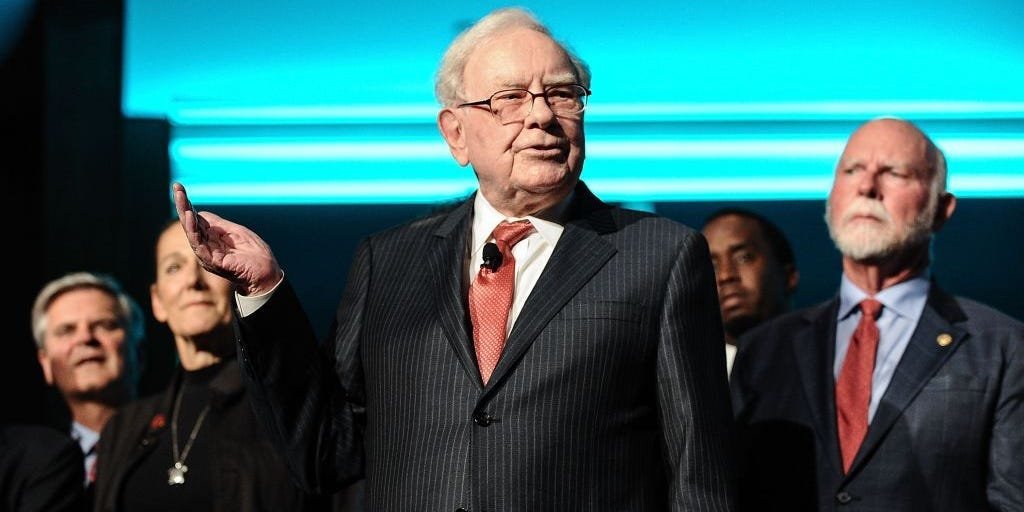
The shake-up of Berkshire Hathaway’s top ranks comes weeks before Greg Abel is due to take over from Warren Buffett as CEO in January. 95-year-old Buffett will remain as chairman of the business that he has led for the past 60 years.
Here’s the full list of appointments, most of which are effective immediately, according to Berkshire Hathaway’s Monday announcement.
Nancy Pierce becomes Geico CEO
The Geico Gecko is one of America’s best-known corporate mascots.
Scott Olson/Getty Images
Nancy Pierce is succeeding Todd Combs as CEO of Geico, the auto insurer owned by Berkshire Hathaway and one of the conglomerate’s core subsidiaries.
Pierce joined Geico in 1986 and was chief operating officer of the company before being tapped as CEO. She has held leadership roles across claims, underwriting, product management, and regional operations.
“Nancy knows the business inside and out. She’s practical, decisive, and focused on results,” said Ajit Jain, vice chairman for insurance operations.
Adam Johnson takes over as head of Berkshire’s consumer division
Adam Johnson has been appointed president of Berkshire Hathaway’s consumer products, service, and retailing businesses.
Johnson has been CEO of the Berkshire-owned private jet company NetJets for over 10 years — a role he’ll continue alongside the new appointment.
“Adam is an accomplished leader with a proven ability to deliver long-term shareholder value,” said Abel, Berkshire’s incoming CEO, in Monday’s press release.
“In his new role, he will support the outstanding CEOs of our 32 consumer products, service, and retailing businesses, and uphold Berkshire’s culture and values.”
Johnson’s new role hints at Abel’s plans for Berkshire. Under Buffett, the incoming CEO oversaw all non-insurance businesses.
The new CEO is splitting up the non-insurance businesses owned by the company.
Johnson will be in charge of consumer firms like See’s Candies and Fruit of the Loom, while Abel will manage the rest, including BNSF Railway, BHE, Pilot, and McLane, alongside his CEO duties.
Greg Abel will succeed Warren Buffett as Berkshire Hathaway CEO in January.
Kevork Djansezian/Getty Images
Marc Hamburg retires as chief financial officer
Marc Hamburg, the long-serving senior vice president and chief financial officer of Berkshire Hathaway, will retire on June 1, 2027.
Now 75 years old, Hamburg joined Berkshire in 1987.
Hamburg’s role was to oversee the conglomerate’s finances. The company hit a record $1 trillion market value in August 2024 and is currently valued at $1.09 trillion.
“Marc has been indispensable to Berkshire and to me. His integrity and judgment are priceless. He has done more for this company than many of our shareholders will ever know,” said Buffett in Monday’s press release.
“His impact has been extraordinary.”
Charles Chang replaces Hamburg
Stepping into Hamburg’s shoes when he retires in June 2027 is Charles Chang.
Chang has been a senior vice president and chief financial officer of Berkshire Hathaway Energy since 2024, and will take over as finance chief of Berkshire. He will be based in Omaha.
Chang is a former partner at the Big Four professional services firm PwC, where he developed over three decades of experience in public company financial reporting and mergers and acquisitions for some of PwC’s largest clients.
Michael O’Sullivan joins as general counsel
A new position has been created for Michael O’Sullivan when he joins Berkshire on January 1, 2026.
O’Sullivan will become senior vice president and general counsel at Berkshire and will be based in Omaha. The company has historically relied primarily on external legal counsel for corporate matters.
O’Sullivan was formerly an attorney at Munger, Tolles & Olson — the firm founded by Buffett’s late right-hand man, Charlie Munger — for over twenty years.
The law firm has been Berkshire’s go-to law firm for decades, meaning O’Sullivan knows the company well. He joins from Snap, where he has served as general counsel since 2017.
Uber wants advertisers to level up their marketing by tapping into data on the millions of rides and deliveries its users order every day.
The ride-hailing giant is announcing the launch of a new insights platform called Uber Intelligence on Monday, the company exclusively told Business Insider.
Launched in partnership with the data-connectivity platform LiveRamp, Uber Intelligence will let advertisers securely combine their customer data with Uber’s to help surface insights about their audiences, based on what they eat and where they travel.
It uses LiveRamp’s clean room technology, which lets companies aggregate their data in a privacy-safe environment, without sharing or seeing each other’s raw or personally identifiable customer information.
A hotel brand could use Uber Intelligence to help identify which restaurants or entertainment venues it might want to partner with for its loyalty program, for example.
Uber also hopes the platform can act as a flywheel for its broader ad business. Marketers can use the data clean room for segmentation, such as identifying customers who are heavy business travelers, then targeting them with ads on their next trip to the airport in the Uber app or on screens inside Uber cars.
“That seamlessness is why we’re so excited,” Edwin Wong, global head of measurement at Uber Advertising, told Business Insider in an interview. He added that the aim is for marketers to begin saying, “‘Oh, I’m not just understanding Uber, I’m understanding Uber in my marketing context.'”
Uber’s other route to revenue
Uber Intelligence is the latest step in the evolution of Uber’s ad business. Uber officially launched its dedicated advertising division in 2022. It offers an array of ad formats in the Uber and Uber Eats apps, on in-car tablets, in emails to its users, and on car tops.
The company said in May that its ad business had reached a $1.5 billion revenue run rate — the figure it has projected to hit by the end of 2025 — which would represent a 60% increase on last year. The company doesn’t break out a more specific ad-revenue figure and hasn’t provided an update on the run-rate number since May.
Uber Intelligence forms part of a bespoke set of services it offers its top advertisers. Earlier this year, it launched a creative studio where brands can partner with Uber to deliver more bespoke campaigns, such as offering rides to Miami F1 Grand Prix attendees in a luxury vehicle sponsored by La Mer, packed with freebie skincare products.
Andrew Frank, analyst at the research firm Gartner, said the launch of Uber Intelligence is another signal that Uber’s ad business is maturing.
“Early-stage ad businesses tend to focus exclusively on selling inventory while more mature ones focus more on delivering differentiated value through targeting and measurement solutions that help brands understand and optimize the impact of their spend,” Frank told Business Insider.
Uber’s unique source of “terrestrial data” put it in good standing against the likes of Amazon, Google, and other retail media networks that emphasize the value of their data-driven insights, Frank added. However, he said Uber may need to address privacy concerns related to aggregating highly sensitive data in order to maintain consumer trust and to comply with evolving global regulators as a collector of first-party data.
Vihan Sharma, chief revenue officer of LiveRamp, said its platform provides technical guarantees to ensure “zero movement of data.”
“The whole objective of a clean room technology is to build trust between data owners and consumers and the advertising ecosystem,” Sharma said.
Travellers faced chaos at London Heathrow Airport on Sunday, where police said some 21 people were apparently injured by pepper spray.
London’s Metropolitan Police said they were called to a parking garage at Terminal 3 around 8 a.m. after a number of people were sprayed by a group of men who left the scene.
Armed officers arrived and arrested a man on suspicion of assault within nine minutes of the first report, it added.
“At this stage, it’s understood that a woman was robbed of her suitcase by a group of four men, who sprayed a substance believed to be pepper spray in her direction,” said Commander Peter Stevens.
He added that it occurred in an elevator, and those directly involved are believed to be known to each other.
21 people were treated by the London Ambulance Service, including a three-year-old child, the police said. Five of them were taken to hospital.
While the terminal remained open, the disruption put many people at risk of missing their flights.
Heathrow is the busiest airport in Europe, serving over 80 million passengers last year.
In an X post, Heathrow Airport advised passengers to allow extra time when travelling to the airport and to check with their airline for any questions.
A highway into Terminals 3 and 2 was closed for about an hour before reopening, according to an X post from National Highways.
It then said it closed it again on the airport’s request, “due to the amount of vehicles and pedestrians within the tunnel,” but reopened within 30 minutes.
The BBC reported that some passengers were seen getting out of cars and walking down a road with their luggage, towards signs that warned “no pedestrians beyond this point.”
There were also delays of 45 minutes approaching the airport, according to National Highways, while Elizabeth Line trains stopped serving the terminals for over an hour.
President Donald Trump is getting involved in the Netflix-Warner Bros. deal.
On Friday, Netflix announced that it would acquire Warner Bros., including its TV and film studios, HBO and HBO Max, for $72 billion. If the deal goes through, it will be Netflix’s biggest acquisition to date.
Speaking to reporters at the Kennedy Centre on Sunday, Trump said Netflix is a great company that has done a “phenomenal job.”
But he added, “They have a very big market share, and when they have Warner Brothers, you know, that share goes up a lot.”
“So I don’t know, that’s going to be for some economists to tell. And also, I’ll be involved in that decision, too,” Trump said.
Trump added that Netflix’s CEO, Ted Sarandos, visited him in the Oval Office last week. He said Sarandos was a “great person” who has done “one of the greatest jobs in the history of movies.”
“But it is a big market share, there’s no question about that. It could be a problem,” he added.
Representatives for Netflix and Warner Bros. did not respond to requests for comment from Business Insider.
The announcement of Warner Bro.’s sale has drawn criticism. Paramount CEO David Ellison was at the White House last week, where he objected to the deal on antitrust grounds, per a report by The New York Post. Paramount Skydance had been competing with Netflix and Comcast to buy Warner Bros.
This is not the first time Trump has become involved in an antitrust case. In 2017, he opposed AT&T’s proposed acquisition of Time Warner, saying it was “not good for the country.”
Netflix’s stock price is down about 7% in the past five days, while Warner Bro.’s stock price is up more than 8% in the same period.
When one of my favorite graduate school professors died just weeks into her retirement, it hit me: I didn’t want to spend my life working toward a future I might never get to experience.
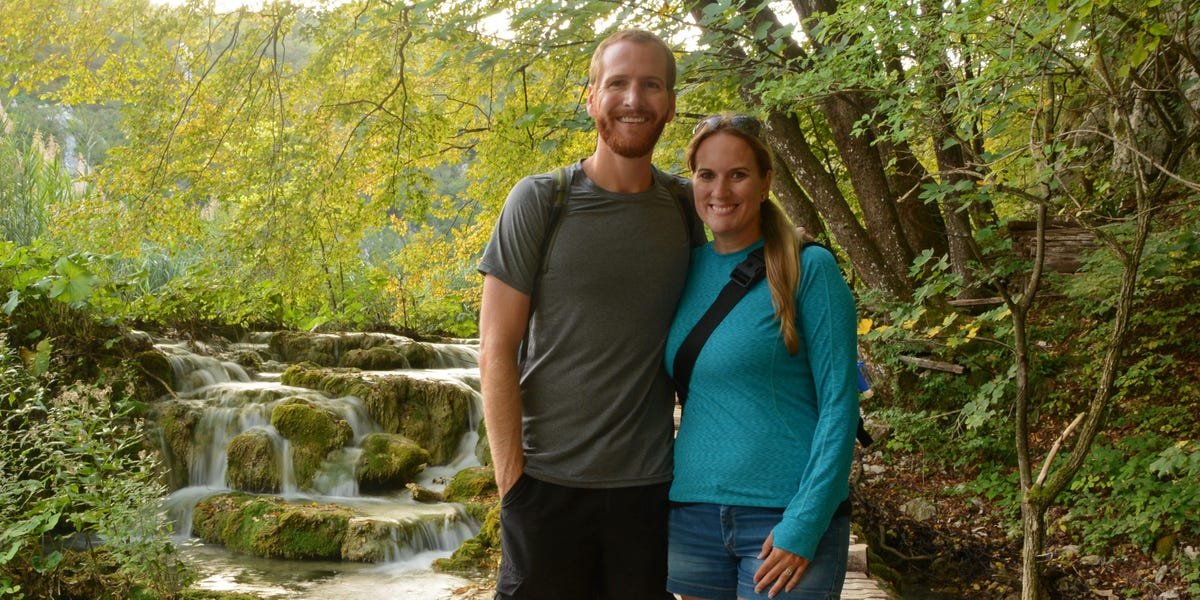
I started my career in education as a high school counselor. My husband, Sam, was a self-published author who could work from anywhere, so we took full advantage of my school holidays and long summer breaks, jetting off to new places whenever we could. We created a travel blog, ForgetSomeday, to share our stories.
But the trips we took during school breaks left me yearning for more, and I approached my husband about taking a year off from our careers to travel full-time.
It didn’t take much convincing. We didn’t own a home and hadn’t yet started a family, so the timing seemed right.
I submitted a request for a year of leave, but it was denied due to pending budget cuts. We decided to move forward with our plan anyway, not wanting to wait until retirement to make this dream a reality.
The couple’s adventures included a road trip through Scotland.
Provided by Toccara Best
Time for an adventure
Over the next year, we slashed our spending and saved more than $30,000 by cutting out anything nonessential.
We sold our car for $5,000 and brought in a bit more by selling smaller items, storing the rest in a 10×10 unit because we thought we’d be gone for just a year.
By June 2015, we had about $40,000 in the bank, walked away from our lease, and flew to Prague on one-way tickets.
We ate our way through Central and Eastern Europe and Southeast Asia, partaking in bucket-list festivities like Oktoberfest in Munich and St. Patrick’s Day in Dublin along the way.
Best visited more than a dozen countries, including Vietnam (pictured).
Provided by Toccara Best
We visited more than a dozen countries — island-hopping in Croatia, Thailand, and Portugal; exploring Cambodia’s temples; soaking in Hungary’s thermal baths; and driving 500 miles through Scotland in a campervan.
From hiking in Austria and Slovakia to swimming with seals in Sweden, the year became a crash course in adventure travel.
As our official gap year came to an end, our bank account was still surprisingly healthy, thanks to housesitting opportunities and blog partnerships that helped stretch our budget. And because I didn’t have a job to go back to, we decided to keep traveling.
Little did we know, our biggest adventure was right around the corner: 6 months later, we found out we were expecting.
Iceland was Best’s final stop before returning to the US.
Provided by Toccara Best
And then we were three
We returned to the US to have our son, but just a few months after his birth, we began traveling full-time again, this time exploring America.
By his third birthday, my son had already visited 27 states. Eventually, the pandemic put a halt to our full-time travels, and we took that as a sign to settle down.
We returned to California five years after the adventure started.
When we planned our gap year, it was supposed to be just that, a year. But as time went on, the gap on my résumé grew, and my motivation to return to the career I once loved began to fade. My husband was also trying to figure out what he wanted to pursue next.
The couple continued to travel around the US after having their son.
Provided by Toccara Best
Reentering the workforce
We didn’t realize that our global adventure would end with such a hurdle — a career pivot after five years away, right in the middle of a global pandemic.
Maybe it was the break we both needed to reevaluate our next steps, but it has taken us both quite a while to get back in the saddle.
Once our son started preschool, I transitioned back into the workforce as an executive personal assistant for a busy entrepreneur, putting my organizational skills to good use.
When the executive moved out of state just over a year later, I quickly found a new role as operations manager at a nonprofit organization, where I’ve worked part-time for nearly four years. I’ve been searching for meaningful full-time employment for the past year and a half, which has been especially challenging in today’s competitive job market.
Was our gap year impulsive? Not exactly. We spent a year saving and planning. Was it risky? Definitely. More so than we imagined. Would we do it all over again? Absolutely.
That said, if we were to do it again, we’d probably just stick to a year.
Do you have a story about taking a gap year that you want to share? Get in touch with the editor: akarplus@businessinsider.com.
There’s a debate rippling through Silicon Valley: How far can scaling laws take the technology?
Google DeepMind CEO Demis Hassabis, whose company just released Gemini 3 to widespread acclaim, has made it clear where he stands on the issue.
“The scaling of the current systems, we must push that to the maximum, because at the minimum, it will be a key component of the final AGI system,” he said at the Axios’ AI+ Summit in San Francisco last week. “It could be the entirety of the AGI system.”
AGI, or artificial general intelligence, is a still theoretical version of AI that reasons as well as humans. It’s the goal all the leading AI companies are competing to reach, fueling huge amounts of spending on infrastructure and talent.
AI scaling laws suggest that the more data and compute an AI model is given, the smarter it will get.
Hassabis said that scaling alone will likely get the industry to AGI, but that he suspects there will need to be”one or two” other breakthroughs as well.
The problem with scaling alone is that there is a limit to publicly available data, and adding compute means building data centers, which is expensive and taxing on the environment.
Some AI watchers are also concerned that the AI companies behind the leading large-language models are beginning to show diminishing returns on their massive investments in scaling.
Researchers like Yann LeCun, the chief AI scientist at Meta who recently announced he was leaving to run his own startup, believe the industry needs to consider another way.
“Most interesting problems scale extremely badly,” he said at the National University of Singapore in April. “You cannot just assume that more data and more compute means smarter AI.”
LeCun is leaving Meta to work on building world models, an alternative to large-language models that rely on collecting spatial data rather than language-based data.
“The goal of the startup is to bring about the next big revolution in AI: systems that understand the physical world, have persistent memory, can reason, and can plan complex action sequences,” he wrote on LinkedIn in November.