An-88-year-old-worked-5-days-a-week-at-a-supermarket.jpeg

An 88-year-old worked 5 days a week at a supermarket. Then strangers raised almost $2 million so he could finally retire.

Before December, Ed Bambas was among the sizable swath of older Americans still working with retirement nowhere in sight. Then, he met content creator Samuel Weidenhofer.

Weidenhofer, who has 12 million followers across social media, set up a GoFundMe fundraiser for Bambas on Monday to help him leave his job at a Detroit supermarket and retire.

“I’m opening a fundraiser to help Ed live the life he deserves to finally give him some relief, comfort and the peace of mind that comes from knowing he can enjoy his later years without constant struggle,” Weidenhofer wrote on GoFundMe.

The fundraiser had a $1 million goal. As of Sunday, over 65,000 people have donated, reaching a total of almost $2 million.

In a video shared to Weidenhofer’s social media accounts, Bambas said he’s an 88-year-old veteran who works at the supermarket five days a week, eight hours a day. Bambas said he retired from General Motors in 1999, but lost his pension after the company went bankrupt in 2009.

Bambas told Weidenhofer that his wife, who died seven years ago, had been sick around the time his pension stopped. Without his pension, Bambas had to re-enter the workforce.

Nearly 550,000 Americans 80 and older are still working, according to 2023 US Census data.

As part of Business Insider’s “80 over 80” series, reporters interviewed nearly 200 workers over 80 — in addition to conducting surveys and receiving emails — in an effort to understand why.

While some older Americans are driven by a personal desire to work, others take on jobs to combat financial insecurity. Some workers over 80 told Business Insider that they use their income to supplement their Social Security and other retirement payments. They fear that without the income, they can’t afford the cost of living.

Weidenhofer shared a video of Bambas receiving his GoFundMe check on Friday.

“It’s something dreams are made of,” Bambas said in the video.

Bambas also thanked everyone who donated to the fundraiser.

“I cannot express in any words how thankful I am to all the people,” he said.


Source link

I-used-to-obsess-over-perfect-holiday-cards-When-I.jpeg

I used to obsess over perfect holiday cards. When I finally stopped sending them, I found more joy in the season.

I grew up in a house where coordinated family photos were the norm. My mom would line up the four of us kids in matching outfits — one year, freshly pressed sailor suits; the next, velvet dresses, with my brother in a matching tie. Every stray hair would be tucked in or sprayed down.

We were bribed (or more like lightly threatened) to smile with our eyes open, something that’s more difficult than it should be when you’re a kid who just wants to be DONE.

Then came the card — glossy, cheerful, and perfectly posed — the proof that our family had it all together, at least for one photo.

I kept the tradition going with my own kids

So when I had my own kids, I continued this tradition without question. Every year, I’d book a family photo session well in advance of Thanksgiving, hoping that temperamental Chicago weather wouldn’t put a damper on our outdoor photos.

I’d scour Pinterest for outfit inspiration, aiming for a coordinated but not totally matching vibe. The goal was to capture one frame of perfection — a photo worthy of the hundreds of envelopes I’d soon address by hand.


Holiday card

The author continued the tradition of holiday cards with her family.

Courtesy of the author


But the reality behind those photos was far from picture-perfect. There were bribes of hot chocolate and complaints about itchy sweaters. I’d smile through gritted teeth while the photographer tried to get everyone looking in the same direction. By the end, the kids were shivering, my husband was done, and I was wondering why we put ourselves through this every year.

And that was just phase one.

Once we had a “good enough” photo, I’d spend hours designing the cards online, tweaking fonts, choosing layouts, and agonizing over whether to include a photo of the whole family or the cuter one of just the kids.

Then came the addressing, stamping, and mailing — usually squeezed in between wrapping gifts, decorating the house, and trying to keep the ambiance somewhat festive. What was meant to be a joyful holiday tradition had turned into yet another item on my never-ending to-do list.

Quitting holiday cards lifted a huge weight

Two years ago, I finally asked myself, “Why am I doing this?”

When I couldn’t come up with a satisfying answer beyond “because we’ve always done it,” I decided to stop. No family photo shoot. No card design. No envelopes or stamps.


Family at ski resort

The author feels her family photos feel more authentic now.

Courtesy of the author


That first year without holiday cards felt strange at first, like I’d forgotten to do something important. December rolled around, and my mailbox filled with cheerful greetings from family and friends, each one featuring those perfectly posed families and braggy year-end recaps. For a fleeting moment, I felt a pang of guilt, like I’d dropped out of a club I’d been part of my entire adult life.

But then the feeling passed. What replaced it was a deep sense of relief.

Without the looming card deadline, December suddenly opened up. I had more time to actually enjoy the holidays — to bake sugar cookies in the shape of stars and drive through neighborhoods adorned in holiday lights. The pressure to present our family in a certain way — smiling, coordinated, festive — simply disappeared.

Now our photos (and holidays) feel more authentic

Instead of orchestrating a posed photo, we started taking more spontaneous pictures: messy, candid, real. A selfie at a local holiday market. A blurry shot of everyone laughing in front of our silver faux Christmas tree. A snowy mountain scene after a day of skiing. These pictures weren’t perfect, but they were us. And when I looked at them later, they didn’t remind me of how stressed I felt trying to get everyone to cooperate — they reminded me of how much fun we actually had.


Family posing by tree

The author and her family.

Courtesy of the author


Something else unexpected also happened: no one seemed to miss the cards. The people who truly wanted to connect reached out in other ways. It made me realize that keeping in touch didn’t have to involve postage and cardstock.

Letting go of the holiday card tradition didn’t make the end of the year any less special — it made them more so. It gave me permission to simplify and remember that the memories that matter most aren’t ones you send in the mail. They’re the ones you make together, no matching outfits required.


Source link

3-of-the-best-and-4-of-the-worst-gameday.jpeg

3 of the best and 4 of the worst gameday outfits Travis Kelce has worn this year

  • Travis Kelce’s gameday outfits have gotten as much attention as his athletic performances this year.
  • His best looks were bold in color and perfectly tailored.
  • The football player’s worst outfits, however, included shorts and a tracksuit.

Travis Kelce doesn’t just stand out on the field.

The Kansas City Chiefs tight end also makes a statement with his unique fashion each time he enters a stadium.

Throughout the 2025 football season, the 36-year-old athlete has worn a mix of standout suits, eye-catching hats, sharp jackets, and cool shades before games.

Some created memorable outfits, while others missed the mark entirely. Here are his best and worst gameday looks of the year.

Travis Kelce chose a questionable outfit near the start of the 2025 NFL season.

Travis Kelce at Arrowhead Stadium on September 14.

David Eulitt/Getty Images

The top half of Kelce’s suit looked great. He wore a blue Thom Browne jacket that was tailored perfectly, a matching tie, and a white undershirt.

Unfortunately, he styled the jacket with tight-fitting shorts that reached his thighs. The bottoms were too casual and didn’t match his dark dress shoes.

Kelce, who played against the Philadelphia Eagles that day, completed the look with a $1,035 pair of Dita sunglasses.

He wore one of his best looks of the season the following week.


Travis Kelce enters the New York Giants and Kansas City Chiefs game on September 21 at MetLife Stadium.

Travis Kelce at MetLife Stadium on September 21.

Vera Nieuwenhuis/AP

He arrived for a game against the New York Giants while wearing a blazer, vest, and trousers all in the same burgundy shade.

He also wore black dress boots, a white undershirt, and a matching pocket square. His square sunglasses, which retail for $725, were designed by Tom Ford.

The outfit was sharp, simple, and highlighted his Louis Vuitton luggage.

He opted for a suede set in October, but unfortunately missed the mark.


Travis Kelce enters the Jacksonville Jaguars and Kansas City Chiefs game on October 6 at EverBank Stadium.

Travis Kelce at EverBank Stadium on October 6.

Gary McCullough/AP

Ahead of a game against the Jacksonville Jaguars, Kelce donned khaki pants, a $2,650 Alfre button-up top from J. Logan Home, a brown suede jacket, and tan boots made from the same soft material.

Most of the outfit worked as a transitional set for fall, especially when paired with his suede duffel bag.

However, the suede newsboy cap Kelce wore dated the look. His overall outfit ended up resembling a costume more than a fashion statement.

Kelce kept things simple for a home game that month, and it worked for him.


Travis Kelce enters the Detroit Lions and Kansas City Chiefs game on October 6 at Arrowhead Stadium.

Travis Kelce at Arrowhead Stadium on October 12.

Ed Zurga/AP

He wore a $1,690 flannel top from Louis Vuitton, khaki pants, white sneakers, and Saint Laurent sunglasses before his game against the Detroit Lions.

It might not have been the most eye-catching outfit he wore this season, but it was contemporary and the epitome of quiet luxury.

A few tweaks could have improved the dark ensemble he chose for his next game.


Travis Kelce enters the Las Vegas Raiders and Kansas City Chiefs game on October 19 at Arrowhead Stadium.

Travis Kelce at Arrowhead Stadium on October 19.

Reed Hoffmann/AP

When the Chiefs played the Las Vegas Raiders in October, Kelce entered Arrowhead Stadium wearing skinny black trousers, a striped collared shirt, and a cropped leather jacket.

The top half of his outfit looked good, especially with the help of his square sunglasses.

However, his choice of pants wasn’t right. A baggier style would have made the difference, and some shining, silver jewelry could have elevated the overall look.

He made a statement in orange at the end of October.


Travis Kelce enters the Washington Commanders and Kansas City Chiefs game on October 27 at Arrowhead Stadium.

Travis Kelce at Arrowhead Stadium on October 27.

David Eulitt/Getty Images

Kelce wore Fendi for a game against the Washington Commanders.

His three-piece outfit included orange jeans with frayed hems, a classic white T-shirt, and a denim jacket painted in shades of white and orange.

The outfit was bold and complemented by his tangerine-colored shades. He also wore statement gold necklaces with diamond charms.

Kelce chose a ’90s-inspired look at the end of November, but it was forgettable.


Travis Kelce enters the Indianapolis Colts and Kansas City Chiefs game on November 23 at Arrowhead Stadium.

Travis Kelce at Arrowhead Stadium on November 23.

Reed Hoffmann/AP

He entered Arrowhead Stadium for a game against the Indianapolis Colts wearing a Nike windbreaker, matching pants, and Air Jordan sneakers.

His accessories — a hat, sunglasses, and watch — stood out and added a stylish element to the look.

Still, the dark color and minimal design of his outfit made it forgettable.


Source link

What-its-like-to-work-over-the-age-of-80.jpeg

What it’s like to work over the age of 80

Welcome back to our Sunday edition, where we round up some of our top stories and take you inside our newsroom. There are many ways to acknowledge your company’s standout workers, but what about giving them a Porsche? How about an all-expenses paid trip? Check out how this company rewards its top employees every year.


On the agenda today:

But first: What it’s like to work over 80.


If this was forwarded to you, sign up here. Download Business Insider’s app here.


This week’s dispatch


Barbara Ford, D'Yan Forest, Rich Colorado, Jane Way, June Boyd, Luis Bautista, Pat Fagin Scott, Sandy McConnell, Thomas Ferguson, Lydia Hinds

Jason Henry, Laura Thompson, Lanna Apisukh, Matt Martian Williams, Brittany Greeson, Cassidy Araiza, Alyssa Schukar, Bridget Bennett, Tim Gruber, Michael J. Fiedler for BI


The older Americans still in the workforce

I’m fascinated by Americans over 80 who are still working — either because they want to, have to, or both.

Older workers long past retirement age are the fastest-growing sector of the US labor market. They’re twice as likely to be in the workforce now as they were in the early 1990s.

For the past year, Business Insider has explored why this cohort is growing. What’s driving it? And what are the repercussions?

My colleague Noah Sheidlower traveled to nine states and spoke to nearly 200 people over 80 years old for this project. He interviewed a range of folks: bookkeepers and lawyers, forklift drivers and Home Depot employees, Uber drivers and substitute teachers, among many others.

Some pieces are heartbreaking: “I’m worried every night when I go to bed that what I have isn’t going to last until I die,” Patricia Willson, a 93-year-old job seeker with a fractured back, told Noah. “For God’s sake, I should have saved every penny I could save.”

Others are inspiring: “As long as I’m physically able to get up, get dressed, and go to work, I’m going to continue that,” says Bill Miller, 82, who works as a real-estate broker and part-time as a forklift driver in North Carolina.

The commonality in all of them is the thought, care, and attention to detail that Noah brings to the subject. “As a 24-year-old journalist wanting to cover these older workers, I heard, ‘You won’t understand’ or ‘You’re too young,'” Noah writes. “The more I wrote, the more people I found who would speak candidly — because someone was finally listening.”

We’ve published more than 20 stories and a documentary on what it really means to keep working past 80 in this economy.

Drop me an email and let me know what you think of the coverage at srussolillo@businessinsider.com.


Bryan Johnson’s long, strange mushroom trip


Bryan Johnson.

Bryan Johnson.

Magdalena Wosinska


Thousands of people across X, YouTube, and Instagram spent last Sunday watching the longevity influencer and centimillionaire take magic mushrooms on a livestream “for science.” BI’s Zak Jason tuned in to the five-and-a-half-hour production “for journalism.”

Zak watched as Johnson shared how he felt like a newborn baby while peeing, extolled the virtues of longevity science, and was joined by his father, his son, Grimes, Salesforce CEO Marc Benioff, and other business leaders, all while fearing his grip on reality may now be lost.

“We like you even more on shrooms.”


Millennials have a serious stuff problem


Baby boomer surrounded by piles of toys, clothing, memorabilia, and keepsakes.

Getty Images; Alyssa Powell/BI


Yes, there is the baby boomer stuff avalanche, but they’re not the only generation accumulating useless items they can’t get rid of. Gen X, millennials, and Gen Zers are leaving their parents drowning in yearbooks, prom dresses, and Little League trophies.

Many of these storage freeloaders have their own lives and don’t have the time or energy to whittle down their items. Plus, when something lives at your dad’s house, it’s easy to pretend it’s not your problem — even though it very much is.

It’s not just boomers.

Also read:


Salesforce Agentforce


Marc Benioff at an event, wearing a black suit and bow tie.

Salesforce CEO and cofounder Marc Benioff


Sean Zanni/Patrick McMullan via Getty Images


How committed is Salesforce CEO Marc Benioff to AI? He might change his company’s entire name to acknowledge the focus on tech.

The tech giant has rebranded several of its products under the Agentforce name, a nod to its huge bet on AI agents. When BI’s Ashley Stewart asked Benioff if he’d consider changing the entire company’s name, he didn’t shy away from the idea.

“That would not shock me,” Benioff told Ashley.

New name for a new game.

Also read:


Netflix’s not-so-sure thing


Donald Trump and Larry Ellison in the White House

Donald Trump could be Larry and David Ellison’s hope to stop the Netflix-WBD deal.

Andrew Harnik/Getty Images


Netflix rocked the entertainment world when it emerged as the winner in the bidding war for Warner Bros. Discovery. The $72 billion offer would give the king of streaming control of HBO and the iconic Warner Bros. movie and TV studio.

Or will it?

BI’s Peter Kafka unpacks how the deal needs regulatory approval, which is no guarantee. And it’s especially more complicated considering the people behind one of the competing bids, Larry and David Ellison, have close ties to President Donald Trump.

Netflix and chill (until you get regulatory approval).

Also read:


This week’s quote:

“I used to be naive and filled with excitement to work for a tech company, but since the layoff, I just see it as a resource to fund my life.”

— Brittney Ball, a 36-year-old who is struggling to find work after getting laid off from Meta as a “low-performer.”


Older worker driving

Timothy Wolfer


The Americans over 80 still working to pay the bills

Four older Americans share why they’re still working. Their stories reveal what it really means to keep going past 80 in an economy with little safety net.


More of this week’s top reads:

  • Citi dropped its 2025 managing director class — we have the full list of 276 new MDs.
  • Harvey’s $8 billion question: How much money does it actually save lawyers?
  • Exclusive: Millennium suffered big losses in one of the $81 billion hedge fund’s favorite strategies last month.
  • Economists run a secret prediction game each year. When ChatGPT took part, here’s what happened.
  • The wannabe real estate moguls going bust.
  • A Hall of Fame quarterback-turned-CEO explains why he interviews everyone he works with — and the red flag he looks for.
  • A Ferrari and over 480 takeout orders: FBI details spending spree of Netflix director in $11 million fraud case.
  • The number of billionaires is on the rise — and they are richer than ever thanks to AI.
  • A 30-year-old lawyer quit Big Law. Days later, she had a term sheet to raise $2.5 million for an AI law firm.


    The BI Today team: Steve Russolillo, chief news editor, in New York. Dan DeFrancesco, deputy editor and anchor, in New York. Akin Oyedele, deputy editor, in New York. Grace Lett, editor, in New York. Amanda Yen, associate editor, in New York.


Source link

Americas-economy-is-getting-swallowed-up-by-middlemen-—-and.jpeg

America’s economy is getting swallowed up by middlemen — and it’s driving people crazy

Bill Gates has been right about a lot of things over the years — Microsoft, mosquito nets, the risk of pandemics. One thing he was not so right about: the idea that the internet would cut out the economy’s middlemen. In his 1995 book “The Road Ahead,” Gates predicted that the information highway would “extend the electronic marketplace and make it the ultimate go-between,” leading to a scenario where the only humans often involved in a transaction would be the actual buyer and seller. Given that you are alive in this current time, you already know that is not what happened. Instead, the internet gave way to a new class of commercial go-betweens. Amazon connects gift givers to makers of novelty socks that the recipient will almost surely never wear. Uber serves as the conduit between driver and rider. DoorDash connects (and takes a hefty fee from) the begrudging restaurant and the lazy eater. And while some more analog middlemen — sorry, travel agents — have withered, others in industries from pharma to meatpacking have tightened their grips.

Middlemen are a necessary evil in many parts of the modern economy. Supply chains are increasingly complex, so someone has to manage coordination and logistics. Consumers demand convenience, which middlemen provide. Suppliers don’t have a choice — they have to go where the people are, even if that means signing up for a delivery app or e-commerce platform that gives them a raw deal. The result: an economy where the real power doesn’t lie with the businesses making goods or performing services but instead with the intermediaries that control access and quietly set tolls.


The problem with middlemen isn’t their existence. If I’m in the mood for chicken for dinner, I don’t want to drive out to the chicken farm to pick a little guy out — that would take a lot of time, and I am not an expert in what makes a good chicken. I want to be able to go buy it from the grocery store, which relies on Tyson and other middlemen to pick it up and process it. Everyone has a part to play in getting the fowl from the farm to my face. The issue is that middlemen gain so much bargaining power that both the chicken farmer and I are in a bind in terms of the conditions of his contract with Tyson and my ability as a consumer to shop around, and neither of us has full visibility into the steps along the supply chain.

“What these intermediaries do is they try to stand between buyer and seller, and the way that they impose their taxes or take rates on, typically, the sellers is very opaque to the buyers,” says Hal Singer, the managing director of Econ One, an economic consulting firm.

Opacity is a middleman’s superpower. Most consumers have no idea how much Amazon charges sellers on its platform, what Apple or Google skim off the top of app sales, or what amount a pharmacy benefit manager is keeping for itself. This hidden tax is often ultimately passed on to the consumer because the seller increases prices to offset it. And, it’s hard, if not impossible, to get around. Amazon and Apple deter sellers and developers from steering customers to cheaper channels. Credit card companies try to compel merchants to accept all of their cards, regardless of the swipe fee. Food distributors allow farmers little leverage over contracts and pay, and some consumers come to suspect they’re not playing fair, price-wise.

In this day and age, if you sell stuff online, you can’t not be on Amazon.

Across industries, the pattern plays out — middlemen lock in customers with convenience and lock in suppliers with access. Intermediaries merge or acquire each other until they become entrenched or leave people with few other options.

“Once a platform aggregates millions of buyers and sellers, whether it’s Amazon’s marketplace, a PBM’s drug formulary, or a ride-hail app, over time, contracts, software, and even regulations get written around those intermediaries, turning them from optional helpers into infrastructure,” says Anindya Ghose, a business professor at NYU’s Stern School of Business, in an email.

In this day and age, if you sell stuff online, you can’t not be on Amazon. And if you manage to avoid buying anything as a consumer on Amazon, bless you.


Some of the ways middlemen become so big and powerful can feel almost inevitable. Supply chains are long and convoluted. Consumers value ease. Suppliers want to offload their products quickly. Economies of scale are an advantage. Middlemen can connect buyers and sellers who wouldn’t otherwise find each other, developing niche expertise that has value for both ends of the equation.

“The way that they’ve grown is not that they were kind of started with this evil intent of taking over the economy. No, they grew in power because they were providing a very real service, but in the process of providing that service, they are very often also erecting blinders that limit us and our ability to see the effects of the decisions that we’re making,” Kathryn Judge, the author of “Direct: The Rise of the Middleman Economy and the Power of Going to the Source,” told me in a 2022 podcast interview.

A lot of what middlemen solve for are fixed costs, explains Matthew Grant, an assistant professor of economics at Dartmouth College. They make investments to set up and maintain infrastructure and markets that smaller businesses can’t undertake as one-offs on their own. If you’re a bookseller or a small farmer, owning and operating a global transportation network, writing up hundreds of contracts, and building out extensive legal and accounting teams isn’t really feasible. To offset those costs and generate meaningful profits for taking on all that work, middlemen gain significant market share and leverage it to recoup their expenses.

“In practice, there aren’t too many other companies that are trying to be Amazon because they know if they tried it, it would not make money,” Grant says.

High fixed costs foster high barriers to entry, which lead to a handful of dominant intermediaries. It’s central to the business model.

Middlemen come with trade-offs. Walmart has cheap prices, but if it squeezes local retailers, it also means fewer choices. Sysco is a convenient partner for restaurants and other food service operations, but it gets to call a lot of shots with suppliers and buyers if it’s the only game in town. Uber is nice for users who want to avoid flagging down vehicles in the street, and its drivers get an extra way to make money. But it’s killed off how we used to do this — taxis — and a lot of drivers and riders feel like ultimately they’re getting screwed.

If there aren’t many other competitors, or none at all, middlemen get to charge whatever they want. People on both sides start grumbling about how they’re either paying too much or not getting paid enough, and it feels like neither side is getting a good deal. That’s where you get complaints about fees on ticketing platforms while artists bemoan how unsustainable a music career is. Mystery charges on food delivery frustrate both eaters and restaurants. Both guests and hosts on vacation rental websites realize this would be a better deal for both parties if they could negotiate directly.

Consumers and producers end up griping about each other while the middlemen quietly skate on by.

“A very simple way to think about it is that a middleman increases the size of the pie,” says Marina Krakovsky, the author of the book “The Middleman Economy: How Brokers, Agents, Dealers, and Everyday Matchmakers Create Value and Profit.” “But then how big a slice do they take for themselves?”

In many cases, it’s a pretty big one, as being a behemoth middleman is a lucrative endeavor. Amazon booked $638 billion in sales in 2024, Uber generated $44 billion in revenue, and Sysco reported $80 billion in sales. Pharmacy benefits managers, which sit between health insurers and drug manufacturers, rake in billions of dollars a year through a web of fees, price spreads, and rebate sharing that’s almost impossible for a layperson to untangle, and they often drive up prices, too.

“Collectively, these intermediaries sit on top of major money flows,” Ghose says.

Parties on either side of the transaction the middleman is facilitating might not always know who to blame. Buyers on a secondary ticket market get mad at the seller when their tickets don’t come through, when in reality, it’s the platform itself that failed to do its due diligence. The delivery guy thinks the customer is a cheapskate after driving through a storm for a minuscule tip, without realizing the platform prompted that option. The restaurant patron is appalled by the menu’s high prices, while the restaurant owner is barely making it through the month. Consumers and producers end up griping about each other while the middlemen quietly skate on by.


The answer isn’t that there should be no middlemen — again, I am not interested in making weekly trips to the chicken farm, or any farm, for that matter. But it would be better if there were more rules of the road to ensure they don’t turn convenience into oversize markups and exorbitant profits. That could take a lot of different forms — increased transparency, more regulatory oversight and enforcement, new laws, or different efforts to ensure competition. Perhaps disclosure requirements for platform fees or restrictions on anti-steering clauses. But given how entrenched — and opaque — these go-betweens can be, wrangling their power has proven to be a tough task.

If an industry has one middleman, it’s a problem. The same goes for if it’s four and they’re all colluding.

“One of the problems and probably a predicate is how concentrated all these markets are,” Singer says.

“It would be great if we had a choice of middlemen and they were competing with each other to be the best middleman they can be on price, on quality, on ethics, and everything,” Krakovsky says. “And often we lose that.”

And so, here we sit, in an economy dominated by middlemen, telling ourselves we’ll do better this holiday season and not rely so much on Amazon, and then deciding maybe that’s better as a New Year’s resolution.


Emily Stewart is a senior correspondent at Business Insider, writing about business and the economy.

Business Insider’s Discourse stories provide perspectives on the day’s most pressing issues, informed by analysis, reporting, and expertise.




Source link

This-years-Netflix-holiday-movies-ranked-from-worst-to-best.jpeg

This year’s Netflix holiday movies ranked from worst to best

People have been describing “My Secret Santa” (a title that doesn’t even make sense, by the way) as the “reverse ‘Mrs. Doubtfire.'”

To that I say: just go watch “Mrs. Doubtfire.”

My list of notes, observations, and questions was by far the longest for this movie, which stars Alexandra Breckenridge as Taylor Jacobsen, a single mom (and former teen rock star, somehow), who decides her daughter must go to an exorbitantly expensive snowboarding school at a ski resort, and the only job she can find requires dressing up as an old man to become the resort’s resident Santa Claus.

Along the way, she meets a man, Matthew (Ryan Eggold), who is quite determined to get to know her — for truly no reason besides the fact that she’s pretty — but, gasp, he turns out to be the resort owner’s son.

This might all sound pretty normal, but believe me, this movie seems like it was written backward. As in, since they needed Taylor to have access to some of the best prosthetics since “Frankenstein,” her brother and his husband happen to be obsessed with Halloween.

Also, Taylor was just really bad at being Santa for too much of the runtime.

This brings me to the villain, Natasha, as played by Tia Mowry. She’s hyper-competent, dedicated to her job, and has been at the resort for years. But when it’s time for someone to get a promotion, Matthew the Nepo Baby gets it instead. Was I supposed to not root for her as she tried to sabotage his (quite poor) attempts at running things? Because I did not! She deserved the promotion!

Ultimately, this movie is deranged (but not in a fun way), the two leads have no chemistry, and it makes the cardinal sin of evoking a much better movie. It was a skip from me.


Source link

Luigi-Mangiones-evidence-hearing-so-far-—-in-sound-and.jpeg

Luigi Mangione’s evidence hearing so far — in sound and photos

  • Luigi Mangione has been in court in NY fighting the admissibility of evidence tied to his arrest.
  • Mangioni stands accused of murdering UnitedHealthcare CEO Brian Thompson.
  • Here are some of the images, audio, and video presented at the hearing, which continues Monday.

Luigi Mangione does not want future jurors to see the gun and handwritten “manifesto” that his arresting officers in Altoona, Pennsylvania, say they pulled from his backpack.

No surprise there. The Glock-style metal-and-3D-printed 9mm is a match, prosecutors say, to shell casings and a bullet from the fatal ambush shooting, five days prior, of UnitedHealthcare CEO Brian Thompson. And Mangione’s writings? Prosecutors say they detail the 28-year-old Baltimore native’s plan to “wack” a healthcare insurance company’s CEO.

Mangione and his lawyers have been in state court in Manhattan since Monday, arguing that the backpack was unlawfully searched without a warrant.

Six law enforcement witnesses have testified, and the court hearing is set to continue next week. Here are some of the images and audio presented in court so far — and why they matter.

The original 911 call — laughter, apologies, a bagel order.

Prosecutors, led by Assistant District Attorney Joel Seidemann, bear the burden of proving that Altoona Police acted professionally, even calmly.

To that end, some of the first evidence Seidemann presented was this 911 audio, which sets the stage for what was to come. Police say they arrived at the McDonald’s expecting the visit to be uneventful in part because the manager who made the call was so apologetic — insisting she was only seeking to appease her customers. Dispatch listed the call as “Priority: Low.”

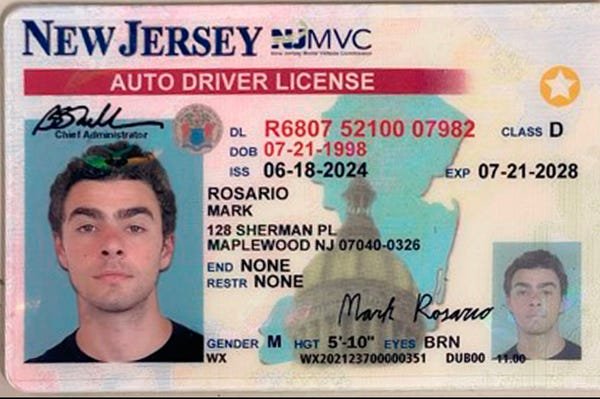
Prosecutors say Mangione tried to throw cops off the scent by claiming he was a “homeless” guy named “Mark.” He handed them this ID.

The license Luigi Mangione is charged with forging bears the false name “Mark Rosario” and a fake New Jersey address.

Manhattan District Attorney’s Office/Business Insider

“What’s your name?” the first of two patrolmen entering the McDonald’s asked. “Uh, Mark,” Mangione answered, according to sealed police bodycam footage shown in court Monday. He told them he was homeless.

Here is the New Jersey license that Mangione then gave the two cops. Moments later, he complied with the command to pull down his blue and white paper medical mask. “I knew it was him immediately,” Patrolman Joseph Detwiler testified, adding, “I stayed calm.”

Bodycam footage showed the officer whistling along as Jingle Bell Rock played on the McDonald’s sound system — to keep Mangione calm as well, he told the judge.

An arresting officer testified he was concerned Luigi Mangione could be dangerous, in part because he’d seen images like this one.


This is a still photo from sidewalk surveillance video of the fatal shooting of UnitedHealthcare CEO Brian Thompson, shown during an evidence suppression hearing in state court in Manhattan.

A still photo from sidewalk surveillance video that was shown at the hearing of the fatal shooting of UnitedHealthcare CEO Brian Thompson.

Manhattan District Attorney’s Office/Business Insider

Detwiler had closely followed the manhunt for Thompson’s killer, the veteran patrolman told New York Supreme Court Justice Gregory Carro from the witness stand.

He’d said he’d seen NYPD social media postings publicizing the as-yet-unnamed shooting suspect’s face. Elsewhere online, he had seen surveillance footage of the shooting, which was played in court.

“I knew in New York that they hadn’t found the firearm,” Detwiler testified to explain that safety was behind the decision to frisk Mangione and search his backpack before arresting him on the initial Pennsylvania charges of forgery and providing a false ID to law enforcement.

Additional evidence was taken from Mangione at Altoona’s police station, including a small folding knife and $7,800 in large bills.


Currency taken from Luigi Mangione included 77 $100 bills and one $50 bill.

Currency taken from Luigi Mangione by Altoona, Pennsylvania police included 77 $100 bills and one $50 bill.

Manhattan District Attorney’s Office/Business Insider

Before they left the McDonald’s, Mangione alerted the police to a small folding knife they’d failed to find in his pocket. It was of legal size, Detwiler’s partner, Patrolman Tyler Frye, testified Thursday, adding that even so, “It could possibly hurt somebody — seriously.”

At the Altoona police station, a more thorough search of Mangione’s clothing and backpack recovered $7,800 in large bills and currency from Thailand, Japan, and India, totaling $1,620. “There’s a gun,” Patrolwoman Christy Wasser is heard saying in footage showing her searching Mangione’s backpack.

Given the gun and the overlooked knife, the decision was made to strip-search Mangione.


Source link

Meta-delays-release-of-new-mixed-reality-glasses-code-named-Phoenix.jpeg

Meta delays release of new mixed reality glasses code-named ‘Phoenix’ in order to ‘get the details right’

Meta is delaying the release of new mixed reality glasses code-named “Phoenix.”

The company planned to release the new device in the second half of 2026, but it is pushing back its timeline to the first half of 2027, Maher Saba, VP of Reality Labs Foundation, wrote in a Thursday memo to employees, which was seen by Business Insider.

In a separate memo, also viewed by Business Insider, metaverse leaders Gabriel Aul and Ryan Cairns said moving the release date back is “going to give us a lot more breathing room to get the details right.”

They added, “There’s a lot coming in hot with tight bring-up schedules and big changes to our core UX, and we won’t compromise on landing a fully polished and reliable experience.”

Meta declined to comment.

The “Phoenix” mixed reality glasses, which were previously reported on by The Information, have a goggle-like form factor and are connected to a puck to help power them, according to two employees who have seen the device and spoke anonymously as they are not authorized to talk to the press.

The two employees said the model looks similar to Apple’s mixed reality glasses Vision Pro. There was some skepticism among leaders about the puck, but they chose to keep it to help keep the glasses lighter and more comfortable, and to prevent it from overheating, they said.

Saba said in the memo that at a recent meeting with CEO Mark Zuckerberg, Reality Labs (RL) leaders received feedback on their plans for 2026, which he said “focused on making the business sustainable and taking extra time to deliver our experiences with higher quality.”

“Based on that, many teams in RL will need to adjust their plans and timelines,” he added. “Extending timelines is not an opportunity for us to add more features or take on additional work.”

Meta also plans to release a new “limited edition” wearable device code-named “Malibu 2” in 2026, according to Saba.

Meta is starting work on its next-generation Quest device, a product that Aul and Cairns wrote will be focused on immersive gaming, and represent a “large upgrade” in capabilities from its existing devices, and “significantly improve unit economics.”

In October, Meta reorganized its metaverse unit and tapped Aul, who led products for Meta Horizon, and Cairns, who was previously in charge of virtual reality hardware, to co-lead its efforts, Business Insider previously reported. The company is now considering budget cuts of up to 30% within its Reality Labs division, which could impact employees working on its virtual spaces platform, Horizon Worlds.

The company has also expanded its AI hardware push by acquiring Limitless, a startup that makes AI-powered pendant devices, the company announced Friday.

Have a tip? Contact this reporter via email at jmann@businessinsider.com or Signal at jyotimann.11. Use a personal email address and a nonwork device; here’s our guide to sharing information securely.


Source link

Judge-orders-Google-to-rebid-for-default-search-deals-every.jpeg

Judge orders Google to rebid for default search deals every year in a major antitrust blow

  • A federal judge ordered Google to limit default search and AI app contracts to one year.
  • The ruling follows a 2024 finding that Google illegally monopolized online search markets.
  • The decision aims to boost competition from rivals in search apps and generative AI.

A judge opened the door to upending Google’s dominance as the default search on your phone.

On Friday, a federal judge ordered Google to limit all default search and AI app contracts to one year, a setback for the long-term deals that have helped cement the company’s dominance on billions of devices.

The ruling, detailed in a December 2025 judgment, requires Alphabet’s Google to renegotiate every default-placement agreement annually, including lucrative deals with Apple’s iPhone and manufacturers like Samsung.

Judge Amit Mehta of the US District Court of the District of Columbia said the “hard-and-fast termination requirement after one year” is necessary to enforce antitrust relief after his landmark 2024 finding that Google illegally monopolized online search and search advertising.

The decision aims to open the door for rivals, especially fast-moving generative AI companies, to compete for default spots that have historically been held for years at a time. It builds on a separate September order requiring Google to share some of the data behind its search rankings with competitors.

While Google can still pay device makers for default placement, the annual renegotiation rule sharply restricts its ability to secure long-term control over the search market.

Google and the Justice Department did not immediately respond to requests for comment.


Source link

SHRM-the-worlds-largest-HR-group-has-been-hit-with.jpeg

SHRM, the world’s largest HR group, has been hit with an $11.5 million verdict in a racial discrimination lawsuit

A jury on Friday issued an $11.5 million verdict against the world’s largest HR organization over allegations it had racially discriminated and retaliated against a former employee.

The Society for Human Resource Management, known as SHRM, was found liable for racial discrimination and retaliation and hit with a ruling of $1.5 million in compensatory damages and $10 million for punitive damages, according to Ariel DeFazio, a lawyer for the plaintiff.

SHRM said it plans to appeal the decision. “Today’s decision does not reflect the facts, the law, or the truth of how SHRM operates,” the trade group said in a statement. “We have acted with integrity, transparency, and in full alignment with our values and obligations.”

SHRM was sued in 2022 by Rehab Mohamed, who worked at the trade group as an instructional designer from 2016 to 2020. The case was tried over the course of five days in a Colorado federal court.

“The optics are bad because they’ve held themselves out as an authority on best practices,” said Alice K. Jump, an employment attorney and partner at law firm Reavis Page Jump.

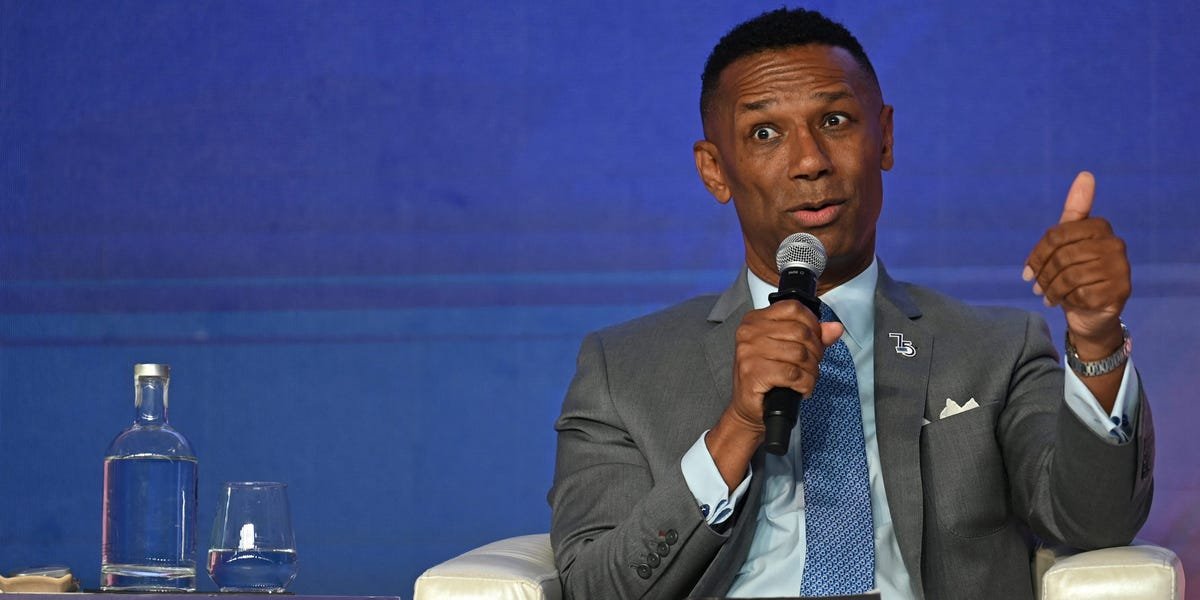
Mohamed said in her suit that she was racially discriminated against by a white supervisor and faced retaliation for complaining to management. She said she raised concerns about racial discrimination and retaliation with leadership, including SHRM’s CEO, Johnny C. Taylor Jr., and its head of human resources, throughout the summer of 2020.

While testifying on December 4, Taylor said he wasn’t involved in Mohamed’s termination. A former SHRM employee, Mike Jackson, who said he was responsible for investigating the matter, told the court that Mohamed’s was the only discrimination claim he had ever investigated.

In response to questions from Hunter Swain, another of Mohamed’s lawyers, Jackson said that he left SHRM in 2021 and his title was manager of employee experience. He said he became a certified HR professional while employed there and that he had undergone one training session on HR investigations just a few months before the discriminatory events that Mohamed cited in her lawsuit took place.

When asked by Swain what he learned from the training, Jackson said he couldn’t remember any specifics.

SHRM has consistently denied Mohamed’s claims. In September, SHRM asked the court to bar Mohamed from introducing evidence or argument that the organization is a specialist in HR best practices.

The following month, US District Judge Gordon P. Gallagher denied SHRM’s request, saying its “asserted expertise in human resources is integral to the circumstances of this case and cannot reasonably be excluded.”

In his testimony, Taylor said SHRM’s work includes advising HR professionals about best practices, including those pertaining to investigating internal complaints of discrimination and retaliation. He said SHRM has a set of curricula around best practices for investigating employment complaints.

The verdict was not surprising given that SHRM promotes itself as an expert in HR, Boston employment lawyer Evan Fray-Witzer told Business Insider. “You’re going to be held to a higher standard,” he said.

In recent years, SHRM has been embroiled in various controversies, as Business Insider recently reported. These include a new attendance policy that penalizes workers who arrive even a minute after 9 a.m.; a memo about a “conservative” dress code that bans sequins; and a companywide meeting in which Taylor said some staffers were “entitled,” “complacent,” and “sloppy.”

During pre-trial discovery for Mohamed’s case, SHRM revealed the existence of two other discrimination complaints from employees. One case, filed with the Equal Employment Opportunity Commission in 2018, was settled. The other, filed with a California regulator in 2021, is pending. SHRM also denied wrongdoing in those cases.

“We are very happy that the jury spent a week listening very closely to the evidence and that they decided, as a result, to hold SHRM accountable,” Mohamed’s lawyer, DeFazio, told Business Insider. She said the verdict would “send a message to workplaces in the entire country.”


Source link