A woman in glasses wearing a blue dress standing in front of a bush.

When I was diagnosed with low sperm count, I felt guilty and embarrassed. I want to break the taboo.

This story is based on an interview with Brian Mazza, 41, who has appeared on the cover of “Men’s Health.” Mazza was recently named “Champion for Male Fertility Advocacy” by the World Fertility Awards. The conversation has been edited for length and clarity.

Before we got married in 2014, my wife, Chloe Melas, a journalist, and I were very much aligned on wanting children in the future. It’s a huge step for anybody in a relationship, but we agreed that it would be great to start a family together.

Then, around a year after the wedding, we tried to get pregnant — without success.

The sense of disappointment each month was challenging and disheartening. Like anything else in life you want to accomplish, it becomes frustrating when it’s not working out.

It wasn’t ideal for both of us and caused a lot of issues, which weren’t fun. It was a strain and kind of brutal.

The test to determine my sperm count felt awkward

Fortunately, we were able to find a good, straight-talking doctor who ran a series of tests. Chloe was found to have a diminished ovarian reserve, but they wanted to check me out, too.

It was awkward and strange. Everybody in the waiting room knew why you were there, which was fine, but then you were ushered into a room next to the secretary’s desk. It felt a bit strange.

My test was back in 2016. Thankfully, there are now a lot of companies that allow you to sort everything out in your own home.


A man wearing a tuxedo

Mazza attends the Michael Rubin Reform Alliance Casino Night Event in September 2025 in Atlantic City, New Jersey.


Photo by Dimitrios Kambouris/Getty Images for Reform Alliance


The results showed I had a low sperm count, which proved to be the primary cause of the issues. If someone asked if I felt guilty, embarrassed, or was worried that Chloe was resentful toward me, I’d answer yes.

I was extremely fit, eating well, and doing everything to meet the expectations of an elite performer in life. I thought, “What is getting in the way of this goal?”

I began to wonder if I’d done something in the past that was responsible. It wasn’t the case, but I wanted to look at the full road map.

I went to every appointment with the fertility doctor

Then, since I’ve always been a problem solver and a reverse engineer, I thought, “How can we approach the situation?”

We had no luck with intrauterine insemination (IUI) and moved on to IVF. The process was pretty easy from a male perspective because you are physically removed.

Still, I went to every doctor’s appointment to listen to the advice. It was hard to see Chloe go through what she did, but we tried to focus on the end result.

We didn’t share our journey with family or friends at the time. It was to protect the situation and not feel like we were letting people down.


A family of four on a dinghy

Mazza and Melas with their sons.


Courtesy of Brian Mazza.


Thankfully, we got pregnant on our first round of IVF. We were thrilled, and it turned into elation when our son, Leo, was born in July 2017.

We went through the same process, and Luke arrived exactly two years later.

I advocate for increased awareness of male factor infertility

Holding Leo and Luke in my arms was every dream that I’d ever dreamed. I’d wanted to become a father so much.

I’m speaking up about male factor infertility because it’s a topic that should be openly discussed. I hope that I’m helping to remove the stigma. It’s useful when someone who has been through an experience like ours can share their story.

As the years pass, I find myself gazing at my boys — now 8 and 6 — with joy and wonder. They’re bright, athletic, and kind. Chloe and I call them our miracles.


Source link

Tatiana-Schlossberg-granddaughter-of-JFK-and-climate-journalist-has-died.jpeg

Tatiana Schlossberg, granddaughter of JFK and climate journalist, has died at 35

  • Tatiana Schlossberg, granddaughter of JFK and climate journalist, has died at age 35.
  • Schlossberg recently revealed her acute myeloid leukemia diagnosis in a New Yorker essay.
  • “She will always be in our hearts,” her family wrote in a post on Instagram.

Tatiana Schlossberg, a granddaughter of President John F. Kennedy and a prominent climate activist and environmental journalist, died on December 30 at age 35, her family announced through a social media post.

“Our beautiful Tatiana passed away this morning,” the post, signed by her family and posted to Instagram, read. “She will always be in our hearts.”

Schlossberg, a mother of two children, recently revealed in an essay for the New Yorker that she had been diagnosed with acute myeloid leukemia shortly after her daughter’s birth in May 2024.

This is a developing story. Please check back for updates.


Source link

Inside-the-rise-fall-and-resurrection-of-Toys-R-Us.jpeg

Inside the rise, fall, and resurrection of Toys R Us, the chain that once commanded a quarter of the toy market

  • Toys R Us opened pop-up stores at some US malls this holiday season.
  • The retailer has been the subject of multiple revival efforts since it ended operations in 2018.
  • Here’s a look at the history of Toys R Us, from its founding to zombie-brand status.

Toys R Us is back — again.

The latest phase of the toy store chain’s comeback came this holiday season as Toys R Us stores popped up at a handful of malls around the US. The temporary stores are part of a broader revitalization opportunity by brand management company WHP and Go! Retail Group.

It’s the latest example of how the once-dominant chain is trying to make a comeback.

Toys R Us used to operate around 700 stores in the US. Then, after years of faltering financial results, the chain filed for Chapter 11 bankruptcy before deciding to liquidate and close its operations in 2018.

Since then, there have been multiple efforts to revive the brand, including opening locations within Macy’s department stores and teaming up with Amazon.

Here’s a closer look at the history of the historic toy company, from its founding just after World War 2 to the revival attempt.

Toys R Us was founded in 1948 by Charles Lazarus after he returned from World War II.

Charles Lazarus in front of an early Toys R Us store.


Mike Derer/AP


Lazarus was inspired by what was then the emerging post-war “baby boom” and sought a way to capitalize.

The company started as a baby goods and furniture store called Children’s Bargain Town in Washington, D.C.


toys r us store

Toys R Us had a different name when Lazarus founded the chain.


Mario Tama/Getty Images


In the subsequent years, Lazarus began expanding into toys and the company officially adopted the name Toys R Us in 1957.

Over the next two decades, Toys R Us played a significant role in putting iconic toys on the map for American youngsters, such as Mr. Potato Head.


mr potato head

Former NBA player Allen Iverson holds up a Mr Potato Head toy.

AP Photo/William Thomas Cain

Lazarus was able to corner the market by buying and selling so many toys that he could negotiate more lucrative contracts than his competitors.

The company was also known for bringing big names in for promotional events or philanthropic work, such as NBA Hall of Famer Magic Johnson.


toys r us magic johnson

Magic Johnson greets kids at a Toys R Us event.


AP Photo/Thomas Kenzle


Kids and their parents would line up for hours to meet their favorite stars — and do a little shopping while they were there.

In 1966, Lazarus sold the company to Interstate Sales to help finance a larger national expansion.


charles lazarus

Lazarus appears in front of a selection of toys with former President George HW Bush.


AP Photo/File


According to Encyclopedia.com, he transitioned from chief executive to head the Toys R Us division, which was already thriving at profits of $12 million.

In 1969, Toys R Us developed its beloved Geoffrey the Giraffe character.


geoffrey the giraffe

Toys R Us still uses Geoffrey as its mascot.


AP Photo/Seth Wenig


The mascot became synonymous with the brand and its advertising campaigns over the decades.

In 1974, parent company Interstate Sales filed for bankruptcy.


toys r us giraffe

A sign outside of a Toys R Us store.


Justin Sullivan/Getty Images


Lazarus handled the restructuring process, according to USA Today.

Lazarus sold off struggling pieces of the business and got the company back on track.


toys r us 1993

A customer walks over a large floor sticker featuring Geoffrey the Giraffe.


AP Photo/Daniel Hulshizer


In 1978, it was able to file its initial public offering.

In 1983, the company opened a clothing store spinoff called Kids R Us.


kids r us

Kids R Us was one of multiple spin-off brands that Toys R Us launched.


AP Photo/Marty Lederhandler


The Toys R Us empire was steadily expanding.

Lazarus eventually stepped down as chief executive in 1994.


toys r us 1990

Turtle Mania hit Teesside today, at the opening of the new Toys R Us at Teesside Shopping Park, Sandown Way, Stockton on Tees. 6th October 1990. Pictured, Emma Michelle Todd after opening the store.

Getty Images

The move signified a series of woes for the brand, including high executive turnover and the looming pressure of ecommerce.

Building upon the success of Kids R Us, the company expanded into baby clothing with Babies R Us in 1996.


babies r us


AP Photo/Julio Cortez


The stores saw success with selling baby-related merchandise.

In the 1990s and early aughts, Toys R Us began expanding into major cities like New York.


Toys R Us store 1990


AP Photo/Richard Drew


In the Big Apple, Toys R Us opened its iconic multi-story store with a fully functioning Ferris wheel in 2001.

Around this time, Toys R Us and its spinoff brands began to experience mounting competition from fellow big-box stores like Walmart and Target.


Toys R Us black friday


Tom Pennington/Getty Images


In fact, according to The Associated Press, in 1998, Walmart had already surpassed the company as the top US toy seller.

The mounting competition led to the eventual closure of Kids R Us.


kids r us


Tim Boyle/Getty Images


All 146 Kids R Us stores were closed in 2003.

In 2005, a conglomerate of private equity firms — including Bain Capital, Kohlberg Kravis Roberts, and Vornado Realty Trust — purchased Toys R Us for $6.6 billion, taking the company private in the process.


toys r us exterior


Getty

According to USA Today, the plan was to boost Toys R Us sales and position the company for a stock offering that would allow investors to cash out.

In an attempt to compete with the ecommerce boom, the company purchased Etoys.com and Toys.com in 2009.


fao schwarz 2640


Business Insider/Jessica Tyler

That same year, it bought KB Toys and the famed New York City toy store, F.A.O. Schwarz.

In 2010 the company registered once again to go public.


toys r us


Stan Honda/AFP via Getty Images


However, by 2013 it withdrew from the process due to sales slumps, according to USA Today.

In 2015, Dave Brandon – formerly the CEO of Domino’s Pizza — took over the helm of Toys R Us.


david brandon


AP Photo/Tony Ding


According to USA Today, Brandon marked the fourth CEO over the course of 16 years “tasked with turning the company around.”

Still, the company continued to struggle, especially during the 2016 holiday season.


toys r us bikes


Joe Raedle/Getty Images


According to Business Insider, the chain lost significant traction to ecommerce giants like Amazon, Target, and Walmart.

The company officially filed for Chapter 11 bankruptcy protection in September 2017.


Toys R Us shopper


Richard Drew/AP Images

The chain hoped to gain control of its debt and continue to operate its 1,600 stores around the world as normal, according to the Washington Post.

With its hopes for a financial savior ultimately dashed, Toys R Us announced in March 2018 that it would liquidate and permanently close all of its 700-plus stores across the US.


toys r us closing


AP Photo/Julio Cortez


According to Business Insider, the decision threatened the jobs of the 33,000 people employed by Toys R Us at the time.

That same year, the company issued an emotional goodbye as it prepared to permanently shutter its Toys R Us and Babies R Us websites.

“We encourage you to stop by your local store and take full advantage of the deep discounts and deals available,” the message read. “Thank you for your business and support over the years.”

It was later announced that gift-card holders could use any remaining funds at Bed Bath & Beyond stores, according to Business Insider.

The CEO of the toy company MGA Entertainment issued a last-minute bid of $890 million to save the company.


black friday 2004 Toys R Us


Shannon Stapleton/Reuters

However, the offer was ultimately rejected by Toys R Us.

Throughout the rest of 2018, stores like Walmart began to position themselves to take over the void left behind in the market by Toys R Us.


Walmart, New Jersey

Walmart Supercenter in New Jersey

Rachel Askinasi/Business Insider

The chain strategized to overtake Toys R Us’s legacy by adding mass amounts of baby-related products to its inventory.

By the fall of 2018, abandoned Toys R Us stores had been temporarily converted into Halloween costume shops across the country.


toys r us closing 9006


Business Insider/Jessica Tyler

According to Business Insider, Halloween costume retailers Spirit Halloween and Halloween City set up shop in the abandoned stores but kept most of the remaining Toys R Us signage and wallpaper.

In February 2019, Toys R Us appeared to rise from the dead when Tru Kids Brands purchased the rights to the company.


Toys R Us store front


Courtesy of Tru Kids Brands

Tru Kids Brands also purchased the rights to the Geoffrey the Giraffe mascot with plans to revitalize it.

Later that year, Tru Kids Brands announced it would open a series of holiday pop-up stores under the Toys R Us name.


tru kids

Toys R Us redesigned store rendering.

Tru Kids

The stores would sell popular toys directly from manufacturers, meaning that any sales would directly go to the toy companies rather than Toys R Us.

Read more: Toys R Us is officially back from the dead, but its new stores won’t actually make any money selling toys

In October 2019, the company announced it was back online but with a catch — you couldn’t actually buy anything directly from the Toys R Us site.


toyrs r us dot com


ToysRUs.com


Instead, users would be directed to make purchases from Target’s website.

In fall 2019, empty Toys R Us stores were once again used for Halloween purposes — this time to host haunted houses.


Toys R Us Haunted house


Shoshy Ciment/Business Insider

The haunted houses were a far cry from the joy-filled Toys R Us stores of the 1990s.

In August 2020, it was confirmed that Toys R Us had ended its partnership with Target.


toys r us amazon


Toys R Us


Toys R Us would now partner with Amazon as its fulfillment partner, according to Business Insider.

The coronavirus pandemic decimated in-store sales for many retailers, including Toys R Us.


toys r us store

A Toys “R” Us storefront closed during the coronavirus pandemic.

Andrew Chin/Getty Images

CNBC reported in January 2021 that the retailer was facing hardships due to dwindling in-store sales amid the coronavirus pandemic. As a result, the chain’s last two remaining stores in the US officially shuttered for good, bringing an end to a years-long ordeal to attempt to revitalize the brand.

The final stores were in Texas and New Jersey, Bloomberg reported.

“Consumer demand in the toy category and for Toys ‘R’ Us remains strong and we will continue to invest in the channels where the customer wants to experience our brand,” a Tru Kids spokesperson told CNBC.

Read more: The last 2 Toys ‘R’ Us stores in the US have closed down after the COVID-19 pandemic hit sales

In 2022, Toys R Us announced it was making yet another comeback, by opening in-store shops at Macy’s around the country.


Macy's Toys R Us homepage

Macy’s Toys R Us homepage

Macy’s

The Toys R Us in-store locations opened in time for the holiday season that year.

In 2025, Toys R Us opened pop-up shops in time for holiday shoppers.


The entrance to a Toys R Us store in Maryland.

A Toys R Us pop-up location in Maryland

Alex Bitter/BI

The stores, operated by Go! Retail Group, include eight flagship locations and 20 seasonal pop-ups around the US.

The stores are different from the original Toy R Us locations.


A banner above some calendars at Toys R Us reads:

A selection of calendars sits under a banner at a seasonal Toys R Us store.

Alex Bitter/BI

Although the pop-ups use the Toys R Us name and slogans, they also feature a different product selection compared to the Toys R Us stores of years past, Business Insider found during a recent visit to one store in Maryland. The store included a wide selection of calendars, for example.

While Toys R Us technically still exists, the brand is a shadow of what it once was.


Black friday women

Customers wait in line to enter Toys R Us in Times Square on Thanksgiving evening.

Yana Paskova/ Getty Images

While some shoppers were able to check out the brand’s pop-up stores, the chain has far fewer locations than it did a decade ago.


Source link

3-reasons-buying-Manus-could-give-Meta-a-much-needed-AI.jpeg

3 reasons buying Manus could give Meta a much-needed AI boost

AI dealmaking isn’t slowing down — and it’s Meta’s turn again.

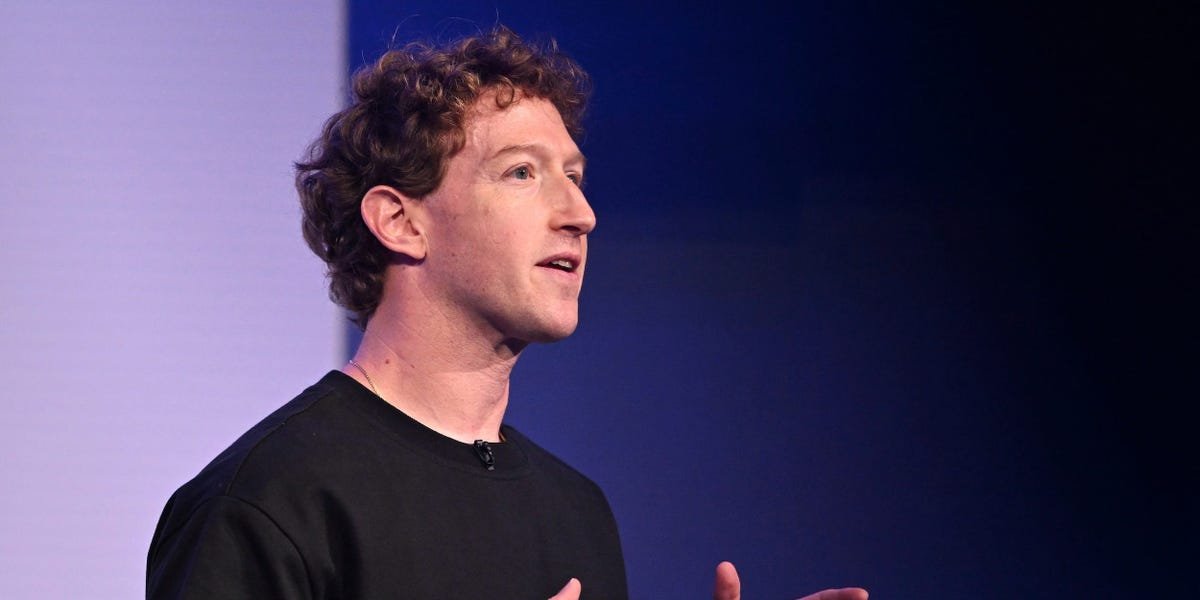
The social media giant is buying Manus, a Singapore-based artificial intelligence startup, the companies announced on Monday.

Manus went viral in March when it previewed an AI agent that could autonomously perform tasks like screening résumés and stock analysis. Manus was created in China but relocated to Singapore in mid-2025. Meta paid more than $2 billion for Manus, the Wall Street Journal reported.

The deal is the latest in a flurry of red-hot AI investment and acquisitions this year, which includes Meta’s $14 billion investment in Scale AI in June. From providing an instant AI revenue source to giving it a leg up in AI agents, here’s why buying Manus could give Meta a much-needed boost in the AI race.

1. It’s an instant revenue generator

Manus said in December that it had processed more than 147 trillion tokens of text and said its users were in the “millions.” It also claimed to have crossed $100 million in annual recurring revenue, achieving both milestones eight months after launch.

Those numbers tell us Meta is getting a startup with a built-in audience of paying users. Meta’s business model to date has largely revolved around building free products and making money from collecting user data and targeted advertising. Manus offers a free tier for basic tasks, but charges users up to $200 a month for its pro tier.

“The purchase gives Meta a functioning business with paying customers, meaningful revenue and infrastructure already proven at scale,” said Murthy Grandhi, company profiles analyst at research firm GlobalData, in a note.

In its announcement, Meta said it plans to continue selling the Manus service separately while also integrating Manus’s technology into its existing platforms, which include Facebook, Instagram, and WhatsApp. Meta did not elaborate on which ones or how it might do so. Meta has poured billions into building up its internal AI teams and developing what is termed “superintelligence,” with so far little in terms of returns. Manus could be a way for Meta to start making money directly from AI while it continues to build out its internal efforts.

2. Manus is a big bet on agents

Meta has struggled to wow consumers and developers as much as OpenAI and Google when it comes to raw model power. However, as these models become increasingly commoditized, there is a growing need to show AI can actually be useful. One such way is AI agents, a type of software that can proactively make decisions and take actions, such as creating a marketing campaign or monitoring and fixing bugs in apps.

Buying Manus could prove a smart bet on the idea that the real value will lie in the programs that sit on top of the models. Manus primarily uses other companies’ AI models, like Anthropic’s Claude, as building blocks and layers its own software on top.

“People keep assuming a small update from OpenAI or Google will wipe out a lot of AI startups,” wrote Yuchen Jin, CEO of the AI startup Hyperbolic, in an X post about Meta’s Manus deal. “But in reality, the AI application layer should be where most of the opportunity is.”

A Meta spokesperson did not immediately respond to a question about which models Manus would support following the acquisition.

3. Meta can use its distribution advantage

One of Meta’s strengths is that its platforms are used by billions of people, which, like Google, gives it a distribution advantage. Its challenge is to find ways to keep them coming back.

Unlike Google with Gemini 3, Meta has yet to have a buzzy AI breakthrough moment with its own in-house models. Combining Manus’s “general-purpose agents” with Meta’s distribution channels gives the social media company another shot at that, particularly as CEO Mark Zuckerberg has acknowledged that Facebook has shifted from being a place for friends to view each other’s content to a “broad discovery and entertainment space.”

“Manus offers a ready-made, high-margin software layer that can be sold directly and integrated across Meta’s consumer and enterprise products,” said GlobalData’s Grandhi.


Source link

Photos-show-how-US-presidents-have-redecorated-the-Oval-Office.jpeg

Photos show how US presidents have redecorated the Oval Office through the years, from Taft to Trump

  • US presidents have redecorated the Oval Office in different ways since it was first built in 1909.
  • Most presidents have sat at the Resolute Desk, but others brought in their own personal furniture.
  • President Donald Trump has added numerous gold embellishments to the Oval Office.

It’s been nearly 100 years since the Oval Office was first built under President William Howard Taft. Throughout that time, US presidents have each made different design choices to redecorate the formal workspace.

Some presidents, like President George H.W. Bush, have brought in their own furniture to replace the Resolute Desk. Others, like President Donald Trump, have reinstated vintage Oval Office pieces while adding their own personal flair.

Take a look at how the Oval Office has changed through the years.

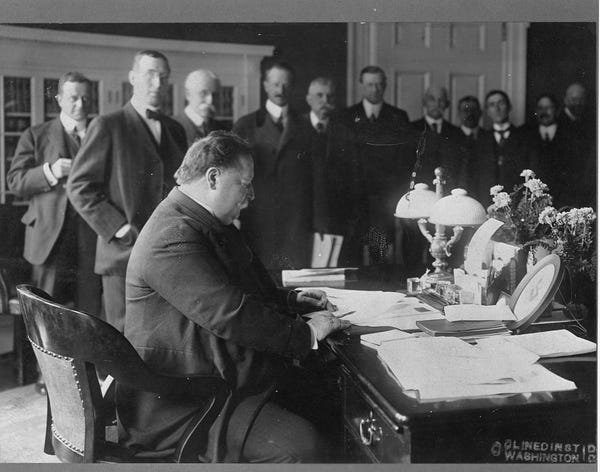
The first iteration of the Oval Office was built under President William Howard Taft in 1909 as part of an expansion of the West Wing.

President William Howard Taft in the Oval Office.

B.M. Clinedinst/Library of Congress/Corbis/VCG via Getty Images

Inspired by the White House’s oval-shaped Blue Room, the president’s formal workspace was designed by architect Nathan C. Wyeth.

Taft’s Oval Office featured an olive-green color scheme.

President Franklin D. Roosevelt redesigned and moved the Oval Office as part of another West Wing expansion in 1934.


FDR in the Oval Office.

President Franklin D. Roosevelt in the Oval Office.

History Archive/Universal Images Group via Getty Images

The Oval Office was moved to the southeast corner of the White House.

Roosevelt kept a variety of items on his desk, including photos of his sons, ceramic animal figurines, and an appointments easel with his daily schedule, according to the Franklin D. Roosevelt Presidential Library and Museum.

President Harry Truman’s Oval Office was the first to feature a rug with the presidential seal.


Harry Truman in the Oval Office.

President Harry Truman with staff in the Oval Office.

FPG/Archive Photos/Getty Images

Truman decorated the Oval Office with the turquoise rug and matching curtains. The walls were painted a lighter seafoam green.

President John F. Kennedy was the first president to use the Resolute Desk in the Oval Office.


The Resolute Desk in the Oval Office.

The Resolute Desk in the Oval Office.

Cecil W. Stoughton/White House Photo

The Resolute Desk, made of wood from the British ship H.M.S. Resolute, was gifted to President Rutherford B. Hayes by Queen Victoria in 1880. Previous presidents kept the desk in the second-floor office of the White House Residence and the Broadcast Room, according to the White House Historical Association.

President Lyndon Johnson replaced the Resolute Desk with his own desk, which he’d used as a US senator and vice president.


Lyndon Johnson in the Oval Office.

President Lyndon Johnson in the Oval Office.

Corbis via Getty Images

He also redecorated the Oval Office with white drapes with red trim, evoking the American flag.

President Richard Nixon chose bold hues of blue and yellow to decorate the Oval Office.


Richard Nixon's Oval Office.

President Richard Nixon’s Oval Office.

Bettmann Archive/Getty Images

Nixon’s Oval Office rug, in the same blue color as the American flag, was designed by first lady Pat Nixon.

President Gerald Ford changed the color scheme of the upholstery to burnt orange and khaki.


Gerald Ford in the Oval Office.

President Gerald Ford in the Oval Office.

Historical/Corbis via Getty Images

Ford’s decor included the wheel from the SS Mayaguez, an American container ship that was seized by Cambodian forces in 1975 and rescued at Ford’s direction.

Ford also added a mahogany Seymour tall case clock in 1975.


The Oval Office in 1975.

The Oval Office in 1975.

Bettmann Archive/Getty Images

The clock, built between 1795 and 1805, has remained in the Oval Office under every subsequent president since 1975.

President Jimmy Carter brought the Resolute Desk back to the Oval Office.


Jimmy Carter in the Oval Office.

President Jimmy Carter in the White House’s Oval Office.

Corbis via Getty Images

Otherwise, he left most of Ford’s decor.

President Ronald Reagan redecorated the Oval Office during his second term with a rug designed by first lady Nancy Reagan.


Ronald Reagan in the Oval Office.

Ronald Reagan in the Oval Office.

HUM Images/HUM Images/Universal Images Group via Getty Images

The rug featured the presidential seal in the center with sunbeams emerging from the middle, surrounded by a border of olive branches.

President George H.W. Bush redid the Oval Office in shades of blue and gold and brought in the C&O desk that he used as vice president.


George HW Bush's Oval Office.

President George H.W. Bush’s Oval Office.

Susan Biddle/White House via CNP/Getty Images

The Resolute Desk was moved to the Residence Office.

President Bill Clinton chose Arkansas-based interior designer Kaki Hockersmith to give the Oval Office a new look.


Bill Clinton's Oval Office.

President Bill Clinton’s Oval Office.

BILL O’LEARY/The Washington Post via Getty Images

Hockersmith designed the yellow curtains and the blue rug with the presidential seal. Clinton also chose to bring the Resolute Desk back to the Oval Office.

First lady Laura Bush designed a new rug for President George W. Bush’s Oval Office.


George W. Bush's Oval Office.

President George W. Bush in the Oval Office.

Greg Mathieson/Mai/Getty Images

The rug featured a sunbeam design with the presidential seal at its center, reminiscent of Reagan’s rug, and a lone star in a nod to Bush’s home state of Texas.

President Barack Obama added striped wallpaper and a new rug with a quote from Martin Luther King Jr.


Barack Obama in the Oval Office.

President Barack Obama in the Oval Office.

HUM Images/Universal Images Group via Getty Images

The quote on the border of the rug read, “The arc of the moral universe is long, but it bends toward justice.”

During his first term, President Donald Trump reinstalled Reagan’s rug and added a portrait of President Andrew Jackson.


President Donald Trump in the Oval Office during his first term.

President Donald Trump in the Oval Office during his first term.

Official White House Photo by Joyce N. Boghosian

He also brought back Clinton’s gold curtains and chose a new off-white wallpaper.

President Joe Biden brought back Clinton’s Oval Office rug and added new portraits.


The Oval Office during Joe Biden's presidency.

President Joe Biden’s Oval Office.

Bill O’Leary/The Washington Post via Getty Images

Biden hung portraits of Franklin D. Roosevelt, Thomas Jefferson, and Alexander Hamilton.

In his second non-consecutive term, Trump has made significant changes to the Oval Office, adding numerous gold embellishments.


Donald Trump's gold-filled Oval Office.

President Donald Trump in the Oval Office.

Demetrius Freeman/The Washington Post via Getty Images

Many of the gold decor pieces in Trump’s Oval Office came from the White House collection, but Trump also imported some statuettes from his Mar-a-Lago estate in Palm Beach, Florida.

Trump also added flags representing different branches of the US military and additional presidential portraits, with President George Washington in the prominent center spot above the fireplace mantle.


Source link

Americans-are-living-in-a-career-industrial-complex-Venture-capitalist.jpeg

Americans are living in a ‘career industrial complex.’ Venture capitalist Bill Gurley explains how to break out and find your dream job.

A top Silicon Valley investor has an antidote for “quiet quitting.”

Bill Gurley is a general partner at venture capitalist firm Benchmark and the author of “Runnin’ Down a Dream, How to Thrive in a Career You Actually Love.” Gurley told Neal Freyman and Toby Howell on the “Morning Brew Daily” podcast that aired on Sunday that it is “horrific” how some people are actively disengaged at work, but the heart of the matter is that people “aren’t ending up in the right place.”

“We developed this mindset where you push kids toward economic safety — doctors, lawyers, jobs where unemployment is low, and salaries are high,” said Gurley. “But we’ve pushed a lot of kids into what I call the ‘career industrial complex.'”

Gurley said that the “career industrial complex” means pushing children toward a “résumé arms race” of standardization and credential accumulation, rather than encouraging curiosity and exploration.

A simple test as to whether you would be successful in your dream job, said Gurley, is whether you would be willing to learn on your own time.

“I like to say, you know, if you have three episodes of Breaking Bad left, would you study this instead?” said Gurley. “Like, does it compete with what you do in your free time?”

Gurley added that he once did a survey where he asked 10,000 people if they would choose a different career if given the chance to go back in time, and 60% said yes.

Gurley’s comments came as workplace trends such as “job hugging” and “quiet cracking” emerged in 2025.

While workers feared layoffs and the prospects of landing new roles dimmed for many young professionals.

A Gallup poll done in 2024 found that employee engagement in the US fell to its lowest level in a decade, with only 31% of employees feeling engaged. Additionally, workers under the age of 35 are less engaged compared to other age groups.


Source link

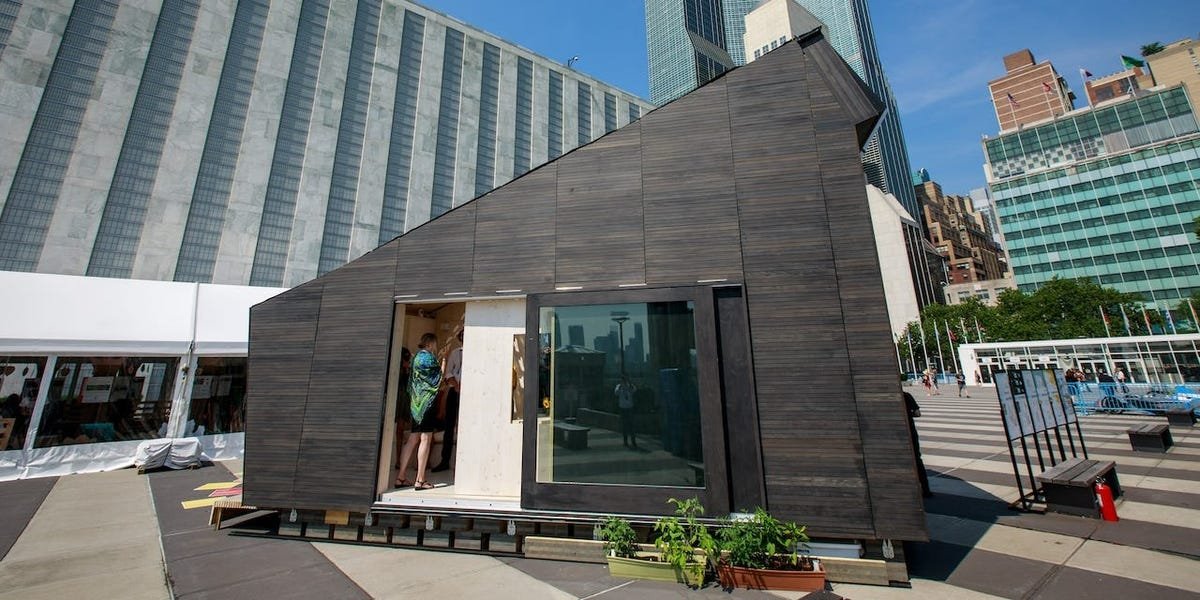
New-York-City-homeowners-can-apply-to-build-a-backyard.jpeg

New York City homeowners can apply to build a backyard tiny home

It’s open season for some New York City homeowners interested in building a tiny home in their backyard.

Under a sweeping zoning reform Mayor Eric Adams signed into law late last year, the city made it legal for certain one- and two-family homeowners to add an additional home, also known as an “ancillary dwelling unit” or ADU, to their property.

On September 30, 2025, the city finalized its rules for backyard and attic ADUs and began accepting applications from homeowners, although the government is still working on the rules for basement units. The city estimates that the reform — part of its City of Yes for Housing Opportunity package — will help create about 25,000 new homes in backyard cottages and converted garages, attics, and basements over the next 15 years. But the success of the reform will depend in large part on homeowners navigating high construction costs and regulations.

Wil Fisher has spent the last year preparing for this. The former city government employee founded a Queens-based firm, Unit Two Development, that helps homeowners determine whether their property is eligible for an ADU and connects them with contractors and others who can help them build one. Fisher said he and his team have identified well over 100,000 eligible individual properties, and they’ve talked with more than 100 of these homeowners, who largely live in Queens and Staten Island.

“The rules of the road are now written,” Fisher said. “It was a long process, but for the most part we’re off to the races.”

Most of the people Fisher has talked with are interested in adding an ADU to house a family member, including an aging parent or a relative with disabilities who needs care, or an adult child.

Maggie Ornstein is one of these homeowners. Ornstein, 47, lives with her mother in a house in western Queens that has been home to five generations of her family since the 1800s. She hopes to build an ADU for her mother, who’s undergoing treatment for cancer and is having difficulty navigating the stairs in their two-and-a-half-story home.

Ornstein, a public health geographer, has consulted with Fisher and determined that she could legally convert her garage into a home.

“My dream for an ADU on my property would be something that would be accessible, but might also have a second floor where a family member could potentially stay if they wanted to visit, or if I wanted to be with my mom in the ADU,” she said.

After months of planning and big picture discussions with potential clients, Fisher is starting to nail down the specifics of what his clients could build and what it might cost.

“Now is sort of the pivot from the conceptual to here’s exactly what it will take, and here are the cost implications of that,” he said.

Are you a New Yorker interested in building an ADU? Reach out to this reporter to share your experience at erelman@businessinsider.com.

Dealing with costs and regulations

One inevitable obstacle homeowners face is the steep price of building in the city. Fisher estimates that adding a backyard unit or converting a garage will start between $300,000 and $400,000, depending on the project’s size. That’s compared to the city’s median home price of $800,000.

The construction cost is out of reach for many homeowners who’d benefit most from adding an ADU to their property, said Thomas Yu, executive director of Asian Americans for Equality, an advocacy organization and affordable housing provider. Yu said there needs to be a much clearer and more affordable path to adding an ADU before the regulatory reform will unleash construction in lower and middle-income neighborhoods. He suggested tax abatements or grants for homeowners with more modest means.

Many of the New Yorkers Yu and his team work with live in overcrowded homes with multiple generations of their family. They could benefit from having a home for an older relative or an adult child who couldn’t otherwise afford to stay in the city.

“The ability for that generation to achieve independent homeownership is zero, particularly in New York City,” Yu said of younger New Yorkers. “So ADUs are the next half-step that’s needed for that.”

Ornstein said she’s been discouraged by the price tag on her potential project. She’s also turned off by how extensive and involved the construction would likely be, especially given her work schedule and caregiving responsibilities. She’s hoping to find some government funding to help pay for the project.

“It’s so much more expensive than I would have anticipated,” she said. “On the one hand, you wouldn’t be able to buy an apartment in New York City for what an ADU would cost to build. But on the other, it’s really a lot of upfront cost.”

The expense and hassle of adding an ADU might not make sense for homeowners who are just looking for rental income, Fisher said. But he expects the units will be easily rentable for those who want a tenant either immediately or in the future. Adding an ADU also tends to hike the property’s resale value.

“As far as I’m seeing, construction costs are a little too high for them to be a slam dunk rental investment from day one,” Fisher said. “But for folks who have a relative or an immediate need that exists within their own family or social network, these are going to be good investments in the long term.”

ADU construction is also limited by a slew of regulations. The units can’t be bigger than 800 square feet or take up more than a third of a homeowner’s backyard. The law also restricts basement ADUs in areas prone to flooding and prohibits them in attached homes, like townhouses.

The Regional Plan Association, a pro-housing nonprofit focused on the tri-state area, found that just 68,000 lots — 12% of the city’s one- and two-family properties — are eligible to add an ADU.

The city says it’s creating a “one-stop shop” full of information for homeowners interested in building an additional unit. The site will include a set of public, pre-approved backyard ADU designs submitted by architects, designers, and builders that homeowners can use to lower design costs and speed up the construction process.

“Efficiencies that can be built in are really going to be make or break for this market,” Fisher said.


Source link

Aditi Bharade

Brian Niccol said he wants Starbucks to feel like the coffee shop from ‘Friends’

Starbucks CEO Brian Niccol wants his cafés to feel like Central Perk from the TV show ‘Friends.’

During an interview with The Wall Street Journal, released Monday, Niccol spoke about his “Back to Starbucks” plan, a yearlong process of turning around the brand after several quarters of declining sales amid a deteriorating customer experience.

He told Alan Murray, president of The WSJ Leadership Institute, that the name “Back to Starbucks” helped to give his baristas a “visual understanding” of the café experience he was trying to achieve.

“Because everybody remembers a ‘Friends’ episode, or that coffee house experience, by me saying ‘Back to Starbucks,’ that kind of hearkens that memory of what I would call the barista-customer connection that we’re after,” Niccol said.

The coffee shop from the ‘Friends,’ Central Perk, was a pivotal set piece throughout the sitcom’s 10-season run. Almost every episode featured the café as the characters’ favorite haunt.

The cast was often filmed sitting on Central Perk’s mismatched sofas and chairs, ordering coffee and baked goods, and making small talk with the awkward manager, Gunther.

Niccol’s comparison of Central Perk to Starbucks comes after he spent more than a year rebranding Starbucks, from what customers and employees said was a soulless conglomerate chain, to a warm and inviting third place. He took the top job in September 2024.

He simplified the menu, introduced more seating and tables in the cafés, offered free coffee and tea refills, brought back the condiment station and ceramic mugs, and encouraged baristas to write small notes on coffee cups to interact with their customers.

However, its sales have yet to see a strong recovery. It reported a 1% increase in its global comparable sales for the fourth quarter of this year, compared to the same period last year. Its stock price is down more than 6% since the start of the year.


Source link

Jamba-Juices-former-CEO-says-middle-management-is-crucial-for.jpeg

Jamba Juice’s former CEO says middle management is crucial for success.

In the era of America’s “Great Flattening,” one longtime executive still believes that middle management has an important role to play.

Speaking in a Monday episode of Yahoo Finance’s “Opening Bid” podcast, Jamba Juice’s former CEO, James D. White, said companies should not lose sight of the fact that humans and company culture drive bottom-line growth.

And White said that middle managers are crucial for driving a good company culture.

“It’s really hard to drive culture into an organization if you’re not focused on the middle management of the organization,” he told host Brian Sozzi.

White said one reason for this is because most workers report to middle management.

“If that part of the organization doesn’t have the tools, hasn’t bought into the mission and vision, and they’re not being appropriately rewarded or invested in, you don’t have the best chance of getting that message into the heart of the organization,” White said.

White was the CEO of Jamba Juice from 2008 to 2016 and has held executive roles in Gillette, Coca-Cola, and Nestlé Purina. He now sits on the board of directors for several consumer companies, including Cava Group and Simply Good Foods.

White’s advice contrasts with that of other executives, who have sworn by a flat company hierarchy.

In recent years, companies like Microsoft, Meta, Amazon, Intel, and Google have all slashed their middle management head count in the name of efficiency. But it’s not just Big Tech: retail giants like Walmart have followed suit.

And in November, Keily Blair, the CEO of OnlyFans, said her company was making $7 billion in annual revenue with a staff count of only 42.

She said her company thrives from having only “incredibly senior talent” and “incredibly hungry junior talent.”

“We do not have that sort of squidgy layer of middle management in the middle, because nobody’s ever had a really good middle manager in my experience,” Blair said in the interview during a Web Summit technology conference in Lisbon.


Source link

OpenAI-wants-a-new-head-of-preparedness-but-heres-why.jpeg

OpenAI wants a new head of preparedness, but here’s why the $555,000 role could be hard to fill

Recruiting a new head of preparedness may be trickier for OpenAI than you might think.

The ChatGPT maker recently generated buzz online when it said the position — which pays $555,000 a year plus equity — is up for grabs. Yet some tech-industry observers say finding someone who’s qualified and willing to take it on poses a challenge.

Whoever lands it will be tasked with balancing safety concerns and the demands of CEO Sam Altman, who has shown a penchant for releasing products at an exceptionally fast clip. This year, OpenAI rolled out its Sora 2 video app, Instant Checkout for ChatGPT, new AI models, developer tools, and more advanced agent capabilities.

The head of preparedness role is “close to an impossible job,” because at times the person in it will likely need to tell Altman to slow down or that certain goals shouldn’t be met, said Maura Grossman, a research professor at the University of Waterloo’s School of Computer Science. They’ll be “rolling a rock up a steep hill,” she said.

Altman himself has even described the position as intense.

“This will be a stressful job, and you’ll jump into the deep end pretty much immediately,” he recently wrote on X.

Still, it could be a dream come true for the right individual. OpenAI has had a major impact on people’s lives, and the more than half a million dollars in base pay is in line with what AI talent can expect to earn these days.

Who might be qualified for the job

The posting for the position doesn’t list common requirements such as a college degree or a minimum number of years of work experience.

OpenAI said a person “might thrive” in the role if they have led technical teams; are comfortable making clear, high-stakes technical judgments under uncertainty; can align diverse stakeholders around safety decisions; and have deep technical expertise in machine learning, AI safety, evaluation, security, or adjacent risk domains.

OpenAI’s former head of preparedness, Aleksander Madry, moved into a new role in July 2024. He left a vacancy within the company’s Safety Systems team, which builds evaluations, safety frameworks, and safeguards for its AI models.

Madry has a background in academia, but a seasoned tech-industry executive would be a better fit going forward, said Richard Lachman, a professor of digital media at Toronto Metropolitan University. Academic types, he said, tend to be more cautious and risk-averse.

Lachman expects OpenAI to seek out someone who can protect the company’s public image regarding safety, while allowing it to continue innovating quickly and driving growth. “This is not quite a ‘yes person,’ but somebody who’s going to be on brand,” he said.

OpenAI’s approach to safety has raised concerns internally, prompting some prominent early employees, including a former head of its safety team, to resign. The company has also been sued by some people who allege it reinforces delusions and drives other harmful behavior.

In October, OpenAI acknowledged that some ChatGPT users have exhibited possible signs of mental health problems. The company said it was working with mental health experts to improve how the chatbot responds to those who show signs of psychosis or mania, self-harm or suicide, or emotional attachment.


Source link