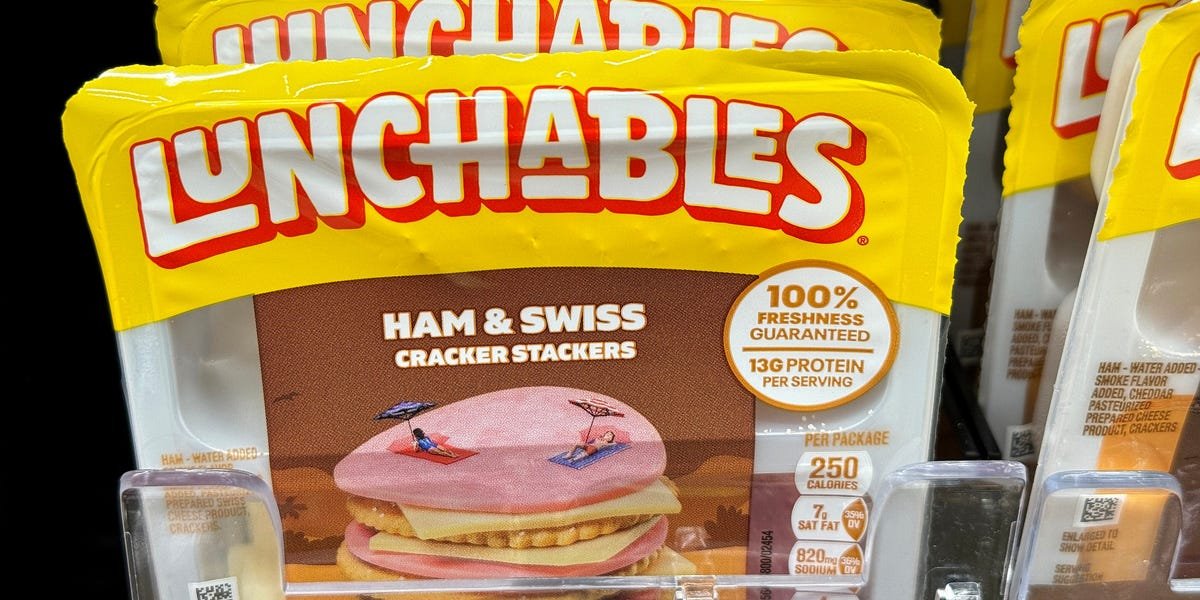
San Francisco is going after food brands that produce “ultra-processed foods,” accusing the companies of fueling a public health crisis.
The 64-page lawsuit, filed on December 2 by San Francisco City Attorney David Chiu, accused some of the country’s biggest food brands of selling dangerous, ultra-processed foods to residents of San Francisco.
It named 11 brands as defendants: The Kraft Heinz Company, Mondelez International, Post Holdings, The Coca-Cola Company, Pepsico Inc., General Mills, Nestlé, Kellanova, WK Kellogg Co., Mars Inc., and Conagra Brands.
The city attorney said the brands had profited from selling ultra-processed foods, which make people crave what they otherwise would not.The attorney accused the brands of failing to include health warnings, making fraudulent claims about the products being healthy, and of targeted marketing at children.
Products from these brands include cereals, candies, soft drinks, and ready-to-eat meals.
“They designed food to be addictive, they knew the addictive food they were engineering was making their customers sick, and they hid the truth from the public,” the attorney wrote, adding that taxpayers were left to foot the bill of a resulting public health crisis.
It said that ultra-processed foods majorly contribute to obesity, type 2 diabetes, cardiovascular disease, and other chronic illnesses.
Chiu called for the brands to cease further deceptive marketing and pay civil penalties to the city of San Francisco.
Representatives for the 11 brands did not respond to requests for comment from Business Insider.
The lawsuit comes as the US is clamping down on processed foods, a result of Health Secretary Robert F. Kennedy Jr.’s “Make America Healthy Again” movement.
In April, Kennedy said he would phase out eight petroleum-based food dyes in the US by 2027. And in July, President Donald Trump said that Coca-Cola had agreed to use real cane sugar in its products in the US, instead of corn syrup that it now uses.
American Eagle’s marketing campaigns are giving the company a meaningful boost.
The retailer has launched a number of campaigns this year that have been at the center of viral moments online.
It looks like they’re paying off financially. Its stock has been up this year, and its total revenue was $1.4 billion for the third quarter that ended November 1, roughly 6% higher year-over-year.
American Eagle raised forward-looking guidance for the fourth quarter, and its stock rose at least 10% after hours on Tuesday.
The boost was driven by its intimates and loungewear brand, Aerie, which saw comparable sales rise by 11%. While other retailers are spending big on AI products for consumers, Aerie is making a promise not to use the technology.
Its pledge not to use AI in its ads, shared in an Instagram post, garnered tens of thousands of likes, making it the brand’s most popular post in the past year as of October, Metricool, which tracks social media engagement, told Business Insider in October.
Its success is also due in part to the star power it tapped into with Sydney Sweeney and Travis Kelce being featured in campaigns that gained traction on social media.
Sweeney’s “Great Jeans” partnership in July drew criticism online from some who said the campaign had a negative message that promoted “regressive” beauty standards. American Eagle tripled down on the campaign.
“Sydney Sweeney sells great jeans. She is a winner, and in just six weeks, the campaign has generated unprecedented new customer acquisition,” chief marketing officer Craig Brommers said in September.
In August, American Eagle released a clothing line in collaboration with NFL star Travis Kelce and his Tru Kolors brand, one day after he announced his engagement to Taylor Swift.
The two campaigns combined made up 44 billion impressions, as it attracted more customers “than ever before.”
“American Eagle launched its largest, most impactful advertising campaigns ever, which are delivering results by collaborating with high-profile partners who are defining culture,” president and executive creative director Jen Foyle said on the Tuesday call.
The brand is not done forming an all-star cast of celerity partners. The most recent campaign is with Martha Stewart, and American Eagle is betting it’ll be a hit with Gen Z customers.
“Martha Stewart resonates with Gen Z. That’s a perfect example of what we’re up to,” Foyle said.
This story is available exclusively to Business Insider
subscribers. Become an Insider
and start reading now. Have an account? .
The 2025 Gotham Awards took place in New York City on Monday.
Celebrities like Tessa Thompson and Jacob Elordi wore stylish outfits to the awards ceremony.
Other stars, including Rihanna and Zoey Deutch, wore looks that missed the mark.
It’s the most wonderful time of the year, and no, I don’t mean the holidays. Awards season is officially upon us.
On Monday, the Gotham Film and Media Institute hosted its annual Gotham Awards, which celebrate independent films, at Cipriani Wall Street in New York City.
Stars from some of the biggest movies of the year gathered in lower Manhattan dressed to the nines for the unofficial start to the race for the Academy Awards.
While some celebrities nailed their red carpet looks, others wore outfits that fell flat. Here were some of the best and worst looks of the night.
“Sentimental Value” star Renate Reinsve arrived in an eye-catching, architectural gown.
Renate Reinsve attends the 2025 Gotham Awards. Taylor Hill/FilmMagic/Getty Images
Reinsve chose a red satin dress for the Gotham Awards.
The gown’s high neckline was accented by an oversized bow that sat at the back of her neck, which Reinsve highlighted by wearing her hair in a sleek updo. The bodice of the gown formed a point at her waist, creating cutouts on either side of her torso.
The skirt ruched slightly at the waist before flowing to the floor in a column style. Chic and structured, the gown was one of the best on the red carpet.
Rihanna’s pink look from Balenciaga had potential, but it didn’t quite work.
Rihanna attends the 2025 Gotham Awards. Taylor Hill/FilmMagic/Getty Images
The pink gown featured an off-the-shoulder neckline that formed short sleeves, revealing black gloves that covered nearly all of Rihanna’s arms.
The bodice bubbled out to her upper thigh, where it formed a dropped-waist skirt and flowed into a dramatic train. A pink and black necklace and a pink headpiece, which coordinated with the dress, tied the look together.
Elements of Rihanna’s outfit were strong, such as the color scheme and neckline, but overall, the look just had too much going on. The outfit could have been stronger if the dress had a simpler silhouette and Rihanna had opted not to wear a hat.
Jacob Elordi’s textured coat made his simple suit pop.
Jacob Elordi attends the 2025 Gotham Awards. Taylor Hill/FilmMagic/Getty Images
Elordi attended the Gotham Awards in a charcoal suit with a patterned green tie.
The suit was nice, but Elordi made the look truly stylish by wearing a gray, knee-length coat atop it. The subtle texture and longer length of the garment brought dimension to Elordi’s classic suit.
The floral appliqué on Li Jun Li’s white gown was stunning.
Li Jun Li attends the 2025 Gotham Awards. Mike Coppola/Getty Images for The Gotham Film & Media Institute
Li, who played Grace Chow in “Sinners,” arrived at the Gotham Awards in a cream gown.
Much of the bodice of Li’s dress was sheer, with three-dimensional floral appliqués covering the top and a line down the center. The line of flowers led to the low-waisted skirt, which was also slightly see-through and gathered in the center in pleats before flowing out into a train.
With delicate silver jewelry, Li’s look felt fresh and effortless.
Zoey Deutch’s feathered gown may have worked better in a different color.
Zoey Deutch attends the 2025 Gotham Awards. Taylor Hill/FilmMagic/Getty Images
Deutch arrived at the Gotham Awards in a short-sleeved, yellow dress from Prada. The entire dress was covered in feathers, from the scooped neckline to the floor-length skirt.
Although feathers can be fun, the sheer volume of them on this gown seemed to swallow Deutch. Plus, the bright color combined with the pattern was unfortunately reminiscent of Big Bird, which didn’t seem to be what Deutch was going for.
The dress may have been more successful in a different color that made the feathers feel less over-the-top.
Ruffled detailing made Tessa Thompson’s gown stand out.
Tessa Thompson attends the 2025 Gotham Awards. Taylor Hill/FilmMagic/Getty Images
Schiaparelli designed Thompson’s silver dress. It had a one-shoulder neckline, with layers of fabric creating large ruffles on the shoulder. The fitted bodice flared slightly at her waist to create a small peplum, contrasting with the sheath skirt.
Silver accessories, including playful cuffed earrings, completed the chic outfit.
Hilaria Baldwin’s floral minidress wasn’t a great choice for the event.
Hilaria Baldwin attends the 2025 Gotham Awards. Taylor Hill/FilmMagic/Getty Images
Baldwin shared on Instagram that she bought the Zimmermann dress she wore to the Gotham Awards after seeing it in the shop’s window the day before the event. The floral minidress was certainly pretty, with spaghetti straps, a corset bodice, and a layered skirt.
However, it looked out of place on the December red carpet, which was full of full-length gowns. Additionally, Baldwin’s accessories also seemed disjointed, particularly between her funky, sparkly heels and her more classic pearl jewelry.
Zimmermann makes a version of the same dress with a longer pencil skirt, which may have worked better for the Gotham Awards, especially if Baldwin had stuck to one aesthetic for her accessories.
Chase Infiniti’s Louis Vuitton gown was sleek and stylish.
Chase Infiniti attends the 2025 Gotham Awards. Taylor Hill/FilmMagic/Getty Images
Infiniti’s velvet Louis Vuitton gown — custom-designed for the “One Battle After Another” star — had a high neckline, pointed shoulders, and long sleeves.
Round cutouts on either side of the bodice broke up the gown, while the skirt hugged her figure before transitioning into a subtle train. She wore sparkly jewelry with the sophisticated gown.
Teyana Taylor’s top and skirt looked a bit disjointed together.
Teyana Taylor attends the 2025 Gotham Awards. Taylor Hill/FilmMagic/Getty Images
A voluminous skirt was the star of Taylor’s Chanel ensemble. Belted at the waist, it was adorned with red and white feathers and had a high-low hemline that created a dramatic train. The hemline also showed off Taylor’s white and black shoes.
The skirt was fabulous, but it would have made more of a statement with a different top, as Taylor wore it with a silky, cream-colored T-shirt. A fitted top or a shirt with a more interesting neckline would have worked better.
Elle Fanning elevated her white gown with statement jewelry.
Elle Fanning attends the 2025 Gotham Awards. Michael Loccisano/Getty Images
Fanning kept her outfit simple but beautiful for the Gotham Awards, wearing a white Ralph Lauren dress.
The gown’s halter neckline dipped to her waist and had an open back, while the chiffon skirt, which was slightly sheer, flowed to the floor.
Cartier jewelry, including a statement choker and bracelet, added a glitzy edge to Fanning’s ensemble.
There was too much color contrast in Alexander Skarsgård’s suit.
Alexander Skarsgård attends the 2025 Gotham Awards. Taylor Hill/FilmMagic/Getty Images
Skarsgård’s custom Valentino suit, designed by Alessandro Michele, featured a black shirt, black trousers, a cream tie, and a shiny pink jacket.
The pink jacket was fun on the red carpet, but there were too many different colors in Skarsgård’s look to make the jacket really stand out. If he had worn a pink tie or opted for a white shirt, the colors may have worked better together.
Riley Keough popped in red at the Gotham Awards.
Riley Keough attends the 2025 Gotham Awards. Taylor Hill/FilmMagic/Getty Images
The bodice of Keough’s Chanel gown was red with a subtle ruched pattern. The high neckline and long sleeves were trimmed with black ruffles, complementing the dropped-waist skirt, which was made of tiered black, red, and white fabric.
She paired the gown with open-toed black shoes, silver hoops, and loose waves in her hair, creating a look that was funky and stylish.
Two “code red” alerts — the first from a veteran tech giant worried about a buzzy AI upstart, the second from the AI upstart after the tech giant gained ground.
What a difference three years can make.
News of a recent Sam Altman memo to OpenAI employees, first reported by The Information, is reverberating around the tech world and highlighting the competitive heat it’s facing as Google narrows the gap in the AI race.
On Monday, Altman reportedly told OpenAI employees in an internal Slack memo that he was issuing a “code red” and that the company would be putting more resources into ChatGPT and delaying other products as a result.
Altman’s memo illustrates just how much the AI race has changed. In 2022, Google’s management issued its own “code red” in the wake of ChatGPT’s launch, a moment that illustrated in sharp relief just how far behind the search giant was in the AI race despite financing the breakthrough research that paved the way for AI’s development.
Three years later, it’s clear that OpenAI’s throne is under threat. Here are some of the pressure points it’s facing as Google nips at its heels.
Google is catching up
The elephant in the OpenAI room is Google’s Gemini 3 AI model, which debuted to widespread praise.
The model’s capabilities demonstrated that Google is no longer far behind in the AI race. It’s not just OpenAI that’s unnerved, either. Nvidia, the world’s most valuable company by market cap, recently found itself defending its AI chips after a report about Google’s own chip progress.
The search giant said in November that Gemini had more than 650 million monthly active users, a large increase from the 450 million such users it reported in July. In comparison, OpenAI has said nearly 800 million weekly active users.
Salesforce CEO Marc Benioff recently said that he was ditching ChatGPT in favor of Gemini 3 because of Gemini’s “insane” improvement.
“Holy shit,” Benioff wrote on X last month. “I’ve used ChatGPT every day for 3 years. Just spent 2 hours on Gemini 3. I’m not going back. The leap is insane — reasoning, speed, images, video… everything is sharper and faster. It feels like the world just changed, again.”
Last month, Google launched “Nano Banana Pro,” its AI image generator, showcasing hyper-realistic images that users quickly used to imagine tech CEOs hanging out together or pretend famous Thanksgiving dinner table guests.
Altman’s “code red,” according to The Information’s report, specifically mentions Gemini 3 and teases a coming OpenAI model that it says tested “ahead” of Google’s flagship model, as well as mentions prioritizing OpenAI’s Imagegen image generation model for ChatGPT users.
Google’s advertising cash cow can fund its AI — while OpenAI faces a $1.4 trillion bill
The AI game is an expensive one, and Google has the advantage of being a cash-generating advertising juggernaut.
Sure, Google plans to spend between $91 billion and $93 billion this year on cap ex, much of which is going toward AI costs. But it also brought in $100 billion in revenue in just the last quarter alone — $74.18 billion of which came from its advertising business.
And unlike OpenAI, Google can leverage its massive size for a full-stack advantage, allowing it to control AI development from research to chip manufacturing to its in-house cloud, which hosts everything.
Meanwhile, some on Wall Street have raised concerns about OpenAI’s mounting AI spending commitments, which tally at least $1.4 trillion over the next eight years. In response, Altman has said OpenAI is on track to bring in $20 billion in revenue this year, and expects its annualized revenue to grow to hundreds of billions in the coming years.
But OpenAI is still figuring out its own ads business — the launch of which could be delayed by Altman’s “code red,” according to The Information.
OpenAI has a head start — but Google has a platform advantage
OpenAI hasn’t squandered its head start, and it’s landed some major wins this year.
In recent months, OpenAI has made significant plays into other industries, including social media with Sora, its TikTok-esque AI video generation app. In a direct shot at Google Chrome, OpenAI also launched Atlas, its own web browser.
And it sounds like OpenAI has more up its sleeve as it battles the bottleneck of lining up enough compute and energy to power its developments.
OpenAI executives have said compute constraints are holding back other initiatives, like making ChatGPT Pulse, a personalized update feature within the chatbot for Pro users, available to everyone. Last week, Bill Peebles, OpenAI’s head of Sora, announced that free users would face significant cuts in the number of videos they could generate per day.
ChatGPT also remains synonymous with AI — not unlike Google and online search. That will likely help continue to drive app downloads and usage and could also stave off Google’s attempts to convince users to switch to Gemini or Google’s other AI-infused products.
But humans are creatures of habit, and many already use a Google product or service everyday — a platform advantage that the tech giant is already utilizing to siphon away ChatGPT users.
Silicon Valley’s history is built on startup disrupting the status quo.
Now, with OpenAI (smartly) looking over its shoulder, we get to watch the AI race heat up as Google, a former startup, gets its AI legs and hits its stride.
For OpenAI, it’s a reminder that tech giants can put up quite a fight when facing the prospect of being disrupted — and sometimes, can turn the tables.
“I try not to think about competitors too much,” Altman said last May before critiquing Google’s aesthetic.
The AI frenzy that’s driving markets and corporate spending may be heading for a hard landing in 2026.
In an interview with Norges Bank Investment Management CEO Nicolai Tangen, renowned economist Ruchir Sharma said that the AI surge now checks every box on his four-part bubble checklist. And a single trigger could bring it all crashing down in 2026 — higher interest rates.
Higher rates reduce the availability of cheap capital that’s been fueling AI investment and put downward pressure on growth-stock valuations.
Sharma’s ‘four O’s’ playbook
To diagnose bubbles, Sharma uses what he calls the four O’s. He said the AI boom is flashing red on all four: overinvestment, overvaluation, over-ownership, and over-leverage.
Sharma said that AI and tech spending in the US has surged at a rate that is comparable to past bubbles, such as the dot-com era. Valuations of major AI players are also approaching bubble territory when judged by long-term earnings and free cash flow.
At the same time, Americans are holding a record share of their wealth in equities, and most of those trades are AI-related, he said.
And after years of running cash-rich balance sheets, Big Tech is now issuing massive amounts of debt to fund the AI arms race.
Over the last few months, Meta, Amazon, and Microsoft have become “the biggest issuers of debt,” Sharma said — a classic late-cycle bubble sign.
Sharma estimated that roughly 60% of US economic growth this year has been driven by AI, both through companies pouring money into new infrastructure and through the stock-market wealth effect lifting spending among high-income consumers.
But the underlying economy looks much weaker without it, he said — and that’s exactly why Sharma thinks the AI trade has become so dangerously crowded.
“Outside of AI, there’s a lot of weakness in the US economy,” he said.
“This big bet on AI better work out for America — because if it doesn’t work out, then I think there’s a lot of trouble for this country ahead,” he added.
Why 2026 could be the breaking point
Sharma doesn’t pretend he can call the exact top. But he said one thing bursts every bubble, and that is interest rates going up.
He identified three conditions that are already building. First, inflation remains “sticky,” and far from the Fed’s 2% target, he said. Second, the Fed has missed its target for five consecutive years and may soon face pressure to halt its interest rate cuts. Thirdly, AI-driven investment has sustained strong growth, which could push inflation higher again.
“At the slightest sign that interest rates are going to go up, I think that’s your sign that, ‘Okay — this is done now,'” Sharma said.
That’s because higher rates make borrowing costlier and slash the valuations of high-growth companies — the exact conditions that tend to burst bubbles.
He said he expects that moment to likely arrive in 2026 — a view shared by other veteran investors, but on different timelines.
Greg Jensen, co-chief investment officer at Bridgewater Associates, said on Tangen’s podcast last week that “the bubble is ahead of us” without giving a timeline, while Mel Williams, cofounder and partner at TrueBridge Capital Partners, warned of “a lot of carnage” over the next 10 years.
A ‘good bubble’ — but still a bubble
Sharma said the AI boom could be a “good bubble” that could ultimately boost productivity — like past tech manias that overshot but left valuable infrastructure in their wake. But that doesn’t mean investors won’t get hurt.
Still, one area he thinks could shine after the correction is quality stocks — companies with high returns on equity, strong balance sheets, and consistent earnings.
That category has badly underperformed the market during the AI frenzy, creating what he called “the single best investment idea” heading into 2026.
Sometimes you have to take matters into your own hands.
The government shutdown ended a while ago, but there’s been at least one lingering effect: a lack of inflation data.
The last CPI report was for September and released way back on October 24. November’s inflation report — sorry October, we’ll catch you next year — was scheduled to drop December 10, but got bumped to December 18.
But who wants to wait another two-plus weeks?
Business Insider took matters into its own hands, surveying readers about how prices have changed. We heard from roughly 200 of you, and BI’s Madison Hoff has the results, along with some personal anecdotes from readers about what they are seeing.
Unfortunately, one area readers feel prices keep climbing is something they can’t skip: Food. Whether it’s groceries (90%) or dining out (87%), the vast majority said those prices have gone up.
The data shows the affordability issue that many Americans say they’re facing.
Despite a stock market that continues to rise, people are finding themselves stretching their budgets. And unlike luxury items that one can hold off on purchasing, groceries are a day-to-day expense that Americans continue to feel the pain of.
“It’s so frustrating that people like us who are financially responsible, who are doing everything right, are still just feeling like we’re stretched every step of the way,” one reader told Madison.
That puts the Fed in an interesting position when it comes to rate cuts.
Central bankers will convene next week for their final meeting of the year. As always, Jerome Powell and co. aim to strike a balance between keeping inflation in check and maintaining a robust job market.
While our survey is far from scientific, the main takeaway is clear: most people feel prices keep going up. If you’re looking to address those concerns, cutting interest rates risks pushing inflation (and prices) even higher.
On the other hand, the job market remains largely frozen. And the best way to kickstart things on that front would be to continue easing up the policy.
So what will the Fed do? Wall Street seems bullish on another cut, with 87.6% of interest-rate traders betting on one next week, according to CME FedWatch.
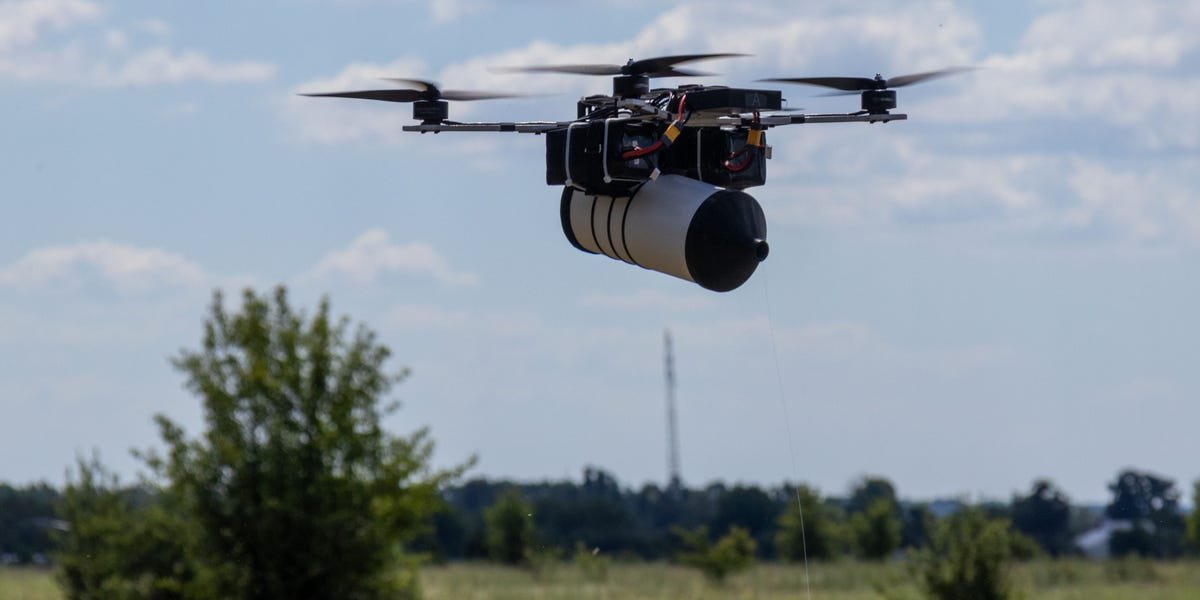
Small unjammable drones controlled by fiber-optic cables have become so integral to Russian and Ukrainian combat operations that they are leaving trails of cabling everywhere, turning areas of the battlefield into a tangled web.
As a counter to extensive electronic warfare, fiber-optic drones are becoming increasingly prevalent on both sides. And with sprawling cables stretched across the battlefield, soldiers are moving with greater caution.
“You see the little webs, and you never know — is it from the fiber-optic drone? Or it’s a part of a booby trap,” Khyzhak, a Ukrainian special operator who for security reasons could only be identified by his call sign (“Predator” in Ukrainian), told Business Insider. Mines and traps have also been prominent threats in this war.
Earlier in the war, first-person-view (FPV) drones — small quadcopter-style drones fielded by both Russia and Ukraine that often carry explosive warheads — relied on radio-frequency connections. However, both sides quickly figured out how to use signal jamming to stop them.
In response, Russia and Ukraine began developing fiber-optic FPV drones that connected to their pilots using spools of long, thin cables. The cables preserved a steady link and made the quadcopters resistant to traditional electronic warfare tactics.
The best chance that soldiers have to stop the fiber-optic drones is by shooting them out of the sky, but that requires precision, quick reaction times, and a lot of luck.
Fiber-optic drones are connected to their operators by long, thin cables.
Kostiantyn Liberov/Libkos/Getty Images
The fiber-optic cables that provide these drones with their greatest advantage are also their greatest vulnerability, as they can get tangled in the environment and bring the flight to an abrupt stop. And even if they don’t get tangled, the cabling is still left draped across the battlefield after use.
Khyzhak, a soldier in the 4th Ranger Regiment, a Ukrainian special operations unit modeled after its US Army counterparts, said it is very common to see fiber-optic cables everywhere because there are more and more of these drones in use, and the cables frequently get stuck in trees and fields.
The 4th Ranger Regiment shared combat footage earlier this month showing Khyzhak, along with two other operators and their driver, narrowly avoiding a Russian fiber-optic drone strike while speeding back to base after a front-line mission.
The footage shows fiber-optic cables strewn in the field next to the road and even on Khyzhak’s gun.
“It was everywhere,” he recalled, speaking about the September incident, where the driver skillfully maneuvered out of the path of the Russian drone, which detonated on the side of the road.
Other video footage taken from the battlefield shows how fiber-optic cables crisscross like spider webs, sometimes only visible in direct sunlight or when viewed from a certain angle.
Khyzhak said the cables are particularly annoying during nighttime missions, when special operators can’t use a lot of light. He described them as a “tactical issue.”
Fiber-optic cables are seen on the side of the road in footage shared by Ukrainian special operators earlier this month.
4th Ranger Regiment of the Special Operations Forces of Ukraine/Screengrab via X
Soldiers can’t always tell right away if it’s a harmless fiber-optic cable or something far more dangerous, like a booby trap. This forces them to think carefully about whether they should call an engineer, destroy the web with explosives, halt, or proceed forward.
It can definitely slow down the mission, Khyzhak said, and becomes a bigger concern the closer special operators get to the front lines, or if they’re working covertly in Russian-held territory.
Ukraine and Russia have expanded production of fiber-optic drones over the past year, and both sides are racing to develop variants that can fly farther across the front lines.
Russia, for instance, has begun to employ fiber-optic drones with a 50-kilometer (31-mile) range, which exceeds the distance that most known variants can travel. Cable length typically limits their range to between 10 and 25 kilometers (roughly 6 and 15 miles).
In Ukraine, fiber-optic drones have become such a threat to critical supply routes that soldiers have covered the roads with netting to protect vehicles from attacks, although it doesn’t always guarantee their safety.
Meanwhile, Ukraine’s defense industry is developing new countermeasures to defend against these drones. The innovations have also caught the attention of NATO leadership, which has been using lessons from the war to inform its own military planning.
This as-told-to essay is based on a conversation with Maitri Mangal, a 26-year-old software engineer at Google, based in New York. Her identity and employment have been verified by Business Insider. The following has been edited for length and clarity.
When I started off as a software engineer, my dad, who also works in tech, kept telling me to get into AI.
I brushed it offbecause I was just starting off my engineering career, and no one was really talking about AI in 2019, unless they were getting a PhD.
Then in 2023, the tech industry changed and everyone started going into AI. That led me to want to start pursuing AI as a job, and alsocreating content about it. When trying to join an AI team, I think having a strong presence and personal brand is crucial for others to take you seriously.
In my three years at Google, I’ve changed roles three times, most recently switching to the Workspace AI team.
It’s important to make a distinction between an AI machine learning engineer and an AI software engineer. An AI ML engineer creates the model, trains it, and evaluates it. An AI software engineer integrates AI capabilities into software applications, and builds APIs and infrastructure to serve the model to the end user.
My transition to an AI team didn’t happen overnight. It required spending about a year upskilling through courses and creating content about the material, which forced me to learn the concepts.
Here’s how I made the switch:
Creating content about AI
In the spring of 2024, I started creating tech content on Instagram and LinkedIn, outside my job. That became a major factor in my transition to an AI team.
Making content motivated me to keep learning and also made me confident about sharing what I knew. Once I started seeing how much it helped people, I wanted to learn more. So that’s where the upskilling started, and I started taking courses to understand the fundamentals of AI.
Eventually, I started applying to AI teams at Google. I felt like if I was going to spend so much time upskilling and making content about AI, I should make the most of what I had. I started searching for new roles in January, about seven months after I started upskilling. In March, I landed the new job.
I still spend an hour a day upskilling
I typically take Google’s internal courses to upskill. Coursera also has amazing courses.
The easiest way to start is by taking the basics of AI, like Google’s Introduction to Generative AI and Google Prompting Essentials. Since I have a computer science background, I was able to get more in-depth with concepts like linear regression and vector analysis.
I took courses for about two hours a day, but in order to absorb the material, I had to talk about it, not just read. When I verbalized the concepts through making content, it helped me understand the material.
I also get feedback from my followers, and when they ask follow-up questions in the comments, it makes me go even deeper into understanding a topic. Talking to friends or teammates who are excited about AI also helps me better understand the material.
In this field, it’s very hard not to learn. I’m not necessarily still dedicating two hours daily to courses, but I still spend about an hour a day upskilling, whether that’s in the form of internal trainings for my job, or watching YouTube courses for the content I create.
Not everyone wants to create content, so that’s not always the best way to go about transitioning to an AI team. If you’re just starting out in tech, my biggest piece of advice would be to take on projects. You should definitely take courses about AI, but keeping up-to-date with the news and doing AI projects also really helps. Many AI courses have users do mini projects, so you get to know how to work with it.
Since I applied internally, I didn’t have to go through the same interview process. However, I still had to submit my résumé, which included all of my side projects, and I think that really helps.
In less than 10 seconds, Kelluu’s silver airships can soar from the ground to high above eastern Finland’s treelines, their motors puttering and their noses pointed skyward.
Gas blimps were first invented in the 19th century, but the Scandinavian startup is betting on a modern version of the old concept to help the West guard its territory.
Kelluu, a Finnish company located about 50 miles from the Russian border, is launching small, propeller-driven airships filled with hydrogen, which it believes can fill a gap in battlefield and border surveillance.
The startup is already finding success with NATO, being the first to secure a deal with a Western nation through a new innovators’ program run by the alliance.
Militaries or law enforcement agencies could equip a fleet of such remotely piloted airships with cameras and sensors, rotating them to monitor regions around the clock. Kelluu said its airships can be automated, meaning a human operator only has to set a target destination.
Airships won’t be easily survivable on an immediate frontline, but can surveil rear areas or combat zones near the fighting for long periods.
Small drones, meanwhile, typically can only fly for a few hours, while spy planes are often expensive, scarce, and need an onboard crew. Satellites have to wait to pass over a specific region to gather intelligence.
Niko Kuikka, the startup’s head of engineering, told Business Insider at Kelluu’s workshop in Finland that its airships can fly for half a day.
“Our customers don’t care so much what we are flying with, but they pay us to stay up in the air for 12 hours. That’s our specialty,” said Kuikka.
About as long as a city bus and six-and-a-half feet wide, Kelluu’s airships are tiny compared to the Zeppelins of World War I. The ship carries fuel, a propeller, and an onboard computer, and can be configured to transport an additional payload of up to 11 pounds for other gear such as sensors. Altitude can allow high-definition cameras or radar to survey a wider area.
Kuikka said a smaller size can be an advantage for Kelluu’s airships, which are designed to fly at top speeds of 33 mph.
Kelluu’s airships are designed to fit into regular shipping containers and are lightweight enough for one person to launch.
Matthew Loh for Business Insider
They’re cheaper and easier to mass-manufacture, so a customer wouldn’t have to worry that losing a few airships might disable an entire fleet, he said.
Kelluu declined to disclose its pricing, but said its airships are meant to be low-cost.
“Having a kind of sitting duck in the air that costs a vast amount of money isn’t going to make sense,” Kuikka said.
‘Free interference’ from Russia
At Kelluu’s workshop, employees perform the final assembly of the airship and fill it with hydrogen, a lighter-than-air gas that serves to both lift its frame and power its propeller. In the upstairs attic, a team of about 10 computer engineers finetunes in-house software and a user interface for monitoring the airships.
Kelluu has a small team working on software in a room above its assembly workshop.
Kelluu
The main team is based in Joensuu, a small city of 78,000 people just west of Russian Karelia.
That location is a key advantage for the airship company, Kuikka said.
Because Joensuu is so close to the border, it has to deal with frequent jamming from both Russia and Finland, or as Kuikka and his team call it: “free interference.”
While other firms may have to pay for tests, Kelluu’s airships must be resistant to electronic warfare to work in the first place, he said.
“We get all sorts of jamming and spoofing from the other side of the border, and also from this side of the border, so we have been proven to be pretty resilient against this sort of GSS denial,” he said.
Kelluu is also about 340 miles south of the Arctic Circle, so its team had to build its airships to withstand icy winds and temperatures that dropped in January to -15°F.
Kelluu’s airships are being tested in the Finnish winter, which the company says makes it ideal for Arctic conditions.
Kelluu
As such, the startup is positioning its airship as a particularly useful means of monitoring future Arctic bases or territories. The theory goes that the longer its fleet can stay aloft in rough conditions, the fewer people are needed on the ground to maintain and operate the airships.
“We are hoping to soon have an asset that can run multi-day missions, so you need even fewer persons working out there,” Kuikka said.
Catching NATO’s eye
Joensuu once heavily relied on Russian tourism, an income flow sapped dry in 2022 after the full-scale invasion of Ukraine prompted Finland to stop issuing tourist visas to Russians. The following year, Finnish authorities closed the country’s 833-mile land border with Russia.
Helsinki, like much of European NATO, is now grappling with the question of how to guard its eastern borders. The Finnish government is already raising concerns about illegal immigration, which it says Moscow is intentionally orchestrating as a gray warfare tactic.
Kelluu was founded in 2018, well before these issues drew public concern. It began by building airships for civilian use, such as monitoring power lines.
Kelluu provides a digital user interface for monitoring airship fleets.
Kelluu
Now, the war is turning it into a rising star in Europe’s defense industry.
Kelluu was one of 14 firms picked by NATO’s Defence Innovation Accelerator for the North Atlantic, or DIANA, to enter the second phase of the alliance’s 2025 program.
The accelerator program is trying to connect allies with startups and defense contractors, pushing governments to adopt new tech into their militaries within two years. Roughly 2,600 companies or parties initially submitted proposals to DIANA this year.
After several showcases, Kelluu was the program’s first company to land a deal with an allied country under a new “Rapid Adoption Service” to conduct national trials, a program spokesperson told Business Insider.
Neither NATO nor Kelluu named the member state, but Fabrizio Berizzi, challenge manager at DIANA, praised Kelluu’s airships as “strongly versatile in terms of maneuvering and endurance” and useful for 24/7 surveillance.
“The airship solution proposed by Kelluu fills the gaps on aerial platforms operating in altitudes in between the typical UAS and aircraft airspaces,” he told Business Insider in a statement, referring to uncrewed aerial systems.
A Kelluu airship can immediately point its nose upward after launch and climb quickly into the sky.
Screenshot/Kelluu
Berizzi highlighted the airships’ jamming-resistant capabilities, saying that they can operate in “electromagnetic contested and congested environments.”
Each airship is also “difficult to detect from radar due to its low radar cross section, or radar reflectivity,” he said.
Building thousands of airships
The material of the airship’s metallic, mirror-like skin is a company secret, the firm said. When asked if it helps avoid radar detection, the company declined to answer.
But Kuikka said the core feature of Kelluu airships is that their structure allows them to be filled safely with hydrogen, which is flammable and more dangerous than helium but provides better lift; it is also lower cost than helium.
These airships are built with a semi-rigid frame, meaning they have some structural integrity but primarily derive their shape from the gas within. Zeppelins, by contrast, had fully rigid frames, while other airships like the $21 million Goodyear blimp would collapse if they were deflated.
Janne Hietala, Kelluu’s CEO, said that lighter-than-air technology is often overlooked in the defense industry, especially with disaster stories like the Hindenburg marring its history.
Other militaries have also deployed airships, though they are typically much larger. Israel, for example, deployed a large airship in 2024 that it said was later hit by Hezbollah.
Christopher Furlong/Getty Images
NATO evaluators were surprised, he said, when they assessed the company’s airships during trials, which included naval showcases in the Atlantic.
“Nobody kind of believed us,” Hietala said. “When they looked at the specs, they were like: ‘Well, the wind is going to blow it away.’ But when we actually deploy, they’re like: ‘Oh, it actually works and makes sense.'”
Kelluu now maintains a small active fleet of just under 20 airships, but Hietala said it’s focused in the near future on scaling up mass production capacity.
Some of its airships are already being deployed in other countries, such as Latvia, for testing or client use. Kelluu now manages and operates the fleet for its clients, but is discussing the possibility that some militaries may want to operate their own airships.
“Our intention in Europe is to manufacture more than 500 for the Western world, and we expect to eventually have 3,500,” Hietala said.
The US government is poised to become a shareholder in a semiconductor startup chaired by Pat Gelsinger, who ran Intel until his resignation last year.
The Commerce Department said on Monday that the Trump administration signed a nonbinding letter of intent to invest up to $150 million in xLight, a startup trying to build a more advanced and cost-effective way to manufacture chips.
The investment would come from the CHIPS and Science Act and would be structured as equity, giving the federal government direct ownership in the company.
The deal — a first from the Trump administration’s CHIPS Research and Development Office — signals Washington’s effort to regain leadership in chipmaking. Most advanced semiconductors are manufactured outside the US, led by TSMC in Taiwan and Samsung in South Korea — areas where China’s influence looms large.
Intel warned in July that it may halt development of its next-generation chip, 14A, due to financial reasons. If Intel gives up on 14A, this could be a death blow to US chip manufacturing, Business Insider’s Alistair Barr wrote in a July report.
“For far too long, America ceded the frontier of advanced lithography to others. Under President Trump, those days are over,” said Commerce Secretary Howard Lutnick in Monday’s press release.
“This partnership would back a technology that can fundamentally rewrite the limits of chipmaking. Best of all, we would be doing it here at home,” Lutnick added.
The Palo Alto-based startup, founded in 2021, is developing free-electron laser technology, “an alternative light source” for extreme ultraviolet (EUV) lithography machines that power cutting-edge chip production, the press release said.
xLight said on its website that its systems would enhance Dutch firm ASML’s machines, “the undisputed global leader in EUV lithography systems.” EUV systems are only produced by ASML. xLight’s technology will “transform semiconductor fab capabilities and dramatically reduce capital and operating expenses,” it added.
Pat Gelsinger, who was pushed out as Intel CEO late last year after the company struggled with weak earnings and fell behind in the AI chip race, became xLight’s executive chairman in March. He is also a general partner at Playground Global, the venture firm that led xLight’s $40 million Series B round in July.
Gelsinger, who was CEO of Intel from 2021 to 2024, said in an interview with CNBC’s “Squawk Box” in October that Intel “made a set of bad decisions over 15 years” and that technical leadership wasn’t “led by technologists for many years.”
“We were late on AI as well,” he added.
Gelsinger spent decades rising through the ranks at Intel and became one of the most influential voices behind the 2022 CHIPS Act, a landmark manufacturing legislation that reshaped America’s chip strategy.
xLight has the potential to “drive the next era of Moore’s Law, accelerating fab productivity, while developing a critical domestic capability,” said Gelsinger in a Monday press release.