The-5-red-flags-a-Michelin-star-pastry-chef-looks-for.jpeg

The 5 red flags a Michelin-star pastry chef looks for when visiting a bakery

Food can get expensive, which means it’s as important as ever to seek out good value with every purchase — even the croissant you have with your morning coffee.

Just ask Camari Mick, the executive pastry chef at The Musket Room, who’s also a partner at Raf’s.

Mick knows her way around a bakery. She grew up visiting local shops and then studied the art of pastry in fine-dining restaurants across New York City. At Raf’s, Mick turns out breads, croissants, and more for the restaurant’s daytime bakery while leading the rest of the pastry program.

Dubbed NYC’s dessert doyenne, the chef has developed her own set of red flags to look out for whenever she visits high-end bakeries.

Here’s how you can tell if you’re at a spot that’s serving high-quality products.

A great bakery should be able to nail the basics


Person using tongs to pick up an almond croissant from a bakery

Croissants should never be so uniform that they look machine-made.

Thai Liang Lim/Getty Images


The first thing Mick does when she walks into a high-end bakery is study the classics. If she sees croissants, she’ll look at the plain variety, taking note of the folds that make up the pastry’s lamination.

Some great bakeries will have croissants with layers that look perfectly aligned, others might take on a more rustic feel and seem more obviously hand-rolled. Both are welcome characteristics, Mick says.

But it’s a bad sign if the lamination is “very thick, or small, or not uniform,” she told Business Insider. And if the croissants look perfectly machine-made, something may not be right in the kitchen.

Mick also looks at the color of the croissants, which can clue you into how they may taste. If it’s too blonde on the outside, it may not have much flavor inside.

Similarly, she says, a pastry probably won’t be super flaky if it looks as if it was “sweating on itself” after being covered while hot, and you can see its layers are wrinkly.

Overall, Mick says, if it doesn’t look as if love has been put into the pastries, she “probably will only just grab a coffee.”

Beware of bread that’s wrapped

Mick says high-end bakeries should only be selling fresh bread.

Ideally, you should touch the bread to see whether it’s too hard. If that’s not an option, there are telltale signs a loaf could be subpar.

“If you were looking at any bread and it looks super voluptuous and almost fresh out of the oven, you’re good to go,” she told BI. “But if you see that the bread is already wrapped, whether it be in plastic or paper, it’s probably an indicator that it was wrapped warm and is not going to be good.”

Mick says fresh bread needs room to breathe, and wrapping it even while it’s only slightly warm will cause it to steam itself, potentially making it soggy.

If the pastries don’t look the same in most photos, it’s hard to trust they’ll be consistently good


Colorful eclairs in display case

It can’t hurt to check customer photos of pastries from a bakery.

ciobanu ana maria/Getty Images


Before she even steps into a bakery, Mick may turn to Instagram for visuals.

First, she’ll comb through the location tag for any given bakery, keeping an eye out for whatever item she was hoping to order.

She tries to see whether the baked good looks the same in all of the photos shared by diners. If it looks different every few pictures, she’s probably not going to order it because it’s unlikely to be very good, or the quality may vary depending on the batch.

And when you’re going to be spending a chunk of change at a pricier bakery, you don’t want quality to be left up to chance.

Some pastries should only be made to order

The pastry chef says her understanding of chemistry also makes her hesitant to buy certain pastries that aren’t made to order.

“You know that a crispy something filled with a moist, wet filling is going to be soggy after sitting for, like, 10 minutes,” Mick said.

For example, a bakery that fills cannoli shells and leaves them in the case until they’re purchased raises some concerns.

Cleanliness in customer-facing spaces says a lot about cleanliness in the kitchen

Look out for flies around the pastry case, Mick warns.

“If you see any type of fly problem or any kind of insect infestation in the case, be sure it’s everywhere,” she told BI.

You may even want to peek into the bakery’s bathroom before placing an order.

She added: “I’m a big believer on if their bathroom is messy, their kitchen is messy.”

This story was originally published on April 3, 2024, and most recently updated on December 29, 2025.





Source link

Read-the-letter-celebrity-lawyer-Alex-Spiro-wrote-to-Gavin.jpeg

Read the letter celebrity lawyer Alex Spiro wrote to Gavin Newsom, warning that his clients will ‘permanently relocate’ if California wealth tax passes

A proposed billionaire tax in California has the wealthy threatening to flee, according to a letter written by power lawyer Alex Spiro to Gov. Gavin Newsom.

In a December 11 letter that was obtained by Business Insider, Spiro lays out his opposition to the proposed tax on behalf of his clients, whom he calls “California residents who would be subject to the proposed Billionaire Tax Act.”

“It will trigger an exodus of capital and innovation from California,” Spiro wrote. “Our clients have made clear they will permanently relocate if subjected to this tax.”

The measure proposes that California residents with assets exceeding $1 billion be subject to a one-time 5% tax on the value of their assets. If the proposal receives enough signatures, it will appear on the state ballot in November 2026. If passed, it would apply retroactively to all California residents as of January 1, 2026.

While Newsom has said he is against the tax and would “fight” it, he would not have the ability to veto it if it were to pass as a ballot measure.

Several wealthy Californians, including venture capitalist Peter Thiel and Google cofounder Larry Page, have considered shrinking their presence in California, according to a New York Times report. Representatives for Page and Thiel did not respond to Business Insider when asked if they were represented by Spiro.

Over the weekend, billionaire Palmer Luckey took to X to voice his opposition to the measure.

“I made my money from my first company, paid hundreds of millions of dollars in taxes on it,” the Anduril cofounder wrote. “Now me and my cofounders have to somehow come up with billions of dollars in cash.”

While it’s not clear which clients the lawyer was referencing in his letter to Newsom, Spiro’s client roster in the past has included billionaires and A-listers. He has previously represented Kim Kardashian, Jay-Z, and Elon Musk.

Read the full letter below:

Re: Constitutional Concerns Regarding Proposed Billionaire Tax Act
Dear Governor Newsom:
I represent California residents who would be subject to the proposed Billionaire Tax Act if it qualifies for the November 2026 ballot. I write to urge you to work to prevent this initiative from moving forward. The Act has serious legal problems and would cause significant economic damage to California and the broader economy.
First, and most importantly, the Act would be unconstitutional. Although the Act purports to be a tax, it is in reality an uncompensated confiscation of property. The Act imposes a 5% levy on total accumulated wealth, including illiquid assets that generate no income. That is in substance a taking without just compensation. As the Supreme Court explained in Armstrong v. United States, the government cannot force “some people alone to bear public burdens which, in all fairness and justice, should be borne by the public as a whole.” 364 U.S. 40, 49 (1960). The Act concentrates an extraordinary burden on a small group to solve a general revenue problem— exactly what the Constitution prohibits.
Second, for the people who relocate from California in 2026 before the November election, the Act would tax them after they have become citizens of other States and without any ability to vote on the measure. The Supreme Court has held that retroactive taxation cannot be “harsh and oppressive.” United States v. Carlton, 512 U.S. 26, 30 (1994). A 5% levy on total net worth imposed on former residents who departed before the law was even enacted clearly meets that definition.
Third, the Act’s unprecedented novelty makes it especially vulnerable to a legal challenge. California has never imposed a wealth tax, much less one that reaches former residents and that is targeted at a small group of citizens. The Supreme Court closely scrutinizes unprecedented exercises of government power precisely because they lack historical precedent. See Biden v. Nebraska, 600 U.S. 477, 505 (2023). In fact, it has not hesitated to invalidate the retroactive application of new taxes, even for far less extreme measures. See Blodgett v. Holden, 275 U.S. 142 (1927). There can be no doubt that the current Supreme Court would carefully evaluate a law so out of step with the American legal tradition.
From an economic perspective, the Act creates two serious problems. First, it will trigger an exodus of capital and innovation from California. Our clients have made clear they will permanently relocate if subjected to this tax. They are not alone. See California’s wealth-tax test: Have voters finally found a policy that the state’s inherent economic strengths can’t overcome?, Wash. Post (Nov. 17, 2025) (opinion) (describing the tax as “almost tailor-made to drive most Silicon Valley tech companies to Austin, Texas”). In other words, by passing this proposal California would exchange a one-time windfall for the permanent loss of billions in annual income taxes, capital gains taxes, property taxes, and economic activity. The state’s most economically productive residents would take their businesses, jobs, and charitable giving with them. Second, the Act will force destructive asset sales. Our clients hold equity stakes in operating businesses, venture capital funds, and real estate. Paying a 5% wealth tax would require massive forced liquidations, depressing asset values and triggering market instability that would harm ordinary investors whose retirement accounts hold these same investments.
Our clients are prepared to mount a vigorous constitutional challenge if this measure advances. Litigation would be protracted and expensive, and it would generate sustained negative attention to California’s business climate. The prudent course is to prevent this constitutionally defective measure from reaching the ballot. We respectfully ask that you discourage signature gathering, oppose qualification, and if necessary, campaign against passage.
Our clients prefer to remain in California and continue contributing to the state’s economy and civic life. But they will not remain if subjected to an unconstitutional confiscation of their wealth. We hope this can be resolved through political channels rather than through years of contentious litigation.
Respectfully,
Alex Spiro


Source link

How-much-Uber-pays-tech-workers-in-2025-with-some.jpeg

How much Uber pays tech workers in 2025, with some roles earning up to $410,000

Uber is hiring people as it tries to become a “super app.” So how much is it paying them?

You’re probably familiar with the millions of gig workers who drive you to the airport or deliver your food. Now, Uber is looking to expand those services — with self-driving cars, for example — as well as offer customers targeted offers.

“We’re slowly moving towards a super app of sorts,” CEO Dara Khosrowshahi said.

Some of the people whom Uber has hired as it tries to make that vision a reality have come from outside the US via H-1B visas.

Companies are required to submit this work visa data, which includes salary information, to the US Department of Labor for all foreign hires. However, the compensation figures don’t include equity or other benefits that employees can receive in addition to their base pay. The filings also include industry average pay rates for US workers.

The process for obtaining an H-1B visa, however, is changing.

In September, President Donald Trump instituted a $100,000 fee for the visa. And proposed changes to H-1B visa rules would tilt the already competitive visa lottery in favor of the highest-paid applicants, lawyers told Business Insider.

Uber filed to hire 945 workers through the H-1B visa program during the 2025 federal fiscal year, according to filings with the US Department of Labor. That’s more than the 778 filings that Uber made during 2024.

Here’s a look at the jobs that Uber disclosed salaries for:

Computer and Information Systems Managers can make up to $410,000

Staff Software Engineer: $225,200 to $258,800

Manager, Engineering: $231,700 to $287,000

Manager, Applications Development: $195,600 to $210,500

Senior Manager: $234,100 to $299,700

Staff Software Engineer, TLM: $242,000 to $249,300

Senior Director, Engineering: $360,000 to $410,000

Data Scientists can earn up to $207,200

Scientist, Tech: $111,966 to $176,400

Senior Scientist, Tech: $151,700 to $207,200

Senior Applied Scientist: $186,307 to $208,062

Staff Scientist, Tech: $219,100 to $250,000

Applied Scientist: $133,100 to $179,100

Data Scientist: $125,950 to $153,700

Data Scientist, Tech: $129,750 to $160,700

Data Scientist III: $150,000 to $175,019

Data Analyst: $156,600 to $161,000

Data Analyst, Tech: $116,750 to $162,200

Senior Data Scientist: $150,400 to $164,300

Information Technology Project Managers can earn up to $215,900

Product Manager: $158,700 to $197,000

Senior Technical Program Manager: $202,500 to $231,400

Senior Program Manager: $144,500 to $170,100

Operations Research Analysts can make up to $185,300

Business Analyst – Operations II: $110,075 to $117,554

Scientist, Tech: $149,650 to $174,900

Senior Scientist, Tech: $169,800 to $185,300

Senior Operations and Logistics Manager: $135,600 to $142,850

Regional Operations Manager: $101,300 to $140,950

Manager, Sales Operations: $157,400 to $166,900

Manager, Central Operations: $157,100 to $161,900

Senior Program Manager: $143,000 to $178,800

Strategic Operations Manager: $111,900 to $166,600

Software Developers can make up to $312,700

Machine Learning Engineer: $178,900 to $198,500

Senior Machine Learning Engineer: $219,900 to $235,500

Software Engineer: $98,516 to $198,500

Software Engineer II: $113,308 to $135,005

Software Engineer III: $131,003 to $188,084

Staff Software Engineer: $207,800 to $273,000

Staff Software Engineer, TLM: $246,400 to $263,000

Senior Staff Engineer: $260,400 to $312,700

Senior Software Engineer: $151,819 to $242,000

Staff Applications Developer: $225,100 to $251,100

Senior Applications Developer: $179,500 to $209,700

Other positions can make up to $206,000

Manager, Technical Accounting: $164,600 to $166,900

Manager, Strategy and Planning: $155,000 to $173,600

Senior Manager, Strategic Finance: $192,300 to $206,000

Manager, Central Operations: $140,900 to $160,200

Product Designer: $157,100 to $174,600

Business Insider has been collecting pay data for tech companies. Find more here.

Do you have a story to share about Uber? Contact this reporter at abitter@businessinsider.com or 808-854-4501.


Source link

Jordan Hart's face on a gray background.

I visited Target’s newly remodeled SoHo store, designed to showcase its style. It was a whole new experience.

Target is putting its style revamp on full display.

The big-box chain is on a mission to rebuild its reputation for style, and its SoHo location in New York City appears to be the centerpiece of that effort. The store has been reimagined with immersive and interactive displays.

The new look comes as operating chief and incoming CEO Michael Fiddelke has set his action plan to improve sales. It involves redirecting Target toward a “style and design North Star” and enhancing the shopping experience to encourage people to spend more time browsing the aisles.

“To see this Target SoHo store is a punctuation point on that style of design and cultural leadership,” Fiddelke, who’s set to step into the CEO role in February, said at an exclusive preview of the revamped store. “It could not be more of a point of pride for me and, I know, the whole team.”

Members of the press got a preview of the remodel in December, and I returned a week later to see what it looked like on a typical day during the hectic holiday shopping season.

Target introduced apparel at the SoHo store for the first time. Although the location is on the corner of a block that also houses brands like The North Face and Abercrombie & Fitch, Cara Sylvester, chief guest experience officer, told Business Insider that the location was previously tailored for locals and tourists to drop in for essentials like snacks or makeup. It didn’t carry Target’s clothing lines, such as Wild Fable, until now.

The retailer hopes clothes, showcased amid towering red displays, will help it make a bigger splash in the fashion-forward New York City neighborhood.

I browsed the bustling location to see the glow-up firsthand.

It was like walking into a literal bull’s-eye


Target store interior

The entrance of the SoHo Target was a wash of red.

Jordan Hart/Business Insider


The immersion started as soon as I walked into the store. I stepped into what looked like an actual bull’s-eye, mirroring Target’s logo. Red arches towered overhead with built-in racks lining the walls. Since I visited the store in December, it had a holiday theme with gift boxes and Christmas knickknacks in the center of the floor.

“We have a new look! There’s more where that came from,” a sign at the door read.

Gifts and apparel were on display


composite image of stanley tumblers and a deer print jacket

There were clearly trendy items on display at the front.

Jordan Hart/Business Insider


In the center of the store, Target advertised potential holiday gifts, including ever-popular Stanley tumblers for $50. The clothing racks featured on-trend styles, including glittering dresses in time for New Year’s and a deer-print fur coat.

The beauty section reminded me of a spaceship


Target store display

The beauty section was unique, in my opinion.

Jordan Hart/Business Insider


Finally, it was time to visit my favorite section in every Target: the beauty department. This beauty section, however, looked totally new. It reminded me of a spaceship, with its gray tone and the circular displays, on which the products were arranged.

I appreciated the design of the layout, but it was a bit closed off, making it a tight fit to truly shop for whatever products you’re looking for.

There was a small photo booth


Interactive photo booth at target

There were a few photo opportunities throughout the store.

Jordan Hart/Business Insider


Tucked into the corner of the beauty section was an interactive feature that I hadn’t seen at Target before. It was a place to take and download a selfie. First, you snap a picture, then it prints a digital receipt for you to scan with your phone to download the image.

When I tried it during my visit, however, the machine was out of paper.

The lower level looked like any other Target store


Target aisle

The lower level looked more familiar.

Jordan Hart/Business Insider


I took the escalator downstairs, and it was business as usual. It looked like the aisles of your neighborhood Target, with snacks, produce, and a small home goods section.

Target’s Alpine holiday theme was present throughout the 2-story store


Target store display

I came across a gondola that reminded me of another Target location.

Jordan Hart/Business Insider


Target’s holiday branding this year features an Alpine theme, designed to make the stores more welcoming and inviting.

I noticed a display not unlike a gondola I came across in another Target location this holiday season. Several people, including myself, stopped to snap photos of the gondola overflowing with silver globes and lined with plush toys.

I appreciated this thread connecting the different locations, and it felt like the right touch for this Target store, which also had unique touches. Sylvester told me the red arches wouldn’t be replicated the same way elsewhere.

Overall, I loved the immersive experience this store offered, and I think it gave Target a refreshed vibe that reminded me more of a niche apparel store than a big-box retailer.


Source link

My-grandmother-wrote-me-a-letter-before-my-wedding-Her.jpeg

My grandmother wrote me a letter before my wedding. Her marriage advice insulted me at first, but now I get it.

I married my husband, Scott, in April 2025 after four years of dating.

Nobody was more excited for the wedding than our families. They rallied around us, sharing tips and calming me down when the planning became stressful.

My sister made a scrapbook for me to open the night before the nuptials. Inside, there were handwritten letters from my bridesmaids, my mom, and my 79-year-old grandmother.


Wedding photo

The author on her wedding day.

Courtesy of the author


The letters were sweet, romantic, and optimistic — well, almost all of them were. My grandmother’s letter had an ominous tone.

“I wish you and Scott all the happiness in the world in your married life. I am sure you two are just right for each other. That’s not to say it will all be plain sailing,” she wrote.

“There may be bumps along the road,” she added, “but love has a way of forgiving a multitude of sins.”

I was alarmed by my grandmother’s note

It was a huge contrast to the other letters in the scrapbook. While my bridesmaids reminisced about the past and shared excitement for my future, my grandma’s words stopped me in my tracks.

I remember laughing and shaking my head in disbelief. I then handed the letter to my mom, who was equally unimpressed.

It’s not that I didn’t appreciate the advice. But really, who wants to hear the words “love” and “sins” mentioned in the same sentence? Especially when it’s in relation to your own husband.


Couple selfie wedding day

The author was taken aback by her grandmother’s letter at first.

Courtesy of the author


For a brief moment, I contemplated what she meant by the word “sins.” Cheating? Lying? Or something else?

My gran has a fantastic relationship with my husband, so I couldn’t imagine what sparked her cautionary words. Similarly, I had never spoken a bad word about Scott to my grandmother.

Of course, like any couple, we’d had fights, but it was never anything relationship-threatening. And I had never spoken about it with my her.

Ultimately, I disregarded the note, just as you would ignore a speck of dirt on a white wedding dress. Even if nobody else notices it, you know it’s there.

Five months later, I learned a major lesson

The wedding day was picture-perfect.

I felt so fortunate that we got to celebrate with our loved ones, especially our grandmothers. Both Scott and I were the first grandchildren in our families to get married, so it felt extra special.

Five months later, I found my grandma’s letter while looking through the scrapbook. It looked different to me with fresh eyes. Now that some time had passed, I could look at it from a new perspective. I could read without taking it personally.

I thought about my grandmother’s life, and I realized that her words were never about my husband and me.

My gran married my late grandfather when they were just teenagers, and it’s fair to say they had many bumps in their own love story. Let’s just say, their relationship wasn’t like the kind I grew up watching in romantic comedies and Disney films.

However, they loved each other deeply. They were loyal, forgiving, and supported each other throughout their more than 50-year marriage.

Staying in love is a choice

Thinking about their relationship reminded me that falling in love is a feeling, but staying in love is a choice. It’s an action. It’s not something that just happens to a person.

The wedding is the beautiful part, but the marriage? That’s where things have the potential to get messy.


Granddaughter posing for photo with grandma

The author now understands where her grandmother was coming from.

Courtesy of the author


I’ve been married for less than a year, so I’m not pretending to know all the answers. But if I’m honest with myself, I can admit that my grandma’s letter shook me because it didn’t fit the aesthetic Instagram version of what I thought marriage was supposed to be.

I know that my husband and I have a great deal of joy ahead of us. But we’re also going to witness one another’s pain, grief, disappointment, and growth. That’s just a part of sharing your life with someone.

If I ever catch myself feeling unprepared, I know I can revisit my grandma’s letter.


Source link

Business Insider BI breaking blue logo

Lou Gerstner, the former IBM chief credited with turning the company around, has died at 83

Lou Gerstner, the former CEO of IBM who led the company through one of the most consequential turnarounds in corporate history, died on Saturday at the age of 83, the company said.

Gerstner ran IBM from 1993 to 2002, arriving at a time when the company was under severe pressure, and its future was in doubt. IBM was losing money, the tech industry was shifting rapidly, and there was widespread expectation that the company would be broken up.

Instead, Gerstner chose to keep IBM together. He pushed the company to organize around customer needs rather than internal divisions, helping reposition IBM as a provider of integrated technology and services for large enterprises. That decision became central to IBM’s recovery and renewed relevance.

Gerstner also drove cultural change inside the company. He emphasized direct decision-making, accountability, and execution, while insisting that innovation mattered only if it translated into real value for clients. The approach marked a sharp break from IBM’s inward-looking habits that had taken hold before his arrival, IBM said in its announcement of Gerstner’s death.

His tenure included painful restructuring. IBM abandoned long-standing traditions, including its decades-long “cradle to grave” no-layoff policy, as it sought to stabilize its finances and compete more aggressively. Many credit those moves, along with Gerstner’s strategic focus, with saving the company from collapse.

Before joining IBM, Gerstner built a high-profile career in corporate America. He was a partner at McKinsey & Company, later served as president of American Express, and was CEO of RJR Nabisco. After leaving IBM, he chaired the Carlyle Group and focused on philanthropy, particularly in education and biomedical research.

A native of Long Island, New York, Gerstner earned a degree from Dartmouth College and an MBA from Harvard. IBM said it plans to hold a celebration of his legacy in the new year.

This story was written using Business Insider’s AI tools and edited by a Business Insider editor.


Source link

After-spending-150-days-on-Princess-Cruises-I-earned-Elite.jpeg

After spending 150 days on Princess Cruises, I earned Elite status. These 4 perks have completely elevated my experience.

Even after working on cruise ships for years, I love this form of travel. And although I’ve sailed with many cruise lines over the years, Princess stands out for its beautiful ships and interesting itineraries.

Just like airlines, most major cruise lines offer loyalty programs, and on every sailing, guests earn credit toward their status.

Although chasing status is never my goal, I gained the highest level — known as Elite — on Princess Cruises’ Captain’s Circle program, after spending 150 days at sea over three years.

Here are five Elite status perks that have completely elevated my sailing experience.

Priority access to water shuttles means more time spent at our destinations


A person holds a priority water shuttle ticket for Elite guests.

I love not having to wait for a water shuttle.

Tammy Barr


Some ports have small or shallow harbors that require cruise ships to anchor offshore and use smaller boats (known as tenders or water shuttles) to take guests ashore.

It’s often a confusing and irking part of the cruising experience because it takes time to load and maneuver these small boats to the pier, which can result in guests waiting hours to go ashore.

Luckily, as an Elite member, I now receive priority access to these water shuttles. My last cruise had three ports where a water shuttle was required to go ashore, and this benefit alone saved me from waiting and worrying about how long it would take to leave the ship.

In the past, I’ve woken up very early and waited in long lines for water shuttle tickets. I’ve also had my independent port plans ruined because of slow tender operations.

With Elite status, though, I’m able to take my entire family on the first tender of the day without having to set an early alarm.

I also have access to complimentary laundry services


Slips of paper and a paper bag on a bed.

As an Elite member, I can have my clothes washed and folded for free.

Tammy Barr


On Princess ships, passengers can pay to access self-service laundromats, as well as full-service laundry and dry cleaning. As an Elite passenger, however, I can send out my dirty laundry and have it washed and folded for free.

This means I no longer have to spend time doing laundry on vacation. Instead, I put my clothes in a bag, and they return clean and folded within a day or two.

I like to use the service for things like socks and underwear, and it’s nice to know I can pack less for long cruises.

Internet access is offered at half price

Although I try my best to disconnect when I’m on vacation, I typically purchase a WiFi package to check in with family members and friends back home.

WiFi is included in some bundled packages, but can also be purchased separately. Luckily, as an Elite member, I receive 50% off all WiFi packages.

There are opportunities for free and discounted food and drinks


An alcoholic beverage and hors d'oeuvres on a table.

I love enjoying free drinks and hors d’oeuvres.

Tammy Barr


One of my favorite parts about being an Elite member is that I get access to discounted food and drinks. For example, certain suites on Princess cruises come with a one-time mini bar, but as an Elite member, this is a perk I get to enjoy on every sailing.

My room comes stocked with 10 alcoholic and 10 non-alcoholic drinks, which include a mix of liquor, beer, soda, and sparkling water. With the price of alcoholic drink packages now up to about $100 per day for each guest, I think this perk provides a good value.

On one formal night each cruise, Elite loyalty members are also invited to the Captain’s Circle party, which includes live music, complimentary drinks, and hors d’oeuvres.

Plus, on formal night, I have the opportunity to order and enjoy delicious hors d’oeuvres while getting ready. I’ve enjoyed small plate options like seared tuna, salmon, and beef — all paired with the mini-bar drinks to create a fun happy hour vibe in my cabin.

I save a lot of money by taking advantage of the various hosted food and drink events on board. In fact, I don’t even purchase a drink package anymore.


Source link

Im-the-oldest-of-8-kids-including-5-foster-siblings.jpeg

I’m the oldest of 8 kids, including 5 foster siblings. There are pros and cons to my big family.

I remember the stares most of all.

In the grocery store, people tried to make sense of my family — how these Black, Hispanic, and white children all belonged to the same woman.

The insatiably curious strangers would stop my mother to comment on her “beautiful family,” hoping she’d explain us. She never did.

I love that she never felt she owed anyone an explanation for her children.

It started with just three of us — my biological brother, sister, and me — your average American, blue-collar family. But when my parents decided to foster kids, our world expanded.

From then on, our sibling count fluctuated. Usually, we had between four and six kids in our home. Over the years, my parents adopted five of my foster siblings, bringing our total to eight.

Growing up as the oldest in a family built through foster care and adoption shaped me in ways I didn’t understand, but I feel them everywhere now.

Not fitting in taught me empathy

We didn’t fit the box of a “nice little American family.” My younger siblings might’ve been too young to notice people’s stares, but I wasn’t. I saw the disapproving looks when my 2-year-old foster sister dumped a carton of eggs onto the grocery store floor or melted down in the cereal aisle.

It was humbling to feel different. To feel like you were “that family.” The one that stood out for the wrong reasons.

In hindsight, it taught me empathy at an early age. To this day, I try to be aware when others feel they aren’t fitting in or measuring up to some impossible standard. I want people to feel like they can be their imperfect selves around me.

I learned that just because something hurts doesn’t mean it’s not worth doing

People often told my mother, “Oh, I could never foster. I’d get too attached. My heart would break if they went home. “

My mother hated these comments. Her heart shattered every time we got a call that one of our siblings was leaving. She loved those children like her own — and then they were gone, often returning to situations that didn’t feel stable. She was powerless to stop it and grieved hard.

People don’t want to foster because it’ll be painful when the children leave, but my mother taught me that you let your heart hurt if it means you can help the hurting.

In a big family, we learned to pull our weight

I vaguely remember doing chores before my foster siblings arrived — but I vividly remember chores after. Suddenly, my mom was overwhelmed, and helping became non-negotiable. At 11, I was in charge of my 1- and 2-year-old sisters’ bedtime routine. By 12, I was the family dishwasher, and by 17, the laundress. And, of course, I babysat.

Every day was a lesson in teamwork and helping out. Not just for me, but for my siblings, too. Many of us who grew up in that house went on to pursue entrepreneurship. I don’t think that’s a coincidence.

If there’s something good, better get it before it’s gone

Scarcity mindset is real when you grow up with so many siblings. Act fast, or there won’t be anything left. Even now as an adult, I have to remind myself not to overfill my plate or worry about something running out. It took me a long time to learn to savor things and not worry about the sense of “not enough.”

Still, that mindset made me scrappy, which has come in handy over the years. When I was young and first married, we needed extra money. I began buying and selling furniture on Craigslist and renting out our home on Airbnb. My book club once voted me “most likely to survive the Hunger Games.”

The demands of parenting didn’t surprise me

My friends used to talk dreamily about their future families. I didn’t. I knew what snot-nosed temper tantrums looked like. For a long time, I wasn’t even sure I wanted kids.

Eventually, I changed my mind and became a mother. Sometimes, helicopter parents ask me how I’m so chill with my kids. Coming from a big family, I’m not worried about a little chaos. Balls and tricycles in the house? Sure. Stomp around in the mud and puddles? Go right ahead. Running around in a diaper? You do you.

In a big family, there’s always room for one more at the table

I love our loud, boisterous family gatherings — my seven siblings, their spouses, nieces, nephews, aunts, uncles, grandparents, and cousins. It’s wonderful chaos.

Whenever I ask to bring a lonely neighbor or another family along, my mom always says the same thing: “Of course! I’ll make sure we have enough chairs.”

That’s my favorite part of belonging to a big family — when you have so many, what’s a few more?


Source link

Streamers-like-Disney-and-HBO-Max-have-a-key-problem.jpeg

Streamers like Disney+ and HBO Max have a key problem with no clear solution

Free streaming services are having success, and it may be coming at the expense of their paid peers.

YouTube and other free ad-supported services, such as The Roku Channel and Fox-owned Tubi, have become increasingly popular over the last two years, according to Nielsen’s viewership data.

“For consumers, cost sensitivity is often a more important deciding factor than user experience,” said Brandon Katz, a media analyst at entertainment data provider Greenlight Analytics. “Saving money outweighs the annoyance of terrible insurance commercials.”

As these free streamers eat up a larger chunk of viewership time on US smart TVs, they may be holding back the growth of services like Disney+, Hulu, and HBO Max.

Free-to-access services YouTube, Tubi, and The Roku Channel have grown their viewership by 53% from December 2023 through November, according to a Business Insider analysis of Nielsen data. Those three free streamers make up nearly 18% of all watch time on US TVs, and that doesn’t include Paramount’s Pluto TV, which Nielsen broke out individually until March.

In that span, major paid streamers’ collective watch time is only up 5%. That includes Netflix, Amazon Prime Video, Disney+, Hulu, Peacock, and HBO Max, formerly known as Max. (Paramount+ was included until March, when Nielsen stopped reporting its individual share. And HBO Max’s viewership includes sister streamer Discovery+.)

That means free streamers are growing more than 10 times faster than their paid counterparts, though the bulk of that growth is driven by YouTube, which has become a force in Hollywood.

Slower engagement growth is a troubling sign for paid streamers. Viewership is positively tied to pricing power and inversely correlated with cancellations, meaning that people who watch a streamer more often are less likely to cancel.

“Engagement drives churn down,” said Hernan Lopez, founder of media consulting firm Owl & Co.

“It’s not just about hours spent,” he added, but also the frequency that viewers return to an app and the breadth of content that they watch.

Engaged streaming subscribers are also usually more receptive to price hikes, Katz said, since they likely place a higher value on the service than inactive users.

“The goal is to offer customers enough attractive content that opening the app becomes a regular occurrence,” Katz said. “At that habitual usage point, streamers are able to reasonably raise prices without fear of a mass exodus of customers.”

For customers on ad-supported plans, higher engagement also translates to more ad revenue.

It’s not all bad news for paid streamers. Streaming is an increasingly profitable business, thanks in large part to price hikes, which every major service (except for Prime Video) has implemented or announced in the past 12 months.

Disney+, Hulu, and HBO Max have also continued to add customers this year. However, Peacock hasn’t grown its subscriber base since the first quarter of 2025, and Netflix no longer reports its subscriber count on a quarterly basis.

The large gap between free and paid streamer viewership growth rates suggests that so-called stream-flation could be taking a toll. Media giants must walk a tightrope between pleasing Wall Street and pushing consumers toward free streamers, or apps like Instagram and TikTok.

Streaming giants Netflix and Disney each have creative ideas for driving engagement in 2026.

Netflix is turning to video podcasts in hopes of adding lean-back content that keeps subscribers engaged throughout the day. It’s also been trying to use games as a way to create daily habits among its users.

Disney is taking a different tack by betting on AI-generated video through a new partnership with OpenAI. This AI initiative will enable fans to create short clips of Disney characters, such as Mickey Mouse or Darth Vader, eventually within the Disney+ app.


Source link

Im-a-14-year-old-founder-whose-YC-application-went-viral-There.jpeg

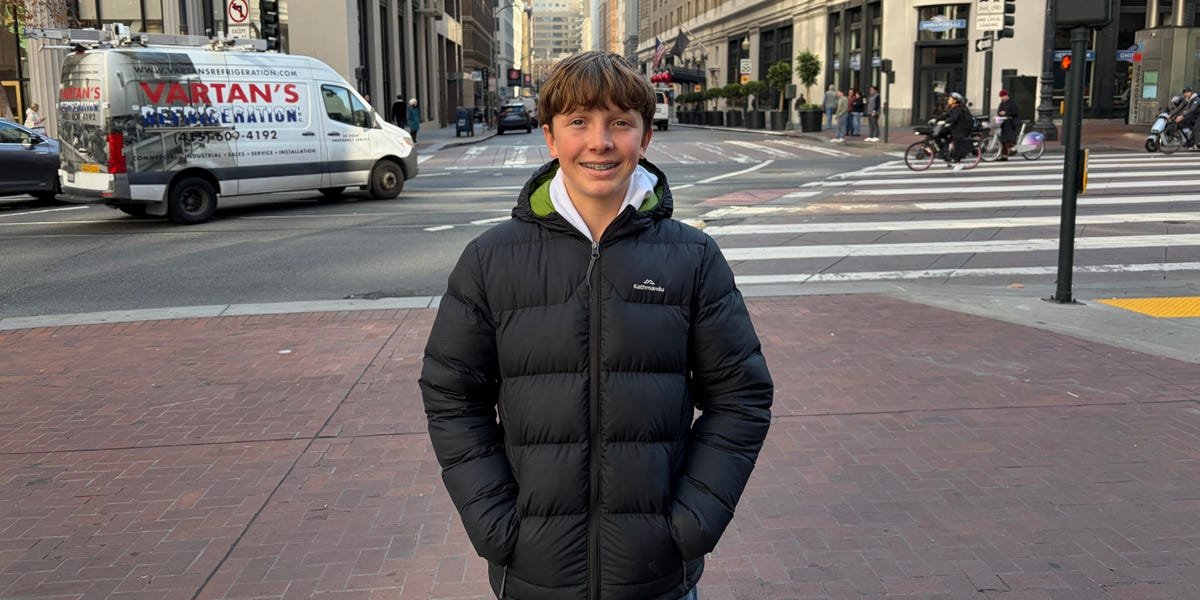
I’m a 14-year-old founder whose YC application went viral. There are pros and cons to starting a company young.

This as-told-to essay is based on a conversation with Alby Churven, the 14-year-old founder of Clovr, who lives in Wollongong, Australia. It’s been edited for length and clarity.

When I was younger, I started an e-commerce grip socks brand called Alpha Grips. It failed, but that’s what got me interested in business. I was 12.

A lot of kids’ first businesses is always something to do with e-commerce, like drop-shipping or clothing brands. Social media does saturate you with that “get rich quick” idea with drop-shipping or crypto. Although 90% of the time it’s a scam, it still ignites an interest.

Then I came up with the idea of Finkel, the startup I applied to Y Combinator with. I sent a cold email to Frank Greeff who’s a pretty big founder here. He recommended I started building in public on social media, so I started doing that. X is full of startups.

Social media played a big role, seeing other people building brands and businesses. That’s what got me into it. I used to do code camps when I was younger, so I’ve always been interested in tech and entrepreneurship.

I applied to YC. Apparently I wasn’t supposed to do this big video with all the editing. It’s supposed to be, you sit down and turn on the webcam and talk. I didn’t actually read the instructions when I did it, but I guess that’s what made it pretty viral.

There’s a new social media ban in Australia for people under 16. All these great things have happened for me with it, but the social media ban is taking that away. I don’t agree with it, but it is what it is.

I’m young. I think my advantage being a teenage entrepreneur is I’ve got time. My goal right now is to build as many things as possible, learn as much as possible, and see where it goes.

You decide you want to do maybe when you’re 18 or 16. But I know what I want to do. I want to be in startups and tech.

The benefits of starting young is that you don’t have as much pressure on you financially, so you can just build things.

In the future, I’ll have had experience. It’s about learning. I have time on my hands, and I enjoy it.

The younger generation thinks a bit differently. Some older people may not even know how to use AI.

I’m in the US right now, and I’ve been meeting with a lot of really cool people. When you’re young, you can utilize your age to make a lot of connections. It’s more rare. It’s crazy you’re doing it this young.

My age is a wow factor, but it also limits legitimacy.

It also can be a negative. People might not take you seriously if you’re really trying to pursue something. All the things I’m building are bootstrapped, because it’s impossible to raise funding when you’re young.

I’m getting to stages in my projects where I do need some money. I’ve applied to these accelerators. I had a very low expectation for Y Combinator. I got an interview about my other startup, Clovr, but then I got rejected.

I’ve heard you have to get in the system early, so when I’m older and I apply, I’ll already be in the system and have experience with how the process works.

I do think grants are a really good opportunity. You won’t raise nearly as much, but you’re not giving away any equity. I think giving away equity young is not a good decision. It gives pressure to perform and deliver, and when you’re young, you want to build stuff.


Source link