
Kaila Yu

I’m a business immigration lawyer. I’m telling my clients that if you have a valid visa stamp, return to the US now.

This as-told-to essay is based on a conversation with Tahmina Watson, a business immigration lawyer in Seattle. Business Insider has verified Watson’s employment history with documentation. The following has been edited for length and clarity.

I’m a business immigration lawyer, and in my day-to-day work with clients, I’m seeing immigration disruptions with immediate consequences, including H-1B visa holders who are outside the US being uncertain if they can return.

​​My law firm, Watson Immigration Law, assists founders and businesses in navigating the employment visa application process. It appears that, at this time, the administration is coordinating the rescheduling and delay of immigration appointments.

Non-immigrant visas generally must be scheduled at a US embassy or consulate in the person’s country of nationality or residence. From my experience, many employees accrue their holiday time and schedule immigration appointments during this period because they’re already planning to leave the country, allowing them to easily visit their designated US embassy or consulate.

These employees are now getting stuck, having already left the US, with their appointments getting rescheduled for June, July, or August 2026, and beyond.

A large group of H-1B work visa holders is stuck outside the country

Major tech companies, including Google, Apple, and Microsoft, sent memos out to their employees in the past week, warning visa-holding employees to avoid international travel amid long delays at US consulates. These policies are coming one after another, and they all intersect with each other.

The policies have created:

  • Visa-stamping delays at US embassies and consulates.
  • Expanded vetting and processing backlogs at consulates.
  • Increased risk that visa holders who travel cannot return to the US in a timely fashion.
  • Lack of guarantees once appointments are rescheduled.

If somebody is outside the country, what are employers supposed to do? Right now, my advice to clients outside the country is that if they have a valid visa stamp, they should return to the US as soon as possible.

We don’t know what changes could come, but I suggest that workers stuck abroad ask to work remotely

For someone who has left the country to obtain a new visa stamp, I’m not sure there’s a clear path to return. This includes individuals on F-1 student visas who traveled to visit family and were planning to re-enter the US. They will need that visa stamp from a consulate.

Ensure your employment is still active and consider whether remote work is an option. If an employer decides they cannot keep someone on the books, even an appointment months from now will not help if there’s no job waiting.

It’s tough to know how things will unfold. What we’re seeing is a confluence of policies coming in at the same time. For example, the Department of Homeland Security has just announced that it is replacing the lottery system for H-1B work visas, which randomly selects who receives a visa. The system is now set to prioritize higher-paid, higher-skilled workers.

Keeping social media accounts public is a good idea

Social media disclosure is being expanded from F-1 visa holders, which began during the student visa crisis, to now include H-1B workers. These applicants are required to change all social media privacy settings to public.

It could easily expand to other visa categories. The government has not provided clear guidance on what they are reviewing. By casting an overly broad net under the banner of national security, without clear standards or transparency, the administration is creating uncertainty that will ripple across families, employers, and the US economy.

Clients should limit what they post online.

My advice since November 2024 has remained the same: Avoid travel unless necessary

In 2024, I was already anticipating these issues with traveling and returning to the US. We’ve also seen issues affecting green card holders with past criminal convictions.

There are many stories of people who have lived in the US for decades, suddenly facing deportation proceedings. This is a highly precarious time for immigrants, and limiting travel is critical.

It feels like a fire hose of policies. Everyone in the immigrant ecosystem is on high alert: Immigration lawyers, immigrants, employers, investors, founders, and employees.



Source link

Read-Bari-Weiss-new-memo-that-defends-pulling-a-60.jpeg

Read Bari Weiss’ new memo that defends pulling a ’60 Minutes’ segment and says Americans lack trust in the press

  • CBS News chief Bari Weiss sent a memo to staff defending her decision to hold a “60 Minutes” piece.
  • Weiss made the decision to pull a segment on the CECOT prison shortly before it was due to air.
  • She said winning back public trust in the news sometimes means holding stories.

CBS News head Bari Weiss sent a Christmas memo to staff on Wednesday defending her decision to pull a “60 Minutes” segment on the Trump administration’s use of El Salvador’s notorious CECOT prison.

In the memo, signed by Weiss and other CBS News leadership, she wrote that the press needed to win back the public’s trust, and that “sometimes it means holding a piece about an important subject to make sure it is comprehensive and fair.”

“Right now, the majority of Americans say they do not trust the press,” she wrote. “It isn’t because they’re crazy.”

Weiss’ decision to hold the “60 Minutes” shortly before it aired led to blowback both inside and outside CBS News, which is owned by Paramount Skydance. Sharyn Alfonsi, who reported the segment, wrote in note to colleagues that the decision was a “political one,” multiple outlets reported.

Weiss said in her memo that she and other CBS News leaders are “not out to score points with one side of the political spectrum or to win followers on social media.”

The media world has heavily scrutinized Weiss’ management since she was installed atop CBS News by Paramount CEO David Ellison in October. Paramount also acquired The Free Press, the conservative-friendly news site Weiss founded after leaving The New York Times’ opinion section, for about $150 million.

Paramount is dueling with Netflix to buy Warner Bros. Discovery. President Donald Trump has said he would be involved in the regulatory review process.

Weiss added in the memo that CBS News would hold itself to a high standard of fairness and be independent.

Here’s the full text of the memo:

Hi all,
Right now, the majority of Americans say they do not trust the press. It isn’t because they’re crazy.
To win back their trust, we have to work hard. Sometimes that means doing more legwork. Sometimes it means telling unexpected stories. Sometimes it means training our attention on topics that have been overlooked or misconstrued. And sometimes it means holding a piece about an important subject to make sure it is comprehensive and fair.
In our upside-down moment, this may seem radical. Such editorial decisions can cause a firestorm, particularly on a slow news week. And the standards for fairness we are holding ourselves to, particularly on contentious subjects, will surely feel controversial to those used to doing things one way. But to fulfill our mission, it’s necessary.
No amount of outrage—whether from activist organizations or the White House—will derail us. We are not out to score points with one side of the political spectrum or to win followers on social media. We are out to inform the American public and to get the story right.
Restoring the integrity of the news is a difficult task. We can’t think of a more important one.
Merry Christmas—and thank you, especially, to everyone who is working over this holiday.
Yours,
Bari
Tom
Charles
Adam


Source link

Thibault

The US banned a former EU official’s visa over Big Tech rules — and the fight is playing out on X

The US just escalated its clash with Europe over tech regulation.

The State Department said it has barred five Europeans, including the EU’s former Internal Market Commissioner Thierry Breton and four members of digital campaign groups, from entering the country over what it called “censorship” of tech platforms.

The visa bans were met with backlash from European leaders on X, who accused Washington of intimidation and political overreach.

The dispute centers on the EU’s Digital Services Act and Digital Markets Act, which imposes obligations on major tech platforms — many of which are based in the US — to police content and curb anti-competitive behavior. Companies in breach of it can be fined up to 6% of their global annual revenue.

In a post on X late Tuesday, Secretary of State Marco Rubio said the State Department would block leading figures of what he called “the global censorship-industrial complex” from entering the US.

“For far too long, ideologues in Europe have led organized efforts to coerce American platforms to punish American viewpoints they oppose,” Rubio wrote. “The Trump Administration will no longer tolerate these egregious acts of extraterritorial censorship.”

In follow-up posts on Tuesday, Sarah B. Rogers, the undersecretary of state for public diplomacy, named Breton among the five European individuals sanctioned, accusing him of using the EU’s Digital Services Act to pressure Elon Musk and X during his tenure as commissioner for the internal market.

She also named Imran Ahmed of the Center for Countering Digital Hate, Clare Melford of the Global Disinformation Index, and HateAid leaders Anna-Lena von Hodenberg and Josephine Ballon, accusing them of pressuring US platforms over online speech. None of the four campaigners immediately responded to a Business Insider request for comment.

Rubio added that the US was “ready and willing to expand this list” unless officials reversed course, framing the move as a defense of free expression and US sovereignty.

European backlash

The back-and-forth has largely played out on X, a platform that was hit with a $140 million fine earlier this month for breaching the Digital Services Act.

Breton responded in Tuesday X post by invoking McCarthy-era politics, asking, “Is McCarthy’s witch hunt back?”

He added, “To our American friends: ‘Censorship isn’t where you think it is.'”

French President Emmanuel Macron also condemned the visa restrictions, describing them in a Wednesday X post as coercive measures aimed at undermining Europe’s digital sovereignty.

“The rules governing the European Union’s digital space are not meant to be determined outside Europe,” he said.

The European Commission “strongly” condemned the US decision, adding that the EU has the sovereign right to regulate its digital market and would seek clarification from US authorities.

“Freedom of speech is the foundation of our strong and vibrant European democracy,” European Commission President Ursula von der Leyen wrote on X on Wednesday. “We are proud of it. We will protect it.”

Gérard Araud, France’s former ambassador to the US, said the dispute reflects a deeper rupture, writing on X that “the West” no longer exists and that Europe is now alone in defending its interests and values.

Daniel Fried, a former US ambassador to Poland and longtime US sanctions official, told Business Insider he could not recall a precedent for Washington imposing visa bans on a former European official in retaliation for policy decisions made in the course of their duties.

Similarly, Jacob Funk Kirkegaard, a senior fellow at the Brussels-based think tank Bruegel, told Business Insider that he could not recall any historical precedent for the move, describing the visa bans as largely symbolic and unlikely to trigger meaningful retaliation.

Musk in the middle

The dispute has been years in the making — and Musk X has often been at the center of it.

Breton repeatedly clashed with Musk after he bought Twitter in 2022 and pledged to loosen moderation in the name of free speech.

As the then-internal market commissioner, Breton warned that X could face fines or even be barred from the European Union if it failed to comply with EU law, later overseeing a formal investigation into the platform regarding disinformation and content moderation.

Those confrontations turned X into a symbol of the broader transatlantic fight over who sets the rules for online speech — a conflict that has now spilled from regulation into geopolitics.


Source link

Sydney Bradley brown hair denim vest slightly smiles

Read the pitch decks of 14 startups looking to disrupt dating apps and social networking that have raised millions

A new generation of consumer social startups is emerging.

From platforms focused on getting people to meet IRL to dating apps taking on Tinder or Hinge, startups are disrupting the digital social scene.

Founders of these startups are tackling problems like loneliness, dating app fatigue, and general dissatisfaction with the current social media incumbents.

Some founders come from Big Tech backgrounds, like the Instagram-heavy team behind photo-sharing app Retro, or the ex-Google employees building the social-mapping app PamPam. Gen Z founders are also throwing their hats in the ring, like Isabella Epstein’s IRL-focused app Kndrd, or Tiffany “TZ” Zhong’s Noplace app.

Investors are taking notice.

For instance, the IRL-social app 222, which matches strangers over dinner or activities with a personality quiz, raised a $2.5 million seed round from venture capital firms like 1517 Fund, General Catalyst, and Best Nights VC in 2024.

“We’re entering this new wave of social where people are trying to revert back to what people really use these platforms for to begin with — which is connection,” Maitree Mervana Parekh, a principal at Acrew Capital, told Business Insider in 2024.

Meet 19 startups in social networking, dating, and AI that investors have their eyes on

Some venture capital funds — such as French firm Intuition VC or gaming-focused firm Patron — have made tackling loneliness and relationships part of their investment theses.

But it’s not just friendship and dating that are ripe for disruption.

Startups like Khosla Ventures-backed Gigi, Yale-student-founded Series, Boardy, Filament, and Goodword have raised capital for AI tools to help people network better or maintain professional relationships.

“When people think about loneliness, they think about friends and family,” Goodword CEO Caroline Dell recently told Business Insider. “But we spend most of our waking hours at work as professionals.”

Meet the founders of 11 startups competing with dating app giants like Tinder

Other startups, like Diem and Spill, have opened up investment rounds to include users themselves using the platform Wefunder.

It’s not yet clear how many of these investments will pan out. Some startups are pre-revenue, while others are experimenting with monetization methods (such as freemium models).

“Founders have to be honest with themselves,” said Marlon Nichols, a founding partner at Mac Venture Capital. “Some of them aren’t really venture-scale or venture-type investments. We’re looking for the next big thing, the next category leader.”

Meet 12 VCs and investors eyeing new social startups

Business Insider spoke with several social media and dating app founders about how they are raising capital, including the pitch decks they used to raise millions of dollars.

Read the pitch decks that helped 14 social-networking and dating startups raise millions of dollars:

Note: Pitch decks are sorted by investment stage and size of round.

Series A

Seed

Pre-Seed

Other

Read about more social networking and dating startups raising millions:

  • Airbuds, a social music app, told Business Insider in November that it has raised $10.2 million — including a recent check from Alexis Ohanian’s VC fund.
  • Sweatpals, a fitness and wellness social platform, raised $12 million in seed funding.
  • Sitch, an AI matchmaking dating app, announced in April that it had raised $2 million in pre-seed funding.
  • Amata, another AI matchmaking dating startup, recently launched in the US and disclosed that it raised $6 million in 2023.
  • Gigi, an AI social network for making professional connections, announced in September that it raised $3 million from Khosla Ventures.
  • Corner, a social mapping app for Gen Z, disclosed in September that it has raised $3.75 million.


Source link

A-Nobel-Prize-winning-physicist-explains-how-to-use-AI-without.jpeg

A Nobel Prize-winning physicist explains how to use AI without letting it replace your thinking

Think AI makes you smarter?

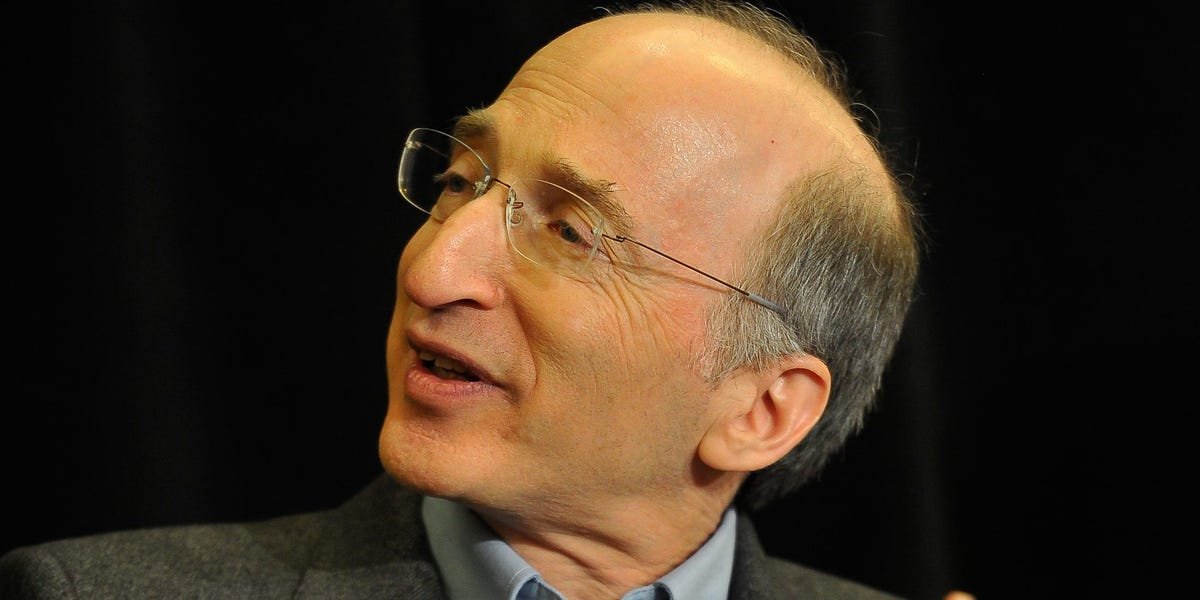
Probably not, according to Saul Perlmutter, a Nobel Prize-winning physicist who was credited for discovering that the universe’s expansion is accelerating.

He said AI’s biggest danger is psychological: it can give people the illusion they understand something when they don’t, weakening judgment just as the technology becomes more embedded in our daily work and learning.

“The tricky thing about AI is that it can give the impression that you’ve actually learned the basics before you really have,” Perlmutter said on a podcast episode with Nicolai Tangen, CEO of Norges Bank Investment Group, on Wednesday.

“There’s a little danger that students may find themselves just relying on it a little bit too soon before they know how to do the intellectual work themselves,” he added.

Rather than rejecting AI outright, Perlmutter said the answer is to treat it as a tool — one that supports thinking instead of doing it for you.

Use AI as a tool — not a substitute

Perlmutter said that AI can be powerful — but only if users already know how to think critically.

“The positive is that when you know all these different tools and approaches to how to think about a problem, AI can often help you find the bit of information that you need,” he said.

At UC Berkeley, where Perlmutter teaches, he and his colleagues developed a critical-thinking course centered on scientific reasoning, including probabilistic thinking, error-checking, skepticism, and structured disagreement, taught through games, exercises, and discussion designed to make those habits automatic in everyday decisions.

“I’m asking the students to think very hard about how would you use AI to make it easier to actually operationalize this concept — to really use it in your day-to-day life,” he said.

The confidence problem

One of Perlmutter’s concerns is that AI often speaks with far more certainty than it deserves and can be “overly confident” in what it says.

The challenge, Perlmutter said, is that AI’s confident tone can short-circuit skepticism, making people more likely to accept its answers at face value rather than question whether they’re correct.

That confidence, he said, mirrors one of the most dangerous human cognitive biases: trusting information that appears authoritative or confirms our existing beliefs.

To counter that instinct, Perlmutter said people should evaluate AI outputs the same way they would any human claim — weighing credibility, uncertainty, and the possibility of error rather than accepting answers at face value.

Learning to catch when you’re being fooled

In science, Perlmutter said, researchers assume they are making mistakes and build systems to catch them. For example, scientists hide their results from themselves, he said, until they’ve exhaustively checked for errors, thereby reducing confirmation bias.

The same mindset applies to AI, he added.

“Many of [these concepts] are just tools for thinking about where are we getting fooled,” he said. “We can be fooling ourselves, the AI could be fooling itself, and then could fool us.”

That’s why AI literacy also involves knowing when not to trust the output, he said — and being comfortable with uncertainty, rather than treating AI outputs as absolute truth.

Still, Perlmutter is clear that this isn’t a problem with a permanent solution.

“AI will be changing,” he said, “and we’ll have to keep asking ourselves: is it helping us, or are we getting fooled more often? Are we letting ourselves get fooled?”


Source link

Theron Mohamed — Profile Picture

Warren Buffett resigning as CEO but not chairman, said retiring worse than death

Warren Buffett is days away from stepping down as Berkshire Hathaway’s CEO, but at age 95, he’s skipping retirement to stay on as chairman. That’s not a shock from the investor who “tap dances to work.”

After revealing his resignation plans to Berkshire shareholders in May, Buffett said he would “still hang around” and “could conceivably be useful” to his successor, Greg Abel.

“I’m not going to sit at home and watch soap operas,” Buffett told The Wall Street Journal after his big reveal. “My interests are still the same.”

In his Thanksgiving letter, Buffett said he still works at Berkshire’s Omaha headquarters five days a week, and sometimes has a “useful idea” or gets approached with an offer.

Buffett’s lasting dedication isn’t surprising, as he’s famously devoted to Berkshire. Since taking control in 1965, he has transformed it from a failing textile mill into a world-beating conglomerate that owns scores of businesses such as Geico and NetJets, and huge stakes in public companies including Coca-Cola and Kraft Heinz.

“We’ve got the best job in the world,” Buffett said about himself and the late Charlie Munger during Berkshire’s annual meeting in 2000. “We get to work with people we like and admire and trust every day of the year. We get to do what we want to do, the way we want to do it.”

Investing Berkshire’s capital inside and outside the company is the “most enjoyable thing to do in the world,” Buffett said during the 2012 meeting. “I get to paint my own painting,” he continued, adding that he has “a lot of fun” with his coworkers.

Buffett has said for decades that retirement doesn’t appeal to him, and he much prefers to keep working as long as possible.

“Berkshire is my first love and one that will never fade,” he wrote in his 1991 shareholder letter, recalling that when a student asked when he planned to retire, he replied: “About five to 10 years after I die.”

Buffett said during Berkshire’s 1996 meeting that the idea of retiring was “unthinkable” for him: “That would be the worst. I think death would be second.”


Source link

Kate-Winslet-says-turning-50-changed-how-she-defines-success.jpeg

Kate Winslet says turning 50 changed how she defines success

Kate Winslet turned 50 this year and says her definition of success has changed.

Speaking to Newsweek in an interview released on Tuesday, the “Titanic” actor spoke about aging and what it’s been like to reach this milestone in her life.

“I think that women get more interesting as we grow older. I think that we’re more involved in life. We have so much more experience,” Winslet told Newsweek.

She added that turning 50 “feels fantastic” and that she’s looking forward to what the coming years will bring.

“When we grow up, and we think about what we want to be when we’re older, I never imagined any of this,” Winslet said.

As a result, she said she has come to view success in a very different way.

“Success, actually, for me more these days is more about pulling it off, being a decent person. You know, being able to take care of people, having time for friends, also learning how to be OK with not being busy all the time,” she said.

Winslet said there’s value in learning to slow down.

“I think it’s important to remind ourselves that sometimes being OK just in stillness and in our own company,” she said.

She said she doesn’t know how to meditate, but it’s something she should learn.

Winslet isn’t the only Hollywood star who has reflected on how turning 50 has changed her perspective.

During a “Today” show appearance in November 2024, Lauren Sánchez Bezos said she didn’t think she would have so much to look forward to in life after turning 50.

“When I was 20, I thought, ‘Oh my gosh, life is over at 50.’ Let me tell you: It is not, ladies. It is not over,” she said.

In January, Chelsea Handler told Parade that she was feeling “pretty into myself” as she turned 50.

“My life is exactly what I hoped it would be — it’s more than I hoped it would be. I had no idea what the possibilities were or that I could live a life like this and feel so free,” Handler said.


Source link

Judge-rejects-bid-to-overturn-Trumps-100000-H-1B-visa-application.jpeg

Judge rejects bid to overturn Trump’s $100,000 H-1B visa application fee

A federal judge cleared the way for the Trump administration to slap a $100,000 fee on new H-1B visa applications.

US District Judge Beryl Howell in Washington, DC, ruled Tuesday that the steep increase is lawful, handing the administration a win as it pushes to curb immigration and steer hiring toward US workers.

The US Chamber of Commerce and Association of American Universities, which challenged the policy in court, can appeal the decision.

This is a developing story; please check back for more.


Source link

I-won-28-million-in-the-Powerball-when-I-was.jpeg

I won $28 million in the Powerball when I was 21. One choice saved me from becoming a broke lottery winner.

The holiday season may have most of us ready to slow down, but the stakes for Wednesday night’s Powerball are just heating up. The top prize for Wednesday night’s drawing is estimated to be $1.7 billion, making it the sixth-largest jackpot in Powerball history.

If there is a winner on Wednesday, it could feel like a Christmas miracle, but former Powerball winner, Timothy Shultz, said there’s also a slim chance of going broke within a few years, despite amassing that amount of wealth.

Schultz won $28 million in 1999 while working at a gas station and retired a multimillionaire by the age of 21. In an effort not to become one of the unfortunate winners who eventually lose it all, he put a specific plan in place.

Consulting wealth professionals is the first step Schultz took after winning the Powerball

“Suddenly, I’d gone from a gas station attendant to retired at 21,” Shultz told Business Insider in a 2024 interview. “I felt like I was holding a magic wand. Everything was possible, but I also wanted to be financially responsible.”

He said, “At 21, I had no idea what to do with that kind of money and was lucky I sought professional guidance. I didn’t want to become a statistic of lottery winners going broke within a few years.”

Before turning in the ticket, he said he consulted with wealth professionals to understand how much he could afford to spend and give to others. “I helped many people, but also wanted to live within my means.”

Investing the money helped him maintain his wealth

Before he received any of the money, he established a plan with advisors to invest it conservatively, ensuring the returns could last him a lifetime. “I mostly invested in stocks, bonds, and mutual funds,” he said.

Emily Irwin, a Wells Fargo advisor who guides lottery winners on how to spend their money, told Business Insider in a 2023 interview that this is exactly what winners should do.

She also advised assembling a team of financial planners as soon as possible and that, “You must carefully consider experts specializing in high-net-worth and ultra-high-net-worth tax planning.” Irwin also said winners should interview several candidates, as these advisors will most likely be in their lives for years.

Other ways the 1999 Powerball winner spent his money

The first thing Shultz purchased with the money was the latest video game system. A luxury, he said, he “couldn’t afford before winning.” The next thing he did was set up his investments.

After establishing his investments, Schultz said he helped his family, bought vehicles, and traveled. He even went back to college to study film and broadcast journalism, a dream come true for him

But after winning, and still being surrounded by other struggling college students, Shultz felt pressure to pay for friends’ vacations, meals, or anything they did together.

He said, “When you win the lottery, people don’t view the money as something you’ve earned. A family member explicitly told me I got something for nothing by winning the lottery and should keep giving them and others money.”

Despite his successful investments, he still has one regret

These days, Schultz said he spends most of his free time exercising and working on his podcast and YouTube channel, “Lottery, Dreams, and Fortune,” which highlights the story of other lottery winners. “YouTube brings in some money, but I can live off my investments,” he said.

Despite making great investment choices, Schultz still regrets overlooking one specific investment.”I wish I had invested in bitcoin a few years ago, but that’s my only regret about how I’ve spent the winnings,” he said.

Still, Shultz’s initial decision to seek professional financial help set him up for years of success.

Correction: December 23, 2025 —An earlier version of this story misstated the details of the next Powerball drawing. It is for $1.7 billion on Wednesday night.


Source link

Business Insider Video Thumbnail

How to buy gold, silver, and other precious metals from Costco online and in-store

Two dozen eggs, a gallon of milk, 30 rolls of toilet paper — and one ounce of 24 karat gold.

While that might be one of the more expensive grocery runs a Costco shopper might make, it is one that could realistically happen.

Costco sells hundreds of millions of dollars’ worth of gold and silver each month. There are two ways to buy bars and coins from the wholesale club: online and in-store at certain warehouses. Here’s what that looks like.

The first step — step zero, if you will — is to get a Costco membership, since precious metals are exclusively available to members. The basic Gold Star membership gives you access, but if you’re planning to spend several thousand dollars on gold and silver, it might make sense to spring for the executive upgrade.

For the additional $65, executive members get 2% rewards on most purchases, including precious metals. At the recent price of about $4,480, the reward on a one-ounce gold bar or coin would be around $89, which is more than the price of an upgrade. (Executive members can also shop early at the warehouse, but that’s another story.)

Equipped with a membership, the options to buy precious metals depend largely on the availability of supply.

How to buy gold and silver from Costco online

Gold, silver, and platinum are listed on Costco.com on a precious metals page in the jewelry and watches category. (The items were previously listed under sports memorabilia and collectibles, which made them a bit harder for the casual buyer to track down.)


Costco.com's precious metals offerings on October 13, 2025.

Costco.com’s precious metals offerings on October 13, 2025.

Costco


When products are priced at or near the commodity market’s “spot” price, they can sell out extremely quickly.

Silver also tends to sell out quickly and follows a similar pricing pattern. In fact, silver’s market rally of more than 130% year-to-date as of Tuesday morning has outpaced gold’s nearly 70% increase. Plus, silver’s lower unit price — it’s at an all-time high of $69 per ounce — means more options for shoppers who are curious about buying metals but don’t want to fork over the price of a well-used car just yet.

Costco has responded to fluctuations in demand by limiting the quantities of a particular item a member is allowed to purchase in one transaction and over a 24-hour period.

Once an online purchase is completed, Costco estimates about three to five days for delivery, typically via UPS or FedEx. Same-day grocery orders must be placed separately, via Instacart.

Comments on the CostcoPM subreddit indicate that some packages can take longer to deliver, especially around periods of high demand and near the end of the week.

How to buy gold and silver at a Costco warehouse

Precious metals are also occasionally available at some warehouses — if you know where to look.

Sometimes it’s easier to spot: the store will put a large sign near the entrance encouraging arriving shoppers to check out seasonal or specialty bars. Some stores will let you know what they have in stock if you call ahead.

At other times, a sample of the available inventory will be displayed in the warehouse’s jewelry case near the electronics section.

Still, it’s not as simple as tossing a bar into your cart and proceeding to checkout. The jewelry case also has a stack of paper forms that shoppers must fill out with the item SKU and the quantity they wish to purchase.


A Costco merchandise pickup slip appears in the jewelry section of a warehouse in Wisconsin.

A merchandise pickup slip is used to buy precious metals at a Costco warehouse.

Dominick Reuter/Business Insider


Shoppers then bring the completed slip to the front office, where an employee will retrieve the order and assist with payment. Voila — they now own a small slab of expensive metal. Don’t lose it.

3 things Costco shoppers should know before buying gold or silver

There are three last things Costco shoppers should note.

Although Costco stands behind everything it sells, precious metals are excluded from the company’s unusually generous return policy. It also will not adjust the price of gold, silver, or platinum after purchase. Once the deal is done, that’s it.

The second thing is that it generally does not make mathematical sense to finance gold or silver purchases with credit card debt or other interest-bearing payment options.

While some metals buyers use credit cards in order to take advantage of rewards schemes, it’s widely understood that any balance should be promptly paid off with cash, since interest charges can offset any card points or increase in the metal’s value.

Lastly, some gold and silver buyers have found that selling metals can be harder than buying them (at least at the prices they would prefer). Coin shops are not likely to offer the full spot price for gold or silver, since they need to leave room to make a profit when they sell the metal.

Metals dealers and advisors generally recommend planning to hold onto physical precious metals for the long term. Selling without a strategy can have unexpected costs.


Source link