This story is based on a conversation with Joan MacDonald, 79, a former driving examiner of Collingwood, Ontario. It has been edited for length and clarity.
January 2017 was a New Year I’ll never forget. It was one of the few times that my daughter, Michelle MacDonald, lost her cool with me.
She’d moved to Mexico the previous month and was visiting. “I won’t get to see you as often as I like,” she said. “And, every time I leave, I won’t know whether it will be the last time I see you.”
Then she made another blunt comment that changed my life. “Mom, why don’t you go to the gym?” she said.
I needed to improve my health
I had high blood pressure, kidney problems, and was at least 70 pounds overweight. Approaching my 71st birthday that March, I felt scared and miserable.
My doctor had already warned me that, if I didn’t make an effort to improve my health, I would end up on dialysis before very long. I was effectively dying.
MacDonald, before she discovered the gym and became healthier.
Courtesy of Michelle MacDonald.
Growing up in Canada, I’d been an active child. I played ball, skated in the winter, and went bowling. I enjoyed doing them because they were fun. But I was by no means an athlete.
I got married a month before my 21st birthday and settled into married life while working as a driving examiner. I juggled work with motherhood, raising Michelle and her older and younger brothers.
Going to the gym really wasn’t a thing back then. None of my married friends worked out, or even thought about doing so.
I took medication for high blood pressure
I believe that your body changes every seven years or so. I went through variations in terms of shape and size, and enjoyed certain foods, then went off them.
I didn’t have regular meals, often eating just two meals a day at irregular times. In between, I’d snack.
Throughout my 60s, I was in poor health. I’d get bronchitis in the fall and spring — I had weaker lungs after contracting rheumatic fever as a child — and the kidney issues began.
The weight had grown to 200 pounds, which was far too heavy for my height of 5 feet 3 inches. And my blood pressure was high; I was put on medication.
MacDonald, after taking up exercise and eating five small meals a day.
Courtesy of Michelle MacDonald
I’m lucky because Michelle is a certified strength and conditioning specialist and sports nutrition coach. She saw how unhealthy I’d become and was worried, especially because she’d moved thousands of miles away and couldn’t keep an eye on me.
Her recommendation struck home. It was enough to jolt me into action. My doctor also encouraged me to lose weight and reduce my blood pressure.
I’d half-heartedly attended the gym before, but not consistently. This time, I went five times a week.
My body slimmed down
I sought advice from Michelle and studied YouTube videos to learn how to use the machines and do strength training with free weights. At first, I couldn’t believe how hard it was to pick up 20 pounds.
I began with small weights and increased them by increments. I’ve since done a deadlift of 170 pounds and a hip thrust of 230 pounds.
It was amazing to see my body slim down and fit into clothes, like jeans, that I hadn’t worn in a very long time.
I lost 45 pounds in six months and a further 25 pounds during the rest of my 70s. I’ve gone from a size XL to a medium. I was able to quit my medications.
MacDonald has become stronger and more flexible.
Courtesy of Michelle MacDonald
My current regimen involves spending two hours at the gym, with around 15 minutes of cardio, followed by using weights. I often work out with Michelle, whom I joined in Mexico for around a year after my husband died.
As for my diet, I eat five small meals a day, including oatmeal with egg whites, protein powder, and 1% coconut milk for breakfast.
Then I’ll have yogurt, an egg white omelette with ground beef, chicken, turkey, and ham, a protein bar, and a final, plain meal without starches. If I start my day at 7 am, I’ll stop eating by 7 pm.
A shoulder injury hasn’t stopped me
Unfortunately, I suffered a shoulder injury while biking outside on a rough surface and needed surgery three months ago. I’ve had to take things a bit easier as I recover. However, I feel 100% happier and healthier than I did before going to the gym.
Michelle and I established “Train With Joan” to help inspire people to take up exercise, regardless of their age.
It may slow you down a bit, but I’ve seen many seniors, even older than me, accomplish great things. They have resolved to do it for themselves. Nobody else is living in your body but you.
Moving at superspeed isn’t limited to SpaceX’s rockets.
Elon Musk’s satellite and rocket company has secured one million new customers for its Starlink internet in under seven weeks and is now active in 155 markets, the company wrote in a post on X on Monday evening.
“Starlink is connecting more than 9M active customers with high-speed internet across 155 countries, territories, and many other markets,” the company said.
In a similar post from November 5, SpaceX said Starlink had 8 million customers, meaning that its customer base has expanded at a rate of more than 20,000 per day since that date.
SpaceX, which uses a constellation of more than 9,000 low-orbit satellites to provide its Starlink internet connection, including to remote areas, is reportedly planning to go public next year at a valuation of $1.5 trillion.
Every time Polly publishes a story, you’ll get an alert straight to your inbox!
Stay connected to Polly and get more of their work as it publishes.
Elon Musk, who founded the company in 2002, said this month that the satellite network was “by far” the largest driver of SpaceX’s revenue.
The numbers close an explosive year of growth for SpaceX. In a December 2024 progress report, SpaceX said Starlink had 4.6 million customers, and by August 2025, the number was up to 7 million.
Global web traffic from users on SpaceX’s satellite-based internet service more than doubled in 2025, according to data from Cloudflare, a cybersecurity company that handles tens of millions of requests between users and websites every second.
Around two dozen airlines have also announced plans to use Starlink to offer high-speed WiFi on their planes, and SpaceX has signalled it could soon launch its own mobile carrier service powered by the satellite network.
SpaceX has successfully commercialized reusable rockets, a feat previously thought impossible by many within the space industry, and now launches more cargo into orbit than any other company.
It has also capitalized on opportunities that emerged as NASA and the Pentagon moved away from government-only spaceflight, and filled a massive unmet demand in global connectivity.
Led by Musk, who is the CEO and founder, SpaceX is also known for its intense, efficiency-driven culture.
SpaceX ultimately plans to fulfill its billionaire founder’s ambitious visions of colonizing Mars and putting data centers in space with its giant Starship rocket.
SpaceX did not immediately respond to Business Insider’s request for comment.
The energy in the room couldn’t have been more tense. Some women were yelling, telling their new friends to stand up and leave. Others were glued to their seats, crying in red-carpet-worthy gowns. Contestant Andromeda Peters was in the middle of it all.
A licensed therapist since 2017, Peters felt compelled to help. She instructed the women to close their eyes and feel their backs against the chairs, to feel their feet planted firmly to the ground, some in their 6-inch stilettos. Then she began to lead the group through a breathwork exercise: Breathe in for four seconds, hold for four seconds, she said, and now exhale.
It was the very first day of Miss Universe.
“We were all distraught,” Peters, who was Miss Ghana 2025, told Business Insider about her fellow contestants. “I was going to walk out, but then I realized, there’s a girl crying next to me and she’s holding my hand. There’s a girl behind me crying. So I helped my sisters ground themselves.”
Chaos had erupted among the pageant queens after Miss Universe director Nawat Itsaragrisil yelled at Miss Mexico Fátima Bosch. Their confrontation was captured on livestream, kicking off what would become one of the messiest competitions in the pageant’s 74-year history. When Bosch was ultimately named the new Miss Universe on November 21, many contestants wondered if they had ever really stood a chance at the crown.
Over the weeks that followed, contestants that Business Insider spoke with would accuse the organization of grueling conditions, favoritism, inconsistent rules, and an ever-changing judging process. Interviews with more than a dozen contestants reveal how a pageant marketed as a women’s empowerment platform had fallen apart as the world watched.
Now, some believe that only a dramatic leadership change can fix Miss Universe.
“I could give you the pageant answer, or I could just be real: Everyone has to go, absolutely everyone,” Miss Haiti Melissa Sapini said.
The Miss Universe Organization did not respond to multiple requests for comment.
Drama from the start
Contestants at the 2025 Miss Universe competition.
Courtesy of Miss Universe
As November neared, 120 women packed their bags and began the journey to Thailand, where they’d spend a month attending events across Bangkok, Phuket, and Pattaya.
For many contestants, walking the Miss Universe stage was a childhood dream finally coming true. Some were seasoned pageant queens with multiple crowns and sashes glittering on their shelves. Others were first-timers. Miss Bonaire Nicole Peiliker-Visser was inspired to compete after her daughter won Mini Miss Universe, while Miss Hungary Kincső Dezsény was searching for a purpose beyond modeling.
“If you get beauty from … God, you need to use it for good,” Dezsény told Business Insider.
Whatever their motivation, the women thought they knew what to expect. The three-week competition would kick off with sponsorship events and media opportunities as they traveled throughout Thailand. Then, contestants would return to the capital to compete in the evening gown, swimsuit, national costume, and interview competitions. A panel of judges would determine the results, though one woman would be able to earn a spot in the top 30 by winning the “People’s Choice” category in Miss Universe’s official fan-voting app.
Meanwhile, trouble was already brewing within the pageant’s leadership.
This year’s event was organized by Itsaragrisil, a controversial figure in the pageant world known as “Papa Nawat.” The Thai businessman, who took over the Miss Thailand pageant in February, has repeatedly come under fire for shaming beauty queens at Miss Grand International, a separate competition he founded in 2013. The flashy and over-the-top production is built around Itsaragrisil’s “4B Framework:” beauty, body, brains, and business.
To kick off the Miss Universe pageant, the Miss Thailand Organization announced it would host a “special dinner and talk show” with Itsaragrisil, Miss Universe 2024 Victoria Kjær Theilvig, and a select group of 2025 contestants. This exclusive dinner, which had been a fixture of Miss Grand International, had never been done at Miss Universe. Fan voting would determine the 10 contestants who would be allowed to attend.
Though some Miss Universe contestants promoted the dinner, they weren’t all on board. Some women worried that scoring a seat at the table could influence final judging during the actual pageant. Miss Canada Jaime VandenBerg told Business Insider that she didn’t “condone what feels like women being auctioned off for dinner with a man.”
The dinner was eventually canceled after Miss Universe called it an “unauthorized activity.” The organization’s president, Raul Rocha, reiterated in a November 3 letter that only the four traditional categories of competition would be considered in the judging.
Miss Thailand director Nawat Itsaragrisil with Miss Universe 2025 contestants.
Courtesy of Miss Universe
A spokesperson for Itsaragrisil told Business Insider that the dinner had been “a sponsor campaign designed to help contestants express their personalities.” Following Rocha’s letter, the spokesperson said many contestants believed all other activities were optional, and more than 30 contestants refused to participate in sponsorship events.
“Sponsor-related activities are a necessary and standard component of any international pageant production,” the spokesperson added. “Sponsors rightfully expect visibility and engagement in return for their contributions.”
The rising tensions came to a head on November 4, the first official day of the pageant, during the confrontation between Itsaragrisil and Bosch. All the pageant queens had been gathered to receive their official Miss Universe sashes, a tradition one contestant compared to the opening ceremony at the Olympics, but the event didn’t begin as planned.
“We’re going in excited for this big moment that everyone lives for,” Peters said. “This was supposed to be our moment to shine at Miss Universe, and then we’re all being yelled at.”
Contestants told Business Insider that Itsaragrisil said he had a list of 20 countries refusing to do sponsorship posts on social media and repeatedly asked the women to “own up to it” before he started calling out specific countries.
“It got to the point where no one even moved because you felt like if you flinched, he would just call you up,” Sapini said. “All I’m thinking is, ‘Oh my God, please don’t say Haiti.'”
When Itsaragrisil turned his attention to Bosch, a heated back-and-forth began. She told the director, “You are not respecting me as a woman,” and he called for security to remove her from the room. Bosch walked out instead, with dozens of contestants following behind her.
“She was shaking,” VandenBerg said of Bosch. “She had tears in her eyes. Victoria popped in and said, ‘Girls, you don’t have to put up with this,’ and I was one of the first to walk out.”
“I was so shocked and angered by the lack of respect that I just did not want to be in that room anymore,” said Miss Armenia Peggy Garabekian, who was among the first to leave. “Then a few of my delegate sisters messaged me and said, ‘Peggy, he’s not letting us out.'”
The women had been seated in alphabetical order for the sashing ceremony, so contestants at the back of the room didn’t have a chance to leave before the Miss Universe staff shut the doors.
“You’re at a loss because you’re uncertain and trying to stay calm,” Miss Malaysia Chloe Lim, who was unable to exit the room, said. “At that moment, we were wondering, ‘Is the competition still going to happen?'”
“It got me really anxious about the legitimacy of the whole event,” Miss Hong Kong Lizzie Li said.
There was a dark cloud hovering over the set the whole time. I didn’t think it could get worse. Then it got worse than worse.Steve Byrne, Miss Universe’s onstage host
Itsaragrisil’s spokesperson said staff temporarily closed the door because “a large number of press and media were gathered directly outside the room, creating a volatile environment.”
The online backlash was swift, but it wasn’t just directed at Itsaragrisil. Some contestants who didn’t leave the room were “being bullied really badly” by fans on social media, Peters said.
“I feel like nobody in the organization did enough; they didn’t care about our mental state and what everyone went through,” Peiliker-Visser, who said she faced online harassment, told Business Insider.
On the day of the confrontation, Rocha said Itsaragrisil’s participation would be limited or eliminated entirely. Yet contestants said he only missed a few events, and Itsaragrisil was quickly and quietly reintroduced.
Itsaragrisil’s spokesperson told Business Insider that Rocha’s promise to limit the director’s presence was never “operationally realistic.” The spokesperson added, “Nawat continued attending activities because he was the only individual with the authority and understanding to ensure the pageant could continue.”
Itsaragrisil tearfully apologized the day after the incident, telling reporters, “I am human. I didn’t want to do anything like that.”
A grueling environment
Contestants onstage at the Miss Universe 2025 competition.
Mohan Raj/Getty Images
Turn on a Miss Universe competition, and you’ll see the three-hour culmination of a weekslong whirlwind experience. While the sea of shimmering sashes and sparkling gowns may look glamorous, there’s a lot of sacrifice off-screen.
For many women, the pressure of the competition was sky-high. After all, these pageant queens weren’t just representing themselves — they were each representing an entire nation. Some women came from countries that had sent them abroad to train with top runway coaches or create couture costumes with the most in-demand designers. Contestants from smaller countries, which typically don’t have many sponsors, had paid thousands of dollars out of pocket for their gowns alone.
Once they arrived in Thailand, contestants had to travel to multiple events each day, sometimes taking flights in the middle of the night before they were expected to participate in various activities, fulfill a daily checklist of social media sponsorship posts, and fight off crowds of passionate bloggers and fans — all while looking picture-perfect.
Contestants said they were forbidden from using hairstylists and makeup artists to help them prepare for each day’s events, so they would regularly wake up at 3 a.m. to get competition-ready. Some simply slept with their makeup on.
When food poisoning or an illness hit, as it frequently did throughout the weeks of competition, many women had to decide whether to rest or miss an important rehearsal. Sometimes, they didn’t have a choice. Dezsényi said her bout with food poisoning was so bad that she spent four days in the hospital — but still made it to the final show.
Contestants take a break during a sponsorship event at Miss Universe 2025.
Courtesy of Miss Universe
After these long days, the women were greeted at the hotel lobby by hordes of fans or pageant bloggers seeking an interview. Contestants told Business Insider that, unlike past Miss Universe competitions, they hadn’t been given chaperones to help manage the crowds.
“They said, ‘We’re not going to have chaperones because you’re grown women,’ but at the same time, you’re putting us in the public spotlight,” VandenBerg said. “To not have security, to me, is kind of crazy.”
Steve Byrne, the onstage host of this year’s competition, told Business Insider that he was shocked by how the Miss Universe Organization treated the women.
“These girls are cooped up for almost 30 days,” he said. “Every day, they have to go to a sponsored dinner. They have to go to this resort and pretend they’re having fun at the pool. To me, it seemed everyone was losing sight of what’s important here. Is anybody thinking about these women? That’s what bothered me.”
Some contestants enjoyed the action-packed itinerary, which included everything from Muay Thai lessons to gala dinners. Miss India Manika Vishwakarma said she appreciated the “incredible focus on fan interactions.”
Others were dismayed by the daily sponsorship events and noticed a lack of philanthropy in the line-up. Miss Universe’s former president, Paula Shugart, told Business Insider that contestants previously participated in an average of three philanthropy events. This year had none.
“I’m a representative of my country, and you’re telling me, ‘Hey, hold this dietary protein powder or take photos with this luggage,'” Garabekian said. “Throughout the month, we could have been taken to a hospital, orphanage, school, anywhere where we could have helped people in need.”
Itsaragrisil’s spokesperson said the Miss Universe Organization did not request any philanthropy events in Thailand, instead focusing on its digital advocacy platform, “Beyond the Crown,” which required contestants to film a video explaining how they used their title to uplift social causes.
Favoritism takes hold
Miss Universe 2025 contestants pose during a sponsorship photo shoot.
Courtesy of Miss Universe
“Sash factor” is a well-known term in the pageant community, bestowed upon the countries that treat Miss Universe like their own Super Bowl. These fan bases dissect the contestants’ every move with the rigor of a fantasy line-up. Their national queen, the star quarterback, is typically rewarded with millions of social media followers.
Miss Universe is designed to be a fair competition, but even the contestants recognize that the playing field isn’t exactly equal. Countries with significant “sash factor” tend to have more sponsors to cover the costs of the gowns and training, and typically receive far more fan attention outside their country. Contestants said that favoritism was also apparent among this year’s official sponsors for the pageant, who were selecting queens from “sash factor” countries for more photo shoots and media appearances.
“They really are looking for women who are popular and have lots of followers,” said Peiliker-Visser. “And if you don’t, you just don’t count.”
Appealing to sponsors has always been necessary to help fund the pageant, but Shugart said in years past it typically wasn’t the main focus of the contestants’ activities. This year, though, multiple women said they were brought into a room and asked to explain any missing sponsorship posts for each brand that had partnered with Miss Universe during the competition.
“I found this extremely unusual and uncomfortable,” Garabekian said. “It made me feel more like a tool for sponsorship obligations, rather than someone there to contribute meaningfully.”
Itsaragrisil’s spokesperson said the sponsor checklist was a “standard operational requirement, not an unusual demand,” and no contestant was “forced or penalized” for a lack of posts.
“It is important to emphasize: MUO is not a charitable organization,” the spokesperson added.
Miss Universe 2025 contestants pose at a sponsorship event.
Courtesy of Miss Universe
As the competition progressed, multiple contestants said it became apparent that some women were secretly using makeup artists and hairstylists to get them competition-ready every morning. This hurt morale, particularly among the pageant queens from smaller countries.
“They scared us so much about the hairstylists and makeup artists, we didn’t even try to think about it,” said Peiliker-Visser. “But these girls were allowed. I said, ‘Oh, they must be special because they’re allowed everything.'”
After several contestants complained, a staff member from Miss Universe held a meeting.
“They said, ‘Girls, we understand there’s a lot of favoritism, and maybe you’re feeling down about it. We just want you to know that it’s the sponsors and has nothing to do with the results of Miss Universe. We’re looking for small countries with big hearts, too,'” Sapini said.
Contestants said the organization promised to take disciplinary action against those who brought makeup artists and stylists, but women continued to break the rules and still placed in the top 30 or better.
A confusing voting app
The 2025 contestants had a jam-packed itinerary with daily sponsorship events.
Courtesy of Miss Universe
While contestants attended events, fans were logging into the Miss Universe app to vote — after watching ads or purchasing votes in bundles — in categories ranging from best skin and evening gown to “Aura of the Day” and “People’s Choice.”
The “People’s Choice” winner would automatically earn a spot in the top 30 — a prize that has become popular across various pageant systems in recent years — but contestants told Business Insider they were unsure whether fan votes would impact anything else.
Conflicting messages made it worse. Rocha’s November 3 statement said contestants were judged only in the four traditional categories — evening, swimsuit, national costume, and interview. Yet the app said votes contributed “10% to the final score of the top 30 placement.”
A screengrab from the Miss Universe app detailing how the fan voting would work.
Courtesy of Zetrix
Peiliker-Viser said the Miss Universe Organization told her national director before the competition that fan votes wouldn’t count. “My director was really concerned because we’re a population of 26,000 people,” she added. “How are they going to measure a small island like Bonaire with other countries?”
For Sapini, it was upsetting to watch people in Haiti work hard to vote for her when there was so much ambiguity around their worth.
“Haiti is a poverty-stricken country, and people in these villages collected their money to send to the Miss Universe Organization because they held onto hope that this would be something good for our country,” she said. “But the voting system was all over the place. It made no sense.”
Can the real judge please stand up?
Miss Universe hurtled toward its final days just as it began — with more confusion.
Speculation surrounding who was judging this year’s competition began circulating online as judges started dropping out. Behind the scenes, contestants said they were just as unsure about who was deciding their fate.
Three days before the November 21 final, composer Omar Harfouch dropped out as a judge, accusing the Miss Universe Organization of carrying out a “secret vote” to select the top 30 without the official judging panel. Former soccer star Claude Makélélé exited the same day due to “unforeseen personal reasons.”
Harfouch also said Princess Camilla di Borbone delle Due Sicilie resigned that week, but VandenBerg said her exit had been misconstrued and that “she dropped out so far in advance.” The princess never publicly explained why.
In a statement, Miss Universe said Harfouch was confused by its announcement of an eight-person selection committee for the pageant’s new “Beyond the Crown” program, which they said operated “entirely independently” to select a winner that had no bearing on the final results. Contestants told Business Insider it was unclear what the winner of the “Beyond the Crown” title would receive.
That statement added more fuel to the rumors, as pageant fans said on social media that James Irvin Healy, one of the “Beyond the Crown” judges, was in a relationship with Miss Paraguay, Yanina Gómez, and began circulating pictures of them together.
Gómez, who went on to win “Beyond the Crown” and “People’s Choice,” never publicly addressed the allegations that she was in a relationship with one of the judges, which fans considered a significant conflict of interest. Meanwhile, the Miss Universe Organization removed Healy’s picture from its November 17 Instagram post announcing the eight-person panel.
Gómez and Healy didn’t respond to requests for comment.
To maintain transparency, Miss Universe previously relied on a separate preliminary selection committee, which it’d announce on Instagram, to decide which contestants advanced to the top 30 ahead of the televised finals. No such distinction or announcement was made this year.
I’m so glad I saw what it’s like because this world is insane.Miss Bonaire Nicole Peiliker-Visser
Some contestants said they were surprised when they walked into their closed-door interview and saw an eight-person panel that included Theilvig, then-Miss Universe CEO Mario Búcaro — who stepped down on December 12, less than two months after taking over the role — a past Miss Thailand, and some Miss Universe staff members.
“I’ve never done a pageant where the staff was judging you,” said Peters, who has competed since 2014. “You typically want a panel of judges with different experiences, backgrounds, and opinions.”
As confusion swirled around the judges, a terrible accident occurred during the preliminary evening gown competition. Contestants were devastated after Miss Jamaica Gabrielle Henry fell off the stage. She remains hospitalized with serious injuries.
“I’ll be honest, there was a dark cloud hovering over the set the whole time,” said Byrne, the onstage host. “I didn’t think it could get worse. Then it got worse than worse.”
A winner is finally crowned
Miss Thailand Praveenar Singh and Miss Mexico Fátima Bosch await to hear the results.
Arnun Chonmahatrakool/Thai News Pix/LightRocket via Getty Images
The Miss Universe final began at 8 a.m. local time so that it could air live during the US primetime. Contestants arrived at 1 a.m. for their call time. “We were making jokes with each other backstage, trying to keep our energy up,” Peters said. “It literally felt like we were in survivor mode.”
The final two came down to Bosch and Miss Thailand Praveenar Singh. When the host called Miss Mexico’s name, he said the stadium filled with boos. It could’ve been locals rooting for Miss Thailand, passionate supporters of fan favorite Miss Côte d’Ivoire Olivia Yacé — who placed fourth runner-up — or the shock of Bosch winning after her dramatic start to the pageant. Whatever the reason, Byrne said he knew it would be bad for Bosch.
“I thought, ‘Boy, this woman is going to be put through the wringer,” he said.
As fans started to doubt the legitimacy of the results online, Miss Universe 2005 Natalie Glebova — who joined the judging panel after Harfouch resigned — posted a picture of Singh, the runner-up, on Instagram with the caption “My winner!”
Glebova also noted that, unlike past Miss Universe competitions, there had been no accounting firm to audit the results. “Until then, I don’t think I will be participating as a judge again,” she added.
In the hours following the announcement of the winner, questions about the integrity of the judging process intensified. Harfouch said on Instagram that the organization’s president, Rocha, had told him to vote for Bosch before he resigned as a judge. Fans also alleged that Bosch’s father had done business with one of Rocha’s companies, a claim the pageant queen denied.
Rocha said one of his companies had a 2023 contract with Pemex, where Bosch’s father works, but it was “impossible” that there was any connection between that and Bosch’s win. Her father added in a November 25 statement that his role at Pemex had nothing to do with awarding contracts and that he’d only met Rocha for the first time at the Miss Mexico 2025 pageant in September.
A contestant fixes Bosch’s crown after she wins Miss Universe 2025.
Mohan Raj/Getty Images
In a separate statement, the president told pageant fans that there were “countless situations” during the three weeks of Miss Universe that went into deciding the winner, appearing to contradict his previous statement that only the four categories of competition would be used during the judging process.
During a November 24 interview on Mexican journalist Adela Micha’s news show, Rocha seemed to indicate that one of those factors was the strength of a contestant’s passport. He told Micha that a Côte d’Ivoire passport, which requires visas for 175 countries, would have made it difficult for Yacé to travel as Miss Universe if she had won the crown.
“She’s going to be the Miss Universe who spent a whole year in an apartment because of the cost of visa processes, of lawyers,” he said.
That same day, Yacé announced that she was resigning as Miss Universe Africa and Oceania — a title she received after placing fourth runner-up — because her values no longer aligned with the organization.
Contestants defended Yacé and questioned whether women from smaller countries ever stood a chance. In fact, multiple contestants that Business Insider spoke with said similar comments were made about their own passports during the competition.
“We need to be valued by our work and what we did onstage, not on the strength of our passport,” Miss Turks and Caicos Bereniece Dickenson said.
A leadership in crisis
Miss Universe’s leadership has weathered several controversies since it changed hands in October 2022. During his interview with Micha, Rocha said he was “fed up” with owning Miss Universe and was looking to sell his 50% stake. What he didn’t mention was the organization’s growing list of legal issues.
The other half of the organization is owned by JKN Global Group, whose founder, former Miss Universe CEO Anne Jakrajutatip, stepped down in June after the Thai Securities and Exchange Commission alleged that she had included false or misleading information in the financial statements. On November 26, the Associated Press reported that a Bangkok court had issued an arrest warrant for Jakrajutatip in an ongoing fraud case. Jakrajutatip hasn’t commented.
That same day, news broke that an arrest warrant had also been issued for Rocha in an investigation involving alleged weapons and drugs trafficking, fuel theft, and organized criminal activity. A Mexican official later said that there was no evidence of organized crime money within Miss Universe. By December 5, Mexico’s Financial Intelligence Unit had frozen Rocha’s bank accounts.
There are arrest warrants for both Anne Jakrajutatip and Raul Rocha.
Adrián Monroy/Medios y Media/Getty Images
Amid the flurry of legal action, Miss Universe addressed rumors that a Thailand-based cryptocurrency company, TCG Social Media Group, had purchased the pageant. In a December 3 statement, the organization said it was aware of TCG’s interest but was not in the midst of any sale or negotiation. TCG Social Media Group could not be reached for comment.
Some contestants believe that new leadership would help Miss Universe regain its sparkle.
“I genuinely hope the Miss Universe Organization focuses on transparency,” Miss Bulgaria Gaby Guha said. “Clearer rules, consistent communication, and a visible decision-making process all help build trust, not just for contestants, but for fans who invest their passion into the competition.”
“No matter who wins or who owns the pageant, the power is in the dream and what you do with it,” VandenBerg said. “You can still believe in the dream, the sisterhood, and the impact Miss Universe has made over decades.”
For others, though, the drama at this year’s pageant is too much to overcome.
“This is just despicable behavior to me,” Sapini, who also competed at Miss USA in 2024, told Business Insider. “I can’t preach to the next generation of girls that this should be your dream.”
“I’m so glad I saw what it’s like because this world is insane,” Peiliker-Visser said. “It’s my daughter’s dream to go to Miss Universe, but my kids are not doing this.”
This story is available exclusively to Business Insider
subscribers. Become an Insider
and start reading now. Have an account? .
President Donald Trump announced new “Trump-class” ships for the US Navy Golden Fleet.
Trump said up to 25 ships will be built, with construction starting immediately.
The first of these ships is the USS Defiant.
President Donald Trump on Monday shared details about new additions to what he’s calling the US Navy’s “Golden Fleet.”
Two “Trump-class” ships, which the president described as “battleships,” were announced Monday afternoon at a press conference alongside Pentagon chief Pete Hegseth, Navy Secretary John Phelan, and Secretary of State Marco Rubio.
Trump said they would be “AI-controlled” and have “lasers,” and he said that the design would be led by the US Navy with his aesthetic input.
The first of these ships will be called the USS Defiant, Phelan said. Posters of the warship were on display at the press conference held at Trump’s Mar-a-Lago Club in Palm Beach, Florida.
“We’re desperately in need of ships, and I have approved a plan for the Navy to begin construction of two large battleships,” he said. “We used to build the Iowa, the Missouri, the Alabama. These will be 100 times the force and power. Each one of these will be the largest battleships built in the history of our country.”
The president said that eventually “20 to 25” of the “Trump-class” ships will be made, and construction will start “immediately.”
The ships will be triple the size of an Arleigh Burke-class destroyer, according to the US Navy, and they will be capable of launching Conventional Prompt Strike hypersonic missiles and the Surface Launch Cruise Missile-Nuclear.
ChatGPT doesn’t want to be left out of the “Wrapped” party that Spotify popularized. So say hello to “Your Year with ChatGPT.”
OpenAI launched the new retrospective on its app on Monday, informing users about the top themes of their chats, the number of messages they have sent, and the awards they have earned.
It’ll even generate some pixel art that depicts some of the your themes.
The recap is available in the US, UK, Canada, New Zealand, and Australia. To see it, click the plus button in the app and ask, “Show me my year with ChatGPT.”
It’s available to Free, Pro, and Plus users, but not those with a business or enterprise account. (So for those with ChatGPT accounts through your work, you likely won’t be able to brag to your boss about your ChatGPT stats.)
Your Year with ChatGPT!
Now rolling out to everyone in the US, UK, Canada, New Zealand, and Australia who have reference saved memory and reference chat history turned on.
OpenAI joins the many companies that are rolling out user rundowns for 2025. Alongside the common streamer packages from Spotify and Apple Music, there are recaps this year from LinkedIn, Uber, Dunkin’, Snapchat, Strava, Partiful, and more.
All these apps promise to show you what you’ve been up to for the past year — perhaps lightly roasting you in the process.
ChatGPT’s rundown begins with a piece of poetry, followed by the three most prominent themes, based on the user’s chat history. Then it gets into the statistics.
Users can learn how many messages they sent, their total number of chats, and their chattiest day. They can also see how many em-dashes have been exchanged throughout the chats, a figure ChatGPT often uses.
ChatGPT informs users of the exact number of em-dashes they exchanged.
Screenshot via Steven Tweedie
Next, the user can learn about their chat style. This is a measure of tone: ChatGPT told me that I spoke “casually, wryly, and directly.”
Then come the awards and accolades. ChatGPT awarded me the “Most Likely to Google, ‘Is this Flight Worth It?'” It’s a bit ironic — I wouldn’t Google that, I’d ask ChatGPT.
My archetype was determined to be the tinkerer, a title given to 8.5% of users. The title meant I learned by trying, and that I used ChatGPT to experiment.
OpenAI has improved its image and video creation models, recently rolling out Sora 2. The recap features an AI-generated piece of pixel art inspired by the year. I asked mine about moving to Brooklyn; it included a matcha.
ChatGPT generates pixel art describing your year.
Screenshot via Henry Chandonnet
Other features are more interactive. Want to learn what your 2026 has in store? You’ll have to wipe away the “mists of mystery” (which looks more like heaps of snow) to learn your fate. Reload the page, and you’ll see another fortune.
With that, ChatGPT’s recap comes to a close, but not before sharing an inspiring message.
“Across all the drafts, questions, and rabbit holes, you found a place to work things out,” it said. “And that’s no small thing.”
Ever since Bari Weiss arrived as the head of CBS News, people inside and outside the company have been waiting to see whether her politics — and those of CBS owner David Ellison — would show up in the journalism.
This weekend, they may have gotten their answer. Or they may not have.
And that uncertainty is the problem.
It’s possible Weiss had legitimate editorial concerns about a “60 Minutes” segment on the Trump administration’s use of El Salvador’s notorious CECOT prison. CBS pulled the segment abruptly before it was scheduled to air on Sunday evening. News organizations do periodically delay or spike stories.
But the reported details around this decision make it hard to take the explanation entirely at face value. And Weiss’s position — and the politics surrounding her appointment — mean that editorial calls like this one will always be read for hints of political bias.
Every time Peter publishes a story, you’ll get an alert straight to your inbox!
Stay connected to Peter and get more of their work as it publishes.
The segment, reported by Sharyn Alfonsi, had been promoted by CBS ahead of Sunday’s broadcast and, according to multipleaccounts, had cleared the network’s standard internal processes. A few hours before airtime, CBS News announced that the segment needed additional reporting and editorial work.
Alfonsi saw it differently.
“In my view, pulling it now — after every rigorous internal check has been met is not an editorial decision, it is a political one,” she wrote in a note to her co-workers. “We are trading 50 years of ‘Gold Standard’ reputation for a single week of political quiet.”
Weiss, meanwhile, told her staff Monday morning that she held the story because “it did not advance the ball,” and because it didn’t include on-camera comment from the Trump administration, which had sent hundreds of Venezuelans to the prison, where many were reportedly tortured. She had previously sent a memo to “60 Minutes” producers complaining that the report they’d made didn’t provide viewers with “the full context they need to assess the story.”
There are two big problems with those arguments: 1) Making them so late in the process of a long-running investigation, shortly before the air date, is guaranteed to raise eyebrows. And 2) arguing that a story about the Trump administration can’t air without on-camera participation from the Trump administration leads to a chilling endpoint: If the Trump administration doesn’t want a story to run on “60 Minutes,” it can kill it by not showing up on camera.
Now, add in the environment Weiss stepped into. She arrived at CBS News through a deal engineered by Paramount’s owners, the Ellison family, at a moment when the Ellison family is deeply enmeshed with the Trump administration.
David Ellison’s father, Larry, who funded his son’s acquisition of Paramount, controls Oracle — which just got approval to acquire part of the US operations of TikTok, in a deal the Trump administration negotiated with the Chinese government. And the Ellisons are also trying to get Trump to favor their bid to buy Warner Bros. Discovery — a deal that would require approval from the Trump-controlled Department of Justice, as well as other regulators.
Trump, meanwhile, has already been complaining about “60 Minutes” under Ellison’s ownership. “For those people that think I am close with the new owners of CBS, please understand that 60 Minutes has treated me far worse since the so-called ‘takeover,’ than they have ever treated me before,” he posted on his Truth Social platform last week.
None of which proves that politics drove Weiss’ decision. And it’s understandable if the way “60 Minutes” used to work isn’t the way Weiss wants it to work — she’s the new boss, and she has spent much of her career complaining about big media institutions like “60 Minutes.”
But it explains why people are wondering if Weiss’ call was directly, or indirectly, influenced by her owner and his political status. I’ve asked Weiss for comment; a Paramount rep declined to comment.
What we do know is this: The decision was made inside a system where the people who own the newsroom need things from a president who wants leverage over the press.
In that world, suspicion isn’t paranoia. It’s a rational response to how power works. And it’s not something Weiss can fix, explain away, or out-communicate.
Eating at Katz’s Delicatessen, which has been on the Lower East Side since 1888, is basically a New York rite of passage. Best known for its pastrami sandwich, the deli goes through 70,000 pounds of meat a week and serves up to 4,000 people on its busiest day. You’re going to see everything it takes to prep and deliver a flawless service during the lunch rush at this iconic Jewish deli.
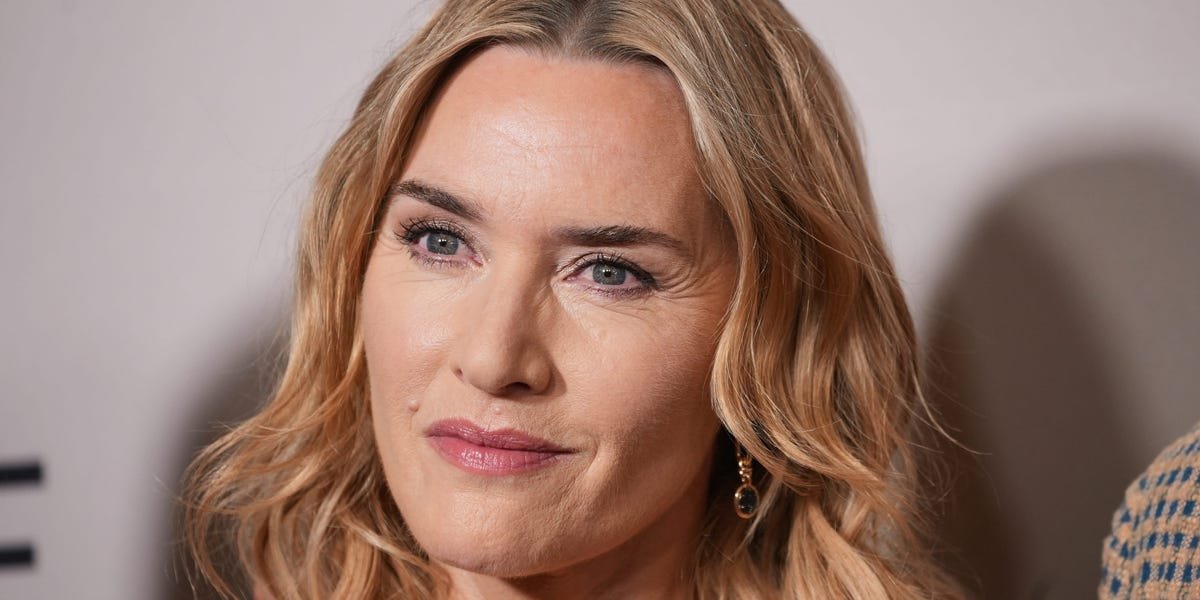
Kate Winslet has a secret to staying sane among the madness of celebrity: motherhood.
“I was very fortunate because I became a mother when I was really young,” Winslet said during an appearance on the podcast “Talk Easy with Sam Fragoso,” which aired Sunday, December 21. “I was, you know, blessed to be taking care of this gorgeous little baby,” she said.
Winslet, 50, had her first child, actor Mia Threapleton, in 2000 when she was 25 years old. She welcomed her eldest son, Joe Anders, 21, in 2003, and her youngest, Bear Blaze Winslet, 12, in 2013.
Caring for her children, two of whom have followed her into the entertainment industry, helped her drown out the outside noise and public scrutiny she has endured over the years, she explained.
When the Hollywood star first became “very famous very quickly,” after starring alongside Leonard DiCaprio in the blockbuster “Titanic” in 1997, her mental health suffered, she said. Winslet, who is English, said she was bodyshamed and “actively bullied” by the British media and that she couldn’t “function like a normal person,” explaining that she would be followed into everyday places like the grocery store.
“I found it quite distressing,” she said.
The actor and director said it made her “really self-critical,” and that there were days when she felt like she “couldn’t face the day,” but being a mother “saved” her.
Winslet is not the only celebrity to cite her kids as a positive force on their mental health. In June, “Mad Max: Fury Road” star Charlize Theron, 49, told the “Call Her Daddy” podcast that adopting her two daughters in 2012 and 2015 was “one of the healthiest decisions” she has ever made. And “Empire State of Mind” singer Alicia Keys has said that motherhood has helped her become more introspective and identify unresolved issues.
Winslet has been on a press tour promoting her directorial debut, “Goodbye June,” which was released in select US and UK theaters on December 12 and will be on Netflix on December 24. The screenplay was written by her son, Anders.
In the interview with podcast host Fragoso, Winslet said that “protecting” herself creatively has also helped her maintain her mental health while living in the public eye.
Since rising to fame in 1997, she said she has only pursued roles that would make her happy.
“I had the good sense to know that I loved acting and that somehow the most important thing in terms of opportunity was only to pursue things that I really want to do,” she said.
More human resources teams are using artificial intelligence for a variety of functions. Amazon and Siemens, for example, use AI for HR to analyze résumés and make job recommendations based on an applicant’s skills.
Indeed, 31% of organizations this year report using some type of AI technology, according to a 2025 survey of nearly 10,000 HR professionals by Sapient Insights Group.
Many companies are also creating new HR job titles that require AI skills, such as data literacy, analytics, large-language model prompt engineering, and workflow redesign.
Moreover, in 2026, many organizations are willing to offer higher salaries for AI-related skills, including data science, data analytics, and business intelligence, according to a Robert Half report.
“Historically, technological shifts have reshaped some jobs and the way we work, but they’ve also opened doors to new roles and skills,” said Christina Giglio, technology hiring and consulting expert at Robert Half. “AI seems to be continuing that trend.”
Every time Erica publishes a story, you’ll get an alert straight to your inbox!
Stay connected to Erica and get more of their work as it publishes.
Here are four new HR job titles that are appearing in the AI age, according to experts.
1. AI adoption and employee experience lead
This role coordinates the adoption of AI tools, helping people understand the technology’s value, how to use it, and how it benefits them, ensuring that AI rollouts go smoothly.
“AI doesn’t eliminate people,” says Anthony Donnarumma, CEO of the recruiting agency 24 Seven. Companies need individuals to manage the relationship between human and machine work to ensure the technology produces consistent outcomes and meets an organization’s needs, he says.
Humans are needed to oversee how teams adopt AI in their daily work, says Lana Peters, chief revenue and experience officer at Klaar, a performance management software.
The job often includes training managers, redesigning workflows, and connecting company culture and technology while helping employees adapt to the changes.
“Without this role, AI use is at risk of being done in silos or improperly, which is why we’re seeing this position pop up across the job market,” Peters adds.
2. AI trainer or coach
This role trains AI systems, such as chatbots, AI agents, and other tools, to ensure the technology works effectively to produce the desired HR outcome. This might include organizing data and reviewing it for bias.
“Part technical, part editorial, part quality control,” Ronni Zehavi, CEO and co-founder of HR tech platform HiBob, says the individual in this role curates and labels data for AI to use, reviews outputs, and teaches AI systems how to respond to data to meet company goals.
This person “improves AI quality through hands-on review and feedback,” he explains.
3. People data and AI insights lead
Turning “raw people data,” such as from performance reviews and manager check-ins, into insights that leaders can act on is this role’s focus, Peters says.
This individual helps leaders make data-based decisions on their workforce strategy and better understand “how employees are performing, when they are ready to be elevated to a new role, and when they may be a flight risk,” she adds.
Data literacy, analytical thinking, and the ability to interpret AI outputs are crucial skills for this role, says Lauren Winans, CEO and principal human resources consultant at Next Level Benefits.
“Additionally, employers will value soft skills such as ethical awareness, critical thinking, collaboration, and the capacity to translate AI capabilities into strategic decisions, especially in roles that bridge technology, policy, and operations,” Winans says.
4. Responsible AI and people governance manager
Policies and oversight are needed to ensure that AI use is safe, fair, and transparent; this role sets those “guardrails,” Peters says. This individual oversees how employee data is used and ensures there’s no bias that could negatively impact them, she says.
Also referred to as an AI governance and risk lead, the job establishes policies to “keep AI use safe and compliant” and focuses on privacy protection and accuracy monitoring, helping organizations manage regulatory shifts and legal or reputational risks, Donnarumma says.
Essentially, Zehavi says, the role “guides teams on fairness, transparency, and compliance, helping companies use AI in ways that support people rather than unintentionally excluding them.”
Nike CEO Elliott Hill inherited an uphill battle when he took over at the sports giant in October 2024.
Since then, Hill has made changes — both big and small — to the company as part of its turnaround strategy. After retiring from Nike in 2020, the former president of consumer and marketplace returned to guide the company amid declining sales, sluggish growth, and increased pressure from upstart rivals.
During the quarter preceding Hill’s start, Nike’s revenue declined 10% year over year to $11.6 billion, following flat growth in the 2024 fiscal year. Nike shares jumped about 8% on the day Hill’s appointment was announced in September.
The Nike veteran didn’t waste time launching his strategy when he took the helm, reevaluating the existing practices and adjusting them as needed.
“We lost our obsession with sport,” Hill said on a December 2024 earnings call. “Moving forward, we will lead with sport and put the athlete at the center of every decision.”
Every time Jordan publishes a story, you’ll get an alert straight to your inbox!
Stay connected to Jordan and get more of their work as it publishes.
Last week, during the company’s most recent quarter, Hill told investors that the comeback “won’t be a straight line.”
Here’s what Hill has been up to in 2025.
Hill kick-started his turnaround plan
Nike’s “win now” strategy — Hill described it on last week’s earnings call as Nike’s “immediate response to our biggest challenges and opportunities” — focuses on five key areas: culture, product, marketing, marketplace, and in-person presence.
The plan leans on a sports-driven reset that has “realigned” about 8,000 employees around its core sports categories, the company said. Those categories include running, basketball, football, and training, as well as sportswear.
The idea is to put the athlete “at the center of everything that we do,” Hill said in a March earnings call.
The running category is leading the effort and reflects the direction Hill is steering the company. Nike said its running business grew by more than 20% last quarter, which ended in November, marking the second consecutive period of comparable growth.
Nike’s senior leadership team got a revamp
Hill shook up Nike’s leadership this year.
In May, he restructured its consumer, product, and brand leadership to focus on three areas: consumer and sport, marketing, and product creation. As part of that overhaul, Nike’s former president of consumer, product, and brand retired, and Hill promoted four other Nike insiders to senior roles reporting to him: president of Nike (Amy Montagne), chief innovation, design, and product officer (Phil McCartney), chief marketing officer (Nicole Graham), and chief growth initiatives officer (Tom Clarke).
Hill also hired a new communications chief this year, Michael Gonda.
And he made another round of changes in December, eliminating the roles of chief technology officer and chief commercial officer. At the same time, Nike established the role of chief operating officer, which reports to Hill. The new job’s function is to “integrate technology more seamlessly into our sport offense,” Hill said in a note to employees that Nike released publicly. Venkatesh Alagirisamy, a 20-year veteran of Nike, transitioned into the role on December 8.
As part of the shake-up, general managers in all regions now report directly to Hill.
“It’s clear how important it is to stay closely connected to what’s happening on the ground, from intern to CEO, and every role I’ve held in between, I’ve felt that way,” Hill said on last week’s earnings call.
He began mending relationships with wholesale partners
Hill said Nike’s ties with wholesalers such as Foot Locker and Dick’s Sporting Goods had frayed amid its aggressive shift toward direct-to-consumer sales.
Since Hill’s return, he said he’s been mending those relationships. For example, Nike is back on Amazon and has struck partnerships with smaller retailers, such as Urban Outfitters and Aritzia.
Nike’s wholesale revenues increased 8% year over year to $7.5 billion during its most recent quarter, which ended November 30.
Hill pulled back on promotions and raised prices
Hill said that Nike would strive to provide a more “elevated” experience for consumers, speaking in a January interview with Fortune. He said Nike had become “too promotional” on its own site.
“Being premium also means full price,” Hill told Fortune. “We’ll focus on promotions during traditional retail moments, not at the consistent levels we are today.”
He said in March that Nike Digital, which includes its website and app,ran zero promotions in North America in January and February, down from over 30 during the same months in 2024. The cutback on promotions came alongside “surgical” price increases Nike made to mitigate tariffs in 2025.
He gave the House of Innovation concept store a makeover
The House of Innovation is Nike’s six-floor flagship store.
Jordan Hart/Business Insider
Nike’s 68,000-square-foot House of Innovation is the blueprint for its stores. It’s a six-story flagship store that opened in 2018, showcasing the company’s most advanced products. The first floor is dedicated to running, and the rest of the sprawling store is organized by sport, gender, and age.
Hill has frequently pointed to the revamped store in his first year as a model for Nike’s move to sports-driven retail layouts.
“It’s an immersive sport experience, and the refresh has already led to double-digit revenue increases,” Hill told investors in September.
Nike did not respond to a request for comment from Business Insider.