Unsubscribe-and-opt-out-A-new-Big-Tech-boycott-to.jpeg

‘Unsubscribe’ and ‘opt out’: A new Big Tech boycott to protest ICE starts February 1

Economic boycotts are a familiar tool of protest. The problem is they often place the greatest strain on the smallest businesses.

That was the case during Friday’s nationwide general strike, which was designed to pressure the Trump administration to dial back its aggressive anti-immigration policies.

For many small business owners, the shutdown created a dilemma. Supporting the cause often means losing a day’s revenue and risking their ability to keep staff employed. Across social media, owners voiced solidarity alongside an apology for staying open.

There may, however, be another way, according to Scott Galloway, a marketing professor at New York University famous for his critiques of Big Tech.

Instead of a blanket shutdown, Galloway is calling for Americans to focus on major tech companies by unsubscribing from — or opting out of — services like OpenAI’s ChatGPT, Amazon’s Prime Video, and Microsoft Office.

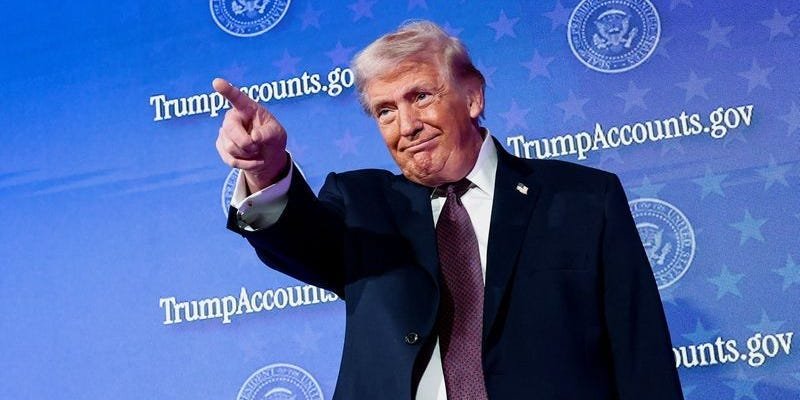
A targeted boycott starting on Sunday and lasting the entire month of February could move markets, he says, which would, in turn, affect the CEOs who have the ear of President Donald Trump.

“We’re proposing something quieter and less cinematic than a protest that will run all day on cable TV, but much more disturbing to the Trump administration. A one-day slowdown is irritating. A one-month slump is terrifying,” he wrote in a blog post announcing the boycott.

Major tech CEOs have sought favor with the president during his second term. Many of them donated to his inauguration, for starters.

AI executives, like OpenAI CEO Sam Altman and Meta CEO Mark Zuckerberg, also accepted an invitation to a White House dinner with Trump in September, where the leaders took turns lauding the president. Apple CEO Tim Cook and Amazon CEO Andy Jassy attended the White House premiere of the documentary about first lady Melania Trump at the height of January’s anti-ICE protests in Minneapolis.

Supporting the AI industry in its competition with China is a major pillar of Trump’s economic agenda.

“These are the leaders who have his ear,” Galloway writes. “A modest reduction in their companies’ growth could have a substantial impact on valuations priced to perfection. Small changes in consumer behavior — starting on the first day of February — could have an enormous ripple effect, one that extends all the way to the White House.”

The anti-ICE movement

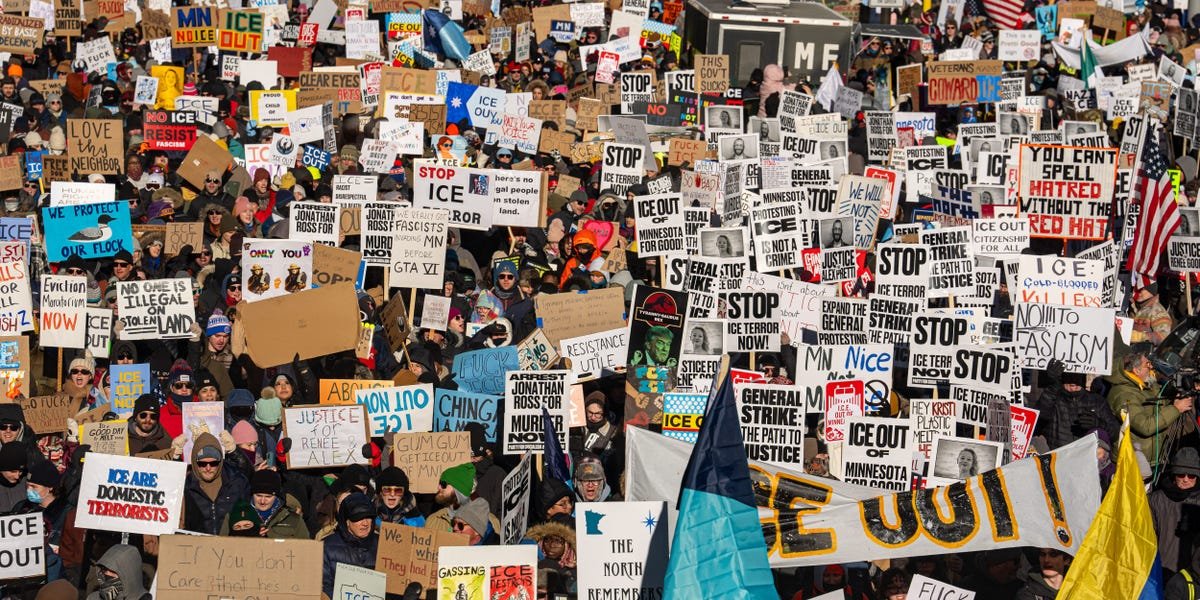
Regular protests against the tactics of ICE and Border Patrol personnel have gripped the country for months. Thousands marched through Minneapolis again on Saturday. Tensions rose dramatically in January after the killings of Renee Good and Alex Pretti in Minneapolis, both at the hands of federal immigration agents.

In both instances, protesters recorded videos and posted them to social media for the world to see, leaving little room for the Trump administration to spin the events in its favor.

While those videos and the subsequent protests — as well as the attempted nationwide shutdown — have spread awareness, they have so far done little to substantively shift the administration’s immigration policies.

The Department of Homeland Security demoted a key Border Patrol official last week and promised more changes. At the same time, however, the acting director of ICE expanded the power agents have to carry out warrantless searches, according to an internal memo seen by The New York Times.

“Real change always comes from the American people, not from our political parties. But power doesn’t fear protests nearly as much as economic withdrawals,” Galloway writes. “Getting off your couch, taking to the streets, and building community is important, but the most radical act in a capitalist society isn’t marching, it’s not spending.”

Source link

I-moved-back-to-Australia-after-decades-in-the-US.jpeg

I moved back to Australia after decades in the US. The culture shock stunned me

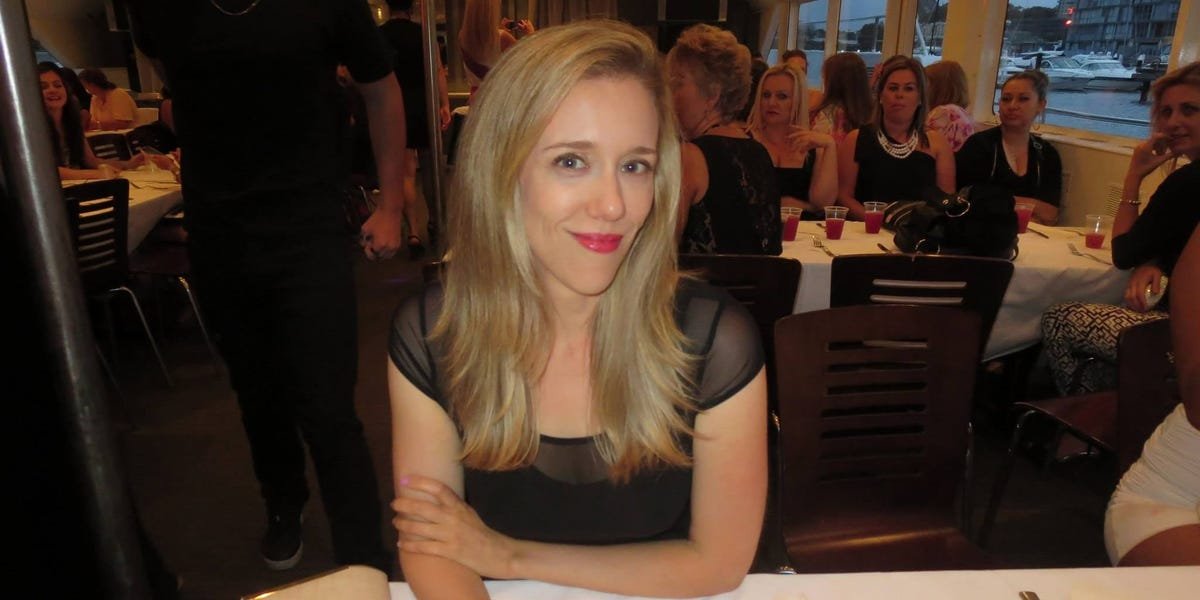
When I was in my early 30s, I went for a three-week holiday to my home in Sydney and never left.

For years, I had toyed with the idea of moving back home, a place I had not lived since I was 7 years old. I’d even made a couple of attempts at it, but the comfortable pull of family and more than 25 years of life in the US always lured me back.

When extending my trip week by week turned into deciding to stay, I assumed slotting back into life in Australia would be the easiest move of my life. After all, I was used to adjusting to a new environment. My father’s job in the film industry meant I spent my childhood moving frequently (13 different schools in multiple cities and countries).

Surely moving back home would feel as comforting as slipping on a well-worn, much-loved cardigan. I was wrong.

The unexpected culture shock of coming home

I never thought I would experience culture shock moving back to Australia, but that was exactly what happened. All my years overseas meant I had missed large parts of general knowledge, I didn’t understand cultural references or sayings, and I found Australian politics completely befuddling.

Although I still sounded Australian, a quick conversation, which inexplicably always started with “where did you go to high school?” quickly established I was not from here. After being viewed as a foreigner my whole life in the US, I was now viewed as a foreigner in Australia, too.

What’s more, I realized with surprise that I was culturally very American. All the things I had taken for granted in the US (convenience, customer service, and affordability) just didn’t exist in Australia.

I had to do some life adjustments

There were the daily frustrations of not being able to get a coffee past 3 p.m. (or before 7 a.m.), no salad bars or real Mexican food, and the expense of absolutely everything (Sydney is Australia’s most expensive city).

Cultural norms were an even bigger adjustment. Handshakes for acquaintances and bear hugs for friends (standard etiquette in the US) were replaced with one or two kisses to the side of (not on) the cheek.

Making friends with Sydney-siders felt hard, so I initially gravitated toward foreigners who were generally open and friendly. When I’d meet Americans, I felt an innate level of comfort and familiarity unlike anything else.

I had expected it to be easy to move back

In my first year back home, I thought a lot about the phrase “you can never go home again.” I’d always been pretty dismissive of it, believing I could return to Australia at any time and it would feel like home. Finally, I came to understand the truth in the phrase. We just can’t return to a previous place or point in life and recapture our original experience.

Just like I adjusted to the culture shock of moving to the US as a little girl (hello, mayo on sandwiches, ice in water, and excessive air conditioning), I needed to acclimatize to Australia. I had been making the move so much harder than it needed to be because I expected it to be easy and familiar.

As I started to let go of the expectation that I’d fit right in, I started to feel more at home, back home. I built up experiences and connections that grounded me, and as I got older, my American background became less noticeable and less relevant. It’s taken a long time, but I now feel entirely at home here. In the end, the key was to start from scratch and get to know my hometown as an adult, rediscovering my Australian identity along the way.


Source link

Why-Mining-In-Greenland-Is-So-Hard.jpeg

Why Mining In Greenland Is So Hard

Greenland holds vast reserves of rare earths that power everything from electric vehicles to military tech. As the world races to loosen China’s grip on critical minerals, this Arctic island is emerging as a new battleground, where extreme conditions, soaring costs, and local resistance stand in the way. Can Greenland become the next global player in the resource race?


Source link

Heart-disease-is-on-the-rise-in-younger-adults-A.jpeg

Heart disease is on the rise in younger adults. A cardiologist says prevention needs to start sooner.

You wouldn’t wait until your 50s to start saving for retirement — so why wait until your heart is already at risk to start protecting it?

Heart disease is spiking among younger people, in part because people in their 20s, 30s, and 40s are procrastinating on their health, according to Dr. Sadiya Khan.

Khan, a professor of cardiovascular epidemiology at Northwestern University, told Business Insider that changes to your diet and exercise habits now can pay big dividends as you age.

“You can’t just become older and then hope to make all these changes,” she said.

The earlier you understand your heart health, the better equipped you are to make healthy decisions for future you.

Your heart may be aging too quickly

Right now, most of us are behind in our investments to our cardiovascular health. The average American’s heart is 4 to 7 years older than their calendar age, according to Khan’s research.

“All of us are naturally driven to procrastinate,” she said. “You try to worry about the things that are immediately in front of you, and it’s harder to prioritize and give as much attention to something that is a long-term consequence.

An online tool, developed by Khan and her team, helps forecast a person’s risk of heart attack or stroke over the next 30 years by illustrating how they stack up to their peers. It shows their percentile rank for heart health: in other words, out of 100 people the same age and sex, how many have a higher or lower risk of cardiovascular disease.

Khan said the new tool uniquely uses percentiles to help people manage their health by understanding their risk and making changes if needed. Patients can then prioritize which habits provide the best bang for their buck in terms of health benefits, starting with what Khan recommends most.

How to invest in your heart health now

Khan said a big challenge with heart health is that it can be highly individualized. All the factors involved — diet, exercise habits, genetics, and stress — can vary widely from person to person.

“It’s not going to be a one-size-fits-all,” she said. “It’s this overarching goal that we need to personalize how we communicate risk and how we can share that information in a way that works for each patient.”

That makes it hard to recommend a specific game plan to boost everyone’s heart health. However, there are a few strategies that can pay off for most people.

  • Stop smoking. It may seem obvious, but if you’re a smoker even occasionally, quitting is one of the most effective ways you can reduce heart health risks (and yes, smoking cannabis is bad for your heart, too).
  • Get your steps in. Exercise helps strengthen the heart and stave off age-related disease, and most of us don’t get enough. Walking an extra 500 steps a day can help start building better fitness from the ground up. Short bursts of high-intensity movement quickly add up for better health.
  • Lift weights. Strength training is increasingly linked to better longevity, and movements like squats and deadlifts or at-home exercises like push-ups or wall sits can support a strong heart.
  • Eat more beans. Most of us could benefit from eating more nutrients like fiber that protect heart health. Affordable foods like whole grains and beans offer protein, fiber, and nutrients to fuel better heart health. Plant-based whole foods also help to keep you full, making it easier to cut back on sweets and processed foods that can be hard on your heart.
  • Take a tai chi break. It’s no secret that stress can be harmful, and over time, it can take a major toll on your heart. Relaxing habits like spending time outdoors and doing yoga or tai chi help to lower your blood pressure and reduce cardiovascular strain. Getting enough quality, consistent sleep is crucial, too.

For best results, try to make small, sustainable changes that you can keep up over time.

“It depends on what works for you and what you are able to stick with,” Khan said. “They all matter, but you don’t also need to do it all at once.”


Source link

17-people-you-didnt-know-had-a-Grammy.jpeg

17 people you didn’t know had a Grammy

  • Steve Martin has five Grammys for comedy and bluegrass music.
  • Former presidents Bill Clinton and Barack Obama have won Grammys for their audiobooks.
  • Martin Luther King Jr. and Jimmy Carter were awarded posthumous spoken-word Grammys.

When you think of music’s biggest night, you probably picture artists like Beyoncé and Paul McCartney, two of the top Grammy winners of all time.

But it’s not just singers and musicians who are honored by the Recording Academy. Comedians, politicians, and activists have also taken home Grammy awards.

Here are 17 people you might be surprised to learn have won big at the Grammys.

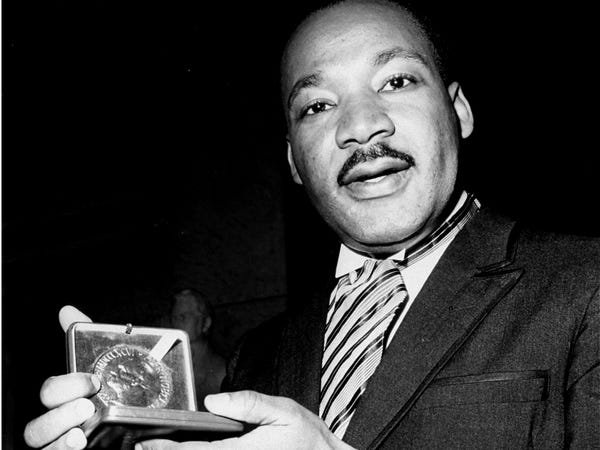
Martin Luther King Jr. was posthumously awarded a spoken-word Grammy.

Martin Luther King Jr.

Associated Press

Martin Luther King Jr.’s speeches made American history, but you might not know that the minister and activist was posthumously awarded a Grammy. In 1971, King was honored with a spoken word award for his anti-war speech “Why I Oppose the War in Vietnam.”

Two of his more famous addresses, “I Have a Dream” and “We Shall Overcome,” were also nominated for Grammys.

Lily Tomlin won a Grammy for best comedy recording.


Lily Tomlin at the Grammys in 1979

Lily Tomlin.

Ron Galella/WireImage/Getty Images

Actor and former stand-up comic Lily Tomlin took home a Grammy for best comedy recording in 1972 for her album “This Is A Recording.” The album features her performance as telephone operator Ernestine, one of the most iconic characters she created.

Tomlin has been nominated a total of five times.

Steve Martin has five Grammys across multiple categories.


Songwriters Edie Brickell and Steve Martin at the 2014 Grammy Awards.

Songwriters Edie Brickell and Steve Martin at the Grammy Awards.

Jason LaVeris/FilmMagic/Getty Images

Since 1978, actor and comedian Steve Martin has won a total of five Grammys. In addition to two awards for best comedy album, Martin, who is also a bluegrass musician, has garnered a handful of music awards for his country and roots tunes.

Most recently, Martin’s track “Love Has Come For You” won a Grammy for best American roots song at the 56th Annual Grammy Awards in 2014. He was also nominated in 2015 and 2017.

Zach Braff won a Grammy for the “Garden State” soundtrack.


Zach Braff holds a Grammy award

Zach Braff.

Steve Grayson/WireImage for The Recording Academy/Getty Images

“Garden State,” Zach Braff’s 2004 directorial debut, attracted a cult following. Part of the film’s appeal is its indie-driven soundtrack, which earned Braff, who starred in the movie with Natalie Portman, a Grammy at the 2005 awards.

Joaquin Phoenix’s performance as Johnny Cash in “Walk the Line” earned him a Grammy.


joaquin phoenix

Joaquin Phoenix.

Kevin Winter/Getty Images

Joaquin Phoenix starred in the 2005 musical biopic “Walk the Line” as Johnny Cash. Phoenix’s portrayal of the country singer earned him a Grammy for best compilation soundtrack for visual media.

President Bill Clinton has won two Grammy awards.


Bill Clinton

President Bill Clinton.

Daniel Berehulak/Getty Images

Former President Bill Clinton won his first Grammy in 2004 in the category of best spoken-word album for children for his narration of “Peter and the Wolf: Wolf Tracks.” He won another Grammy for the audiobook narration of his memoir, “My Life,” in 2005.

He was nominated twice more for narrating his subsequent books, “Giving: How Each Of Us Can Change The World” and “Back To Work: Why We Need Smart Government For A Strong Economy.”

Hillary Rodham Clinton has also won a spoken-word Grammy.


Hillary Rodham Clinton at the Grammy Awards.

Hillary Rodham Clinton at the Grammy Awards.

Dave Allocca/DMI/The LIFE Picture Collection/Getty Images

Hillary Rodham Clinton won a spoken-word Grammy in 1997 for “It Takes a Village,” her non-fiction book about the future of children in America.

She was nominated again in the same category in 2004 for her White House memoir, “Living History.”

Orson Welles won three spoken-word Grammys.


Actor and director Orson Welles in 1951.

Orson Welles.

Hulton-Deutsch Collection/CORBIS/Corbis via Getty Images

Filmmaker Orson Welles won three spoken-word Grammys. The first was for “Great American Documents,” for which he read the Declaration of Independence. He also won the award for his masterpiece “Citizen Kane” and for the sci-fi radio play “Donovan’s Brain.”

“Weird Al” Yankovic’s comedic songs have won him multiple Grammys.


Weird Al Yankovic accepts the Grammy for best comedy album in 2004.

Weird Al Yankovic.

TIMOTHY A. CLARY/AFP/Getty Images

For someone whose musical career is predicated on parody, “Weird Al” has made it big. The singer, known for hits like “Eat It” and “eBay,” has five Grammy wins and 17 nominations.

Earvin “Magic” Johnson has a spoken-word Grammy for his work in HIV/AIDS prevention advocacy.


Magic Johnson

Magic Johnson.

Lisa Blumenfeld/Getty Images

Johnson won a spoken-word Grammy in 1993 for “What You Can Do to Avoid AIDS.” The basketball legend, who announced in 1991 that he had been diagnosed with HIV, has been a vocal advocate for HIV/AIDS prevention and education.

Stephen Colbert has two Grammys.


Stephen Colbert poses in the press room at the 52nd Annual Grammy Awards in 2010.

Stephen Colbert at the Grammy Awards.

Michael Tran/FilmMagic/Getty Images

Late-night host Stephen Colbert has won two Grammys out of his three nominations.

At the 52nd Grammy Awards in 2010, Colbert won best comedy album for “A Colbert Christmas: The Greatest Gift of All!” Then, at the 56th Annual Grammy Awards in 2014, the recording of his book “America Again: Re-becoming the Greatness We Never Weren’t” won a spoken-word award.

President Barack Obama has won two spoken-word Grammys for his memoirs.


barack obama

Barack Obama.

Bill Pugliano/Getty Images

Former President Barack Obama won spoken-word Grammys for narrating the recordings of his books “Dreams From My Father” and “The Audacity of Hope: Thoughts on Reclaiming the American Dream.” He was nominated again in 2022 for narrating the audiobook of his presidential memoir, “A Promised Land.”

Michelle Obama has also won two spoken-word Grammys for her memoirs.


Michelle Obama

Michelle Obama.

Jim Young/Reuters

The former first lady’s audiobook for her memoir “Becoming” won a spoken-word Grammy award in 2020. She won again in 2024 for “The Light We Carry.”

Maya Angelou won three spoken-word Grammys.


Poet Maya Angelou poses at Radio City Music Hall during the Grammy Awards.

Maya Angelou.

Mitchell Gerber/Corbis/VCG via Getty Images

In 1994, American poet Maya Angelou won her first spoken-word Grammy award for “On the Pulse of Morning,” which she wrote for Clinton’s inauguration. She also won the award for her poetry collection “Phenomenal Woman” and for the autobiography “A Song Flung Up to Heaven.”

Betty White also won a spoken-word Grammy.


Betty White in 2012

Betty White.

Frederick M. Brown/Getty Images

Betty White won a Grammy at the 54th Annual Awards in 2012. The “Golden Girls” actor received a spoken-word award for her autobiography, “If You Ask Me (And of Course You Won’t).”

Carrie Fisher won a posthumous spoken-word Grammy.


carrie fisher

Carrie Fisher.

Dimitrios Kambouris/Getty Images

At the 60th Annual Awards in 2018, Carrie Fisher was posthumously awarded a spoken-word Grammy for her memoir, “The Princess Diarist.”

President Jimmy Carter won three Grammys during his lifetime and one posthumously.


Jimmy Carter

Jimmy Carter.

Drew Angerer/Getty Images

The former president won Grammys for best spoken-word album for three of his books: “Faith — A Journey For All,” “A Full Life: Reflections at Ninety,” and “Our Endangered Values: America’s Moral Crisis.”

Carter, who died at the age of 100 in 2024, won again at the 2025 Grammys for the audiobook “Last Sundays in Plains: A Centennial Celebration.”


Source link

12-details-you-might-have-missed-in-Melania-Trumps-documentary.jpeg

12 details you might have missed in Melania Trump’s documentary

  • Melania Trump’s documentary, “Melania: Twenty Days to History,” premiered in theaters on January 30.
  • It follows Melania Trump in the 20 days leading up to the 2025 inauguration.
  • The “very private” first lady was deeply involved in the film’s creation, producer Marc Beckman told Business Insider.

First lady Melania Trump is no stranger to cameras, but this time, she’s the one calling the shots.

Her new documentary, “Melania: Twenty Days to History,” provides a glimpse into her life and work during the 20 days leading up to President Donald Trump’s 2025 inauguration.

It was released in theaters on Friday. After its theatrical run, “Melania” will stream on Amazon, which paid $40 million for the film and a forthcoming docuseries set for release this summer.

The first lady served as both its star and producer.

“She’s a very private and very selective person as to who she speaks to and what she does,” Marc Beckman, Melania Trump’s senior advisor and a producer of the film, told Business Insider. “We thought that this would be the appropriate opportunity to share a little bit more, to open the lens a little bit more into her family life, her career, and her philanthropy, all as she becomes first lady of the United States of America again.”

Beckman said that the first lady was deeply involved in the film’s creation.

“She participated not just with the creative direction, but in production and post-production,” Beckman said. “She was in the edit room. She was helping with color correction. She was very much involved with music selection — every song was selected by her.”

Critics largely panned “Melania” for not offering major revelations and for lacking journalistic rigor due to Trump’s oversight. Instead, they felt like it largely focused on surface-level moments from her life.

Still, there were some new details we learned about Trump’s life from the documentary, from how she left her mark on her husband’s inaugural address to insight into her favorite musical artists, and there were some surprising cameos.

Melania Trump is a Michael Jackson fan.

Melania Trump listens to Michael Jackson in the car.

PRAKASH SINGH/AFP via Getty Images

The film opens with “Billie Jean” by Michael Jackson playing over aerial footage of Mar-a-Lago. The song reappears later as Melania Trump sings along while riding in the car and names it her favorite Michael Jackson hit.

She described Mar-a-Lago as her “refuge from the outside world, a place where I can exhale.”


Mar-a-Lago.

Mar-a-Lago.

Joe Raedle/Getty Images

“Melania” follows Melania Trump as she divides her time between Trump Tower in New York City, Mar-a-Lago in West Palm Beach, Florida, and Washington, DC.

The Florida estate holds special meaning for the first lady, who remembers it as the place “where Baron took his swim lessons with his grandfather, played golf with his father, and took his first tennis lesson with me.”

At President Jimmy Carter’s funeral, Melania Trump was also mourning the first anniversary of her mother’s death.


Donald and Melania Trump at Jimmy Carter's funeral.

Donald Trump and Melania Trump at Jimmy Carter’s funeral.

Haiyun Jiang/Pool/Getty Images

Carter’s funeral was held on January 9, 2025, one year to the day after the death of Melania Trump’s mother, Amalija Knavs.

“Grief comes in waves when you lose someone who means so much to you. I will be sitting in the Washington Cathedral, paying respect to President Carter, but I know my beloved mother will be on my mind,” she said in the film’s voiceover.

During a dress fitting, designer Herve Pierre revealed a closer look at her inauguration gown, which he constructed with no visible seams.


Donald Trump and Melania Trump at an inaugural ball.

Donald Trump and Melania Trump at an inaugural ball.

Jabin Botsford/The Washington Post via Getty Images

In the film, Pierre said the seams on the dress were entirely hidden beneath the black band zigzagging across it.

“You don’t give the recipe,” he said. “It’s like a mystery.”

First lady Brigitte Macron of France made a surprise cameo in the documentary.


Brigitte Macron and Melania Trump.

Brigitte Macron and Melania Trump in 2019.

REGIS DUVIGNAU/POOL/AFP via Getty Images

The film showed a video call between Macron and Melania Trump, where they spoke about working together on her Fostering the Future and Be Best initiatives focused on children’s well-being.

“My next step and my next goal is to foster relationships and work on it with like-minded leaders and establish a coalition,” Melania Trump said. “And when we do, I hope you will join me.”

“With pleasure. I go everywhere with you,” Macron said.

The film also featured an appearance by Queen Rania of Jordan.


Queen Rania of Jordan with Melania Trump at the White House in 2017.

Queen Rania of Jordan and Melania Trump.

Pool/Getty Images

In the days leading up to her return to the White House, Melania Trump also recruited Queen Rania of Jordan for her coalition during a meeting at Mar-a-Lago.

The film included a meeting with Aviva Siegel, a released Israeli hostage who was held by Hamas.


Aviva Siegel.

Former Hamas hostage Aviva Siegel.

FABRICE COFFRINI/AFP via Getty Images

Aviva Siegel was held for 51 days before being released on November 26, 2023, as part of a temporary ceasefire deal brokered by the Biden administration. In the documentary, Melania Trump comforted Siegel and pledged Donald Trump’s support for releasing the remaining hostages, including Siegel’s husband, Keith Siegel.

“I know that once he’s commander in chief, I know that’s his priority. I’m sure of it,” Melania Trump said.

One of the final title cards of the film reads: “Melania Trump played a key role in securing the release of Keith Siegel after 484 days as a hostage in Gaza, just 12 days after the inauguration.”

The first lady revealed what she was thinking about right before entering the Capitol Rotunda for the inauguration.


Melania Trump at the Capitol Rotunda.

Melania Trump at the Capitol Rotunda on Inauguration Day.

Kenny Holston-Pool/Getty Images

“Walking into the Capitol Rotunda, I felt the weight of history intertwined with my own journey as an immigrant — a reminder of why I respect this nation so deeply,” she said in the film’s narration. “Everyone should do what they can to protect our individual rights. Never take them for granted because in the end, no matter where we come from, we are bound by the same humanity.”

As the first naturalized US citizen to serve as first lady, Melania Trump has previously spoken about her “arduous” pathway to citizenship.

She said she was “relieved” when the inaugural parade was moved indoors to the Capitol One Arena.


Melania Trump at Capital One Arena.

Melania Trump at the Capital One Arena.

Jabin Botsford/The Washington Post via Getty Images

Though the move was due to frigid temperatures in Washington, DC, on Inauguration Day, Melania Trump said she preferred an indoor space for security reasons after her husband survived an assassination attempt in July 2024.

“Being in a more secure and closed space brought a certain peace of mind,” she said.

Melania Trump contributed to Donald Trump’s inaugural address.


Donald Trump delivers his inaugural address.

Donald Trump’s inaugural address.

SHAWN THEW/POOL/AFP via Getty Images

In a scene toward the end of the film, Donald Trump was shown practicing an inauguration speech as Melania Trump watched.

“My proudest legacy will be that of a peacemaker,” he said.

“And unifier,” Melania added.

Her addition made it into the final draft of Donald Trump’s inauguration speech.

The film ends with a behind-the-scenes look at Melania Trump’s official White House portrait shot by photographer Régine Mahaux.


Melania Trump's official White House portrait.

Melania Trump’s official White House portrait.

Régine Mahaux/The White House

Mahaux, who has photographed the Trump family for over 20 years, describes Melania Trump as “very reserved, but deeply intentional.”

“I think what people don’t always see in her is a curiosity that she has for the world,” she told Business Insider. “I think the documentary reflects her sense of duty, her discipline.”

Mahaux also took Melania Trump’s White House portrait during Donald Trump’s first term in 2017.

“The first portrait was about discovering her new duty and her new role, and now this time, the portrait was an affirmation,” Mahaux said. “She really knew what she was. She was really embracing it and ready to get to work.”


Source link

Joi-Marie McKenzie

Business Insider’s entertainment team predicts who will take home an award, and why.

Grammy’s night forecast: cloudy with a chance of snubs

After covering the Grammy Awards for nearly two decades, there are a few moments I know will happen on music’s biggest night: Someone will go home happy, and someone will go home sad.

Either way, we’ll get Trevor Noah as the host for his sixth and final time, performances you’ll text about, and candid moments between our favorite singers seated inside LA’s Crypto.com Arena on Sunday. It’ll all air on CBS.

Kendrick Lamar leads with nine nominations, including in the major categories such as Record, Album, and Song of the Year, followed by Lady Gaga and producers Cirkut and Jack Antonoff with seven. We’ll also be watching Super Bowl performer Bad Bunny, Sabrina Carpenter, and my personal favorite, Leon Thomas, to see if they go home with trophies after nabbing six nods.

I asked Business Insider’s entertainment team who they thought would go home with a small, 24K gold-plated gramophone. Here’s what they’re betting on:

Jason Guerrasio, Entertainment correspondent: Tucked away in the midst of the 90-plus Grammy categories is Best Album Cover. I hope it goes to Perfume Genius’ “Glory” cover. Google it. It’s instantly eye-catching.

Samantha Rollins, deputy editor of Entertainment: When “Mayhem” single “Abracadabra” debuted during a commercial break at last year’s Grammys, many posited that Lady Gaga’s newest album would take a back-to-basics approach to the edgy electropop that made her famous. What emerged instead was far more interesting. Lady Gaga’s “Mayhem” is an invigorating return to form that proves one of pop’s most famous shape-shifters can still keep us guessing. She’ll take it for Album of the Year.

Callie Ahlgrim, senior pop culture writer: Record of the Year is supposed to honor the most superb blend of production and performance, but since it tends to favor ubiquity, I have to give the edge to the global pop smash “APT.” Bruno Mars has the cross-generational appeal that Grammy voters can’t resist, and Rosé would make history as the first K-pop star to win in a competitive category.


Source link

Trump-taps-a-longtime-agency-economist-as-the-next-Bureau.jpeg

Trump taps a longtime agency economist as the next Bureau of Labor Statistics commissioner

President Donald Trump’s monthslong and contentious search for a new commissioner to lead the Bureau of Labor Statistics may be ending.

On a Truth Social post on Friday, Trump announced that he intends to nominate Brett Matsumoto, a longtime agency economist, to lead the BLS.

The BLS commissioner role has been vacant since August, when Trump fired Erika McEntarfer after the release of a jobs report showing weak employment growth. Trump alleged, without providing evidence, that the data had been politically manipulated. The allegation and removal have since undermined public trust in one of the federal government’s most closely watched statistical agencies, which is supposed to remain nonpartisan.

The agency has roughly 2,000 employees, and the commissioner is its only appointed position. The commissioner’s role carries a four-year term and requires Senate confirmation.

Before Matsumoto, the White House previously nominated EJ Antoni, a Heritage Foundation economist, for the job, but later withdrew the nomination after it became clear Antoni lacked sufficient support for Senate confirmation.

Who is Brett Matsumoto?

Matsumoto is a career economist with deep ties to the agency he would lead if confirmed.

Based on Matsumoto’s LinkedIn profile, he earned undergraduate and master’s degrees at the University of Delaware before earning his doctorate in economics from the University of North Carolina in 2015. Since then, he has been working at the BLA as a supervisory research economist. Multiple academic papers under his name can be found covering issues such as consumer expenditure and inflation measurement. Over the past year, he has been on assignment at the Council of Economic Advisers.

Matsumoto is not very active on social media. A Facebook account under his name shows that his profile picture used to be a photo with Ivanka Trump back in August 2020. His most recent profile photo features him alongside a tabby cat.

In a post on Truth Social late Friday, Trump said he was confident Matsumoto had the expertise to “QUICKLY fix the long history of issues at the BLS on behalf of the American People.”

Several economists posted online that they believe Matsumoto could be the right choice.

Claudia Sahm, Chief Economist at New Century Advisors, posted on X that Matsumoto is an “excellent choice” for the commissioner position.

Skanda Amarnath, Executive Director of Employ America, echoed the sentiment on X and said that Matsumoto is “a very thoughtful person who understands the nuts and bolts of data measurement and estimation.”


Source link

The-Senate-just-voted-to-fund-the-government-—-but.jpeg

The Senate just voted to fund the government — but it’ll still partially shut down for a few days anyway

The US federal government is shutting down again, but it won’t be like last time.

Funding for a slew of federal agencies runs out at midnight late on Friday, and lawmakers on Capitol Hill failed to send a series of bills to fund those agencies to President Donald Trump’s desk in time.

Even though the Senate passed a series of bills to fund the government on Friday, the House is not set to vote on them until late Monday at the earliest, meaning the shutdown will last at least a few days.

Some parts of the federal government have already been funded, meaning that the shutdown, even if it drags out, is only partial.

Additionally, it’s unlikely that this shutdown will last as long as the one that began in October, which stretched for 43 days and became the longest government shutdown in American history.

Here’s what could be affected — and what won’t be

In October, funding for the entire federal government was being held up, and the shutdown was far-reaching. This time, some parts of the federal government would remain operational.

That’s because Congress has already passed a series of spending bills that fund agencies and programs through September 30.

Among those programs are SNAP and WIC, which were notably affected by the previous shutdown. Additionally, national parks would likely remain open, veterans would continue to receive benefits through the Department of Veterans Affairs, and staff on Capitol Hill would continue to be paid.

But plenty of other government agencies and programs would be affected if the shutdown drags out, including the Department of Defense (including troops), the State Department, the Treasury Department, the Transportation Security Administration, and the Federal Emergency Management Agency.

Notably, Immigration and Customs Enforcement (ICE) and Customs and Border Protection would remain operational, even though it’s funded via the Department of Homeland Security.

That’s because DHS received $190 billion in funding via the “One Big Beautiful Bill Act” in July, including $75 billion for ICE and roughly $65 billion for CBP.

It’s unlikely to last as long as before

Unlike in the fall, lawmakers in both parties are working together to try to resolve the situation as quickly as possible.

The odds of a shutdown first rose following the fatal shooting of Alex Pretti by Border Patrol agents in Minneapolis on Saturday.

Democrats vowed to oppose a bill to fund the Department of Homeland Security, which oversees ICE and CBP, until reforms to immigration enforcement are made.

The House had already passed a package of six funding bills, including the DHS bill, and they had been stitched together into one package in the Senate.

The Senate has now passed a reformulated version of that package, with DHS funding continuing for only two weeks to allow for a renegotiation.

It’s unclear as of now whether that package will pass the House when lawmakers return to the lower chamber next week.


Source link

Taylor Rains

Trump’s threat to ‘decertify’ Canadian planes is a safety risk

President Donald Trump’s threat to “decertify” Canadian-made aircraft — the backbone of many US carriers’ regional jet fleet — is a threat to aviation safety, industry watchers said Friday.

The president also doesn’t have the authority to unilaterally declare planes unworthy to fly in the US, Henry Harteveldt, an aviation industry authority and president of Atmosphere Research Group, told Business Insider. That authority belongs to the FAA.

The trade spat — another in a continuing back-and-forth between Trump and Canada — comes after Canada hasn’t fully certified newer US-made Gulfstream jets to fly in its skies. (It has certified older models.) Gulfstream planes are used almost exclusively by private aviation companies, governments, and the ultrawealthy.

Trump said on Thursday night, in a Truth Social post, that he would “decertify” Canada-made Bombardier jets until Canada approved the Gulfstream models. He also threatened a 50% tariff on “any and all” Canadian aircraft sold in the US until the situation was corrected.

Bombardier said in a statement that it’s in contact with the Canadian government. The FAA referred Business Insider to the White House. A White House official said decertification would not immediately affect aircraft already in operation; it would apply only to new deliveries.

That would be a relief for US airlines like American, Delta, and United, whose regional affiliates operate Bombardier CRJ aircraft to cities across the country.


SkyWest crj700.

Regional carrier SkyWest, operating on behalf of the Big 3 and Alaska Airlines, is the largest operator of Canadian-made planes. It has 238, per Cirium.

Fabrizio Gandolfo/SOPA Images/LightRocket via Getty Images


Still, any move to decertify these more than 2,000 passenger airliners and private jets — part of almost 5,550 Canadian-made aircraft and helicopters certified in the US, according to Cirium — could trigger thousands of flight cancellations a day. A 50% tariff would likely raise airline ticket prices.

Aviation analysts said Trump’s threat posed a safety risk in itself.

“Anything that intrudes on the turf of safety regulators coming from politics, trade issues, or personal grievances is a very, very bad idea,” Richard Aboulafia, managing director of the aviation consultancy AeroDynamic Advisory, told Business Insider.

Aboulafia said aircraft certification is intentionally non-political for a reason: Regulators are meant to evaluate risk, not respond to trade threats. Once certification becomes a political weapon, trust in the system erodes for manufacturers, operators, and the flying public, he contended.

Why is the Gulfstream certification delayed in Canada?

In Canada’s case, the delay in certification is likely not obstructionism but the result of independent regulatory decisions.

For the Gulfstream G700 and G800, Canada hasn’t completed its own certification, while the FAA has granted Gulfstream a temporary exemption from certain fuel‑icing rules designed to ensure aircraft engines and systems operate safely in extreme cold.

The FAA waiver means Gulfstream has until the end of this year to meet those requirements — meaning the aircraft is operating under essentially conditional certification in the US, despite being allowed to be delivered.

These waivers are not unusual and are typically granted to allow new aircraft to enter service while completing certain technical tests and paperwork, rather than because the planes are unsafe.

Still, history shows what can sometimes go wrong when thorough certification and safety protocols are deprioritized. The most consequential example was the Boeing 737 Max, which suffered two fatal crashes in 2018 and 2019 due to systemic design issues, killing 346 people.

More recently, in early 2024, a door plug separated on another 737 Max due to quality-control issues at Boeing’s Washington factory, further exacerbating scrutiny of production and certification. No one died in that incident.

Part of the reason the 737 Max issues slipped past regulators is that, for decades, global authorities often relied on reciprocal approvals, effectively rubber-stamping each other’s certifications to speed aircraft to market.

The Max disasters exposed the risks of that approach. Today, regulators — including those in Canada — are expected to conduct their own full assessments rather than automatically rely on approvals from foreign authorities.

The FAA itself is taking extra precautions before certifying the Boeing 737 Max 7 and 10, as both aircraft have technical problems that could lead to engine overheating. Boeing initially asked for a waiver but rescinded it amid the scrutiny.


Source link