Larry-Page-is-officially-moving-business-out-of-California-ahead.jpeg

Larry Page is officially moving business out of California ahead of a proposed billionaire’s tax

Billionaire Larry Page is peacing out of California.

The Google cofounder has cut ties between California and many of his assets that risked exposing him to a proposed new wealth tax in the state, meeting an end-of-2025 deadline, according to filings reviewed by Business Insider.

Page’s family office, Koop, was converted out of California in late December and incorporated in Delaware, per filings with both states. Page converted several other entities to Delaware, including Flu Lab LLC — a vehicle he has used to fund research on tackling influenza and lists its principal office address in Nevada — and another entity named One Aero, which has funded his flying car ventures and lists its principal office address in Florida.

A filing was also made to convert Dynatomics, LLC from California to Delaware with a new principal address in Keller, Texas. Page launched Dynatomics, a new startup focused on applying AI to aircraft manufacturing, in 2023, Business Insider previously reported. A source close to Page said that the team, run by Chris Anderson, continues to work out of California.

Anderson and representatives for Page’s family office did not respond to requests for comment.

The New York Times reported in December that Page had told people he was considering moving to Florida because of a proposed ballot measure that would tax the state’s wealthiest residents. The proposal, if passed successfully, would mean that any California resident worth more than $1 billion would be taxed 5% of their assets.

Under California law, residency is determined by the nature of a person’s ties to the state, with factors such as the time spent in the state and the maintenance of substantial business ties taken into account. If the ballot measure is approved in November, it would take effect retroactively for residents living in California as of January 1, 2026.

A source close to Page said the Google cofounder had already left the state. Whether Page’s move is temporary could not be learned.

Page is ranked the second-richest person in the world, according to the Bloomberg Billionaires Index.

Page’s family converts other entities to Delaware

Besides his family office and funding vehicles, Page converted out an LLC that Business Insider previously identified as being used to purchase islands in Puerto Rico and the Virgin Islands, from California to Delaware, with a new address listed in Florida.

A separate LLC Page used to purchase an Island in Fiji was also converted out to Delaware.

Page’s wife, the scientist Lucinda Southworth, founded a marine-conservation charity named Oceankind. Filings show that Oceankind converted out of California to Delaware in December.

Delaware has become a popular state for businesses to incorporate due to its favorable tax structure, privacy, and its home to a court system specifically designed to handle corporate disputes. The state does not require LLCs to disclose the names and addresses of directors when incorporating, providing them with an extra layer of privacy.

Privacy is especially important to Page, whose family office is shrouded in a level of secrecy unparalleled by most and carefully managed by its CEO, Wayne Osborne.

Cristina Rosado, an attorney who handles many of Page and Southworth’s assets, signed several of the California filings.

Page incorporated three entities in Florida last year, as previously reported by The New York Times. A Koop LLC was incorporated in Florida in January 2025, per filings reviewed by Business Insider. It could not be confirmed if it belongs to Page.

California’s billionaire tax proposal

The California billionaire tax proposal faced some opposition from leaders in venture capital and politics. In a post on X in December, venture capitalist Vinod Khosla said the proposed measure would mean California would lose its most important taxpayers and “net off much worse.”

“Long term damage unless legislature bans wealth taxes,” he added. “Easier to equalize taxes on work income and capital gains at the national level.

Matt Mahan, Democratic mayor of San Jose, California, on Monday described the tax as “a political plan that will sink California’s innovation economy.”

White House AI czar David Sacks has criticized the proposal and said it will backfire. He has also said he believes Miami and Austin will overtake New York and San Francisco for finance and tech, respectively. He announced this month that his venture capital firm, Craft Ventures, had opened an office in Austin.

Last month, celebrity lawyer Alex Spiro wrote a letter to California Gov. Gavin Newsom, warning that the proposed billionaire tax would “trigger an exodus of capital and innovation from California,” Business Insider previously reported.

Have something to share? Contact this reporter via email at hlangley@businessinsider.com or Signal at hughlangley.01. Use a personal email address and a non-work device; here’s our guide to sharing information securely.



Source link

Greenlanders-say-Trumps-talk-of-buying-the-island-crossed-a.jpeg

Greenlanders say Trump’s talk of buying the island crossed a line

If Greenlanders weren’t concerned by President Donald Trump’s threats to annex the territory in his first term, many of them are now.

In the days since the United States’ surprise raid into Venezuela, there’s been a renewed focus on Trump’s interest in the island, sparking fear among locals.

“I don’t know what he’s able to do. Most of me is trying to tell myself, ‘Don’t worry, everything’s going to be fine,’ but still I’m worried,” Tupaarnaq Kreutzmann Kleist, a sheep farmer in South Greenland, told Business Insider’s Sarah Andersen on Tuesday.

Casper Frank Møller, CEO and cofounder of Greenland tourist company Raw Arctic, echoed Kleist’s concerns, saying that he and many of his peers are worried about how the situation may affect their finances.


Casper Frank Møller on a boat with mountains in the background.

Casper Frank Møller, CEO and cofounder of Raw Arctic.

Raw Arctic


“We’ve made investments into developing our tourism aspects of our company, and it comes with risk now because of the geopolitical situation and the threats by Trump, so of course, yeah, we’re all really worried,” he told Business Insider on Tuesday.

In a statement to Business Insider on Tuesday, White House press secretary Karoline Leavitt confirmed that Trump and his team are discussing a range of options to pursue Greenland, including “utilizing the US Military.”

A US takeover feels more realistic than ever

Trump’s had his sights set on the Arctic island, a semi-autonomous territory of Denmark, since his first term in office. He has argued that Greenland’s location makes it strategically important, as the melting of Arctic ice opens up new shipping routes and intensifies competition with Russia and China. The island is also rich in critical minerals and already hosts a key US military base, which American officials say is vital to missile defense and Arctic security.

When Trump initially raised the topic of buying Greenland in 2019, Greenlandic influencer and engineer Qupanuk Olsen told Business Insider she and other locals thought it was a joke, and said she still didn’t take it seriously when Trump resurfaced talks in late 2024.


Qupanuk Olsen sitting at table.

Qupanuk Olsen is one of Greenland’s most prominent influencers.

Mark Adam Miller


That changed when Donald Trump Jr. visited Nuuk in January 2025. “That’s when we realized that Trump’s words were no longer just words,” Olsen said in June. “They are real, and he means what he says.” Business Insider wasn’t able to reach Olsen this week for a follow-up.

In the wake of the raid on Venezuela, Møller said on Tuesday that Trump’s threats to annex Greenland feel “much more realistic that it will actually happen” than when he spoke with Business Insider in January 2025.

A country dividing

US interest had at least one positive effect, Olsen said in June: It pushed Greenlanders to think more seriously about their place in the world and the need to speak for themselves.

“It was such a huge wake-up call for everyone in Greenland because suddenly we needed to have an opinion whether we still want to stay under Denmark, whether we should become independent, or whether we should become a state under the United States,” she said. “We certainly had options. So those options were helpful in the beginning for the independence movement.”


Tupaarnaq Kleist in a blue shirt at a kitchen table in her home.

Tupaarnaq Kleist is a sheep farmer in Greenland.

Mark Adam Miller


That mindset may be shifting. Kleist said she’s worried that “we as the local indigenous Greenlandic people are slowly going against each other now,” she told Business Insider on Tuesday. Some want to stand with America, others with Denmark, she said. Ultimately, though, the dream is for Greenland to become its own independent country, she added.

“We want Greenland to be the Greenlanders, and we’re not for sale. We are not to be taken over,” Møller said.

Naaja Nathanielsen, Greenland’s minister of natural resources, business, energy, justice, and gender equality, said in June that she sees much of the American administration’s interest in Greenland as an opportunity for collaboration. But she said the way Trump is going about it is wrong.


Naaja Nathanielsen in black shirt in office setting.

Naaja Nathanielsen is Greenland’s minister of natural resources, business, energy, justice, and gender equality.

Mark Adam Miller


“I think if we take the temperature down a bit and de-escalate the conflict level and the rhetoric, I think we can, in agreement with each other, find many paths forward that are mutually beneficial for both the US and for us,” Nathanielsen said in June. “But we don’t appreciate being talked about as a commodity, as something you can buy or sell or acquire or take. That is, of course, offensive to all people.”

In an email on Tuesday, Nathanielsen told Business Insider that she stands by what she said in June.

“The people of Greenland find the current situation unsettling, and it causes a great deal of anxiety,” she wrote. “We will continuously promote the idea of alliances and partnerships over colonialism. We have had our share of that.”

The debate heats up

Denmark, Trump has argued, is not doing enough to safeguard Greenland. “We need Greenland from the standpoint of national security,” Trump told a group of reporters on Air Force One on Sunday.

The same day, Denmark’s Prime Minister Mette Frederiksen urged the US in a statement to “stop the threats against a historically close ally.” Frederiksen has previously rejected Trump’s suggestions outright, telling him that Greenland is not for sale and that any idea of annexation is “absurd.”

Frederiksen has warned that any US military action against Greenland would severely damage NATO unity, raising questions about whether the alliance could withstand such a conflict between allies.

On Tuesday, major European leaders, including those from France, Germany, the UK, Italy, Spain, Poland, and Denmark, released a joint statement defending Greenland. “Greenland belongs to its people,” the statement said. “It is for Denmark and Greenland, and them only, to decide on matters concerning Denmark and Greenland.”


Source link

Prediction-giant-Kalshi-is-rolling-out-a-new-VIP-program.jpeg

Prediction giant Kalshi is rolling out a new VIP program for power users

Prediction platform Kalshi is looking to retain its power users with a new VIP program.

Kalshi has started emailing high-volume traders about a new loyalty program called “Kalshi Platinum,” which gives them access to merchandise and referral incentives, a company spokesperson confirmed to Business Insider.

Other program perks include tickets to in-person Kalshi events and dinners, plus access to a “dedicated account manager” who can assist with customer support questions from 7 a.m. to 1 a.m.

“For the past couple of months, our team has been brainstorming ideas on how to best serve our most loyal customers,” one Kalshi Platinum email read. “After speaking with both customers and partners, we are excited to announce the launch of Kalshi Platinum to a select group of Kalshi users.”

Financial exchanges Coinbase and Kraken, as well as sportsbooks FanDuel and DraftKings, have also implemented VIP programs. These types of programs have become particularly important to sportsbooks, which compete fiercely with each other for VIPs.

“Similar to other financial markets, brokerages, and large consumer brands, we’re piloting a program that offers priority support and other benefits to some of our most loyal customers,” a Kalshi spokesperson said in a statement.

Kalshi and its top rival, Polymarket, have become popular by allowing users to make money by trading contracts about the outcomes of events like elections, world events, and sports games. Unlike sportsbooks, Kalshi operates in all 50 states and is regulated by the US Commodity Futures Trading Commission. However, some state regulators have targeted prediction markets like Kalshi, arguing that parts of their businesses should be overseen by gaming authorities. Kalshi disputes that notion. The company has received cease-and-desist orders from several state agencies.

Kalshi has recently raised its profile through data integration deals with CNBC and CNN. These networks and their websites will display data from Kalshi that shows what its users think are the probabilities of different market and economic outcomes. For example, CNN could show Kalshi prediction data about which political party users think will control the Senate after the 2026 midterm elections.


Source link

Lucia Moses

MrBeast’s release strategy for Season 2 of ‘Beast Games’ highlights a key concern creators have with TV

  • MrBeast is making the first episode of “Beast Games” Season 2 copyright-free on Prime Video.
  • That will enable people to share reaction clips without fear of repercussions.
  • Season 2 features 200 contestants competing for over $10 million in prizes.

MrBeast is blurring the lines between YouTube and TV in a new way with the release of season two of his reality TV hit, “Beast Games,” on Amazon’s Prime Video.

The superstar YouTuber, whose real name is Jimmy Donaldson, announced that the first episode will be copyright-free. That’ll enable people to share reaction clips to their heart’s content without fear of repercussions on platforms like Google’s YouTube and Amazon’s Twitch. The show kicks off on Wednesday.

It’s only for one episode, but it gives MrBeast a way to have his TV cake and eat it, too — and for Amazon to juice exposure for the show.

The Amazon deal exposed MrBeast to a new audience and enabled him to create a big-budget spectacle that would have been difficult to make economically viable if it ran on YouTube. However, a potential risk was that MrBeast’s fans might not follow him to Prime Video, which is behind a paywall requiring a Prime membership.

Last year, MrBeast uploaded part of the first season to YouTube to ensure his fans on that platform were aware of it. MrBeast is YouTube’s top creator, with over 450 million subscribers, and regularly receives more than 100 million views and numerous comments on his YouTube videos.

Traditional media companies, such as Netflix and Fox, have been trying to stay relevant with younger viewers by striking deals with YouTube creators. The loss of fan interaction and decreased reach are concerns for some creators, though. In negotiating deals with podcasters, Netflix has told talent agents that it’s exploring how to replicate community features for podcast hosts that it brings onto its platform.

Season 2 of “Beast Games,” which features 100 “strong” and 100 “smart” contestants competing for more than $10 million in prizes, blends elements of TV and digital platforms in other ways.

It’ll include a crossover episode with “Survivor,” the famous reality TV show that “Beast Games” took inspiration from. And Twitch is promoting the season kickoff with a VIP screening on Tuesday featuring streamers alongside MrBeast.


Source link

Taylor-Swifts-The-Fate-of-Ophelia-is-her-biggest-No.jpeg

Taylor Swift’s ‘The Fate of Ophelia’ is her biggest No. 1 hit ever. Here are all 13 of her songs that topped the chart.

  • Taylor Swift’s single “The Fate of Ophelia” debuted at No. 1 on the Billboard Hot 100.
  • The song has charted at No. 1 for nine weeks, surpassing “Anti-Hero” as her longest-leading hit.
  • The list also includes hits like “Shake It Off,” “Blank Space,” “Cruel Summer,” and “Fortnight.”

Since releasing her first No. 1 album in 2008, Taylor Swift has enjoyed a historic run on the charts, topping the Billboard 200 and Billboard Hot 100 over a dozen times each.

Swift’s collection of No. 1 hits includes both radio-friendly pop singles and understated gems pushed to the top of the chart by passionate fans.

Most recently, “The Fate of Ophelia” joined the ranks while breaking a record for the most streams in a single week on Spotify. Swift is now tied with Michael Jackson and Drake for the fifth-most No. 1 hits in history.

All 13 are listed below in chronological order of their peak dates.

1. “We Are Never Ever Getting Back Together”

“We Are Never Ever Getting Back Together” hit No. 1 on the chart dated September 1, 2012.


Taylor Swift/YouTube


Weeks at No. 1: Three

Despite writing ubiquitous hits like “You Belong With Me” and “Love Story” earlier in her career (which peaked at No. 2 and No. 4, respectively), “We Are Never Ever Getting Back Together” was Swift’s first-ever song to top the Hot 100.

The country-pop crossover smash was released as the lead single from Swift’s fourth album, “Red.” It rose from No. 72 to No. 1 in its second week of tracking and remained atop the chart for two more weeks.

2. “Shake It Off”


taylor swift shake it off music video

“Shake It Off” hit No. 1 on the chart dated September 6, 2014.


Taylor Swift/YouTube


Weeks at No. 1: Four

“Shake It Off” was released as the lead single from Swift’s fifth album, “1989.” It became her first No. 1 debut on the Hot 100.

3. “Blank Space”


taylor swift blank space music video

“Blank Space” hit No. 1 on the chart dated November 29, 2014.


Taylor Swift/YouTube


Weeks at No. 1: Seven

“Blank Space,” the second single from “1989,” debuted at No. 18 on the Hot 100.

It rose to No. 13 before soaring to No. 1 in its third week — dethroning “Shake It Off” and making Swift the first woman in history to replace herself in the chart’s top spot.

“Blank Space” went on to become one of Swift’s biggest hits, reigning atop the chart for nearly two months.

4. “Bad Blood” featuring Kendrick Lamar


taylor swift bad blood music video

“Bad Blood” hit No. 1 on the chart dated June 6, 2015.


Taylor Swift/YouTube


Weeks at No. 1: One

On May 17, 2015, a remix of “Bad Blood” featuring Kendrick Lamar was released as the fourth single from “1989.”

It rose from No. 53 to the chart’s top spot after the music video premiered at the 2015 Billboard Music Awards and broke the Vevo record for most views in 24 hours.

5. “Look What You Made Me Do”


taylor swift look what you made me do music video

“Look What You Made Me Do” hit No. 1 on the chart dated September 16, 2017.


Taylor Swift/YouTube


Weeks at No. 1: Three

Despite mixed reactions from critics, Swift’s lead single from “Reputation” rose to No. 1 after its first full week of tracking, breaking the weekly streaming record for a song by a woman.

Once again, Swift’s music video broke the record for most views within 24 hours, racking up 43.2 million views in its first day.

6. “Cardigan”


taylor swift cardigan music video

“Cardigan” hit No. 1 on the chart dated August 8, 2020.


Taylor Swift/YouTube


Weeks at No. 1: One

Swift announced the arrival of her eighth album, “Folklore,” just one day in advance. The second track, “Cardigan,” was released at the same time as the album and promoted with a whimsical music video.

“Folklore” debuted at No. 1 on the Billboard 200 while “Cardigan” simultaneously debuted at No. 1 on the Hot 100, making Swift the first artist in history to open atop both charts in the same week.

7. “Willow”


taylor swift willow music video

“Willow” hit No. 1 on the chart dated December 26, 2020.


Taylor Swift/YouTube


Weeks at No. 1: One

Just five months after “Folklore,” Swift repeated her pandemic-era strategy and surprise-released her ninth album, “Evermore,” alongside its lead single.

Again, “Willow” debuted at No. 1 on the Hot 100 while “Evermore” simultaneously debuted at No. 1 on the Billboard 200.

8. “All Too Well (Taylor’s Version)”


taylor swift all too well

“All Too Well” hit No. 1 on the chart dated November 27, 2021.


Taylor Swift/YouTube


Weeks at No. 1: One

“Red (Taylor’s Version)” was the second rerecorded album Swift released. It was accompanied by the long-awaited 10-minute version of “All Too Well,” a fan-favorite track from the original album.

“All Too Well (Taylor’s Version)” was promoted with a self-directed short film and plenty of theories about the song’s most likely muse.

It debuted at No. 1 on the Hot 100, becoming the longest song in history to top the chart. The record was previously held by Don McLean’s “American Pie (Parts I & II)” at 8 minutes and 37 seconds.

9. “Anti-Hero”


taylor swift anti-hero music video

“Anti-Hero” hit No. 1 on the chart dated November 5, 2022.


Taylor Swift/YouTube


Weeks at No. 1: Eight

“Anti-Hero” was released alongside Swift’s 10th album, “Midnights,” and promoted as the lead single.

It dominated the Hot 100 for eight weeks, surpassing the high-water mark set by “Blank Space.”

The same week that “Anti-Hero” debuted at No. 1, Swift became the first and only artist in history to occupy the entire top 10 on the Hot 100. The hit single was flanked by “Lavender Haze” (No. 2), “Maroon” (No. 3), “Snow on the Beach” (No. 4), “Midnight Rain” (No. 5), “Bejeweled” (No. 6), “Question…?” (No. 7), “You’re On Your Own, Kid” (No. 8), “Karma” (No. 9), and “Vigilante Shit” (No. 10).

10. “Cruel Summer”


taylor swift eras tour

“Cruel Summer” hit No. 1 on the chart dated October 28, 2023.

John Shearer/Getty Images for TAS Rights Management

Weeks at No. 1: Four

“Cruel Summer” was originally released as the second track on Swift’s 2019 album “Lover.”

Although it was identified early as a fan favorite, the song was never promoted as a single and debuted modestly at No. 29 on the Hot 100.

Four years later, Swift transformed “Cruel Summer” into a showstopping spectacle on the Eras Tour. Streams of the song began to surge, and it reigned atop Billboard’s Pop Airplay chart for two months. Swift’s label sent the song to pop radio in June 2023.

Finally, following the release of “The Cruelest Summer” EP — which includes a live version of the song and a remix by LP Giobbi — the song reached No. 1 on the Hot 100, marking Swift’s milestone 10th chart-topper.

11. “Is It Over Now?”


taylor swift eras tour

“Is It Over Now?” hit No. 1 on the chart dated November 11, 2023.

Kevin Winter/Getty Images for TAS Rights Management

Weeks at No. 1: One

“Is It Over Now?” was released as the final vault track on “1989 (Taylor’s Version),” a rerecording of her beloved fifth album.

Although it wasn’t initially slated as a single, its enthusiastic reception from fans pushed Swift’s team to serve the song to pop radio.

“Is It Over Now?” debuted at No. 1 on the Hot 100, dethroning “Cruel Summer.” Swift remains the only woman in history to replace herself in the top spot, a feat she’s now achieved twice.

12. “Fortnight” featuring Post Malone


taylor swift fortnight music video

“Fortnight” hit No. 1 on the chart dated May 4, 2024.


Taylor Swift/YouTube


Weeks at No. 1: Two

“Fortnight,” a duet with Post Malone, was released alongside “The Tortured Poets Department” and promoted as the album’s lead single.

The song debuted at No. 1 on the Hot 100 while “Poets” simultaneously debuted at No. 1 on the Billboard 200.

For the second time in her career, Swift managed to occupy the entire top 10 of the Hot 100. In fact, the top 14 positions on the chart were occupied by “Poets” tracks, including “Down Bad” (No. 2) and “I Can Do It With a Broken Heart” (No. 3), all the way through to “The Smallest Man Who Ever Lived” (No. 14).

“Fortnight” returned to No. 1 on the Hot 100 for a second consecutive week.

13. “The Fate of Ophelia”


Taylor Swift in the music video for

“The Fate of Ophelia” hit No. 1 on the chart dated October 18, 2025.


Taylor Swift/YouTube


Weeks at No. 1: Nine

“The Fate of Ophelia” was released alongside Swift’s 12th studio album, “The Life of a Showgirl,” and promoted as the lead single.

The Shakespeare-inspired pop song debuted at No. 1 on the Hot 100, while “Showgirl” simultaneously debuted at No. 1 on the Billboard 200, breaking a record for the biggest sales week of all time.

All 12 tracks on the album debuted within the Hot 100’s top 12 spots, making Swift the first and only artist to dominate the chart’s top 10 on three separate occasions. “The Fate of Ophelia” was joined in the top five by “Opalite” (No. 2), “Elizabeth Taylor” (No. 3), “Father Figure” (No. 4), and “Wood” (No. 5).

“The Fate of Ophelia” remained atop the Hot 100 for eight straight weeks after its release. After falling to lower positions during the holiday season, it returned to No. 1 for its ninth week, surpassing “Anti-Hero” as Swift’s longest-leading hit to date.


Source link

My-partner-and-I-have-been-together-for-nearly-a.jpeg

My partner and I have been together for nearly a decade, but we still live apart. It’s been great for our relationship.

My partner was my first relationship and first love. I thought he would remain simply “first,” but we’re happily in love nine years later.

Yet, there’s one big milestone that we haven’t reached: our first time living together. Unlike most couples, we’ve never shared a space for more than a few weeks.

People are always shocked when they hear how long we’ve been together. The first question they usually ask is, “Why hasn’t he proposed yet?” Their eyes widen even more when they find out I’m not going home to him.

We feel great about our living dynamic, though: Living apart has helped us maintain the same spark at 27 that we had when we met at 19.

Living apart keeps our relationship exciting


The writer and her partner snorkeling and making a heart with their hands underwater.

Because we don’t share a space, we’re very intentional about spending time together.

Maya Kokerov


We met in our first year of college, when we both lived on campus but in different accommodations.

When we moved back home at 21, three years into the relationship, we continued living apart for practical reasons. Our goal was to live with our families until we saved up enough money to buy a more permanent home.

At first, I missed my partner a lot, and living with my parents felt a bit claustrophobic. After the initial adjustment, though, I began feeling happier than ever.

My family and I have always been close, but staying with them as adults made us cherish each other even more. The dynamic started to feel great for my romantic relationship, too: We realized that living apart helped us date with more intention.

My partner and I would — and still do — schedule regular dates, prioritizing novelty and adventure. We’d splurge on special nights out each month and meet up for weekly creative activities, like painting and cooking.

Since our time together is limited, even ordinary things like driving home feel sacred. Our independence keeps a steady drip of excitement into our partnership, and we don’t take each other’s presence for granted.

Six years into our relationship, we were almost ready to move in together. Then, my family life abruptly changed, and our circumstances shifted again.

Losing my dad reshaped my priorities


The writer and her family standing close together near ski lifts, wearing snow gear.

After I lost my dad, I felt grateful for the years I spent living at home.

Maya Kokerov


When my dad unexpectedly died four years after I moved back home, I had a new perspective on my choice to live with my parents after college.

I was angry at the world for cutting my time with him short, but my one salvation was all the time that we had spent together. If I had moved out after college, like I originally wanted, I never would have had these extra four years with my dad.

Now, it’s been one year since I lost him. Living with my mom and sister, and leaning on them for support, has been bittersweet but invaluable — even if it means my plans to move in with my partner are once again on the back burner.

We’ll move in together someday, but we’ve learned not to rush cohabitation


The writer and her partner holding up glasses of champagne at a restaurant.

We aren’t ready to move in together just yet, but we’re excited to eventually share a home.

Maya Kokerov


Now, I’ve finally saved up enough to buy a home, but I’m still not sure if it’ll be the place I share with my partner.

I’ve developed a different dream — securing a place for my mom and sister. My partner even suggested moving in with us and living as a unit to help us navigate our newfound fear of loss.

Some may say we’re delaying the inevitable, or that we can’t know if we’ll last if we don’t live together.

To that, I always say that cohabiting just doesn’t fit our lives yet. Life is as full of uncertainties as it is short. I found this out the hard way with my father.

Not only are we grateful to have nice places to live with our families as we wait for the right time to move in together, but by letting go of expectations, we’re still in the “honeymoon stage” almost a decade into our relationship.

One day, we plan to live together, get married, and start a family. For now, though, we’re building a partnership that keeps us close to both each other and the people we love.


Source link

I-moved-to-France-8-years-ago-The-first-few.jpeg

I moved to France 8 years ago. The first few months were filled with challenges and surprises — especially at work.

In 2017, I quit my job as a paralegal, packed up my life in England, and bought a one-way ticket to Paris.

The new chapter was full of surprises, and though most of them were positive, I was in for some unexpected challenges in those early months — from navigating the notoriously tricky French bureaucracies (and supremely unhelpful bureaucrats operating them), to the weird and wonderful world of the Parisian soirée.

However, the strongest culture shocks came in the workplace, and even now, after eight years in France, I still find aspects of French office culture surprising.

Adjusting to French social norms was harder than expected


Woman standing in front of eiffel tower at dawn

Many traditions in France differ from what I’m accustomed to back in England.

Jodie Hughes


Getting to grips with office etiquette was my first major challenge — and the most urgent to overcome. I was starting a completely new role, in a completely new company, barely three days after arriving in France.

My title was still paralegal, but even there, my remit couldn’t have been more different. To say I had a steep learning curve ahead of me would be an almighty understatement.

I had, at least, anticipated some difficulty addressing people correctly, but that didn’t make my (frequent) blunders any less embarrassing.

In French, there are certain words for “you” and different versions of verbs depending on the level of politeness/deference needed. The rules around who you “tu” and who you “vous” feel nebulous at best — and a total minefield for a (foreign) new recruit.

Meanwhile, social norms I wasn’t expecting included greeting everyone who joins you in an elevator, and then wishing them a good day/evening when they/you leave. (People do this in medical waiting rooms here, too. I still haven’t gotten used to it.)

In England, people mostly awkwardly avoid eye contact at all costs in these situations. And if you do accidentally acknowledge someone else’s existence, at the very most, you offer them a tight (also awkward) smile.

You absolutely do not, under any circumstances, talk to them.

Mealtimes are sacred here, and I couldn’t believe the food — or bubbly — on offer in my office


Woman smiling in front of Seine river with lit up boats at night

In France, I’ve found that it’s not uncommon to pop open some bubbly at work.

Jodie Hughes


It didn’t take me long to realize just how seriously the French take enjoying the enjoyment of mealtimes.

Even my office cafeteria felt like a foodie’s dream with a rotating menu of things like duck, salmon, and paella; desserts hand-crafted by a professional pastry chef; fresh bread from the local boulangerie; and literal mounds of cheese

My lunches were so heavily subsidised by my employer that, unless I wanted a three-course meal or a glass of wine (a girl’s got to treat herself occasionally), they were almost always free.

And, yes, it’s apparently perfectly acceptable to have an alcoholic drink in the middle of the workday in France.

I also quickly learned that mealtimes, like baguettes, are sacred in this country, both for socializing and for savoring.

It’s frowned on to eat at your desk, scarfing down a sandwich while you work (I’m looking at you, England). Here, you sit down around a table, and you enjoy your food.

Accordingly, a two-hour lunch break is also customary; The French are often baffled as to what you’re supposed to do with “only” an hour.

My colleagues use their breaks to take or teach classes, exercise, or enjoy a leisurely meal in a restaurant — none of which had ever been possible with the 30 to 60 minutes I’d grown used to back home.

Remember how I said it was acceptable to have a drink with lunch?

Apparently, it’s also acceptable to have a drink before lunch, after lunch, and at essentially any time of the day, if there’s even the smallest occasion to celebrate.

I was served more champagne in my first two months in the office than I had been, cumulatively, in my entire life until that point.

One time, several bottles were opened for a colleague’s going-away breakfast at 11:30 a.m. It was tough going, but I adapted to this particular culture shock as uncomplainingly as I could …

My new vacation allowance changed my life


Woman standing next to blue water at Côte d'Azur

In France, I’ve had more paid vacation time than ever.

Jodie Hughes


Another early discovery was that work-life balance is everything in France.

The culture of competition I’d experienced in England — the peculiar bragging over who was arriving at the office earliest and leaving latest (read: burning out fastest) — was completely absent.

Leisure time feels ferociously protected here, to the extent that employees legally have the “right to disconnect” (ignore job-related calls and emails outside work hours) and the French are not shy about enforcing their rights.

Additionally, when I was informed of my vacation allowance, I was sure I must have mistranslated something: I had over five weeks of annual leave in my first year, and that’s not including the 11 public holidays.

In France, workers are generally required to take at least two consecutive weeks’ vacation. These breaks often falls between July and August, and swaths of employees disappear for an entire month.

It’s quite a contrast to the situation I’d left behind in England, where taking two weeks’ vacation in a row was considered a real extravagance. This is perhaps unsurprising, given I was never entitled to more than four weeks total annual leave.

That means everything pretty much grinds to a halt in the summer — pretty inconvenient when you’re in the middle of a project and all your colleagues are OOO until September.

But it also opened my eyes to just how life-changing that kind of balance can be, and has been one of the most incredible parts of relocating to France.

Adapting to such starkly different workplace norms from the ones I’d known in England has been a real roller-coaster ride — but there have definitely been plenty more ups than downs.

Ultimately, the experience has been as enjoyable as it has been surprising. Champagne, anyone?


Source link

AMDs-CEO-says-AI-will-need-10-yottaflops-of-compute.jpeg

AMD’s CEO says AI will need 10 ‘yottaflops’ of compute — here’s what that actually means

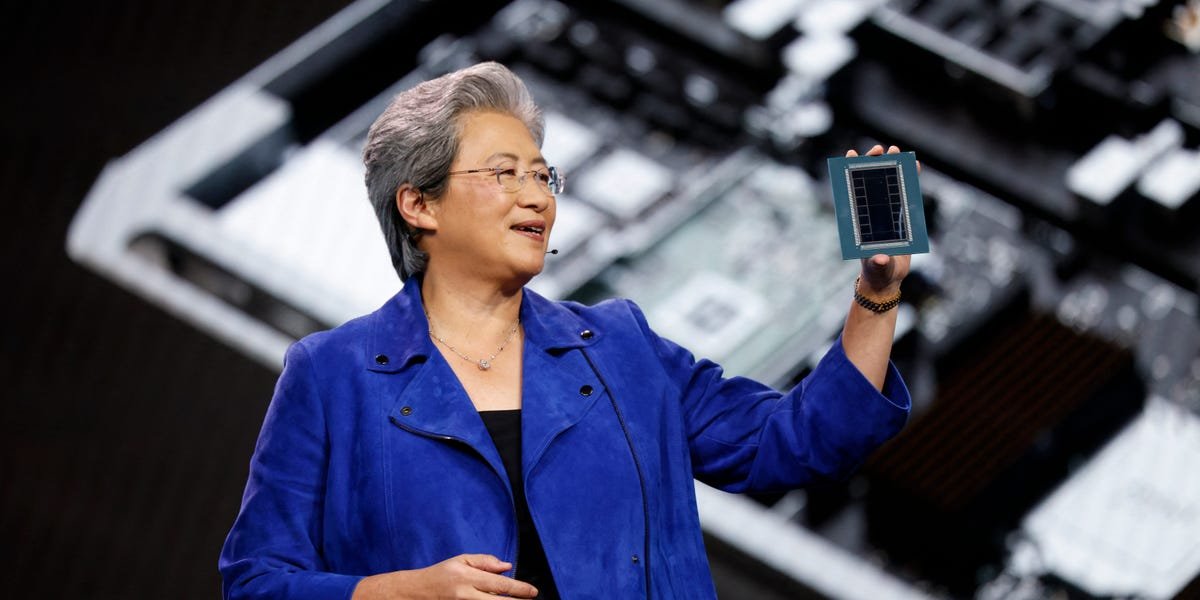
AI needs so much computing power that AMD CEO Lisa Su put it in terms of a unit most people have never heard of: the yottaflop.

Su said in her keynote at CES 2026 on Tuesday that the world would need more than “10 yottaflops” of compute a measure of how fast a computer is over the next five years to keep up with AI’s growth.

“How many of you know what a yottaflop is?” Su asked the audience. “Raise your hand, please,” she added, before quickly explaining the term herself when no one appeared to raise their hand.

“A yottaflop is a one followed by 24 zeros. So 10 yottaflop flops is 10,000 times more compute than we had in 2022,” she said.

In computing, a flop is a single basic math calculation. A computer doing 1 billion calculations per second is equal to a gigaflop. A yottaflop is equivalent to a computer performing one septillion calculations per second.

In theory, scientists say 10 yottaflops would be enough computing power to run complex, atom-level simulations for entire planets.

In 2022, global AI compute stood at about one zettaflop — a one followed by 21 zeros. By 2025, Su said, that figure had already surged to more than 100 zettaflops.

“There’s just never, ever been anything like this in the history of computing,” she said at the Las Vegas conference.

Su’s 10 yottaflop prediction is about 5.6 million times faster than the most powerful supercomputer today — the US Department of Energy’s El Capitan.

However, powering today’s AI compute is already putting a strain on the US power grid. The build-out of energy infrastructure would be a big bottleneck in scaling up AI compute power.

During the keynote, Su also used the stage to unveil AMD’s next generation of AI chips, including its MI455 GPU, as the company pushes deeper into supplying data-center hardware for customers such as OpenAI.


Source link

Hilton-called-out-by-DHS-after-the-department-said-ICE.jpeg

Hilton called out by DHS after the department said ICE agents’ reservations were canceled at an independently owned Hampton Inn

The Department of Homeland Security singled out Hilton on X, saying a hotel in Minnesota canceled reservations belonging to Immigration and Customs Enforcement agents.

According to a screenshot shared by DHS on Tuesday, a Hampton Inn in Lakeville, south of Minneapolis, said it was “not allowing any ICE or immigration agents to stay at our property.”

“If you are with DHS or immigration, let us know as we will have to cancel your reservation,” the screenshot said.

Hilton said it doesn’t own or operate the hotel.

“This hotel is independently owned and operated, and these actions were not reflective of Hilton values,” Hilton said in a statement to Business Insider. “We have been in direct contact with the hotel, and they have apologized for the actions of their team, which was not in keeping with their policies. They have taken immediate action to resolve this matter and are contacting impacted guests to ensure they are accommodated.”

“Hilton’s position is clear: Our properties are open to everyone and we do not tolerate any form of discrimination,” the statement said.

Everpeak Hospitality, the owner of the hotel, said in a statement Tuesday that the incident was “inconsistent with our policy of being a welcoming place for all.”

“We are in touch with the impacted guests to ensure they are accommodated,” the statement said. “We do not discriminate against any individuals or agencies and apologize to those impacted.”

The Department of Homeland Security did not respond to a request for comment.

Who owns Hilton-branded hotels?

Hilton is a publicly traded company owned by its shareholders.

Hilton’s largest known shareholders are The Vanguard Group and BlackRock, which respectively own 10.6% and 8.5% of its common stock, according to the company’s 2025 proxy statement.

Hilton, like other global hotel chains, does not own most Hilton-branded hotels.

Instead, most of its hotels are franchised, in which case they are owned and operated independently, or they are owned by a third party and operated by Hilton.


Source link

Here-are-the-biggest-announcements-coming-out-of-the-2026.jpeg

Here are the biggest announcements coming out of the 2026 Consumer Electronics Show, starting with Nvidia’s Vera Rubin chips

On Monday, ahead of the Consumer Electronics Show, Huang officially introduced the Vera Rubin architecture, which is now in production and expected to ramp up in volume in the second half of the year. This move follows a blockbuster year for its Blackwell chip, as demand for AI infrastructure continued to surge.

In a press briefing ahead of Huang’s keynote, Dion Harris, Nvidia’s senior director of HPC and AI infrastructure solutions, described Vera Rubin as “six chips that make one AI supercomputer.”

“Vera Rubin is designed to address this fundamental challenge that we have: The amount of computation necessary for AI is skyrocketing,” Huang told the audience during a presentation at the CES.

Huang added that compared to the Blackwell model, Rubin marks a leap in performance, with more than triple the speed, could run inference five times faster, and can deliver significantly more inference compute per watt of energy.

Rubin was first announced in 2024 and has been slated to replace Blackwell ever since. The early debut comes months ahead of the late-2026 timeline Nvidia had previously projected.

Named after astronomer Vera Rubin, who discovered the existence of dark matter, Nvidia said in a press release that the architecture is designed to support more complex, agent-style AI workloads, as well as more networking and data movement.

The Rubin systems are already lined up for deployment across much of the cloud industry. Nvidia said partners, including Amazon Web Services, OpenAI, Anthropic, alongside the upcoming Doudna system at Lawrence Berkeley National Laboratory, all plan to use the new platform.

The accelerated launch comes shortly after Nvidia reported record data center revenue, up 66% from a year earlier, driven largely by demand for Blackwell and Blackwell Ultra GPUs. Those chips have become a benchmark for the current AI boom are widely seen as a test of whether spending on AI infrastructure is sustainable.

Huang has previously estimated that between $3 trillion and $4 trillion could be spent globally on AI infrastructure over the next five years. Nvidia said products and services built on the Rubin platform will begin rolling out from partners in the second half of 2026.


Source link