Inside-the-hell-on-earth-Brooklyn-jail-reportedly-housing-Nicolas.jpeg

Inside the ‘hell on earth’ Brooklyn jail reportedly housing Nicolás Maduro

Venezuelan President Nicolás Maduro and his wife Cilia Flores are reportedly awaiting their first court appearance at a Brooklyn jail famous for its poor conditions.

Numerous publications, including The Wall Street Journal, have reported that the pair were escorted to the Metropolitan Detention Center late Saturday after arriving by plane in New York.

MDC, which has yet to confirm the transfer to Business Insider, has been home to numerous high-profile defendants facing trial in New York City, including music mogul Sean “Diddy” Combs, Sam Bankman-Fried, the founder of fallen bitcoin exchange FTX, and Ghislaine Maxwell, who was convicted of aiding the sex trafficking operation of the deceased sex offender Jeffrey Epstein.

Luigi Mangioni has been housed at MDC while awaiting trial for the murder of UnitedHealthcare CEO Brian Thompson. He has pleaded not guilty.

The jail has been widely criticized over the years for its poor conditions, having been described as “inhumane” and “hell on earth.”

Last year, the Legal Aid Society issued a press release lamenting the jail’s “documented history of violence, medical neglect, and human and civil rights violations.” It cited reports of no heat during the winter and “maggot-infested food.”

In 2024, a federal judge in Brooklyn made headlines when he carved out a special exemption during sentencing to help a defendant avoid the MDC. The judge ruled that if the 74-year-old, convicted of tax fraud, were assigned to the MDC, he could serve his time under house arrest, The New York Times reported.

In March, Brooklyn federal prosecutors announced charges against 25 defendants in 12 separate cases tied to violence and contraband smuggling at the jail, which is located in the Sunset Park neighborhood of Brooklyn.

“Over the years, MDC has become synonymous with egregious neglect and abuse with the people incarcerated,” the Legal Aid Society said in a June press release opposing ICE detentions at the jail.

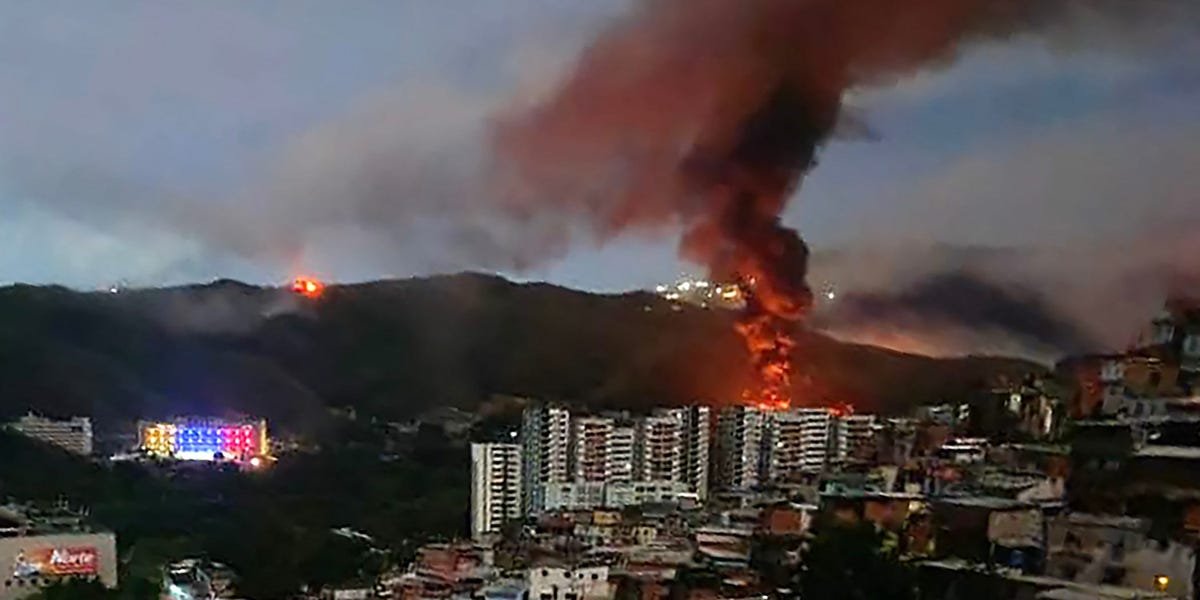
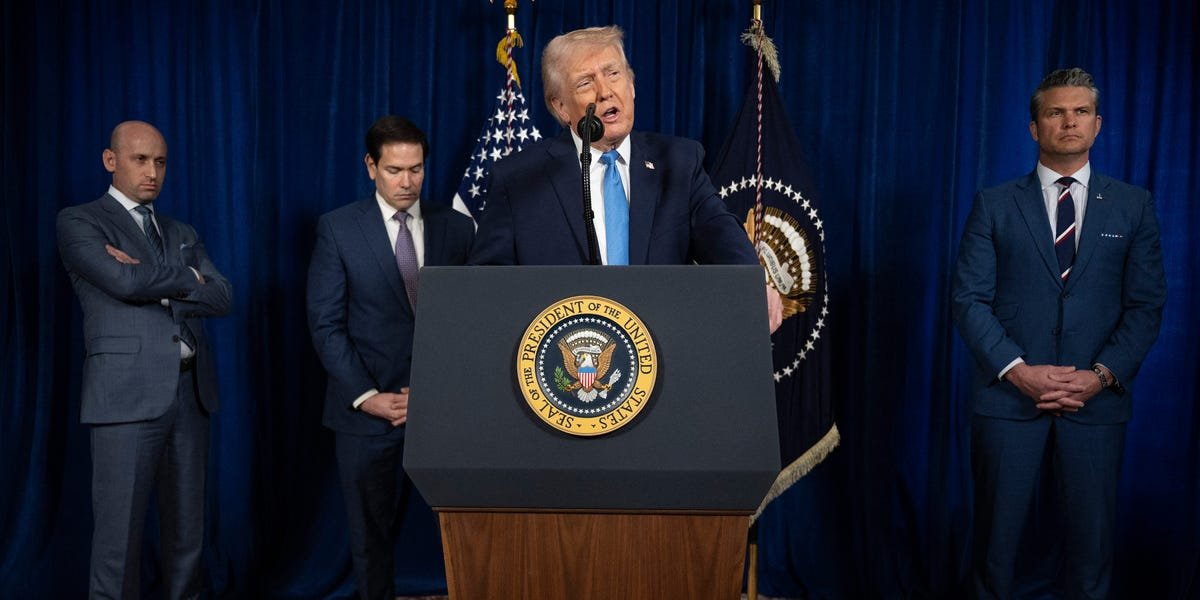
President Donald Trump shocked the world on Saturday when he announced that the US had captured the Venezuelan president and his wife after a “large-scale strike” on Venezuela.

Trump has said the US is “going to run the country” until it can facilitate a safe transition of power, and that US oil companies will now be free to “spend billions” on development in the South American nation.

Maduro has been in the US Department of Justice’s crosshairs for years, and in 2020, Manhattan federal prosecutors indicted him as a leader of the Cartel de Las Soles, its name for the alleged drug-trafficking organization run by Venezuela’s military and political elite.

An expanded indictment unsealed on Saturday added as defendants Maduro’s wife and son, Nicolás Ernesto Maduro Guerra, identified in the indictment as “The Prince.” It accused them of participating in a wide-ranging effort to traffic drugs to the US to enrich themselves.


Source link

A-rattlesnake-bit-my-toddler-at-a-birthday-party-What.jpeg

A rattlesnake bit my toddler at a birthday party. What happened next changed me.

I was sick at home when my 2-year-old son was bitten by a rattlesnake at a kid’s fairy-themed birthday party in LA.

My husband, Mac, was with our two kids when our son fell into the grass, crying and pointing to his hand. At first glance, Mac thought he was having an allergic reaction to a bee sting, a fair assessment for an Angelino parent, until he identified a second puncture wound in the divot between his little fingers.

It’s one thing to be present when your child gets hurt. The self-blame is straightforward — “It’s all my fault. I wasn’t quick enough. I should have seen it coming.” But when it happens without you, the guilt wanders until it emboldens — “Had I been there, I would have prevented it. I would have lured the snake away with the live mouse I keep in my first aid kit next to the Paw Patrol Band-Aids and butt cream.”


Toddler at hospital crying

The author’s son was admitted to the hospital after being bitten by a snake.

Courtesy of the author


Mac rushed to the Children’s Hospital LA while I went through the suddenly delicate motions of being a parent to our oldest. The CHLA attending doctors, in tandem with California’s leading poison specialist, determined that he would require an anti-venom treatment. A Marvel comic book plotline except this was real life, and the idea of Mads becoming Sssnake-Man was far-fetched, even in our desperation. Ironically, this is when you’re meant to conjure hope. Even if your son’s hand has gone from swollen pink to rigid gray.

As we waited to see if the anti-venom would work, I ran through the unthinkable what-ifs until I landed on a firm bed of memories from the last time I feared death.

My mom died at 67

The first time someone deeply close to me died was 10 years ago, when I lost my mother.

Her death made no sense to me. She was 12 years younger than my dad and only 67 when she died. She’d lived a self-proclaimed glamorous life before meeting my dad and becoming surprisingly pregnant with me at 39.

Before that, she was a “walking model” at Bal Harbour Shops in the 70s, touting signage from the then-emerging designers of couture. We loved each other completely, but it was no secret that becoming a mother deprived her of her golden years.


Mom and daughter

The author’s mom died when she was 67.

Courtesy of the author


I traveled across the county to be with her after her first heart attack. She refused medical advice to be added to a heart transplant list and was vehemently against keeping a low-sodium diet. For this, I was angry. I plead with her. I begged. Did she want to live? What if I were to get married one day? Wouldn’t she want to meet her future grandkids? All she wanted was sodium-rich tomato soup. I was so mad, I decided to cut my trip short so I didn’t have to watch her kill herself. Harsh, maybe, but that’s what it felt like at the time.

“Won’t you stay and hold my hand?” she asked before I left.

She died a few weeks later from sepsis after another heart attack. I made it back in time for her last breath.

Then my dad died at 82

I tried to do better when my dad became ill three years later. His death made more sense. He was an 82-year-old personal injury attorney with diabetes, Parkinson’s disease, and eventually bladder cancer.


Dad and daughter

The author’s dad died at 82.

Courtesy of the author


In a word, my dad was basic before it became a popular insult. I mean it in the most endearing way. He was a New York Jew who grew up at the tail end of the Great Depression and was generally satisfied as long as he had a Miami Hurricanes game on and a palmful of peanuts that, in his final hours, he wouldn’t be able to swallow. It was then that I’d watch the games with him and drop ice chips into his mouth to offer some relief.

I knew it wouldn’t be long before he died, but I guess I expected to be there when it happened. Instead, I got a call very early one morning to let me know that my father had “expired.” Like a carton of milk.

My son’s snake bite taught me something important

In the weeks leading up to Madsen’s snake bite, we were preparing to move across the country to be closer to Mac’s family. The decision was made at the last minute, and we had limited assistance. We were moving so fast, we forgot what mattered until Mads was admitted to the ICU.

A decade ago, I had somehow mistaken my mother’s autonomy for abandonment. It was only now that I understood, far too late, that my mom needed me just as much as I needed her.

Madsen received 21 doses of anti-venom over a 72-hour period. And it worked. When I saw him, he kept saying “I got you!” which is what Mac had been telling him since they arrived.

“I got you, too, little buddy,” I said and held his hand in mine.


Source link

A-week-of-taking-care-of-my-8-and-2-year-old.jpeg

A week of taking care of my 8 and 2-year-old grandkids left me exhausted. It also taught me we all need a little grace.

On day five of caring for my 2-year-old and 8-year-old grandsons full-time, I almost snapped.

I had slept just a few hours and woke up dehydrated, my tongue dry and sticky, my head aching. In the bathroom, I noticed yellow specks on the porcelain rim. Not surprising with a 2-year-old in the house.

But then, at 7 a.m., there it was: a puddle circling the toilet with a musty odor rising from it. I flicked on the fan, reached for a paper towel to sop up the mess, and cautioned myself against overreacting.


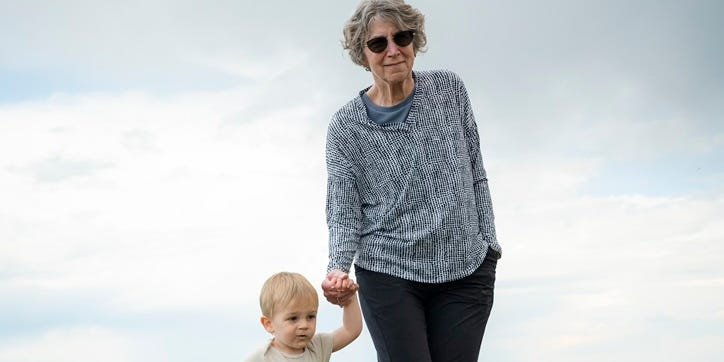
Grandma and grandchild walking

The author took care of her grandsons for a week.

Courtesy of Kenny Withrow


My grandson said he could do things himself

Throughout the week, I had offered to help, but George always said he could do it himself. Then, he’d slam the door into its frame.

That puddle challenged my composure. “Keep calm,” I told myself. “He’s only 2, and at least you’re not changing poopy diapers.”

George knocked and asked if I was taking a shower. I stepped into the hallway and let him know I wasn’t happy.

No answer.

I told him there was pee all over the floor.

Both Grandpa and his older brother, Stanley, had shown him how to pee in a toilet, but apparently, George liked to lift the seat and aim for the circular opening. I’d watched him steer an RC car through impossible turns, so aiming into a toilet shouldn’t have been difficult.


Grandparents with grandchidlren

The youngest grandson is a grandpa boy.

Courtesy of Kenny Withrow


George dropped his head. This non-stop chatterer went silent. He turned toward the wall and buried his face in his shoulder.

After breakfast, George became his talkative self again as he drove trucks through kinetic sand, performed somersaults off the couch, and wheeled his scooter from room to room. When he needed a bathroom break, he opted for nature pees in the backyard.

But then, as I made lunch, George scooted into the bathroom and slammed the door.

I gave him some time, then slowly, silently, peeked inside. He wasn’t sitting. He wasn’t standing. He was kneeling — reaching toward the back wall with a gigantic wad of toilet paper. The bowl was clogged with more paper — voluminous amounts of it.

What I wanted to say: WE TALKED ABOUT THIS!

What I actually said: Nothing. I just sighed.

My grandkids taught me an important lesson

That’s when big brother Stanley intervened. During the day, George followed Stanley around, imitating his every move. At night, they shared a bedroom. They had bunk beds, but instead of using the top and bottom, George and Stanley chose to sleep side by side, arms around each other, in the bottom bunk.

Stanley took one look at George on his knees, flashed a big smile, and suggested I praise him for his good work.


Family brushing teeth together

The author learned an important lesson from her grandkids.

Courtesy of the author


Then Stanley looked right at George and told him what a good boy he was. No mention of clogging the toilet. No scolding that the mess was unnecessary. No criticism of the sticky wet floor. Not even a reminder to wash his hands. Just arms open for a hug.

I stood there speechless for a few seconds. Where I saw disaster, Stanley saw effort. While I considered a lecture, he opened his arms.

I herded both boys to the sink for hand washing before lunch. After a bite to eat, we played with Monster Trucks, and when George got cranky, I put him in bed for a nap. Then I played cards with Stanley and cleaned the bathroom with chlorine bleach.

When George woke up, my husband suggested an hour at the park. With Stanley at a friend’s house, George, Grandpa, and I headed off on foot.

They taught me we all need a little grace

George is Grandpa’s boy. Every sentence begins, “Grandpa, watch…” or “Grandpa, look at this…” or “Grandpa, can I….” He holds Grandpa’s hand in every parking lot and sits in Grandpa’s lap for every book.

But as we approached an intersection and Grandpa prompted him to hold hands, George surprised me.

Instead of taking Grandpa’s hand, he reached for me, squeezed my palm, and held on long after we crossed the street. His tiny fingers curled into my fist said he wanted us to be right again.

At bedtime, when he usually chose Grandpa, George asked me to read him a book. Five books. We didn’t talk about bathrooms or disinfectants or a better aim. I just snuggled him in my lap, pulled a blanket over us, and read the words slowly, to enjoy the story a little longer. I tucked him under the covers with Doggie, his favorite stuffed toy. I kissed him and said I love you.


Grandparents with kids

Courtesy of the author


It was 8 p.m. when I joined Grandpa in the living room, too tired to read my own book, pick up stray Hot Wheels, or empty the dishwasher. Longing for bed myself, I thought about the last several hours and what I should have done better.

And I realized the lesson of the day was not how to pee into a toilet, reason with a 2-year-old, or keep a bathroom spic and span.

The lesson was that we all need a little grace.

Stanley praised George, not for succeeding, but for trying. When was the last time I’d done that?

In our world of high expectations, perfection often feels like the goal. We’re so conditioned to correct and fix — our children, coworkers, or strangers on Instagram — that we forget what encouragement looks like.

And then there was George. Without words, he reached for my hand, an ordinary kindness with extraordinary power. Adults often forget this truth, too, that love repairs itself with simple gestures.

The best love, I realized, isn’t earned through perfection, but offered in the middle of our messes.


Source link

35-books-Wall-Street-investors-dealmakers-and-traders-say-helped.jpeg

35 books Wall Street investors, dealmakers, and traders say helped them succeed

Updated

  • We’ve asked Wall Street stars about the books that informed both their careers and personal growth.
  • The list includes biographies of billionaires and handbooks on leadership and decision-making.
  • We’ve compiled their 35 picks for those kick-starting their career in finance.

Aspiring to build a career on Wall Street? While there’s no one single playbook, one of the best ways to learn the ropes is by picking up the books that helped industry insiders get to where they are today.

Over the past few years, we’ve asked Wall Street’s rising stars to share the titles that helped them understand their industries, sharpened their skills, and inspired their career paths.

Their recommendations span everything from biographies of billionaires to practical handbooks on time management, decision-making, and leadership.

Whether you’re just starting or looking to level up, this list of 35 books offers a look at what ambitious professionals on Wall Street have read—and why it matters.

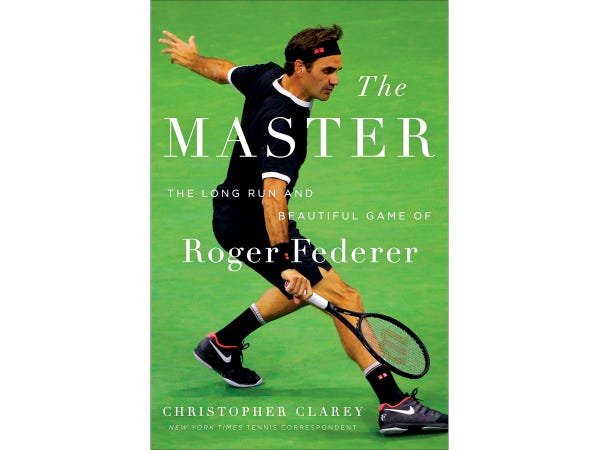
“The Master: The Long Run and Beautiful Game of Roger Federer” by Christopher Clarey


Amazon

“I recently read ‘The Master, ‘ the biography of Roger Federer, who some would argue is one of the best (tennis) players, if not the best player, of all time. Every time I read one of the tennis biographies, you’re reminded that it’s a very all-consuming commitment to be one of the greatest. At least in the case of tennis, it’s a very lonely existence. You’re the only person out there. You in your mind battling it out. The key is making sure you surround yourself with the right team.

“Every player, at least in the major tournaments, has a player’s box. You’ll have the family, the coach, and some friends in the player’s box. 

“The lesson I think is who’s in my player’s box?  How do they help me keep going? And, similarly, at least in the investing world, am I in the player’s box for others? How do I be the best person on the sidelines supporting?”

– Vinay Trivedi, General Atlantic

“How to Lead: Wisdom from the World’s Greatest CEOs, Founders, and Game Changers” by David Rubenstein


How to lead David Rubenstein


Amazon

“It’s kind of an anthology of various industries. A key takeaway from these stories is the importance of finding your passion. I’m obviously very passionate about finance.”

– Will Boeckman, Citadel Securities

“Why We Sleep: Unlocking the Power of Sleep and Dreams” by Matthew Walker


why we sleep matthew walker


A

“This book explores sleep’s impact on your body and mind.”

“Before the coronavirus pandemic, I was a daily 4:30 A.M. workout warrior and advocate for holistic nutrition, but I certainly was not prioritizing sleep in my health equation. This was an eye-opening and convincing read that has helped me to get significantly more shut-eye.”

– Lacey Vigmostad Giliberto, JP Morgan

“I’m a bad sleeper. This book puts in layman’s terms why you need to sleep and why it’s important for so many reasons.”

– Julia Dworkin, Jefferies

“The Short and Tragic Life of Robert Peace” by Jeff Hobbs


The short and tragic life of Robert peace jeff hobbs


Amazon

“It was a really interesting dichotomy. It’s about a young African-American man who grew up in a rougher neighborhood in Newark but went to Yale and ended up being really successful in his academic work. But he struggled at times to mesh the two worlds together.”

“It shows that the path to equality isn’t always as easy and seamless. Going to Yale on a scholarship, it can still be really hard for people. People often don’t get that.”

-Mir Subjally, Compass Rose Asset Management

“Liar’s Poker” by Michael Lewis


Amazon

“I am a little biased because I started my career at Citigroup, which is formerly Salomon Brothers. I also recommend ‘Panic!’ by Michael Lewis, and I generally like all the ‘Market Wizards’ series, which are helpful in knowing what fits your trading style and what doesn’t.”

-Tian Zeng, Nirvana Capital

“Give and Take” by Adam Grant


Give and Take Adam Grant


Amazon

“It shows that it’s not just about you. In the grand scheme of things, it’s how you help others along the way. How you can grow the pie for everyone.”

– Rachel Murray, Moelis

“It’s about striving to be somebody who gives to others and then expects nothing in return,” she said, “and how ironically fruitful that can be for your own life and career.”

– Lacey Vigmostad Giliberto, JP Morgan

“Young Money” by Kevin Roose


young money 1


Amazon

The book holds insights into “all the wrong reasons why you can go into finance.” 

– Daniel Costanza, previously a head of data analytics at Yieldstreet

“Dare to Lead” by Brené Brown


Dare to lead by  Brené Brown


Amazon

“Leaders are in the arena, and there are lots of people in the stands who are there just to criticize or comment on what you’re doing. But being in the arena takes courage. It gives you a lot of advice around, how do you think about having that courage?” 

– Alexis Rosenblum, Capital Group

“The Most Important Thing” by Howard Marks


'The Most Important Thing' by Howard Marks


Amazon

“It taught me that all decision-making should be driven by the gap between expected value and market price, and expected value is calculated by weighing each outcome by its probability of occurring.

“Second-level thinking is all about finding value that others don’t appreciate yet. It’s risk/reward times the coefficient of likelihood for being right.”

-Mark Stearns, Goldman Sachs

“Active Portfolio Management: A Quantitative Approach for Producing Superior Returns and Selecting Superior Returns and Controlling Risk” by Richard Grinold and Ronald Kahn


active portfolio richard ginold and ronald kahn


Amazon

“It’s pretty technical, but a must-read for any quant.”

-Robert Lam, Man Group’s Man Numeric 

“Bad Blood: Secrets and Lies in a Silicon Valley Startup” by John Carreyrou


Bad Blood by John Carreyrou


Amazon

“Theranos founder Elizabeth Holmes was a few years ahead of me at Stanford. It’s one of the greatest diligence misses of all time. As you think about that as investor, there are a lot of lessons to be learned.”

-Katherine Wood, TPG

“Originals: How Non-Conformists Move the World” by Adam Grant


'Originals: How Non-Conformists Move the World' by Adam Grant


Amazon

“I spend a lot of time with founder-led companies within the tech world. I like working with them because they’re very focused on disrupting the status quo, not just in the businesses they’re building but in anything they do, and that includes working with bankers and advisors writ large.”

“They really force their advisors to think outside the box and challenge the traditional way of doing things. Part of Adam Grant’s book is talking about what makes founders founders, and it’s been incredible watching them ask a question that might be perceived as basic, but there’s really sort of that double layer of, ‘Why is it being done this way, and why can’t we do it in a better, more efficient way?'” 

– Lalit Gurnani, Goldman Sachs

“The Happiness Equation” by Neil Pasricha


'The Happiness Equation' by Neil Pasricha


Amazon

“He wrote this book that really shares some tips about how to have a happier life and ways that you can streamline things in your work; how to find a better work-life balance; and how to think about where you’d like to spend your time and how you’re spending your time and the types of things you’re investing in.” 

“I’ve picked up so many helpful tips and tricks from there. I feel like it’s a must-read for people — financial-related or not, I think it applies to all different industries — on really how to take a step back and identify what is meaningful to you. And are you spending the right amount of time on things that you deeply care about versus things that are just, you know, background noise?”

– Samantha Merwin, BlackRock

“Drive: The Surprising Truth About What Motivates Us” by Daniel Pink


'Drive: The Surprising Truth About What Motivates Us' by Daniel Pink


Amazon

“I always thought a lot about what motivates people, how humans work, and what motivates them. I really appreciated his research and his take on that.”

– Julia Jaskólska, HarbourVest

“The Effective Executive” by Peter Drucker


'The Effective Executive' by Peter Drucker


Amazon

“It’s one of the best management books. I think what’s unique about the book is when I first looked at the title, I was a little bit intimidated by it — like, this is just for executive positions.

“But he looks at everyone being an executive in their role, and he provides some extremely practical advice on how to become more effective in anything we do in our everyday life. Some are well-known — such as time management, focusing on strengths.

“Even those obvious things that he brings up, he makes it so simple to apply in your everyday life. For example, on time management, there are just two questions you need to ask yourself on a regular basis: What would happen if I don’t do certain things? And can these things be done by somebody else?

“That helps you to eliminate a lot of time-wasters and use time more wisely. Super simple, but at the same time, quite practical.”

– Mikhail Krayzler, Allianz Global Investors

“The Obstacle Is the Way: The Timeless Art of Turning Trials Into Triumph” by Ryan Holiday


Amazon

“It’s a book framed through the teaching of Marcus Aurelius, who was also a Roman emperor, and it covers how to optimize situations and make the best out of everything. The book does a great job of translating philosophy into modern context.”  

“As for how that translates to me: Clients expect a trusted advisor to maintain poise and equanimity in situations that are stressful to them. So this has been helpful in taking a teaching that is 2,000-plus years old and transferring it to the 21st century.”

 – Christopher Oglesby, Bank of America 

“How to Win Friends and Influence People” by Dale Carnegie


'How to Win Friends and Influence People' by Dale Carnegie


Amazon

“Everything in the investing business is relationship-based, and Henry and George, the KKR founders, often talk about doing business with people you like and trust. This is a book I’ve read three or four times and is really a staple.”

– Evan Kaufman, KKR

“Factfulness: Ten Reasons We’re Wrong About the World — and Why Things Are Better Than You Think” by Hans Rosling


'Factfulness: Ten Reasons We're Wrong About the World — and Why Things Are Better Than You Think' by Hans Rosling


Amazon

“What the author is trying to do is to help the reader look at the world and analyze global trends in a more objective way. In a very engaging and comical way, he shows you that human beings tend to think that the world is more dramatic than it really is. So people’s brains are systematically misinterpreting the state of the world. 

“Something that really hits on that point is the beginning of the book. He presents the reader with a set of 13 questions. Each question has three multiple-choice answers. The bottom line is that most people actually score lower than the theoretical chimpanzee would have on these questions.

“He tries to walk you through a formula to avoid looking at the world in this overly dramatized way. I think he’s not talking specifically about the financial markets, but I think it’s so relevant to investing because this is part of the way you can capitalize on opportunities.”

– Unoma Okolo,  Artisan Partners

“Lords of Finance: The Bankers Who Broke the World” by Liaquat Ahamed


'Lords of Finance: The Bankers Who Broke the World' by Liaquat Ahamed


Amazon

“It’s a great book about monetary policy in the Depression era that has major implications for how monetary policy and currencies have evolved.”

– Phil Salinger, former Bridgewater Associates 

“Mindset” by Carol Dweck


'Mindset' by Carol Dweck


Amazon

The book emphasizes “how a growth mindset — or the belief that talents can be developed with hard work and good strategies and input from others — can enable much better outcomes than people with a fixed mindset, which is believing that talents are just innate gifts.” 

“The reason that a growth mindset matters so much is that it fosters an emphasis on learning and intellectual curiosity instead of trying to seem like the smartest person in the room, and that’s something that I often reflect on for my own personal development as well, as a quality to look for as we bring on really amazing management teams.” 

– Lexie Bartlett, General Atlantic 

“Drawdown: The Most Comprehensive Plan Ever Proposed to Reverse Global Warming” edited by Paul Hawken


drawdown book


Amazon

“For me, it’s a game plan of how to actually seek solutions to the biggest existential threat that we actually face as a species and as a planet. Whenever I introduce people to the book, you see people get obsessed with the kinds of things that we can be doing, whether that’s regenerative agriculture, renewable energy, or reducing food waste.”

Jay Lipman, Ethic

“Beating the Street” by Peter Magellan


beating the street


Amazon

“Being a Fidelity person, I had to pick a Peter Lynch book. Beating the Street has been one of my favorites, such a classic. It’s about how Peter ran Magellan day-to-day. And so I’ve just found it to be an excellent guide to investment processes for new fund managers.”

– Jennifer Fo Cardillo, Fidelity

“Security Analysis” by Benjamin Graham and David Dodd


Security Analysis Benjamin Graham David D


Amazon

“Much has been said about ‘Margin of Safety’ over the years, but in my opinion nothing quite compares to the original “Security Analysis” by Benjamin Graham and David L. Dodd. They epitomized the concept through their careful approach, still relevant to this day.”

– Paul Kamenski, Man Group’s Man Numeric 

“Shoe Dog” by Phil Knight


Amazon

“I recently read ‘Shoe Dog,’ which is Phil Knight’s autobiography and the story of how he founded Nike. I chose it because our firm is, in some respects, a startup, as we are launching new lines of business and building upon others, and I wanted to learn about an entrepreneur’s success story.

Nike certainly had some difficult and existential issues in its early years, and the book was a good reminder about the importance of perseverance and believing in the value of one’s work.”

– Jackie Klaber, Rockefeller Capital Management

“Fooling Some of the People All of the Time,” by David Einhorn


Amazon

“It is an interesting read, and I enjoy how David Einhorn seems so relentless when he believes in something.”

– Tanaka Maswoswe, Carlyle Group

“The Ride of a Lifetime: Lessons Learned From 15 Years as a CEO” by Bob Iger


'The Ride of a Lifetime: Lessons Learned From 15 Years as a CEO' by Bob Iger


Amazon

Bob Iger, a former CEO at Disney, “early on saw the need to create digital channels for his customers and understood the virtuous cycle he could create around the right types of content, which informed his M&A strategy. Some of the M&A moves that he did in the preceding 10 years were really prescient.”

– Tyler Parker, EQT Group

“A Man for All Markets: From Las Vegas to Wall Street, How I Beat the Dealer and the Market” by Ed Thorp


A man for all markets


Amazon

“Reading the stories of great investors is both fun and informative. What’s most interesting is the commonalities you see between the two investors despite radically different approaches and asset classes.”

– Philip Dobrin, Bridgewater Associates

“Foundation” by Isaac Asimov


Foundation issac


Amazon

“There’s a lot of game theory involved, analyzing big data to predict outcomes. The concepts in that book and trilogy are very relevant today.”

– Vlad Moshinsky, Stifel

“Range: Why Generalists Triumph in a Specialized World” by David Epstein


Range david epstein1


Amazon

“Looks at the benefits of late specialization and a diversity of experience, and how knowledge in a variety of arenas can pay off, especially when solving complex problems that require creative solutions.” 

– Shaan Tehal, Morgan Stanley

“Breaking the Bamboo Ceiling: Career Strategies for Asians” by Jane Hyun


book cover of


Amazon

We read it as part of an Asian-American affinity group at TPG. It’s a very tactical book on how Asian Americans can advance in the workplace, and it’s written in a style that gives stories of actual people but gives very tangible advice. I enjoyed it quite a bit. 

– Akash Pradhan, TPG

“Contrarian Investment Strategy: The Psychology of Stock Market Success” by David Dreman


Contrarian investments


Amazon

“Compared with what has now often become fairly complex and evolved, his works as an early adopter of the approach were simple, intuitive, and persuasive, establishing clear roots for what it means to use a systematic approach.” 

– Paul Kamenski, Man Group’s Man Numeric 

“Crossing the Chasm: Marketing and Selling Disruptive Products to Mainstream Customers” by Geoffrey A. Moore


crossing the chasm moore


Amazon

A “must-read” for any aspiring tech investors.

– John Curtius, Cedar Capital

“The Outsiders: Eight Unconventional CEOs and Their Radically Rational Blueprint for Success” by William Thorndike Jr.


Amazon

“The book best represents how I think about investing and also articulates the success stories and habits of the best CEOs of the 20th century.”

– Sims Lansing, Lansing Management

“Flash Boys: A Wall Street Revolt” by Michael Lewis


Amazon

“‘Flash Boys’ was a prime example of how technological innovation and forward-thinkers can reshape an entire industry. In ‘Flash Boys,’ novel computer algorithms and communications networks caused both market structure and behavioral changes to the trading industry.

“Similarly, today we’re experiencing the confluence of cryptography, blockchain technology, and distributed systems, which are meaningfully challenging preconceived notions of not just the financial industry but what constitutes money.”

– Michael Sonnenshein, Securitize

“Building a Second Brain: A Proven Method to Organize Your Digital Life and Unlock Your Creative Potential” by Tiago Forte


Book cover for “Building A Second Brain” by Tiago Forte


Amazon

“We have all this data and information on our laptops and on our phones, but it’s not organized. So is it really serving us, is it really useful for us?

“The book talks about knowledge management systems and how to organize the data in such a way that works for the individual, and ultimately, getting to a point where we can share that with others.”

– Richesh Shah, Oaktree


Source link

Heres-what-the-smartest-people-in-foreign-policy-business-and.jpeg

Here’s what the smartest people in foreign policy, business, and economics are saying about Trump’s raid on Venezuela

President Donald Trump on Saturday announced that the US had conducted a raid on Venezuela, resulting in the capture of Venezuelan President Nicolás Maduro and his wife, and big names in business and foreign policy have been reacting as the aftermath unfolds.

Here’s what they’ve been saying:

Charles Myers

Myers, chairman of political risk consulting firm Signum Global Advisors, told Business Insider that foreign investment in oil, tourism, and construction will be the “centerpiece” of Venezuela’s financial recovery going forward, adding that he expects the country’s economy will grow “faster over the next two years than people anticipate because of the extent or scale of foreign investment.”

Myers, also a former head of investment advisory firm Evercore, is planning a trip of 15-20 investors to visit Venezuela in March to identify investment opportunities. Signum Global Advisors has hosted similar trips for investor groups in Syria and Ukraine.

Ian Bremmer

Bremmer, founder of the political risk research and consulting firm, Eurasia Group, in a post on LinkedIn, wrote that the “US presumption is next Venezuelan leaders will now do what the Americans want because they’ve just seen the ‘or else.'”

Accompanying the post was a photo of a drawing of a horse. The hindquarters of the horse were drawn in intricate detail, and labeled “SOF operation to capture Maduro,” referencing the special operations forces mission that was executed early Saturday. The horse’s head was depicted as a rudimentary children’s drawing, captioned “plans for future of Venezuela.”

“I wouldn’t exactly call it a plan,” Bremmer added.

In a separate post, he wrote: “The law of the jungle is dangerous. What applies to your enemies one day can apply to you the next. Make no mistake where the world is heading here.”

Bill Ackman


Bill Ackman

Bill Ackman has expressed support for many of the Trump administration’s policies, foreign and domestic.

PATRICK T. FALLON/AFP via Getty Images


The billionaire hedge fund manager wrote in a post on X that “The removal of Maduro will lower oil prices, which is good for America and very bad for Russia. A weaker Russian economy will increase the probability that the war in Ukraine ends sooner and on more favorable terms for Ukraine. And Putin will be sleeping in his safe room from this point going forward.”

Henry Gao

Gao is a senior fellow at the Center for International Governance Innovation and a law professor at Singapore Management University. In a series of posts on X, he said the raid on Caracas ushered in “the brave new world of international law.”

“Maduro’s capture has triggered the biggest revival of international law since Grotius — and overnight turned everyone on X into an international law wonk, eager to compare Venezuela to Taiwan,” he wrote.

“But China has never treated the Taiwan issue as a matter of international law,” he continued. “It has always been framed as an internal affair, with Taiwan regarded as a renegade province. The reason China has not acted is not because it lacks legal justification, but because it lacks the capability. Thus, US ops in Venezuela provide China with no additional legal justification.”

Sen. Elizabeth Warren

The Democratic senator from Massachusetts is a former Harvard Law professor who holds deep expertise in bankruptcy and consumer finance. In a post on X, she wrote that Trump’s action to seize Maduro, “no matter how terrible a dictator he is — is unconstitutional and threatens to drag the US into further conflicts in the region.”

“What does it mean that the US will ‘run’ Venezuela, and what will Trump do next around the world?” Warren wrote. “The American people voted for lower costs, not for Trump’s dangerous military adventurism overseas that won’t make the American people safer.”

Elon Musk


President Trump and Elon Musk i nthe White House.

Elon Musk and Donald Trump in the Oval Office.

Kevin Dietsch/Getty Images


The Tesla and SpaceX CEO spent most of Saturday posting praise for the Trump administration and the military operations in Venezuela, posting that it was “heartwarming to see so many Venezuelans celebrating their country freed from a brutal tyrant.”

In another post, Musk retweeted a White House image of Maduro aboard the USS Iwo Jima after being apprehended, with the caption “Congratulations, President Trump! This is a win for the world and a clear message to evil dictators everywhere.”

Musk and Trump have had a tumultuous relationship over the years, alternating between appearing to be close allies and trading sharp criticisms in the media.


Source link

A-group-of-about-20-US-investors-is-already-planning.jpeg

A group of about 20 US investors is already planning a trip to Venezuela in March

A group of about 20 US investors is already planning to travel to Venezuela in March, following Saturday’s news that the country’s president, Nicolás Maduro, had been taken into US custody.

Charles Myers, the chairman of the political risk advisory firm Signum Global Advisors and a former vice-chairman of the investment advisory firm Evercore, told Business Insider that the mood among investors he has spoken to is one of “cautious optimism” following news of Maduro’s ouster.

“I think the centerpiece of Venezuela’s success, looking out 12 months or even 24 months, is foreign investment,” Myers said. “A big part of the Venezuela story, starting today, is foreign investment, especially in oil and gas, which is pretty straightforward, but there are massive opportunities in construction, in tourism.”

Myers said it’s not the responsibility of his firm to take a “moral position” on whether it was right or wrong for the US to involve itself in Venezuela’s government, but rather to help the firm’s clients anticipate investment opportunities or mitigate risk due to geopolitical events.

However, he added, his firm “very much expected” the situation in Venezuela would unfold as it has, and has been preparing investor groups to be ready to travel to the country when the opportunity presents itself. Signum previously hosted similar trips for asset managers and hedge funds to visit Syria and Ukraine.

“People have seen this coming, especially very smart investors, and many of them have actually bought bonds in anticipation of this,” Myers said. “But there’s a very strong degree of cautious optimism, even more so than we saw with Syria, just because this is a United States-directed action.”

“The United States will play a pivotal role in everything, especially the Venezuelan economy, starting today,” Myers added, “So, I think the reaction has been more enthusiastic than perhaps other situations like this.”


Source link

Lauren Crosby

I stopped being the first to reach out to friends. It made me realize I don’t need to be liked by everyone.

Ever since I was a little girl, I remember that friendships were a priority for me; I would constantly ask my mom to let me have friends over for playdates and sleepovers.

As a teenager, I had a Nokia brick phone and a driver’s license, and I could always be found planning to see friends or inviting them over to mine.

The craving for friendship has continued ever since, with my incessant desire for it fuelled by an innate need to feel accepted. I moved a number of times when I was a kid, and I fought against the outsider mentality by developing relationships that would help me become part of social circles.

I moved from the US to Wales

As an adult, I moved from the US to Wales, and once again, had to find a way to fit in — through friendship.

I invited myself to people’s houses for coffee and asked them to go for walks with me. I texted and rang to check in on friends I had made through church, work, my kids’ school, and my husband’s previous social circles.

These friends were incredibly important to me, and I had to hold on to them. I felt the only way to do this was to maintain frequent contact, more often than not initiated by me.

In recent years, I found myself thinking: What would happen if I didn’t text, call, or plan to meet up with friends? Would they get in touch with me?

It’s led to little monthlong experiments — going quiet to see who I’d hear from, if anyone.

The results have been both disappointing and frustrating, yet reaffirming. There were some friends who didn’t make any contact (and I felt rejected as a result), others who got in touch with me.

All of my childhood fears about exclusion and rejection were acutely felt once again.

I’m a loyal friend

I had lots to think through. Did I mind being the one who initiated the friendship — the one who kept it going? Was my concept of friendship too intense for other people? Were there some friendships I was willing to put in the work, even if I felt it wasn’t always reciprocated? Was I a needy friend?

This soul-searching led me to understand a few things about myself and the nature of friendship.

I’m a loyal friend who values deep, meaningful relationships that require time and effort. I make space for close friends, even though I work full-time, am married, and have three children, and I crave friendships with people who share the same values. A twice-a-year check-in just doesn’t do it for me. I want sisterhood.

However, this is not necessarily a value that everyone else has, and that’s OK. I suppose some people don’t need such intense friendships. Or perhaps they already have them with family or other friends. I can’t get frustrated with or feel rejected by friends who don’t have the same idea of friendship as I do.

To avoid frustration and feelings of rejection, over the last year, I’ve decided to mentally note which friends want the depth of friendship I offer and those who are happy with a surface-level relationship.

I stopped chasing friends

I leaned into those deep friendships (three of them) — people who valued relationships as much as I did. They feel like my village, those who depend on me, and those who I can depend on. They’re the ones who check in with me, just as I check in on them. It’s not me who initiates everything — they’re texting and calling too. They’re fiercely loyal.

But I stopped chasing friends who didn’t seem to place the same value on friendship as I do. I didn’t cut them out (and would happily still see them for a coffee), but I didn’t prioritize contact as I had before. I didn’t feel any resentment, but rather an understanding that we had different ideas of what friendship entailed. And that’s totally OK — I can accept this without feeling rejected or unwanted. When we do see each other, at school gates, on the streets, or for an infrequent meet-up, I enjoy their company, expecting no more than they are able to give.

And then, there were a couple of friends whom I knew I would have to initiate contact with if I wanted to maintain our friendship — I’d have to accept that for it to continue. I appreciated their friendships too much to only see or hear from them occasionally.

Over the past year, with these changes in place, I feel completely content in my friendships, as I have never before. I know where I stand with friends, and as a result, don’t feel rejected — no longer that child with an insatiable desire to be accepted by everyone. I know I’m wanted and loved, not by everyone, but by a few, and that’s enough now.


Source link

The-US-strikes-and-raid-that-captured-Venezuelas-leader-raise.jpeg

The US strikes and raid that captured Venezuela’s leader raise some big questions. Here’s what we know.

The US executed targeted, large-scale attacks in Venezuela’s capital city, Caracas, overnight.

President Donald Trump said Saturday American forces struck the country’s military, turned off the lights in the city, and captured Venezuelan President Nicolás Maduro and his wife, Cilia Flores, for prosecution in New York.

The assault news has raised big questions. Here’s what we know right now.

What did the US military just do in Venezuela?


Picture of fire at Fuerte Tiuna, Venezuela's largest military complex, after a series of explosions in Caracas on January 3, 2026.

The US carried out strikes in Venezuela early on Saturday.

Luis JAIMES / AFP


Early Saturday morning, Trump revealed on Truth Social that the US military carried out a “large-scale attack against Venezuela” and that the leader had been captured and taken out of the country.

The US president didn’t seek Congressional approval prior to the mission. Congress, however, was notified afterward.

Trump told Fox News he watched the capture of Maduro play out in real time from a room inside his Mar-a-Lago resort in Florida alongside military generals.

“I was told by real military people that there’s no other country on Earth that can do such a maneuver,” he shared during a phone interview with Fox News. “If you would have seen what happened, I mean, I watched it literally, like I was watching a television show.”

Trump said the raid was “extremely complex,” more so than the Midnight Hammer operation against Iran’s nuclear sites conducted last year. Maduro and his wife were taken to the Wasp-class amphibious assault ship USS Iwo Jima.

Trump said US assets involved included land, air, and sea, including a “massive number” of aircraft and troops. Chairman of the Joint Chiefs of Staff Gen. Dan Caine said the apprehension mission, called Absolute Resolve, was based on months of intelligence-gathering, including watching Maduro’s patterns of life, and involved all elements of the joint force, from space and cyber assets to traditional combat forces.

The assault involved 150 aircraft — fighter jets, bombers, electronic warfare planes, intelligence and surveillance aircraft, and helicopters and rotary aircraft — that provided “layered effects” to clear the way for the interdiction force to slip in with the “element of surprise” into downtown Caracas. Fighters and different drones covered the extraction.

There were no US personnel or equipment losses, Trump said; however, he did say that troops were hit, along with a helicopter that he said was hit “pretty hard.” Caine said the US responded to hostile fire with “overwhelming” force.

What has the Trump administration been saying about why this is necessary?


Groups of fighter jets sit on a tarmac.

The US military has built up a massive force presence in the Caribbean in recent months, including aircraft at an airport in Puerto Rico.

Miguel J. Rodriguez Carrillo / AFP


Tensions have been rising for months between Venezuela’s Maduro regime and the Trump administration, which has ramped up its rhetoric while increasing military action nearby.

The US has blamed Venezuela for pushing deadly drugs into the country, as well as using its oil industry, which the Trump administration says the US built and intends to take back, to fund narco-terrorism and other criminal activities.

The administration has labeled cartels and the Maduro regime terrorist organizations. Trump has also called Maduro an illegitimate leader.

What’s been happening in the lead-up to this assault?


A US Marine Corps UH-1Y Venom helicopter flies above José Aponte de la Torre Airport, formerly Roosevelt Roads Naval Station, on December 15, 2025 in Ceiba, Puerto Rico.

Trump said a US helicopter took fire during the operation in Venezuela.

Miguel J. Rodriguez Carrillo / AFP


The US has been launching attacks against alleged drug trafficking boats since September 2025, with over 100 people killed and others missing or captured.

A massive US force presence, including warships and combat aircraft, has been in the Caribbean to combat narcotics trafficking and pressure Venezuela for months.

More recently, US forces began executing a blockade of oil tankers out of Venezuela in an effort to enforce American oil sanctions, hurting a key Venezuelan export and straining its economy.

Maduro’s government said that the purpose of the US attack on Venezuela was to “seize Venezuela’s strategic resources, particularly its oil and minerals, in an attempt to forcibly break the nation’s political independence.”

How unusual is this?


A destroyed antiaircraft unit at La Carlota military air base, after US President Donald Trump said the US has struck Venezuela and captured its President Nicolás Maduro, in Caracas, Venezuela, January 3, 2026.

A destroyed air defense unit at a Venezuelan military base.

Leonardo Fernandez Viloria/REUTERS


The US has removed the leaders of sovereign states in the past. For instance, during the 2003 invasion of Iraq, or Operation Iraqi Freedom, it captured Saddam Hussein after the Bush administration asserted the Iraqi president had weapons of mass destruction. Hussein was later convicted for crimes against humanity by an Iraqi court and executed in December 2006.

A lack of evidence that Hussein’s regime had weapons of mass destruction led to criticisms against the Bush administration’s motives.

Much earlier, Panamanian military dictator Manual Noriega was also a target of American military forces during the US invasion of Panama from December 1989 to January 1990, partially prompted by his attempt to annul the results of the 1989 Panamanian general election. US courts had charged Noriega with drug smuggling and money laundering, and the Panamanian official was captured in January 1990 and taken to Miami, where he was convicted on most of the charges.

Both Noriega and Maduro were heads of state indicted by US federal courts, they were accused of using state power to facilitate drug trafficking, and the US could argue in both cases those actions taken against them were law enforcement.

The US has also conducted military action to kill prominent foreign figures. Exactly six years ago, US military personnel successfully assassinated Qasem Soleimani, a senior Iranian military officer, in a drone strike in Baghdad.

The US designated Soleimani a terrorist in 2005. In response to Soleimani’s assassination in January 2020, Iran launched missiles against US military bases in Iraq, injuring 110 US troops.

What’s happening now?


A woman wearing a hood and mask holds a sign that says,

Maduro and his wife have been indicted in New York, and Trump said the US will be involved in the next steps for the Venezuelan government.

Carlos Jasso/Reuters


Maduro and his wife are on their way to New York. Pamela Bondi, US attorney general, said that Maduro had been charged with narco-terrorism conspiracy, cocaine importation conspiracy, and possession of machine guns and destructive devices, as well as conspiracy against the US.

“They will soon face the full wrath of American justice on American soil in American courts,” Bondi said on X.

On Saturday morning, Trump posted a picture of Maduro in custody on Truth Social. The photo showed Maduro aboard USS Iwo Jima.


Venezuelan president Nicólas Maduro in custody.

Venezuelan president Maduro in custody on the USS Iwo Jima.

Truth Social


By law, Venezuelan vice president Delcy Rodríguez should assume power in Maduro’s absence. But Trump said the US would “run the country” until a “safe, proper” election can occur.

The president also added that US oil companies would be returning to Venezuela.


Source link

Latest-updates-Trump-says-the-US-has-captured-and-indicted.jpeg

Latest updates: Trump says the US has captured and indicted Venezuelan President Nicolás Maduro

President Donald Trump said on Saturday that the United States had captured Venezuelan President Nicolás Maduro and his wife, Cilia Flores, following a “large-scale strike” on Venezuela.

Attorney General Pamela Bondi has said that Maduro and Flores have now been indicted in the Southern District of New York.

Maduro was charged with drugs and weapons offenses, Bondi said, adding that they would “soon face the full wrath of American justice on American soil in American courts.”

Venezuela said the US had carried out strikes on Caracas and the coastal states of Miranda, Aragua, and La Guaira early Saturday.

Trump had repeatedly threatened Venezuela with military action in recent months as tensions with Maduro soured over what the Trump administration says are drug trafficking networks in the country. Caracas has maintained that Washington’s aim is to overthrow the Venezuelan government.

Follow this liveblog for updates.


Source link

I-spent-2-weeks-in-Italy-Here-are-5-things.jpeg

I spent 2 weeks in Italy. Here are 5 things I’m glad I brought with me, and 2 I should’ve left at home.

  • I travel to northern Italy often and have a good idea of what to pack.
  • However, I still find myself bringing along a few items I don’t need.
  • Some of my must-have items include a small umbrella, a good travel adaptor, and a tripod.

I’ve traveled to northern Italy for the past three years in a row, and there are a few things I never leave for my flight without. However, I still learn something new on every trip about what I need to bring and what I should have left at home.

This time, after two full weeks of trains, spritzes, hilltop towns, and cobblestone streets, I finally have a clear list of what actually earned its spot in my suitcase — and what I’m officially retiring from future Europe trips.

Here are five items I’m glad I packed for my trip to Italy, and a few things I could have done without.

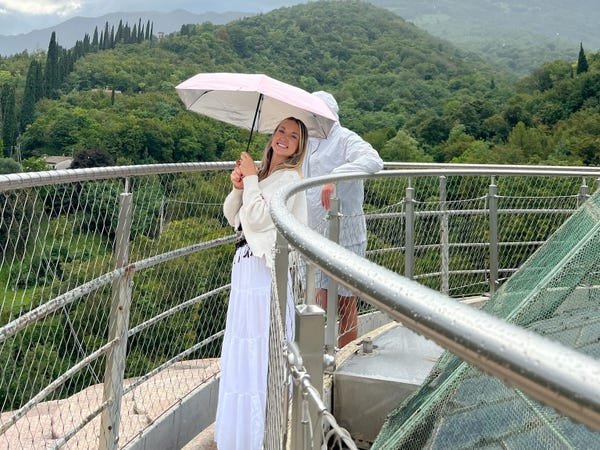
A packable umbrella came in handy and didn’t take up too much space in my suitcase.

I always bring a small umbrella with me when I travel.

Chloe Caldwell

It has rained at least one day on each of my trips to Italy, so this time, I prepared by ordering a compact umbrella that came with a small, packable case.

It was easy to fit in my purse or backpack during our outings, and I whipped it out more than once. It wasn’t the highest quality, but it was convenient and portable.

A tripod makes it easy to get group photos.


Chloe and her friends pose for a photo in a vineyard.

Having a tripod means I no longer have to ask strangers to take my photo.

Chloe Caldwell

We’ve all asked a stranger to take our photo on vacation, and when we get the phone back, it’s fuzzy and there’s a thumb in the corner of the frame.

That’s why I bring a slim and easy-to-pack phone tripod with me on every trip. It fits in most small totes and can be propped up in seconds. The one I have also operates as a selfie stick.

Just set your phone on self-timer or download a remote shooting app, and you’re ready for finger-free group photos. This has also come in handy many times while I was solo traveling.

A backpack with a luggage flap is essential for seamless transportation.


Chloe poses on a train platform with a suitcase and backpack.

I love my Beis travel backpack.

Chloe Caldwell

Getting through airports, hopping on and off trains, and dragging my stuff across bumpy cobblestone walkways is the price I pay to visit such a beautiful destination.

One way I (literally) take some of the weight off my shoulders when moving from place to place is by using a backpack with a flap on the back that slips over the handle of my luggage.

I actually have more than one backpack with this feature now because it’s that much of a gamechanger for traveling. I regularly rotate between my Beis backpack and Portland Gear version.

I always bring a travel adaptor that works for multiple devices.


Chloe holds a travel adaptor.

I have a Tessan adapter for several regions of the world.

Chloe Caldwell

I love this Tessan adapter from Amazon because I can plug in multiple devices at once.

It has four outlets, two USB-A ports, and one USB-C port, so I know I can rely on it for charging my phone, plugging in my hair tools, and anything else I might need.

Plus, the plug folds down, making it even easier to pack. In addition to my universal adapter, I have this specific converter for several regions of the world.

I always travel with a small belt bag for daily essentials.


Two belt bags on a bed.

A belt bag makes it easy to stay hands-free during tours and activities.

Chloe Caldwell

When wandering through major tourist cities, I always carry an over-the-shoulder belt bag to keep my money, passport, phone, and cards safe and within arm’s reach.

These bags are also practical for sightseeing. For instance, I went on a three-hour walking tour of St. Mark’s Basilica in Venice, and wanted to participate without worrying about carrying or keeping track of my things.

Being hands-free for big activities like this always makes the experience more convenient and enjoyable.

On the other hand, I’m done bringing outfits I’ll only wear once.


Chloe smiles over her shoulder while posing on a bridge.

From now on, I’m prioritizing versatile clothing options.

Chloe Caldwell

Planning outfits for a trip is one of my favorite parts of travel prep. I love to dress on theme and get a snapshot of the moment.

However, on my last trip, I realized that packing items I’ll only wear once for a couple of hours just isn’t worth the hassle. For example, I packed a long red gown to wear just in case we went to a fancy dinner. And, yes, it did sit folded in my suitcase for two weeks.

Next time, I’ll bring more versatile items that I can mix and match for various occasions throughout the trip.

I also brought too many pairs of similar shoes.


A pair of white shoes dangles out of a plane.

I don’t know why I brought two pairs of white sneakers with me.

Chloe Caldwell

Don’t ask me why I packed two pairs of white sneakers. It seems silly now, but my logic was that one pair was for active outings and one was for more fashionable outfits.

However, this was unnecessary, and I could have just brought one pair and been fine. In fact, I’d avoid white shoes altogether in the future, as they can get dirty and matted on the cobblestone streets.


Source link