My-husband-and-I-work-from-home-and-try-to.jpeg

My husband and I work from home and try to follow a nutritious diet. Here are 10 of our favorite groceries to buy at Aldi.

  • As empty nesters who work from home, my husband and I love shopping at Aldi.
  • The Elevation energy bars and Summit Popz prebiotic sodas are good substitutes for pricier brands.
  • I love snacking on the Simply Nature coconut clusters and Southern Grove trail mix.

As empty nesters who both work from home, my husband and I try our best to choose nutritious food options while keeping our grocery costs low.

Luckily, shopping at Aldi helps us achieve both of these goals. Here are some of our favorite products to buy.

My husband enjoys the peanut butter Elevation energy bars.

Elevation energy bars are a great afternoon pick-me-up.

Amy Barnes

My husband recently stopped buying Clif Bars and replaced them with the more budget-friendly Elevation energy bars from Aldi.

These come out to just about $1 per bar, and he says the taste and texture are great.

He likes to enjoy them as a snack or an afternoon pick-me-up.

I love snacking on the Simply Nature coconut clusters.


Bags of Simply Nature coconut clusters on display at Aldi.

The Simply Nature coconut clusters are made with pumpkin, sunflower, and hemp seeds.

Amy Barnes

The Simply Nature coconut clusters satisfy my sweet tooth, with only 160 calories per serving.

These crunchy clusters are made with a mix of pumpkin, sunflower, and hemp seeds.

Southern Grove trail mix is great for when I’m hiking.


Boxes of Southern Grove trail mix on display at Aldi.

This Southern Grove trail mix is made with cranberries, sunflower kernels, almonds, edamame, chocolate, and peanuts.

Amy Barnes

Whenever I head to Aldi, I like to grab snack-size portions of trail mix. I especially love the Southern Grove version because it doesn’t include raisins.

Packed with cranberries, sunflower kernels, almonds, edamame, chocolate, and peanuts, this mix is easy to snack on at home or when we’re hiking with our dog.

I prefer Aldi’s egg bites to the Starbucks version.


Boxes of Whole & Simple omelet breakfast bites on display at Aldi.

The Whole & Simple egg bites are easy to heat up in the morning.

Amy Barnes

I’m always hunting for delicious protein options to start my day, and I often find myself craving the egg bites from Starbucks. However, my wallet doesn’t love them as much as I do.

So, I’ve switched to Aldi’s Whole & Simple version, made with bell peppers, uncured ham, and cheddar. I think they taste similar to the Starbucks version and they’re easy to heat up at home.

We love the Happy Farms spreadable cheese wedges.


Containers of Happy Farms spreadable cheeses on display at Aldi.

There are lots of different varieties of Happy Farms spreadable cheese.

Amy Barnes

Since we both work from home, my husband and I are always looking for quick lunch options. We like the Happy Farms spreadable cheese wedges, which cost less than $3 each, and taste great on their own or in wraps.

Simply Nature popcorn is great for movie night.


Bags of Simply Nature popcorn on display at Aldi.

Each cup of Simply Nature sea-salt popcorn contains 35 calories.

Amy Barnes

At only 35 calories per cup, I like to have Simply Nature popcorn with my lunch or as a movie-watching snack when the kids come back home. It’s also a good source of fiber and is gluten-free.

Aldi’s steamed vegetable medleys make dinner easy.


Bags of steamed vegetables on display at Aldi.

I love the Season’s Choice Asian-seasoned vegetable medley.

Amy Barnes

Whenever I take a trip to Aldi, I look for the Season’s Choice steamed vegetable medleys. These bags of brightly-colored veggies are reasonably priced and easy to make.

I like to season my veggies with Burman’s stir-fry sauces.


Bottles of Burman's sweet and sour stir-fry sauce on display at Aldi.

Burman’s stir-fry sauces are a great way to add flavor to steamed vegetables.

Amy Barnes

Instead of ordering take-out, I like to season my steamed vegetables with Burman’s orange or sweet and sour sauces. I just add some chicken to create an easy stir-fry meal.

Aldi sells a great substitute for brand-name probiotic sodas.


Cans of Summit Popz prebiotic soda on display at Aldi.

I love the Summit Popz prebiotic sodas.

Amy Barnes

Staying hydrated while working from home is a necessity, and I love sipping on the Summit Popz prebiotic sodas. I think they’re a great alternative to the more expensive Poppi sodas.

Click to keep reading Aldi diaries like this one.


Source link

What-smart-people-in-economics-and-business-are-saying-about.jpeg

What smart people in economics and business are saying about a viral report warning of an AI-driven recession and stock crash

  • A viral research report warned of a stock market crash and double-digit unemployment by 2028.
  • The note sent software stocks sliding and rattled investors.
  • Critics said markets may be overreacting to a worst-case scenario thought experiment.

A research note warning that the AI boom could trigger a recession and a stock market crash spooked investors and sent software stocks sliding on Monday.

Citrini Research outlined a hypothetical 2028 scenario in which rapid AI adoption leads to mass white-collar layoffs and a collapse in consumer spending.

The report, which was published Sunday, went viral and amplified debate over whether AI is a productivity boom or a destabilizing shock.

Here’s what prominent economists and business leaders are saying about the note:

Claudia Sahm

Claudia Sahm, the chief economist of New Century Advisors and creator of the Sahm Rule recession indicator, raised concerns about the framing of the scenario.

“One concern with the Citrini scenario (and mirrored in the current moment) is the focus on destructive (left) rather than constructive (right),” Sahm wrote on X on Monday. “Maybe the latter takes longer, but it matters for the new equilibrium, too.”

In a follow-up post, she said that a labor market shock of the magnitude Citrini describes would likely trigger a forceful policy response.

“The labor market crisis they describe would generate a forceful fiscal/monetary response. They downplay that,” Sahm wrote. “The more likely scenario of gradual, limited job losses will be the hard one to get policymakers to focus and act.”

Michael Burry

Michael Burry.

Jim Spellman/WireImage

Michael Burry, the investor famous for predicting the 2008 housing crash and profiled in “The Big Short,” amplified the report to his millions of followers.

“And you think I’m bearish,” Burry wrote on X, linking directly to Citrini’s research.

His post included a chart from the Citrini report, titled “The AI Feedback Loop: A Non-Cyclical Disruption,” contrasting traditional recessions — which, it said, self-correct — with what Citrini describes as an AI-driven cycle with “no natural brake.”

Brendan Duke

Brendan Duke, a senior director for federal budget policy at the Center on Budget and Policy Priorities and a former senior policy advisor at the Biden-Harris White House National Economic Council, said many critics may be misreading Citrini’s premise.

“A lot of people have a hard time with the concept of a thought experiment,” he wrote on X.

However, Duke added that one underappreciated risk in the scenario is the financial market impact if “prime white collar borrowers who nobody ever thought would default… defaulting” becomes a reality — referring to the report’s suggestion that white-collar layoffs could cascade into prime mortgage and private credit stress.

Jeff Dorman

Jeff Dorman, chief investment officer at Arca, framed the response to the report as a lesson in investor psychology.

“The biggest takeaway from the virality of this Citrini doom porn is that fear sells,” Dorman wrote on X, referring to Monday’s stock market sell-off.

He said that markets and media often reward dramatic crash predictions, even if they rarely materialize.

“There are thousands of successful macro newsletters that you pay money to subscribe to, and all of them tell you to buy gold, build a bunker, and short stocks,” he wrote, adding that high-profile recession forecasters frequently get attention despite repeated false alarms.

Deepak Shenoy

Deepak Shenoy, founder of Capitalmind, compared the AI recession warning to past resource-scarcity warnings.

“This is the viral post that currently spooks everyone,” Shenoy wrote in an X post.

He pointed to 2008-era warnings that oil reserves were running out — fears that did not ultimately dismantle the energy industry.

“Doomsday porn is addictive,” Shenoy wrote. “AI based end of everything is the WWF of the world now, fun to watch but is mostly fake.”

Michael Bloch

Michael Bloch, a partner at VC firm Quiet Capital, published a rebuttal titled “The 2028 Global Intelligence Boom.”

He said that even if AI keeps improving rapidly, it doesn’t have to end in a crash — it could make the economy richer.

“What if our AI bullishness continues to be right… and what if that’s actually bullish?” he wrote on Substack this weekend.

Bloch said investors are confusing pain in parts of tech — like SaaS and middleman-style businesses — with a broader economic collapse, and that cheaper services could leave households and startups with more money to spend.


Source link

A headshot of Insider's Pete Syme

600 airline passengers faced the weirdest sleepover ever, when snow left them stuck on planes overnight

Hundreds of people spent a snowy and freezing night trapped on board parked airplanes last Thursday.

Six flights, with around 600 passengers total, were unable to take off before Munich Airport’s 1 a.m. curfew due to the bad weather, the airport said in a Monday statement.

The airport police department has prepared a report on the incident, which is set to be submitted to the public prosecutor on Tuesday, Sven Otto, chief inspector for the Upper Bavaria North Police, told Business Insider.

He added that no complaints have yet been filed with the police by affected passengers.

Around 100 flights were canceled in Munich on Thursday, and temperatures dropped to 30 degrees Fahrenheit. There were long lines to de-ice planes, while runways were periodically closed at short notice to clear the heavy snowfall, the airport said.

Munich, Europe’s 10th-busiest airport, typically shuts at midnight, but it received a permit that day to operate an hour later.

When the six flights couldn’t depart on time, there was no space left to park at the terminal due to all the cancellations, the airport said.

However, the passengers couldn’t be transported to the terminal because “bus service was severely restricted” due to “the late hour and communication problems,” it added.

Five of the flights were operated by Germany’s Lufthansa Group, and another by Air Arabia, a budget airline based in the UAE, according to the airport.

It said that airlines “provided the passengers with the best possible care on the aircraft.” Although those on board spoke of their distress.

“There was no food or drink for us. There were no blankets for us either,” Søren Thieme, who was on one of the Lufthansa planes, told Ekstra Bladet, a Danish newspaper that first reported the incident.

He said passengers on the canceled flight to Copenhagen asked if they could enter the airport, but they were told it was forbidden, and that all the bus drivers had gone home.

“We’re simply trapped here, along with the staff, too,” he told the newspaper.

Lufthansa and Air Arabia did not immediately respond to a request for comment sent by Business Insider.

Munich Airport said it “apologized expressly” to the affected passengers.

“Our top priority is always the safety and satisfaction of our passengers, and these incidents do not meet our standards.”


Source link

A-cardiac-surgeon-ignored-his-own-heart-attack-symptoms-He.jpeg

A cardiac surgeon ignored his own heart attack symptoms. He says anyone can miss the red flags.

Dr. Jeremy London was miles from home, out in the dark Georgia woods on a hunting trek with his teenage son when he was hit with a crushing chest pain.

He hadn’t been feeling well that day, suffering from what he told his wife — and himself — was heartburn. That morning, when the couple went to take their dogs for a walk, he started pouring sweat, despite the chill in the December air. The symptoms came and went, easing when he sat down, and starting up again when he got moving.

These were textbook signs of a heart blockage, something London knew well from his daily work as a cardiac surgeon.

“I went, ‘Oh shit.’ I knew what it was. Symptoms brought on with exertion, relieved with rest is coronary angina until proven otherwise. That’s what I do every day,” London told Business Insider.

He couldn’t quite believe it was happening to him.

London was, on the surface, doing everything right: eating well (his wife is a holistic nutritionist) and exercising often while training for triathlons and practicing jiu-jitsu.

But out in the field with his son that night, as the woods darkened to pitch black and London fell to his knees with the pain, he couldn’t brush it off as heartburn. It was clear he was having a heart attack.

When he made it to the ER, doctors found a 99% blockage of blood flow in his right artery.

That was in 2022. Now 59 years old, London said his personal experience highlights how easy it is to put off your health or ignore red flags, even as an expert — and how a few simple changes can make all the difference.

“The bottom line is, many, many times we know better and we don’t do better. It is a universal human trap, and none of us are immune,” he said. “I mean, who would know better than me?”

Changes for a healthier heart

As London recovered from his heart attack, he was forced to be brutally honest about his health. He was great at exercising, but skimped on other healthy habits in pursuit of his busy career and active lifestyle.

“The most important thing for you is the thing you’re bad at,” London said. “For me, that’s sleep.”

After decades of working long hours and staying on call as a doctor, his ability to rest and relax was a mess.

Step one was working on his sleep hygiene, managing his stress, and improving his overall recovery.

But as London took a closer look at his health, he realized other habits weren’t as healthy as he thought. For instance, he was shocked to find that he was pre-diabetic after trying a continuous glucose monitor on a whim.

To manage blood sugar, he started taking a short walk after eating, taking more movement breaks during the day, and including fiber and protein at each meal.

Hydrating for a healthier heart

He also hydrates consistently, drinking water first thing in the morning and keeping a bottle with him so he can sip throughout the day.

Dehydration can exacerbate stress on the heart and worsen mental and physical performance. London is an official partner of the water filter brand Rorra and uses their countertop filter daily to reduce exposure to environmental contaminants like PFAS, which have been linked to health issues.

“With my busy schedule and operations that can last hours at a time, it’s easy for my hydration to take a back seat,” he said. “Though it’s far from perfect, I try to hydrate proactively.”


A doctor sitting at his desk, pouring water from a steel carafe into a glass.

After his heart attack, Dr. London revised his daily routine to better prioritize sleep and hydration, which he said are crucial factors in heart health.

Courtesy of Rorra


Realizing how he had fallen short in caring for his health — and all the warning signs of heart problems he missed — was a humbling experience, but also an opportunity, according to London.

“The key is that you recognize it, you learn from that, and you’re a better person at taking care of yourself and consequently everyone around you as a result of making those mistakes,” he said.

How to know if your heart is healthy

London said most people don’t realize that heart disease, not cancer, is the leading cause of death for American adults.

While factors like age, genetics, and environment play a role in heart health, the best way to protect yourself is to understand metrics that matter, such as:

  • Blood pressure: hypertension or high blood pressure is known as “the silent killer” because symptoms can be hard to spot.
  • Blood sugar: a key measure of metabolic health, balanced blood sugar is a sign that your body can handle energy efficiently.
  • Cholesterol: we need some cholesterol for health, but too much LDL or “bad” cholesterol can build up and create a risk of blockages.
  • Weight: maintaining a healthy weight helps to prevent excess strain on the heart and circulatory system.

Once you’ve checked your baseline heart health and understand how it compares to normal ranges for your age group, it’s easier to get the most bang for your buck in forming healthier habits.

“There are some really simple, although not easy ways to move the needle, to protect yourself from cardiac events or to then reset yourself if those things have already happened,” London said.


Source link

Student-loan-borrowers-are-falling-behind-on-payments-at-record-levels.jpeg

Student-loan borrowers are falling behind on payments at record levels

Student-loan borrowers are falling behind on payments at record levels.

A new report by left-leaning groups, the Century Foundation and Protect Borrowers, found that nearly 9 million student-loan borrowers — or one out of every five — are in default, which typically occurs after a federal borrower hasn’t made a payment for more than 270 days.

Additionally, the report said that one in four borrowers with a payment due is in delinquency, meaning they’re behind on payments, and those borrowers have seen their credit scores decrease by 57 points on average over the first three quarters of 2025. A drop in credit can cause borrowers to lose access to various forms of credit or loans, making it difficult to afford basic necessities, the report said.

This data follows President Donald Trump’s restart of collections for defaulted borrowers in May 2025 after a five-year pause. While the Department of Education announced in January that it was pausing wage garnishments and tax refund seizures for defaulted borrowers, it’s unclear when the pause will lift, and more borrowers could be at risk of facing those consequences.

The report said that the pause is “welcome” but “puts a band-aid on a serious wound.”

“Considering the nation’s worsening affordability crisis and unprecedented number of borrowers entering default, resuming garnishments would be cruel and economically reckless,” the report said.

Ellen Keast, the Department of Education’s press secretary for higher education, attributed the rise in delinquency and defaults to various relief measures that the Biden administration put in place, including the “on-ramp” to repayment, during which the department did not report any missed payments to credit agencies.

“The idea of a sudden increase in delinquencies in student loans is a misnomer — the Trump Administration is once again reporting full and accurate data on student loan repayment instead of extending so-called flexibilities related to a pandemic that ended five years ago,” Keast said. She added that the department “will continue to support regular, on-time repayment.”

Options for defaulted student-loan borrowers

The Department of Education released guidance on February 18, urging institutions to reduce student default rates. The guidance included updated nonpayment rates, which are the percentage of borrowers who entered repayment between January 2020 and May 2024 with federal student loans more than 90 days delinquent. Over 1800 institutions have nonpayment rates at or above 25%, the guidance said.

“Student borrowers have an obligation to repay their loans, but institutions also share a responsibility to ensure their students are prepared to enter repayment and understand the consequences of nonpayment,” Undersecretary of Education Nicholas Kent said in a statement. “Institutions cannot benefit from taxpayer dollars while ignoring the fact that a significant share of their students are not well-prepared to repay their loans.”

The department’s looming repayment changes could make things more difficult for some borrowers. Trump’s “big beautiful” spending legislation eliminated existing income-driven repayment plans and replaced them with less generous options, meaning borrowers will face longer timelines to loan forgiveness and likely higher monthly payments.

The department also announced a settlement to eliminate Biden’s SAVE plan, which would have allowed for cheaper monthly payments and a shorter timeline to relief. The report said that SAVE borrowers are “more financially fragile than the average borrower,” citing data from the Biden administration showing that more than half of them qualified for $0 monthly payments, putting them at greater risk of delinquency and default.

Student loan borrowers have a few options to get out of default. One option is loan rehabilitation, in which a borrower must contact their servicer and enter an agreement to make nine payments over 10 consecutive months. While wage and benefits garnishment will continue during this time, the default status will be removed from the borrower’s credit report once rehabilitation is complete.

Another option is loan consolidation, in which a borrower can apply to consolidate a defaulted student loan into a federal consolidation loan. After consolidation, the borrower would become eligible for federal benefits, but the default status would remain on the borrower’s credit history.


Source link

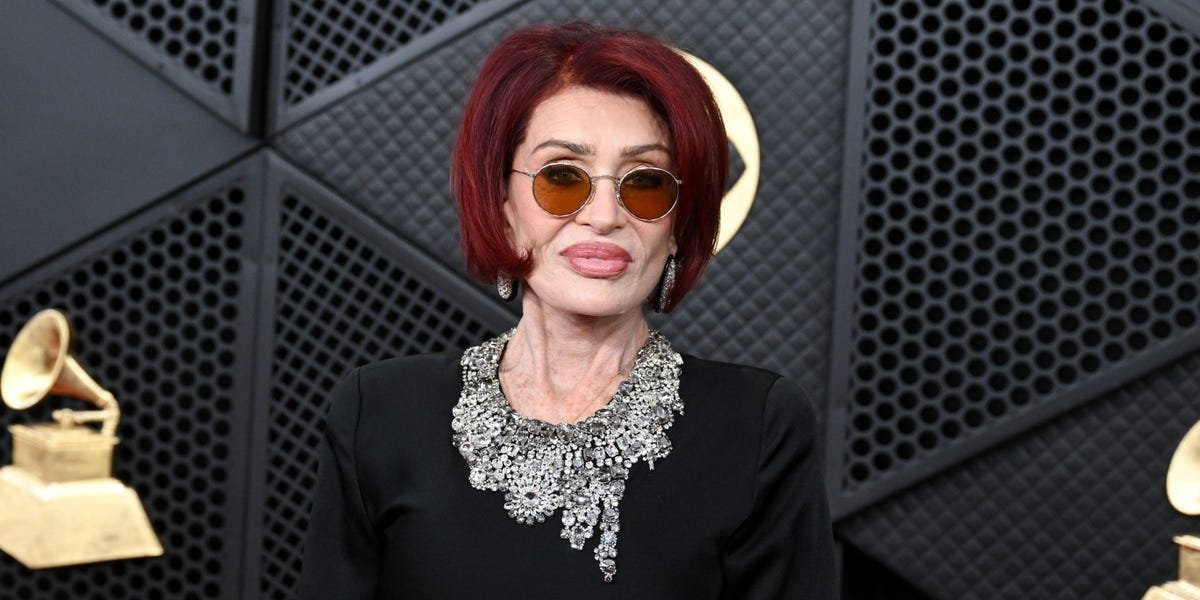
Sharon-Osbourne-73-says-she-cant-start-her-day-until.jpeg

Sharon Osbourne, 73, says she can’t start her day until she does this one thing

Before Sharon Osbourne, 73, begins her morning beauty ritual, there’s something else she must do.

“The morning routine has to be the news, the world news. I’m, like, addicted to it,” Osbourne told host Bunnie XO on her “Dumb Blonde” podcast. “I’ll check Instagram, check my emails, and then I start with the ice on the face.”

The TV personality and wife of Black Sabbath front man Ozzy Osbourne, who died in July, is specific about how she uses ice in her skincare routine.

“I do the bowl, and then I do it in, you know, in a little baggie, and just keep doing it. And then I do a face mask, and then I start the day,” she said.

Osbourne is equally meticulous about her hair, refreshing her signature red shade “every 10 days.”

But keeping the bold color vibrant isn’t easy since it gets “everywhere,” she said.

“It’s a nightmare. My neck is red. Everything I wear is red. The pillowcases,” Osbourne said.

She added that the closest she ever came to going blonde was getting highlights in the ’80s, but red is the shade she keeps coming back to because her mother was a redhead.

“Of course, you know, it’s gray or white or whatever color it is underneath. And I tried doing that, and that was just miserable,” Osbourne said.

“I would look at my reflection sometimes, like in a shop window. I’d go, who the fuck is that? It’s me. Like, no thanks,” she said.

Osbourne isn’t the only public figure who says reading the news is a nonnegotiable part of their mornings.

Google CEO Sundar Pichai says he starts his day by reading Techmeme, a site that aggregates tech news from across outlets.

Martha Stewart, 84, says she wakes up at around 4:30 a.m. and spends the first part of her morning reading the news and doing puzzles.

Peter Warwick, CEO of Scholastic, says he begins each morning by browsing news sites and checking for updates on his favorite English Premier League team, Arsenal.


Source link

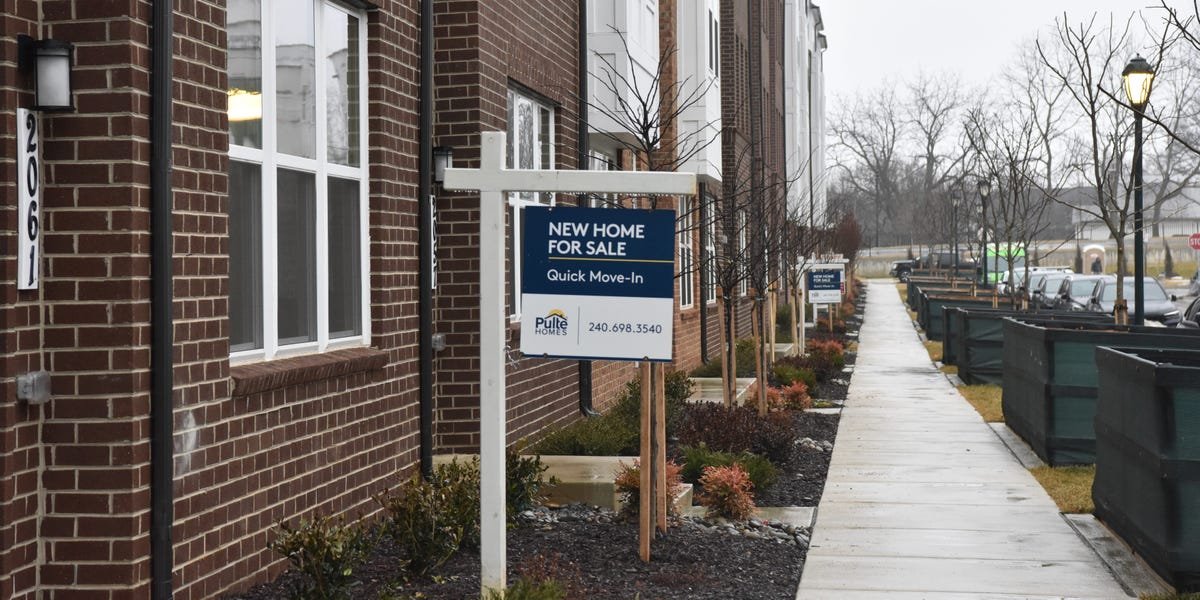
Mortgage-rates-are-back-below-6-the-lowest-since-2022.jpeg

Mortgage rates are back below 6%, the lowest since 2022

Prospective homebuyers are seeing the lowest 30-year fixed mortgage rates since 2022.

The average rate on the 30-year fixed mortgage fell to 5.99% on Monday, according to the Mortgage News Daily Rate Index.

The drop ties the lowest level since 2022 and marks a sharp decline from 6.89% a year ago. In late 2023, rates surged to around 8%, the highest level in years.

The move came after a stock-market sell-off pushed investors into bonds. That lowered Treasury yields and mortgage rates as markets assessed the Supreme Court’s Friday ruling on President Donald Trump’s use of emergency tariff powers.

Lower home borrowing costs are expected to fuel refinancing activity, which has already been gaining momentum.

Applications to refinance a home loan are up roughly 130% from a year ago, according to the Mortgage Bankers Association’s survey for the week ending February 13.

Still, falling rates have yet to translate into a meaningful pickup in homebuying. Pending home sales declined 0.8% in January from the previous month and slipped 0.4% year over year, according to the National Association of Realtors.

“Improving affordability conditions have yet to induce more buying activity,” said Lawrence Yun, the chief economist at NAR, earlier this month.

But with mortgage rates near 6%, roughly 5.5 million additional households now qualify for a loan compared with a year ago, he said.

“Most newly qualifying households do not act immediately, but based on past experience, about 10% could enter the market—potentially adding roughly 550,000 new homebuyers this year compared with last year,” Yun added.

Beyond mortgage rates, other affordability pressures may also be easing.

As Business Insider’s James Rodriguez reported last month, median home prices were largely flat toward the end of 2025, and wage growth is expected to outpace price gains this year — potentially improving affordability further.


Source link

Katherine Li, West Coast breaking news reporter at the Business Insider.

The author of a viral AI report warns that blue-collar jobs won’t be safe from an AI-driven recession

The coauthor of an AI research paper is speaking out after his work triggered a global stock sell-off.

Citrini, a firm focused on thematic equity investing, alongside Alap Shah, CEO of Littlebird.ai, theorized a future where, instead of transforming the economy in a positive way, the AI boom erases white-collar jobs and severely reduces the spending power of those workers, and eventually stunts economic growth.

On Monday, Shah told “TBPN” podcast hosts John Coogan and Jordi Hays that despite how well it seems to be going for blue-collar jobs at the moment in terms of growth and the lack of mass layoffs, these jobs won’t be safe if white collar jobs go away because ultimately, there is only “one labor market.”

“Let’s say in our scenario, we talk about 5% of folks might get fired in a couple of years,” said Shah. “Those 5%, if there aren’t white collar jobs for them to relocate into, then they’re going to have to move into the gig economy and the blue collar labor force.”

“And so that puts pressure on the entire labor market, not just the white collar one,” Shah added.

Shah and Citrini published a report on Sunday, written from a futuristic point of view set in 2028, that predicts a negative domino scenario triggered by the AI boom. The research theorizes that AI will kick off a mass white-collar layoff too quickly, which will then deal a blow to the metro housing and mortgage market, and eventually lead to a global stock sell-off and a widespread recession in all sectors. In this scenario, the paper said, AI growth could also lose momentum due to a lack of funding.

“The system turned out to be one long daisy chain of correlated bets on white-collar productivity growth,” the paper theorizes. “The November 2027 crash only served to accelerate all of the negative feedback loops already in place.”

Shah elaborated on these concerns on “TBPN.” When asked what he thinks of the current growth in the health and education sectors, Shah said most of it could be spurred by government spending, which would go away if personal income declines.

“Those sectors continue to grow because government spending grows,” said Shah. “But again, gets very circular if government spending is coming primarily from taxes and primarily payroll taxes because the average worker pays a lot more in taxes per dollar than the average corporate does.”


Source link

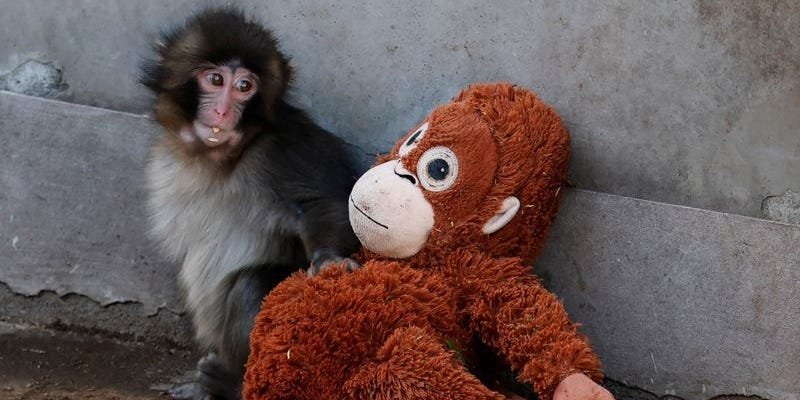
This-Ikea-plushie-is-swinging-off-the-shelves-because-of.jpeg

This Ikea plushie is swinging off the shelves because of Punch the sad viral TikTok monkey

A sad baby monkey has turned an Ikea plushie into a viral must-have.

Punch, also known as Panchi-kun, is a seven-month-old Japanese macaque born in July. His mother abandoned him shortly after birth, and he was later rejected by other monkeys at Ichikawa City Zoo in Japan. To soothe him, zookeepers gave him a brown orangutan plush from Ikea.

Videos of Punch clinging tightly to the orangutan toy — hugging it after being brushed off by an older monkey, carrying it everywhere, even fending off curious monkeys who try to grab it — have racked up millions of views on TikTok. The clips turned the lonely macaque into an internet star.


monkey toy punch

Punch found comfort in an Ikea plush.

JIJI PRESS / AFP via Getty Images


A Japanese hashtag that translates to “hang in there, Punch” has also been trending, with users around the world rallying behind the baby monkey.

Viewers identified the plush as Ikea’s Djungelskog orangutan, and now it’s swinging off shelves at top speed.

Javier Quiñones, commercial manager at Ingka Group, which operates Ikea stores worldwide, told Business Insider on Monday that Ikea has “seen a clear increase in sales of the DJUNGELSKOG orangutan toy, particularly in Japan, the US, and South Korea” over the past few days.

The toy is sold out in some stores in those regions, and the company is “making sure that the toy is back in stock as soon as possible,” Quiñones said.

“The toy has long been one of our most sought-after across markets, and the story from Japan is now giving it a little extra love,” he added.

An Ikea spokesperson said the Japan team has reached out to the zoo to explore ways to help Punch.

“On February 17, IKEA donated several soft toys, including additional orangutans, as well as storage items to support Punch and enhance areas for children visiting the zoo,” the spokesperson said.

“Just like the zookeepers, we sincerely hope that Punch will soon become comfortable in an environment with the other monkeys and no longer need the soft toy,” the spokesperson added.

The orangutan plushie retails for $19.99 in the US, both in stores and online. Business Insider’s check of Ikea’s website on Tuesday found the toy out of stock at most US locations, with only about six stores still offering click-and-collect or in-store purchases.

The frenzy also spilled onto resale platforms, where prices climbed quickly.

A search on eBay on Tuesday showed multiple listings for the orangutan plush, with one seller asking as much as $328, more than 16 times the retail price.


Source link

These-companies-want-their-tariff-money-back-from-the-Trump.jpeg

These companies want their tariff money back from the Trump administration, and they’re suing

BYD’s lawsuit marks the first from a Chinese carmaker against Trump’s tariffs.

The EV giant filed the suit on February 9 and detailed nine executive orders related to trade that affected the company, including tariffs on cars, auto parts, aluminum, steel, and exports from China.

In the complaint, BYD wrote that it is seeking a refund of “all IEEPA tariffs paid to date” and “all IEEPA tariffs that may be paid in the future.”

The company also said that aside from China, its imports into the US from Canada, Germany, Mexico, and Poland were also affected.

The Chinese carmaker does not sell passenger cars in the US, but its business here includes buses, commercial vehicles, batteries, energy storage systems, and solar panels. According to its website, the company’s truck plant in Lancaster, California, employs 750 workers.


Source link