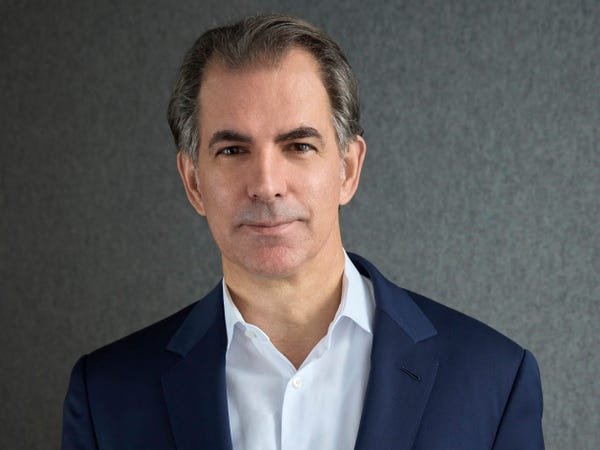
Lauren Crosby

My 12-year-old has made over $5,000 selling stickers she designed. She’s donated part of her earnings to local charities.

This as-told-to essay is based on a conversation with Tom Landry. It has been edited for length and clarity.

It was during the pandemic that my daughter Maddie’s creativity really started to blossom. She loved doodling in particular, giving each of the characters she created back stories.

When she was 7, she asked me if she could create stickers featuring her characters, for herself and to give to her friends.

My wife and I could have just done this for her, but we decided to involve Maddie in the process. We all researched sticker companies to find the ones that could help us get the job done. Once we decided on a company to use, we filled out the interest forms and learned to scan the characters together to send to the company.


Girl posing with sticker

Maddie Landry’s friends loved her designs.

Courtesy of Tom Landry


At the beginning, it was purely about having fun. None of us were thinking about this as a business opportunity.

Her friends loved her designs

When Maddie took the stickers into school, her friends loved them, asked her how she had done it, and gravitated toward the characters on the stickers and their corresponding stories.

When she was 8, Maddie said she wanted to have a lemonade stand and sell some of her stickers at the same time. People bought them, which launched Maddie’s business selling her sticker creations.


Girl and dad on lemonade stand

Maddie Landry started selling her stickers at her lemonade stand when she was 8.

Courtesy of Tom Landry


From the lemonade stand, she donated a portion of her profits to a local charity, setting a precedent for her future business growth.

Giving back to the community has always been a priority in our family, something Maddie has grown up with, so it was no surprise that she wanted to do the same with her own business.

We often say, “Do well, but do good.” Maddie clearly took this on board. She had internalized behaviors she’s seen at home for years.

We started a business with her

The initial interest sparked by her stickers led Maddie to work with her mom and me to learn how to set up a business.

How do you set up a website? How do people order online? Where can you sell your products? What do you do with the profit?

We answered all of these questions, and more, together.

Even though I’m an entrepreneur, it was fun to just play again and be creative with my daughter. It’s been incredibly energizing for me.

I think that as adults who are often busy, our innate artist can disappear, and that attitude of “anything is possible” dissipates. It’s kind of sad.


Girl on her sticker stand

Tom Landry’s daughter has donated 10% of her earnings to local charities.

Courtesy of Tom Landry


I’ve been working for 35 years, and it’s easy — almost subconscious — to assume that because something has been done a certain way for a long time, that’s the way it must continue to be done. Watching Maddie approach her work with curiosity, optimism, and a willingness to try things without overthinking them pushed me to look at my own business through a much fresher lens.

Even more importantly, I’ve had the chance to nurture Maddie’s creativity, empower her to take control of what she wants, and help her learn about her agency. These are such great life skills.

She has donated 10% of her earnings to local charities

Her business, Maddie Moo Designs. has continued to grow. She has sold stickers online, in local souvenir shops, and at events. She’s learned so much about business along the way.

Since starting, Maddie has generated more than $5,000 in sales and has already donated over $500 of her earnings to Maine charities.

We’ve encouraged her to think about how she’ll use the money she’s made, suggesting four “buckets” — the fun bucket, the giving back bucket, the investing in the business bucket, and the savings bucket.

One of Maddie’s favorite purchases with the money she has made is a black North Face coat that is fluffy and warm on the inside. She’s also bought squishies and books.

Maddie didn’t need pressure from me or perfectionism to succeed; she just needed exposure, possibly, and look where that has taken her. Kids are capable of so much more than we assume.




Source link

The-best-and-worst-looks-celebrities-wore-to-the-2026.jpeg

The best and worst looks celebrities wore to the 2026 BAFTAs

  • The 2026 BAFTA Film Awards were held at the Royal Festival Hall in London on Sunday.
  • Chase Infiniti and Michael B. Jordan were among the stars who wore standout red-carpet looks.
  • Other celebrities missed the mark with their outfits, including Kirsten Dunst.

The biggest film stars of the year gathered in London on Sunday to celebrate the big screen.

Celebrities, along with the Prince and Princess of Wales, attended the BAFTA Film Awards at the Royal Festival Hall in London, where “One Battle After Another” and “Hamnet” took home top awards.

There were plenty of stylish looks on the red carpet, but there were also some lackluster fashion moments.

Take a look at the best and worst outfits celebrities wore to the 2026 BAFTAs.

Chase Infiniti’s gravity-defying skirt elevated her strapless gown.

Chase Infiniti attends the 2026 BAFTA Film Awards in February 2026.

Samir Hussein/WireImage/Getty Images

The “One Battle After Another” nominee made her BAFTA debut in a maroon Louis Vuitton gown.

The strapless dress hugged her figure before flaring at the knee, creating the illusion that her skirt was floating around her ankles.

Coordinating pumps and De Beers jewelry, including bejeweled dangly earrings, completed her avant-garde ensemble.

The fabric of Jessie Buckley’s gown didn’t suit the silhouette.


Jessie Buckley attends the 2026 BAFTA Film Awards in February 2026.

Jessie Buckley attends the 2026 BAFTA Film Awards in February 2026.

Samir Hussein/WireImage/Getty Images

Buckley, who won a BAFTA for her performance in “Hamnet,” walked the red carpet in a bright-blue Chanel gown that was custom-designed by Matthieu Blazy.

The gown cinched at Buckley’s waist and dipped in the back, flowing into a column-style, floor-length skirt. Silver brooches sat on each of her shoulders for a touch of glamour.

The silhouette was pretty and evoked a Grecian feel, but the dress was made of heavy velvet. The silhouette and fabric didn’t look right together, and the dress may have popped more on the red carpet if it had been made of something like chiffon instead.

Buckley’s costar Paul Mescal and his girlfriend Gracie Abrams looked effortlessly chic on the red carpet.


Paul Mescal and Gracie Abrams attend the 2026 BAFTA Film Awards in February 2026.

Paul Mescal and Gracie Abrams attend the 2026 BAFTA Film Awards in February 2026.

Karwai Tang/WireImage/Getty Images

Mescal and Abrams made their red-carpet debut as a couple in style at the BAFTAs.

Mescal, who was nominated for best supporting actor for “Hamnet,” wore a Prada suit. His jacket was unbuttoned, he wore no tie, and his shirt cuffs were folded over for a relaxed look.

Abrams also wore black, choosing a Chanel gown. Her dress was adorned with sparkly embellishments, with the neckline trimmed with green beading and the gown itself adorned with fish.

Their stylish outfits went well together, but didn’t feel too matchy-matchy.

Michael B. Jordan’s charcoal jacket was the star of his look.


Michael B. Jordan attends the 2026 BAFTA Film Awards in February 2026.

Michael B. Jordan attends the 2026 BAFTA Film Awards in February 2026.

Samir Hussein/WireImage/Getty Images

Nominated for his performance in “Sinners,” Jordan wore a Prada suit to the BAFTAs.

His double-breasted, charcoal jacket had padded, pointed shoulders. Jordan paired it with a black blouse, black tie, and slim-fitting black pants.

A silver brooch brought a touch of glamour to the tailored suit.

Kirsten Dunst’s pink jacket overpowered the rest of her ensemble.


Kirsten Dunst attends the 2026 BAFTA Film Awards in February 2026.

Kirsten Dunst attends the 2026 BAFTA Film Awards in February 2026.

Karwai Tang/WireImage/Getty Images

Dunst arrived at the awards show in a Valentino ensemble. The look included a white blouse, a black skirt with a cutout on the waist, strappy black heels, and a pink jacket.

Her jacket featured voluminous, bubbled sleeves and thick lapels on either side of its opening for a dramatic look.

There were pretty elements to the outfit, but the jacket distracted from them. She may have looked more stylish on the red carpet if she had just left the jacket at home.

The dramatic cutout on Renate Reinsve’s gown made it stand out.


Renate Reinsve attends the 2026 BAFTA Film Awards in February 2026.

Renate Reinsve attends the 2026 BAFTA Film Awards in February 2026.

Samir Hussein/WireImage/Getty Images

Reinsve attended the BAFTAs in a Louis Vuitton gown.

The strapless, black gown had a cutout on one side of the bodice, leaving her torso exposed in a triangle shape. The skirt flowed to the ground and into a subtle train. A silver choker sat on her neck, completing the simple but beautiful outfit.

The actor, who was nominated for her performance in “Sentimental Value,” wore one of the most fashionable looks of the night.


Source link

I-live-between-New-York-and-Puerto-Vallarta-There-are.jpeg

I live between New York and Puerto Vallarta. There are burned-out cars in my neighborhood — but I won’t leave.

This as-told-to essay is based on a conversation with Steven Polito, 49, a drag performer from New York with the stage name Hedda Lettuce. The following has been edited for length and clarity.

I am a native New Yorker who lives in Puerto Vallarta during the winter.

As a drag performer, it’s a great place to be — it’s a very LGBTQ+ friendly community here. There’s a lot of theater, a lot of cabaret, and great restaurants. It’s also walkable, which I love.

The moment you leave the house here, it’s like one big “hello.” That’s what’s really special about this place.

It’s why I come here — and why I’m still going to come back. Being part of a community means staying when things are tough.

There was burned-out car after burned-out car

I went to the gym at 8:30 a.m. and I was struck by how unusually quiet it was. Then, my friend at the gym told me the city is under attack by a cartel and I had to stay put.

When I left around 10:00 a.m., it was a very different scene.

Everyday life was juxtaposed against horrendous property damage. There was an older woman sweeping leaves in the street, while burned-out car after burned-out car was in flames.

My neighborhood was particularly hard-hit. One neighbor pointed out a burned out car that belonged to another neighbor who’s an Uber driver with two young children. That was the bulk of his income.

My nerves are shot a bit from the sensory overload of all of it. I’ve had some tough experiences, but never anything like this.

The strong community keeps Puerto Vallarta going

As I walked home from the gym, I saw a restaurant that I go to three, four times a week. They offered me coffee. Despite everything, they were trying to be good neighbors.

I saw people were cleaning up the burnt out cars: it’s neighbors taking care of neighbors.

I could go back to New York City, but we have to think in a less cavalier way. People who live here don’t have the luxury of getting up and going.

During COVID, I stayed in Puerto Vallarta the entire time instead of going back to the States. We all thought it was going to just crumble around us. But somehow, everyone found their way and part of that was through the community.

The strength of the community, that’s what’s so great about Puerto Vallarta.

I’ve experienced it firsthand and that’s what keeps it going. People persevere here.


Source link

Money-managers-are-hungrier-than-ever-for-obscure-data-to.jpeg

Money managers are hungrier than ever for obscure data to give them an edge

Sophisticated money managers have long turned to intel from credit-card receipts or satellite images of retailers’ parking lots into an investing edge, but this data is increasingly becoming table stakes.

Hedge funds and other money managers spent $2.8 billion on alternative data in 2025, according to a new report from consultancy Neudata, a 17% jump from the year before. It’s more than double what asset managers spent on alternative data in 2021, which includes a wide range of non-traditional information sources.

The report projects that the total spend on alternative datasets could jump to more than $23 billion in the consultancy’s bull case in 2030 and just under $8 billion in the bear case. The driver for this growth — and how much will come over the rest of the decade — will be based on how many new entrants, both buyers and sellers, enter the market, Daryl Smith, head of research at Neudata, said.

“Plenty of funds have only stuck their toes in,” Smith said, and “several hundred” new datasets were launched last year alone.

AI is also changing how funds consume and ingest alternative data sources, the report notes.

Now that structuring and cleaning raw data has become a faster, cheaper task thanks to AI tools, asset managers are looking for direct hook-ups to alternative data vendors’ feeds. It’s also opened up alt data to a range of managers that were once unable to pull meaningful insights from the data because of technical challenges.

These new funds could be a big driver of the industry’s growth in the coming years, from the demand side, Smith said.

More companies could be selling data

Some new data vendors might not be start-ups that stumbled onto something intriguing, but instead familiar brand names. Established corporations that have seen web-scraping bots take their data to sell are now getting into the game, Smith said.

He said Neudata’s consulting team, which helps new buyers and sellers navigate the market, has gotten outreach from big-name companies recently, though he said he couldn’t reveal the names of the potential sellers. Trustpilot, the consumer review website, is one example of a firm that has begun selling its data and has presented at Neudata conferences in the past, Smith said.

Unsurprisingly, data sources tracking the growth of artificial intelligence were in high demand last year. The report points out vendors such as Aterio, which track data center construction and power usage, for example.

Still, the most popular type of dataset, of which there are thousands, is web-scraping offerings, which accounted for 15% of the total spend in 2025, roughly in line with 2024.


Source link

My-dad-died-at-56-and-never-made-it-to.jpeg

My dad died at 56 and never made it to retirement. The 3 lessons he taught me changed my own plans and perspective.

In 2023, my dad called to tell me he’d dropped down to four days a week at work.

He’d had a long career as an insurance underwriter, though it didn’t define him. At one point, he even left the profession to become a plasterer for a decade to better balance out his schedule. Still, it served him well enough.

“You really are getting old, then,” I joked. Dad laughed — he was only in his 50s.

We talked about his retirement and how he planned to wind down gradually over the next few years, before pulling the trigger and paying a full-time job’s worth of attention to the golf course.

That step was the first, and last dad took toward retiring. A year later, he told me he had cancer.

His diagnosis marked the beginning of a period in which I spent every day with him. He had been exceptionally fit, competing in triathlons, marathons, and Ironman races, but went from Hyrox to hospice care in just eight weeks.

Then on June 19, 2024, at the age of 56, Dad’s oesophageal cancer snatched away his future, and any prospect of a retirement.

I later realized our conversations during his illness were a textbook of the values by which he had lived his life. I’d heard him talk along similar lines in the past, but it wasn’t until I was lucky enough to spend each day for two months with him as his peer that I was able to distill them into three lessons.

Now, at the age of 32, these guide me in my career and life, and frame the way I think about retirement.

Live as if you might never make it


Man jumping in the air in front of a mountain

Dad while doing the Tour De Mont Blanc.

Callum Macauley-Murdoch


It may sound a morbid start, but I see this principle as both pragmatic and a call to action.

I see it as pragmatic because, of course, it is true: You might very well not make it to your retirement. And thinking about death in this way can help you take important practical steps, like ensuring you have an updated will and, at the very least, start thinking about granting powers of attorney.

And I see it as a call to action because, when loss helps you understand that life is precarious, it shines a light on how we often live without confronting the inevitability of death.

With that understanding, a more fulfilling life can emerge years earlier than it might otherwise have; one that, perhaps, you dreamed might come in retirement.

This principle led my dad to travel widely, a habit he passed to me. I’m due to visit New Zealand soon, the place he unknowingly took his final big trip. It also led him to take up the sports that piqued his interest over the years, and achieve a genuine sense of contentment.

It took me a lesson in the brutality of life, and the illuminating chaos of grief, to truly understand the importance of living it.

Build a life that gives you choices


Man on a bicycle

Dad finishing an Ironman in Wales.

Callum Macauley-Murdoch


One of the pitfalls of the first lesson is that, if taken literally, it could lead to financial ruin.

If it were a certainty I’d never make it to retirement, I’d spend everything I had now. However, in a classic catch-22, living life like I’d never make it there would delay my retirement in perpetuity.

So instead, I keep an eye on the future and try to resist the urge to part with all my money in exchange for experiences now, so that I can have some freedom of choice when I retire.

For Dad, working hard and getting an education meant having choices, and that influenced many of my decisions in life, including the one to pursue a career in corporate law.

In the end, that didn’t align with the life I wanted, but the experience gave me the skills and financial backing to choose a different legal career for myself.

Because of my job and savings I’ve built up from it, I had choices when Dad died. I was able to pause, reassess my life, and temporarily step away from my busy career.

During that time, I thought about how he used to ask me about work and I’d sometimes tell him how I wished I could just retire now to travel the world and write. He’d remind me I had a long way to go.

But now, those passions I always thought I’d save for later, like planning a trip to New Zealand or getting my master’s in creative writing, have become present pursuits.

Soon enough, though, I’ll pick up some legal work again. Why? Because unless I write a bestselling novel by the end of the year, I still want choices in retirement, should I make it there.

Find the adventure in everything


Man with hat on a mountain leaning on a stone

My dad on a hike at Arthur’s Pass in New Zealand.

Callum Macauley-Murdoch


Dad took a keen interest in all aspects of life, and didn’t take much of it seriously — because of that, not in spite of it, he was still successful in much of what he did.

This lesson applies to every aspect of life, including retirement, which I’m viewing as simply another opportunity to experience a new pocket of life.

It even applies to terminal illness. When my dad was nearing the end of his life, he said something in an attempt to comfort me, which has ended up being the most transformative lesson of the three.

“Life is one series of adventures. This is just another one.”

That impacted me profoundly, and taught me to seek joy even in life’s darkest corners.

These days, I view my retirement, career, and life much differently


Author Callum Macauley-Murdoch and his dad

Dad and I at my wedding.

Callum Macauley-Murdoch


Losing Dad changed how I think about my life, career, and the very concept of retirement.

Most of all, it prompted me to stop deferring what I truly wanted to my final years while still setting myself up to have choices in the future.

Now that I’m taking incremental steps towards something I’d be happy to do well into my old age, the dream of retirement crosses my mind less often.


Source link

Dan DeFrancesco

Despite the setback, the president isn’t backing down.

Call it De-Liberation Day.

The Supreme Court blocked a significant chunk of President Donald Trump’s sweeping tariff policy on Friday. But instead of closing the chapter, it’s opened an entirely new book that no one seems to understand.

Let’s break it down:

Return of the tariffs. Despite the setback, the president isn’t backing down. This weekend, he announced plans to impose a 15% “worldwide” tariff. That’s thanks to Section 122, which allows him to briefly implement tariffs broadly. However, they can only remain in place for up to 150 days. Ultimately, he’ll likely need to work with Congress for something more permanent.

The refund issue. One of the biggest questions is what happens to the $133 billion in taxes collected from the struck-down tariffs. More than a thousand companies preemptively filed lawsuits to claw back that money.

The process isn’t as simple as the US government cutting a check. It’s bound to get messy and involve lots of lawyers. Companies will also need to weigh the benefits of fighting for a refund against the risks of angering the current administration.

Some Democrats are calling on the administration to issue $1,700 refunds directly to Americans. Shoppers shouldn’t expect the ruling to mean prices are coming down soon, Goldman Sachs says.

Market reaction. It’s a double-edged sword for investors. The ruling is likely to set a legal precedent that’ll make it harder for the administration to impose larger tariffs than before. That’s good for most businesses. Companies hit with tariffs could also get refunds, which would serve as a nice cash infusion.

On the other hand, lowering tariffs and the revenue they generate puts the spotlight firmly on the federal government’s growing pile of debt. That could push bond yields higher and weigh on stocks.

Jefferies mapped out some consumer stocks that could benefit.

The broader economic impact. Since tariffs will remain in some form, it’s tough to make a definitive statement. However, the most recent data from the past year shows a clear trend: The economy is growing, but not everyone is benefiting.

It’s worth considering that a lot of the dire economic predictions people had about Trump’s policies haven’t materialized. A think tank offered reasons that’s the case.

So who comes out on top? Even with so much still up in the air, we identified some potential winners and losers from the latest shake-up. (Hint: Lawyers are going to be just fine.) Meanwhile, many COOs are likely pulling out their hair from the tariff whiplash affecting their supply chains.

We’ll get more clarity on Tuesday night during Trump’s first State of the Union of his second term. Just don’t expect a warm welcome for some of the Supreme Court justices.


Source link

Wall-Streets-Rainmakers-The-20-bankers-who-hammered-out-2025s.jpeg

Wall Street’s Rainmakers: The 20 bankers who hammered out 2025’s biggest deals

The battle for the future of Warner Bros. Discovery has become Wall Street’s defining deal of the year.

As Netflix and Paramount fight for control of the media giant, eight of 2025’s top 20 investment bankers are advising one side or the other — an unusually high concentration of firepower around a single, still-unsettled transaction. After a sluggish stretch for M&A that’s recently turned around, the impact this one megalithic deal could have on the coffers of the banks involved shouldn’t be taken lightly.

For the seventh consecutive year, Business Insider has partnered with MergerLinks, a UK-based deal-tracking organization, to rank the top bankers in North America for the prior year, evaluating them by overall transaction value.

This year’s list is filled with new names and faces. Nine are on the list for the first time. Two are from Wells Fargo, a feat for the retail-first lender that has only recently made competitive inroads in investment banking, and is primed for growth after the government last year lifted a strict asset cap tied to Wells’ fake-accounts scandals.

The firm clinched a major 2025 win when it became Netflix’s primary advisor on its proposed takeover of Warner Bros. Discovery. The competing offer, from Paramount, is represented by another dealmaker on this list: RedBird’s Gerry Cardinale.

Sam Britton and Timothy Ingrassia, Goldman Sachs’ chairman of global TMT banking and co-chair of mergers and acquisitions, respectively, helped the Wall Street giant fend off competition to retain its No. 1 position on the year’s M&A league table, according to data from LSEG, another industry tracker. Ingrassia’s enviable list of mandates included Kenvue’s nearly $50 billion sale to Kimberly-Clark. And Anu Aiyengar, last year’s top rainmaker and the famed head of global advisory and M&A at JPMorgan Chase, returns to the list after helping steer the firm to more than $1.2 trillion in overall deal value, per LSEG.

Overall, these dealmakers accounted for a significant share of last year’s $4.6 trillion in worldwide M&A, a staggering 50% surge from the year prior, LSEG found. Large, strategic tie-ups were at the center of the rebound.

To find out which bankers helped their firms benefit from last year’s boom, MergerLinks tracks publicly announced deals and calculates deal values on a net basis, including both equity and debt. To make the individual league table, a banker must have been the lead advisor to one of the transaction parties. Transaction values are converted from British pounds to US dollars at the average 2025 exchange rate. Some deal prices announced in dollars throughout the year may not match up.

To see more dealmaker rankings, visit the MergerLinks website. For more on its methodology and criteria, click here.

No. 1: Jeffrey Hogan, Wells Fargo

Wells Fargo’s Jeff Hogan.

Courtesy of Wells Fargo.

Title: Head of global mergers and acquisitions

Number of deals: 5

Total deal value: $153.4 billion

Hogan joined Wells Fargo in May 2023 after a 27-year career at Morgan Stanley, where he served as the star technology banker and co-head of global technology M&A. Since his arrival, he has been a primary architect of the bank’s meteoric rise in the advisory rankings, helping Wells Fargo jump from 17th place in 2024 to 9th place in 2025, according to LSEG’s league table for global M&A. This year marks Hogan’s inaugural appearance as a rainmaker.

His 2025 deals included:

  • Advised Netflix on its more than $80 billion contested blockbuster merger with Warner Bros. Discovery.
  • Advised Cox Enterprises on its roughly $35 billion strategic consolidation and merger with Charter Communications.
  • Advised FuboTV on its business combination with Disney’s Hulu + Live TV.

No. 2: Gary Posternack, Barclays


Headshot of Gary Posternack at Barclays


Barclays

Title: Chairman of global M&A

Number of deals: 7

Total deal value: $149.2 billion

After a decade as global head of M&A at Barclays, Posternack became the practice’s chairman in 2024. Spending more time advising top clients has paid off, as Posternack is on the Rainmakers list for the second year running, adding nearly $200 billion in deal value in a career and ranking No. 2 overall this year. Posternack’s decorated career spans nearly four decades. After getting his start at Dillon, Read & Co. in the 1980s, he joined Lehman Brothers in 1995; Barclays acquired Lehman in 2008 during the financial crisis.

His 2025 deals included:

  • Advised the special committee of Paramount’s board of directors on its bid for Warner Bros. Discovery, in competition against rival bidder Netflix.
  • Advised DigitalBridge, an asset manager focused on digital infrastructure like data centers, cell towers, fiber networks, on its sale to SoftBank for $4 billion.
  • Advised Waters, a manufacturer of chemistry software and instruments, on its merger with medical tech company BD’s biosciences and diagnostic solutions business in a nearly $18 billion deal.
  • Advised Global Payments on its acquisition of Worldpay from GTCR and FIS for $24 billion.

No. 3: Steven Baronoff, Bank of America


Steven Baronoff

Bank of America’s Steven Baronoff.

Courtesy of Bank of America

Title: Chairman of global M&A

Number of deals: 9

Total deal value: $124 billion

Baronoff has been chairman of global M&A at Merrill Lynch since 2000, overseeing the business. He originally joined Merrill Lynch in 1986 and has held various leadership roles, including head of retail and consumer M&A. His 2025 performance was marked by high-volume advisory roles in the transportation, consumer goods, and infrastructure sectors. This is Baronoff’s second appearance on the Rainmakers list.

His 2025 deals included:

  • Advised Norfolk Southern in its roughly $85 billion acquisition by Union Pacific, a massive consolidation in the North American railroad industry.
  • Advised JDE Peet’s in its approximately $18 billion acquisition by Keurig Dr Pepper.
  • Advised Sempra Infrastructure Partners on the $10 billion sale of a 45% non-controlling stake to KKR.

No. 4: Sam Britton, Goldman Sachs


Sam Britton

Goldman Sachs’ Sam Britton.

Courtesy of Goldman Sachs

Title: Co-head of technology, media, and telecommunications investment banking

Number of deals: 11

Total deal value: 122.8 billion

Britton serves as the co-head of TMT investment banking at Goldman Sachs, where he has led the firm’s coverage of the red-hot tech sector for over two decades. Based in San Francisco, his 2025 activity encompassed transactions in the gaming, enterprise software, and artificial intelligence sectors. Notably, Britton acted as a key advisor during OpenAI’s transition to a public benefit corporation. This marks Britton’s fourth appearance on the Rainmakers list.

His 2025 deals included:

  • Advised Electronic Arts as financial advisor in its $55 billion all-cash take-private transaction by a consortium led by the Public Investment Fund (PIF) and Silver Lake.
  • Advised OpenAI as financial advisor on its recapitalization and the subsequent $40 billion sale of a stake to an investor group led by SoftBank Group Corp.
  • Advised Permira and Warburg Pincus as financial advisor in the $8 billion take-private acquisition they led of Clearwater Analytics.
  • Advised Niantic on the approximately $4 billion sale of its game business to Scopely.

No. 5: Daniel Mendelow, Evercore


Headshot of Evercore banker Daniel Mendelow


Evercore

Title: Co-head of US investment banking

Number of deals: 3

Total deal value: $116.5 billion

Mendelow joined Evercore in 2001 and has risen through the ranks over the past 25 years, advising on a slew of communications, media, and technology deals. Along with Naveen Nataraj (No. 15), he was promoted to co-lead US investment banking in 2020 and sits on the management committee. This is his first year on the Rainmakers list.

His 2025 deals included:

  • Advised Warner Bros. Discovery on its contested sale to Netflix.
  • Advised Cox Communications, the cable TV giant, on its $35 billion sale to telecom conglomerate Charter.
  • Advised Astound Broadband on its $400 million investment from PE firm Stonepeak.

No. 6: Chris Ventresca, JPMorgan


Chris Ventresca

Chris Ventresca

Courtesy of JPMorgan Chase

Title: Global chairman of investment banking and M&A

Number of deals: 9

Total deal value: $113.5 billion

Ventresca has spent more than three-and-a-half decades at JPMorgan and has served as global chair of JPMorgan’s investment banking business since 2020, according to LinkedIn. A third-time rainmaker, Ventresca has advised on deals across a range of industries, from industrials to consumer retail.

His 2025 deals included:

  • Advised on Warner Bros. Discovery’s contested sale to Netflix for more than $80 billion.
  • Advised on the $12 billion merger of paint producer Akzo Nobel and coatings company Axalta.
  • Advised Amphenol, a global electronics manufacturer, on its nearly $11 billion acquisition of network infrastructure provider CommScope’s connectivity and cable solutions business.

No. 7: Blair Effron, Centerview Partners


Blair Effron

Centerview’s Blair Effron.

Emilio Madrid

Title: Cofounder and partner

Number of deals: 7

Total deal value: $113.3 billion

Effron co-founded Centerview Partners in 2006, establishing the firm as a prominent independent advisor to the world’s elite corporations, offering big-bank power within the boutique banking landscape.

Over a career spanning four decades, he has advised on complex strategic mergers and high-profile activism defenses across the media, consumer, and industrial sectors. His 2025 activity included leading roles in major media-sector consolidations and significant industrial-technology acquisitions. This marks Effron’s fourth appearance on the Rainmakers list.

His 2025 deals included:

  • Advised Paramount as the lead financial advisor in its more than $80 billion transaction involving Warner Bros. Discovery.
  • Advised Emerson in its $17 billion acquisition of the remaining stake in the industrial software company Aspen Technology.
  • Advised Baker Hughes as joint lead financial advisor in its $14 billion acquisition of energy technology provider Chart Industries.

No. 8: Anu Aiyengar, JPMorgan


Anu Aiyengar

JPMorgan’s Anu Aiyengar

JPMorgan

Title: Global head of advisory and M&A

Number of deals: 13

Total deal value: $105.2 billion

Aiyengar has been at JPMorgan for decades and became the head of advisory and M&A in 2024. She’s advised on more than a trillion dollars’ worth of deals — from ones involving investment bank Morgan Stanley to ones involving luxury giant LVMH — and topped last year’s Rainmakers list.

In addition to being involved in initiatives to mentor women at JPMorgan, Aiyengar is considered one of the financial services industry’s most influential female leaders.

Her 2025 deals included:

  • Advised Kimberly-Clark in its $49 billion acquisition of Kenvue, a consumer health company.
  • Advised a group of investors, including Apollo and Brookfield Asset Management, on their $28 billion acquisition of Air Lease, an American aircraft leasing company.
  • Advised on the $9 billion sale of Skechers to private equity firm 3G Capital.

No. 9: David DeNunzio, Wells Fargo


David DeNunzio

Wells Fargo’s David DeNunzio.

Courtesy of Wells Fargo

Title: Chairman of Global M&A, Corporate & Investment Banking

Number of deals: 2

Total deal value: $97.1 billion

David DeNunzio has been at Wells Fargo since 2016. Before coming to Wells Fargo, he spent decades at Credit Suisse and years at Kidder, Peabody in the 1980s. This is DeNunzio’s first year on the Rainmakers list.

His 2025 deals included:

  • Advised Union Pacific on its about $85 billion acquisition of Norfolk Southern, a landmark consolidation of the North American railroad industry
  • Advised Chart Industries, an energy technology provider, on its $14 billion sale to Baker Hughes.

No. 10: Navid Mahmoodzadegan, Moelis & Co.


Headshot of Moelis & Co CEO Navid Mahmoodzadegan


Moelis

Title: CEO and cofounder

Number of deals: 10

Total deal value: $94.7 billion

Mahmoodzadegan helped founder Ken Moelis launch Moelis & Company in 2007 and has been central to building the boutique into a heavyweight advisor on marquee deals. A former attorney, he moved into investment banking at Donaldson, Lufkin & Jenrette in 1995 and joined UBS in 2001, rising to global head of media investment banking. The longtime co-president took the helm as CEO in October 2025, as Moelis shifted to executive chairman under a planned leadership transition. This is his first time on the Rainmakers list.

His 2025 deals included:

  • Advised Netflix on its contested acquisition of Warner Bros. Discovery for more than $80 billion.
  • Advised the investor group led by billionaire investor William Chisolm on its $6 billion acquisition of the Boston Celtics NBA franchise.
  • Advised PrizePicks, a sports gaming platform, on the sale of a majority stake to lottery operator Allwyn in a $3 billion deal.

No. 11: Timothy Ingrassia, Goldman Sachs


Timothy Ingrassia

Goldman Sachs’ Timothy Ingrassia.

Courtesy of Goldman Sachs

Title: Co-chairman, global mergers and acquisitions

Number of deals: 12

Total transaction value: $87.5 billion

Ingrassia is a 40-year veteran of Goldman Sachs, currently serving as the co-chairman of global M&A. He previously held leadership roles as the head of Americas M&A and the consumer retail group. His 2025 activity was defined by high-value transactions in the consumer health and retail sectors, as well as notable advisory roles in professional sports and media. This is Ingrassia’s sixth appearance on the Rainmakers list.

His 2025 deals included:

  • Advised Kenvue (formerly Johnson & Johnson Consumer Health) as lead financial advisor in its about $49 billion acquisition by Kimberly-Clark.
  • Advised Sycamore Partners in its $24 billion acquisition of Walgreens Boots Alliance.
  • Advised the buyer group led by billionaire investor William Chisholm in its nearly $6 billion purchase of the Boston Celtics.
  • Advised WK Kellogg in its $3 billion sale to Ferrero International.

No. 12: Nelson Walsh, Morgan Stanley


Nelson Walsh

Morgan Stanley’s Nelson Walsh

Morgan Stanley

Title: Vice chairman, investment banking

Number of deals: 1

Total deal value: More than $80 billion

Nelson Walsh has spent nearly four decades at Morgan Stanley, where he’s now the vice chairman of investment banking. This is Walsh’s first time on the Rainmakers list.

His 2025 deals included:

  • Advised Union Pacific on its roughly $85 billion acquisition of Norfolk Southern, a landmark consolidation of the North American railroad industry.

No. 13: Gerald J. Cardinale, RedBird Advisors


Gerry Cardinale

RedBird’s Gerald Cardinale.

Claudio Villa/AC Milan via Getty Images

Title: Founder and managing partner

Number of deals: 3

Total value of deals: $82.5 billion

Cardinale founded RedBird in 2014 after 20 years at Goldman Sachs, where he was a partner in the merchant banking division. The sports, media, and financial services investor has since made several high-profile investments, including David Ellison’s Skydance Media, and completed transactions, including the acquisition of Italian soccer club AC Milan. Under Cardinale’s leadership, RedBird has grown to manage about $14 billion in assets for major global institutions and family offices. This year marks Cardinale’s first time on the Rainmakers list.

His 2025 deals included:

  • Advised Skydance and Paramount on the more than $80 billion proposed merger with Warner Bros. Discovery.
  • Advised RedBird on its sale of a strategic stake in the professional cricket team Rajasthan Royals to investment firm Siguler Guff.
  • Advised B5 Studios on its launch and initial R&D partnership with Meta. Terms were undisclosed.

No. 14: Michael Klein, M. Klein & Co.


Photo of investment banker Michael Klein at a podium


Brendan Smialowski/Getty Images

Title: CEO

Number of deals: 1

Total deal value: $81.8 billion

Klein now runs his own boutique advisory firm, but he was once one of the most prominent big bank M&A chiefs. He joined Salomon Brothers in the 1980s, which became part of Citigroup in the late 1990s. At Citi, he held top roles in the investment bank and was viewed as a contender for CEO before his departure in 2008. He went on to launch M. Klein & Co., advising on high-profile transactions, and has also launched several special purpose acquisition companies, so-called “blank check” companies.

This is Klein’s first year on the Rainmakers list, thanks to his advisory role on the year’s most contentious megadeal:

  • Advised Paramount on its more than $80 billion bid for Warner Bros. Discovery, in competition against rival bidder Netflix.

No. 15: Naveen Nataraj, Evercore


Headshot of Evercore banker Naveen Nataraj


Evercore

Title: Co-head of US investment banking

Number of deals: 9

Total deal value: $75.6 billion

This is Nataraj’s third year on the Rainmakers list. The technology, media, and telecommunications banker joined Evercore in 2002 and, like Daniel Mendelow (No. 5), was promoted to lead US investment banking in 2020 and is a member of the firm’s management committee.

His 2025 deals included:

  • Advised Calpine, a power company, on its sale from investment firm Energy Capital Partners to energy conglomerate Constellation for $27 billion.
  • Advised Dayforce, an HR and workforce management software firm, on its $12 billion sale to tech investor Thoma Bravo.
  • Advised CommScope on the nearly $11 billion sale of its connectivity and cable solutions business to Amphenol, an electronic and fiber optic connectors manufacturer.

No. 16: Xavier Loriferne, JPMorgan


Xavier Loriferne

JPMorgan’s Xavier Loriferne

JPMorgan

Title: Head of financial institutions group M&A, Co-Head of media & communications M&A

Number of deals: 19

Total deal value: $72 billion

Loriferne has been at JPMorgan since 2006 and made the Rainmakers list for the first time last year, when he advised on deals involving BlackRock and Nippon Life.

His 2025 deals included:

  • Advised Rithm Capital on its $17 billion acquisition of Crestline, an alternative investment manager.
  • Advised on the $14 billion sale of Mr. Cooper, a mortgage servicer, to Rocket Companies, a fintech platform.
  • Advised EQT and communications infrastructure provider Zayo on their nearly $10 billion acquisition of Crown Castle’s fiber and small cell business.

No. 17: E. Eric Tokat, Centerview Partners


E. Eric Tokat

Centerview’s E. Eric Tokat.

Courtesy of Centerview

Title: Partner and co-president of investment banking

Number of deals: 21

Total value of deals: $71.2 billion

Centerview’s Tokat had one of the most active healthcare M&A years on Wall Street. Advising exclusively on the sell side, he worked across biotech, pharmaceuticals, and specialty therapeutics transactions, helping companies secure premium exits in a market that rewarded innovation and strategic consolidation. This year marks Tokat’s second appearance.

His 2025 deals included:

  • Advised Exact Sciences in its $21 billion sale to Abbott Laboratories.
  • Advised Verona Pharma in its roughly $10 billion sale to Merck.
  • Advised Blueprint Medicines in its approximately $9 billion sale to Sanofi, including additional contingent value rights.
  • Advised Amicus Therapeutics in its $5 billion sale to BioMarin.

No. 18: Robert Pruzan, Centerview Partners


Robert Pruzan

Centerview’s Robert Pruzan.

Courtesy of Centerview

Title: Cofounder and partner

Number of deals: 4

Total value of deals: $68.5 billion

In 2025, Pruzan’s performance was anchored by leading complex advisory projects across multiple industries simultaneously. Most notably, he led the year’s largest consumer healthcare divestiture: the $49 billion acquisition of Kenvue, formerly Johnson & Johnson’s consumer health division, by Kimberly-Clark. He has advised on more than $1 trillion worth of transactions over his career, Centerview says. This year marks Pruzan’s first entry on the list.

His 2025 deals included:

  • Advised Kenvue on its $49 billion acquisition by Kimberly-Clark.
  • Advised Mediobanca on Italian lender Banca Monte dei Paschi di Siena’s complex multi-billion euro tender and exchange offer for about $17 billion.
  • Advised Simple Mills in the natural snack brand’s roughly $800 million sale to Flowers Foods.
  • Advised Thirty Madison in its $500 million sale in late 2025 to Remedy Meds.

No. 19: Lily Mahdavi, Morgan Stanley


Lily Mahdavi

Morgan Stanley’s Lily Mahdavi

Morgan Stanley

Title: Co-head of M&A, Americas

Number of deals: 10

Total deal value: $66.8 billion

Mahdavi joined Morgan Stanley in 2012, after previous stints at Deutsche Bank and Citi. She’s spent her whole career working in mergers and acquisitions, and was promoted to co-lead Morgan Stanley’s M&A business in the Americas at the beginning of last year. This year marks her second as a rainmaker.

Her 2025 deals included:

  • Advised NOVA Chemicals, a petrochemical company, on its $13 billion sale to Borouge Group International, a joint-venture polyolefins producer.
  • Advised Global Payments, a company that provides payment technology and software, on its $24 billion acquisition of payment processing company Worldpay from GTCR and FIS.
  • Advised Pinnacle Financial Partners, a bank holding company, on its nearly $9 billion merger with the financial services company Synovus.

No. 20: Ben Frost, Goldman Sachs


Ben Frost

Goldman Sachs’ Ben Frost.

Courtesy of Goldman Sachs

Title: Chairman of investment banking

Number of deals: 10

Total value of deals: $61 billion

Frost’s elevation to chairman of investment banking in January followed his leadership on several of the consumer sector’s most significant recent transactions. Over the past year, he guided Goldman Sachs in completing the two largest deals in the consumer retail space, including the transformational nearly $49 billion Kenvue acquisition. This year marks Frost’s first appearance on the Rainmakers list.

  • Advised Kenvue on its $49 billion acquisition by Kimberly-Clark.
  • Advised Sycamore Partners on its roughly $24 billion acquisition of Walgreens.
  • Advised Lowe’s on its nearly $9 billion acquisition of Foundation Building Materials.


Source link

Why-OpenAIs-chairman-prefers-his-board-members-to-write-their.jpeg

Why OpenAI’s chairman prefers his board members to write their meeting prep without the help of AI

Sure, ChatGPT could help a board member write up a memo ahead of a meeting. But OpenAI’s chairman says there’s value to going old-school.

Bret Taylor, OpenAI’s board chair, said in a recent appearance on the “Uncapped with Jack Altman” podcast that he prefers concise but detailed written documents from board members over slide presentations. And he doesn’t want them relying on AI.

“I really like written documents for boards over presentations,” Taylor said. “You end up letting people synthesize information ahead of the board meeting, so you end up with more substantive discussions in the board room.”

Taylor, the former co-CEO of Salesforce and cofounder of AI startup Sierra, said that writing without AI is a worthwhile thinking exercise and helps board members clarify their thoughts.

His expectation for the boards he runs is that members have read the written material ahead of time, which helps keep things focused and substantive during the actual meeting.

“The main thing is it’s been read — and it’s been read ahead of time,” he said. “You end up with a meeting about the actual meat and potatoes of the topics, and you’re not staring at a bunch of sales numbers for the first time.”

Amazon cofounder Jeff Bezos is famously a big fan of meetings focused on a single memo prepared ahead time, but while Bezos preferred dense, 6-page memos, Taylor specifically favors concise material, arguing that brevity is a sign of careful thought — and respect to stakeholders.

“It’s like what’s that famous line — if I had more time, I would have written a shorter letter,” he added. “Like, spend the time because that’s actually how you can show respect to your stakeholders that you’re thinking about the strategic issues going on in your business.”

And while Taylor might not be a fan of leaning on AI for board meeting prep, that doesn’t mean he is dismissing the technology’s potential to be valuable in high-stakes situations.

“If you want a hot take, I think my intuition is regulators will start asking for agents,” he said. “The idea that you have a human set of controls over a regulated process will start to feel like a risk, rather than the risk being AI.”


Source link

The-mega-rich-are-moving-Heres-where-theyre-going.jpeg

The mega-rich are moving. Here’s where they’re going.

Andrew Rosener had already built a successful domain name brokerage when he and his wife found themselves asking a familiar question: Where do we want to live, not just work?

The answer turned out to be Portugal.

The American founder of MediaOptions, a domain broker, says the country checked every box: safe, sunny, affordable, and steeped in a culture that feels both European and Latin American. “There’s no other place like it,” he says. “Portugal created the single greatest immigration culture on Earth,” he says, citing the Golden Visa, the Startup Visa, the Digital Nomad Visa, and the Tech Visa, among other programs offered by the country.

The Rosener family flew over in May 2018. “Ten days later, we bought our dream house,” Rosener says. “Since then, the value’s gone up 250%.”

The entrepreneur was an early adopter. In 2018, only 108,000 extremely wealthy individuals emigrated to a new country. Since then, the global migration of the ultrawealthy has grown dramatically. According to the private wealth research firm Henley & Partners, 134,000 UHNWIs migrated in 2024, a year when more than 70 countries went to the polls and upended civil norms. By the end of 2025, more than 142,000 HNWIs were expected to have relocated.

“We’re seeing a dramatic shift in global wealth flows,” said Jeremy Savory, founder of Millionaire Migrant, a global consulting firm that helps wealthy families find places to relocate. “More people are rethinking traditional wealth hubs like the UK and China, while places like Portugal, the UAE, and Singapore are surging in popularity.”

The reasons behind these relocations are as diverse as the individuals making the move, but a few key factors stand out. Tax efficiency is at the top of the list. Wealthy non-Americans are increasingly seeking countries where they can retain a greater share of their earnings, particularly through capital gains, income, and estate taxes. Countries with lower tax burdens offer a substantial financial advantage, making them highly attractive to the global elite.

Switzerland, for example, has a lump-sum tax scheme that uses a taxpayer’s lifestyle expenses as a surrogate tax base, rather than taxing global income and assets. Panama taxes citizens only on income earned in the country, making it a true tax haven. The UAE doesn’t levy income tax; instead, it relies on a 5% value-added tax. Since US citizens are taxed on worldwide income, they don’t really benefit from alternative tax strategies — unless, perhaps, they leave a state like California or New York, with their high state and city taxes. However, says Basil Mohr Elzeki, Managing Partner at Henley & Partners, “Obtaining additional residencies and citizenships still remains a hedge for future potential tax reforms in the United States.”

Geopolitical safety is another driver. With political instability, civil unrest, and even the threat of war growing at an alarming rate in many parts of the world — think Venezuela, the Democratic Republic of Congo, Sudan — wealthy individuals are opting to leave regions where they feel vulnerable in favor of more stable and secure environments. Quality of life is also a significant consideration. The Roseners are having a blast in Portugal, where they have access to decent healthcare, world-class education, clean and well-maintained public spaces, and a low crime rate. And while the country provides almost no social benefits and has some of the lowest wages in all of Europe, it deters migrants with less wealth seeking employment. “So if you’re looking for work, there is no reason to come here,” Rosener says.

Nevertheless, business opportunities play a crucial role in deciding where to plant a flag. Many of the global wealthy are relocating to cities that offer entrepreneurial freedom, often lacking in more bureaucratic regions. The ability to set up and run businesses with fewer regulatory hurdles is a compelling draw for people looking to capitalize on global opportunities or launch a startup.

And let’s not understate the benefits of having a “good” passport. With growing restrictions on travel to many countries, wealthy individuals are applying for second residencies or even multiple citizenships as a safeguard. This “Plan B” provides them not only with a strategic escape route in the face of unforeseen political or social upheaval but also with a sense of greater freedom and flexibility in their personal and professional lives. Also, with these passports, fewer visas are required.

Here are five (OK, really six) of the top destinations winning this geopolitical arms race to lure the world’s wealthiest people.

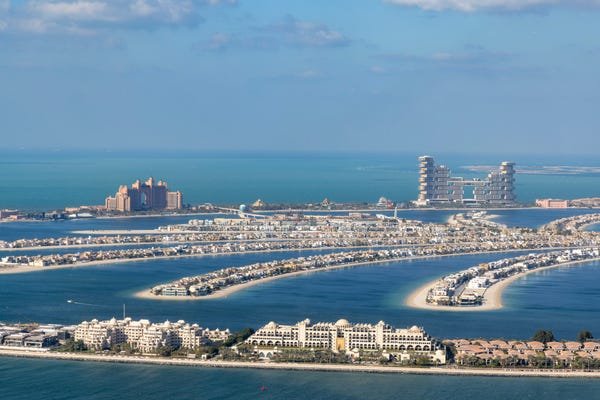
Dubai


Andrew Aitchison / In pictures via Getty Images

It is no surprise that Dubai has cemented itself as the premier destination for the global elite in recent years, attracting wealthy individuals from across Europe, Russia, and beyond. Known for its lump-sum tax policy and luxury lifestyle, Dubai offers an attractive package for the ultrawealthy. According to Elzeki, the UAE continues to see significant immigration inflows, particularly after recent tax reforms. This year, nearly 10,000 wealthy foreigners are expected to relocate to the UAE, making it the top destination for ultrawealthy migrants.

Savory believes that technology is the biggest reason the global rich can migrate. “Technology is enabling us to live anywhere,” says the Brit who lives in Dubai. “Just like with business, the world is an open playing field. Governments have to compete with one another to win investments and wealthy immigrants.”

“Dubai’s appeal is its pro-business environment, minimal red tape, and tax-free status,” Elzeki says. “It’s the ultimate destination for people looking to invest and live in a luxurious environment with limited government interference.”

The city’s appeal isn’t just for business moguls. Many entertainers, athletes, and tech entrepreneurs are calling Dubai home, though not so many from the United States. With a steady flow of talent and investment, particularly in real estate, Dubai is rapidly emerging as a global powerhouse. Monaco, watch out.

Portugal


Cityscape and skyline of the Alfama district


Roberto Machado Noa/LightRocket via Getty Images

Portugal remains one of the most popular destinations, particularly for American centimillionaires seeking a European foothold/hedge. The so-called Golden Visa Program for “non-habitual residents” has been a major factor, though it expired in March 2025. No longer do new emigrées get a 10-year tax break for 10 years; now they’re taxed at 20% on most Portugal-derived income and none on foreign income.

However, Portugal’s relatively low taxes, warm climate, and laid-back lifestyle continue to attract people from all over the world, particularly from the US and Brazil. “Portugal’s tax incentives, like the scientific research and innovation tax incentives, are incredibly attractive,” says Elzeki. “With a fast-track route to citizenship, many are opting to apply for residency as a hedge” against whatever chaos is happening in their country of origin.

Another reason to like the idea of living in Portugal: The country responds to its citizens’ demands. With the massive influx of migrants since the COVID-19 pandemic, real estate prices have soared, says Andrew Amoils, head of research for New World Wealth, a wealth intelligence company based in South Africa. As a result, the country changed the Golden Visa rules. “There was a backlash from locals who felt they were being priced out,” he says. One solution: Make wealthy migrants contribute to social funds rather than build fancy mansions.

Singapore


People gather along the boardwalk in front of the skyline at Marina Bay in Singapore


ROSLAN RAHMAN/AFP via Getty Images

Singapore stands out as Asia’s business hub, with its strategic location and tax advantages attracting a mix of wealthy entrepreneurs, investors, and professionals. It has no capital gains tax and a very pro-business environment, which makes it a top choice for global billionaires, particularly those from China and India. It’s also clean, safe, and close enough for weekend trips to Bali or Phuket.

“Singapore is a magnet for Southeast Asians and increasingly for Western entrepreneurs as well,” says Amoils. “It’s a place that offers both lifestyle and business opportunities without the tax burden found in other global cities.”

Italy


Villa Poggio Torselli in Val di Pesa, Tuscany, Italy


1666-ca 1745

Italy has become an unexpected favorite among many of the world’s wealthiest individuals, particularly Americans seeking a lifestyle change and favorable tax treatments. Italy’s flat tax, capped at €200,000 annually (double last year’s level), applies regardless of income, making it particularly enticing for the ultrawealthy. Combined with the country’s rich cultural history, stunning landscapes, welcoming climate, and a decent number of international flights, Italy is now home to a growing number of billionaires.

“A lot of wealthy Americans have found that Italy offers a unique combination of luxury living and tax incentives,” says Elzeki. “It’s more affordable than places like Monaco or London, yet it offers that European charm with significant tax benefits.”

Australia and New Zealand


The skyline of Auckland. from a hilltop


Jan Kruger – FIFA/FIFA via Getty Images

Australia and New Zealand continue to attract high-net-worth individuals, though the distance may be a limiting factor for many. Despite this, both countries are known for their stable economies, excellent healthcare systems, and high quality of life. (And to Americans, strict gun laws.)

“Australia is still a top choice for South Africans and Brits, especially retirees,” says Amoils. “But the rules have changed over the last decade, and they now prefer younger applicants with specific skills, like plumbers and teachers.”

New Zealand, on the other hand, offers a more straightforward pathway to residency through an investment-based program. For those looking for a retreat from geopolitical risks and a peaceful lifestyle, New Zealand, with its relatively low cost of living and unspoiled scenery, remains a strong contender.


Source link

You-cant-cop-Jensen-Huangs-GPUs-but-you-can-eat.jpeg

You can’t cop Jensen Huang’s GPUs but you can eat the same cake he got for his birthday at work

Nvidia’s GPUs may be hard to snag, but Jensen Huang’s birthday cake might just be sitting in a display case at your local mall.

A strawberry soft cream cake from Korean bakery brand Paris Baguette was served at a birthday dinner for the Nvidia CEO near the company’s Santa Clara headquarters last Saturday, according to The Korea Times, which cited an interview with the bakery brand’s operator, Paris Croissant.

Huang, who turned 63 on Feb 17, invited about 30 engineers involved in South Korea’s SK Hynix DRAM and high-bandwidth memory for a dinner party at a fried chicken restaurant called 99 Chicken.

Korean business newspaper Hankyung reported that Huang had instructed Nvidia employees to “organize a dinner to encourage SK Hynix HBM engineers.”

“Please supply the highest-performance HBM4 without a hitch,” he told SK Hynix engineers that day, according to Hankyung.

SK Hynix is one of Nvidia’s key suppliers of high-bandwidth memory chips, or HBM chips — the advanced chips that sit alongside GPUs and feed them data at extreme speeds. Memory chips have become one of the biggest choke points in the AI boom.

At one point, Huang personally prepared and served somaek — a mix of soju and beer — to guests at each table.

For about two hours, Huang went table to table thanking his guests, according to Hankyung.

Huang’s cake is a huge marketing win for the bakery brand.

“It was all about the symbolic moment — our brand’s cake being present at a birthday party for the current leader of the global AI industry. It was a total boon without costing us anything,” a Paris Croissant official told The Korea Times.

Paris Croissant operates about 280 Paris Baguette locations across the US, including several in Silicon Valley. It aims to expand to 1,000 outlets in North America by 2030.

The bakery chain is a household name in South Korea, with about 3,400 stores there. Since making its first push overseas in 2004, the Paris Baguette brand has expanded to 15 countries.

The Paris Baguette cake is described as a “vanilla cake filled with soft cream and fresh strawberries, topped with more berries.”

A global AI superstar

Huang has become something of a spectacle wherever he goes.

In October, Huang sat down for fried chicken in Seoul with the heads of Samsung and Hyundai. The casual meal quickly turned into a media event.

A crowd of journalists, photographers, and fans gathered outside the restaurant, while national broadcasters aired live footage of the executives eating and talking inside.

Photos from the evening also captured reflections in the restaurant windows, showing fellow diners lifting their phones to snap pictures.

Following Huang’s visit to the Seoul restaurant, crowds lined up before opening hours, hoping to dine at the same table occupied by the Nvidia chief and his high-profile guests, Korean media outlets reported.

The restaurant has imposed a one-hour time limit on the table used by Huang and the Korean business leaders, the reports added.


Source link