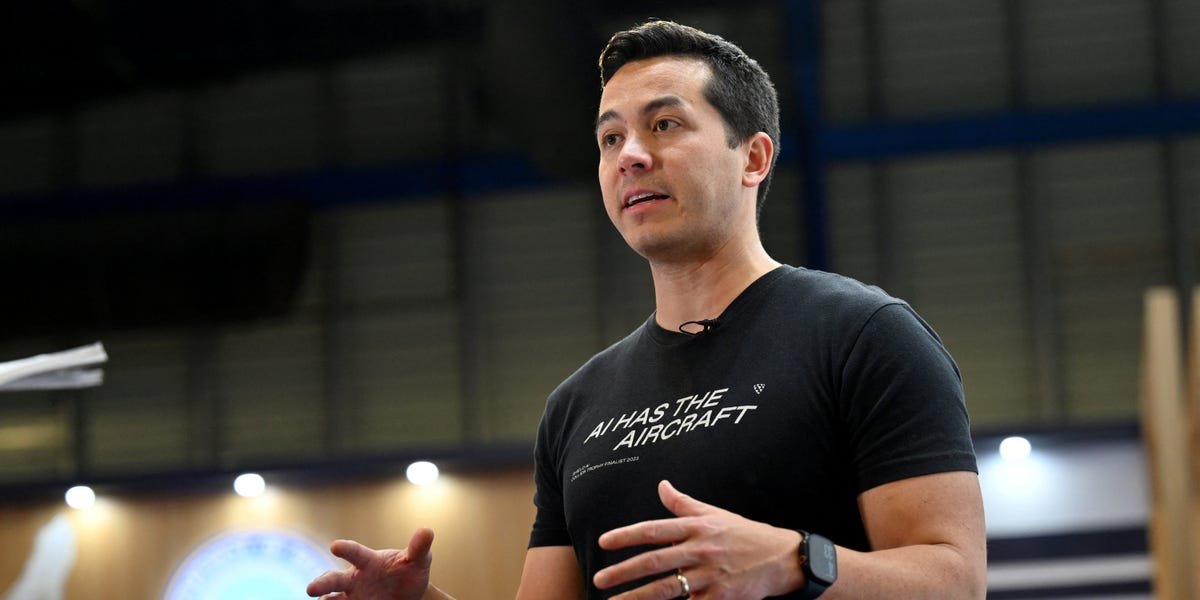
Brandon Tseng, Shield AI’s cofounder, said there’s a common misconception about his company’s signature software-powered drone: People say it needs to be armed.
The more experienced militaries who work with Shield AI, however, know they don’t need that capability in modern war, Tseng told Business Insider.
“Who doesn’t ask for that? The US military doesn’t ask for that because we understand joint fires. The Ukrainians don’t ask for it anymore, either,” said the former Navy SEAL, who is Shield AI’s president.
The V-BAT, a vertical takeoff and landing drone that uses artificial intelligence to fly in jammed environments, has primarily been used for intelligence and reconnaissance missions in high-profile conflict zones such as Ukraine. Shield AI said the V-BAT flew over 200 missions there in 2025.
The drone is still meant to be a multi-mission platform, Tseng said, and Shield AI has been exploring ways to mount weapons on it. The firm announced a partnership last month with South Korean arms manufacturer LIG Nex1 to equip the V-BAT with six-pound guided missiles.
“But at the end of the day, look: I describe V-BAT as a mini predator, reaper drone,” Tseng said. “That’s the mission it’s doing, which is: It’s finding targets. And it’s hard to find targets, you have to be out there for a long period of time.”
The V-Bat is being primarily used for ISR missions, but there are also options for the AI-powered drone to be equipped with weapons.
Kim Hong-Ji/REUTERS
To be fair, the MQ-9 Reaper is also commonly equipped with missiles.
However, Tseng said sophisticated militaries already have a vast array of other weapons that can turn the V-BAT’s intel into a precision strike.
“If you have been in these combat zones, the US allies who fought closely with us in Afghanistan, they do not ask for organic fires on board the V-Bat,” Tseng said. “Because everybody is so used to just saying: ‘Okay, I have a targeting package. What fires asset do I have lined up? Is it a one-way attack drone? Is it HIMARS? Is it artillery? Is it an SM-6? SM-3?”
“Doesn’t matter. You can find weapons,” he added. “The weapons are available. You need, actually, more intelligence.”
V-BAT’s early use in Ukraine
This was a framework that Ukraine still needed to improve when the V-BAT began spotting targets there in early 2024, Tseng said. The drone is meant to fly for over 13 hours and be easily deployable, requiring a two-person launch crew and no runway.
Tseng said that while Ukraine excelled in tactical drone warfare, its troops weren’t used to having a long-range asset that could spot targets for regular strategic attacks as the US military did.
“The strategic effects would happen, but they would be rare,” he said. “They’d be very, very deliberately planned operations, very expensive operations, things like what they did to the Russian runways with sending quadcopters deep into Russia via trucks.”
Ukrainian drone teams would use the V-BAT to find important targets, such as Russian S-300 and S-400 air defense systems, only to realize they hadn’t linked up with the right teams to strike them, Tseng said.
“We’d say: ‘Why didn’t you guys have these weapons lined up?’ They’d say: ‘Oh, well, we didn’t think to coordinate,'” Tseng said.
Since then, Kyiv’s forces have been using intelligence from V-BATs to carry out strikes with systems such as one-way attack drones or US-made HIMARS, Tseng said.
“There was a lot of learning over the past year for the Ukrainians,” he added.
Mikaela Shiffrin, 30, may be a three-time Olympic gold medalist, but there was a time when just hearing the name of the Games felt overwhelming.
On Friday’s episode of “Not Gonna Lie with Kylie Kelce,” Shiffrin said getting ready for one of the biggest competitions in sports took years of work, much of it away from cameras and crowds.
“My Olympic experiences have been so wildly different. Now it’s four, and I’m really aware, right now, of all of the work that’s gone into — actually, not the medal — but the work that’s gone into showing up on race day, and being able to show up with the mentality and the skiing that I wanted to do,” Shiffrin told podcast host Kylie Kelce.
The grind continued even away from the slopes, she said, especially when it came to managing the pressure that comes with the Games.
“Even this summertime, the amount of conversations I had with my psychologist talking about all the different feelings surrounding the Olympics, and like desensitizing to the word, and imagining the vibe, imagining the colors,” Shiffrin said.
She added that she even visited Paris two summers ago to get a feel for the Olympic atmosphere and “desensitize” herself to it.
Not only that, Shiffrin has structured her life around staying physically and mentally ready at all times.
“There’s just so much life outside of the sport, but we do so much of our life, you know, it’s all geared towards the sport,” Shiffrin said, adding that she hasn’t had alcohol in two years because it tends to make her sick.
“And I’m like, I can’t afford to be sick, literally ever. So, we’re just going to not have any alcohol. Like, we’re going to drink electrolytes, man,” Shiffrin said.
It still throws her off that something she’s trained for over years can be decided in seconds.
“But you spend so much time doing all of this work and training for something, and then the moment it happens is, you know, 47 seconds, or like in the blink of an eye, and it’s just really weird,” she said.
Shiffrin is widely considered the greatest alpine ski racer of all time, with 108 World Cup wins. She made her Olympic debut at the 2014 Sochi Games at age 18, winning her first Olympic gold in slalom and becoming the youngest athlete in history to do so.
On Wednesday, nearly a decade later, she earned another gold medal in slalom — her first Olympic victory since 2018.
This isn’t the first time Shiffrin has spoken about the steps she takes to stay focused.
Speaking to WDSU News on Friday, she said she deliberately avoided social media in the lead-up to her races at the Winter Olympics.
“If I was scrolling my feed or something, I just knew I was going to come across things that would get into my brain that would be not at all conducive to the experience that my team and I came for,” Shiffrin said.
On Saturday, she told NBC Sports that she chose not to “set expectations” for herself heading into the Milan Cortina Games — a mindset she said ultimately helped her ski her best.
“On race day, I felt like I skied my best skiing, and that was really my goal,” she said.
Spoilers ahead for “A Knight of the Seven Kingdoms” season one, episode six, “The Morrow,” and the book “The World of Ice & Fire.”
HBO’s “A Knight of the Seven Kingdoms” stuck the landing on Sunday after a highly praised first season.
The prequel show, which was meticulously adapted from George R. R. Martin’s “Tales of Dunk and Egg” series, managed to toe the line between faithfully bringing Martin’s characters to the screen and adding a few new twists.
That was especially true of the season one finale, “The Morrow,” which features several key scenes that don’t exist in Martin’s original novella “The Hedge Knight” — two of which have major implications for the show’s plucky duo and their many adventures to come.
Dunk’s flashback scene implies that he’s lying about his knighthood
Peter Claffey as Dunk and Danny Webb as Ser Arlan in “A Knight of the Seven Kingdoms.”
Steffan Hill/HBO
“The Morrow” includes a flashback to Dunk’s recent past, when he was a squire for Ser Arlan of Pennytree.
As Arlan is propped against a tree, pale and babbling and apparently dying, Dunk asks, “Why did you never knight me? Did you think I’d leave you? I wouldn’t have. Or was it something else?” He doesn’t get an answer.
The scene is filmed in the same place as the season opener — on the hillside where Dunk buries Arlan’s body.
Book readers have long suspected that Dunk is lying about his knighthood. He tells people that Arlan knighted him just before he died, with “only a robin, up in a thorn tree” to bear witness. When Dunk tries to enter the jousting tournament at Ashford Meadow, he’s told to find a lord or another knight to vouch for him, but no one can verify his claim. Hardly anyone even remembers that Arlan existed.
Privately, Dunk struggles with his identity and how he presents himself to the world. In “The Hedge Knight,” after it’s revealed that Egg is a Targaryen prince in disguise, Dunk is shocked and embarrassed for having been deceived, but he also feels a twinge of compassion and solidarity: “He knew what it was like to want something so badly that you would tell a monstrous lie just to get near it.”
“A Knight of the Seven Kingdoms” showrunner Ira Parker told Business Insider that he wanted the scene to be up for interpretation.
“A lot of the exposition around whether or not Dunk was knighted is internal thoughts in his head. And we get pretty, pretty close to him coming out and just saying it. It’s just like, what else could he be thinking of? What else could he mean by this?” Parker explained. “But it’s not said in black and white.”
Peter Claffey as Dunk in “A Knight of the Seven Kingdoms.”
Steffan Hill/HBO
Throughout season one, “A Knight of the Seven Kingdoms” drops subtle hints that Dunk was only ever a squire — that he’s lying to give himself a fighting chance at a better future. When he meets Egg in the premiere, the boy tells him plainly, “You don’t look to be a knight.” In episode four, Dunk hesitates when Raymun Fossoway asks to be knighted so he can fight in Dunk’s Trial of Seven.
“Go on, Ser Duncan,” Lyonel Baratheon urges. “Any knight can make a knight.”
Still, Dunk doesn’t draw his sword to fulfill the request. Is that because he doesn’t want his friend to die in a dangerous trial by combat? Or because he doesn’t know the words to recite if he never heard them himself? (“In the name of the warrior, I charge you to be brave. In the name of the father, I charge you to be just,” etc.) It’s also possible that Dunk doesn’t want to risk Raymun’s honor with a knighting ceremony by a fake knight.
During his loaded pause, Lyonel gives Dunk a searching look, but these questions remain unasked.
Parker said he made sure to preserve the ambiguity surrounding Dunk’s knighthood, which is “100% the way George would like it.”
In the finale’s flashback scene, just when it seems like Arlan is gone forever, he startles awake. We never actually watch the old man die, so it’s still possible that he knighted Dunk offscreen.
“It is just as wide open as it ever was,” Parker said. “So that was very important to maintain, but also — it’s just fun. And I know fans of the book are going to be thinking about that question, so we’re just trying to enjoy ourselves as much as possible with it. And it’s a little bit of a tease.”
The irony, of course, is that Dunk is a truer knight than most, even if he never took the sacred vows. He’s brave and just, and he risks his own life to protect the innocent — quite unlike the dishonesty and bloodthirst of his Trial of Seven opponents. These characters ask us to consider what real honor looks like in a place like Westeros, and to question the substance of titles like “ser,” “lord,” and even “prince.”
In turn, Egg lies about getting his father’s blessing to travel with Dunk
Dexter Sol Ansell as Egg in “A Knight of the Seven Kingdoms.”
Steffan Hill/HBO
After the Trial of Seven is over, Egg’s father, Maekar, asks Dunk to pledge himself to House Targaryen and return with their family to Summerhall. He says that Egg has grown fond of Dunk and wishes to serve as his squire.
Dunk offers instead to bring Egg on his travels. He believes that growing up among smallfolk rather than servants will help Egg learn compassion and humility.
Naturally, Maekar says no. He’s not about to let his youngest son, the latest in a long line of royal Aegons, wander around Westeros with only a hedge knight to protect him. “Princes are not made for sleeping in ditches and eating hard salt beef,” he tells Dunk in the book.
Dunk counters that Egg’s older brothers, who are known as Daeron the Drunken and Aerion the Monstrous, never slept beneath the stars or ate less-than-perfect food. Maekar leaves without saying another word.
Then, as Dunk is readying his horses to leave Ashford, Egg suddenly reappears.
“My lord father says I am to serve you,” Egg says, and they ride off together, heading south toward Dorne.
Why and when does Maekar have a change of heart? In the book, it remains a mystery, but the show offers a plainer explanation: He didn’t.
Sam Spruell as Maekar and Peter Claffey as Dunk in “A Knight of the Seven Kingdoms.”
Steffan Hill/HBO
The final scene of the episode shows Maekar riding away from Ashford with the rest of the Targaryens. When he realizes Egg is nowhere to be seen, he begins panicking and shouting for his son.
Parker said he created the scene because it makes sense for the character of Egg. “[The story] started by him sneaking off and getting into trouble. And of course, he just goes and he does the same thing, because we all make the same mistakes over and over and over again, and then we die.”
As for Maekar, the added scene reflects his stubbornness as a father and his pride as a Targaryen.
“He’s just a curmudgeon, and probably a shitty father, but I actually do think he really does love his children. I do think he cares about them, even though he’s not able to raise them well, he still wants to,” Parker said of Maekar. “The idea of letting Egg go off with someone else just felt like too much for me. It felt like he could reasonably say no in this moment, even though he knows it would be better for Egg.”
Although the show’s version of events doesn’t directly contradict the book, it does add a troubling wrinkle to Egg’s family lore. Maekar eventually becomes king of Westeros, and he may not take kindly to Dunk’s absconding with his heir. He may even misinterpret the event as a treasonous kidnapping.
“We’ll never be in Maekar’s POV, but this will rear its head at some point,” Parker hinted for future seasons. “Many ways were discussed about how to deal with this. Hopefully, people like the way we’ve chosen.”
The second season of “A Knight of the Seven Kingdoms,” adapted from Martin’s “The Sworn Sword,” is slated for a 2027 release.
We were racing to keep up with our packed family schedule. Days blurred into school, work, gymnastics, birthdays, and dinner parties — energizing in theory, exhausting in reality. We were scraping by.
I remember peak multitasking: listening to my 6-year-old read aloud while making breakfast, and trying to finish putting on eyeliner while the eggs finished cooking in the pan.
My husband and I longed for wide-open days to actually connect, but school holidays were never long enough to decompress. We could see how easily the years might slip by, buried in logistics, until suddenly the kids were packing for college.
We wanted to freeze time. So we hatched a plan to leave our “normal” life for a year and have a wild adventure together as a family.
We came up with a plan
In July 2024, we rented out our London home, stored our belongings, and took the bus to Heathrow with two backpacks and a carry-on.
We weren’t wandering aimlessly. We planned to live in three locations, traveling for five weeks before and after each stop.
I pivoted my marketing consultancy toward travel writing and speaking, while my husband’s academic research guided our shortlist of places we wanted to live. His research enabled legal residency which allowed the girls to attend school. We chose Japan, the US, and the Netherlands, staying three to four months in each.
We picked Tsukuba, Japan, to immerse ourselves in a completely unfamiliar culture; Great Neck, New York, near where we’re both from, to give our daughters a taste of American life and spend rare time with family; and Leiden, the Netherlands, to experience its bike- and water-centered lifestyle.
Residency came with a lot of admin.
Lucas had a plan to homeschool her daughters in Japan (pictured), but ended up sending them to a local school.
Provided by Lisa Lucas
For Japan, we had originally planned to homeschool. Our 8-year-old surprised us by asking to attend a local Japanese school, despite only knowing a few phrases she had picked up during the three weeks we spent traveling around the country.
The school welcomed both girls. Like their classmates, they walked to school alone, changed into indoor shoes, helped serve lunch, and cleaned the classrooms.
In New York, we lived with family outside the city. The girls rode a yellow school bus for the first time, while my husband commuted by train. It was a stark contrast to London — no uniforms, more complicated mornings, and the sobering reality of active-shooter drills.
In Leiden, the girls attended a small international school. Students biked along canals and tended their own garden plots as part of a Dutch gardening program.
Their daughters enjoyed cycling while living in Leiden, the Netherlands.
Provided by Lisa Lucas
We packed light
Living out of backpacks forced minimalism. I loved escaping the endless to-do list of home life and focusing on actually living.
I wore a single black maxi dress almost every day in Asia — biking through alleys or hiking through the jungle — and it somehow worked.
If anything, I’d bring even less next time. With fewer possessions, our mental bandwidth expanded. We could focus on fun, without guilt.
Parenting on the road
When we first told the girls about our plan, our youngest cried. They loved their friends, their teachers, and the rhythm of school. They couldn’t imagine leaving and not coming back. We tried tempting them with volcanoes and snorkeling in Indonesia.
They came around, somewhat. They loved most moments, but they also always wanted to go home. We promised it would only be a year.
The family spent time exploring other parts of Asia, including a trip to Mount Bromo, a volcano in Indonesia.
Provided by Lisa Lucas
Our priority was making them feel safe and secure. We talked about adaptability as a life skill, but we also held them close and reminded them they were loved.
Most days, we’d say, “We’re still on the trip,” and it made us feel like a team. The girls learned how to be the new kid, make friends, and settle into unfamiliar rhythms. They learned you can reinvent your life more than once.
The intensity bonded us. We had waterfalls to ourselves, watched wild snow monkeys, and made friends who invited us to visit them in Cozumel. I celebrated my usually grim January birthday on a Thai beach.
In the US, we were present for heavy family moments, including my grandfather’s passing.
We were still on the trip — until we weren’t
Returning to London after 13 months felt surreal. Our 6-turned-7-year-old kissed the ground at Heathrow.
The trip changed us. It gave us shared memories — Hokkaido cream, a road trip from New York to Miami, sunsets from an Alpine hut — but more importantly, it clarified what matters: slow time together, not renovations or packed calendars.
We’re happy to be home, blender included. But we’re already dreaming about our next extended adventure.
Do you have a story about taking a gap year that you want to share? Get in touch with the editor: akarplus@businessinsider.com.
This as-told-to essay is based on a conversation with Greg Kitzmiller, a 64-year-old American retiree living in Panama. It has been edited for length and clarity.
I was born and raised in Michigan, where I met my wife, Jen, and where we built our life together.
In 2016, I retired from my job as a manufacturing supervisor. My wife retired from her law career over a year later.
The year before she retired, my main goal was to find a place where we could live the best life during our retirement. I did a lot of research on various countries, andPanama kept coming to the top of the list.
For their retirement, the couple wanted to live in a warm place where their money could go further.
We were eager to escape the snow, so my first priority was eternal summer. We also wanted to stay close to the US to make traveling back easy. The fact that Panama uses the US dollar only added to its appeal.
We hadn’t spent our whole lives planning to retire abroad, but after watching HGTV shows, we both thought that this was something we could do.
Panama also offers a special Pensionado visa for retirees, which comes with incentives such as discounts on utility bills, medication, and even transportation.
Before making the move, we took a few exploratory trips to Panama. Our first trip was a weeklong in October 2017. After my wife retired, we came back in February 2018 for a nine-week trip, touring different areas to see if it felt like the right fit.
Coming from Michigan, they were eager to get away from the snow.
During that trip, the weather was beautiful. When we went home to Michigan and saw the snow on our driveway, my wife turned and said to me, “We’re moving, right?” And I said, “Yeah, we are.”
We sold our house quickly. We held a few garage sales, donated what we didn’t need, and fit our lives into five suitcases. In June 2018, we officially moved to Panama.
Our kids were OK with the decision.
We have two daughters in Texas and one in Alabama. We’re no further from them now than we were in Michigan. Moreover, the world has gotten so small. We can get on a video call with the kids and the grandkids anytime.
With the help of a real-estate agent, we bought our two-bedroom condo for $210,000 in Coronado, which is about an hour and a half from Panama City by car.
Our condo isin a country club community, where the golf course wraps around our building, and we have 180-degree views of the ocean and the mountains.
The couple bought a two-bedroom condo in Coronado.
Even though I’ve joined several Facebook groups, it’s the people we met at church that make up the core of our social circle.
Moving to Panama sparked an unexpected passion for writing.
When we started talking about moving here, one of Jen’s friends at work said, “Well, you should write a blog.”
It wasn’t that easy, since I’m not very tech-savvy, but I did it. I still maintain the blog and publish a newsletter. And, right after we got here, I connected with a writer’s group.
Being a part of that group led me to do a lot of things in my retirement that I never thought I would do.
Kitzmiller published his first book about his experience retiring in Panama in 2020.
I published my first book in 2020 about our experience of retiring in Panama. Since then, I’ve started writing in different ways, including a detective fiction series — I’m working on the fourth installment.
Writing wasn’t something I expected to do in my retirement, but there’s a strong community of artists, authors, and musicians here. When you surround yourself with other people who are talented in those ways, it fosters your own talent.
My retirement has been very fulfilling.
Our health is better, too. It helps that there is always an abundance of fresh fruit and vegetables around.
Kitzmiller says being surrounded by a thriving community of artists has encouraged his own passion for writing.
If I had it to do over, I would’ve learned Spanish when I was young. When you’re in your 60s, it’s hard to learn a new language. I almost always understand what’s being said, but don’t verbalize very well, unlike my wife, who is fluent.
Every day’s a little different. We have a few social groups, including one where we play dominoes every week. We rotate between houses, someone makes lunch, and we spend the afternoon playing.
Initially, we figured we’d come for 10 years and then evaluate if we wanted to stay. It’s only been eight years, but we’ve already decided that this is where we want to be.
We’re not planning to move back to the US. There’s honestly not much we miss.
Do you have a story to share about relocating to a new city? Contact this reporter at agoh@businessinsider.com.
This as-told-to essay is based on a conversation with Yilin Zhang, an AI product manager at AI startup Kuse who worked at Meituan for more than three years. It has been edited for length and clarity. Business Insider has verified his employment and academic history.
I graduated from Tsinghua University with a master’s degree in computer science in 2021 and then joined Meituan — one of China’s biggest tech firms — as a product manager.
At Meituan, China’s platform for local services, especially known for food delivery, I worked on two AI projects. One was a consumer-facing AI assistant that helps users complete various tasks, including ordering food. The other was a merchant-facing AI agent designed to help businesses manage their daily operations, including handling reservations, managing orders, and supporting routine operational tasks.
The main difference between how products are built in China and in the US comes down to the market.
Why Chinese tech companies are so cost-efficient
Across most large Chinese tech companies, AI product development accelerated more aggressively around 2025.
Every time Lee Chong Ming publishes a story, you’ll get an alert straight to your inbox!
Stay connected to Lee Chong Ming and get more of their work as it publishes.
The AI initiatives I worked on at Meituan started around April or May of that year. It coincided with the surge of interest around DeepSeek, when attention around AI agents took off.
Large companies began racing to build AI projects, and almost every business unit launched its AI initiative.
For a long time, especially before 2021 or 2022, Chinese tech companies were primarily focused on domestic competition rather than overseas expansion. Because competition in China is intense, tech companies were forced to become extremely efficient. Their execution methods have been sharpened to an almost frightening degree.
Constraints have also pushed Chinese AI companies to pursue different paths, with a strong focus on open-source models and cost efficiency. These limitations forced exploration in new directions, and those paths have proven valuable in their own way.
DeepSeek is a good example. Because of international restrictions, it couldn’t access large numbers of GPUs and was forced to innovate around efficiency instead.
Why Chinese AI products differ from the West
Chinese and overseas markets are fundamentally different, leading to distinct user bases, expectations, and product designs.
Chinese users have a much lower willingness to pay for software; hence, many mass-market AI products, such as Doubao, tend to be free. The core objective is often to scale active usage.
Many capabilities are packaged into a single prompt you can ask, essentially a chatbox interface with a low barrier to entry.
International AI products target users doing high-value tasks. They are more often designed for desktops than for mobile devices, with interfaces better suited to work contexts. These products explore how AI and humans can collaborate and intersect across different work scenarios, helping users complete tasks more effectively and efficiently.
In China, that user group is relatively small. That makes it harder for its mainstream AI products to move beyond chat-based forms into more advanced products.
China’s internet success over the past decade has also largely come from consumer-facing apps. That environment forces product managers to obsess over user feedback and relentlessly polish even the smallest features.
Teams may spend enormous effort refining a tiny feature just to win over a small group of users. In markets with less competition, that level of detail isn’t always necessary.
The AI startup scene is growing in China
After three to four years at Meituan, I felt I had learned most of what I could from that environment. I left to join the AI startup Kuse in October.
AI is evolving extremely fast. In large companies, iteration speed can be slower. Many of my friends across different Big Tech companies share this same frustration. Smaller, more agile companies can adapt faster.
In the past, top graduates had basically two paths: becoming a civil servant or joining a Big Tech company.
That’s changing. Especially over the past year, many AI startups have emerged, and more young people are choosing entrepreneurship. AI has created a new path outside Big Tech.
By 2025, not being involved in AI at all will feel like staying in the PC internet era of 2010 instead of joining the mobile internet wave.
Do you have a story to share about working in a Chinese tech company? Contact this reporter at cmlee@insider.com.
This story is available exclusively to Business Insider
subscribers. Become an Insider
and start reading now. Have an account? .
The US State Department urged American tourists in Mexico to “shelter in place” on Sunday.
Violence has erupted across parts of Mexico after the local government killed a cartel leader.
The areas include Jalisco State and Tamaulipas State.
The US State Department urged Americans in certain parts of Mexico to “shelter in place” on Sunday amid a spike in violence and criminal activity.
“Due to ongoing security operations and related road blockages and criminal activity, US citizens in the following locations should shelter in place until further notice: Jalisco State (including Puerto Vallarta, Chapala, and Guadalajara), Tamaulipas State (including Reynosa and other municipalities), areas of Michoacan State, Guerrero State, and Nuevo Leon State,” the State Department wrote on X.
The US Drug Enforcement Agency said the Mexican government killed Nemesio “El Mencho” Oseguera Cervantes, the leader of the Jalisco New Generation Cartel, according to CNN.
This is a developing story. Check back here for updates.
President Donald Trump seems to be trying a new approach in his quest to take over Greenland: The president said Saturday the US would send a hospital ship to the territory.
“We are going to send a great hospital boat to Greenland to take care of the many people who are sick, and not being taken care of there,” the president wrote on Truth Social. “It’s on the way!!!”
Greenland, however, isn’t interested.
Greenland’s prime minister, Jens-Frederik Nielsen, said in a subsequent Facebook post that “it’s going to be a no thank you from here.” Greenland provides free universal healthcare for all permanent residents and citizens.
“We have a public health system where treatment is free for citizens. It’s a deliberate choice. And a basic part of our society. It’s not like that in the United States, where it costs money to go to the doctor,” he wrote. “We are always open to dialogue and collaboration. Also with the U.S. But talk to us now instead of just coming up with more or less random outbursts on social media.”
Every time Tristan publishes a story, you’ll get an alert straight to your inbox!
Stay connected to Tristan and get more of their work as it publishes.
Trump has had his sights set on the Arctic island, a semi-autonomous Danish territory, since his first term in office. Trump has suggested the US could buy Greenland or even take it by force.
The president says Greenland’s location makes it strategically important as the melting of Arctic ice opens up new shipping routes and intensifies competition with Russia and China.
The island is also rich in critical minerals and already hosts a key US military base, which American officials say is vital to missile defense and Arctic security.
Major European leaders, including those from France, Germany, the UK, Italy, Spain, Poland, and Denmark, released a joint statement last month defending Greenland.
“Greenland belongs to its people,” the statement said. “It is for Denmark and Greenland, and them only, to decide on matters concerning Denmark and Greenland.”
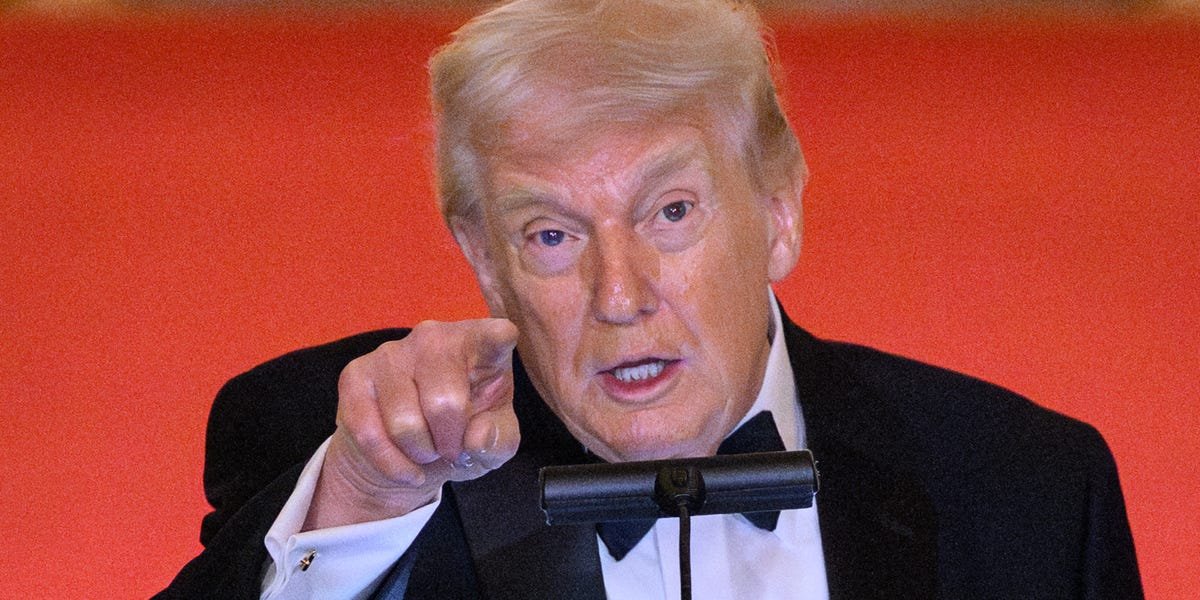
Netflix wants President Donald Trump’s stamp of approval as it maneuvers to buy Warner Bros. Discovery.
Now, Trump has a demand for Netflix: unseat board member Susan Rice.
In normal times, we would all be marveling at the spectacle of the US president telling a company in the midst of a merger fight (Paramount also wants to buy Warner Bros. Discovery) how to structure its board. During Trump 2.0, though, this has become standard stuff. Trump routinely tells companies to fire someone he doesn’t like or do something he does like.
That doesn’t mean Trump always gets what he wants. The demands alone, however, are an extraordinary use of power. We should make sure we don’t become inured to it.
Trump’s Truth Social post is a reminder that the future of Warner Bros. Discovery will run through the White House, no matter what Trump says at any given moment. (Refresher: In December, Trump said, “I’ll be involved” in the fight between Netflix and Paramount. Earlier this month, he announced that “I’ve decided I shouldn’t be involved.” Now he’s telling Netflix it will “pay the consequences” if it doesn’t fire Rice, which sure seems like he’s involved again.)
Trump himself doesn’t have the authority to stop Warner Bros. Discovery from selling itself to Netflix or Paramount, which is controlled by David Ellison and his father, the prominent Trump supporter, Larry Ellison. He can, however, instruct Attorney General Pam Bondi to sue to stop a deal on antitrust grounds.
Modern presidents have traditionally assumed an arm’s-length distance from federal law enforcement. And it’s entirely possible that any other president’s Department of Justice would also look into an antitrust case against Netflix, given its enormous market power.
Trump, however, has made it clear that he expects Bondi to act on his behalf. So if he doesn’t want Netflix to buy Warner Bros. Discovery, he can certainly make it more difficult for them.
Which makes it puzzling that Rice, who held senior roles in the Clinton, Obama, and Biden administrations, would sound off on a podcast, announcing that “elites” and “corporate interests” who accommodated Trump would one day “be held accountable by those who come in opposition to Trump and win at the ballot box.“
This wasn’t a mere gaffe or misstatement. She went on at length. It was, regardless of how she intended it, a provocation aimed at the Trump White House — at the exact moment the company she’s supposed to help govern is seeking Trump’s approval.
I’ve asked Netflix for comment on Rice’s comments and Trump’s response.
We should also note that Trump’s most consistent trait is his inconsistency and that he frequently reverses himself. Last summer, for instance, he announced that Intel CEO Lip-Bu Tan was “highly CONFLICTED” and must resign. Days later, Trump met with Tan and described him as a “success.” Weeks after that, the US government acquired 10% of Intel.
However, just because we don’t know how serious Trump is about pushing Rice out of Netflix — or how his administration will ultimately rule on the Netflix/Paramount race — doesn’t mean we should shrug this off.
We’re in a place where the president routinely tells companies how to run their businesses and threatens them if they don’t comply. If we get used to that, we shouldn’t be surprised when future presidents decide they can do it, too.
Disclosure: Mathias Döpfner, the CEO of Business Insider’s parent company, is a Netflix board member.
My high school son, Jack, was overwhelmed with college anxiety — SAT prep, AP classes, acceptance rates, and all the pressure that comes with being a New York student.
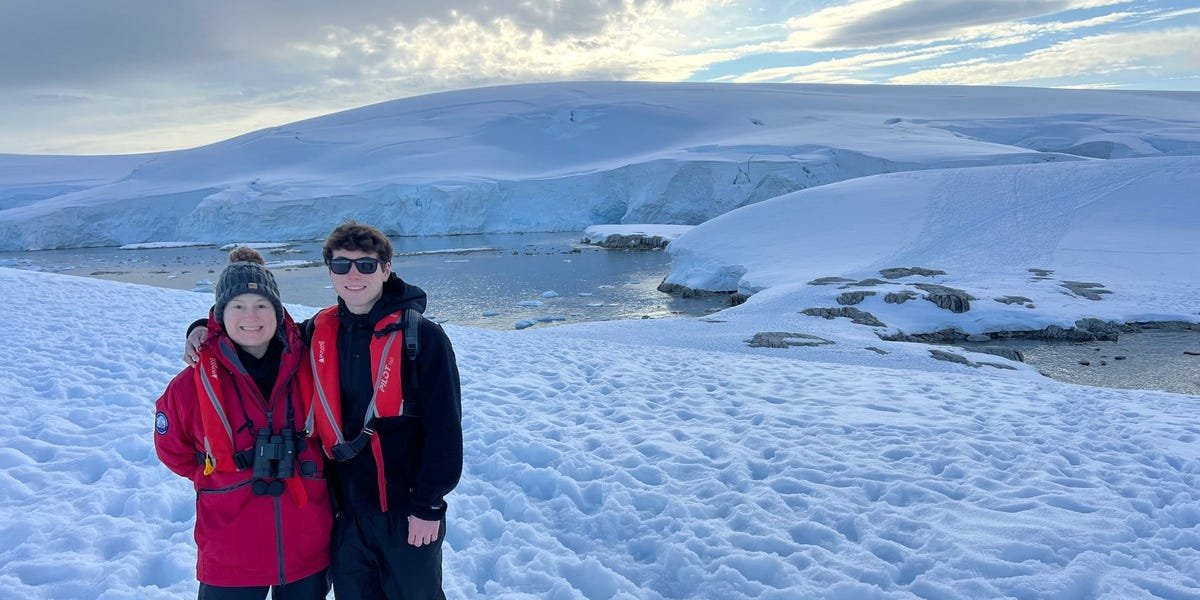
It was hard to quiet the noise, so I decided to make a radical — and unconventional decision: I pulled him out of school and took him to Antarctica for three weeks over winter break.
Everyone told me it was a terrible idea, but I thought it was exactly what he needed.
We’ve been traveling since he was a baby
Jack and I have been traveling together since he was 3 months old. I’m a huge traveler, and when I had my first son, I decided to take him along for the ride.
In elementary school, I didn’t think twice about pulling him out in order to explore the world (Costa Rica, Mexico, Nevis, Finland). Against the judgment of some parents (and some school officials), I thought it was important to expose him to travel — different cultures, different ways of doing things, different ways of thinking. He quickly became my favorite travel companion, and I often thought travel Jack was the best version of himself.
Every time Judy publishes a story, you’ll get an alert straight to your inbox!
Stay connected to Judy and get more of their work as it publishes.
The author and her son have been traveling together since he was a baby.
Courtesy of the author
It became more difficult to pull him out in middle school (but I still did — he missed eighth-grade graduation — to go on a trip to Sri Lanka). Once he entered high school (where, according to him, grades matter), it became really difficult to make up the work if I pulled him out.
Then came junior year and all the stress that comes with college prep settled upon us. Not only was he balancing a bunch of AP classes, but he was also studying for the SAT and doing all the college prep work. Basically, he (and therefore I) became slightly unhinged.
I booked a 3-week cruise to Antarctica
So when I floated the idea of going on a trip — just the two of us — Jack was instantly in, but I got tons of pushback from everyone else. Junior year is the most important year for college prep; he’s in AP classes, and it’s super hard to make up the work. Did I have my priorities straight? Now is the time to lock in, not travel.
But I ignored the noise and booked us on a three-week cruise to Antarctica — he had two weeks off for the holiday break and would miss one week of school. I had him talk to all his teachers about missed work and make-up, and, surprisingly, while a lot of parents thought I was nuts, the teachers were supportive of this once-in-a-lifetime trip.
The author says people told her not to take her son out of school as he was preparing to apply for college.
Courtesy of the author
And off we went on a three-week trip to Antarctica, South Georgia, and the Falkland Islands. I purposefully chose this cruise itinerary because it included South Georgia, which everyone says is a must if going to the white continent. It definitely made the trip long (by a week), but it turned out South Georgia was both Jack and my favorite part of the cruise (we saw thousands of king penguins in their beautiful orange plumage, alongside their baby chicks, which looked like they were wearing lush fur coats).
His perspective started to shift during the trip
Every day was a different adventure: hiking up snow-capped peaks; kayaking among icebergs looking for whales and seals; getting face-to-face with several types of penguins (we quickly learned the difference between rockhopper, macaroni, gentoo, Adelie, and chinstrap varieties).
Far from GPAs and college chatter, surrounded instead by penguins, elephant seals, and endless ice, Jack’s perspective started to shift. College stopped feeling like the entire world — and started looking like just one chapter.
One night we had dinner with Rich Pagen a naturalist and Kristen Wornson the Young Explorers guide. When Jack asked them how they knew what they wanted to do with their lives, they shared their experience of trying to find the right college and then moving into different career circles. It was great for Jack to hear that their path wasn’t always straightforward, but they ultimately found jobs they loved.
For Jack to see people loving their jobs — and to realize that no one thought they’d end up where they did, leading expeditions in Antarctica — was a great wake-up call.
Also, because this was the family holiday cruise, several other families with teens were on board. It was great for Jack to get out of his comfort zone and talk to teens from all over the world. One was taking a gap year before college, and it really got him realizing that there are so many paths out there.
The trip brought us closer together
The trip also brought Jack and me closer together; away from the distractions of everyday life, we connected in a way that’s rare during the teenage years.
On this trip, Jack and I always did the excursions together, and we ate dinner together every night. But on sea days, I attended every lecture, and he opted to go to the gym or sleep. By giving each other space, we really enjoyed the time we did spend together. I didn’t nag him, and he, in turn, didn’t give me an attitude.