Lauren Edmonds Profile Photo

Blizzard triggers New York City travel ban as airlines cancel thousands of flights

The Monday morning commute won’t be messy in New York City. It will be nonexistent.

New York City Mayor Zohran Mamdani declared a state of emergency and a travel ban during a press conference on Sunday as a giant winter storm bore down on much of the Northeast.

The National Weather Service said to expect blizzard conditions and up to 20 inches of snow over the next 24 hours. Parts of New Jersey, Rhode Island, and Massachusetts could get up to 25 inches.

“The state of emergency closes the streets, highways, and bridges of New York City for all traffic,” Mamdami said. The travel ban begins at 9 p.m. Sunday and lasts until 12 p.m. on Monday.

US airlines, meanwhile, are canceling and delaying thousands of flights. As of Sunday afternoon, airlines had canceled over 3,000 flights and delayed over 2,900, according to the flight-tracking website FlightAware.

New York City’s John F. Kennedy and LaGuardia airports have the highest number of cancellations, followed by Newark Liberty International Airport, Philadelphia International Airport, Ronald Reagan Washington National Airport, and Boston Logan International Airport.

Anyone hoping to catch a flight in the region on Monday can also expect major disruptions, according to Cirium, an aviation analytics company. At LaGuardia Airport, for example, 82% of flights scheduled for Monday have been canceled.

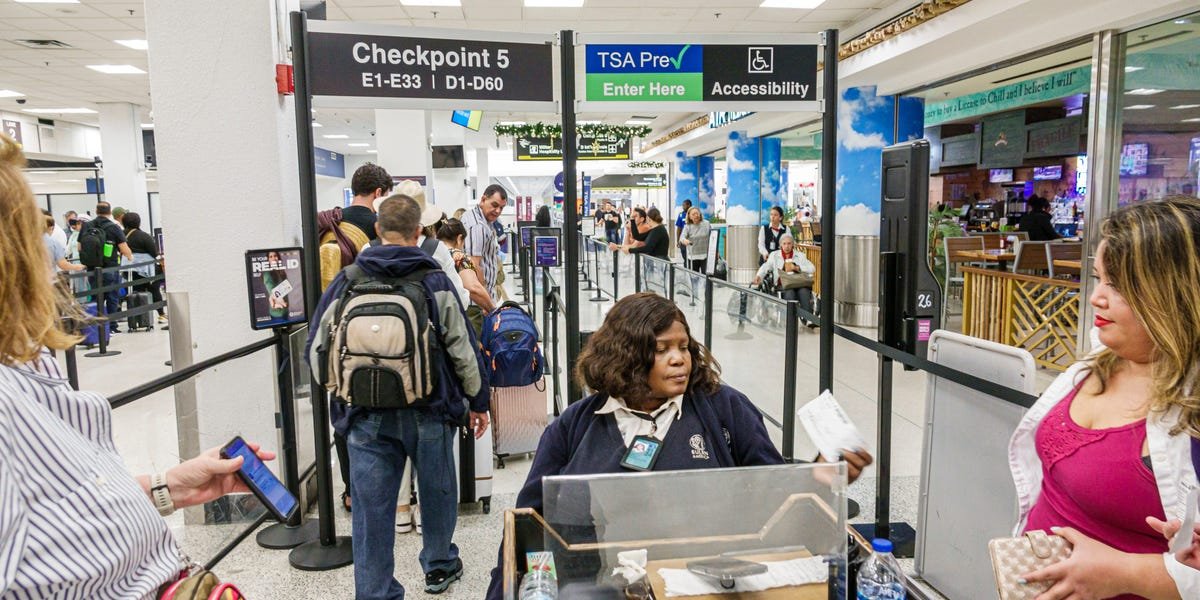
Adding to what will likely be a chaotic 48 hours for travelers, the Department of Homeland Security announced Saturday night that it was suspending TSA PreCheck and Global Entry due to the partial government shutdown.

Despite the announcement, however, TSA Precheck and Global Entry lanes remained open at major airports on Sunday. In a statement, the Transportation Security Administration said it is evaluating the situation “case-by-case.”

“At this time, TSA PreCheck remains operational with no change for the traveling public,” a spokesperson said. “As staffing constraints arise, TSA will evaluate on a case-by-case basis and adjust operations accordingly.”

The federal government entered a partial shutdown earlier this month, delaying funding for some agencies, like DHS. TSA agents are essential workers, so they’re still working — for now. During the full government shutdown earlier this year, TSA agents and air traffic controllers went 43 days without a paycheck.


Source link

The-partial-government-shutdown-has-come-for-TSA-PreCheck.jpeg

The partial government shutdown has come for TSA PreCheck

Federal officials said they suspended TSA PreCheck and Global Entry Sunday morning at 6 a.m. ET, but in many US airports, the lanes remained open past the deadline.

The Department of Homeland Security said on Saturday night that it would shut down the expedited airport security and immigration lanes due to the partial government shutdown, which left the department without funding.

The Transportation Security Administration, which operates PreCheck and is an agency of DHS, said it was evaluating the situation on “a case-by-case basis.”

“At this time, TSA PreCheck remains operational with no change for the traveling public,” a TSA spokesperson said Saturday morning. “As staffing constraints arise, TSA will evaluate on a case-by-case basis and adjust operations accordingly.”

Travel chaos at airports is often an impetus to end government shutdowns. TSA and customs agents are considered essential employees and are working without pay during the partial shutdown, as they did for 43 days during the full shutdown in October.

Last year’s shutdown ended after air traffic controllers began to call out after several $0 paychecks. The 2019 shutdown ended soon after mass callouts temporarily halted travel in New York.

Social media posts showed that PreCheck lanes were still operating at major airports on Sunday, including Minneapolis, Washington, DC, and Orlando, hours after the 6 a.m. cutoff.

The injection of confusion comes on an already stressful travel weekend, with many flights canceled as the country prepares for a blizzard in parts of the Northeast. Airlines like JetBlue and Delta have preemptively said some flights in the region will be canceled and have offered travel waivers to affected flyers.

TSA PreCheck allows approved travelers to keep shoes and jackets on and leave laptops and liquids in bags, while Global Entry provides expedited passport control when returning to the US from abroad.

Both programs are widely used by frequent flyers and business travelers and are designed to help agents handle more travelers more efficiently through facial recognition and automation. If the lanes close, wait times at airports could increase significantly.

TSA PreCheck costs $76.75 per traveler for a five-year pass (renewals start at about $58); Global Entry, which includes PreCheck, costs $120. DHS said passengers with active memberships will be able to fly using standard security or immigration lines.

CLEAR, a separate, privately run expedited checkpoint, appears to be operating.

DHS Secretary Kristi Noem said the agency is “making tough but necessary workforce and resource decisions” and prioritizing the “general traveling population” at airports.

“Without appropriations, TSA simply cannot afford to risk overstretching our staff and weakening our security posture,” she added.

The lanes would reopen once the agency secures funding, DHS said.


Source link

Heres-exactly-what-Susan-Rice-said-before-Trump-called-on.jpeg

Here’s exactly what Susan Rice said before Trump called on Netflix to fire her from its board.

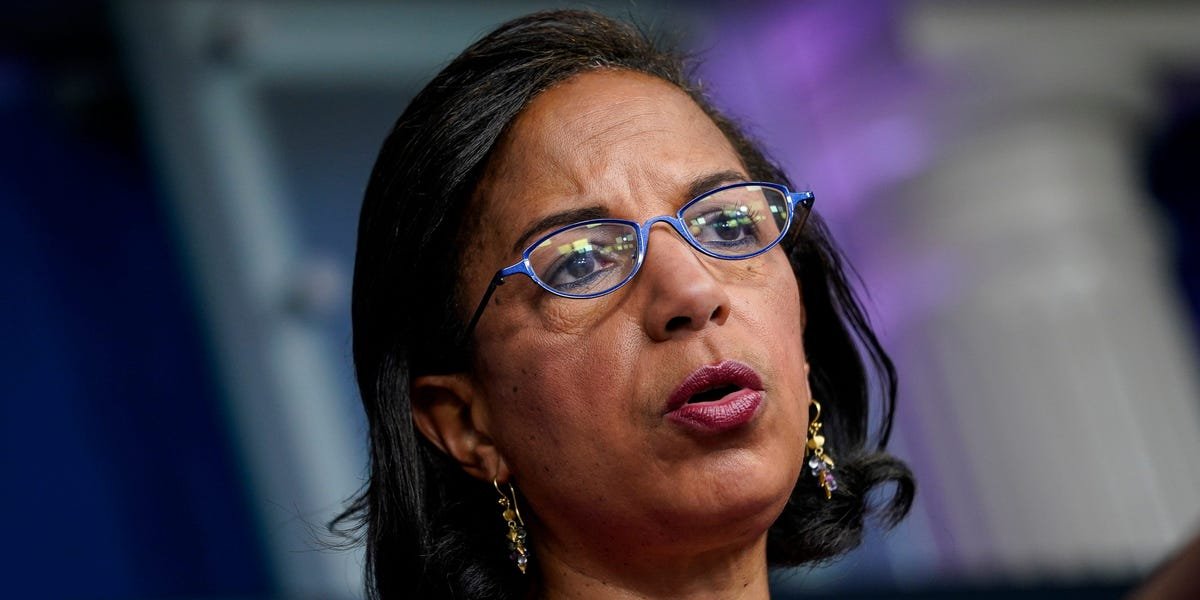
President Donald Trump has warned Netflix to remove former US ambassador and national security advisor Susan Rice from its board “or pay the consequences.”

The stakes are high for Netflix: It’s in the middle of trying to execute a mega-deal to buy Warner Bros.

Rice, who served in senior roles in the Obama and Biden administrations, was critical of Trump’s second term in office when she appeared on the “Stay Tuned with Preet Bharara” podcast in an episode published on Thursday. Rice made comments about corporations that “take a knee to Trump,” saying they could face retribution under a subsequent Democratic administration.

After being alerted to Rice’s comments by far-right activist Laura Loomer, Trump posted: “Netflix should fire racist, Trump Deranged Susan Rice, IMMEDIATELY, or pay the consequences. She’s got no talent or skills – Purely a political hack! HER POWER IS GONE, AND WILL NEVER BE BACK. How much is she being paid, and for what??? Thank you for your attention to this matter. President DJT.”

Loomer’s post highlighted comments Rice made about corporations.

Here’s exactly what Rice said on that topic:

“When it comes to the elites, you know, the corporate interests, the law firms, the universities, the media, I agree with you, Preet, it is not, it’s not going to end well for them. For those that decided that it was, you know, that they would act in their perceived very narrow self-interest, which I would underscore is very short-term self-interest, and, you know, take a knee to Trump, I think they’re now starting to realize, ‘Wait a minute, you know, this is not popular.’
“Trump is not popular. What he is doing, whether on the economy and affordability or on immigration, now, is not popular, and that there is likely to be a swing in the other direction, and they are going to be caught with more than their pants down, they’re going to be held accountable by those who come in opposition to Trump and win at the ballot box.
“And I can tell you Preet, you know, as I talk to leaders in Washington, leaders in our party, leaders in the states, if these corporations think that the Democrats, when they come back in power, are going to, you know, play by the old rules and say, ‘Oh, never mind, we’ll forgive you for all the people you fired, all the policies and principles you’ve violated, all, you know, the laws you’ve skirted,’ I think they’ve got another thing coming.”

Netflix’s pursuit of Warner Bros. would require approval from the Department of Justice’s antitrust division.

Trump in December said that Netflix had a “very big market share,” and that its potential acquisition of Warner Bros. “could be a problem.”

However, this month, he said he “shouldn’t be involved” in the deal and would defer to the Department of Justice to investigate the proposed merger.

Paramount, backed by Trump ally Larry Ellison, the billionaire Oracle cofounder, is also trying to buy Warner Bros.

A White House official told Business Insider last week that Trump “has great relationships with all parties in this potential transaction and remains neutral in this process with no preference for either bidder.”

Netflix’s co-CEO Ted Sarandos said on a podcast appearance last week that Trump had not asked for any political concessions related to the deal.

‘I expected it to be very bad’

In the podcast interview, Rice was critical of Trump on many fronts.

When asked what worried her most about the current political situation, Rice said:

“The thing that worries me, perhaps the very most, is the abrogation of the rule of law in this country, and the fact that, you know, we are now living in a lawless society when the authorities of what is an increasingly authoritarian state exercises, you know, personal police forces, to go and execute the will of the President and do so in blatant violation of American citizens constitutional rights, their First Amendment rights, their Second Amendment rights, their Fourth Amendment rights.”
“And when you have, you know, masked armed men busting into the houses of American citizens and ripping people out of their homes in their underwear and beating them and throwing them to the ground and putting them in cars and disappearing them and denying them access to counsel or their families, when you have the same people shooting American citizens in the street for exercising their First Amendment rights, we are in a very different place, and that worries me enormously.
“And what also worries me, Preet is, you won’t be surprised to hear, is that we’re only at the beginning of what I think they may intend to try and that our very elections and our the fundamental elements of our democracy are profoundly at risk.”

When asked for her assessment of the Trump administration’s past 12 months in office, Rice said:

“Well, I expected it to be very bad, and I guess I would confess that it’s probably worse than I anticipated, but not because they’re doing things that surprised me. They told us exactly what they were going to do.”
“You know, recall Trump saying multiple times on the campaign trail, ‘If you vote for me, this one time, you’ll never have to vote again.’ Or his, you know, pledge to use the American military against the quote, ‘enemy within.’
“You know, you had Stephen Miller, foreshadowing not only the use of the Insurrection Act, but potentially the suspension of habeas corpus and the imposition of martial law. All of these are, you know, they tell you, interestingly, where they intend to head.
“But what surprised me is the speed and the efficacy of their efforts to do what they set out to do, and the fact that they have faced very little resistance from members of their own party, from the private sector, from civil society leaders and university heads and law firms and all of the, you know, the pillars of society, media — that have rolled over and played dead or hidden under rocks.
“So I think the speed and the ease with which they’ve made progress on their agenda, which they laid out very clearly in Project 2025, and elsewhere, is what surprised me more than what they’ve tried to do.”

Disclosure: Mathias Döpfner, the CEO of Business Insider’s parent company, is a Netflix board member.


Source link

How-Rikers-Island-jail-makes-7-million-meals-a-year.jpeg

How Rikers Island jail makes 7 million meals a year

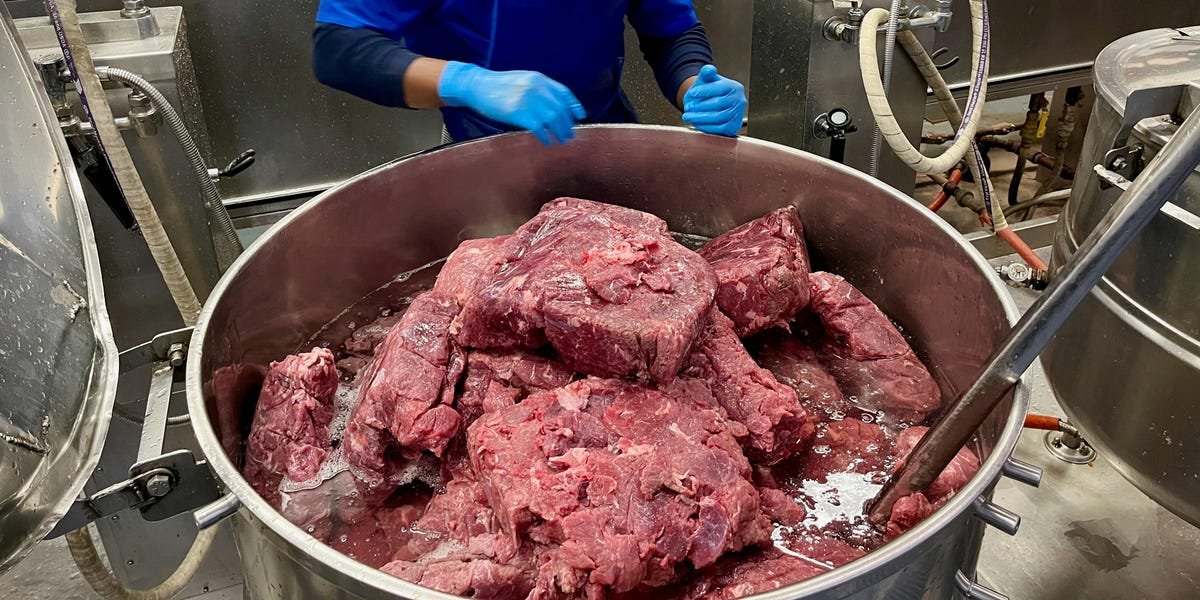
New York City’s infamous jail, Rikers Island, currently houses nearly 7,000 detainees. Chefs, not inmates, do the cooking. But while they’re on their shift, the chefs are locked in, too. There are cameras everywhere, monitored from the guard’s office. Knives are chained to heavy machinery. Can lids slide into a locked cage. Spoons are locked up in the office. Inside Rikers’ kitchens, there’s a delicate balance between the chefs, guards, and the detainees who wash the dishes.


Source link

Naydeline Mejia

My move from the US to Paris has come with a lot of benefits, but finding love has felt impossible

When I visited Paris for the first time in 2022 during my inaugural solo trip, I fell in love with the city instantly.

Sipping my chocolat chaud while reading Hemingway’s “A Moveable Feast” at the legendary Café de Flore, enveloped in the charming Haussmannian architecture the city is renowned for, I whispered to myself: “I could live here.”

It wasn’t until two years later that I would finally make the move abroad after being accepted into a graduate school program and subsequently quitting my dream job at a big-time magazine to fulfill my newest dream of living in Paris.

Although moving to France from the US has come with plenty of benefits, such as a slower pace of living and a healthier work-life balance, one part of my journey has significantly suffered: my love life.

For a city that markets itself as the City of Love, I have found building a meaningful connection with someone in Paris nearly impossible.

The language barrier has made it difficult to connect with potential partners deeply


Woman reading book outside at cafe in PAris

I can speak French, but I still feel a language barrier on dates.

Naydeline Mejia


As someone with an intermediate level of French, I knew when entering the Parisian dating scene that language would be a hurdle, especially when going on dates with non-native English speakers.

During dates with people who didn’t feel comfortable speaking English or didn’t speak the language very well, we’d mostly converse in French — I found banter to be difficult and less fluid.

My personality also took a hit. Instead of my usual, flirty self, I felt more reserved because I couldn’t express myself fully in my third language.

Even during dates where the other person did have a good command of English, I felt as though we lacked a certain access to one another as we weren’t able to express ourselves in our mother tongues.

As a result, I convinced myself our connection would never reach deeper than center ground.

I’ve had some great dates, but intimacy doesn’t always translate into romance


Woman smiling in PAris under umbrella

For me, romance has been hard to find in Paris.

Naydeline Mejia


Another barrier to finding love while dating in Paris has been the differing dating customs.

In my experience, it’s not uncommon for French partners to want to go on regular romantic dates and engage in public displays of affection, like holding hands, even if we’re only seeing each other casually.

As someone who is used to clearly defined relationship boundaries and labels, like “friends with benefits” and “exclusive,” while dating in the US, I find it a bit disorienting to receive forms of intimacy usually reserved for a serious relationship from a non-romantic partner.

I have also observed that the “what are we?” conversation is not really common in France. After a few successful dates, it’s often assumed that you and your dating partner are exclusive. In comparison, in the US, a conversation around exclusivity usually precedes becoming “official” with someone.

The lack of a clear conversation around labels has often left me feeling confused about where I stand with potential partners or the relationship feeling unbalanced.

I have considered moving back to the US for a better chance at love


Woman walking next to building in Paris

I’m not sure if I’ll find love in Paris.

Naydeline Mejia


While I can’t say my dating experience was that much better when I was living in the US, I do consider moving back home to New York to increase my chances of finding a meaningful partnership.

In my experience, there are many benefits to dating in your native country — from speaking the same language to upholding similar dating rules and customs, and, oftentimes, having shared experiences that can only be witnessed by someone from your hometown.

At the same time, some of the most beautiful love stories defy cultural and language barriers. I would be remiss not to try to work past the difficult parts of dating abroad in my search for a partner who makes my heart flutter long past the honeymoon stage.

Nevertheless, while concurrently navigating a seemingly never-ending dating pool, I have also been enjoying my alone time in this fairy-tale city.

In her essay, “Why Are All the Lonely Girls Going to Paris?,” writer Jenna Ryu argues that perhaps inhabiting this so-called City of Love is not about finding a storybook romance, but celebrating the beauty of solitude, especially as a young, single woman.

I have never felt more sure of myself and in love with life than during these past two years living in Paris. The love I would often reserve for a romantic partner, I have been pouring onto myself — and that has made all the difference.


Source link

Lucia Moses

Who is Susan Rice, the former national security advisor in Trump’s crosshairs?

President Donald Trump has demanded that Netflix remove former US ambassador and national security advisor Susan Rice from its board, stepping up his criticism of the streaming giant as it seeks to merge with Warner Bros. Discovery amid antitrust scrutiny.

Rice, who served in senior roles in the Obama and Biden administrations, recently warned companies against aligning with Trump. Speaking on the “Stay Tuned with Preet Bharara” podcast published Thursday, she said corporations that “take a knee” to the president and skirt the law should expect consequences, predicting an “accountability agenda” if Democrats take back power.

“There is likely to be a swing in the other direction,” and these companies are “going to be caught with more than their pants down,” Rice said.” They’re going to be held accountable by those who come in opposition to Trump and win at the ballot box.”

Rice, a Democrat, has a long career in US foreign and domestic policy, working under Democratic presidents.

She served in the Clinton administration from 1993 to 2001, including roles at the National Security Council and as assistant Secretary of State for African Affairs.

Under Obama, Rice served as US ambassador to the UN, becoming the second-youngest person at 44 and the first Black woman to represent the US at the UN. She later served as head of the Domestic Policy Council under Biden.

She was born in Washington, D.C., and graduated from Stanford with a degree in history. She worked in management consulting for McKinsey and Company before entering government.

Rice has previously faced criticism from the right. In her 2019 memoir, “Tough Love: My Story of the Things Worth Fighting For,” she wrote that she was a frequent “villain” for conservative media.

After the 2012 killing of four Americans in Benghazi, Libya, Republicans accused her of misleading the public in interviews discussing the attacks. She was later cleared by subsequent investigations.

She also faced scrutiny by Trump and his allies for “unmasking” senior Trump officials to understand why the crown prince of the United Arab Emirates was in New York in 2016.

Unmasking is when senior government officials ask to learn the identity of a US citizen whose name has been withheld in intelligence reports about communications, such as intercepted calls. In some situations, national security officials argue that knowing the person’s identity is necessary to interpret and assess the intelligence information.

As UN Ambassador, Rice supported US intervention against Muammar Gaddafi.

Rice has written op-eds supportive of the Biden administration and accusing Trump of undermining democracy. In a 2025 column in The New York Times, Rice accused members of Trump’s national security team of “reckless negligence” after they discussed sensitive national security matters on Signal.

Disclosure: Mathias Döpfner, the CEO of Business Insider’s parent company, is a Netflix board member.


Source link

The-most-famous-local-sandwich-from-every-state.jpeg

The most famous local sandwich from every state

Updated

  • Each state has its own signature sandwich, from a grilled cheese to something called a Jucy Lucy.
  • Indiana claims to have the best pork tenderloin sandwich in the nation.
  • Illinois is known for the Horseshoe, an open-face sandwich topped with fries and cheese sauce.

Every state, from Alabama to Wyoming, has its own signature sandwich that locals can’t get enough of.

From a classic, gooey grilled cheese to something called the Horseshoe — an open-face sandwich topped with fries and cheese sauce — these sandwiches are must-trys on your next road trip or visit to a new state.

Business Insider found the most famous local sandwiches in every state, and while some may be up for debate, every sandwich on this list is worth trying at least once.

These are America’s most famous local sandwiches.

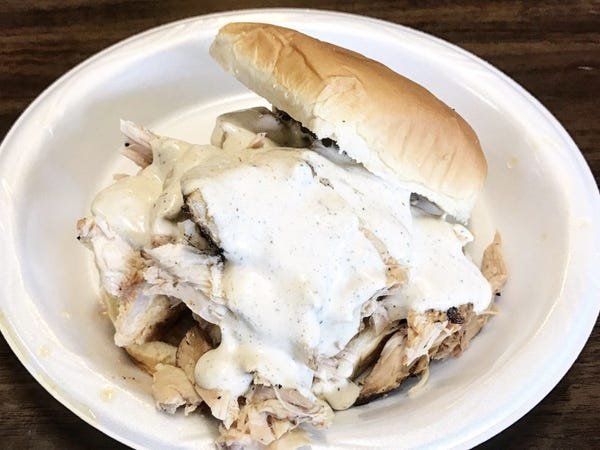
ALABAMA: A chicken sandwich with white barbecue sauce

Alabama serves up a unique chicken sandwich with white barbecue sauce.


Jesse R./Yelp


Alabama’s famous white barbecue sauce — invented by a pitmaster in Decatur, Alabama, in the 1920s before becoming a popular choice across the state — is creamy and tangy, made with mayonnaise, vinegar, salt, and ground black pepper.

ALASKA: A wild Alaskan salmon sandwich


a salmon sandwich with arugula and tomato

Salmon is one of the biggest exports in Alaska.

Shutterstock

Alaska’s salmon is said to be the freshest, pinkest salmon around. The state is the top producer of wild salmon in the world.

ARIZONA: Frybread tacos


frybread tacos with salsa and sour cream

Frybread tacos are an Arizona specialty.

Nate Allred/Shutterstock

Also known as “Navajo tacos,” these are popular in Arizona. The fried dough is topped with traditional taco fillings like meat, beans, and cheese.

ARKANSAS: A deep-fried catfish sandwich


catfish sandwich with fries on a plate

A deep-fried catfish sandwich is a famous local dish in Arkansas.

Shutterstock

Caught locally and tucked between two buttered buns, the deep-fried catfish sandwich is best paired with a side of fries and slaw.

CALIFORNIA: An avocado club sandwich


avocado club sandwich.

Californians love to top their club sandwiches with avocado.

rangtheclick/Shutterstock

Though the famed French Dip originated in this sunny state, California is best known for its avocados. Try one of California’s fresh avocado club sandwiches to see why.

COLORADO: A Denver sandwich


Denver sandwich

A Denver sandwich is made with an omelet.

StockFood/Getty Images

You’ve heard of the Denver omelet, but have you heard of the Denver sandwich? It’s a traditional Denver omelet filled with diced ham, onions, and green bell peppers, and then stuck between pieces of toast. Extra points if you add ham and hash browns.

CONNECTICUT: A Connecticut hamburger


Connecticut hamburger on a plate with two patties

A Connecticut hamburger is typically served on white toast.


Jason P./Yelp


Connecticut is known for its non-traditional hamburgers, which are served on white toast with a choice of onion, tomato, or cheese, but no condiments. Try one at Louis’ Lunch in New Haven.

DELAWARE: A soft-shell fried crab sandwich


soft-shell crab sandwich

Soft-shell crab sandwiches are popular in Delaware.

Coast-to-Coast/Getty Images

Anyone visiting this seafood-obsessed state should try a soft-shell fried crab sandwich topped with coleslaw and leafy greens.

FLORIDA: A Cuban sandwich


cuban sandwich cut in half and stacked on top of one another on a plate

Florida is known for its Cuban sandwiches.

Megan Betz/Shutterstock

The Sunshine State is known for its Cuban sandwich, which features generous portions of ham, roasted pork, Swiss cheese, pickles, and mustard on two slices of Cuban bread.

GEORGIA: A fried chicken sandwich


fried chicken sandwich on a bun with lettuce

Georgia is the home state of Chick-fil-A.

Aly Weisman/Business Insider

Those visiting Georgia — the original home of Chick-fil-A — should partake in a classic fried chicken sandwich with lettuce, tomato, and spicy mayo.

HAWAII: A Kālua-style pork sandwich


pulled pork sandwich with coleslaw

Kālua-style pork sandwiches are popular in Hawaii.

Shutterstock

Kālua-style pork is common fare at most luaus, but the slow-roasted and shredded meat is also amazing on sandwiches. Try yours with pineapple coleslaw for an extra Hawaiian punch.

IDAHO: The “Meat Your Maker” sandwich


meat your maker sandwich from idaho

The “Meat Your Maker” is made with steak, Italian sausage, and bacon.

Emm D./Yelp

The Best Sandwich Shack in Idaho really lives up to its name. Locals swear by the “Meat Your Maker” — a combo of steak, Italian sausage, bacon, and more.

ILLINOIS: A Horseshoe sandwich


Horseshoe sandwich

A Horseshoe sandwich is made with fries and cheese sauce.

Brent Hofacker/Shutterstock

Illinois is known for an open-faced sandwich called the Horseshoe, made with thick-sliced toasted bread, your choice of meat, and topped with french fries and a secret cheese sauce.

INDIANA: A Hoosier sandwich


pork tenderloin sandwich with tomato and lettuce on a white plate

A Hoosier sandwich is made with fried pork tenderloin.

Jeff R Clow/Getty Images

Indiana claims to have the best pork tenderloin in the nation. Put it to the test by tasting a Hoosier sandwich, or a breaded tenderloin on bread.

Purists insist on trying it with only a few dill pickles and some mustard, but you can also get it with lettuce, tomato, and other fixings.

IOWA: A Tavern or “loose meat” sandwich


Tavern sandwich with pickles on a bun

Iowa is home to the tavern or “loose meat” sandwich.

Brent Hofacker/Shutterstock

It’s made with unseasoned ground beef, sauteed onions, and sometimes topped with pickles, ketchup, or mustard on a bun.

KANSAS: “Runza” or “bierocks”


runza

“Runza” or “bierocks” are small, filled bread pockets.

Brent Hofacker/Shutterstock

“Runza” or “bierocks” are a bun-shaped bread pocket filled with beef, cabbage or sauerkraut, onions, and seasonings. The recipe was spread by German immigrants to the Midwest.

KENTUCKY: A Hot Brown sandwich


Hot Brown sandwich with bacon chicken and cream sauce in foil wrapper

The Hot Brown sandwich originated at the Brown Hotel in Louisville in 1926.

Brent Hofacker/Shutterstock

It consists of an open-faced sandwich with turkey and bacon covered in cheesy Mornay sauce and baked or broiled until the sauce begins to brown.

LOUISIANA: A po’boy


po boy sandwich with fried shrimp on a plate

The po’boy sandwich is one of Louisiana’s most iconic eats.

Jean Faucett/Shutterstock

The classic po’boy is made with French bread and roast beef or fried seafood. A “dressed” po’boy has lettuce, tomato, pickles, mayonnaise, onions, and hot or regular mustard.

MAINE: A lobster roll


A lobster roll and chips at Tap & Barrel.

Lobster rolls are one of the most popular local dishes in Maine.

Michelle F/Yelp

What else would you order in Maine but a classic lobster roll? Served on a lightly grilled bun and filled with steamed and buttered lobster, these sandwiches taste like summer.

MARYLAND: A crab-cake sandwich


Crab cake sandwich with fries

Maryland is famous for its crab-cake sandwiches.

eurobanks/Shutterstock

You can find some of America’s freshest crabs in Maryland. Try a crab cake sandwich on a buttered bun with lettuce, tomato, and onion.

MASSACHUSETTS: A Fluffernutter


fluffernutter sandwiches piled on top of a plate

Fluffernutter sandwiches were invented in Massachusetts.

bhofack2/Getty Images

If you’ve never tried the Fluffernutter sammie, you’re missing out.

It’s made with soft white bread topped with peanut butter and marshmallow Fluff, which was invented by Archibald Query of Somerville, Massachusetts.

MICHIGAN: A corned beef sandwich


corned beef sandwich from zingermans deli

Zingerman’s Deli sells a famous corned beef sandwich.


Triphena W./Yelp


Zingerman’s Deli in Ann Arbor is known for its corned beef sandwiches, especially the Oswald’s Mile High, which is made with corned beef and yellow mustard on double-baked, hand-sliced Jewish rye bread.

MINNESOTA: A Jucy Lucy


The Jucy Lucy Matt's Bar burger

A Jucy Lucy is a cheese-filled burger.


Tom C./Yelp


Though the war over which restaurant invented it continues, Minnesota is the official home of the Jucy Lucy — a burger cooked with cheese on the inside that oozes out at the first bite.

MISSISSIPPI: A pig-ear sandwich


pig ear sandwich

A local staple in Jackson is a pig-ear sandwich.


Ken T./Yelp


It consists of two tender pig ears served on a small bun with mustard, slaw, and hot sauce.

MISSOURI: A Gerber sandwich


Gerber Sandwich on a plate

A Gerber sandwich is made with French bread and ham.

Fanfo/Shutterstock

Feast on Missouri’s famous Gerber, an open-faced sandwich with French bread, garlic butter, ham, provolone, and paprika, and then perfectly toasted.

MONTANA: A PB&J with huckleberry jam


peanut butter and jelly sandwich halves stacked on a plate

Montana locals add huckleberry jam to their peanut butter sandwiches.

Shutterstock

Montana is known for its huckleberries, which grow in the wild during the summer and fall seasons. Try its famous huckleberry jam for a delicious PB&J.

NEBRASKA: A Reuben


reuben sandwich in newspaper wrapping with pickle on the side

The classic Reuben sandwich was supposedly invented by an Omaha grocer.

Jeffrey Greenberg/Universal Images Group/Getty Images

It’s made with corned beef, sauerkraut, Swiss cheese, and Thousand Island dressing, and is best served on rye bread.

NEVADA: A Heart Attack Grill burger


heart attack grill burger

Las Vegas’ Heart Attack Grill is periodically in the news for its calorific burgers.

Megan Willett/Business Insider

Some variations contain five burger patties with bacon and, of course, a side of fries.

NEW HAMPSHIRE: A fried ham and cheese Monte Cristo drizzled with syrup


monte cristo sandwich on a plate

New Hampshire is famous for its Monte Cristo sandwiches drizzled with maple syrup.

dirkr/Getty Images

One of the proudest accomplishments of this state is its delicious maple syrup. Order a fried ham and cheese Monte Cristo drizzled with it for the ultimate breakfast sammie.

NEW JERSEY: A Jersey breakfast sandwich


new jersey taylor ham sandwich on a white background

Breakfast sandwiches are a go-to in New Jersey.


Ezume Images/Shutterstock


Stop by any Garden State diner and try the signature Jersey breakfast sandwich. It’s thick-cut Taylor ham (or pork roll) with egg and American cheese on a hard Kaiser roll or bagel.

NEW MEXICO: A green chile cheeseburger


Green chile cheeseburger Buckhorn Tavern NM

Green chile cheeseburgers are popular in New Mexico.


Dan H./Yelp


A cheeseburger is one thing, but a green chile cheeseburger takes it to a whole other level. This state’s signature vegetable adds a major kick to this classic American dish.

NEW YORK: A pastrami sandwich on rye


katz's deli

The pastrami sandwich from Katz’s Deli is arguably the most famous sandwich in the country.

Jake Gabbard/Business Insider

There’s nothing more NYC than a pastrami sandwich from Katz’s Delicatessen in the Lower East Side of Manhattan. The famous deli, which opened its doors in 1888, is one of the city’s oldest delis and arguably the most famous deli in the country. 

Scores of celebrities and politicians have frequented the restaurant over the years, and it was even featured in the classic 1989 romantic comedy “When Harry Met Sally.”

Katz’s is where the iconic “I’ll have what she’s having” scene took place.

NORTH CAROLINA: A pulled-pork sandwich


pulled pork sandwich on a wooden board with barbecue sauce

Pulled pork is a local specialty in North Carolina.

GMVozd/Getty Images

Just like Hawaii, one of North Carolina’s best sandwiches is pulled pork, but make sure to smother it in a tangy, vinegar-based barbecue sauce.

NORTH DAKOTA: Smørbrød


smorrebrod sandwich

Smørbrød is an open-faced sandwich commonly made with rye bread.

izhairguns/Getty Images

This state’s huge Scandinavian population loves their Smørbrød, a classic open-faced sandwich commonly made with rye bread, roast beef, Gravlax (a type of salmon), butter, lettuce, Jarlsberg cheese, pickled herring, hard-boiled eggs, honey mustard, or cucumber.

OHIO: A Polish boy


cleveland polish boy hot dogs with fries on a wooden board

Polish boys are sausage sandwiches topped with fries.

Brent Hofacker/Shutterstock

Not to be confused with Louisiana’s po’ boy, Ohio’s Polish boy is a sausage sandwich native to Cleveland. It has a link of kielbasa covered with a layer of french fries, barbecue or hot sauce, and coleslaw, all on a bun.

OKLAHOMA: A chicken-fried steak sandwich


chicken fried steak sandwich

Chicken-fried steak sandwiches are popular in Oklahoma.


Gina D./Yelp


What’s better than chicken-fried steak? That same breaded and fried steak on a hamburger bun with your choice of condiments.

OREGON: A falafel pita


falafel pita

Falafel pitas are popular in Oregon, where vegan food is a local favorite.

Deb Lindsey/The Washington Post/Getty Images

Portland is known for its delicious vegan food. Falafel pitas, in particular, are a popular choice, packed to the brim with veggies and hummus.

PENNSYLVANIA: A Philly cheesesteak


philly cheesesteak sandwich on a roll

Pennsylvania is known for its Philly cheesesteaks.

Shutterstock

The state’s most famous food by far is the classic Philly cheesesteak.

Thinly cut steak handsomely topped with cheese on a roll is delicious by itself, but don’t be afraid to add sautéed onions, peppers, mushrooms, mayonnaise, hot sauce, salt, pepper, or ketchup.

RHODE ISLAND: A Dynamite sandwich


dynamite sandwich sloppy joe on blue plate

Rhode Island is the home of something called a Dynamite sandwich.

Charles Brutlag/Shutterstock

This tiny state is home to a very big sandwich. The Dynamite, which hails from Woonsocket, is a sloppy Joe burger made with onions, bell peppers, and celery. Be careful — it is spicy.

SOUTH CAROLINA: A tuna melt


tuna melt with crinkle fries on a plate

Tuna melts reportedly originated in South Carolina.

doug m/Shutterstock

People say the tuna melt was born in 1965 in South Carolina at the Woolworth’s lunch counter. Head there and see for yourself why this simple delicacy is a Charleston classic.

SOUTH DAKOTA: A walleye sandwich


walleye sandwich with fruit on the side

South Dakota is known for its walleye sandwiches.

wanderluster/Getty Images

South Dakota’s walleye is next level, so it’s no surprise that the state is known for its walleye sandwiches. When the flaky fish is fried to perfection, it will melt in your mouth.

TENNESSEE: A Fluffernutter


Fluffernutter sandwich with fluff dripping out

Elvis Presley popularized the fluffernutter sandwich.

Business Insider

Sink your teeth into Elvis Presley’s favorite sandwich, made with peanut butter, banana, and bacon. Just be careful — the mix of salty, sweet, and savory is highly addictive.

TEXAS: A brisket sandwich


brisket sandwich on a bun with fries

Texans love to make barbecue brisket sandwiches.


Christine J./Yelp


Barbecue brisket is Texas’s national dish, so try yours on some hardy, homemade bread with or without onions and bell peppers.

UTAH: A pastrami burger


pastrami burgers on a plate

The pastrami burgers from Crown Burgers in Salt Lake City are famous.

Tatty B./Yelp

When in Utah, it’s perfectly acceptable to dig into a burger topped with a quarter-pound of thin-sliced pastrami.

“Pastrami burgers,” which originated at Crown Burgers in Salt Lake City, are slathered with a Thousand Island-style sauce as well as tomatoes, shaved lettuce, and onions.

VERMONT: A Vermonter


vermonter sandwich with turkey and ham on a red plate

A Vermonter sandwich includes ingredients like turkey, ham, and Vermont cheddar cheese.


Gabriel M./Yelp


The “Vermonter” takes advantage of its state’s freshest ingredients, like turkey, ham, Vermont cheddar cheese, green apples, and honey mustard.

VIRGINIA: A grilled ham and cheese


grilled ham and cheese sandwiches

Grilled ham and cheese sandwiches are popular in Virginia.

Azurita/Getty Images

There’s almost nothing more classic than a grilled ham and cheese sandwich, and Virginia is known for its excellent cheeses and succulent ham.

WASHINGTON: Bánh mì


banh mi pork sandwich on a baguette

Seattle has a large Vietnamese community.

Shutterstock

Due to its large Vietnamese community, Seattle is home to some of the best bánh mì sandwiches in America.

The inexpensive staple is usually made with pate, bright, crunchy vegetable slaw, fish sauce, and sliced jalapeño pepper or fresh cilantro.

WASHINGTON, DC: A chili half-smoke


chili half-smoke hot dog in a tray with potato chips

Washington, DC, is home to chili-topped hot dogs called a “chili half-smoke.”

Jon Hicks/Getty Images

Stop into Ben’s Chili Bowl and order a chili half-smoke, a half-pork, half-beef smoked sausage served on a warm steamed bun with mustard, onions, and spicy homemade chili sauce.

WEST VIRGINIA: An apple and turkey sandwich


turkey and apple sandwich on a plate

West Virginians love to add local apples to their sandwiches.

Shutterstock

Make a delicious apple and turkey sandwich with West Virginia’s Golden Delicious apples. Cheese and apples sound like a weird combo, but it’s worth it.

WISCONSIN: A sausage roll or brat bun


bratwurst with sauerkraut on a bun

Grilled bratwurst is popular in Wisconsin, which has a large German immigrant population.

Charles Brutlag/Shutterstock

This Midwestern state has a large German immigrant population, so it’s no surprise that its most famous sandwich contains classic bratwurst. Eat the sausage roll topped with mustard, sauerkraut, and cheese curds — another thing for which Wisconsin is well-known.

WYOMING: A bison meatball sandwich


meatball sub with melted cheese

Bison meatball sandwiches are commonly found in Wyoming.

LauriPatterson/Getty Images

Wide-open Wyoming is where the buffalo roam … and occasionally appear on menus. Try a bison meatball sandwich when you’re here to taste the state’s most famous meat.


Source link

I-thought-traveling-with-toddlers-was-impossible-Now-we-live.jpeg

I thought traveling with toddlers was impossible. Now we live in Spain for 2 months at a time — and it’s cheaper than Disney.

When I was in junior high, I had a family history project. I didn’t know it then, but that project would spark a lifelong interest in my heritage.

In 2018, my wife (who is Cuban with Spanish ancestry) and I took a road trip through snow-capped Spanish mountains, meeting new family members that I never knew existed. When we met these relatives, we all grew close.

My wife and I then wanted to reconnect with our Spanish heritage in a whole new way. We decided that the best way to do so would be to travel to Spain for long stretches, with our toddlers.

For the past three years, we’ve spent two-month stints in Europe as a growing family.

At first, we thought long-term travel sounded impractical — and expensive

When my daughter was 2 years old, she had a 45-minute meltdown at the Miami International Airport. While we were resolving a ticketing issue for our baby boy, our daughter was throwing a loud tantrum. We endured many side-eyes from soon-to-be passengers (one of them snapped at us), and eventually, an airline employee frantically asked us to make it stop.

I thought we would never travel again, but the idea of an extended trip kept lingering in our minds.

On shorter trips, we pushed through and learned tricks that made travel easier, like using inflatable beds that rest on plane seats, small trinkets to play with, and plenty of snacks. With time, we knew we had a shot.


John Paul Hernandez's toddlers sitting on a wall in spain

The author’s toddlers love traveling in Spain.

Courtesy of John Paul Hernandez


We now stay in Spain for 2 months at a time

Thanks to the flexibility of freelancing and some practice in penny pinching, we learned we could travel to Spain for two months for about the cost of a typical family Disney trip.

A trip to Disney for a family of four can cost $6,000 to $10,000 a week. An extended trip to Spain, I quickly learned, ranged from $4,220 to $4,900 for an apartment in the central parts of major cities.

When we book an apartment for a month or two in Spain, for example, we get rates much lower than for a shorter trip because Airbnb offers discounts on longer stays.

To get the family to Europe, we collect airline miles from credit card offers and fly mostly for free.

While on the trip, we rely on public transportation and shift our stay from a “tourist” experience to living like a local to continue saving money.

This worked for our trips in 2023, 2024, and 2025.

We lived like locals in Spain

When we transitioned from visiting to living in Spain, we focused on the town we were in and the people around us. We didn’t eat out for every meal, but cooked traditional dishes with local ingredients.

Our neighbors became friends, and our kids played at parks with familiar faces. Eventually, these friends invited us to their homes, and we stayed in touch after our trips.

To explore the country, we focused on different regions. For example, in year one we stayed in the Comunidad Valenciana, then on other trips in the País Vasco and Andalucía.

Once we were in these regions, we focused mainly on our home base and explored the nearby cities on weekend trips.

Our kids have gained a lot so far

Our toddlers are now willing to try different foods without hesitation, no matter where we are. They understand and use words they normally wouldn’t hear at home in the US.

As they get older in school, some of the places and events they learn about will be personal because they’ve been there and touched the stones.

My son learned to walk in Spain and has had all of his birthdays there. Spain also became a base for exploring other countries thanks to cheap, short flights.

More families can do this than you’d think

Our experiences in Spain have inspired many of our friends and family. I’m helping a cousin and a neighbor plan similar trips with their children.

With budgeting and smart planning, it’s much more affordable than two-week vacations in many parts of the US.

I’m not sure how long we’ll be able to do extended stays like this, but I do know these memories will be ingrained in our family.

They’ve helped shape my kids’ lives (our third child is on the way), and they continue to inspire us even at home in the US — by cooking Spanish meals, enjoying the present through walks, and lingering over late-night, hourslong dinners.

John Paul Hernandez is a marketing writer for tech companies. He’s based in Florida’s Treasure Coast. Connect with him on LinkedIn.


Source link

My-company-announced-a-return-to-office-policy-a-few-weeks-ago.jpeg

My company announced a return-to-office policy a few weeks ago. It’s already affecting my relationship with my partner.

I hadn’t always been a believer in working from home. When remote work first became part of my life, I resisted it. I missed the structure of an office, the separation between work and everything else. Home felt like the wrong setting for serious work.

Then, slowly, it didn’t. I found a rhythm I hadn’t expected. Mornings became mine. I cooked real lunches. I thought more clearly.

More importantly, my girlfriend and I have been living together in London for a year, and we have built a life around being home together that feels chosen rather than forced. I’ve stopped seeing remote work as a compromise and started seeing it as the better version of my day.

So when the email came from work that said I’d have to return to office, it wasn’t just a scheduling change. It was a disruption to something we had spent months building, a routine that had come to feel like the foundation of everything else.

It has only been a few weeks since the announcement, and already, almost nothing looks the same — especially my relationship.

My partner and I both worked from home, so we had to rethink everything

The first thing we’ve had to confront was practical. Two people who both work from home occupy a shared space in a very specific way. That balance had taken time to calibrate. We had never sat down and designed it. It had just formed, organically, around our needs. The return-to-office policy exposed how deliberate that accidental life actually was.

My girlfriend still works remotely, so the shift hasn’t been symmetrical. I now leave each morning to head into a version of London we rarely engaged with during the week — the commuter version, the structured version — while she stays inside the life we’d built together. That asymmetry requires more honest conversation than either of us expected.

We’ve had to redesign things we never explicitly designed in the first place. What do mornings look like now? Who handles what, and when? The small, invisible agreements that hold a shared life together suddenly need to be spoken out loud. That process, still ongoing after just a few weeks, has been more revealing than disruptive. But it has required real effort.

Commuting in London comes with a price, and it goes beyond the cost of a train ticket

The financial reality surfaced quickly. Commuting to London isn’t cheap, and the daily arithmetic of transport, lunches, and the small expenses that accumulate when you’re out of the house adds up faster than expected. We had saved money by being home — on food, on travel, on the general inefficiency of city life when you’re moving through it daily. That buffer has started to shrink almost immediately.

But the more significant cost has been time. The commute is carving hours out of the day that had previously been ours. Mornings that once felt spacious have become logistical, and evenings are now shortened. The long, unhurried romantic dinners that had been a quiet anchor in our week are starting to require more effort to protect. Time, it turns out, had been our most abundant resource when we were both at home. We hadn’t noticed until it started running out.

There is also an energy cost that is harder to quantify. Offices are stimulating in ways that are both useful and exhausting. I now come home differently — more depleted, less present. After just a few weeks, my girlfriend has already noticed the shift before I fully named it myself. The version of me that walks through the door at the end of the day is not quite the same one that used to simply close the laptop and call it done.

Going back to the office has asked something new of our relationship

What surprised me most wasn’t the logistics. It was how much our new relationship had quietly depended on proximity: a shared lunch, a passing conversation in the kitchen, the low-level awareness of each other that comes with being in the same space. Those things weren’t dramatic, but their absence has been.

We are now trying to be more intentional. Dinners that used to happen naturally now need to be protected. Check-ins that once occurred organically require more deliberate effort. It isn’t a strain exactly; it’s a recalibration.

The return-to-office policy hasn’t damaged anything between us. But it is revealing how much of our relationship had been built on the life we’d created around being home. Losing some of that structure forced us to be more conscious about what we actually wanted, and more honest about what we weren’t willing to give up.

We have only been doing this for a few weeks. Something tells me the real adjustments are still ahead.


Source link

I-did-Y-Combinator-in-2016-and-2025-The-first.jpeg

I did Y Combinator in 2016 and 2025. The first time felt more ‘family-style.’

This as-told-to essay is based on a conversation with Quang Hoang, the 37-year-old cofounder and CEO of Vybe, who lives in San Francisco. It’s been edited for length and clarity.

We started 10 years ago. We were out of college and wanted to solve a problem that we experienced ourselves. When you’re a student, you don’t have that many problems.

When we were interns, we had a lot of expense reports, but we would lose receipts and lose money. When you’re a student, you don’t have much money. One of the first problems we wanted to solve was: Let’s build a mobile app to save your receipts, a bit like Expensify.

Slack released its first API at the time. Now, we could create a bot. That was our pitch to YC: This is a new thing called a Slack bot. During the interview, they installed the Slack bot, and it pinged everyone in the YC Slack. Everyone started to use it. We got in.

It was 2016. At the time, it was in Mountain View. Sam Altman was still a partner. We had some office hours with him.

The core principle remained the same, but everything felt way less streamlined and processed than it is today. For example, the dinners were way more family-style. There weren’t any visible employees. Some of the partners were cooking sometimes. Paul Graham was there.

We still were 100 people total in the batch, which is probably 3x less than it is today. Everything was in-person. We came from France and rented a house. It was a big difference to be in Mountain View when you’ve never lived in the US, than when you already live in San Francisco, and you do YC for the second time.


Quang Hoang is pictured at Demo Day for his first startup

Quang Hoang pitched investors on his Slack bot startup at Demo Day in 2015.

Quang Hoang


The former company was bought two years ago by Coda, which was acquired by Grammarly. Then, I discovered vibe coding. I decided that Notion, Airtable, Coda, and Retool are going to be the incumbents, and that a new category of vibe-coding platforms are going to emerge.

One of the partners at YC is also a friend, Nicolas Dessaigne. He said, “You should apply to YC.” It was a big opportunity cost to leave the company that acquired me, and having something like YC is a bit reassuring.

The fundamentals are still the same. You still have to talk to users, code, and grow. You still have to grow every single week at a steady percentage growth. It was 5-10% at the time; today it’s more like 10, 12, 15%.

You have more and more young founders. It’s not something that happened in the past 10 years; it probably happened in the past two years. I was one of the old folks. It was also my second company. Many are first-time founders.

I think it was already the case that you want young founders that don’t know limits and don’t have anything that would prevent them from thinking really big. With AI, it’s the same thing.

A constant debate that you have less when you’re a first-time founder is: Should I ship this, or should I double-check it? As a younger, first-time founder, you might have less experience with technical depth because you might not have worked with bigger companies before. You say: Let’s ship this.

The batch sizes don’t feel that different. The interaction you have with your batch is through weekly dinners, group office hours, individual office hours, and Demo Day. You also have some workshops here and there. If you are 300 or 400 people in the batch, it doesn’t change that much if you’re in subgroups.

Sometimes there are events, like when Sam Altman comes to talk, or the CEO of Perplexity or Cursor, where you need to have the whole batch. But, it’s conference style anyway. You have 400 people in a room, sure, but if it’s 150 or 400, it’s the same.


Quang Hoang is pictured at Demo Day for his second startup.

Quang Hoang’s second Demo Day, this time for Vybe.

Quang Hoang


The themes changed a lot, obviously. It was a lot of mobile apps and cloud. Today, it’s a lot of AI. The brand of YC helps a lot. The brand is probably 10x better today than it was 10 years ago.

Demo Day was way more important at the time than it is today. It feels more like an anchor date. It gives urgency to investors: if you don’t invest in the hot startups now, they will meet with thousands of investors two weeks from now, and you might just lose your opportunity.

Good investors all invest before Demo Day. It’s just an anchor date to create a timeline for the investor and the startup.

If you ask me: Are you happy that you went back to YC? The answer is super straightforward. It’s 100% yes.


Source link