After-a-breakup-I-put-my-belongings-in-storage-and.jpeg

After a breakup, I put my belongings in storage and traveled full-time for 3 years. It was the best chapter of my life.

Three and a half years ago, I stood in my New Jersey apartment, surrounded by boxes I was about to put into storage. Tears streamed down my cheeks.

I’d recently ended a two-year, live-in relationship. We loved each other deeply, but just weren’t the right fit — and although the split was a gut-wrenching decision, we both knew it was the right move.

I had just accepted a fully remote job, which allowed me to explore moving out of the New York City area — something I had been considering for about a year.

I planned to just travel for a few months before settling down somewhere, but I ended up spending the next three years as a nomad.

Although it wasn’t quite what I’d pictured when I said goodbye to the apartment I shared with my ex, it turned into one of the most important chapters of my life.

My brief stint abroad turned into a longer chapter


A shot of a building and Mexican flag in Mexico City.

My time in Mexico City taught me about my own resourcefulness and independence.

Samantha Caffrey


My post-breakup plan was to put all of my belongings into a storage unit and spend a few months in Tulum.

After that, I would travel to Miami and Los Angeles, “interviewing” both cities as candidates for a longer-term move. I was about seven months into this plan when I learned my role was going to be eliminated.

Luckily, I was able to secure freelance work, so I decided to continue my travels since I wasn’t needed in one particular place for my job.

From Tulum, I headed to Mexico City. After just a few days, I fell in love with the food, vibrancy, people, and culture. My one-week vacation turned into an almost three-month stay.

During my time in Mexico City, I explored art galleries and museums, learned some Spanish, made friends, went on dates, visited small shops, and tipped local people well.

These little moments helped me learn how adaptable I truly was. I realized I could make friends anywhere, stay disciplined with my work even while exploring a new place, safely navigate dating as a solo traveler, and be extremely resourceful.

I kept exploring. I took the nomad life slowly, spending about four or five months abroad at a time in places like Paris, Lisbon, Málaga, London, Melbourne, Miami, and Tulum.

Between travels, I’d spend a few months recharging in a sublease (or a friend’s apartment) in New York City.

I felt my confidence grow as I navigated new cities and connected with inspiring women from all over the world


The writer roaming a hallway in Versailles.

I traveled the world, from France to Mexico to Australia.

Samantha Caffrey


When traveling solo, every choice you make is yours, from where you eat to how you spend your days. I felt immensely grateful for this freedom — every day, it struck me how lucky I was to have every minuscule decision be solely my own.

That’s not to say I felt lonely, though. With each new city and country I stayed in, I was delighted by the magic of connecting with strangers.

One time, I struck up a conversation with another woman at a particularly intense yoga class in Tulum. She was visiting from Canada, and we ended up spending a whole day together.

I had another memorable experience in Europe. I had been traveling by myself for about three years at that point, and although it was incredible, I was exhausted. I felt ready to return to New York City, but I wasn’t sure I could afford to do so.

Then, one afternoon, my spirits were lifted when I found myself in a café in Paris, enjoying a chocolate-chip cookie and a latte. An older woman started chatting with me, and soon, another young woman traveling solo from Korea joined in.

We all shared stories and giggled as we sipped our coffees. As the older woman left the café, she said, “You two girls exchange numbers now, and spend time together.”

We laughed at the gentle demand, but wound up spending that evening — and the next day, too — exploring the city as a pair. I may or may not ever see her again, but she told me that if I ever visit Seoul, I’ll be welcomed with open arms.

Best of all, this time in my life helped me stay open and live in the moment


The writer standing in front of buildings in London on a sunny day.

One of the best parts of traveling was connecting with people from around the world.

Samantha Caffrey


I learned that not every place has to be a permanent home, and not every relationship has to last forever; in fact, some friendships might just last for the span of a trip.

The memories I made during this time will stick with me, though I’ve since emptied out my storage unit and settled into a one-year lease in New York City.

My nomadic chapter is closed for now, but my encounters with strangers, small moments in new cities, and solo time with myself left me changed for the better — and will surely inspire my next adventure.




Source link

Kavanaugh-in-dissent-Bad-policy-or-not-Trumps-tariffs-were.jpeg

Kavanaugh in dissent: Bad policy or not, Trump’s tariffs were ‘clearly lawful’

Three conservative justices of the US Supreme Court — Brett Kavanaugh, Clarence Thomas, and Samuel Alito — broke with the majority Friday, arguing that President Donald Trump had clear authority to impose his sweeping tariff policy.

The three dissenting justices said the president’s tariffs were perfectly legal under the 1970-era law Trump used that says presidents can “regulate” importation in the case of emergencies.

“The tariffs at issue here may or may not be wise policy,” Kavanaugh wrote. “But as a matter of text, history, and precedent, they are clearly lawful.”

The three justices also noted that the majority 6-3 decision is silent on how to return billions of dollars in tariffs that have already been collected.

That process “is likely to be a ‘mess,'” as was acknowledged at oral arguments, Kavanaugh wrote in a lengthy dissent that Thomas and Alito joined.

The two dissents differed with the majority on two fronts: Trump’s bypassing of Congress in imposing tariffs, and the legality of the president’s invocation of the International Emergency Economic Powers Act, or IEEPA.

In the dissent written by Kavanaugh, the justices argued that presidents have “commonly” imposed tariffs to regulate imports throughout American history.

Interpreting IEEPA to exclude tariffs “creates nonsensical textual and practical anomalies,” Kavanaugh wrote. As with quotas and embargoes, tariffs are a “traditional and common tool to regulate importation,” he said.

“It does not make much sense to think that IEEPA allows the President in a declared national emergency to, for example, shut off all or most imports from China, but not to impose even a $1 tariff on imports from China,” Kavanaugh wrote.

Reversing the tariffs may be an exercise in futility, Kavanaugh added. Even without IEPPA, “numerous other federal statutes authorize the president to impose tariffs and might justify most (if not all) of the tariffs at issue in this case,” Kavanaugh wrote.

In a separate dissent, Thomas tackled the constitutional question, arguing that the Constitution allows Congress to delegate tariff authority to the president.

“Historical practice and precedent confirm that Congress can delegate the power to impose duties on imports,” he said.


Source link

We-paid-9000-for-the-cheapest-room-on-an-ultra-luxury.jpeg

We paid $9,000 for the cheapest room on an ultra-luxury Caribbean cruise. See inside our ship and 302-square-foot suite.

  • We booked the least expensive suite on a Seabourn ultra-luxury cruise for about $9,000.
  • After crunching numbers and seeing high-end resort prices, this felt reasonable for a family trip.
  • We loved getting to see lots of new places and not worry about having to plan our meals.

I paid $9,000 for what was technically the cheapest room on an ultra-luxury cruise — a price that initially felt steep until I compared it with alternatives.

My family had been planning a multigenerational trip to the Caribbean during the busy period between Christmas and New Year’s Eve, which is also one of the most expensive travel weeks of the year.

We wanted something that felt indulgent without becoming logistically exhausting or financially disproportionate once all the extras were added up.

At first, we looked at high-end beach resorts, but they were commanding eye-watering rates. I saw a few in Barbados and St. Barts charging over $4,000 a night for a room, and that price doesn’t even include food, drinks, and gratuities.

The costs seemed like they could really add up. As we ran the numbers, an all-inclusive cruise began to make more sense.

Plus, we liked the idea of exploring Caribbean destinations we hadn’t visited before without having to deal with multiple hotel check-ins, flights, and transfers. A port-heavy itinerary could allow us to sample several places while unpacking just once.

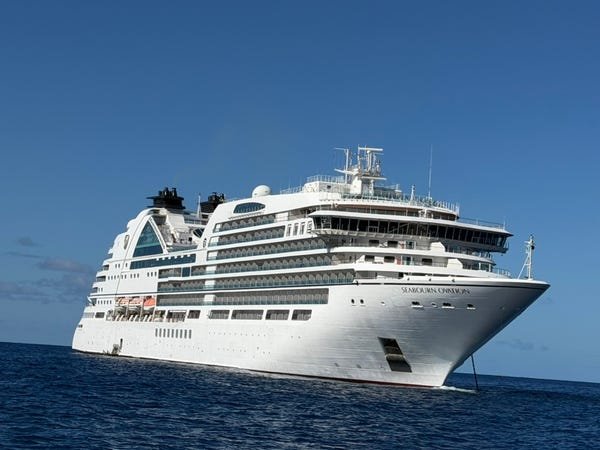
So, our group settled on a 12-night Caribbean cruise aboard the Seabourn Ovation.

Our family booked two rooms and spent about $20,000 on the cruise.

Our group of five set sail on the Seabourn Ovation.

David Morris

We traveled as a group of five: my mother, my brother and sister-in-law, their 7-year-old son, and me.

In total, we booked two entry-level suites — one for my mother and me, and another for my brother, sister-in-law, and their son — bringing the combined cruise fare to just over $20,000 for five people across 12 nights.

This figure includes accommodations, all meals, a selection of soft drinks and alcoholic beverages, and gratuities. We saved some money on my 7-year-old nephew’s fare thanks to the cruise line’s third-guest-at-half-price policy.

By booking through a preferred travel advisor, I also received $400 in onboard credit, plus an additional $250 referral credit (which my brother’s family also received).

Our cabin felt like part of a boutique hotel.


Two beds in cabin on cruise ship

A wide shot of our suite’s interior on the Seabourn Ovation.

David Morris

Our suite measured 302 square feet, plus a 68-square-foot balcony.

Its decor was pretty minimal, but it felt a bit elevated with accents of marble, dark wood, and glass.

Despite being the cheapest option on the ship, this room felt more like it was part of a boutique hotel than just a standard cruise cabin.

The walk-in closet was a pleasant surprise.


Closet with draw chest, hooks on walls

We could fit a lot of clothes in here.

David Morris

The base-category suite felt thoughtfully laid out, with a seating area, a couch, a table, two beds, and a generously sized walk-in closet. Our clothes and bags easily fit inside with space to spare.

In the other suite, a sofa bed was set up as a dedicated sleeping space for my nephew.

The bathroom had dual sinks, a tub, and a compact but functional shower.


White bathroom with large mirror, counter

The bathroom felt spacious enough.

David Morris

The bright-white bathroom featured dual vanities, a soaking tub, and a glass-enclosed shower. My only critique was the shower size, which felt slightly tight compared to ones in some newer ships we’ve sailed on.

Our room’s minibar was stocked exactly to our preferences.


Top of mini fridge with canned drinks, bottle of water

Before sailing, we submitted drink preferences to the Seabourn crew.

David Morris

We were delighted to find our room’s minibar stocked with complimentary ginger beer, juices, and the spirits we requested prior to our sailing.

Twice-daily housekeeping kept everything meticulously refreshed.

Room aside, we were pretty happy with the ship.


Sushi on plates

We had sushi on the ship.

David Morris

Since all of our meals, standard beverages, and gratuities were included in the cost of the cruise fare, we didn’t have to budget or crunch numbers during our trip.

We had most of our dinners in the ship’s main dining room, which was so easy. It felt quite formal, and the rotating menus kept things interesting across the 12-night itinerary.

Passengers also had access to The Patio, a poolside eatery with laid-back fare, and The Colonnade, a more casual spot serving buffet breakfasts and lunches, plus seated themed dinners.

We also enjoyed our opportunities for specialty dining.


Charred seafood and steak in plates

The food at Solis really impressed me.

David Morris

Options for specialty dining included a sushi restaurant and a Mediterranean eatery called Solis, which was a standout for me.

The menu featured steak, lobster, and whole grilled fish deboned tableside. I particularly loved its post-dinner affogatos

Pools, hot tubs, and quieter outdoor spaces were easy to find.


Author David Morris smiling on top deck of cruise

The main deck was lit up at night.

David Morris

The ship has a large main pool surrounded by lots of loungers, though we preferred the smaller hot tubs in other areas.

Quieter spots, like the hot tub at the bow with incredible views of the ocean, quickly became our favorites.

My favorite area on board was The Retreat.


Partially covered deck area with lounge chairs

The Retreat was one of the best places to get work done.

David Morris

Located on the top sundeck, The Retreat was my favorite area on the ship.

The space offered shaded cabanas, a noticeably calmer atmosphere than the main pool deck, and attentive, unhurried service.

To access it, passengers had to pay an additional $150 per day on port days or $250 on sea days.

Booking it on sea days felt especially worthwhile. The quiet setting made it easy to relax or catch up on a bit of remote work on my laptop without feeling out of place.

Excursions cost extra, but they felt well-organized and fairly priced.


Selfie of author and family on cruise ship

We embarked on some excursions at the ports.

David Morris

We mostly booked excursions through the cruise line for peace of mind.

Our favorite was in Saint Lucia, where a packed day included a catamaran ride, volcano hike, mud bath, and snorkeling.

The excursion ran late, but the ship waited for us as it had been booked through them.

Holiday surprises added to the experience.


People in sand on beach with cooler of drinks

We spent the holiday on a beach.

David Morris

On Saint Kitts, the crew arranged a private Christmas Day beach party with grilled lobster and drinks. Later, Santa Claus arrived by Jet Ski to serve caviar and Champagne in the surf.

The cruise’s overall cost felt reasonable considering everything it included.


Group of people dressed up, posing by stairs on cruise ship

The cruise meant we could visit new places without planning out flights and hotels.

David Morris

Ultimately, our cruise averaged out to about $333 per person, per night. That felt surprisingly fair considering how much was included in our 12-night trip.

We also really enjoyed the ship’s intimate size. Compared to other mega-ships carrying thousands of people, this 600-passenger vessel felt calm, navigable, and personal. We never felt overwhelmed by crowds, even on sea days.

Although children aren’t typically the target audience for ultra-luxury cruises, my nephew genuinely had a great time alongside the mostly older guests. His sailing also felt like a great value, considering he was charged half price as a third guest and still had his own proper bed.

For a multigenerational holiday trip that combined ease, variety, and consistent service, the value ultimately justified the price.

All in all, we enjoyed the trip enough to book another Seabourn voyage (at a discounted price) before disembarking.


Source link

Photos-show-how-Love-Story-recreated-Carolyn-Bessette-Kennedys-iconic-style.jpeg

Photos show how ‘Love Story’ recreated Carolyn Bessette-Kennedy’s iconic style

  • “Love Story” follows the doomed love story of JFK Jr. and Carolyn Bessette-Kennedy.
  • The show recreates several of Bessette-Kennedy’s iconic looks and timeless style.
  • The show’s costume designer was replaced after initial backlash to how star Sarah Pidgeon was styled.

The iconic style of Carolyn Bessette-Kennedy has been often imitated but never replicated — until now.

“Love Story,” which is produced by Ryan Murphy for FX, chronicles the fated relationship between John F. Kennedy Jr. and Carolyn Bessette-Kennedy, who died in a plane crash off the coast of Martha’s Vineyard in July 1999.

The series has drawn praise for its striking casting — with Sarah Pidgeon bearing an uncanny resemblance to Carolyn Bessette-Kennedy and Paul Anthony Kelly closely capturing the look of John F. Kennedy Jr. — as well as for its thoughtful costume design, which carefully recreates and honors Bessette-Kennedy’s real-life style.

Here’s a look at how the show recreated and paid homage to Carolyn Bessette-Kennedy’s style.

The series recreated an early Carolyn Bessette-Kennedy look down to the leather loafers.

Jenny Landy and Carolyn Bessette-Kennedy in New York City in 1995; Sarah Pidgeon filming “Love Story” in New York City.

Patrick McMullan/Patrick McMullan/Getty Images; TheStewartofNY/GC Images

In this scene, before she meets John F. Kennedy Jr. for the first time, Carolyn (played by Sarah Pidgeon) wears a simple black turtleneck, flared black capri pants, and black leather loafers.

In both the show and real life, Bessette-Kennedy worked as a showroom assistant for Calvin Klein before rising the ranks to become head of publicity for the fashion house.

Despite marrying into American royalty, Bessette-Kennedy knew how to perfect a casual look.


JFK Jr. and Carolyn Bessette in New York City, and Paul Kelly and Sarah Pidgeon are seen on the set of

JFK Jr. and Carolyn Bessette in New York City, and Paul Anthony Kelly and Sarah Pidgeon are seen on the set of “Love Story.”

Mitchell Gerber/Corbis/VCG via Getty Images; Jose Perez/Bauer-Griffin/GC Images/Getty Images

She was often seen wearing loose Levi’s 517 jeans, her hair slicked back into a bun, with a simple monochromatic coat over the top.

When it came to recreating the New York City icon’s style, the series didn’t always nail it. Early leaked images from the set were criticized online for being too modern, fast-fashion-looking, and different from Kennedy-Bessette’s more upscale style.

In response to the backlash, the show brought in a new costume designer, Rudy Mance, who dedicated himself to making the costumes as accurate as possible.

“I get it. I’m protective of [John and Carolyn] as well. We all just wanted to be as precise and accurate as possible,” Mance told Variety.

Mance said he and his team studied for months throughout filming, comparing old paparazzi photos of the couple with the new looks he was creating for the show and pulling in as many archival and vintage pieces as possible to accurately recreate the look.

Part of Bessette-Kennedy’s enduring appeal was her dedication to a minimalist, understated style that felt polished yet effortlessly cool.


Carolyn Kennedy in 1996; Sarah Pidgeon seen on the set of

Carolyn Bessette-Kennedy in New York City; Sarah Pidgeon on the set of “Love Story.”

Lawrence Schwartzwald/Sygma/Getty Images; Jose Perez/Bauer-Griffin/GC Images/Getty Images

“There’s so much mystery about Carolyn. My familiarity with her was through paparazzi images,” lead actor Sarah Pidgeon told Vogue.

Mance said that recreating Kennedy’s style before she was thrust into the public eye was the most challenging.

“Everybody knows what they wore from 1996 to 1999, but we were telling the story of how they met,” he said, according to Glamour.

Her formal looks remained simple but added a sexy edge, a balance “Love Story” tried to recreate.


Carolyn Bessette-Kennedy and JFK Jr. in 1998; Sarah Pidgeon in

Carolyn Bessette-Kennedy and JFK Jr. in 1998; Sarah Pidgeon in “Love Story.”

Steve Eichner/Penske Media/Getty Images; FX Networks

Bessette-Kennedy often looked effortlessly sexy when she stepped out on red carpets, like in the strapless black Yohji Yamamoto gown photographed above. Pidgeon wears a similar dress for her meet-cute with Kelly in episode one of the series.

It was delicate work for Pidgeon to strike the same balance, especially when fans reacted strongly to early images of her in the role. However, the actor told Vogue she was ultimately grateful for the public feedback about her portrayal.

“The online conversations at the beginning of the process served as a reminder of how important it was to get our portrayal of Carolyn correct. She grew even more important to me,” Pidgeon told Vogue. “People really, really love Carolyn, and my priority every single day on set was doing justice to her legacy.”

And even when they were recreating simple outfits, the “Love Story” team ensured the fit was similar to what Carolyn would have worn.


Carolyn Bessette Kennedy poses for a picture at a gala in 1999; Sarah Pidgeon in

Carolyn Bessette-Kennedy poses for a picture at a gala in 1999; Sarah Pidgeon in “Love Story.”

Evan Agostini/Liaison/Getty Images; FX Networks

Although Bessette-Kennedy’s simple outfits could be recreated with off-brand designers — like the white blouse and floor-length black skirt by Yohji Yamamoto that she wore in 1999 — Mance was dedicated to finding archival pieces. Pidgeon was wearing true recreations of Bessette-Kennedy’s looks whenever possible.

He also ensured the pieces would fit Pidgeon similarly to how they fit Bessette-Kennedy, as Pidgeon told Vogue.

“We found her Prada and Valentino coats, and fitted some Levi’s so that they looked exactly how they fit Carolyn,” Pidgeon told Vogue.

By recreating the magic of Bessette-Kennedy’s wardrobe, the “Love Story” team offered a window into her world.


Carolyn Bessette Kennedy in 1999; Sarah Pidgeon on the set of

Carolyn Bessette-Kennedy in 1999; Sarah Pidgeon on the set of “Love Story.”

Justin Ide/Getty Images; Jose Perez/Bauer-Griffin/GC Images/Getty Images

Kennedy’s clothes were always going to play a central part in her on-screen portrayal since style was so critical to her identity. However, Pidgeon said she hoped the clothes she wears offer a jumping-off point for the total woman she hopes to portray.

“She is known as this minimalist fashion icon, but I learned that she was also vivacious, funny, and had a wildness about her,” she told Vogue.


Source link

Supreme-Court-strikes-down-swath-of-Trumps-tariffs-—-but.jpeg

Supreme Court strikes down swath of Trump’s tariffs — but he has other options

The Supreme court struck down a chunk of President Donald Trump’s sweeping tariff policy on Friday, finding a new limit to the expansive presidential powers he has sought.

The 6-3 decision centered on the tariffs Trump justified under the International Emergency Economic Powers Act, a national security law that allows the president to regulate economic activity during emergencies.

Those IEEPA-justified tariffs have been one of Trump’s most powerful weapons in his efforts to renegotiate trade agreements around the globe. They include Trump’s so-called “Liberation Day” tariffs, announced in April, which are at least 10% on nearly every country in the world.

The Trump administration’s use of the law went too far, wrote Chief Justice John Roberts in the majority opinion. Trump would need a distinct law from Congress “to justify his extraordinary assertion of the power to impose tariffs,” he wrote.

“What common sense suggests, congressional practice confirms,” he wrote. “When Congress has delegated its tariff powers, it has done so in explicit terms, and subject to strict limits.”

The Supreme Court’s decision comes as the United States trade deficit is shrinking, largely due to the Trump administration’s tariffs, which are taxes on imported goods. It shrank to $29.4 billion in October, the lowest figure since 2009, according to recently published Commerce Department data.

Two groups of businesses filed lawsuits challenging Trump’s authority to impose tariffs through IEEPA. The Supreme Court combined their cases and put it on the fast track, holding oral arguments at the beginning of its November term.

IEEPA, a Carter-era law, gives presidents the power to “regulate” importation in times of emergency. The Trump administration claimed that it included the ability to impose tariffs — a position no other president has taken.

Lawyers representing the businesses argued that Congress has been clear about taxation and tariff powers in other laws, and would have been clear if IEEPA were meant to confer those powers to the president.

During oral arguments, most judges expressed skepticism about the Trump administration’s arguments. Justice Neil Gorsuch, whom Trump appointed to the bench in his first term, said taxes were “part of the spark of the American Revolution” and should get careful treatment.

“The power to reach into the pockets of the American people is just different,” Gorsuch said. “And it’s been different since the founding.”

The Supreme Court’s ruling does not affect the tariffs that Trump has imposed using other laws, and Trump still has the power to issue additional tariffs using those laws.

But his administration has favored IEEPA because of its perceived flexibility. The other laws that allow presidents to impose tariffs without explicit Congressional approval have limits — including built-in expiration dates and caps on the amount taxed. They also make it more difficult to target particular countries, rather than certain industries.

This is a breaking story. Please check back for updates.


Source link

I-toured-the-USS-Lionfish-a-Balao-class-submarine-that-rescued.jpeg

I toured the USS Lionfish, a Balao-class submarine that rescued downed pilots in World War II. Take a look inside.

  • The USS Lionfish was commissioned in 1944 and earned one battle star for service in World War II.
  • It sank a Japanese submarine, rescued the crew of a B-29 bomber, and served as a training submarine.
  • The Balao-class submarine is now a museum docked at Battleship Cove in Fall River, Massachusetts.

The World War II submarine USS Lionfish was part of America’s “Silent Service.”

Despite comprising less than 2% of all US Navy vessels during World War II, submarines like the USS Lionfish sank 55% of Japanese vessels in battle.

This once-fearsome vessel is now a 311-foot-long museum exhibit, allowing the public to learn about its top-secret wartime operations.

Take a look inside the USS Lionfish.

Commissioned in 1944, the USS Lionfish earned one battle star for service during World War II.

The USS Lionfish at sea in an undated photo.

Arkivi/Getty Images

Over the Balao-class submarine’s two war patrols, she sank a Japanese submarine, destroyed a schooner, and rescued the crew of a downed American B-29 bomber.

The USS Lionfish was recommissioned for the Korean War, serving from 1951 to 1953.

From 1960 to 1971, the USS Lionfish served as a reserve training submarine, teaching crew members to operate similar vessels.

Since 1973, the USS Lionfish has been on display at Battleship Cove, a maritime museum in Fall River, Massachusetts.


The USS Lionfish.

The USS Lionfish.

Talia Lakritz/Business Insider

Tickets to Battleship Cove cost $25 per adult. I visited the museum in January to take a closer look at the retired submarine.

The first stop on my self-guided tour was the forward torpedo room, where 16 torpedomen slept and worked.


The forward torpedo room on board the USS Lionfish.

The forward torpedo room.

Talia Lakritz/Business Insider

The forward torpedo room featured six torpedo tubes, each storing a torpedo, and 10 reloads. The 16 crew members slept alongside the torpedoes on pull-out bunks, remaining ready to fire at all times.

Behind the torpedo room was officers’ country, which included the officers’ pantry.


The officers' pantry on board the USS Lionfish.

The officers’ pantry.

Talia Lakritz/Business Insider

In the officers’ pantry, meals for the higher-ranking crew members were reheated and plated on Navy china. They ate the same food as the rest of the sailors, but in a fancier setting.

Officers used the wardroom for dining, working, and relaxing.


The wardroom on board the USS Lionfish.

The wardroom on board the USS Lionfish.

Talia Lakritz/Business Insider

It could also serve as an operating room in medical emergencies.

Junior officers slept in a room with four bunks.


The junior officers' quarters on board the USS Lionfish.

The junior officers’ quarters.

Talia Lakritz/Business Insider

Officers enjoyed more privacy on board than enlisted men.

Senior officers had even more privacy in a room with a triple bunk.


The senior officers' quarters on board the USS Lionfish.

The senior officers’ quarters.

Talia Lakritz/Business Insider

The submarine’s second-in-command, known as the executive officer, slept in this room.

The commanding officer slept in the only private room on board the submarine.


The commanding officer's stateroom on board the USS Lionfish.

The commanding officer’s stateroom.

Talia Lakritz/Business Insider

The commanding officer’s stateroom featured a small desk that functioned as a private workspace.

Chief petty officers slept five to a room in their quarters.


The chief petty officers' quarters on board the USS Lionfish.

The chief petty officers’ quarters.

Talia Lakritz/Business Insider

Chief petty officers served as liaisons between the officers and the crew. This room was also colloquially known as the “goat locker” since the more experienced officers were affectionately nicknamed “old goats.”

In the ship’s office, an administrator known as the yeoman handled all of the ship’s paperwork.


The ship's office on board the USS Lionfish.

The ship’s office.

Talia Lakritz/Business Insider

Personnel files, orders of supplies, and other administrative tasks were the yeoman’s domain.

Equipment in the control room managed the submarine’s depth, speed, steering, and navigation.


The control room on board the USS Lionfish.

The control room.

Talia Lakritz/Business Insider

The commanding officer issued orders from the control center or the conning tower located directly above. The USS Lionfish’s conning tower wasn’t open to the public, but I did get to look inside one while touring another Balao-class submarine, the USS Becuna.

Communications and covert operations were handled in the radio room.


The radio room on board the USS Lionfish.

The radio room.

Talia Lakritz/Business Insider

The USS Lionfish was equipped with sonar, or “sound navigation and ranging,” to listen for enemy ships in the surrounding waters.

Chefs prepared meals for the submarine’s 80 crew members in the main galley.


The main galley on board the USS Lionfish.

The main galley.

Talia Lakritz/Business Insider

The galley prepared four meals a day: breakfast, lunch, dinner, and midnight rations known as “mid-rats.”

The crew’s mess was an all-purpose room where sailors ate, lounged, and played games.


The crew's mess on board the USS Lionfish.

The crew’s mess.

Talia Lakritz/Business Insider

Frozen and refrigerated food was stored in compartments underneath the floor.

The bunks have been removed from the crew’s berthing during ongoing restoration work.


The crew's berthing on board the USS Lionfish.

The crew’s berthing.

Talia Lakritz/Business Insider

Other Balao-class submarines held 35 or 36 bunks in this space.

The USS Lionfish featured two engine rooms, each containing two diesel engines.


The forward engine room on board the USS Lionfish.

The forward engine room.

Talia Lakritz/Business Insider

Each engine room was responsible for half of the ship’s electric and propulsion power.

In the maneuvering room, switches controlled the flow of electricity to the submarine’s generators.


The maneuvering room on board the USS Lionfish.

The maneuvering room.

Talia Lakritz/Business Insider

While surfaced, the submarine’s four diesel engines powered its generators, which in turn powered the ship’s motors. While submerged, storage batteries powered the motors.

My tour ended with the after torpedo room at the back of the submarine.


The after torpedo room on board the USS Lionfish.

The after torpedo room.

Talia Lakritz/Business Insider

Around 13 enlisted men worked and slept in the after torpedo room, which featured four torpedo tubes.

The USS Lionfish remains unique among World War II submarines.


The USS Lionfish docked at Battleship Cove in Fall River, Massachusetts.

The USS Lionfish docked at Battleship Cove in Fall River, Massachusetts.

Talia Lakritz/Business Insider

Over 50 submarines underwent a Greater Underwater Propulsive Power 1-A, or “GUPPY,” modernization after World War II. However, the USS Lionfish remained as it was.

Museum staff and volunteers are working to restore the USS Lionfish and preserve its original configuration. Even in frigid temperatures, I saw volunteers holding tools and walking carefully around the deck’s open panels, revealing the complex mechanics beneath.


Source link

John F. Kennedy Jr. and Carolyn Bessette Kennedy in black tie attire

JFK Jr. and Carolyn Bessette died in a plane crash 27 years ago. It fueled rumors of a ‘Kennedy curse.’

John F. Kennedy Jr. and his wife, Carolyn Bessette Kennedy, attended the Municipal Art Society Gala in 1998.

  • John F. Kennedy Jr., his wife, and her sister died in a 1999 plane crash near Martha’s Vineyard.
  • Rumors of a “Kennedy curse” were fueled by multiple family tragedies over the decades.
  • JFK Jr. and Carolyn Bessette’s relationship is now the topic of an FX series, “Love Story.”

The Kennedy family has been subjected to many tragedies over the years, including two assassinations and a plane crash that took the lives of John F. Kennedy Jr. and two other passengers.

Nearly 27 years ago, on July 16, 1999, John F. Kennedy Jr., his wife Carolyn Bessette-Kennedy, and her older sister Lauren Bessette were killed in a plane crash off the coast of Martha’s Vineyard in Massachusetts. There were no survivors from the accident.

The relationship between John F. Kennedy Jr. and Carolyn Bessette-Kennedy is now the topic of an FX series executive-produced by Ryan Murphy, “Love Story.”

Their deaths became a major news story and perpetuated rumors of a “Kennedy curse.”

JFK Jr.’s father, former President John F. Kennedy, was assassinated in 1963. His uncle, Robert “Bobby” Kennedy, was assassinated five years later in 1968. And two years before JFK Jr.’s death, his cousin Michael Kennedy also died after hitting a tree while skiing in Aspen, Colorado.

Here’s what we know about the plane crash that killed John F. Kennedy Jr. and two others.

John F. Kennedy Jr. frequently made headlines throughout the 1990s.
John F. Kennedy, Jr. addresses the Democratic National Convention in 1988
John F. Kennedy, Jr. at the Democratic National Convention in 1988.

As the son of a president and a member of one of America’s most prominent political dynasties, John F. Kennedy Jr. was destined for the spotlight.

JFK Jr. was born on November 25, 1960, just two weeks after his father was elected president. His father was assassinated on November 22, 1963, just three days shy of JFK Jr.’s third birthday.

JFK Jr., affectionately nicknamed “John-John” by the public, attended the funeral on his birthday and was famously photographed saluting his father’s casket.

Throughout much of his adolescence and adulthood, he mostly remained out of the public eye.

However, his public image began to change after he introduced his uncle, Ted Kennedy, at the Democratic National Convention in 1988.

In September 1988, People named Kennedy, who was then a 27-year-old third-year law student at NYU, the “Sexiest Man Alive.”

JFK Jr. also dated a few celebrities throughout the 1990s, including “Sex and the City” star Sarah Jessica Parker, Cindy Crawford, and Daryl Hannah.

John F. Kennedy Jr. began dating Carolyn Bessette, a publicist for Calvin Klein, in 1994.
John F. Kennedy Jr. and Carolyn Bessette-Kennedy in 1995
John F. Kennedy Jr. and Carolyn Bessette-Kennedy in 1995.

They met in the fitting room at Calvin Klein, where Bessette helped JFK Jr. pick out wardrobe items, Elizabeth Beller wrote in “Once Upon a Time: The Captivating Life of Carolyn Bessette-Kennedy,” cited by People.

Tall, sophisticated, and beautiful, JFK Jr.’s new girlfriend captivated the public.

After two years of dating, the pair married in an intimate ceremony on Cumberland Island, Georgia, People reported.

While their wedding ceremony was private, their relationship was anything but, thanks to the prying eyes of the paparazzi.
John F. Kennedy Jr. and Carolyn Bessette in New York City and the front cover of the October 7, 1996, Daily News picturing the couple and the headline

The media attention may have even inspired Kennedy to get his pilot’s license in 1998.

“That was some of the happiest times he ever had. Floating around with the buzzards in his Buckeye [plane]. It was the freedom,” his close friend Robbie Littell told “JFK Jr: An Intimate Oral Biography” author RoseMarie Terenzio, according to People.

“He said, ‘It’s the only place I can go where no one is bothering me. I have complete silence, and no one can get to me except the air traffic controllers.’ Maybe that gives you insight into what he was really dealing with on the ground,” his college friend Gary Ginsberg said, People reported.

John F. Kennedy Jr. was traveling to Martha’s Vineyard with his wife and her older sister when their plane was reported missing.
The hangar where John Kennedy Jr. kept his Piper Saratoga airplane and a similar model plane.
The hangar where John Kennedy Jr. kept his Piper Saratoga airplane.

The Washington Post reported that Kennedy departed Essex County Airport near Fairfield, New Jersey, at around 8:38 p.m. on Friday, July 16, 1999. The sun was already beginning to set and “hazy conditions,” which had been reported earlier in the evening, were getting worse, People reported.

Kennedy planned to drop his sister-in-law Lauren Bessette on Martha’s Vineyard before traveling to his family’s compound in Hyannis Port with Carolyn. The couple was due to attend his cousin Rory Kennedy’s wedding the following day, according to People.

However, the plane never landed in Martha’s Vineyard.

An unidentified driver reported the plane had failed to arrive at Martha’s Vineyard Airport as expected, according to the Post, citing an NBC report. It kicked off a search for the missing aircraft in the early hours of July 17.

The Kennedy family notified the Cape Cod Coast Guard that the couple had not made it back to Hyannis.
A Coast Guard helicopter lifts a rescue swimmer after the swimmer jumped into the water on July 17, 1999, to look for debris from John Kennedy Jr.'s plane
A Coast Guard helicopter searching for debris from John Kennedy Jr.’s plane.

The Washington Post reported that the Coast Guard then began investigating whether the plane had landed at another airport.

By 4 a.m., the Coast Guard began searching for the missing plane, and by 7:30 a.m., the Air Force and Coast Guard had launched 20 aircraft vehicles and two boats to search the area between Long Island and Martha’s Vineyard, according to the Post’s timeline.

On Sunday afternoon, what was presumed to be debris from the plane was found on Philbin Beach on Martha’s Vineyard. Among the debris was a headrest that was later concluded to be from the missing aircraft and a black suitcase that contained Lauren Bessette’s business card.

Rory Kennedy’s wedding, scheduled for 6 p.m. that night, was put on hold as the family awaited more news.

The Washington Post reported that after more debris was found in the days to follow, the search-and-rescue mission became a search-and-recovery mission.

All three of the plane’s passengers were now presumed dead. John F. Kennedy Jr. was 38 years old. Carolyn Bessette-Kennedy was 33, and her sister Lauren Bessette was 34.

Five days after the crash, the bodies of John F. Kennedy Jr., Carolyn Bessette-Kennedy, and Lauren Bessette were recovered.
Massachusetts State Police divers left Menemsha on Martha's Vineyard on July 19, 1999.
Massachusetts State Police divers left Menemsha on Martha’s Vineyard on July 19, 1999.

The debris field was identified off the coast of Martha’s Vineyard, relatively near the estate once owned by Jacqueline Kennedy Onassis, Kennedy’s mother, The New York Times reported. (Kennedy Onassis died in 1994.)

The bodies of John F. Kennedy Jr., Carolyn Bessette-Kennedy, and Lauren Bessette were discovered by Navy divers on July 22, 1999, after an extensive search approved by President Bill Clinton.

The bodies of the crash victims, which were ”near and under” the main body of the aircraft, were still strapped in, according to the Times.

Details began to emerge about what led to the crash.
A television technician holds up the official handout map of the search and rescue area off Martha's Vineyard
A television technician holds up the official handout map of the search and rescue area off Martha’s Vineyard.

Kennedy had only flown about 72 hours without a flight instructor, and had only about 300 total hours of flying experience, The New York Times reported in July 2000. He had reportedly rejected an offer to have a flight instructor accompany the group on their journey.

As a newly trained pilot, Kennedy was not licensed to fly and navigate the air using flying instruments. Instead, he had only trained to fly using sight alone, which would have been extremely difficult in dark or hazy conditions such as those on the night of July 16.

Warren Morningstar, a spokesman for the Aircraft Owners and Pilots Association, told the Times that “flying at night over featureless terrain or water, and particularly in haze or in overcast, is a prime setup for spatial disorientation.”

About an hour into the trip, the plane’s flight path became irregular as it began its descent into Martha’s Vineyard, indicating that the pilot may have become disoriented by the darkness of the sky and the water, the National Transportation Safety Board concluded.

“His flight path into the water is consistent with what is known as a graveyard spiral,” Jeff Guzzetti, an NTSB investigator in the accident, told Terenzio, according to People. “The airplane makes a spiral nose down … kind of like going down a drain. The plane went into one final turn and it stayed in that turn pretty much all the way down to the ocean.”

The aircraft went down in the water about 7 miles from its intended destination of Martha’s Vineyard.
A mourners cries as people pay respects at the floral shrine outside of the building where John F. Kennedy Jr. and Carolyn lived in 1999.
Mourners pay respects at the floral shrine outside of the building where John F. Kennedy Jr. and Carolyn lived in 1999.

The Washington Post reported that the plane did not send out a distress call. Instead, it made its final descent and crashed into the Atlantic Ocean in under 30 seconds.

Kennedy, Kennedy-Bessette, and Bessette’s bodies were cremated and buried at sea off the coast of Martha’s Vineyard on July 22, 1999.

“We are filled with unspeakable grief and sadness by the loss of John and Carolyn and Lauren Bessette,” Ted Kennedy said in a statement on behalf of the Kennedy family. “John was a shining light in all our lives and in the lives of the nation and the world that first came to know him as a little boy.”

As the country mourned the loss, rumors of a “Kennedy curse” were reignited.
John F. Kennedy, Jr. gives his wife Carolyn a kiss on the cheek during the annual White House Correspondents dinner
John F. Kennedy, Jr. and Carolyn Bessette-Kennedy attended the White House Correspondents dinner in 1999.

The extensive search captured the nation’s attention, as did the tragedy of the three young passengers’ deaths. Yet another tragic accident for the Kennedy family, the plane crash only added to rumors of a Kennedy family curse.

“I’ve looked high and low and cannot find another family since the ancient Greek House of Atreus that has suffered more calamities and misfortunes than the Kennedys,” Edward Klein, the author of “The Kennedy Curse: Why Tragedy Has Haunted America’s First Family for 150 Years,” said, according to The Washington Post.

While there are many logical reasons for the fateful plane crash, it’s nevertheless poignant that the Kennedy family, one of the wealthiest and most influential political families in the world, has suffered so much tragedy throughout the last 100 years.

“The humanity of their story is what keeps us engaged,” Kennedy family biographer J. Randy Taraborrelli told NBC News in 2019.

“We peer behind the scenes of their wealthy lifestyle, and we see, for all the advantages they have, tragedy can still happen.”

Read the original article on Business Insider

Source link

Used-Tesla-prices-have-soared-since-the-end-of-the.jpeg

Used Tesla prices have soared since the end of the $7,500 tax credit, even as other EVs get cheaper

  • Used Tesla prices are rising as the secondhand EV market booms following the end of the $7,500 tax credit.
  • That’s a relief for Tesla owners, who have seen resale prices plunge in the past few years.
  • The Model S and X saw the largest price hikes. Elon Musk said Tesla would discontinue them to build its Optimus robots.

The market for used Teslas is heating up.

A booming secondhand EV market is pushing used Tesla prices up even as other electric vehicles get cheaper.

The average price of a used Tesla has climbed 4.3% since the end of the $7,500 tax credit for new electric vehicles in September, according to data from used car seller iSeeCars.

The two used EVs with the largest rise in prices were Tesla’s luxury Model S and X vehicles. Musk announced in January that both models would be discontinued in the coming months to make room for the company’s Optimus robot.

The spike comes as other used EVs get cheaper. The average price of used non-Tesla EVs fell 3.6% between September and January, per iSeeCars data. The exception was the Porsche Taycan, which was the only non-Tesla model to see used prices rise.

With the auto industry in the grip of an EV winter as prices soar and automakers cancel new models after the end of the tax credit, electric vehicle buyers are turning to the used-car market.

Sales of used battery-powered vehicles surged 21% in January from the previous year, per data from Cox Automotive, even as sales of new EVs fell nearly 30%.

That’s good news for Tesla. The brand dominates the used EV market in the US, with used Teslas outselling Audis, the second-largest retailer, by more than 10,000 vehicles in January, per Cox figures.

It’s also a relief for Tesla owners, who have seen their resale values collapse in recent years.

Used Tesla prices have been in freefall since 2022 and hit new lows last year amid backlash over CEO Elon Musk gutting government spending through his role at DOGE, which he has since left.

Tesla fans disappointed that the company never made its long-promised $25,000 EV do have a consolation prize — a secondhand Model 3 now sells for an average price of $25,700.


Source link

Gap-CEO-has-3-rules-for-cutting-down-meetings-—.jpeg

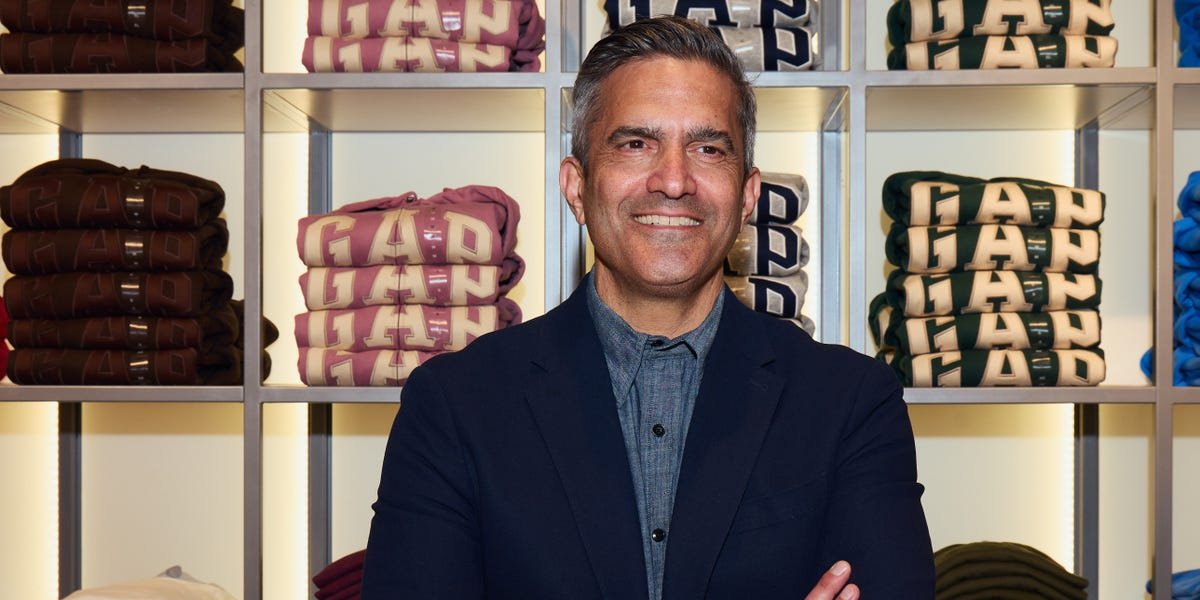
Gap CEO has 3 rules for cutting down meetings — and asking if he’s on the invite list breaks one of them

In an era of hyper-efficiency, leaders are taking a close look at the meetings on their calendars — and Gap’s CEO is no exception.

Since returning to lead Gap’s global brand in 2020, CEO Mark Breitbard told Business Insider he’s been focused on restoring the brand’s relevance, and part of that has included stripping away bureaucracy and unnecessary layers.

Meetings are often viewed as the pinnacle of corporate bureaucracy, — and Breitbard said he follows three rules to keep them in check.

The 3 rules

Breitbard said that if no one is sure why a recurring meeting is happening, it should be examined critically.

“If it’s a default meeting, like it happens every single week, then I feel like we need to question it,” Breitbard told Business Insider.

His second rule is to keep the invite list tight. Breitbard said it’s a red flag when he walks into a meeting, and someone asks, “Oh, are you in this meeting?”

“If you ask, the answer is ‘no.’ I clearly don’t need to be here if you have to ask,” Breitbard said, suggesting that the meeting shouldn’t be so big that people are invited without having a clear purpose for attending.

His third habit rule is to end on time — or early. He said when it’s near the end of a meeting, there often comes a time when people say something along the lines of, “Well, we have five more minutes…”

“We don’t have five more minutes,” Breitbard said. “We’re done now.”

Breitbard said that people often book 30-minute meetings, but he’s inclined to finish earlier if the purpose of the discussion has been accomplished.

“At minute 24, I say, ‘OK, good, this was great. Thanks, everyone,'” Breitbard said, adding that when people question if it’s really time to end, he says, ‘Yeah, we got what we needed.'”

Cutting down on meetings

The debate over meetings and how they should be run isn’t new. In 2018, Elon Musk said in an email that large meetings should be scrapped or kept “very short,” and billionaire investor Mark Cuban has similarly said they get in the way of his productivity.

But in today’s results-driven work culture, the push to rein in the amount of time spent in meetings in has taken on a new form of urgency.

Snowflake CEO Sridhar Ramaswamy told Business Insider in December that “meetings are like bureaucracies,” and he has four rules for managing his own, which involve keeping gatherings short, ensuring there’s a purpose, and making sure there’s an agenda and notes.

Instagram chief Adam Mosseri, also recently announced that recurring meetings would be canceled every six months and only re-added if “absolutely necessary.” He also encouraged making recurring one-on-ones biweekly “by default” and said workers should decline meetings that interfere with “focus blocks.”


Source link

Chong Ming Lee, Junior News Reporter at Business Insider's Singapore bureau.

A Japanese toilet maker and seasoning giant are unlikely winners of the AI boom

The AI boom isn’t just lifting chipmakers and Big Tech. In Japan, it’s flushing gains into a toilet manufacturer and a seasoning giant.

As demand for AI chips surges, investors are piling into companies that sit inside the semiconductor supply chain — even if they’re better known for bathrooms and soup stock.

Toilet maker Toto, famous for its high-tech bidets and heated seats, has drawn investor attention. The company makes electrostatic chucks, which are critical components used in the production of NAND memory chips.

Memory prices have climbed sharply in recent months, driven by AI-related demand.

Last week, UK-based activist fund Palliser Capital called Toto “the most undervalued and overlooked AI memory beneficiary,” according to reports by Bloomberg and the Financial Times.

After news broke on Tuesday that Palliser Capital had taken a stake and was pushing Toto to promote its chip-parts business, the toilet maker’s stock jumped more than 5%. Its shares are up more than 54% over the past year.

It’s not just Toto. Japanese food giant Ajinomoto, better known for its umami seasonings and soup bases, has become an unlikely AI infrastructure play. The company produces an insulating material used in advanced semiconductor packaging.

Ajinomoto’s latest financials point to strength beyond its core food business. For the nine months ended December, the company reported an 8.9% rise in net profit, while operating profit increased 5.6% year-on-year. The gains were partly driven by its “Healthcare and Others” segment which includes electronic materials used in semiconductors, the company said in a February earnings statement.

After Ajinomoto posted its earnings on February 5, the company’s stock rose 13%. Its shares are up more than 56% over the past year.

Not all non-tech companies are benefiting equally from the AI boom. Daikin, best known globally for its air conditioners, supplies high-purity chemical materials used in semiconductor manufacturing. It recently trimmed its outlook, citing uncertainty over US tariffs as a drag on demand.

The Japanese air conditioning maker reduced its operating profit forecast by about 5% to 413 billion Japanese yen, or $2.6 billion, for the fiscal year ending in March.

“Operating profit was significantly affected by the decline in semiconductor demand, decreasing by 44.6% year over year to ¥18,102 million,” the company said in its financial report in February.

“Net sales of fluoropolymers fell year over year, despite focused Group efforts to capture strong new demand in the data center field, and was due to the stagnation in the construction markets of the United States and China and the significant overall impact of delays in the recovery of semiconductor demand,” it added.

The company said it plans to cushion the blow through price increases and cost reductions.

Daikin’s stock dropped as much as 8.4% in Tokyo following its financial results.


Source link