This as-told-to essay is based on a conversation with Mark Seguin, who was surprise-diagnosed with colon cancer five years ago at age 35. It’s been edited for length and clarity.
I’ll never know for sure why I got colon cancer at age 35.
Sure, I can look back now and point to things that weren’t perfect. Work stress, ultra-processed foods, having two young kids, I wasn’t taking care of my body in exactly the way that I used to — especially after weathering several snowboarding injuries, I kind of slowed down on my fitness. But I don’t feel like it’s healthy to “would have, could have, should have” about cancer or blame yourself. Especially because some people in peak physical fitness with the cleanest diets get this disease.
Ever since I was a teenager, I’ve loved snowboarding.
Courtesy of Mark Seguin
There weren’t really any obvious signs that I was sick. Just one day, I woke up and it hit me. A searing pain in the middle of my stomach as soon as I opened my eyes. I literally could not get out of bed. The pain was so bad, I couldn’t get my body upright. It felt like someone was ringing out a rag inside of me.
I’d later learn this was because — unbeknownst to anyone — food was getting stuck behind the tumor in my colon. Unable to move through my system properly, waste was building up and wreaking havoc.
Every time Hilary publishes a story, you’ll get an alert straight to your inbox!
Stay connected to Hilary and get more of their work as it publishes.
I just assumed I ate something bad the day before. I wondered what it could have been.
By the afternoon that day, I was feeling better, and I got up and carried on. But about a month later, it happened again. This time, it was the same type of stomach pain, but not as severe. Again, I was like, “Man, what am I eating that keeps doing this to me?”
A couple more months went by. Then again, the pain returned, this time on the right side of my belly. Alarm bells went off. I immediately thought of all the stories I’ve heard about people ignoring stomach pains, and then their appendix ruptures and bursts. That was my wake-up call to get myself to the ER and get checked out. Still, cancer was not on my radar. I never saw any blood in the toilet, so I didn’t think I had to worry about colon cancer.
After searing stomach pain, and a trip to the ER, a GI doctor finally found my cancer
I had to get part of my intestines taken out.
Courtesy of Mark Seguin
Thankfully, I didn’t have appendicitis, but my ER doctor referred me to a gastroenterologist for some follow-up tests. The GI doctor said I was young, healthy, and there was probably nothing to worry about, but suggested we do a colonoscopy, just to be safe.
I’ll never forget the look on his face when he walked in to deliver my results. He looked like he’d just seen a ghost. “I’m pretty sure you have cancer,” he said. It was serious too: late, stage 3 colon cancer that had spread to my lymph nodes. He said I won the bad luck lottery.
I reacted like I always do when I get hurt snowboarding, break a bone, or throw my back out: What’s the next step? I have to know what to do next.
I had trouble staying hydrated during chemotherapy. Even the smell of water repulsed me.
Courtesy of Mark Seguin
Surgery, draining high-dose chemotherapy treatments, and lots of days in bed. That’s what came next. The chemo made me super sensitive to cold. Breathing cold air or drinking cold water felt like pulling apart velcro in my throat. I couldn’t drink anything cold or enjoy popsicles to stay hydrated, but warm liquids made me nauseous. I became hyperattuned to even the smell of water, and it repulsed me. I had to get hooked up to intravenous hydration roughly half a dozen times while going through chemo because I just couldn’t eat or drink much of anything.
After colon cancer, I committed to more strength training
By the time I rang the bell and finished chemotherapy, about five months after my diagnosis, I felt so frail and small. I’d lost 30 pounds. I hated feeling that way. I wanted to be able to pick up my kids when I needed to. My youngest was only 5 years old when I was diagnosed. I can’t let my boys outrun me just yet! So at the end of my chemotherapy course, I started a strength training program. It was the same one I’d used in high school that helped me get stronger, a program from a baseball fitness coach who helps train pros, including the New York Yankees, Eric Cressey.
At first, I was worried: was training safe for a cancer patient? Could it derail my recovery? And would I even have the energy? Initially, after chemo, even short hikes were draining, but I pushed forward, including squats, presses, and broad jumps into my routine.
At first, even family hikes on flat terrain were super draining. But I kept trying.
Courtesy of Mark Seguin
It turns out, there’s a pretty wide and growing body of evidence suggesting that working out is great for cancer rehab — and especially for colon cancer. After about six months, I was thrilled to be setting all-time bests for my lifts and presses. It was such a proud moment.
There was a super compelling new study that I came across in 2025, which shows that exercise can be as effective at preventing colon cancer relapse as drugs. It was a wild finding that shook oncologists and excited doctors nationwide when it was revealed last year at the nation’s largest cancer conference. I’m just glad I have more reasons to keep doing what I’m doing. Right now, my routine is a basic two days a week of strength training, plus some cardio like hikes with a weighted vest or an incline treadmill jog when I can fit it in.
I cannot let these boys beat me just yet!
Courtesy of Mark Seguin
Part of what motivates me to work out is the idea of staying healthy and cancer-free, and — I must admit — part of it is just my dad pride. My youngest wants to race me all the time. He’s 10 now, I can’t let him beat me yet, okay?
I eat healthier now, but I’m a realist
I have also changed up my diet, incorporating more fiber-rich foods into my routine. I was raised in the “fast-food era,” but now I try to avoid the ultra-processed and cured meats that are so clearly linked to more colon cancer, like sausages, hot dogs, and bacon. (I rarely have bacon now, which sucks.)
I try to incorporate more veggies and beans into my diet, things that we know are good for colon health. In true Mediterranean Diet fashion, I try to make sure dinners include something green — if it’s chicken, I might add some broccoli, if it’s spaghetti, let’s dish up a side of green beans. I’m not perfect about it, but I think any little effort helps. When I make tacos now, I mix the ground beef with some mashed black beans. That way, it’s a little bit less meat, but also you’re getting fiber from the beans. I haven’t overhauled my diet completely, but I’ve been finding the little evidence-backed opportunities, which I think is honestly a more realistic strategy.
Exercise, a healthy diet, and managing stress have all been important to my recovery.
Courtesy of Mark Seguin
It’s been five years since my cancer diagnosis now, and I’m almost in the clear. My doctors say if my next scan looks good, and my blood work remains clean through the rest of the year, they’re going to release me completely. It’s kind of a scary prospect to go out into the open world without your oncology team looking out for cancer. I’ve found peace knowing I am doing a lot of the things we know decrease the odds of recurrence: exercising more, eating better, and decreasing stress. I also take a baby aspirin, which recent studies have suggested may reduce the risk of recurrence of certain types of colon cancer.
3 rules to live by for finding colon cancer
If you’re 45, get a colonoscopy. Don’t delay the care that could save your life.
Courtesy of Mark Seguin
I try to always remember a few things that can help identify colon cancer early, and share them with my friends when I can.
First of all, if something feels off, go get it checked out.
Second: make that follow-up appointment.
My doctor said the one thing I did that so many folks miss is actually going in for that next appointment, after leaving the ER. Don’t delay the care that might save your life.
Finally, if you’re 45, get a colonoscopy.
I know, we snowboarders like to tough things out sometimes. Don’t do that with your colon. I’m not going to miss an opportunity to say, “Hey, you’re 45, right? Did you get that colonoscopy booked?”
I still love to snowboard, and try to bring my colon cancer advocacy to the slopes as much as I can.
Courtesy of Mark Seguin
I try to keep it casual and not be the colon cancer weirdo out on the slopes, but I do want to advocate for more awareness of young colon cancer. Colon cancer is now the leading cause of cancer death in people under 50 — and the only cancer that’s becoming more deadly in my age group, not less. If I can help one more person get checked and find cancer earlier, that’s success.
Greg Abel paid tribute to Warren Buffett and reassured Berkshire Hathaway shareholders he wouldn’t do anything drastic as their new CEO in his first letter to them on Saturday.
Buffett handed Berkshire’s reins to Abel at the start of this year, ending a six-decade run during which he transformed the failing textile mill into a sprawling conglomerate worth more than $1 trillion.
The legendary investor oversaw a 6,100,000% return for Berkshire shareholders between 1965 and 2025, trouncing the S&P 500’s total return of 46,100% including dividends. His compounded annual gain of 19.7% was nearly double the index’s 10.5% figure over a 60-year timeframe.
“Warren is obviously a very hard act to follow,” Abel wrote, continuing Buffett’s decades-long tradition of penning an annual shareholder letter.
Berkshire’s new boss dedicated the first section of his letter to Buffett, praising everything from his patience and judgment to his investing prowess, legacy as an educator, track record as a CEO, and the unique company he built with the late Charlie Munger.
Every time Theron publishes a story, you’ll get an alert straight to your inbox!
Stay connected to Theron and get more of their work as it publishes.
Abel used the letter to properly introduce himself to shareholders, and even tried to inject some of Buffett’s trademark wit.
“I will not be your CEO for the next 60 years as simple arithmetic makes that — shall we say — an ambitious plan,” he quipped.
More of the same
Abel made it clear to shareholders that he “gets it” — he understands what makes Berkshire special and has no plans to ruin it.
He walked through what he called Berkshire’s “foundational values”: its decentralized model, integrity, financial strength, capital discipline, risk management, and operational excellence.
Abel lingered on the topic of capital discipline, showing he’s aware of how much scrutiny Berkshire has received for hoarding more than $370 billion of liquid assets.
He signaled there won’t be any rushed deals or immediate dividend payouts on his watch. He described Berkshire’s cash pile as both its rainy-day fund and its “dry powder” for stock purchases and acquisitions, but said he’ll remain disciplined in spending it “regardless of the size” of the company’s reserves.
Digging into the details
Abel’s letter contained several keynuggets for close followers of Berkshire.
First,he described its Kraft Heinz investment as “disappointing” with a return “well short of adequate,” echoing Buffett’s uncharacteristic bashing of the food giant.
Second, Abel broke out the five stakes in Japanese companies purchased by Buffett a few years ago. The dedicated table showed Berkshire paid a total of $15.4 billion for positions worth a combined $35.4 billion at December’s close, and collected $862 million in dividends from them last year.
Third,he revealed that Ted Weschler now oversees about 6% of Berkshire’s investments after assuming control of the recently departed Todd Combs’ portion of the company’s portfolio.
Abel also positioned Weschler as one of his key deputies, writing that his “impact extends beyond these investments” to weighing in on big opportunities and Berkshire’s businesses, and providing other support.
Finally, he signaled a shift to a bigger brain trust at Berkshire. Instead of Buffett and Munger holding court for the entire Q&A at Berkshire’s annual meeting, as they did for many years, Abel will field questions with Berkshire’s insurance chief, Ajit Jain, and later with Katie Farmer and Adam Johnson, two of his top deputies.
Iran launched missile strikes into at least six countries in retaliation for the Saturday morning attack by the US and Israel.
Multiple countries across the Middle East reported Iranian bombardments, with the IRGC, the Islamic Revolutionary Guard Corps, saying that it had launched attacks on US bases.
Iran said it targeted at least four bases hosting US forces in the Middle East. Details about the scale and the impact of the strikes are still emerging, but multiple nations reported being able to intercept the attacks. Some have reported damage and at least one death from debris. At least one US base appears to have been hit.
Bahrain’s state news agency said that the US Navy’s 5th Fleet service center was the subject to a missile attack, without offering details or reporting any casualties. Iran also said it targeted the base. The agency also reported Bahrain’s defense forces saying that its air-defense systems successfully intercepted multiple missiles from Iran.
Qatar’s defense ministry said successfully intercepted three waves of attacks that had targeted multiple areas of the country, and that all missiles were intercepted before they reached the country’s territory, the state-run Qatar News Agency reported.
Qatar hosts Al Udeid, the biggest US base in the region. Iran said it targeted the base, without giving details over whether it was successful. The US has not confirmed an attack. Qatar condemned what it said were Iranian strikes on US bases in Qatar and neighboring countries.
Jordanian state media reported the country’sair defense systems successfully intercepting two ballistic missiles that targeted the country.
A smoke plume rises over Abu Dhabi from the site of an Iranian missile strike.
AFP via Getty Images
The country’sPublic Security Directorate said there have been 12 separate incidents created by falling debris across the country, causing some damage but with no reported civilian casualties.
The Muwaffaq Al-Salti Air Base in Jordan, which is key for the country’s air force and also has a US military presence, was targeted, Iranian state media reported. It did not give any details over whether the reported attack was successful, and the US has not confirmed any attack.
The United Arab Emirates’ defense ministry said it intercepted Iranian ballistic missiles across multiple attacks. It said one person was killed by falling debris in Abu Dhabi, the country’s capital.
It shared images of what appears to be downed Iranian missiles.
It said that missile debris also damaged some infrastructure. Explosions were also reported in Abu Dhabi and Dubai. Its Al Dhafra Air Base hosts US forces. The IRGC said that the base was targeted, but that has not been confirmed.
A plume of smoke rises over Tehran, Iran.
Mahsa / Middle East Images / AFP via Getty Images
Kuwait’s army said its air defenses intercepted missiles that were detected in the country’s airspace. The country hosts the US military at its Al Salem Air Base, another base the IRGC said was targeted but with no confirmation.
Israel reported multiple missile barrages from Iran, but has not reported any deaths or major damage to the country.
Successful attacks have been reported in Iran, and its people are trying to flee the capital city, Tehran. Iranianofficials said an Israeli attack on a girls elementary school in southern Iran killed least 51 people. Israel has released video footage of strikes in Western Iran against missile launchers and other targets.
US embassies in countries across the region have given advice to Americans to shelter-in-place.
Attacks and counter-attacks are still ongoing. US President Donald Trump said that he would destroy Iran’s missile program and navy and make sure that the country can “never” have a nuclear weapon.
“The lives of courageous American heroes may be lost, and we may have casualties. That often happens in war,” Trump said in a statement. “But we’re doing this not for now — we’re doing this for the future. And it’s a noble mission.”
Flights have been cancelled across the region with multiple countries closing their air spaces, creating major disrupution in one of the world’s busiest flight routes.
Growing up with limited money, I always viewed college as a safety net, an investment that would set me up for immediate success. I started saving for tuition in high school, worked full-time in college to avoid student loans, earned straight A’s, and did all I could think of to guarantee financial success.
I felt financially secure for a short time, but everything changed when I graduated. The stability I once felt walking around my safe college town vanished almost overnight, and I was completely unprepared.
Since graduating over six years ago, I’ve moved 10 times while navigating rent increases, job changes, and the financial realities of being a young adult.
I thought life after college would be stable, but I was wrong
It took 10 months to find a job after graduating. When I finally did, I moved out of my childhood bedroom only to live temporarily with friends, and then back with my parents, recovering from the embarrassment of not being able to afford housing on my entry-level salary.
After a few months and a decent raise, I tried again. I moved into an apartment with my boyfriend (now husband) and got a dog. Since then, we’ve lived in four different apartments, moving back in with family between each one.
I’ve changed addresses so many times that my GPS has given up on me. Rising rent, post-pandemic inflation, pay cuts, unexpected debt, and even a lost tax payment forced us back home multiple times. We were fortunate to have family to fall back on, but the repeated setbacks never felt easy.
The author has faced many financial struggles since college.
Courtesy of Erin Wetten
Over six years later, I’m still not “settled” in the way I imagined. Each move taught me to handle setbacks with a little more confidence, yet, as someone who was so used to being prepared, I still felt like I was losing my sense of self.
I began to understand the emotional toll of feeling like a failure
I’ve spent my whole life measuring my self-worth in numbers — my SAT score, GPA, and items on my résumé. I planned my entire future in spreadsheets, bit my nails until they bled, and spent nights before big tests throwing up, even after weeks of studying.
That was me: an anxious, overachieving mess who crumbled at the thought of even a small failure.
Postgrad life quickly humbled me, teaching me that no amount of spreadsheets or A’s could protect me from the real world.
Every time I moved into a new apartment, I told myself, “This is it. I’ll save up, and the next move will be into a house of my own.”But it still hasn’t worked out that way. I’ve been forced to decide: Do I let that feeling drag me down, or accept that instability is a part of life and choose to enjoy the journey?
I had to find a ‘home’ within myself.
In my 20s, I’ve learned that life rarely unfolds the way we imagine, no matter how meticulously we plan. When I crossed the stage in cap and gown six years ago, I pictured a steady job, a white picket fence, and a stress-free existence waiting for me on the other side. I thought fulfillment would come from checking the right boxes in the right order, as I had always done.
Instead, I’ve never felt more fulfilled than I do now that I’ve thrown out the checklist altogether and stopped viewing life like a syllabus.
Over time, the weight of starting over lightened, and I learned to feel at home within myself, even as my physical space kept changing. Rather than feeling sorry for myself, I sought opportunity in each new set of blank walls, finding comfort and purpose from within.
My life hasn’t followed the simple, straightforward path I once expected, and I’ve come to believe that is for a reason. As someone with a Type A personality who was once consumed by anxiety over the smallest things, more rules and timelines weren’t what I needed. I needed freedom from my own expectations, and in my case, that meant getting knocked down enough times to finally loosen my grip on perfection.
No matter how many times I have to move or start over, I know I’ll be OK. I’m no longer chasing a timeline or striving for a perfect grade in life. I’m building a life that feels like mine, and letting its ups and downs shape me for the better.
This story is available exclusively to Business Insider
subscribers. Become an Insider
and start reading now. Have an account? .
Some companies are keeping remote work policies even as other firms call people back to the office.
Companies like Atlassian, Dropbox, and Deel report increased job applicants and retention rates.
Some firms also credit work flexibility with boosting employee satisfaction.
You might not be destined for a cubicle after all.
As a number of big-name companies increase their requirements for how often workers spend time in the office, some firms are sticking with remote work arrangements.
Those leading the RTO charge have argued that face-to-face collaboration breeds a stronger culture of teamwork and creative problem-solving. However, remote companies say they are reaping their own set of distinct benefits.
The doubling down on flexibility has been a boon to recruiting at some companies, allowing firms like Dropbox and Crowstrike to tap into a wider pool of talent.
“A lot of the companies going back to the office are leaking talent to us, whether or not they want to admit it,” Alex Bouaziz, cofounder and CEO of the HR and payroll platform Deel, previously told Business Insider.
Here are 12 companies that still offer remote work — and why:
Atlassian
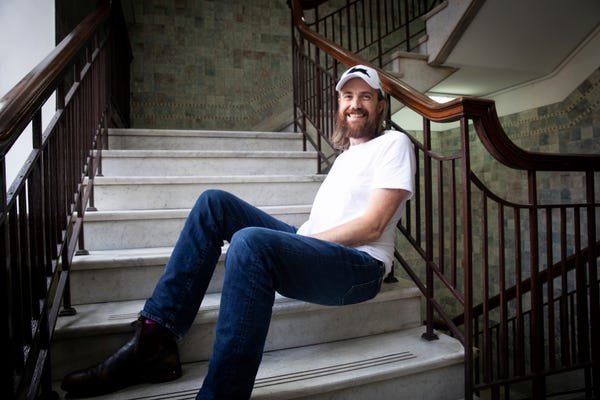
Mike Cannon-Brookes is the cofounder and CEO of Atlassian. Renee Nowytarger/The Sydney Morning Herald via Getty Images
The software maker Atlassian has 13,000 employees in more than a dozen countries. Nine in 10 of its workers report that flexibility is both an important reason they stay and that it allows them to do their best work, Avani Prabhakar, the company’s chief people officer, previously told Business Insider.
Since the company introduced its work-from-anywhere policy in 2020, it has seen the number of applicants per job opening double, Prabhakar said.
Coinbase
Brian Armstrong is the cofounder and CEO of Coinbase. Matt Winkelmeyer/Getty Images for Vanity Fair
Cryptocurrency exchange Coinbase has been remote-first since May 2020. L.J. Brock, chief people officer at Coinbase, told Business Insider via email that the company is not “remote-only,” but instead has hubs all over the world and no central headquarters.
Teams also gather in-person once a quarter for what Coinbase calls “Surges,” Brock said. Brock added that the firm is constantly iterating on its in-person meetings to make sure that the company’s remote structure evolves.
The company has taken a remote-first approach for a couple of reasons, Brock said, including the fact that Coinbase operates in a decentralized industry and that remote work allows the company to tap into a global network of talent.
“We’ve unlocked a caliber of talent that simply cannot be reached without the flexibility of remote work,” Brock wrote. “Our teams don’t have to choose between their personal lifestyle and the opportunity to build the future of global finance.”
CrowdStrike
George Kurtz is the founder and CEO of CrowdStrike. Bloomberg/Getty Images
Cybersecurity company CrowdStrike has a remote-first work culture. From its inception over a decade ago, the company has placed an emphasis on hiring talent from a diverse pool.
“Being a remote-first company ensures CrowdStrike can hire the best people — regardless of their geographic location,” the company wrote in 2022.
The company added that its remote structure enables employees with family or caregiving obligations to contribute to its mission.
Deel
Alex Bouaziz is the cofounder and CEO of Deel. Vaughn Ridley/Sportsfile for Collision via Getty Images
Deel’s Bouaziz said the most in-demand workers are often most willing to push back — or leave — when employers introduce rigid RTO policies. He said that the strict approach by some companies has benefited Deel.
Deel has a global workforce and hired more than 2,000 employees in 2024 — out of a pool of 1.5 million applicants, the company said.
DoorDash
Tony Xu is the cofounder and CEO of DoorDash. Mike Blake/Reuters
In 2022, DoorDash committed to a “flexible workplace model” and continues to offer that structure to employees. The policy allows teams to decide how and where they want to work.
“Rather than requiring employees to work in an office for a set number of days, we recognize that elements of both in-person and remote work will differ depending on how distributed each team is, and the nature of each team’s work,” the company wrote in a blog post on the subject.
A company spokesperson told Business Insider it also offers “meaningful in-person collaboration where it makes sense.”
“We’ve found that trust and clarity around outcomes matter more than rigid location policies,” the spokesperson said.
Dropbox
Drew Houston is the cofounder and CEO of Dropbox. Rodin Eckenroth/Getty Images
Dropbox implemented a “virtual-first” policy in 2021. The cloud storage company has redesigned its workforce to focus on flexibility, and this approach has paid off in both hiring and retention, Melanie Rosenwasser, the company’s chief people officer, previously told Business Insider in an email.
The average number of applicants per job is nearly sevenfold higher than it was prior to the company adopting its virtual-first model, Rosenwasser said.She added that more than eight in 10 applicants accepted Dropbox’s employment offers, and attrition is the lowest in the company’s history.
HubSpot
Yamini Rangan is HubSpot’s CEO. Courtesy of HubSpot
The software company says more than 70% of its employees work remotely. HubSpot requires its employees to work from the location where they were hired, but allows them to log on from elsewhere for up to 90 days.
Remote workers can visit an office twice a quarter. The company also offers a stipend each month to go toward expenses related to working remotely.
HubSpot also provides funds so that workers in a geographic area can meet up with their colleagues. There are also monthly virtual chats, where the company pairs someone with another employee elsewhere in the company to facilitate a sense of belonging.
Mozilla
Anthony Enzor-DeMeo is the CEO of Mozilla. Eugene Gologursky/Getty Images for Fast Company
Mozilla embraces a remote-first approach while offering in-person options.
“Employees have the flexibility to choose the type of workspace that best supports their productivity and wellbeing — whether that’s a home office, a Mozilla office, or a co-working space,” a spokesperson told Business Insider in an email.
The open-source software company has offices or coworking spaces in several locations, including San Francisco, New York, Berlin, Toronto, Paris, and London. For those who prefer an office setting but are based elsewhere, the company may cover the cost of a coworking space, Mozilla said.
“By accepting the imperfect reality of a hybrid environment, we enable ourselves to take full advantage of the opportunity of this moment,” the company wrote in a 2022 blog post.
Olipop
Ben Goodwin is the CEO of Olipop. Ben Goodwin
Olipop has been remote since its founding, but the prebiotic soda brand, which has roughly 220 staff members, hosts cohorts of new hires for off-sites throughout the year and also holds regular leadership and individual team off-sites.
In a previous interview with Business Insider, CEO Ben Goodwin said that instead of investing in office facilities, Olipop pays significant costs in employee benefits and perks. The companypays for employees to have a gold PPO plan and covers 95% of insurance costs, Goodwin said.
Olipop also offers department off-sites, a party at the end of the year with a DJ and a hotel stay, new hire orientations, and a program for leadership called Olipop Leadership University.
Spotify
Daniel Ek is the CEO of Spotify. Kevin Dietsch/Getty Images
Since early 2021, when the music streaming service introduced a policy allowing employees to work from anywhere, Spotify has seen about half of its employees working remotely — from home or elsewhere — and the remainder going into an office.
Spotify states that roles are often associated with specific regions or time zones; most employees have the option to work from a country where the company has an established entity.
The annual attrition rate at Spotify has fallen to 3%, about half of what it was before it began the policy, according to the company. At the same time, the average time to hire workers has dropped to 37 days from 48, Spotify said.
Toptal
Taso Du Val is the CEO of Toptal. Shauna Clinton/Sportsfile for Web Summit via Getty Images
Toptal, a company with about 700 employees, has operated remotely since its inception. Taso Du Val, CEO of the talent sourcing company, previously told Business Insider that he thinks of the structure as hybrid, because teams meet typically for three-day off-sites once a quarter.
He said the ideal work structure is an “80/20 mix,” which he describes as working remotely 80% of the time and meeting in person the other 20%.
Zapier
Zapier cofounders are Wade Foster, Bryan Helmig, and Mike Knoop. Zapier
For a week each year, the software company Zapier brings together its workers and customers to focus on various projects, Brandon Sammut, the company’s chief people officer, previously told Business Insider.
By working with customers and problem-solving with teammates, he said, “you naturally build connection and belonging.”
Some of Zapier’s 800 workers, who are spread across 42 countries, also gather periodically to focus on a particular topic or challenge.
An earlier version of this story appeared on November 14, 2025.
Have a tip? We want to hear from you. Reach out to the reporters via email at aaltchek@insider.com and tparadis@insider.com, or via the secure messaging app Signal at aalt.19 or tparadis.70.
This as-told-to essay is based on a conversation with Anne Leijdekkers, 32, a Dutch arts entrepreneur, and Simone Solazzo, 31, an Italian who used to work in tech. Last year, the couple moved into the house they built in the tiny-home village of Minitopia in Valkenswaard, the Netherlands. This piece has been edited for length and clarity.
Anne: At first, my parents were sceptical about our plan to build our own tiny home.
Friends will always stand behind you, but family members can be more critical. It was important for us to have them on board.
Simone used to work in the corporate world and loves PowerPoint presentations, so on Christmas Day in 2024, we used one to pitch our dream to my family.
We wanted to be financially autonomous
Simone: I liked the idea of being able to explain to them why we wanted to do this and what we were planning. The first slide said, in Dutch, “We are building our home. We’d like your support.”
Every time Joshua publishes a story, you’ll get an alert straight to your inbox!
Stay connected to Joshua and get more of their work as it publishes.
In the presentation, we told them about the plan, the timeline, and where we would be living. We included our budget, which ranged from 40,000 to 80,000 euros ($47,000 to $94,000).
Mostly, the slides outlined our motivations. The first reason was to be financially autonomous.
If we were to buy a big house, we’d be committing to a big mortgage. Instead, we used our savings to pay for the construction of the tiny home, and its transportation to the Minitopia site in Valkenswaard. In total, the project cost us 75,000 euros.
We don’t have a mortgage, and our monthly costs are relatively low. We spend about 500 euros a month on ground rent, utilities, and insurance. I imagine the monthly costs of running a larger property would be considerably higher.
Living in a tiny house is like being a snail
Simone: When you have a smaller space, you have to limit your possessions to what you actually need.
Anne: It was important for us to find out whether we were capable of doing that. We wanted to show that there’s a different way to live. You don’t need an attic at the end of your life filled with so many things.
It wasn’t about being minimalist as much as decluttering. It’s almost like being a snail. We keep things compact and can move our home whenever we want.
That’s how we arrived here: putting our tiny house on a truck and moving it.
Simone: We also like that the house can evolve with us. This means it can be our forever home. For example, if we decide one day to have kids, we could easily build a second module on top.
In the presentation, the couple shared their motivations for building a tiny home, which included financial autonomy.
Joshua Nelken-Zitser
Living in a tiny home encourages you to spend time outdoors
Simone: We both felt that knowing how to build and dismantle things was an important skill to learn. We like to challenge ourselves, and building our own home felt like the ultimate challenge. It turned out to be a real learning experience.
We’ve become handier. Sometimes, when it’s raining heavily, I wake up in the middle of the night worried about a leak. But now, if something goes wrong, I know how to deal with it.
Another bonus of living in a tiny house is that it encourages you to spend more time outdoors. When you have a big house, you can do most things inside. When your home is tiny, you need to get outside and move around in nature. We haven’t lived here in the spring or summer yet, so we’re looking forward to seeing what that is like.
My parents had concerns, but they stood behind us
Anne: The final slide said, “Let’s think about it and make it together — as a family.”
Before the presentation, my parents had concerns: was it a sensible investment? What if we wanted to have children? Were we actually capable of building it ourselves? My brother even suggested we buy a pre-made tiny house on Amazon.
After the presentation, they still had concerns about the financial rationale, but they understood our dream and 100% stood behind us. That was an amazing feeling.
We spent two months planning, budgeting, and designing, and then we started building. We began the process exactly a year ago, and it took about five months. Now that it’s finished, they’re very proud of us.
Simone: Anne’s father, who is in his 70s, even helped us build it. It gave her a beautiful opportunity to spend time with him and to build new memories.
Anne: It turned out to be a really warm period in our lives.
This story is available exclusively to Business Insider
subscribers. Become an Insider
and start reading now. Have an account? .
Rikers Island jail in New York City holds nearly 7,000 detainees, who consume about 7 million meals a year.
I wanted to see how the operation works, so I visited its largest kitchen.
I was surprised by how much is made from scratch, and by the constant state of readiness for the worst-case scenario.
Rikers Island, New York City’s most notorious jail complex, sits in the water between the Bronx and Queens.
When I visited the complex in April 2025, I expected it to be hard to reach — and I wasn’t wrong. There’s just one small, mile-long bridge for everyone entering and exiting the facility.
Nearly 7,000 detainees are in custody at Rikers. In 2024, the city spent $19 billion to feed them all, amounting to 7 million meals. I wanted to learn why the price tag is so high and how the operation works.
Here, chefs — not detainees — do the cooking. When they’re on shift, the cooks are locked in, too.
Visiting Rikers shook me more than I expected, and I couldn’t help but wonder how the chefs and officers carry it every day.
The larger of the two kitchens at Rikers is in the Anna M. Kross Center.
No detainees were housed here at the time of filming. Abby Narishkin
After traversing the mile-long bridge, we passed through three security gates. I was surprised to learn that many chefs rely solely on public transportation to get to work, often traveling two or more hours each way.
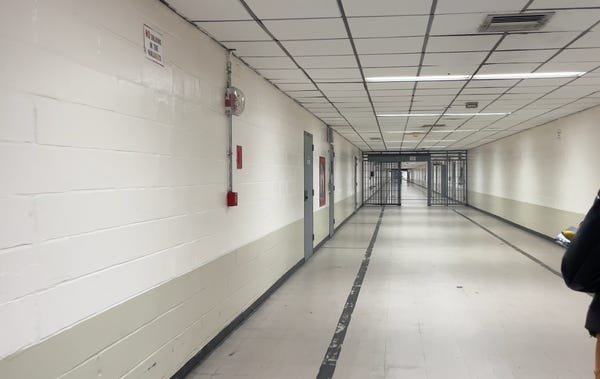
Once inside AMKC, we went through metal detectors. This building hasn’t held detainees since 2023. It was an eerie 10-minute walk down the silent, seemingly endless hallways.
Eight guards watch over the kitchen.
Five chefs were cooking while five people in custody washed dishes. Adam Miller
People in custody wash dishes, push carts, and serve food.
They can’t have any infraction tickets. They must be serving time for nonviolent offenses and be approved by custody management to work here.
Everything’s cooked in huge batches.
This vat of tartar sauce was for the next day’s dinner. Adam Miller
There are no open fires here. They cook chicken in rotisserie ovens.
I was shocked to see how many dishes chefs made from scratch. Tartar sauce started as mayo and pickles. Pepper steak, a favorite among detainees, started as blocks of frozen beef.
There are security cameras everywhere in the kitchen.
Cameras are monitored from a guard’s office, inside the kitchen. Adam Miller
Inside the kitchen, it still felt like a jail. I felt the cameras everywhere.
Guards watched over the detainees and checked every incoming shipment of food for contraband. They frisked down detainees before they entered the kitchen, and again before they left.
Dull knives are chained up.
Guards lock the knives onto the massive cooking vats or stainless steel tables. Adam Miller
Knives are kept on chains for their protection. When a chef needs the knife at a different location, they have to get a guard from the office to come unlock it and move it.
The chefs told me it felt awkward at first, the chain brushing against their hands, but they eventually got used to it.
Still, they say it can be tricky. I watched one chef wrestle the chain into position before cutting into a large frozen block of beef.
Chefs also secure the lids they remove from cans.
A mechanical can opener quickly removes the lids, and then chefs slide them down this caged trash can. Mark Miller
Even things I wouldn’t normally consider dangerous — like cans of green beans — are treated as potential threats. Chefs are required to throw them away immediately.
Cans go into wagons, and lids go into a caged trash can. Officers told us they have to be cautious about everything. Even small pieces of plastic, wood, and metal can be turned into weapons. That goes for spoons and ladles, too.
Spoons, ladles, and whisks are kept in a locked box in the guard’s office.
All tools are kept behind lock and key in the guard’s office when they’re not in use. Mark Miller
Whenever a chef needs a ladle or whisk, they have to get a guard to unlock a box in the office.
I couldn’t help but think how tedious that must be. “It’s for security,” the chefs reminded me.
Despite all the security measures, I was surprised at how relaxed the chefs seemed.
Mr. Ageda is the senior cook on staff. Mark Miller
Chef Ageda was cracking jokes and laughing with me. He didn’t seem phased by the detainees in the kitchen. He said he can’t be friends with the people in custody because he knows why they’re here. But he said he treats them all with respect.
In an email statement to Business Insider, the Department of Corrections said, “violent incidents that occur in our kitchens are extremely rare.”
Getting a job in the kitchen is a coveted role among people in custody (PICs).
Nadine Leach has worked in the kitchen for 17 months. Mark Miller
Nadine Leach was a chef before serving time at Rikers. She’s one of the detainees approved to push food carts to the housing units.
At the time of filming, Leach earned $1.45 an hour. She’s saving money for her grandkids, she told me.
Officers check the wagons for contraband and pat down detainees.
Guards pat down every PIC before they leave the kitchen area. Mark Miller
Leach has worked in the kitchen longer than any other person in custody, clocking 56 hours a week by choice, she said. She calls the kitchen her “sanctuary” because she doesn’t feel like she’s in jail while working there.
But even in her sanctuary, officers pat her down, along with all the other people in custody, before they deliver food to the housing units.
There’s a delicate relationship between officers, chefs, and detainees.
As an officer accompanies Leach after a food delivery, she passes through metal detectors every few paces. Mark Miller
One moment, Leach is telling me about her grandkids and her goals when she gets out. Then reality sinks in, and she’s up against the wall.
She says she understands the officers are doing their jobs and that she’s doing her time. They’re living in two different worlds.
Leach is one of the people in custody allowed to serve food.
Leach serves up lunch in the women’s housing unit. Mark Miller
A dinner might include grilled chicken or pepper steak, which smelled delicious.
The day I visited, pasta salad and tuna were on the lunch menu. It didn’t look particularly appetizing, but it was way better than I expected. There were multiple veggies, from coleslaw to the beets.
In 2024, a Department of Corrections representative told the City Council that each meal costs about $9.
Rikers Island is legally required to close by 2027.
Rikers sits in the waters between the Bronx and Queens. A runway at LaGuardia Airport is only a few hundred feet away. John Moore/Getty Images
In October 2019, NYC’s city council voted to close Rikers for good, citing years of violence and unmanageable conditions. The deadline to cease all jail operations on the island was 2027.
However, a 2025 report from the Independent Rikers Commission found that the city likely won’t meet that deadline. One criminal justice reporter I spoke to said 2031 was more likely.
I left the day pretty shaken by what I’d seen.
We spent three days inside Rikers. This was me after filming in the kitchen at AMKC. I didn’t feel like smiling. Abby Narishkin
Obviously, this is jail. I knew it was going to be tough to see life inside Rikers. On one hand, the chef and officers’ ease helped me relax. But it was clear — simmering just beneath the surface — that there was a constant readiness for the worst-case scenario.
It was like this huge elephant in the room. We were laughing with the chefs, talking with Leach about her grandkids — but I never forgot where we were. I could feel the cameras. I could always spot an officer in the corner of my eye.
I left Rikers wondering how chefs and officers return to their normal lives every night. Are they able to shake that alertness?
I left thinking about Leach, and my heart sank. Every second she’s watched. Every time she leaves a room, she’s patted down.
Even so, she maintains a positive outlook, telling me she plans to open up a restaurant when she gets out. A goal I hope she achieves.
President Donald Trump announced early Saturday that the US had begun “major combat operations in Iran.”
“Our objective is to defend the American people by eliminating imminent threats from the Iranian regime, a vicious group of very hard, terrible people,” he said in a video statement posted on Truth Social.
The US and Israel carried out airstrikes against Iran on Saturday, following months of tensions between Tehran and Washington.
The Israeli government first announced the airstrikes, which were carried out in broad daylight, as “preemptive.”
“The government of Israel has carried out a preemptive strike against the Islamic Republic to eliminate threats against the country of Israel,” Israeli Defense Minister Israel Katz said in a statement carried by government channels.
“As a result, a missile and drone attack against Israel and its civilian population is expected in the near future,” he added.
A US official confirmed to Business Insider that American forces were involved, adding that the strikes were ongoing.
Footage circulating on social media appeared to show explosions and plumes of smoke in Iran.
The attack marks the second time that the Trump administration has taken military action against Iran. In June 2025, the US bombed the country’s nuclear facilities as part of Operation Midnight Hammer, and Trump said at the time these had “obliterated” Iran’s nuclear sites.
This new round of strikes comes on the heels of negotiations between the US and Iran, part of the Trump administration’s efforts to pressure Tehran into a deal that would severely limit its nuclear and military capabilities. It also follows the withdrawal of Western diplomats from several Middle East countries.
In recent weeks, as Trump has issued repeated threats and warnings to Iran, pushing it to make a deal, the US has built up a large military footprint in the Middle East and nearby European waters.
The Pentagon has surged hundreds of fighter jets, aerial refueling tankers, reconnaissance planes, support aircraft, and warships into the region.
One complicating factor has been public resistance from US allies to operations against Iran. The UK barred the US from using its nearby bases, and Jordan said its bases couldn’t be used for attacks on Iran, despite imagery showing the US has shifted cargo planes and F-35 stealth fighters to one of its bases.
The significant US naval presence on station or taking up position in the area includes at least two aircraft carriers, more than a dozen guided-missile destroyers, and three littoral combat ships, which are designed for near-shore operations.
The two aircraft carriers — USS Abraham Lincoln and USS Gerald R. Ford — are each equipped with dozens of embarked fighters, electronic attack jets, early warning planes, and helicopters. The Lincoln’s air wing includes F-35 stealth fighters.
On Friday, a day after the Trump administration’s negotiations with Iranian officials in Geneva, White House official Dan Scavino posted a photograph on social media of eight B-2 Spirit stealth bombers on a runway, suggesting these aircraft could be used to strike Iran again.
This story is breaking. Please check back for updates.
Burger King is tweaking its Whopper — and the changes don’t just freshen a decades-old recipe; they also reposition its flagship product as part of the fast-food industry’s broader premiumization push amid years of value wars.
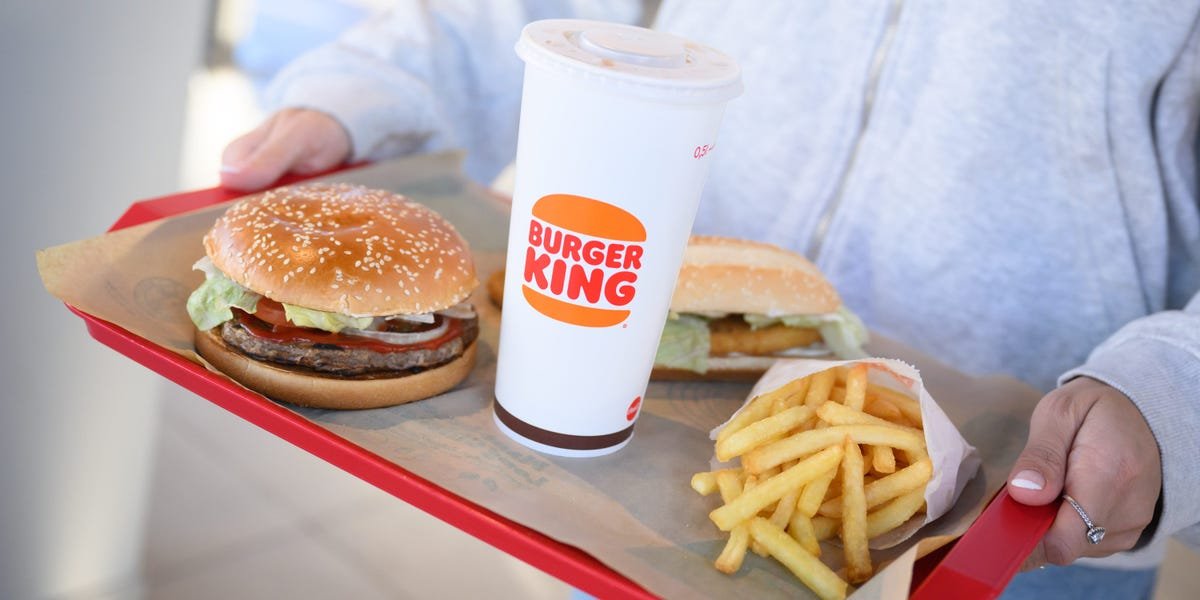
The chain is betting that highly visible upgrades — including what a press release described as “a more premium, better tasting bun,” and packaging designed to prevent the dreaded squish — can compete against its fellow quick-service restaurants as diners increasingly demand both quality and value.
The changes mark the first meaningful refresh of the Whopper in nearly a decade and came as a response to a campaign that allowed customers to call or text Burger King US and Canada president Tom Curtis directly.
Curtis heard those calls and told Business Insider the company received nearly 20,000 voicemails and texts, with the Whopper “consistently one of the top topics,” underscoring how central it remains to the brand’s identity.
A battle between value and quality
The fast-food industry has been locked in an intense value war that has intensified since the summer of 2024 as inflation and economic pressures pushed consumers to seek the lowest-priced options. However, as chains lean into discounts, they also face a ceiling: consistently cutting prices can erode margins and dull brand appeal.
In response, competitors have begun pushing premium upgrades to core menu items.
McDonald’s has tweaked its burgers — with changes like cooking patties in smaller batches, glaze-like sauces, and richer buns — as part of its broader menu refresh and McValue strategy. Taco Bell’s Luxe Cravings boxes and premium limited-time offerings signal a similar attempt to mix higher-end cues with value structures. Wendy’s has spiced up its lineup with elevated sandwiches, such as the Mushroom Bacon Burger, and premium nugget varieties amid its ongoing value promotions.
Burger King’s Whopper upgrades fall right in line with the trend. Curtis framed the move as refinement, not reinvention.
“Guests today expect higher-quality execution without losing the familiarity of their favorites,” Curtis told Business Insider. “These changes are about elevating the experience and maintaining the core attributes that make the Whopper a category leader. It’s a reflection of rising consumer expectations across the industry.”
Reinventing a classic is risky
“Anytime a brand changes its most iconic product, there is risk,” Kelly O’Keefe, founding partner at Brand Federation, told Business Insider, pointing to New Coke as a cautionary tale: “consumers were furious, and the new product was killed faster than a new Cracker Barrel logo.”
Still, he said, ignoring evolving expectations can be just as dangerous.
“In the burger category, premium players like Five Guys and Shake Shack are thriving, and Burger King is playing catch-up,” O’Keefe said. “If they don’t stray too far from what their customers love about a Whopper, I think this could be very successful.”
Asit Sharma, an analyst at The Motley Fool, said his immediate reaction to the Whopper changes was: “What took you so long?!”
He pointed to McDonald’s 2023 efforts to refresh the Big Mac — including steps to improve texture, sauce quality, and buns — as evidence that even the biggest chains see premiumization as table stakes.
Sharma also suggested that Burger King’s narrative about listening to fans likely intersects with franchisee pressure, noting that, by parent Restaurant Brand International’s admission, the development process took years. Curtis didn’t dispute franchisee involvement, saying franchisees “were an important part of this process,” and adding that their operational input helped ensure the changes could be executed consistently.
Analysts say that premiumization, when done right, can help brands protect traffic and pricing power even as consumers remain value-focused. Sharma described the dynamic as a potential “glass half-empty” defensive move — one that prevents customers from moving to higher-end competitors — or a “glass half-full” opportunity to draw in diners who are trading down but still demand quality.
“Substituting a few ingredients for the trappings of a more premium burger (including cardboard packaging) is a way to entice more affluent customers who may be trading down in a tough economy,” Sharma said.
Mike Perry, founder of the creative agency Tavern, which has worked on rebranding efforts with companies including Burger King, described the clamshell-style box as “the most innovative thing they’ve done” because it signals care and structure that customers remember from earlier eras of fast food.
For Burger King, Curtis said the company is “more excited than ever” to act on what it heard through its feedback initiative, adding that the Whopper is the first of what the brand anticipates will be many “thoughtful updates” to the menu over time.
If the bet works, Burger King could demonstrate a path forward for legacy fast-food brands trying to thread a needle: keep the value-minded core, win back lapsed customers who’ve traded up, and do it all without breaking the emotional contract customers have with an icon.