
Kalshi-may-be-more-useful-than-some-traditional-economic-forecasting.jpeg

Kalshi may be more useful than some traditional economic forecasting methods, Fed researchers find

Kalshi may be good for more than just making a quick buck.

A new research paper published by a trio of Federal Reserve economists suggests that the prediction market platform is a useful method for measuring macroeconomic expectations — and it may even be better than some traditional methods.

“Our results suggest that Kalshi markets provide a high-frequency, continuously updated, distributionally rich benchmark that is valuable to both researchers and policymakers,” the researchers wrote.

The researchers found that Kalshi actually beat traditional methods for two different purposes.

The first was on forecasting inflation. The researchers found that when it comes to headline consumer price index (CPI), Kalshi’s expectations represented a “statistically significant improvement” over the Bloomberg consensus, an oft-cited aggregation of financial analysis forecasts.

The second was on predicting Fed rate decisions. The researchers found that the median and mode of Kalshi’s prediction markets have a “perfect forecast record” on the day before the Fed meeting, which is a “statistically significant improvement” over Fed Funds futures.

Kalshi is also useful because it provides real-time responses to events, offering more up-to-date information than typical survey and forecasting methods, according to the researchers.

The paper was greeted as welcome news by Kalshi, which has long pitched itself as a source of useful information about future events, rather than just a betting platform. CEO Tarek Mansour touted the paper on X on Wednesday.

“The Federal Reserve just put out an incredible paper about Kalshi’s data,” Mansour wrote.

Investors have been on the hunt for reliable economic events forecasting tools recently, as the reliability of government data has repeatedly been called into question.

Now they may be able to ascertain valuable information from a platform that has achieved undeniable popularity. Goldman Sachs CEO David Solomon revealed in January that the bank is considering an expansion into prediction markets, which may compel similar institutions to do the same

The paper comes as public scrutiny of prediction markets like Kalshi and Polymarket picks up, with lawmakers raising concerns about potential insider trading and the proliferation of gambling.


Source link

GabbyLandsverkpic

A weight loss doctor, who specializes in helping high performers, shares her favorite hack to eat healthy without tracking every bite

On a recent trip to France, Dr. Meghan Garcia-Webb was struck by an age-old paradox.

Everywhere she looked, she saw people enjoying cheese, wine, and bread — yet the average person seemed much healthier than the typical American.

In France, despite their reputation for rich cuisine, the obesity rate is a fraction of what we see in the United States, for all our calorie-counting and protein maxxing.

“There isn’t this pervasive diet culture of going to a restaurant and seeing how many calories are in this and how many carbs,” Garcia-Webb told Business Insider. “I do find it is refreshing in the sense that there’s not this fear around food, and the food is very satisfying.”

It’s just one example of how stressing less about your diet can lead to better weight loss and long-term health, she said.

In her concierge medicine practice, Garcia-Webb specializes in helping high achievers, such as CEOs and attorneys, manage their weight. A lot of her job is pushing back on extreme diet fads, including the trend of tracking everything.

“I really enjoy food and the more I do this work, the more compelled I feel to show people that it actually is possible to be healthy and really like to eat,” she said.

Garcia-Webb said her favorite food hack makes it easy to eat well without turning your food journal into a full-time job. Here’s how to try it at home for more nutritious meals.

A stress-free guide to healthy eating

Everyone loves a food hack, and Garcia-Webb said hers is simple: when you prepare a meal, start by making half the plate fruits and non-starchy vegetables.


A colorful salad with greens, nuts, peppers, and grilled chicken.

Filling half your plate with produce is a simple way to eat well without measuring each bite, calorie, or gram of protein.

Magda Tymczyj/Getty Images


“It’s actually very easy,” she said. “You don’t even have to cook them if you don’t want to.”

Think carrots, cucumbers, peppers, greens, tomatoes, berries, grapes, citrus — anything you’d find in the produce aisle (except potatoes). To make it even easier, opt for pre-cut options that are ready to eat or frozen produce, which is as healthy as fresh.

From there, Garcia-Webb builds a full meal by adding a source of protein, like lean meats or fish, to fill another quarter of the plate. The last quarter of the plate is for starchy foods like whole grains, pasta, rice, or potatoes.

The strategy makes it simple to get five servings a day of fruits and veggies. Each serving is about a handful when you’re eyeballing it.

As you fill up on produce, the high-volume, high-fiber food keeps you full and satisfied after eating, so you’re less likely to reach for junk food later. That means you’ll find yourself eating healthier without having to count a single calorie or even measure a portion.

When to track your food for weight loss

There’s nothing inherently wrong with tracking your eating habits, and calculating every gram of protein is fine if that works for you.

Still, for most people, too much tracking can be a burden, taking away the enjoyment of food and making you less likely to stick to your healthy habits long-term.

Instead of trying to track everything you eat forever, Garcia-Webb recommends keeping a food log for a few days: it can give you a baseline sense of your current habits and what you can change to move toward your goals.

“You build this intuitive knowledge, and then you have a rough sense of what it looks like for you,” she said.

A temporary habit of food tracking can be helpful if you feel like you’re doing everything right and wonder why you aren’t losing weight.


A woman in a grocery store comparing two cartons of dairy

Food labels can mislead you by making a processed snack seem healthy because of added protein, but sneaking in extra sugars.

Luke Chan/Getty Images


Garcia-Webb said if you’ve never tracked your habits, it’s common to eat more and exercise less than you realize.

These days, plenty of convenience foods disguise ultra-processed junk with a “health halo” of added protein or other nutrients to make you believe you’re making a nutritious choice.

“People think that they’re eating healthier than they are,” Garcia-Webb said. “Something that we can all fall prey to is very good marketing.”


Source link

Lauren Crosby

My sister and I are not best friends. Still, she knows me better than anyone.

I recently asked my mom what my younger sister, Hannah, and I were like together when we were little girls. “You played parallel to each other,” she told me.

This didn’t come as a surprise, because as a teenager, I remember it exactly this way. Living parallel lives together as sisters.

It was only ever the two of us, and with our ages so close together — I’m not even two years older — you might think we were inseparable. It just wasn’t how it was.

We were so different

We were night and day different then. I woke early; she woke late. I was out with groups of friends at every opportunity; she had a couple of close friends she was content to see occasionally. I was meticulously tidy; she was unabashedly quite messy (we shared a room, so this posed problems).


Girls smiling for photo

The author and her sister are only a few years apart.

Courtesy of the author


The list of differences was endless, but one thing we both had in common was that we could wind each other up as no one else could.

We also both liked the series “Pride and Prejudice.” Many afternoons were set aside binging the Bennet sisters’ woven-tight relationship. I remember thinking my sister and I weren’t like the Bennets at all. They depended on each other in a way Hannah and I didn’t.

When we went our separate ways in college, I rarely contacted her, and she rarely contacted me. Occasionally, we’d send each other a text, but other than that, we just saw each other briefly on the weekend at home or during the holidays.

I moved to the UK

Once we finished college, I moved to the UK to marry a Welsh man, and later settled here to raise my family.

It was around this time that social media began to take off.

I remember watching videos, reading articles, and flicking through pictures of sisters on Facebook who were what I’d describe as “bosom friends,” thinking I wish I had the same with Hannah.

It was also during these early years in Wales that I felt desperately lonely. I craved deep, abiding female friendship, and thought that if only Hannah and I were closer friends, perhaps I wouldn’t feel so lonely.


Sisters smiling for photo

The author and her sister lived parallel lives during college.

Courtesy of the author


If we texted and phoned every day, sharing our deepest, darkest secrets which no one else knew, and lived in each other’s pockets, that would fill the friendship void.

I imagined sisters all around the world had this kind of intimate friendship, and we were just missing out. Where had we gone wrong? How did we miss out on what sisters everywhere were experiencing?

And then I hit my 30s.

My sister was there for me

During this decade, there have been some significant events in my life that have nearly broken me. And one of the few people who was there throughout was Hannah.

Hannah checked in via text consistently. She came and visited from the US, eventually moving to London for work three years ago. Now, we see each other four to five times a year. She’s taken phone calls where I have just cried.

She shows up, over and over again.

Not just for me, but for my three boys. Being involved in their lives is of utmost importance to her, and because we don’t have much family around, of utmost importance to me too.

Although I have friends, I have no friend who is quite like my sister.

We still aren’t what I would consider stay-up-into-the-night-talking-endlessly friends, and are still completely opposite in so many ways, but I’ve come to realize that my sister really is the closest female friendship I have.

She knows my history in full. I know hers. We’ve walked — even if in parallel — with each other since childhood. No one else knows her as I do, and no one knows me as she does. If something were to happen to my husband and me, it is Hannah I would trust more than anyone with my children. We can fall out briefly, but never forever. She’ll always be there for me, and I’ll always be there for her. We’re bound together.

Sisterhood isn’t a one-size-fits-all. Each of our sister bonds is unique and doesn’t have to look like the others. It was only once I accepted and believed this that I could fully appreciate the eternal relationship I have with my sister.

Hannah and I still live parallel lives. We certainly aren’t the Bennet sisters, or giddy besties who do every single thing together. But neither of us is going anywhere. Sisters forever.


Source link

Ukrainian-soldiers-armed-with-scissors-say-they-cut-any-fiber-optic.jpeg

Ukrainian soldiers armed with scissors say they cut any fiber-optic drone cable they see — even if it might be their own

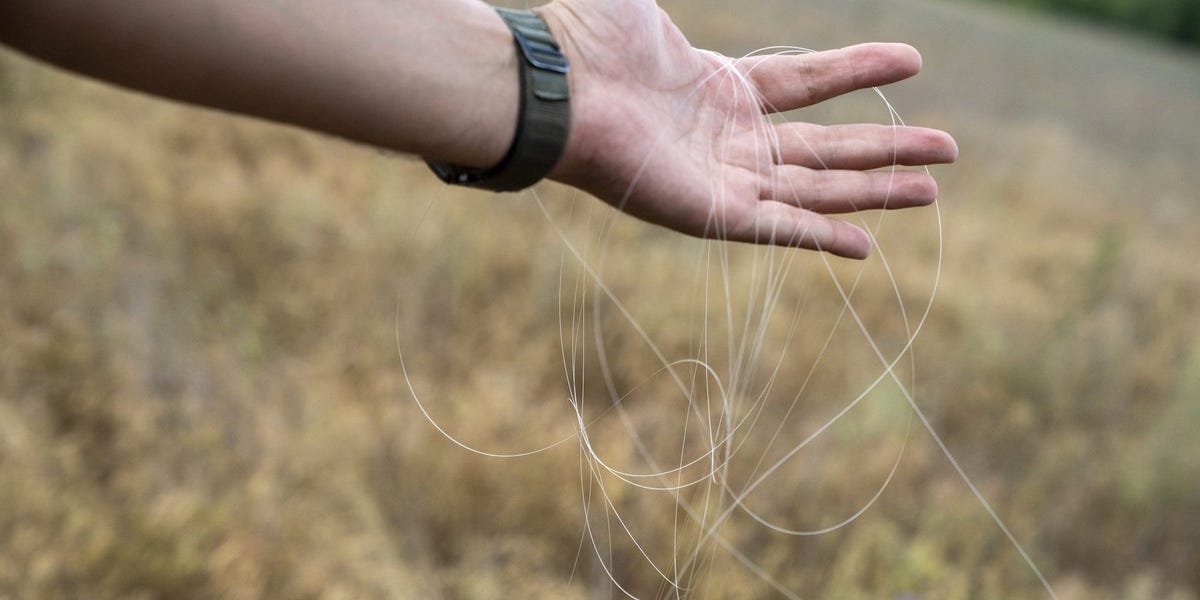
Ukrainian soldiers are out cutting and snapping any fiber-optic drone cables they come across, regardless of which side they belong to. They use scissors, knives, even their bare hands.

Troops say it doesn’t matter if a drone is Ukrainian or Russian. If they’re not sure, they just assume it’s hostile.

These unjammable drones controlled by long, thin cables have flooded the battlefield as a countermeasure to the electronic warfare that often renders radio-frequency drones inoperable.

As these drones have become increasingly prolific, the result has been forests and trenches snarled with discarded and active cables.


A snowy field with brown shubbery with thin white cables running across it and a small drone in a grey sky

Fiber-optic drones can leave webs of cables across Ukraine.

Francisco Richart/SOPA Images/LightRocket via Getty Images


Dimko Zhluktenko, an analyst with Ukraine’s Unmanned Systems Forces, said that he always carries scissors so that he can “cut each and every optic fiber that we see.”

He said that his unit “actually stopped considering them friendly or foe. We think that all of them are kind of the enemy drones.”

In a YouTube video about the gear he carries, Zhluktenko said scissors became so essential that when his unit started operating in areas littered with fiber-optic cables, every team member was required to carry a pair. He said that he bought retractors for his team so no one would lose them.


A man in khaki gear stands in a dark space with stairs leading up to light behind him, pulling out scissors from a pouch at his chest

An analyst with Ukraine’s Unmanned Systems Forces said he carries scissors to cut the cables of fiber-optic drones he comes across.

Dimko Zhluktenko


A Ukrainian soldier who spoke with Business Insider on the condition of anonymity said troops can often break the thin strands with their hands; that isn’t often necessary, though. Soldiers in his unit already carry scissors for medical purposes. Many also have knives.

He said that there can be so many cables about on the battlefield that “you don’t know if it’s a new thread or if it’s an old one that’s been lying around for a long time.” So his unit severs any they find as often as possible.

Not just fiber-optic cables

Other similar behaviors have been observed on the battlefield.

There are sometimes so many drones in the sky that soldiers looking up from the ground can’t even begin to tell which is friendly and which is hostile. In such cases, soldiers can be ordered to shoot down any drone they see.

Soldiers in charge of electronic warfare systems sometimes panic and jam everything in the air when they can’t tell drones apart, Zhluktenko previously told Business Insider.


Thin pale wires come out of a black and white cylinder with a gloved hand holding them

Drones controlled by fiber-optic cables are popular as they can’t be jammed.

Viktor Fridshon/Global Images Ukraine via Getty Images


Zhluktenko told Business Insider that cutting the fiber-optic cables is not something that he had to do often, as his unit was typically working in areas further from the front-line fighting that had fewer of the fiber-optic drones. He described it as something that they “sometimes” encountered.

Soldiers in Ukraine’s 15th Mobile Border Detachment “Steel Border” previously said in a video for Ukraine’s state border service that using scissors is a reliable way to disable the Russian drones. Russian soldiers have reportedly done the same.

If the cable is intact on an active and operational drone, the only other way to stop it is to physically shoot it (troops say a shotgun works best); that requires a mix of skill and luck, though.

Fiber-optic drones are a relatively new feature in this war that have not previously been fielded at this scale. That these drones can be disabled with simple tools — scissors, knives, bare hands — underscores a broader pattern in Ukraine: sophisticated systems are often countered with low-tech fixes.

In many cases, some of the most effective counters to advanced technology have been older or improvised combat tools — from shotguns used against small drones to nets draped over vehicles and positions to blunt aerial attacks. Even the drones themselves are cheap innovations designed to overcome more expensive equipment and wartime demands.


Source link

Andrew-Mountbatten-Windsor-arrested-on-suspicion-of-misconduct-in-public-office.jpeg

Andrew Mountbatten-Windsor arrested on suspicion of misconduct in public office, BBC reports

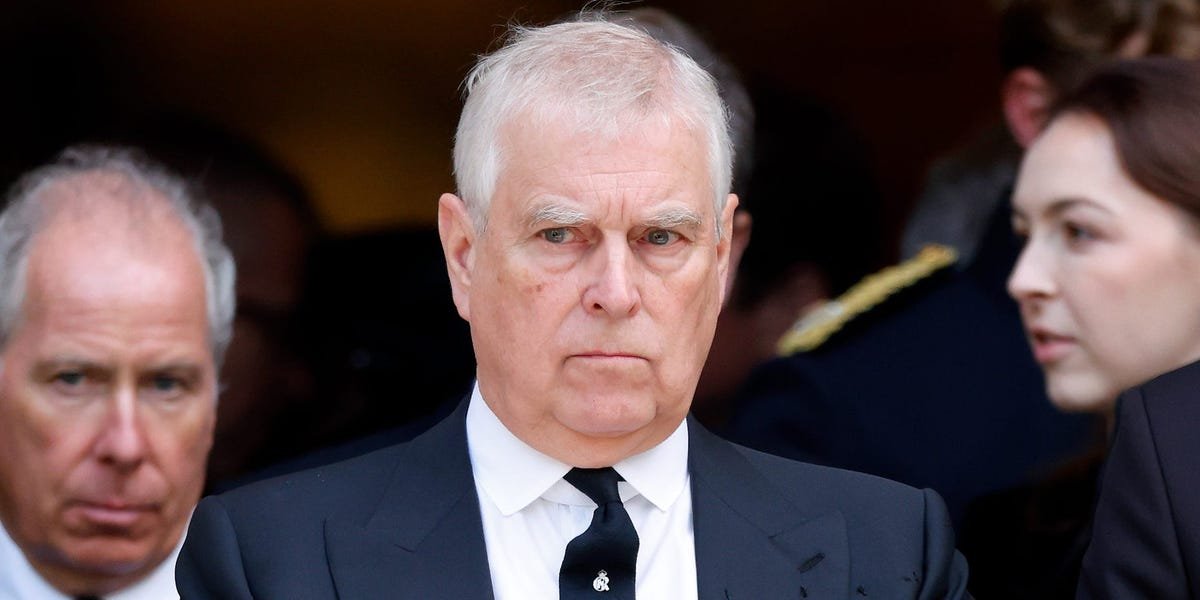
Andrew Mountbatten-Windsor, the former prince, was arrested on Thursday morning, his 66th birthday.

In a statement, the UK’s Thames Valley Police said it had arrested “a man in his 60s from Norfolk on suspicion of misconduct in public office.”

“We are unable to name the arrested man as part of national guidance,” it added.

The police also said it was carrying out searches at addresses in Berkshire and Norfolk.

Photos showed police at the Sandringham estate in Norfolk, where Mountbatten-Windsor is said to have been living. He previously lived in Windsor, Berkshire.


Men step out of an unmarked car at the home of Andrew Mountbatten-Windsor on February 19, 2026 in Sandringham, Norfolk

Men step out of an unmarked car at the home of Andrew Mountbatten-Windsor on February 19, 2026 in Sandringham, Norfolk.

Peter Nicholls/Getty Images


Mountbatten-Windsor, the brother of King Charles III, was stripped of his royal titles last year amid scrutiny of his relationship with Jeffrey Epstein.

The latest release of the Epstein files showed more of Mountbatten-Windsor’s communications with the convicted sex offender.

In 2010 and 2011, when the former prince was a UK trade envoy, he appeared to forward official reports on his work visits to Epstein.

A spokesperson for Mountbatten-Windsor did not immediately respond to a request for comment.

“Following a thorough assessment, we have now opened an investigation into this allegation of misconduct in public office,” said Oliver Wright, assistant chief constable with the Thames Valley Police.

“It is important that we protect the integrity and objectivity of our investigation as we work with our partners to investigate this alleged offence,” he added.

Before the arrest, UK Prime Minister Keir Starmer told the BBC, “Nobody is above the law.”

“[The police] will conduct their own investigations, but one of the core principles in our system is that everybody is equal under the law and nobody is above the law,” he said.


Source link

The-biggest-names-in-AI-are-gathering-for-a-summit.jpeg

The biggest names in AI are gathering for a summit in India. Here are 5 of the biggest takeaways.

Google CEO Sundar Pichai said the world must not let the digital divide “become an AI divide.” He said expanding access to compute infrastructure, connectivity, and training is essential as AI reshapes economies.

Pichai said AI represents “the biggest platform shift of our lifetimes” and could drive “hyper progress” across science, healthcare, and economic development. But its benefits are neither “guaranteed nor automatic.”

“We must be equally bold in tackling problems in regions that have lacked access to technology,” Pichai said. “We cannot allow the digital divide to become an AI divide. That means investing in compute infrastructure and connectivity.”

Governments must act both as regulators and innovators to ensure AI improves public services and broadens opportunity, he added.

Anthropic CEO Dario Amodei said that while AI capabilities are advancing rapidly, there’s a gap between those capabilities and real-world impact.

“There is this duality between the fundamental capabilities of the technology and the time that it takes for those capabilities to diffuse into the world,” he said.

“There are just frictions to adopt things through enterprises, and I think even more so in the developing world,” he added.


Source link

Amanda Goh

Sarah McLachlan, 58, says she had to ‘eat a lot of humble pie’ to repair her relationship with her older daughter

Sarah McLachlan, 58, says she had to rethink how she was parenting her daughter to rebuild their bond.

“I would have been softer on her in a different way. I was a hard ass,” McLachlan told Amy Poehler on Tuesday’s episode of “Good Hang with Amy Poehler.”

McLachlan shares two daughters with ex-husband Ashwin Sood: India Ann, born in 2002, and Taja Summer, born in 2007.

“It’s funny because I thought so clearly in my own mind that I was being the antithesis of my mother. And I looked at the way she parented, and I thought, ‘I’m going to do everything completely different,'” McLachlan said. “Then her words come spewing out of your mouth in a moment of anger and frustration, and you’re like, ‘Oh my God, I can’t believe I did that.'”

She said her older daughter would sometimes shut down or lash out when things got hard, and at the time, McLachlan didn’t fully understand what was behind it.

“I looked at that and went, ‘How do I help you with this? How do we move past this, because the world out there is scary and big, and you have to have some grit, and you have to do hard things so that you know you can,'” McLachlan said, describing the tough approach she took with her daughter.

It was only after they went to family counseling that she realized her daughter was experiencing a lot of anxiety.

“The way I was communicating to her was just making her feel shitty about herself instead of building her up, which was completely the opposite of what I thought I was doing,” McLachlan said.

“I had to eat a lot of humble pie and take stock and go, ‘OK, look, I want a relationship with my kid. So, I need to learn how to communicate differently with her,'” she said.

Through the process, she said her daughter also learned how to take responsibility for her own reactions.

“It was a long process, but it was beautiful and powerful. And we have such an open, loving relationship now because of that,” McLachlan said.

This isn’t the first time McLachlan has spoken about her relationship with her firstborn. In August, she told Variety that the chapter of their relationship inspired the second single, “Gravity,” on her latest album, released last year.

“It feels really sweet to be able to sing this song and know that we’re in such a better place, having come through this really challenging time together,” she said.

In September, McLachlan told People that therapy gave her a “safe environment” to connect with her daughter.

“What I realized is the way I was communicating my love to her, she was not hearing it, not feeling it,” McLachlan said. “I was not reaching her. And for me as a parent, that’s devastating because you just want to take your kid in your arms and hold them and keep them in.”

India Sood did not respond to a request for comment from Business Insider.


Source link

Chong Ming Lee, Junior News Reporter at Business Insider's Singapore bureau.

Drunken boxing and backflips: China put on a robot kung fu display that shows how fast its robotics industry is growing

China didn’t just celebrate Lunar New Year this week. It staged a robotics flex.

At the annual Spring Festival Gala, the Lunar New Year show in China, humanoid robots from Chinese startup Unitree Robotics flipped, lunged, and swung swords and nunchucks just feet from child performers in a tightly choreographed kung fu routine.

In one sequence inspired by “drunken boxing,” a traditional Chinese martial arts style, the robots staggered, fell backward, then rose again — showcasing advances in control and coordination.

Clips circulating online quickly drew comparisons to last year’s broadcast, which featured Unitree humanoid robots performing a Chinese folk dance. The choreography then was noticeably simpler.

The gala, often likened to the US Super Bowl for its massive audience, also featured other Chinese robotics firms, including MagicLab, Galbot, and Noetix, in separate segments throughout the broadcast on Monday evening.

Reactions on Chinese social media showed viewers being struck by how quickly the technology has advanced.

On RedNote, a user who goes by Ma Xiao said in a video posted on Wednesday that during last year’s performance, the robots were only “doing very simple things.”

“Now, they’re doing kung fu, they’re doing flips, they’re doing synchronized dancing,” he said. “Everybody’s shocked.”

“Now the rest of the world knows what China’s speed is,” he added.

Another RedNote user, DKKD, posted a video of friends reacting to the performance on Tuesday, captioning it: “Three Americans were scared by the Spring Festival robot.”

“They were all shocked by the robot’s level of evolution (including me),” the user wrote.

One viewer in the video can be heard saying: “It’s way more impressive than last year. It’s crazy.”

Unitree CEO Wang Xingxing said in an interview with Chinese media following the gala that the company expects to ship up to 20,000 humanoid robots this year, up from about 5,500 in 2025.

Global shipments of humanoid robots could reach “tens of thousands” this year, with Unitree potentially contributing between 10,000 and 20,000 units, Wang said on Tuesday.

China’s push in robotics

Chinese companies developing humanoid robots and autonomous systems are racing to outdo global rivals.

In September, Ant Group, an affiliate of Alibaba Group, unveiled R1, a humanoid robot that drew comparisons to Tesla’s Optimus. Two months later, EV and robotics maker XPeng introduced the latest version of its humanoid, Iron, which the company described as “highly human-like.”

China’s elite universities are also moving to build talent for the sector. In November, China’s Ministry of Education issued a notice stating that top institutions are preparing to launch a new undergraduate major in “embodied intelligence,” a field that combines AI with robotics.

Still, China’s rapid push into robotics hasn’t been seamless.

XPeng’s Iron fell face-first during its first public appearance in China earlier this year. Its CEO, He Xiaopeng, later wrote on Chinese social media that the mishap was part of “learning to walk.”

Last month, a Unitree humanoid kicked an engineer in the groin during a test. Humanoid robots stumbled and fell while racing against humans in a half-marathon in Beijing in April last year.


Source link

Aditi Bharade

A JetBlue plane made an emergency landing at Newark after smoke was reported in the cabin

A JetBlue flight from New Jersey to Florida on Wednesday made an emergency landing after smoke was reported in the cabin.

In a statement to Business Insider, a JetBlue representative said that JetBlue flight 543 from Newark to West Palm Beach returned to Newark Liberty International Airport shortly after takeoff, “following a reported engine issue and smoke in the cabin.”

The representative said the aircraft landed safely and passengers and crew evacuated using the aircraft’s slides. They added that JetBlue was working with federal authorities to investigate the incident.

Data from the aircraft-tracking website FlightRadar24 showed the plane, an Airbus A320, making a circular loop in the air above Newark.

It departed from Newark at 5:30 p.m. E.T., 45 minutes later than its scheduled departure time, and returned about 20 minutes later.

There have been several instances of flights in the US making emergency landings because of smoke in recent years.

In November, a United Airlines flight from San Francisco to Hong Kong was forced to return to SFO. The airline said that the flight crew had detected a “burning rubber smell in the cabin,” and it returned to address the issue.

Last February, a Delta Air Lines flight from Atlanta to Columbia, South Carolina, was forced to return after just 10 minutes in the air.

Communications between the pilot and air traffic control staff captured the Delta pilot saying, “Got smoke in the cabin and need to plan a return back. Have the fire trucks roll for us, please.”

And in October 2024, a Frontier Airlines flight with nearly 200 people on board, arriving from San Diego, caught fire upon landing in Las Vegas. A video from an onlooker on X showed the plane’s right engine aflame as it slowed to a halt.

Representatives for the Federal Aviation Administration did not respond to a request for comment from Business Insider.


Source link

Parents-showed-up-to-face-Mark-Zuckerberg-as-he-took.jpeg

Parents showed up to face Mark Zuckerberg as he took the stand in a social media addiction trial

Lori Schott, a mother from rural Colorado, said she stared down Meta CEO Mark Zuckerberg as he walked into court in Los Angeles on Wednesday to testify in a landmark trial regarding social media addiction.

Schott lost her 18-year-old daughter, Annalee, to suicide in 2020. She believes the content Annalee saw on social media platforms “destroyed” her mental health.

“I made eye contact with him for quite a long time,” Schott said of Zuckerberg. “I was not backing down.”

Schott is not a plaintiff in the case where Zuckerberg testified on Wednesday, but is among more than 2,000 individuals who have similar personal injury lawsuits pending regarding social media addiction and harm.

The case underway in Los Angeles centers on a 20-year-old woman, identified by the initials KGM, who says her use of social media throughout her childhood negatively affected her mental health, contributing to depression and suicidal thoughts. It is considered a bellwether trial that could indicate how other similar lawsuits related to social media harm, like Schott’s, could play out.


LOS ANGELES, CALIFORNIA - FEBRUARY 18: Lori Schott , holds a picture of her daughter Annalee who died by suicide after consuming social media content on depression, anxiety and suicide, stands outside the Los Angeles Superior Court at United States Court House on February 18, 2026 in Los Angeles, California. A 20-year-old California woman sued Meta and YouTube accusing them of building addictive platforms causing harm to children. Schmitt is not part of this case but has a separate social media case and came to advocate and raise awareness. (Photo by Jill Connelly/Getty Images)

Lori Schott, a mother from rural Colorado, lost her 18-year-old daughter, Annalee, to suicide in 2020.

Jill Connelly/Getty Images


Meta, which owns Instagram and Facebook, was named as a defendant alongside Google-owned YouTube, TikTok, and Snapchat. TikTok and Snapchat both settled the lawsuit out of court.

Last month, Meta warned investors that its mounting legal battles over youth safety could “significantly impact” its 2026 financial results. Attorneys for more than 100,000 individual arbitration claimants have “sent mass arbitration demands relating to ‘social media addiction'” since late 2024, the company said in a 2026 10-K, which warned that potential damages in certain cases could reach into the “high tens of billions of dollars.”

In a statement, Stephanie Otway, a Meta spokesperson, said: “We strongly disagree with these allegations and are confident the evidence will show our longstanding commitment to supporting young people.” Otway highlighted changes the company has made over the past decade, including Teen Accounts, which give parents tools to manage their teens’ accounts.

Google declined to comment. TikTok did not respond to a request for comment. A Snapchat spokesperson said in a statement: “The Parties are pleased to have been able to resolve this matter in an amicable manner.”

On Wednesday, parents showed up hours before the courthouse opened in hopes of getting a seat inside. Many of them had personal stories about how they believed social media use harmed their children.


Parents and family members, including some plaintiffs in the case, hold hands as they pose together before entering the Los Angeles Superior Court for the social media trial tasked to determine whether social media giants deliberately designed their platforms to be addictive to children, in Los Angeles, on February 18, 2026. Meta CEO and Chairman Mark Zuckerberg is scheduled to testify Wednesday. (Photo by Frederic J. Brown / AFP via Getty Images)

Parents gathered outside the Los Angeles Superior Court on Wednesday.

Frederic J. Brown / AFP via Getty Images


“We face a lot of stigma from people telling us we’re bad parents,” said Amy Neville, another parent who attended to show her support. She said that once the evidence comes out in the trial, she believes “the tide will turn, and the general public will be on board with us.”

“It is by design that social media is tearing their family apart,” Neville said.

On the stand, Zuckerberg said that teens represent less than 1% of Meta’s ad revenue and that most teens don’t have disposable income, so it’s not especially valuable to advertisers to reach them.

Zuckerberg said it’s in Meta’s best interest to create a platform that inspires people and makes them want to stick around for the long term.

“If people aren’t happy with a service, eventually over time they’ll stop using it and use something better,” he said.

Sarah Gardner said that regardless of the outcome of the trial, she hopes it raises awareness about how the social media companies, and specifically Zuckerberg, have been operating. Gardner is the CEO of the Heat Initiative, an advocacy group that pressures Big Tech companies to make their platforms safer for kids. She was at the courthouse with the parents who believe they have been affected.

Gardner said she’s hopeful the trial will empower more people to say, “I don’t want to be on Instagram anymore.”


Source link