Passengers flying from Japan to Europe endured a 14-hour-long flight to nowhere on Tuesday after an engine issue.
All Nippon Airways Flight 223 left Tokyo around 11 a.m. and was scheduled to land in Frankfurt, Germany, about 14 hours later.
However, over six hours into the journey, it turned around while flying over the Arctic Ocean, north of Alaska.
Flight-tracking data shows how the Boeing 787 then headed back to the Japanese capital.
It took another eight hours to reach Tokyo’s Haneda Airport, where Flight 223 touched down around 1 a.m.
The plane diverted due to a “low engine oil level,” an ANA spokesperson told Business Insider.
Engine oil differs from jet fuel and is used to lubricate and cool the moving parts inside the engine.Returning to Tokyo, the airline’s main hub, would mean more resources for maintenance and repair.
The spokesperson added that the flight departed again on Wednesday morning, with a change of aircraft and crew.
Data from Flightradar24 shows the new plane departed at around 7:30 a.m. and is supposed to land in Frankfurt around 1 p.m. local time. That’s about 20 hours later than passengers initially expected to get there.
“The safety of our passengers and crew is our top priority,” the spokesperson said. “We sincerely apologize for the inconvenience caused to our customers by this extensive delay.”
Since the plane turned around roughly halfway through a huge journey, it was a particularly gruelling flight to nowhere — but not the longest.
Last June, a Qantas flight to Paris returned to Perth after 15 hours. It was mid-flight when Iran launched strikes against a US air base in Qatar, closing some of the world’s most congested airspace.
And in 2023, Air New Zealand passengers had a 16-hour flight to nowhere after an electrical fire in a terminal at New York’s JFK Airport.
Jake Paul was a firebrand YouTuber. Then he was an NFT merchant, and a betting site operator. Now, Paul is a professional boxer — and venture capitalist. And he’s learning from one of the biggest names in tech.
On “Sourcery,” Paul said that he met OpenAI CEO Sam Altman while sitting next to each other at President Donald Trump’s inauguration.
“Sam likes fast cars, and so do I,” Paul said. “So, we just started talking about cars, and then we got along, and that was really it.”
Paul’s Anti Fund — which is also led by his brother Logan and longtime founder Geoffrey Woo — invested in OpenAI in 2025. The biggest lesson he’s learned from Altman is efficiency, Paul said.
He described the quick-and-tidy meetings that Altman runs. The OpenAI CEO “walks into the room, sits down, let’s get right into the conversation, boom boom boom,” he said.
In 15 minutes alone, Altman was “hella productive,” Paul said. Then, Altman can go on to his next meeting and do it all over again.
“We’ll do hourlong meetings or calls and just waste time,” Paul said. “I think that was inspiring because time is the most valuable thing, and it’s the only reason you can’t accomplish more.”
Indeed, Altman has long opted for the 15-minute meeting. In a 2018 blog post, he wrote that the ideal meeting time is either around 15 to 20 minutes or 2 hours, but “the default of 1 hour is usually wrong.”
Paul has worked closely with OpenAI in the last year, beyond participating in fundraising.
Remember all of those strange Paul memes running around the internet during the Sora 2 launch? They were by design. Paul said he helped consult on the project and was one of the first to sign over his name, image, and likeness.
Woo also appeared on the podcast, and spelled out the thinking behind those far-out memes (such as an AI Paul declaring he was gay). “It was not something that was like, ‘Hey, Jake Paul is now gay.’ Jake was thoughtful in terms of why we were part of that launch.”
Woo also said that he had formed a good friendship with Altman and Mark Chen, OpenAI’s chief research officer.
For the Sora 2 launch, Paul said that he had “regular calls” with OpenAI and offered “super detailed consulting.”
“Me and my brother have however many years combined of social media experience since the beginning,” Paul said. “We were there when the term ‘influencer’ was even made up.”
This background, Paul said, helped him give good advice on what OpenAI’s social media-like interface should look like. He advised on both what creators and audiences wanted, he said.
Anti Fund closed its $30 million fund in September. Other investments include defense tech startup Anduril and prediction market Polymarket.
Woo said their ties to OpenAI remain strong. “We were just at OpenAI for three hours looking for other ways to collaborate,” he said. “Things might be cooking.”
The average American picks up their phone more than 200 times a day. Teens are pinged with some 250 notifications a day — during school, after school, and overnight. The apps meant to prevent you from checking apps have done little to stop the problem. Now, some of the tech companies that helped create our screen dependence are trying to disrupt it.
Later this year, OpenAI plans to debut a small, screenless device that Sam Altman describes as more “peaceful” than a smartphone. Apple, the Oz of screentime, is developing smart glasses, a pin, and AirPods with more AI built in, according to a Tuesday report from Bloomberg, with the rumored pendants featuring microphones and cameras to be the “eyes and ears” of the iPhone. Meta has teased its fully augmented reality Orion glasses since 2024. While that device doesn’t have a release date, the company last year sold some 7 million pairs of its smart glasses, which is the start of the post-smartphone future Mark Zuckerberg has predicted. Eventual smart specs could be more screen all-the-time than screenless, but they also rely on AI to make the experience much more hands-free than swiping and scrolling on a phone.
Could AI be what finally breaks our phone addiction?
Since 2007, no device out of Silicon Valley has captured universal imagination the way Steve Jobs did when he put your iPod, your phone, and the internet together on a 3.5-inch screen. Competitors have tried for a decade-plus to get people to shift us from the iPhone to smart glasses, and largely failed. The awe around smartphones has turned to derision, as excessive screen time is linked to disrupted sleep, anxiety, and fractured attention. Now, developers are hoping the AI boom can give us the next big thing.
Beating the smartphone would mean replacing a device that 91% of American adults now carry — a device for which millions of apps have been developed and people now depend on in lieu of wallets and cameras and health monitors. New AI devices can’t just copy what smartphones do, says Ramon Llamas, a research director at a technology intelligence firm IDC: They have to show they have a solution to an everyday problem. If they don’t, Llama says, “these things are just gonna really end up as solutions looking for a problem to solve.”
Critiques of screen time can be as blunt and smoothbrained as what the critics say excessive screen time makes you. A seven-hour daily log may seem like a staggering amount of dependence, but what did the person spend those seven hours doing? Doomscrolling late into the night, or FaceTiming with a far-away friend? With AI wearables, there’s the risk of becoming dependent on the device for different reasons.
“The screen may not be there, but what’s getting filled in the back is already this problem of AI companionship,” says Olivia Gambelin, an AI ethicist and author of the book “Responsible AI.” An AI device designed to do something very specific — like listen to a meeting and then send follow-up emails or messages related to action points discussed — could save people time and keep them from writing tedious emails and Slack messages from their desk. But that same device listening in to personal conversations with family and friends could compromise a relationship, and erode the positive effects that texting a friend to check-in can have on both people (already, my friends are tiring of AI summaries on the iPhone that summarize our group text and become an intermediary into our threads of gossip and jokes in the name of efficiency). Wearing microphones and cameras to social interactions and into businesses is likely to really weird out some of the people around you. More people are entering into romantic, dependent relationships with AI companions, and a swell of loud dissenters are criticizing the technology for taking jobs and attempting to replicate human relationships.
But OpenAI is betting that it can package its technology in a device in a way that calms the user. “When I use current devices or most applications, I feel like I am walking through Times Square in New York and constantly just dealing with all the little indignities along the way,” Altman said in November. OpenAI’s device, he said, would be less Time Square, more “sitting in the most beautiful cabin by a lake and in the mountains and sort of just enjoying the peace and calm.” That’s because the AI device would learn “contextual awareness of your whole life,” and when best to send you alerts.
The screen itself may not be the problem; it’s what’s summoning us to the screen.
Other AI wearables have failed by falling short of that goal. Humane AI sold a wearable pin, priced at $700 plus a monthly fee to connect it, but pulled it from the market a year ago. It failed perhaps because it tried too hard to replace our phones — it didn’t interact with them, but provided a shoddy replacement. Novelty wasn’t a factor that could outshine usability. The AI Friend pendant, which can’t search the internet or help with tasks outside of sending reminders and acts instead as an eavesdropping sycophant around its user’s neck, was mocked relentlessly and sold just a few thousand devices after it hit the market last year.
Companies trying to make AI hardware should focus on “transformative features,” Jason Low, research director at Omdia, tells me in an email. AI wearables must be more than “marginally more convenient,” should integrate with our existing products, and have a clear, stated value. For example, glasses that provide real-time language translation or devices for fitness and health tracking offer features our smartphones can’t do as well. The Oura ring continues to grow in popularity, particularly among women after starting out as a niche tech bro buy, for the novel insights it can offer; the company announced last fall it has sold 5.5 million rings since 2015, with more than 2.5 million sold between June 2024 and September 2025. “These devices often deliver a more polished user experience compared to general-purpose, do-it-all AI devices,” Low says.
Llamas tells me that the AI functions of a wearable have to be “contextual, personalized, and actionable,” like reminding the wearer to send birthday flowers or responding accurately to being asked to direct the user to the nearest Starbucks. A first attempt device shouldn’t try to replace the smartphone, but to integrate with the Apple or Google ecosystems, he says. Apple and OpenAI did not respond to requests for comment about their rumored products for this story.
If anything has hyped Silicon Valley like the iPhone, it’s been AI. But three years after the mainstream adoption of ChatGPT, the value generative AI in the white collar workforce has yet to be fully realized. That could make a product for consumers a hard sell, too. “Some of the overwhelm that’s coming with AI that I see in general users is you can use it for everything, or it’s promoted that way, which is actually quite stifling,” Gambelin says.
In our quest to find a peaceful equilibrium with tech, the screen itself may not be the problem; it’s what’s summoning us to the screen. Its bright colors, games, and infinite scroll give quick dopamine hits that entice us to stay glued to it. But much of what pings my phone throughout the day are useless notifications trying to get me to reopen one of the dozens of apps — a markdown moment on a clothing thrifting app, a like on the Instagram story I’ve posted of my dog from my best friend, and ironically, a report of how much time I’ve already logged. There’s a relentless business model at play to keep us on these apps. No screens would mean no infinite scroll through TikTok, no Candy Crush — but app developers and companies may need to find new ways to reach people if wearables caught on, and an always-there AI device and companion might not be as peaceful as Altman describes. Our collective screen time is a problem, but the AI wearable will have to surprise us all with something novel to be useful.
Amanda Hoover is a senior correspondent at Business Insider covering the tech industry. She writes about the biggest tech companies and trends.
Business Insider’s Discourse stories provide perspectives on the day’s most pressing issues, informed by analysis, reporting, and expertise.
True artificial general intelligence is on the way, but it still has some ways to go, said Google DeepMind’s CEO.
Speaking at an AI summit in New Delhi, Demis Hassabis was asked whether current AGI systems can match human intelligence. AGI is a hypothetical form of machine intelligence that can reason like people and solve problems using methods it was not trained in.
Hassabis’ short answer: “I don’t think we are there yet.”
He listed three areas where current AGI systems are falling short. The first was what he called “continual learning,” saying that the systems are frozen based on the training they received before implementation.
“What you’d like is for those systems to continually learn online from experience, to learn from the context they’re in, maybe personalize to the situation and the tasks that you have for them,” he said during the discussion.
Every time Aditi publishes a story, you’ll get an alert straight to your inbox!
Stay connected to Aditi and get more of their work as it publishes.
Secondly, Hassabis said current systems struggle with long-term thinking.
“They can plan over the short term, but over the longer term, the way that we can plan over years, they don’t really have that capability at the moment,” he said.
And lastly, he said that the systems lack consistency. They’re adept in some areas and unskilled in others.
“So, for example, today’s systems can get gold medals in the international Math Olympiad, really hard problems, but sometimes can still make mistakes on elementary maths if you pose the question in a certain way,” he said. “A true general intelligence system shouldn’t have that kind of jaggedness.”
Humans, in comparison, would not make mistakes on an easy math problem if they were math experts, he added.
Hassabis said in a “60 Minutes” interview last year that true AGI would arrive in five to 10 years.
The executive cofounded DeepMind, an AI research lab, in 2010. The lab was acquired by Google in 2014 and is the brains behind Google’s Gemini. In 2024, Hassabis won a joint Nobel Prize in chemistry for his work on protein structure prediction.
AGI is a disputed topic in Silicon Valley. Databricks CEO Ali Ghodsi said at a September conference that current AI chatbots already meet the definition of AGI, but Silicon Valley leaders keep “moving the goalposts” and pushing toward superintelligence, or AI that can outthink humans.
The AI Summit in India, from Monday to Friday this week, has attracted big names from the tech and AI spheres. Notable speakers on the summit’s agenda include OpenAI CEO Sam Altman, Anthropic CEO Dario Amodei, Google CEO Sundar Pichai, and Meta’s chief AI officer, Alexandr Wang.
The European Union is going after Shein for hooking customers with what it calls “addictive design.”
In a press release on Tuesday, the European Commission announced that it had launched a probe into Shein under its Digital Services Act.
The Commission said it would investigate Shein for “addictive design, the lack of transparency of recommender systems, as well as the sale of illegal products, including child sexual abuse material.”
Shein’s platform is addictive because it uses points and rewards for engagement, the Commission said in the press release, which could jeopardize consumer well-being. Shein, a Chinese fast fashion brand, is headquartered in Singapore.
The Commission added in the release that it would investigate the systems that Shein has in place to limit the sale of illegal products in the European Union, such as “child-like sex dolls.”
Every time Aditi publishes a story, you’ll get an alert straight to your inbox!
Stay connected to Aditi and get more of their work as it publishes.
The probe comes after the French government tried to have Shein’s website suspended in the country last year after reports of sex doll listings on the site.
Reuters reported in December that a Paris court had rejected the suspension and ordered Shein to implement age verification for adult products and impose a fine for any breach.
This is not the first time the EU has taken action against Shein for its marketing tactics.
In May, the bloc accused the company of deceiving customers with fake discounts and misleading information, failing to process refunds, and hiding the contact information of customer service agents, which it called a “breach of EU law.”
Shein has also been the subject of probes by other countries. South Korean authorities found toxic substances in quantities above legal limits in Shein’s products on numerous occasions.
And in December, a Texas court said it would investigate Shein for “unethical labor practices and the sale of unsafe consumer products.”
“Any company that cuts corners on labor standards or product safety, especially those operating in foreign nations like China, will be held accountable,” Texas Attorney General Ken Paxton said in a press release.
Representatives for Shein did not respond to a request for comment from Business Insider.
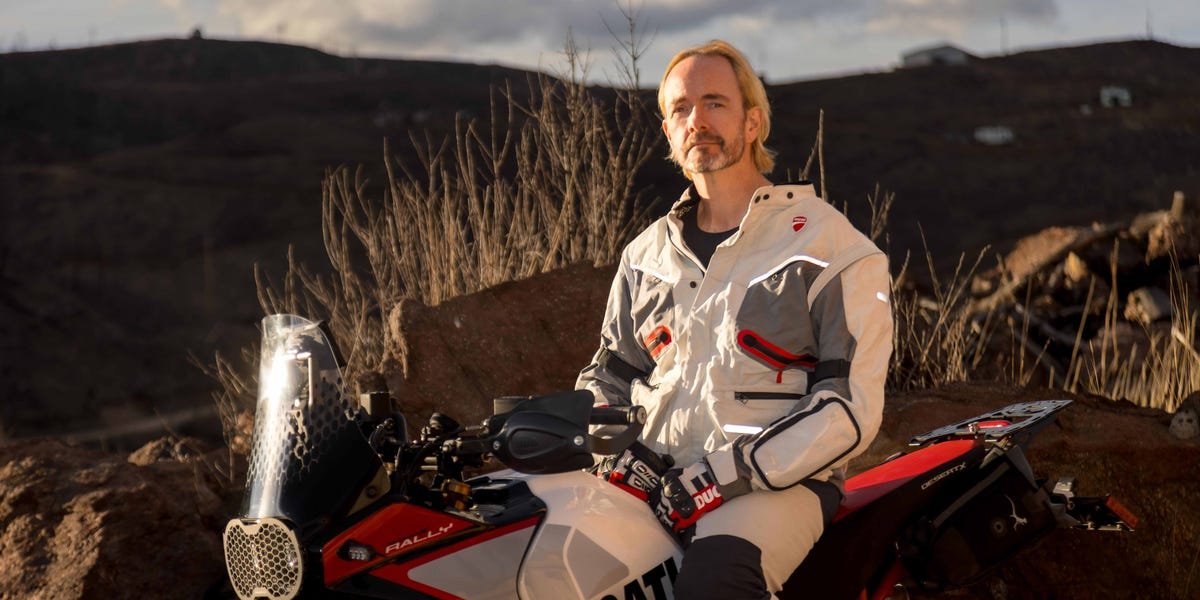
Ducati’s top executive said he hopes he’ll never see the day when motorcycles can drive themselves.
Jason Chinnock, who has been with the Italian luxury motorcycle company for over 20 years and served as its North American CEO for a decade, said being a motorcyclist is a core part of his identity.
He told Business Insider in an interview that aself-driving motorcycle would “take away the entire reason to ride a motorcycle.”
Autonomous cars, he said, are useful for mobility — they transport people in a “safe, smooth, efficient, and carefree way.”
He said Ducati’s motorcycles are less about transportation and more about entertainment and the riding experience.
“We are not building mobility. We’re building motorcycles. We’re building something for joy and for fun,” Chinnock said. “If it takes away the ability to operate it and experience it, then just get in a pod and go from point A to point B.”
There are no commercially available self-driving motorcycles. Some companies, such as Japan’s Yamaha and the Singapore-headquartered Omoway, have started work on self-balancing bikes.
However, Ducati is not entirely dismissing autonomous features, adding them where necessary for safety. For instance, Chinnock said some of Ducati’s models come with electronic cruise control, traction control, and an anti-lock braking system.
Ducati, which was founded in Bologna, Italy, in 1926, is owned by the Volkswagen Group.
Its motorcycles cost more than $10,000 in the US, with some models exceeding $40,000. In 2024, Ducati sold about 55,000 motorcycles worldwide, earning 1 billion euros, or about $1.17 billion, in revenue.
Autonomous cars are gaining traction globally. Tesla’s robotaxis and Alphabet’s Waymo both offer autonomous taxi services in San Francisco and the Bay Area, with Uber set to join the fray this year.
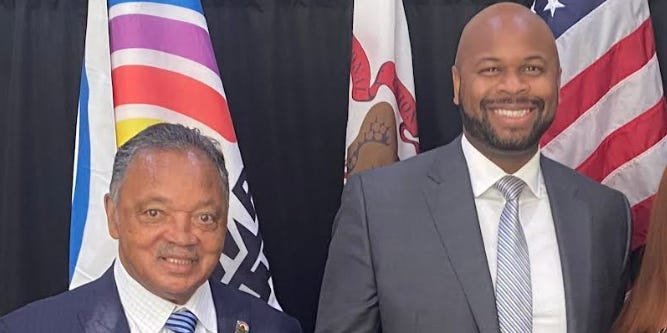
Rev. Jesse Jackson Sr. took a chance on me as a 19-year-old college student.
At that age, as an intern in 2009, I should’ve been pouring coffee, maybe making copies. Instead, he put me to work on college affordability policy, youth violence prevention, and immigration reform at his Rainbow PUSH (People United to Serve Humanity) Coalition on the South Side of Chicago.
That was nearly two decades ago. This week, he passed away.
A few weeks ago, I sat with him in the hospital. He was extremely present even as Progressive Supranuclear Palsy disorder had taken his voice — the same instrument that had formed seemingly impossible coalitions and made the moral case for justice in language that brought people together instead of tearing them apart.
I considered Rev. Jackson a close mentor
I met him in 2009 at a press conference he held to announce his intention to negotiate the release of journalist Roxana Saberi from an Iranian prison.
Every time Bradley publishes a story, you’ll get an alert straight to your inbox!
Stay connected to Bradley and get more of their work as it publishes.
Saberi was an alum of Northwestern University, where I was a student. Several classmates and I had staged a rally to call attention to her issue, and Rev. Jackson had invited us to join him at his press conference in Chicago.
When it ended and everyone packed up to leave, I made a split-second decision.
I grabbed him by the shoulder — strongly enough that his security detail sprang into action — and asked if I could volunteer for his Reduce-the-Rate initiative on college affordability. It was an issue that deeply resonated with me, as I’d borrowed a crippling amount to attend Northwestern. He said yes.
That moment changed everything. Less than a month later, I became the campaign’s manager, working part-time during school. I handled policy research and community interface and accompanied Rev. Jackson to meetings and events. I spent time with him every week and at times even did my homework at his house.
He became a mentor, coaching me and looking out for me not only professionally, but personally. I left the role in 2011, but over the years, we stayed close.
From Rev. Jackson, I learned three lessons about leadership that have shaped everything I’ve done since.
Lesson 1: Lean into hard moments, not out.
Rev. Jackson had a pattern: When things got difficult, he moved closer to the problem, not away from it.
He negotiated the release of over 200 hostages across Syria, Cuba, Iraq, and Serbia. He flew into war zones and sat across the table from dictators. He showed up to Texaco’s headquarters during their discrimination scandal. He walked into corporate boardrooms where he wasn’t welcome.
Many leaders I know do the opposite. When crisis hits, they create distance — delegate to lawyers, let the public relations team handle it, wait for it to blow over.
Rev. Jackson taught me that the moments when you want to step back are precisely when you need to step forward. Your measure as a leader is taken in the hardest moments, not the easy ones.
The author with Rev. Jackson during an interview outside of Pacific Gardens Mission, a homeless shelter in Chicago, in 2012.
Courtesy of Bradley Akubuiro
Lesson 2: Never stop investing in people.
Rev. Jackson had no reason to believe in my abilities. But he understood that individuals have incredible capacity for growth — they just don’t start off optimally productive.
He put a 19-year-old on policy work that mattered, then put me on-air representing the campaign. That wasn’t reckless — it was intentional investment. He knew that by giving people opportunities, some would disappoint him over the years, but the ones who didn’t might surpass what he could’ve imagined.
I’ve carried that forward — looking for people others overlook and investing in their growth. Not everyone pans out. But the ones who do become extraordinary.
Real leadership isn’t about finding perfect people. It’s about developing the potential in imperfect ones.
Lesson 3: Conflict and conversation can coexist.
Rev. Jackson was simultaneously the agitator and the negotiator. The prophet and the pragmatist.
He showed up uninvited to shareholder meetings and organized boycotts, but also sat down with those same executives afterward to identify resolutions.
“Diamonds can’t be produced without pressure,” he once told me. This applies to individuals, organizations, and systems.
He understood that real change requires both confrontation and conversation. You can’t just be nice and hope things improve. But you also can’t only apply pressure and expect people to come around.
I watched him do this with the Wall Street Project, pressuring corporations like Texaco and Coca-Cola to commit billions to diversity initiatives. He made them uncomfortable with boycotts. Then he sat down with their leadership and helped build solutions.
The author (right) with Rev. Jackson and his son, Rainbow PUSH Coalition COO, Yusef Jackson, in 2025.
Courtesy of Bradley Akubuiro.
Too many leaders think they have to choose to either be tough or be empathetic. Rev. Jackson taught me that’s a false choice; the best leaders do both.
The work continues
Rev. Jackson once told me the work of justice isn’t about being comfortable. It’s about being consistent. It’s about showing up when it’s hard, especially when staying silent would be easier.
He showed up. Consistently. The work he did — building coalitions across impossible divides, making the moral case in language that united rather than divided — we need it now more than ever.
Last week, when I held the first copy from the printer and saw the quote from him on the front cover, it was so moving. That he could support me one last time means the world to me.
I grabbed his shoulder at 19 because I didn’t want to let the moment pass. He taught me to lean into hard moments, develop people others overlook, and hold the tension between conflict and conversation.
That work doesn’t end with him. It’s up to us to pick it up.
Bradley Akubuiro is a partner at Bully Pulpit International, where he advises corporate leaders like Levi Strauss and the NFL on high-visibility reputation and diversity and inclusion matters.
In Europe, there’s been a lot of handwringing over why there are very few large, successful tech companies in the region. Peter Steinberger, the creator of the agentic AI hit OpenClaw, has an answer.
Steinberger was recently hired by OpenAI and is moving from Europe to the US. An Austrian by birth, he previously split his time between London and Vienna.
On X, a professor from a European university asked why Europe couldn’t retain this tech talent.
Steinberger replied that most people in the US are enthusiastic, while in Europe, he’s scolded about responsibility and regulations.
If he built a company in Europe, he would struggle with strict labor regulations and similar rules, he added.
At OpenAI, he said most employees work 6 to 7 days a week and are paid accordingly. In Europe, that would be illegal, he added.
The most valuable company in Europe is Dutch chip-equipment maker ASML, valued at about $550 billion. In contrast, there are 10 US companies worth more than $1 trillion. Most of these are tech companies.
In 2024, a landmark EU report found that the region had fallen behind the US, particularly in innovation. It proposed a series of changes to tackle the problem, but by the end of 2025, few of the recommendations had been implemented.
Steinberger said he was hopeful about EU INC, an effort to create a single corporate legal framework to make it simpler to run a business across the region.
But this seems to be “fizzling out,” he wrote on X. “Watered down, too much egoistic national interest that ultimately hurts everyone.”
Sign up for BI’s Tech Memo newsletter here. Reach out to me via email at abarr@businessinsider.com.
Perplexity is going full steam ahead with subscriptions and business sales and plans to focus more on monetization than it has in the past, executives said at a roundtable with reporters on Monday.
The AI search startup, based in San Francisco, is the latest to publicly distance itself from putting ads in chatbot answers, with one executive saying it isn’t exploring any ad deals at the moment. That’s a contrast to OpenAI, which is going all in on ads, while arch-rival Anthropic has publicly touted the opposite.
One Perplexity executive said the startup is increasingly targeting large businesses. The company has only five people on its enterprise sales team and plans to ramp that up, the executive added. It also wants to serve high-powered users such as finance professionals, doctors, and CEOs.
The focus on selling to businesses positions Perplexity more directly as a competitor to startups like Glean, which lets employees search internal files and data more efficiently with AI.
The move comes amid some VC skepticism about Perplexity’s prospects, with Silicon Valley investors voting it the company they’d most like to bet against in an informal poll at an AI conference last year, amid back-to-back funding rounds and talks of a wider AI bubble.
Every time Charles publishes a story, you’ll get an alert straight to your inbox!
Stay connected to Charles and get more of their work as it publishes.
Perplexity will focus more on revenue and revenue retention than on other metrics, such as the number of questions it answers, the executive said. Perplexity also pledged to keep allowing people to use the product for free, with rate limits.
At the roundtable, the company declined to share specific financials and shared that revenue grew 4.7 times last year. Perplexity generated over $150 million in annual recurring revenue by mid-last year, its head of communications Jesse Dwyer told Business Insider in August. It hit $200 million in ARR in October, Alex Heath of Sources reported.
The news comes after several months of the AI startup lying low, as Perplexity said in a press invite. The company’s leaders said it was busy building and not focusing on AI-related drama.
Perplexity had announced in 2024 that it would start experimenting with ads. That effort stalled, with the top ads leader, Taz Patel, quietly leaving last year. One consistent issue with ads in AI-generated answers is that users won’t believe them, the Perplexity executive said.
Perplexity also launched a product for enterprises in 2024 that uses internal and external data to generate research reports, among other features.
This story is available exclusively to Business Insider
subscribers. Become an Insider
and start reading now. Have an account? .
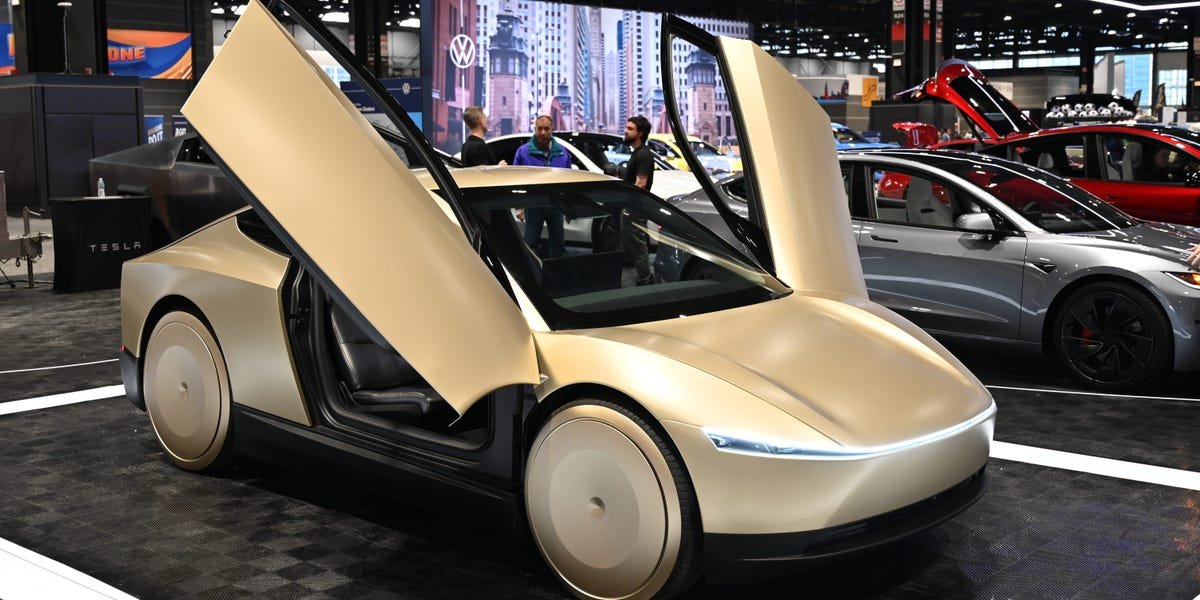
Tesla is building a fully autonomous car, called Cybercab, for its robotaxi service.
Tesla CEO Elon Musk has said that people will be able to buy the car.
The Cybercab still needs regulatory approval in order to be street legal.
Tesla says its purpose-built robotaxi just reached an important manufacturing milestone.
In an X post on Tuesday, the company said the Cybercab, a two-door car without a steering wheel, came off the production line at Tesla’s sprawling Gigafactory in Austin.
“Congratulations to the Tesla team on making the first production Cybercab!” Tesla CEO Elon Musk said on X.
The Cybercab was designed for Tesla’s nascent robotaxi ride-hailing program.
Tesla’s robotaxi program has so far deployed only 2025 Model Ys and mostly relies on human safety monitors to supervise rides. Tesla began offering a limited number of unsupervised rides to the public in January.
Unlike the Model Y, the Cybercab doesn’t have a steering wheel or pedals — it’s intended to be fully autonomous. Amazon’s Zoox similarly manufactures purpose-built robotaxis designed solely to transport passengers.
Tesla has said it expects to start production of the Cybercab in April.
What’s less clear is the timeline for when the automaker expects the Cybercab to be fully street legal.
Federal vehicle safety standards were written with human control systems like a steering wheel in mind, which means Tesla would likely need special approval from regulators for any requirements it can’t meet. Notably, Zoox received such a federal exemption and now operates a limited public service in Las Vegas and San Francisco.
Musk also said people will have the option to buy the car. Selling a car without pedals or steering controls not only requires clearing federal regulatory hurdles but could also expose Tesla to a patchwork of state-by-state rules governing registration, insurance, and autonomous vehicle operation.
“What we designed is optimized for autonomy,” Musk said during an earnings call in October 2024. “It will cost on the order of — cost roughly 25K, so it is a 25K car. And you can, you will be able to buy one exclusively if you want.”
A Tesla spokesperson did not respond to a request for comment.