Eliza Relman

Three generations live next door — and it’s helping this family afford both housing and elder care

Lauren McCadney had always wanted to live next door to friends or family. In her late 50s, she finally made that happen, though not the way she’d planned.

In 2020, Lauren’s mother, who had been living with her brother and his family in Frederick, Maryland, died. Lauren, who was going through a difficult divorce and doesn’t have children, decided she wanted to be closer to her family and help her brother care for their dad, who was dealing with his own health challenges.

In 2021, she moved from her home in Chicago to Maryland, renting a house a few blocks away from her brother, James, her sister-in-law, Lorri, and twin 20-year-old nephews, Drew and Carter. In 2023, the five-bedroom house next door to James and Lorri went on the market, and Lauren bought it and moved in with her sister, Cheryl.


Lauuren McCadney's family home.

Seven family members across three generations live next door.

Charlotte Kesl for BI


Now the seven family members live between the two houses, sharing caregiving responsibilities for James Sr., the family patriarch, and forming what they call a family compound.

Multigenerational living was once the norm in the US. Before World War II, it was almost unheard of for older adults to live independently or to receive care outside their families, while younger people often waited until marriage to move out. That changed for millions of American families as they lived farther apart, independent living services for older people became more accessible, and more women joined the workforce.

Now, as the costs of housing, long-term care for seniors, and childcare soar, that trend is beginning to reverse. The McCadneys are one of a growing number of American families moving back in together — or never separating in the first place. The number of people in the US living in multigenerational households — those with two or more adult generations — quadrupled between 1971 and 2021, according to Pew Research.

“I feel very blessed and fortunate that we have the situation we have,” Lauren said, “because I have friends who are the primary solo caregiver, and that is hard.”


Lauuren McCadney and family.

The McCadneys split caregiving duties and expenses.

Charlotte Kesl for BI


Sharing caregiving and expenses

The McCadney family splits caregiving duties — and everyone saves money in their arrangement.

Lauren, who retired from her career in tech marketing in 2024, renovated her house to suit her family’s needs, refinishing the basement into a separate living space for Cheryl and making the first floor accessible for their father, who has a neurological condition that makes walking difficult and affects his memory.

Cheryl, who pays below-market rent, takes care of Lauren’s dog while she’s on vacation. Their brother manages most of their father’s personal and medical care, while Cheryl spends a lot of time with him during the day. Lauren likes to take her father, who uses a scooter, to restaurants, breweries, and concerts.

When any family member goes on vacation or is otherwise occupied, they know another family member will be there to take care of the elder James.

By not putting the elder James in assisted living or a nursing home, the family is saving significant sums. “Unless you’re a billionaire, I don’t think that most people have the luxury of saying cost is not a consideration,” Lauren said.


Lauuren McCadney's father.

The family is saving a significant amount of money by taking care of the elder James at home.

Charlotte Kesl for BI


They also appreciate the peace of mind that comes from knowing their dad is being cared for by family. Plus, James Sr. wasn’t keen on moving into a facility.

“We know that he’s going to get much better care, and from a socialization perspective, from a stimulation perspective, from having a reason to get out of bed perspective,” Lauren said. “That’s something you cannot put a price on.”

Drew and Carter, who save on rent by living at home, also chip in, including by helping Lauren. They mow their aunt’s lawn, give her rides to the airport, and recently drove her to and from eye surgery.

“I do love that my boys have lived their formative years in a multigenerational household,” said Lorri, who’s a teacher. “It is, hopefully, clear to them that love is an action.”

Navigating challenges and an uncertain future

There are real challenges with caring for an aging family member. The siblings don’t have as much flexibility or privacy as they otherwise would. Cheryl said that before she moved in with Lauren, she “had grown accustomed to living alone and having flexibility to decide when to or not to interact with others.” Living with family has changed that.


Lauuren McCadney

The family aims to strike a balance between all three generations.

Charlotte Kesl for BI


James and Lorri are sandwiched between caring for their kids and their parents, all while juggling full-time jobs. Even as the couple is on the precipice of becoming empty-nesters, they’re responsible for someone who’s ever more dependent on them.

“I know there are times when James is exhausted and or frustrated,” Lorri said, “and as his wife, that’s hard to watch.”

James, who works for Maryland’s Department of Human Services, said there’s a constant balance to strike in doing right by all of his family members.

“Am I taking anything away from my children, or did I take anything away from them?” he said. “We hope that we’re doing all the right things.”


Lauuren McCadney and family.

Multigenerational living is on the rise.

Charlotte Kesl for BI


The McCadneys don’t know how long they’ll stay where they are. Lauren’s house requires a lot of maintenance that she’d rather not have to deal with as she ages. Lorri and James hope to someday downsize and spend more time at the beach in their travel trailer. As long as the elder James is living with them, the couple said they’ll stay in their home.

Lauren doesn’t know who will take care of her when she’s older. She and her friends talk about buying a piece of land and building several small homes on it, creating their own communal living arrangement where they could share a caregiver and help each other out.

“A lot of my friends are sitting around right now having this conversation, which is, ‘We don’t have kids, who’s taking care of us? How do we do this?'” she said.

While so much about the future is uncertain, she’s taking one day at a time for now.

“I’m just happy that everything works for right now,” she said.


Source link

Jacob Zinkula

A Gen Zer took a 6-figure job at Meta to rebuild her savings. Then she quit and returned to her dream.

When Alyson Isaacs joined Meta in 2022, she only had about $200 in her savings account. A six-figure salary offered a chance to rebuild her finances, but her ultimate goal lay outside Big Tech.

After college, Isaacs “completely drained” her savings on a startup she’d co-founded, and found herself grappling with her next career move. After weighing her options, she decided to follow the advice of a mentor: go to “startup rehab” — in other words, take a full-time job.

“You can always get a job at a Big Tech company,'” said Isaacs, who’s 28 and lives in San Francisco.

About four months later, she landed a product manager role at Meta in the company’s Quest for Business virtual reality division. But her entrepreneurial itch never left, and she eventually began mapping out the best path back into the startup world.

“There are ways you can be entrepreneurial,” she said of working at Big Tech, “but it’s very much not the same.”

Over the past year, I’ve interviewed more than a dozen workers who, like Isaacs, chose to quit their jobs at major employers — in some cases without another role lined up. While some eventually landed at another large company, others stepped away from the corporate world entirely — joining a smaller business, launching their own venture, pursuing a career pivot, or focusing on personal priorities like parenting.

They’ve become outliers in an economy where workers are quitting at one of the lowest rates in the past decade — a trend driven by a hiring slowdown that’s left some clinging to their jobs with few appealing alternatives. Those who have called it quits told me they did so for a mix of reasons: concerns about job security, shifts in workplace culture, entrepreneurial ambitions, or a desire for more meaningful work. In short, they wanted greater long-term agency over their careers.

Isaacs shared how she decided to take the leap back into entrepreneurship — and offered advice for others facing a similar career crossroads.

Preparing for a return to entrepreneurship

After leaving her post-college startup, Isaacs took a month to reset. She then spent two months interviewing at smaller companies to fine-tune her résumé and sharpen her interview skills. Eventually, she applied for a role at Meta and landed the job. She moved from the Berkeley area to San Francisco and started in May 2022 — about a year after graduation.

While Isaacs didn’t have firm plans to return to entrepreneurship, she knew that if she ever went down that path again, she’d need to be financially prepared for life without a steady paycheck. So she started living well below her means, including living in a less expensive area, going to a basic gym, cooking at home, and avoiding shopping sprees.

“I saved so hard because I knew that this wasn’t going to be the end game for me, and I wanted to start my own thing again eventually,” she said.

Isaacs also prepared for a potential return to entrepreneurship by spending about five hours a week angel investing, which involved scouting and backing startups. After about a year of saving, she began making a few investments, each under $10,000. She said the experience helped her build a network in San Francisco’s startup scene and spot gaps other entrepreneurs could exploit — insights that helped shape her own business ideas.

The final phase of Isaacs’ preparation was soaking up everything she could from her time at Meta, including transitioning to a product manager position at Instagram — one of Meta’s subsidiaries — in 2024. She said the roles gave her knowledge and experience that entrepreneurship alone couldn’t provide.

“Traditional entrepreneurship was just flying by the edge of my seat and seeing what worked,” she said. “But I needed that level of expertise to go farther in my career.”

The question was when to make the leap and leave Meta. Isaacs said the death of her father in 2024 weighed heavily on her thought process.

“That really triggered this thought in my brain of, ‘Is being a product manager at a Big Tech company what I want to do for the rest of my life?'” she said. “And the answer was resoundingly no — I wanted to do something on my own and prove myself.”

By mid-2025, Isaacs found herself thinking more and more about a startup idea in the consumer AI space — and struggling to focus on her job at Meta. On July 1, she resigned; the next day, she began working full-time on her startup, which she described as an “agentic AI solution for personal wellness.” The company is currently in stealth, meaning the team isn’t publicly sharing full details while the product is still in development. She said she and her two co-founders are testing the product with users and plan to open a pre-seed funding round in the spring.

Read more about people who’ve found themselves at a corporate crossroads

Advice for others weighing big career moves

Isaacs said she knows many people might hesitate to give up a Big Tech job. But she believes some underestimate their chances of finding a new role or building something themselves — and end up stuck in jobs they don’t enjoy.

“It’s kind of like dating,” she said, adding that if you anticipate a bad dating pool, “you’re going to stay with your bad ex.”

Isaacs said she wasn’t worried about resigning from Meta, in part because she’s a “super optimist” about her career. If her startup doesn’t work out, she’s confident in her backup plan — the same one she relied on after her post-college startup opportunity fell through.

“Leaving Meta wasn’t scary for me because I was like, ‘I can always get another job in Big Tech,'” she said.

Isaacs has a few pieces of advice for other aspiring entrepreneurs. She recommends connecting with as many people as possible who are relevant to the venture you want to pursue — and looking for ways to help them, whether through angel investing, advising, or offering support.

“You kind of create this flywheel of people helping you if you help other people first,” she said.

Additionally, even if your end goal is to build a business, Isaacs said having experience at a big-name company can give you valuable credibility as an entrepreneur.

“I needed to be undeniable as a founder, and having a big-box name brand on your résumé gives you that undeniability,” she said.


Source link

Shuby headshot

Snowflake’s CEO says software giants risk becoming a ‘dumb data pipe’ to AI models

The biggest software companies might be reduced to mere data sources, says Snowflake’s CEO.

“The big model makers want to create a world in which all of the data for all of the enterprises is easily available to them,” Sridhar Ramaswamy said on an episode of Alex Kantrowitz’s “Big Technology Podcast” published last week. “Everything else, the world, is just a dumb data pipe that feeds into that big brain.”

Prior to becoming Snowflake’s CEO in 2024, Ramaswamy was a partner at Greylock Ventures and cofounded AI search startup Neeva, which was acquired by Snowflake.

Ramaswamy added that Snowflake needs to operate with a “fear” that people would stop using AI agents developed by software companies and instead want an all-inclusive agent that has data from Snowflake, for example, and everywhere else

He said his solution was to let customers take the lead and decide how they want to access their data — directly through their own agents, or through a product like ChatGPT.

In the last few months, AI labs have evolved from being sources of AI infrastructure to becoming software providers themselves. OpenAI has entered the sales, support, and document analysis market, threatening incumbents such as Salesforce and Oracle.

On a podcast released last week, Andreessen Horowitz general partner Anish Acharya said software firms were being unnecessarily punished by Wall Street over fears that AI could take over their industry. The VC said that legacy software could not be replaced so easily, because it would not be worth it to use AI for every business function.

He said that software accounts for 8% to 12% of a company’s expenses, so vibe coding to build the company’s resource planning or payroll tools would only save about 10%. Instead, companies should focus on big-ticket items, like developing their core businesses or optimizing other costs.

Ramaswamy and Acharya’s comments follow a brutal start of the month for software stocks, which dragged down tech and broader markets. The sell-off started when already-wary investors panicked about Anthropic’s new AI tool, which can perform a range of clerical tasks for people working in the legal industry.


Source link

Jacob-Elordi-28-says-he-has-no-relationship-with-social.jpeg

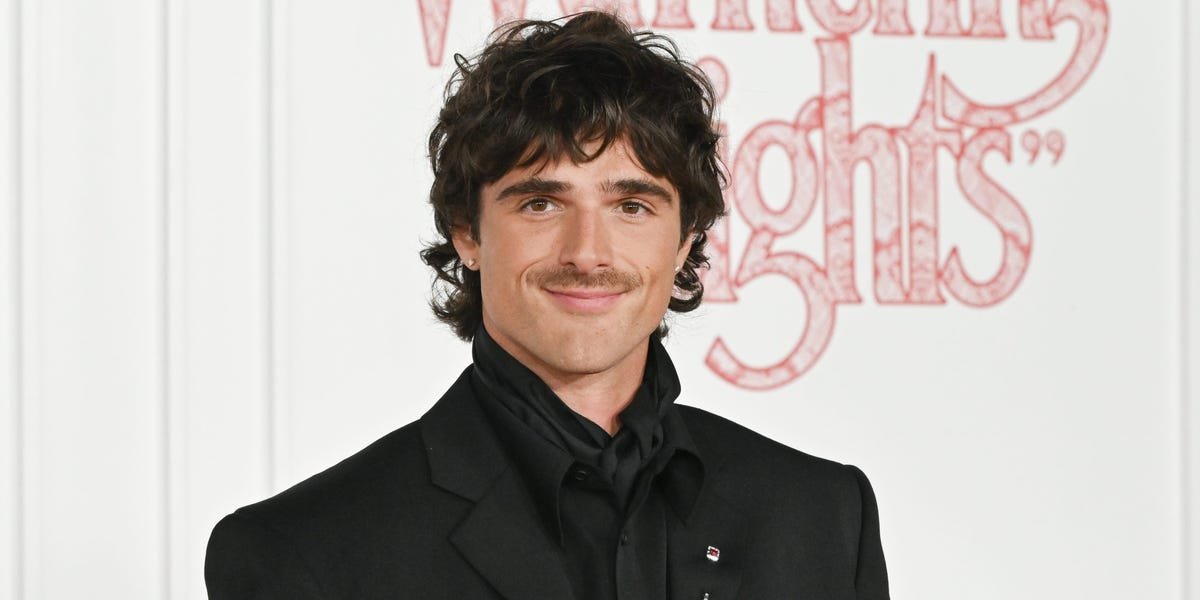
Jacob Elordi, 28, says he has ‘no relationship’ with social media

Jacob Elordi, 28, is everywhere right now — he’s just not on social media.

From “Euphoria” to “Saltburn” and “Priscilla,” to Guillermo del Toro’s “Frankenstein” last year and “Wuthering Heights,” released last week, Elordi has cemented his place as one of Hollywood’s most in-demand young actors.

But in an interview with CBS Sunday Morning, he made it clear that he has no interest in putting his private life online.

“I have no relationship with social media,” Elordi told CBS correspondent Tracy Smith.

“My dream was to be an actor. My dream was to play in the movies and, you know, I’m far too nervous to ask for more than that. I’ve been given exactly what I wanted, and I see it exactly how I dreamed it, and I live it how I dreamed it. So for me, that’s about all I can handle,” Elordi said.

Though the Australian actor has had an Instagram account in the past, he’s known to deactivate it often. His account has been deactivated since late 2024.

For Elordi, staying offline is a way to keep Hollywood from taking over his entire identity. Despite his rising profile — he’s TK he says that the boundary allows him to move through his private life mostly unbothered.

“I have a pretty strong refusal to lose my life to an industry, you know. I consider myself an actor and just an actor. And so for me, life kind of goes on outside the set, and outside of these lights and cameras and things,” he said. “I don’t have too much trouble in the world.”

Even with cameras around, Elordi says being a Hollywood star barely registers in his daily life.

“It doesn’t really factor into my reality, you know,” Elordi said. “I have so much love in my life, and the relationships I have in my life are so present and real. I was raised in such a sort of authentic and true way.”

“I feel so deeply here that, I don’t know, the idea of this industry and stuff — it doesn’t really factor into my day-to-day,” he said.

This isn’t the first time Elordi has spoken about social media and fame. In 2022, he said he woke up to 4 million new Instagram followers after his breakout role in Netflix’s “The Kissing Booth,” and the sudden public attention made him consider quitting acting.

“I hated being a character to the public. I felt so far from myself,” Elordi told GQ.

Elordi isn’t the only Gen Z actor to have spoken about staying offline.

In 2025, Mia Threapleton said her mother, Kate Winslet, encouraged her to make a list of pros and cons for joining Instagram when she was 14.

“The cons completely outweighed the pros for me. That was quite a clarifying moment. Since then, the more time I spend in this world, the more I’m really happy that I don’t have it,” Threapleton said.

It’s not just a Hollywood thing, either. Plenty of Gen Zers are deciding they’re better off offline.

They’re trading smartphones for dumb phones, turning cellphones into makeshift landlines, and throwing anti-social media parties where no one’s allowed to scroll.


Source link

A-blink-and-you-miss-it-scene-in-A-Knight-of-the-Seven-Kingdoms.jpeg

A blink-and-you-miss-it scene in ‘A Knight of the Seven Kingdoms’ ties Dunk to his most famous descendant

Spoilers ahead for “A Knight of the Seven Kingdoms” season one, episode five, “In the Name of the Mother,” and the book “The World of Ice & Fire.”

HBO’s newest “Game of Thrones” prequel, “A Knight of the Seven Kingdoms,” centers on Dunk, a lovable hero distinguished by his tall frame, raw strength, and unshakeable moral code.

For fans of the original series, that description may sound awfully familiar — and that’s no accident.

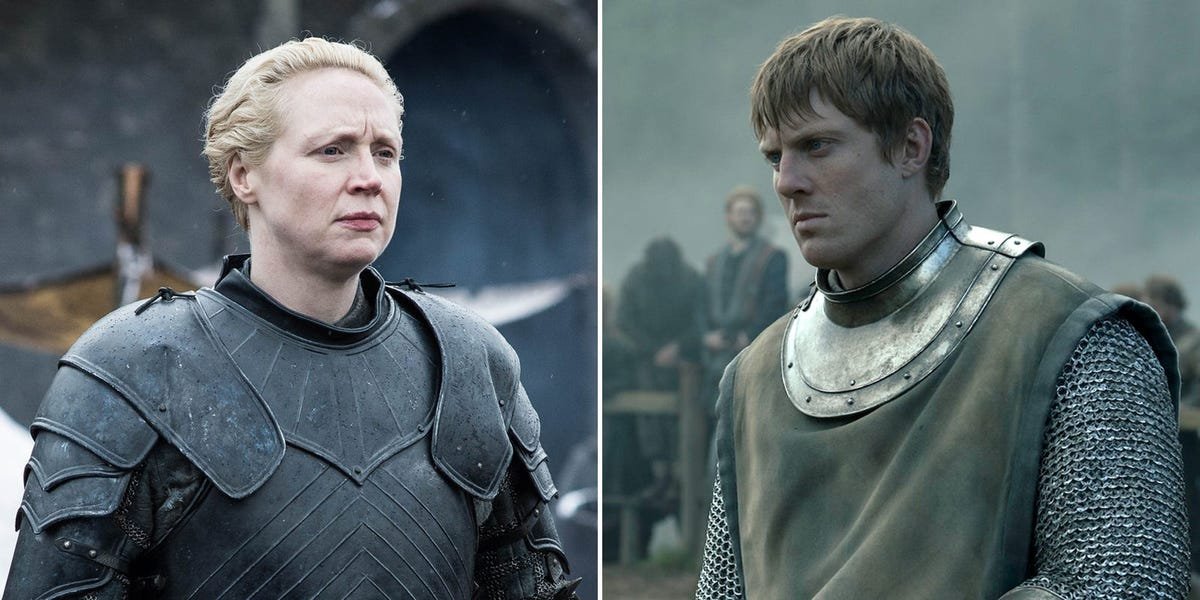
A blink-and-you-miss-it detail from episode five, “In the Name of the Mother,” draws a subtle throughline between Dunk and another prominent knight from Westerosi history: Brienne of Tarth, who appears a century later in the “Game of Thrones” timeline.

In a flashback scene, a young Dunk is shown walking down the kingsroad with his childhood friend, Rafe, returning to their home in King’s Landing. This route runs for thousands of miles across Westeros, easing travel to and from the capital.


Bamber Todd and Chloe Lea as young Dunk and Rafe in

Bamber Todd and Chloe Lea as young Dunk and Rafe in “A Knight of the Seven Kingdoms.”

Steffan Hill/HBO


In “Game of Thrones,” Jaime Lannister sends Brienne in the opposite direction, away from King’s Landing, on a quest to find and protect Sansa Stark. He also assigns Podrick Payne to serve as her squire. In season five, episode five, “First of His Name,” the duo travels down the same wooded path that Dunk and Rafe had trodden before.

“A Knight of the Seven Kingdoms” showrunner Ira Parker confirmed to Business Insider that he intentionally included this parallel. Both scenes were filmed in the same location in Ireland.

“It’s the exact same road in Belfast, same trees and everything,” Parker said. “There’s no attention drawn to it, but anyone who’s a deep, deep fan of the show, hopefully, will pick up on that.”

Parker said he liked the idea of distant relatives crossing paths generations apart.

Author George R. R. Martin, who’s also credited as an executive producer on “A Knight of the Seven Kingdoms,” confirmed in 2016 at a sci-fi and fantasy convention that Brienne is Dunk’s descendant.


Daniel Portman as Podrick and Gwendoline Christie as Brienne in

Daniel Portman as Podrick and Gwendoline Christie as Brienne in “Game of Thrones.”

Helen Sloan/HBO


Martin’s “Tales of Dunk and Egg” trilogy doesn’t cover this chapter in Dunk’s life; in the last installment that was published, “The Mystery Knight,” he’s only about 19 or 20 years old. But it sounds like, at some point during his travels, Dunk coupled up with a lady of House Tarth in the stormlands — and left a souvenir or two in his wake. In “A Feast for Crows,” the fourth book in Martin’s “A Song of Ice and Fire” series, Brienne recalls seeing a shield with Dunk’s personal sigil in her father’s armory.

Dunk and Brienne follow similar character arcs

In season one of “A Knight of the Seven Kingdoms,” as in the novella it’s based on, “The Hedge Knight,” the running joke is that no one knows who Dunk is.

He grew up as an orphan in Flea Bottom, the poorest area of King’s Landing, before he became a squire for Ser Arlan of Pennytree, a sloppy hedge knight. The two would roam Westeros, taking work where they could find it and offering help when it was needed, but they rarely left an impression on the lords and ladies of the realm.


Bamber Todd as young Dunk and Danny Webb as Ser Arlan in

Bamber Todd as young Dunk and Danny Webb as Ser Arlan in “A Knight of the Seven Kingdoms.”

Steffan Hill/HBO


As a result, Dunk struggles to be taken seriously after Arlan’s death. He has no status, no money, and no one to vouch for him. Hardly anyone even believes he’s a real knight. He begins introducing himself with a slightly more impressive name: Ser Duncan the Tall.

However, fans of Martin’s source material know that Dunk’s anonymity doesn’t last for very long. Thanks to the fictional history book, “The World of Ice & Fire,” we know that his young squire, Egg, grows up to become King Aegon V Targaryen.

After their many adventures together, King Aegon recruits Dunk to be Lord Commander of the Kingsguard — the highest honor for a knight in Westeros. (This also means Dunk swore an oath not to marry or father children, which makes Brienne’s lineage even more of a mystery.)

Dunk was so good at his job that he’s still famous a century later. In season four of “Game of Thrones,” Dunk’s name appears in the Book of Brothers, a written history of the Kingsguard.

“Ser Duncan the Tall. Four pages for Ser Duncan,” Joffrey Baratheon notes while flipping through the pages. “He must have been quite a man.”

“So they say,” Jaime replies.


Peter Claffey as Dunk and Dexter Sol Ansell as Egg in

Peter Claffey as Dunk and Dexter Sol Ansell as Egg in “A Knight of the Seven Kingdoms.”

Steffan Hill/HBO


Indeed, Dunk’s rise through the ranks closely resembles Brienne’s.

Like Dunk, Brienne is motivated by honor and loyalty, and she’s known for her tremendous height and strength. Although she’s not low-born, Brienne still struggles to earn respect as a warrior. Fighting is considered unnatural for a lady, and technically, women aren’t allowed to be knighted in Westeros, so Brienne is often met with ridicule and violence.

Still, she manages to overcome this unjust class system by making friends with the right people. Defying convention, Brienne is knighted by Jaime in season eight of “Game of Thrones,” in an episode titled “A Knight of the Seven Kingdoms.” She finishes the series as the very first Lady Commander of the Kingsguard.

In her final scene, Brienne writes in the very same book that features four pages about her ancestor. Odds are, by the end of her service to King Bran, she’ll end up with just as many or more.


Source link

Elon Musk is in a black suit jacket and a black graphic t-shirt on stage. He is looking to the top left corner of the image.

Elon Musk says Anthropic’s philosopher has no stake in the future because she doesn’t have kids. Here’s her response.


Marc Piasecki/Getty Images

  • Anthropic’s resident philosopher, Amanda Askell, helps shape Claude’s personality and morals.
  • Elon Musk said she’s not qualified because she doesn’t have kids and no stake in the future.
  • Askell had thoughts.

Anthropic famously employs a Scottish philosopher named Amanda Askell.

Her job is to imbue its chatbot, Claude, with a personality and a set of moral guardrails. She is essentially teaching it to be cool and good.

Elon Musk, however, doesn’t think she’s qualified.

“Those without children lack a stake in the future,” Musk posted on X in response to a profile of Askell published by The Wall Street Journal.

The Journal profile does not say whether Askell has kids. Musk, who has imbued his own chatbot, Grok, with a distinct personality, has 14 of them. Musk is known for promoting a brand of pronatalism that’s become popular among Silicon Valley elites.

Askell responded with her trademark dry intellectualism.

“I think it depends on how much you care about people in general vs. your own kin,” Askell wrote. “I do intend to have kids, but I still feel like I have a strong personal stake in the future because I care a lot about people thriving, even if they’re not related to me.”

“I think caring about your children can make you feel invested in the future in a new and very profound way, and I do understand people wanting to convey that,” she added.

The responses to their short back-and-forth were as varied as you might expect on Musk’s social media network. A day later, Askell posted again.

“I’m too right wing for the left and I’m too left wing for the right,” she said. “I’m too into humanities for those in tech and I’m too into tech for those in the humanities. What I’m learning is that failing to polarize is itself quite polarizing.”


Source link

I-took-a-risk-moving-to-Phuket-as-a-single.jpeg

I took a risk moving to Phuket as a single mom. It paid off.

This as-told-to essay is based on a conversation with Cheska Hull, 40, a British reality TV star and PR professional who relocated to Phuket. Her words have been edited for length and clarity.

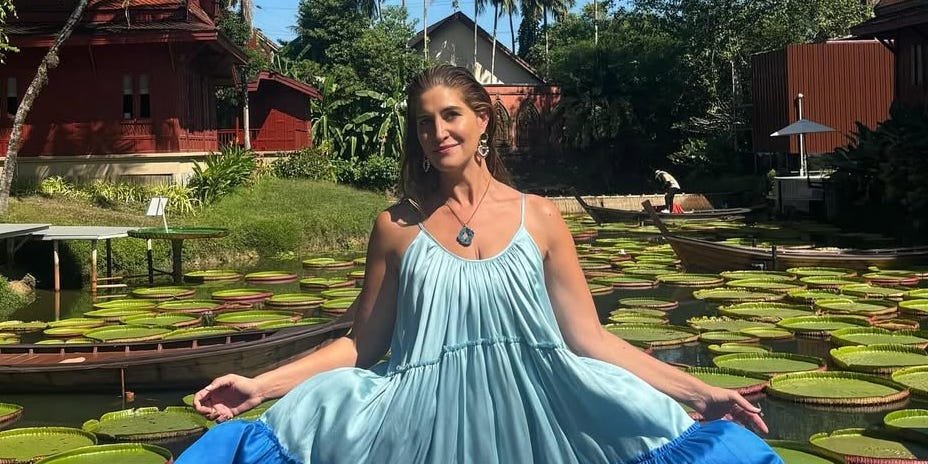
My move to Phuket was about choosing a fabulous place to live while continuing my freelance career.

I feel like I’ve been part of the island’s community for years. I’d visit annually for a couple of weeks at a time, maintain friendships, and get to know local business owners.

Every trip had me dreaming about potential jobs and interesting opportunities. I’m a PR specialist who has always worked in the luxury sector, across food, beverage, and hospitality. In London, I specialized in private members’ clubs.

That work also led me into radio and television, where I starred in the reality show “Made in Chelsea” for nearly four years. It helped me understand the evolving world of influencers and celebrities. Having lived on both sides of the PR and fame spectrum, I gained a deep understanding of that industry.


Cheska Hull posing at the Children with Cancer UK Fundraising Gala

In May 2011, Hull was a member of the original cast of the reality show “Made in Chelsea.”

Provided by Cheska Hull


I happened to be born in Thailand

My parents lived in Phuket in the 1980s, when my dad was head of Standard Chartered Bank for Phuket, which is why I was born here. We moved back to England when I was young.

Being born in Thailand didn’t simplify moving back as an expat. I still had to go through all the same steps as everyone else.

Initially, I came on a DTV digital nomad visa while freelancing for my UK clients. I told all of them, “I want to live in Thailand. That’s my dream.”

I wanted the best of both worlds.

There were a few reasons for the move

I’ve always been drawn to the famous Thai “sabai sabai” — take-it-easy — lifestyle. But when it comes to business, I’m driven. I could never just move to Phuket and not work.

Even between projects, I was constantly networking, talking to people, and pushing for collaborations with brands I’d worked with before. Now, I get to do what I’ve always loved in a place I love.

My son was also at the right age for a big change. As a single mom, the stress came from knowing how significant the move was and wondering, “Have I made the right decision?” My main priority in life is his happiness.

If he hadn’t been happy, I don’t think we would have stayed. But he’s 8, and he was able to fit in quickly — learning some Thai at school and thriving.

There was another catalyst, too. At the time, I was engaged to be married and realized that wasn’t the path for me anymore. Once I called off the wedding, the door felt wide open.

Nothing was holding me back.


Cheska Hull and her son in Phuket, Thailand.

She says her 8-year-old son is learning Thai at school and has fit in quickly.

Provided by Cheska Hull


Finding my career groove in Thailand

Browsing jobs in Phuket started as a guilty pleasure. Through meeting people and networking, someone told me about a new opening at Anantara, a hotel I already knew well. It seemed perfect. And so now, as cluster director of public relations, I have a work permit.

I’ve had to quickly learn Thai workplace customs, like addressing colleagues respectfully using “khun” before names or navigating the widespread use of nicknames. It’s about understanding a different culture and being respectful within it.

One of my favorite rituals happens every Friday during my team’s morning meeting. We go outside to a huge tree in front of the hotel with two spirit houses. We all take incense, make a prayer, and privately speak to the spirits. It’s so different and unique, I find it special.

It’s a meaningful part of their culture that I’ve come to love. I can’t imagine trying to get everyone in London to do that, they’d laugh.


Cheska Hull stroking a horse on a beach in Phuket, Thailand.

She plans to stay in Phuket.

Provided by Cheska Hull


Thailand is my long-term plan

There haven’t been many hard parts to settling in. The main challenge of living on a small, seasonal island like Phuket is traffic. You get used to a calm pace, and then suddenly there’s a massive influx of people. But that comes with the territory in hospitality and tourism, which is ultimately what we want here.

My move to Thailand is long-term. Looking back, there was an element of risk. I came with a bit of an “Eat, Pray, Love” vision. I knew I loved it here and wanted it to work, but I also told myself, “If it doesn’t, you can just go back.”

For me, the quality of life, the people, the food, the weather — just about everything about Phuket — makes it a place I want to call home forever. Island life simply couldn’t be better right now.

Do you have a story to share about living abroad? Contact the editor at akarplus@businessinsider.com.


Source link

Amanda Goh

They moved to China for a new adventure. Their 3 kids gained independence — and mom has time for hobbies.

After five years in Qatar, Elisa Orsi and her husband, David Sleight, knew they were ready to leave the desert behind.

They had moved from Australia to the Middle Eastern country in 2019 with their three kids — all under 6 — after Sleight accepted a job there.

Already big travelers before they had kids, the couple used school holidays to see the world after starting a family, before later leveraging Sleight’s teaching career to travel even more.


A family posing with their car in the sand dunes of Qatar.

The family moved to Qatar from Australia because they wanted to experience more of the world.


Provided by Elisa Orsi.


“Usually when people have children, it deters them from travel, but we went completely the other way,” Orsi, 37, a stay-at-home mom, told Business Insider.

Life in Qatar felt safe and comfortable, and it served as a base from which they could explore the region, traveling to places like Jordan, Turkey, and Egypt.

Gradually, the couple found themselves looking for something new.

“By the time we came back from our summer holiday in 2024, we said, ‘OK, we’re done. We need a change,'” Orsi said.

In August 2024, the family packed up their bags and moved to Hangzhou, a bustling city in eastern China.

Moving to China

China had been on their radar for a long time, though neither of them had visited before.

It wasn’t until Sleight came across an online job ad for a teaching role in Hangzhou that they began looking into the city.


A couple in front of a temple in Shanghai.

The family had traveled through other parts of Asia and always wondered what life in China was like.


Provided by Elisa Orsi.


“I was impressed with the natural beauty and how modern the city appeared. I knew China was very well connected by the railway infrastructure, so I wasn’t overly concerned about the location,” Sleight, 45, told Business Insider.

The couple looped their kids, who are now 11, 9, and 7, into the conversation about moving to China early. “We wanted to give them lots of time to process and to get an understanding of what was happening,” she said.

“We have a philosophy that we talk to our children, and we keep them informed about the decisions we make,” Orsi said.


A woman and her three kids in China.

The couple involved their three young children in conversations about the move early on.


Provided by Elisa Orsi.


To ease the transition, they showed their kids YouTube videos about China and the school they would attend.

When they arrived in Hangzhou, Orsi said their first impressions quickly put any lingering nerves at ease.

“We were actually quite shocked to see how clean, how modern, how organized, and how convenient everything is,” Orsi said. “Sometimes you watch videos, but unless you’re actually in it, you can’t really understand it to that degree until it affects your life.”

Their children attend an international school, and Sleight teaches English in the school’s bilingual program.

House-hunting was a breeze because the school put them in contact with a real-estate agent ahead of their move.


The living room.

They live in an apartment about five minutes away from the school.


Provided by Elisa Orsi.


“We wanted to have a bedroom for each of the kids, and we were looking for amenities,” she said. “Most importantly, we wanted to be close to the school.”

Within 10 days of arriving in China, the family moved into a four-bedroom apartment. It’s about a five-minute drive from the school and roughly 50 minutes outside the city center, in a neighborhood dominated by local Chinese families.

Rent is 5,500 Chinese yuan, or about $790 a month, and is covered by the school as part of Sleight’s employment contract.

Life in Hangzhou

Moves like the couple’s have become more common in recent years. China’s latest national census shows that 845,697 foreigners were living in the country in 2020, up from 593,832 a decade earlier.

Even with a growing foreign community, the transition isn’t always easy.

The biggest challenge has been the language barrier, though translation apps have helped. Orsi is learning Mandarin through online apps, while the children learn it at school.

Sleight relies on support from bilingual teachers and staff, and many parents at the school speak English.

“During staff meetings and presentations, I wear an earpiece and listen to a live translation provided by the school’s professional translator,” he said. Sleight added that parents and staff also communicate through a messaging app with built-in translation.

In China, the family also had to get used to a system in which nearly everything, including payments, is done on a smartphone.

Despite those adjustments, Orsi said safety has been one of the most striking aspects of life in China. She said she’s often asked about the presence of surveillance cameras, but sees them as a positive.


A man and his three kids eating their first meal in their new neighborhood in China.

Orsi said the level of safety in China has given her children more freedom to move about on their own.


Provided by Elisa Orsi.


“If anything were to go wrong, the issue would be resolved very, very quickly. So the children, they can be outside on their own,” Orsi said. She added that she probably wouldn’t feel comfortable giving her kids the same level of freedom even in Townsville, a city in North Queensland, where they lived before moving to Qatar.

It’s also common to see children wearing kid-friendly smartwatches, which let them be more independent.

“You can see their location, they can call you, they can pay for things, and so they can go anywhere. They’ll organize their own play dates and go and meet their friends,” she said.

As a woman, Orsi also feels safe walking alone, including from the train station late at night. “I have not thought about it twice. I wouldn’t do it in Australia. And I wouldn’t do it in Argentina, where I’m from,” she said. Orsi moved to Australia in her teens and later met Sleight while working at a telecommunications company.


Two kids along the Great Wall of China.

The family has been using school holidays to travel around China, including to the Great Wall.


Provided by Eliza Orsi.


It took a year, but Orsi says the family finally feels settled in their new home. Most of their social circle has grown out of the school community, including other parents and foreign teachers.

The longer school days have also given Orsi more time for herself. She said she’s picked up new hobbies, including learning to play the piano, going to the gym, and focusing on content creation for their YouTube channel, where she and Sleight document their family life in China.

Sleight is on a three-year contract at the school. As for what comes next, Orsi said the family hasn’t made any firm decisions.

“I think we would probably like to move elsewhere and go to another country when our contract is up, but that could change,” she said. “We may very well decide to stay in China and move to another school or experience a different city.”

Do you have a story to share about relocating to a new city? Contact this reporter at agoh@businessinsider.com.


Source link

Sam-Altman-says-OpenClaw-creator-Peter-Steinberger-is-joining-OpenAI.jpeg

Sam Altman says OpenClaw creator Peter Steinberger is joining OpenAI to build next-gen personal agents

  • Sam Altman says OpenClaw creator Peter Steinberger is joining OpenAI.
  • OpenClaw is a viral AI agent launched last month.
  • Altman said Steinberger will build “next generation” AI agents at OpenAI.

OpenAI just scored a win in the AI talent wars.

Sam Altman said Sunday on X that Peter Steinberger, the creator of OpenClaw, the viral AI agent powering the agent-only social network Moltbook, is joining OpenAI.

Altman said Steinberger would build the “next generation” of personal AI agents at the company.

“He is a genius with a lot of amazing ideas about the future of very smart agents interacting with each other to do very useful things for people,” Altman said about Steinberger. “We expect this will quickly become core to our product offerings.”

Altman added that OpenClaw, which was for a brief moment in time known as Moltbot and then Clawdbot before Anthropic took notice, will live on as an open-source project supported by OpenAI.

“The future is going to be extremely multi-agent and it’s important to us to support open source as part of that,” he wrote.

Steinberger, previously best known for founding the PDF processing company PSPDFKit, came out of retirement to launch OpenClaw in late 2025.

He is likely to bring a new perspective to OpenAI’s race to develop artificial general intelligence. Steinberger said he believes AGI is best as a specialized form of intelligence rather than a generalized one.

“What can one human being actually achieve? Do you think one human being could make an iPhone or one human being could go to space?” Steinberger said on a Y Combinator podcast in February. “As a group we specialize, as a larger society we specialize even more.”


Source link

Take-a-look-inside-the-Air-Force-One-plane-that.jpeg

Take a look inside the Air Force One plane that carried 8 presidents and brought home JFK’s body from Dallas

Updated

  • SAM 26000 operated as Air Force One from 1962 to 1998, carrying eight US presidents.
  • Lyndon Johnson was sworn in on board, and the plane transported John F. Kennedy’s body from Texas.
  • SAM 26000 is housed at the National Museum of the US Air Force, where visitors can walk through it.

“If history itself had wings, it would probably be this aircraft,” Vice President Al Gore said of the SAM 26000 Air Force One plane upon its retirement in 1998.

The first Air Force jet designed and built specifically for US presidents, SAM 26000 (pronounced two six thousand) carried eight presidents between 1962 and 1998 — every leader from John F. Kennedy to Bill Clinton.

After 13,000 flying hours over 36 years of service, the plane was retired to the National Museum of the US Air Force in Dayton, Ohio, where it remains on display.

I visited the museum in August and walked through the historic aircraft. Take a look inside.

The SAM 26000 Air Force One jet, a Boeing VC-137C, was completed in 1962 for President John F. Kennedy.

SAM 26000 at the National Museum of the US Air Force.

US Air Force photo by Ken LaRock

The Boeing VC-137C was a customized and modified version of a civilian 707-320B airliner. It was powered by four Pratt & Whitney TF33 engines, each with 18,000 pounds of thrust.

First lady Jacqueline Kennedy chose the plane’s blue and white paint colors in coordination with industrial designer Raymond Loewy.


A blue and white plane on display in a museum, with

Eight US presidents flew on this Air Force One plane known as SAM 26000.

US Air Force photo by Jim Copes

The first lady also added the words “United States of America” to the aircraft to signal its importance as the president’s plane.

In a tragic period of American history, SAM 26000 transported President John F. Kennedy’s body home after his assassination in 1963.


Air Force One arrives with President John F. Kennedy's coffin.

President John F. Kennedy’s coffin was transported on Air Force One after his assassination.

Schulman-Sachs/picture alliance via Getty Images

President Lyndon Johnson was sworn in as president aboard the plane hours after Kennedy was pronounced dead.

Now an interactive museum artifact, visitors can board the plane the same way US presidents did via a staircase leading into the cabin.


Air Force One at the National Museum of the US Air Force.

Air Force One.

Talia Lakritz/Business Insider

Admission to the National Museum of the US Air Force is free.

SAM 26000 is located in the museum’s William E. Boeing Presidential Gallery, which includes other presidential planes such as the Douglas VC-54C, the first presidential aircraft, which was known as the “Sacred Cow.”

The first stop on my self-guided tour was the cockpit, which featured a four-person crew.


The flight deck of SAM 26000.

The cockpit.

Talia Lakritz/Business Insider

The crew consisted of a pilot, copilot, navigator, and flight engineer. The navigator and flight engineer roles were eventually replaced by GPS and computerized technology on later Air Force One planes.

Two phones were located behind the flight deck.


Two phones aboard Air Force One, SAM 26000.

Two phones aboard Air Force One.

Talia Lakritz/Business Insider

A plaque above the phones read, “This telephone is subject to monitoring at all times. Use of this telephone constitutes consent to monitoring.”

An equipment storage space featured a first aid kit and firearms.


A first aid kit and weapons on Air Force One SAM 26000.

A first aid kit and weapons on Air Force One.

Talia Lakritz/Business Insider

The closet also had a rack to hang suits and coats.

Next, I walked by the plane’s communication facility.


The communication facility on board SAM 26000.

The communication facility.

Talia Lakritz/Business Insider

The secure communication center allowed presidents to place calls anywhere in the world while in flight.

Meals were prepared in the galley.


The galley on board SAM 26000.

The galley.

Talia Lakritz/Business Insider

The galley included a stovetop, oven, and sink.

This seating area was used by presidential staff, members of the press, and Secret Service agents.


A seating area aboard SAM 26000.

A seating area aboard SAM 26000.

Talia Lakritz/Business Insider

The aircraft could hold up to 40 passengers.

The seating area, like many areas of the plane, is now protected by plastic barricades.

I noticed fox decals above the seats, which a museum volunteer told me was a nod to the 89th Airlift Wing, which operates Air Force One.


A fox decal on Air Force One SAM 26000.

A fox decal on Air Force One.

Talia Lakritz/Business Insider

Stationed at Joint Base Andrews in Maryland, the 89th Airlift Wing is tasked with flying the president and high-ranking government officials. The group is also referred to as “SAM FOX,” which stands for “Special Air Missions Foreign.”

The presidential stateroom was located down a long hallway.


A hallway on Air Force One.

A hallway on Air Force One.

Talia Lakritz/Business Insider

The benches in the hallway were hollow to offer additional storage.

The president’s spacious quarters featured a desk, couch, television, and private bathroom.


The president's stateroom aboard SAM 26000.

The president’s stateroom.

Talia Lakritz/Business Insider

In 1969, Nixon redesigned Air Force One and moved the presidential quarters over the wings, which was the quietest and smoothest part of the plane during flight.

The stateroom came with two phones, each with different purposes.


Two phones in the president's stateroom on Air Force One SAM 26000.

Two phones in the president’s stateroom.

Talia Lakritz/Business Insider

Presidents used the white phone to communicate with crew members and other passengers on the plane, while the beige phone could be used to call anywhere in the world.

Behind the presidential stateroom, a conference room provided more meeting space.


A conference room on SAM 26000.

A conference room.

Talia Lakritz/Business Insider

The room was furnished with throne chairs, a folding table, and another TV.

Additional conference areas provided more seating for staff, Secret Service members, and VIPs.


Seating aboard SAM 26000.

A conference room aboard SAM 26000.

Talia Lakritz/Business Insider

Presidents Nixon, Ford, and Carter sat here while flying to attend Egyptian President Anwar El-Sadat’s funeral in 1981.

An office area across the aisle featured an electric typewriter, scanner, and more phones.


A conference room with a map of the United States aboard SAM 26000.

A conference room.

Talia Lakritz/Business Insider

Presidents used the electric typewriter to write and edit speeches while on board the plane.

The wall of the office space was decorated with a map of the United States.

President Lyndon Johnson was sworn in as president in this area of Air Force One’s cabin after Kennedy’s assassination in 1963.


Lyndon Johnson takes the oath of office aboard Air Force One after the assassination of John F. Kennedy.

President Lyndon Johnson was sworn in on board Air Force One after President John F. Kennedy’s assassination.

Universal History Archive/Getty Images

Kennedy was assassinated on November 22, 1963, while visiting Dallas. He was pronounced dead at Parkland Memorial Hospital at 1 p.m., and Johnson took the oath of office at 2:38 p.m.

Jacqueline Kennedy’s pink suit was still smeared with blood when Federal Judge Sarah T. Hughes administered the oath of office on Air Force One. Johnson’s wife, Lady Bird Johnson, stood to his right.

Standing in the very spot where Johnson was sworn in after Kennedy’s assassination was awe-inspiring.


A hallway on SAM 26000.

A hallway between conference rooms on SAM 26000.

Talia Lakritz/Business Insider

Even blocked off by plastic barricades, the plane’s cabin preserves a pivotal moment in US history.

These four seats toward the back of the plane were removed to make room for Kennedy’s coffin on the flight from Dallas back to Washington, DC, in 1963.


Seats on Air Force One.

Seats on Air Force One.

Talia Lakritz/Business Insider

The Secret Service had to break the handles off the casket to make it fit through the plane door.

Air Force security personnel operated out of this area at the back of the aircraft to secure the plane while it was on the ground.


Seats for security personnel aboard SAM 26000.

Seats for security personnel.

Talia Lakritz/Business Insider

The seating area featured six seats, a phone, and a folding table.

My tour ended at the back of the plane with a view of its call sign on the tail and an American flag.


The tail of SAM 26000.

The tail of SAM 26000.

Talia Lakritz/Business Insider

According to US Flag Code, an American flag decal must always be positioned so that the stars face forward.

Air Force One remains an instantly recognizable symbol of US might, making my walkthrough tour a memorable experience.


The presidential seal on Air Force One.

The presidential seal on Air Force One.

Talia Lakritz/Business Insider

Like many modes of presidential transportation, such as the bulletproof limousine known as “The Beast” and the Marine One helicopter, Air Force One is about more than simply getting the president from point A to point B. It symbolizes the power of the United States and its elected leader wherever it goes.

The image projected by presidential planes remains of great interest to President Donald Trump, who opted to accept a luxurious Boeing 747-8 jet from the Qatari royal family instead of waiting for Boeing to deliver its long-delayed new Air Force One jets.


Source link