The-worlds-most-famous-couples-therapist-spends-her-entire-work.jpeg

The world’s most famous couples therapist spends her entire work day with other people

This as-told-to essay is based on a conversation with Esther Perel, a renowned couples therapist, bestselling author, and podcast host. Perel lives in New York City and travels the world for speaking engagements. This story has been edited for length and clarity.

I have been interested in psychology since I was about 14. I wanted to understand myself, my family, and my surroundings. So, becoming a therapist was quite an obvious choice for me.

I started working with large groups, then moved to families, then couples. In particular, I was interested in interracial, intercultural, inter-religious couples and families — families in cultural transition. What is sexuality in the culture, and how does it enter into the family culture and the couple’s relationship?

I spent 35 years in my therapy office, alone. At one point, I started to feel that the office was getting small. Therapy is not democratic; it’s not accessible to many people who need it.

I wrote “Mating in Captivity” (2006) and “The State of Affairs” (2017). Then, I started bringing people into the sessions, and that’s the podcast. “Where Should We Begin?” was doing live anonymous couples therapy sessions at scale, all over the world, for free.

It’s not therapy, but a way to bring the insights that happen in the office into the public square. Then I decided to step out of the office myself and go onstage to recreate the experience at scale with thousands of people.


Esther Perel at SXSW

Esther Perel shares therapy insights at speaking events around the world.

Rick Kern/Getty Images for Vox Media


I created a card game during the pandemic because I wanted to give people something playful that helps them connect. I recorded courses on conflict and desire because for every book I wrote, people would then say, “And then what do I do?”

Right now, I am working on a new tour and a few other projects that I’m keeping to myself until they happen. Although I live primarily in New York and spend a few months a year in Europe, I travel in bursts, and always with either a family member or friend. I mix pleasure and purpose, work and personal. I’m going on an adventure with someone.

I still have a therapy practice, one or two days a week. I’ve never stopped because I think it’s very important to keep close to the craft, and not just to become a storyteller.

Here’s a day in my life.

Mornings start with group yoga

I get up around 7 to 7:30 a.m. As soon as I wake up, I need to move to feel calm. It’s a bit of a paradox.

I do yoga four times a week. I’m part of a group of friends who started practicing together during the pandemic. For six years, we’ve never missed a class. We do it in person and on Zoom, so wherever one is, one can join. It’s very grounding and strengthening.

A bunch of us in the group happen to be teachers. I became one by default — I’ve never been trained as one, but I know how to repeat what my teachers have said to me.

On other days, I exercise, also with a friend. It motivates me and makes me accountable. Alone, I would be a lazy bum. I’d be getting ready, then spend the day futzing around and never get there.

I check international texts while I drink my coffee

I very rarely get a coffee outside. I like to make it, sit down, and look at who texted me in the middle of the night, since people in my life are in different time zones. Who am I waking up to this morning?


Esther Perel

Perel uses the morning to catch up with her friends, many of whom live across different time zones.

Zenith Richards


For breakfast, I eat grapefruit, yogurt, and berries, and on occasion, eggs.

My team helps me balance therapy, podcast, and meeting days

I don’t start work before 10 a.m. so that I have time to do what I like to do in the morning. I work partly at home and partly at Magnificent Noise’s podcast studio.

My work days are nicely segmented:

  • Mondays are for therapy patients.
  • Tuesdays are for recording the podcast.
  • Wednesdays are for internal meetings.

I try to create a focus for the day so that I don’t have to see patients and go to meetings when I’m in clinical mode. Still, I sometimes have to switch modes in such drastic ways that it’s a bit jarring.

It’s a lot to juggle. I have an amazing team of people that I work with, who are very knowledgeable about the different things that I do. I cannot do any of this alone.

When I was exclusively working as a clinician, I often would say, “I miss working with others.” Now, I’m never just doing one thing. It’s a very rich day, which I really missed back then.

I take some therapy patients on walks

Much changed after the pandemic. I don’t have a practice office anymore. I practice from my home or go to other people’s offices.

Sometimes, we meet outside, and we walk.


Esther Perel

Perel said walking therapy sessions have their own benefits.

Zenith Richards


It’s fantastic. When you’re in motion, you experience your thoughts differently, and you respond differently to the person talking to you. You’re not face-to-face; you’re side-by-side, so the parallel position gives you a whole other interaction.

Sometimes, we stop, we sit down. We continue the session by the river. There’s water floating by. That too is very calming. There’s this intersection between beauty and calmness and motion and the depth of what you are reflecting upon at the same time.

What I like about clinical work is that every human being is a whole universe opening up to you. It’s an endless exploration. The psyche, the mind, the body, the painful and the joyful, the breaches and the connection, the people who suffered from too much attention, and the people who suffered from too little. I can’t think of a subject that would be more diverse in its interests.

I don’t prioritize lunch breaks

I don’t always take a lunch break. In general, I prefer to end the day earlier.

I have very few routines when it comes to food. Most of my meals are home-cooked. I eat lots of nuts and fruit. I’m a major bread-and-cheese person, and sometimes a slice of both is a good lunch, too.

Today, I cooked up a bunch of different vegetables. I made some chicken so it would last for two or three days. I am a big soup maker in the winter, and I like salads in the summer.

I stop work at 5 to go to the theater

I usually stop working around 5 p.m.

I love movies. I love theater. I go with friends into the world to see art — paintings and performances. Probably, I’m at a theater two or three times a week. I saw the Broadway production of “Oedipus” twice. I just thought it was pertinent, current, exquisitely well-acted, beautifully written.

I socialize, too. Meeting people for dinner, inviting them over. When I spend so much time on a screen, I like to see people in real life.

Book and movie clubs cut down on social scheduling


Esther Perel sitting on a black stool in front of a beige background

NEEDS A CAPTION. NEEDS A CAPTION. NEEDS A CAPTION.

Zenith Richards


I’m in a movie and book club as well.

We recently read “Train Dreams” by Denis Johnson. We’ve read Roberto Bolaño, Rachel Cusk. We’re reading Muriel Spark for next month.

For the movie club, we just discussed “The Worst Person in the World” — I had just seen “Sentimental Value” by the same director, Joachim Trier. We’ve done the movie club every three weeks for the past six years — that’s a lot of movies with a great group of people who have a lot to say.

Plus, you have your homework, and you’re not just going to read articles and social stuff. These little structured pieces of my life that actually invite real exploration and connection.

I end the night with my husband — and almost no social media

At night, I talk to my husband. I also go to look at the messages that I didn’t catch for the day. I often spend the last half hour or hour on my phone. It’s not the best. I sit on the couch, and I look at my calendar for tomorrow and who I’m meant to connect with.

I rarely scroll through social media. I’m in a few different WhatsApp groups, so I see what’s happening in my social world. That’s how I unwind.

I’m quite relational. Fundamentally, if I want to do something, I instantly think, “Who do I want to do this with?” Then, I organize the activity with that sociability. They are completely intertwined.




Source link

Im-a-Stanford-student-who-uses-the-new-dating-app.jpeg

I’m a Stanford student who uses the new dating app that’s taken the campus by storm. It’s fun, but I haven’t met my match yet.

This as-told-to essay is based on a conversation with Mila Wagner-Sanchez, a freshman at Stanford Univeristy, who uses Date Drop, a new dating app created by Henry Weng, a Stanford senior. It has been edited for length and clarity.

I’m a 19-year-old freshman at Stanford University. I wasn’t sure what to expect on campus — whether people would be actively dating or not. I have friends on both sides of the spectrum; some are more focused on school and friendships, and some are in relationships.

But I initially found Date Drop through my friends.

It was one of those week one things — everyone was getting to know each other, and we all decided it could be fun if we signed up together.

Date Drop has interesting dating app features

I’ve never been on a dating app like Hinge or Tinder, but I was surprised by the complexity of the questions that Date Drop asked. The questions on Date Drop were like: “What do you do for fun,” “What are you doing academically,” “Do you have any age, height, or ethnicity preferences,” and so on.

It also asked whether you preferred long-term or short-term relationships, and how many kids you wanted. It was very comprehensive. There was even an open-ended question asking me to describe my perfect date.

Anyone on campus can sign up — from freshmen to seniors to grad students. We have another similar platform on campus called Marriage Pact that matches once a year, but Date Drop matches weekly.

Also, if you want to get to know someone, you can enter their info, or if you want to try to match two people, you can influence the algorithm. For example, you can play matchmaker and enter the info for two people across the hall from each other that you want matched. It never tells you who has put you into Date Drop; it’ll say that someone has “shipped” you with someone else.

I got matched twice

The first time, I was matched with a friend of mine, which was fun. We treated it as a friend date and went out to get coffee at a coffee shop that was giving out free drinks to Date Drop dates.

I was matched a second time, but that person didn’t reach out, so it went nowhere.

After that, I had other stuff going on, like midterms that I needed to focus on, and Date Drop had kind of lost its novelty. Most of my friends had a similar experience.

I’d be open to doing it again

Stanford is smaller, so I think it’s easier to get to know people than it is at a state school. There’s more of a community, and the chances of you knowing a friend who knows your Date Drop or a friend of a friend are high. A lot of people have similar interests, which makes it easier to strike up a conversation than it might be at a bigger school.

Our generation has grown up on online platforms and sees them as a way to connect with others. It’s definitely a culture shift. I also think it’s not bad to try something new. You never know what’s going to happen, and I think a lot of us go into it with that mentality.

While I didn’t find a match, I’d be open to doing it again in the future. I do know a couple of Date Drop couples. I’d do it again if it were something my sophomore year dorm wanted to do together, as a way to get out there and meet people.


Source link

I-left-the-US-in-2015-and-have-since-lived.jpeg

I left the US in 2015 and have since lived around the world. Reverse culture shock hit me harder than leaving ever did.

This as-told-to essay is based on a conversation with Kat Smith, 35, who has lived abroad since 2015. Smith, the founder of Away Abroad, a website for female travelers, currently lives in Trieste, Italy, with her husband. This conversation has been edited for length and clarity.

I think people don’t always believe me when I say it, but living abroad has always felt more fun to me. I love the cultural challenges, the language barrier, the different food, and the process of figuring out the day-to-day.

I’m originally from Conyers, a small town just outside Atlanta. In high school, I moved to Athens, Georgia. It was a typical small, suburban place — there weren’t many people traveling internationally. Certainly, no one was moving abroad the way I eventually did.

When I was 18, between graduating from high school and starting at the University of Georgia, my parents basically forced a gap semester on me. They came home from a dinner party one night and were like, “Instead of going to college, you’re going to Guatemala.”

I did not want to go, but hindsight is 20/20.

Going to Guatemala was the best thing that could have happened to me. While I was there, I met a Peace Corps volunteer. Spending time with them and being in the country changed my perception of the world and opened my eyes to what was even possible.

When I got back and started university, I met with an advisor who had also served in the Peace Corps. After talking with him more, it just felt like the right path for me.

Living abroad changed me as a person

In 2013, almost exactly a month after I graduated from university, I joined the Peace Corps and left the US for Ecuador.

At the time I applied, you didn’t really have much say in where you went. I basically said, “Send me anywhere in the world,” and they sent me to Ecuador. During training, they placed me in a community based on my skill set and the community’s needs.

I ended up in Tumbaco for 3 months for training and then in Arenillas, a really small town in the southwestern province of El Oro, where I lived for about two years.

When my service ended, a friend of mine and I hitchhiked through the Peruvian Amazon and ended up working at an eco-lodge in the middle of the rainforest for a few months.


A man sits in a boat, bananas sit on the boat's floor, and a sunset looms in the background.

Smith’s boat ride on the Amazon River.

Courtesy of Kat Smith


Around that time, in 2015, my dad was like, “Okay, you haven’t been home in almost three years. I’m buying you a ticket—you’re coming to visit.” So, begrudgingly, I went back to the US.

I remember feeling reverse culture shock more intensely than I ever felt culture shock. It completely caught me off guard. All of a sudden, the US didn’t feel like home anymore. I felt like I didn’t fit in.

I also knew I wasn’t the same person I’d been when I’d left, which created an internal conflict. I don’t want to be that dramatic, but I had a different mindset, and trying to be the old me was hard.

I’ve traveled and lived all around the world

Over the years, I’ve lived in Panama City, been to Colombia, worked on a yacht in the South of France, and backpacked through Eastern Europe for a couple of months. I also backpacked between Vietnam and Thailand, and taught English in South Korea.


A man and woman, in wedding attire, stand in front of a bright pink wall in Colombia.

Smith and her husband, Rafael Tudela, in Cartagena, Colombia.

Courtesy of Kat Smith


Somewhere in the middle of all of that, I fell in love and got married in Colombia in 2018. Not long after, my husband and I moved to Vietnam, where we stayed for three years while I was teaching English, before leaving in 2021 because of COVID restrictions.

After Vietnam, we went back to the US for a while. We bought a van, converted it, and traveled up and down the West Coast. I loved nature, but after a few months, I was ready to leave again.


A woman sits in the back of an open van, mountains stand before her.

Smith inside of the van she traveled with across the West Coast.

Courtesy of Kat Smith


So we tried Albania next. We stayed for a couple of months, but it didn’t feel like the right long-term fit. Instead, we kept moving and spent time around the Balkans — traveling through Montenegro, Serbia, Bosnia, and Croatia.

My journey hasn’t been perfect

Looking back, I’ve made a few mistakes along the way.

One of the things I cringe about most is how I treated my friends and family back home. I was pretty insensitive about their choices — friends who just wanted to graduate, buy a house 10 minutes from where they grew up, and settle into a typical, structured, no-surprises kind of life. I think I judged that because I felt like what I was doing was so extravagant.

But honestly, I was a bit of a brat about accepting other people’s paths.

I did something similar with my family, too. I didn’t really consider what it meant for them when I left. I was so focused on what it meant for me, and not necessarily on how it was affecting everyone around me.


A group of friends walk down a street in Seoul, Korea.

Smith and friends exploring a neighborhood in Seoul.

Courtesy of Kat Smith


Italy is home — for now

In 2023, we moved to Italy for a job opportunity for my husband. He has an EU Blue Card — basically a work permit for skilled workers — and I’m on a family reunification visa linked to his.

We’ve been living in Trieste for the past 2.5 years. Trieste is fantastic, but it’s also an up-and-coming city that’s gotten really expensive, fast. Even in the short time we’ve been here, we’ve seen a big jump in costs. Our rent, for example, increased by $308 a month, which still feels crazy.

Our apartment is really nice: one bedroom, one bath, open floor plan, and close to everything. I’m really into nature, and we have a beautiful view of the sea and the hills. We were paying $1,423 a month, and now it’s $1,732.


A city view of Trieste.

The view from Smith’s apartment in Trieste.

Courtesy of Kat smith


That rising cost of living is one of the reasons we started looking at other places — just to get more for our money.

We ended up buying an apartment in Belluno for $260,955, and we’ll move in April. Belluno is a much smaller town, kind of a gateway to the Dolomites, and it sits north of Venice. We’re big mountain people, and the Dolomites are genuinely my happy place. Being closer to them means we can hike and snowboard more regularly without a long drive, which was a huge perk for us.

Although we didn’t choose Italy initially and only moved here for my husband’s job, there are a lot of reasons we’ve chosen to stay rather than move on like we typically do after a few years.

Italy has a strategic geographic position. I love living smack dab in the middle of the world. Not only is this exciting adventure-wise, but it’s also meant more people have been able to visit us, including our parents, who aren’t as keen on the long-haul flights.


A woman and her dog stand on a walking trail, sitting high above a city in Montenegro.

Smith and her dog on a hike in Montenegro.

Courtesy of Kat Smith


On top of that, the culture clicks for both of us. As an intercultural couple, we have different triggers, things we look for, and things we want to avoid. Northern Italy has provided the perfect balance for us.

I really hope Italy can be our home base, at least for the foreseeable future. But I also know myself: If, two years from now, it doesn’t feel right, we’ll pivot. I’m not setting a deadline; it’s more about whether it still feels like home. And right now, it does.


Source link

Im-57-and-helping-raise-my-6-grandchildren-in-a.jpeg

I’m 57 and helping raise my 6 grandchildren in a crowded multigenerational home. I thought my life would be easier by now.

I turned 57 this year. I always thought that by this point in my life, I would be taking bucket-list trips, tending a garden, and writing the novel I’ve always known was in me. Instead, my days are filled with wiping noses and every surface imaginable while keeping tabs on everything from medications to musical instruments.

My husband and I now live with our adult daughter and her six children, and because it makes the most sense, I take care of the kids, the house, the dog, and everything else while the other two adults go to work.

One day, when my daughter had to take five hours of mandatory overtime, and I was losing my cool at hour 10 of juggling meltdowns and messes, it hit me. I wasn’t the fun, easygoing, they-grow-up-so-fast-so-nothing-is-worth-getting-upset-about Grammie anymore. I had become the person holding everything together, and if nothing changed, I was going to burn out.

My busy mornings show how much I care for my grandkids

On a typical morning, I hit the ground running at 6 a.m. My daughter is able to take the first grader to the bus stop before work, so I’m “only” responsible for five kiddos most mornings.

After getting myself dressed and ready, I take the dog out and feed him, and then get my oldest grandson ready for the bus that picks him up at our door.

By then, the two preschoolers are awake, which means diaper changes and getting everyone dressed and fed. The middle schoolers need to be up, dressed in clean clothing (which is a bigger struggle than you’d think), and out the door on time. Somewhere in there, I’ll manage a cup of coffee and some sort of breakfast before we settle into the rest of our daily routine.

That’s when everything goes as it should. But when the 14-year-old misplaces his headphones, the dog gets frantic because of an early morning Amazon delivery, and the commotion wakes the toddler, it can feel like there’s no way I’ll make it through the day. Even then, the work doesn’t end when the workday does. It simply shifts into a different part of the day.

Loving my family doesn’t make the daily weight any lighter

I would take a bullet for every single member of my family. But the load is heavy, and I carry a lot of guilt for the moments I mourn the version of midlife I thought I would live.

It’s not that my daughter or my grandchildren are a burden; they’ve all been through more heartache and struggle than most people could imagine, and I’m so thankful we can provide emotional support.

But I’d be lying if I said I don’t sometimes long for the clean, quiet home I used to wake up to. My longing for that other life sometimes admittedly makes me cranky with my grandkids.

I had to change the way I showed up, or I wasn’t going to make it

A series of steps helped me change the way I show up without breaking myself down. I set an (almost) concrete bedtime for myself, completing tasks, chores, and self-care by 9 p.m. This gives me a little time to read or catch a podcast before getting to sleep at a decent hour.

The extra rest also allows me to get up a little earlier. Now, I have at least 30 minutes of quiet alone time while everyone else is still sleeping. It helps me start the day feeling grounded, rather than immediately pouring from an empty cup. I’ve experienced a huge shift in my attitude, and it seems to set the tone for everyone.

I’ve also started following some of the life advice I often give to the kids, like “Done is better than perfect.” I’m working on not holding myself to expectations I would never put on others. While I still won’t allow things to pile up until they’re unmanageable, I’m learning to be OK with leaving a load of laundry in the dryer for tomorrow.

Helping raise six grandchildren has reshaped my understanding of midlife

If there’s one thing I’ve learned in my nearly six decades on this planet, it’s that life rarely goes as planned. Letting go of dreams is tough, especially when we’re sold a picture of how midlife ought to look — but whether it defines you is your choice.

I’m choosing to embrace my current purpose and see the significance in helping to shape the hearts and minds of six amazing human beings.

This chapter of my life is messy, exhausting, noisy, and chaotic. But at the heart of it all is unconditional love, and the simple truth I carry with me is that there’s nowhere else I’d rather be.


Source link

Public-breakups-are-still-a-thing-—-and-its-awkward.jpeg

Public breakups are still a thing — and it’s awkward for everyone

Inside the breakup economy

I know, I know, it’s Valentine’s Day, so who wants to read about breakups? Hear me out. Today isn’t just about love; it’s about every part of a relationship — the meet-cute, the intoxicating limerence, and even splitting up over soup. Meet the breakup economy.

Business Insider’s Juliana Kaplan writes about how breaking up in public is still a thing, and many are choosing restaurants, bars, and coffee shops to do the deed. It’s not only affecting the two people sitting at the table. Waitstaff are also taking notice and trying their best to navigate what happens when someone suddenly leaves the table.

Chef Gabrielle Macafee encountered this exact scenario when she worked at a Brooklyn restaurant serving a small tasting menu. After a couple walked in looking “morose,” the man stood up and left halfway through the $130 meal.

“My teammates and I were like, wait, how do we handle this? He’s gone. You can only hold the food for so long,” Macafee told BI’s Kaplan, who added that the woman still seated paid for both meals. “We offered to send her the rest, but obviously, she just wanted to get out of there as soon as possible.”

If you do find yourself giving the “it’s not you, it’s me” speech in public, dating coach Julie Nguyen advised picking a neutral spot, such as a park, and avoiding regular haunts you both frequent. “You don’t want either of you to feel dread going back, or tie bad memories to a spot they love. A neutral, quiet outdoor setting is the best play,” she added.

Lane Denbro, a former line cook, said that if you’re not in total shock at what’s happening, be thoughtful of the staff, the servers, and the bartenders. “If you’re going through a breakup, make sure to tip well, because the service staff in the back of house, we’re going to try to support you however we can,” Denbro said.


Source link

How-emails-between-Jeffrey-Epstein-and-powerful-people-ended-up.jpeg

How emails between Jeffrey Epstein and powerful people ended up on your social media feeds

On July 6, 2019, federal agents arrested Jeffrey Epstein aboard his private jet, which had just landed in New Jersey from a trip to Paris.

At the same time, another set of FBI agents raided his mansion in Manhattan. They took photos of everything, from a taxidermied tiger in the library, to framed pictures of Epstein with Donald Trump, Pope John Paul II, and Saudi Crown Prince Mohammed bin Salman scattered across his desks.

The agents also seized more than 70 computers, iPads, and hard drives, as well as boxes of shredded paper and financial documents. They sawed open a metal safe and found even more hard drives, along with a binder of CDs, 48 loose diamonds, and a Saudi Arabian passport with his photo.

Six weeks later, after Epstein killed himself in jail while awaiting trial on sex-trafficking charges, agents raided his US Virgin Islands estate, where they seized even more electronic devices and documents.

On January 30, the US Department of Justice put much of that material on the internet.

It created an immediate explosion of news. The public already knew that numerous powerful people in politics, business, and academia spent time with Epstein even after he had already registered as a sex offender, in 2008. The files demonstrated a vaster scope than previously known.

Emails show Tesla CEO Elon Musk and US Commerce Secretary Howard Lutnick made plans to visit Epstein’s island. Epstein exchanged crude emails with Virgin founder Richard Branson and other businessmen. The UK’s ambassador to the US, Peter Mandelson, resigned from the Labour Party after the files revealed a photo of him in his underwear and emails showed him sharing government secrets with Epstein. Kathryn Ruemmler announced she would resign as the top lawyer at Goldman Sachs after emails showed years of warm — and at times intensely personal — emails between her and Epstein. The documents disclosed that prosecutors investigated sexual abuse allegations against Leon Black, a billionaire acquaintance of Epstein, but did not charge him. A financial document which had been kept secret since Epstein’s death showed he asked his girlfriend to marry him and planned to give her $100 million and all of his properties.

The records also include a number of unsubstantiated tips sent to the FBI, which include unproven allegations about President Donald Trump.

Before the release, the public knew there was more to the Epstein story.

A glimpse of the Epstein files was shown in the criminal trial of Ghislaine Maxwell, which I covered for Business Insider, in Manhattan federal court in 2021. Victims testified about how Epstein and Maxwell would name-drop Trump, Bill Clinton, and Prince Andrew, showing them how many friends he had in high places.

After the jury found Maxwell guilty of trafficking girls to Epstein for sex, I filed my story, and then got drinks with a few other journalists who covered the five-week trial, including Julie K. Brown, the Miami Herald journalist whose stories about Epstein’s abuses led to his arrest.

It had been a grueling trial, filled with horrific testimony from women who had recounted the darkest moments of their lives. The trial took place in December, requiring journalists to show up at 4 a.m. in the 20-degree weather to get a seat in the courtroom.

We were happy for the trial to be over and for the jury to reach its verdict. But a question hung in the air. Was what we heard at the trial really all there was to say?

Questions about Epstein and his sex-trafficking operation continued to persist in the years following the trial. How did Epstein get so rich? Was there any truth to rumored connections to the CIA or the Mossad? Did Epstein traffic girls to some of his powerful friends, as some victims alleged? Did he really kill himself in prison, as authorities concluded, or was he assassinated to cover up an elite pedophile ring, as some theorized?

Civil lawsuits generated new revelations. A judge in New York unsealed documents from a long-running case that Epstein’s most outspoken victim, Virginia Giuffre, filed against Maxwell. Groups of victims sued big banks, accusing them of ignoring red flags about Epstein’s finances. (Deutsche Bank and JP Morgan each settled class-action lawsuits with victims; similar lawsuits against Bank of America and BNY Mellon are pending.) JP Morgan and the US Virgin Islands government filed lawsuits in which each accused the other of facilitating Epstein’s sex-trafficking operation. And a compensation program identified 150 victims.

The lawsuits delivered a steady drip of details: how Epstein trafficked girls and hushed them up with money, more names of people in his orbit, and the financial red flags waved before banks. A Justice Department inspector general report analyzing the circumstances of his death concluded that poor management at the federal jail created the conditions that allowed him to kill himself. Another Justice Department report criticized Alexander Acosta, the prosecutor who gave Epstein a plea deal in 2007 on light charges, for “poor judgment,” but found nothing that substantiated a vast conspiracy. (The latest file release includes a copy of the robust indictment prosecutors had initially drafted, with 19 victims.)

As theories about Epstein continued to swirl online, the Justice Department refused requests by journalists and Epstein’s victims to make the files public.


jeffrey epstein credenza photos

On a credenza in his Manhattan mansion, Jeffrey Epstein kept photos of himself with some of the most powerful people in the world.

US Department of Justice


By the 2024 presidential campaign, speculation about Epstein had reached fever pitch among members of Trump’s political base, who had for years been steeped in other conspiracy theories, including QAnon. Podcasters and journalists pressed Trump to promise to release the Justice Department’s vast trove of Epstein files.

The issue was potentially awkward for Trump. Epstein was affiliated with prominent Democrats, including Clinton, former New Mexico Gov. Bill Richardson, and diplomat Bill Burns. But Trump and Epstein had been friends in the 1980s and 1990s, both spending time together in the Manhattan and Palm Beach social circuits. Epstein also forged close ties with Steve Bannon, Trump’s former White House advisor, in the months before his arrest on sex-trafficking charges.

Shortly after Trump won the presidential election, Giuffre — who was a teenager when Maxwell recruited her from Mar-a-Lago, where she worked, and brought her to Epstein for sex — urged him to release the files.

“We need someone who despises these sick people with the power to help make it easier to hold these monsters accountable, no matter how much $$ they have,” she wrote on X. “God bless you and Thank you for caring!”

When Trump took office in January 2025, the job of releasing the Epstein files fell to his attorney general, Pamela Bondi.

For months, Bondi promised but failed to provide any substantial new information about Epstein. Then, in July, the Justice Department and FBI abruptly announced they would not release any more Epstein files after all. On Truth Social, responding to backlash from his supporters, Trump praised Bondi, called the Epstein files a “hoax,” and urged his supporters to “not waste Time and Energy on Jeffrey Epstein, somebody that nobody cares about.”

Todd Blanche, the No. 2 official in the Justice Department, and Trump’s former personal lawyer, traveled to Florida to interview Ghislaine Maxwell, who is serving a 20-year prison sentence, for reasons that remain unclear. Then she was mysteriously transferred to a nicer, lower-security prison also for reasons that remain unclear.


Jeffrey Epstein Ghislaine Maxwell horses

By law, the Epstein Files Transparency Act requires the Justice Department to make public everything they have about Jeffrey Epstein and Ghislaine Maxwell — even a photo of them riding horses together in the countryside.

US Department of Justice


Trump’s and the Justice Department’s perplexing handling of Epstein brought fresh attention to the story. I spoke to four people who had access to the Justice Department’s files, and who said there was no trace of intelligence material, which would have been the case if Epstein or Maxwell’s crimes were tied to the CIA or Mossad. The New York Times produced deep investigations into Epstein’s ties to JPMorgan and how he accumulated his wealth by exploiting his network and his complicated relationships with his two main patrons, Black and fellow billionaire Les Wexner. The Wall Street Journal found a copy of a 2003 book of birthday well-wishes, prepared by Ghislaine Maxwell, which included an apparent letter from Trump.

These developments together created the perfect storm and prompted Congress to take ook action.

In August, the House Oversight Committee subpoenaed the Justice Department for its Epstein-related records. It also issued subpoenas throughout the year to Epstein’s estate, former Justice Department officials, Clinton, and banks where Epstein had accounts.

Republicans and Democrats on the committee released tranches of various “Epstein files,” most of which came from his estate. It put out a copy of the “birthday book.” prepared for his 50th birthday. A letter attributed to Trump is accompanied by a crude illustration of a female body, calls Epstein a “pal,” and says that “enigmas never age.” Trump is suing The Wall Street Journal over a story it published earlier about the letter, which his lawyers maintain is a fabrication.


Jeffrey Epstein birthday boy

The Epstein files contain many birthday celebrations for Jeffrey Epstein, including a now-infamous book of letters from acquaintances prepared for his 50th birthday.

US Department of Justice


The most potent revelations came from tens of thousands of emails, text messages, and other files from Epstein’s estate. Some of those emails included cryptic references to Trump. In one email to Maxwell, Epstein called Trump “the dog that hasn’t barked.” In another, Epstein told writer Michael Wolff that Trump “knew about the girls.”

Larry Summers, the former treasury secretary and Harvard president, was removed or resigned from various positions after it was revealed that he sought the Epstein’s advice for pursuing an extramarital affair. Prince Andrew stayed in touch with the pedophile long after he previously said they cut ties. The House Oversight Committee also released numerous photos of Epstein hanging out with Branson, Bannon, Noam Chomsky, Woody Allen, and other powerful and influential people.

The flood of revelations now pale in comparison to what we’ve learned from the files in the Justice Department’s possession. At the time, they raised the question: Why was the Justice Department resisting calls to release the files?

Public pressure — including from Epstein’s victims, who wanted more transparency from the government — led to a flood of support for the Epstein Files Transparency Act. The law required the Justice Department to do what it had initially promised: release all of its Epstein files. It allowed minimal redactions to protect the privacy of victims and gave a 30-day deadline. In November, both houses of Congress passed the bill. Trump — seeing any veto would be overridden — signed it into law.

When the December 19 deadline arrived, the Justice Department published several hundred thousand documents. There were a lot of photos of Clinton, including one of him in a pool with Maxwell, and more photos of Epstein’s home and his friends. Emails between prosecutors provided insight into how they built the cases against Epstein and Maxwell, although many of them were redacted. There was very little information about Trump.


Epstein files Melania face redacted

The redactions in the Epstein files often appear to have no rhyme or reason. Melania Trump’s face is redacted from a famous photo of Epstein, Maxwell, and Donald Trump.

US Department of Justice


In court filings several days later, the Justice Department revealed that it still had to review several million Epstein-related documents. It had blown past its 30-day deadline.

On January 30, Blanche announced that the Justice Department would keep its promise and release whatever Epstein files it could — millions more pages.

He said the department would withhold another 200,000 documents, asserting legal “privilege,” even though the law doesn’t allow for that.

The redactions in the files are inconsistent and baffling. Victims’ names, which were supposed to be kept secret, have been exposed. In one photo, Melania Trump’s face is blacked out, even though the photo — of her, Epstein, Maxwell, and the president — had widely circulated for years.

There are other odd omissions. The Epstein files have surprisingly few financial records. An interview with Kristin Roman, the medical examiner who conducted the autopsy on Epstein’s body, is missing. There’s an incomplete record of prosecutors deciding which of his acquaintances they would face criminal charges.

Members of Congress who have been permitted to view the unredacted files have pushed the Justice Department to make more documents public. The House Oversight Committee is scheduling interviews with people who might know more about Epstein’s activities.

The fight for the Epstein files isn’t over yet.


Source link

Alice Tecotzky

A Goldman Sachs partner in technology shares the skills young job seekers need in the AI workplace

Bracha Cohen has a front row seat to Wall Street’s AI revolution — and to how young people can compete in it.

“I would tell the new generation of graduates, in this world where AI is so transformational, to build judgment and not just skills,” Cohen, a partner within asset and wealth management engineering, said. “AI may automate execution, but it can’t fully replace decision-making, systems thinking, and ethical reasoning.”

Cohen joined Goldman as a programmer in 1994, long before anyone had to prove AI fluency on their applications. She said that serving in various roles across business lines helped her ascend to partner, the firm’s top leaders.

Today, her engineering team in asset management focuses on automating operations to help the business scale, including through AI. As of now, the booming business — which holds a record $3.6 trillion in assets — uses AI for routine work, like analyzing and summarizing data, Cohen said.

As white-collar hiring slows and anxiety about AI in junior roles grows, Cohen said young engineers should focus less on simply completing tasks and more on how systems function. Mastering engineering fundamentals is key, she said, since AI should serve “as leverage, but not as a crutch.”


Bracha Cohen

Bracha Cohen is a partner and engineer at Goldman Sachs.

Goldman Sachs


She added that computer science majors should practice evaluating risk and crafting good questions, both for other people and AI models. Two other Goldman partners also previously said that interpersonal skills and communication are becoming increasingly crucial in the AI workplace.

And engineers who want to work on AI in particular have their own set of criteria. Dan Popescu, a newly promoted managing director and Goldman’s head of AI engineering for asset management, previously told Business Insider that the most competitive hires need a suite of skills: knowledge in AI engineering, finance, and traditional software engineering.

Goldman spent $6 billion on technology last year and has rolled out internal AI tools, including an assistant and a limited banker copilot. In an October memo, the firm laid out the latest phase of its OneGS initiative, which it says will drive efficiency, slow hiring, and create a “limited reduction” in roles.

CEO David Solomon is one of several big bank leaders who have said that, in the long run, AI won’t reduce head count, and that the firm needs to focus on attracting more high-quality talent.


Source link

Jeremy-Grantham-called-pandemic-crash-but-screwed-up-his-trade.jpeg

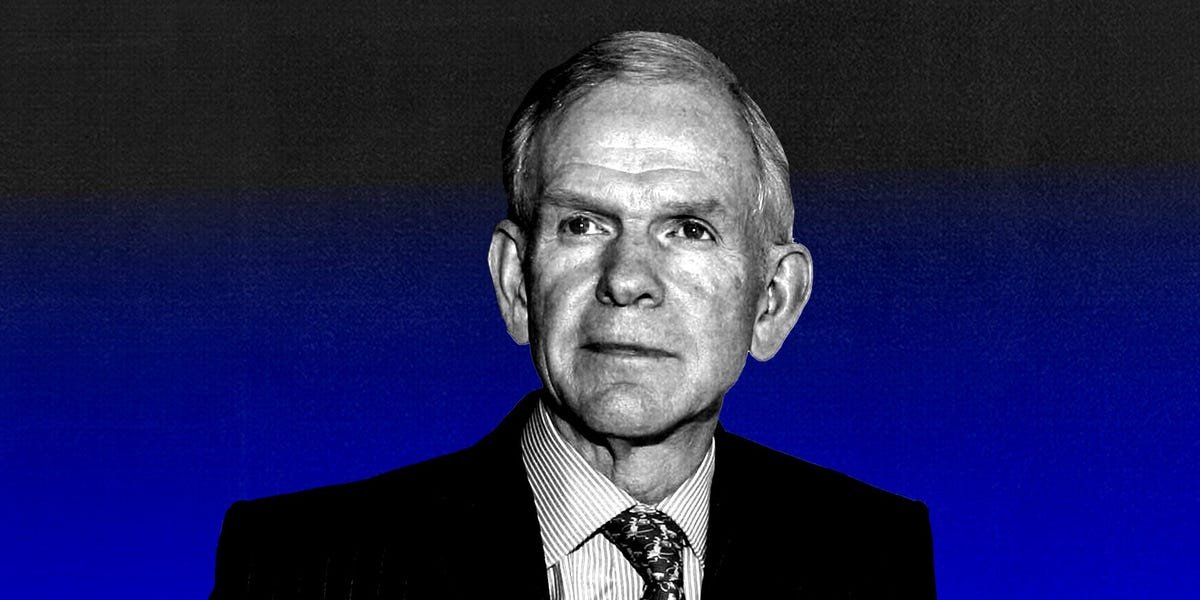
Jeremy Grantham called pandemic crash but screwed up his trade: memoir

Legendary investor Jeremy Grantham raised the alarm on an AI bubble, revealed a pandemic bet that didn’t pay off, and recommended young people steer clear of Wall Street in a memoir published last month.

The GMO cofounder wrote in “The Making of a Permabear: The Perils of Long-term Investing in a Short-term World,” which he coauthored, that ChatGPT’s release in late 2022 shored up a crumbling stock market and created a “bubble within a bubble.”

There’s “no clear historical analogy to this strange new beast,” Grantham wrote, but the AI bubble is likely to “at least temporarily deflate,” allowing the original market bubble to pop.

He issued a grim outlook, warning that the massive run-up in stocks has frontloaded returns so the market’s long-term prospects “look as poor as almost any other time in history.” Investors face either a “dismal return forever or a hefty bear market followed by a normal return,” he added.

Grantham also predicted that past interest-rate hikes and “ridiculous speculation” during and after the pandemic would “eventually end in a recession.”

“The US market since at least 2020 has been in a bubble,” he wrote, adding that even though bubbles can be unpredictable, all of them have popped so far.

Right bet, wrong size

Grantham disclosed in his book that he anticipated the COVID-19 pandemic would tank the stock market, but he didn’t win big from the prescient call.

The investor wrote that he dug into every rumor about the mystery virus in January 2020, and determined it posed a serious medical and economic threat, especially if countries bungled their responses.

He took steps to protect the portfolio of his family foundation — the Grantham Foundation for the Protection of the Environment — from a slump in stocks, and later convinced his GMO colleagues to prepare for trouble too.

“I get to brag here at how early this was compared to most,” Grantham wrote. “The bad news was that when the smoke had cleared, our trade was so unlevered and so lacking in cleverness that we really might as well have done nothing.”

Grantham contrasted that with Bill Ackman, whose Pershing Square hedge fund spent $27 million on credit-default swaps (CDS) on investment-grade and high-yield CDS swap indexes in February 2020.

Those derivatives soared in value within weeks, and Ackman sold them for $2.6 billion by late March, scoring a nearly 100-fold profit. The windfall offset losses in Pershing’s equity portfolio, and Ackman plowed more than $2 billion into stocks before they rebounded.

Grantham said his comparatively lackluster pandemic trade was a reminder that he’s “good at research and judgment, but left to my own devices sometimes mediocre at implementation.”

He gave another example of that shortcoming. He recalled publishing a bullish outlook the day the stock market hit its low in March 2009, but “neither I nor our Foundation nor GMO came close to maximizing the potential rewards of such a highly confident call.”

Skip the finance job

Grantham wrote in his book that he enjoyed the “intellectual challenge” of investment management, but came to view it as a “trivial activity.”

“If I started out all over again I’d prefer to do something that has some socially redeeming features,” he wrote.

Grantham said the world needs more people with practical and scientific skills to weather hard times and tackle existential risks such as climate change.

“We are going to have desperately difficult years ahead,” he wrote. “And I would urge young people with talent to do really seriously useful stuff: engineering, farming, metal bashing and serious science and research because we are going to need those kinds of skills.”

Grantham added that his foundation invests in new ventures that could “save the day” by harnessing geothermal energy or replacing toxic food packaging with greaseproof paper.

He wrote that making strides in “something so important is more satisfying and exciting than the equivalent breakthrough in making money in the stock market.”


Source link

Headshot of Ben Shimkus

EVs turned everything into a touchscreen — but physical buttons are making a comeback

When automakers went electric, they also went sleek and digital.

Climate control knobs disappeared. Door handles tucked themselves into body panels. Audio volume dials became haptic sliders.

Now, as automakers face regulatory pressures and customer blowback, some of the industry’s biggest names are reversing course and reintroducing physical buttons.

Audi’s upcoming 2027 e-tron updates promise a more “tactile” interior experience. Ferrari’s first EV — designed in collaboration with former Apple design chief Jony Ive — is filled with physical controls. Even Tesla is redesigning its flush door handles.

“We will never, ever make this mistake anymore,” Andreas Mindt, the head of design at Volkswagen, told AutoCar last year when asked about filling cars with digital screens.

“Honestly, it’s a car. It’s not a phone: it’s a car.”

How the touchscreen took over


The interior of the Ferrari Luce - including the Apple Watch-shaped instrument cluster and center console.

Ferrari’s newest interior design mixes several standard buttons and control knobs with digital displays.

Ferrrari


The move to giant screens was about aesthetics, economics — and influence.

Sam Abuelsamid, co-host of the Wheel Bearings podcast, told Business Insider it all started with Tesla’s lead.

Tesla’s Model S, its first-ever ground-up design, centered much of its interface around a 17-inch touchscreen.

“It gives cars a more high-tech look and feel,” Abuelsamid said. “Also, it cut costs. It costs a lot of money to develop and validate physical controls.”

When Tesla’s sales started to take off, the industry tried to mimic the sleek styling. Throughout the industry, the influence of Tesla’s pared-down approach was evident.

Volkswagen’s ID.4 never had climate knobs. Rivian’s door handles electronically slid inside the door frame. Ford added huge tablets to the center of its Mustang Mach-E and F-150 Lightning.

Even Tesla took it a step further, removing the physical turn-signal stalks from the Model 3 — before bringing them back.

At first, the tech-forward approach worked for the target audience.

“It goes back to the types of consumers who adopt these technologies,” Eleftheria Kontou, an assistant professor in civil and environmental engineering at the University of Illinois, said to Business Insider.

“Environmentalists and technically-inclined shoppers are the most common EV buyers,” Kontou added. “They want a new tech gadget, so EVs are a very attractive option.”

But as EVs moved beyond tech enthusiasts and into the broader market, expectations shifted.

The usability problem


A white Tesla Model 3 parked on a showroom floor.

Tesla led the EV industry with its sleek door handle and screen-centric design.

Sjoerd van der Wal/Getty Images


As EVs went mainstream, the downside of screen-heavy cabins became harder to ignore.

“The core safety concern isn’t mechanical reliability — it’s distraction,” Spencer Penn, a former Tesla Model 3 engineer and now CEO of sourcing platform LightSource, told Business Insider. “Touchscreens require visual attention and lack haptic feedback.”

The advantage of physical controls, he said, is ergonomic and psychological immediacy rather than mechanical redundancy.

That usability tension has begun drawing regulatory scrutiny.

China recently moved to ban certain flush and hidden door handle designs over safety concerns. In the US, the National Highway Traffic Safety Administration has investigated complaints involving electronic door mechanisms. And in 2024, the European Transport Safety Council said it would not afford five-star safety ratings to vehicles with too many screens.

A course correction

The EV revolution was built on the promise that cars could function more like smartphones — constantly updated, endlessly configurable, and increasingly software-driven.

That vision isn’t disappearing — and touchscreens aren’t going anywhere.

General Motors is building subscription revenue around digital features. Tesla continues to push new full self-driving updates. Ford’s next generation of EVs will rely heavily on cloud-connected systems.

Instead, they’re restoring some physical controls for high-frequency or safety-critical functions — volume, climate adjustments, hazard lights, windshield wipers — while leaving navigation, media, and ambient light settings to digital menus.


The 2027 Audi e-tron

The 2027 Audi e-tron brings back the scroll wheel on its steering wheel.

Audi


“Inspired by the functional aesthetic of the well-received Audi Concept C and the tactile experience of its physical controls reflecting mechanical quality, the familiar scroll wheel returns, permitting operation of various functions and replacing the previous touch-sensitive interface controlling volume and MMI menu selection,” Audi says about its 2027 e-tron.

But even in a software-defined future, drivers still expect something smartphones don’t require: the ability to drive down the road without looking at a screen.

“It is less expensive when you remove dozens of switches with a singular screen panel,” Penn said. “However, it’s more expensive if you misalign yourself with the voice of the customer.”


Source link