Alexander-brothers-testimony-describes-a-woman-being-sexually-assaulted-in.jpeg

Alexander brothers testimony describes a woman being sexually assaulted in a Hamptons hot tub as partygoers watched

Two Alexander brothers had sex with a protesting woman in the backyard of a Hamptons rental as other partygoers joined in or watched, according to testimony in the third week of the siblings’ Manhattan sex trafficking trial.

“She was over and over and over asking them to stop,” a witness told the jury of an unnamed woman she described as intoxicated and “screaming” for help in a hot tub.

It was Saturday night on Memorial Day weekend in 2009. Tal Alexander and “one of the twins” — the witness couldn’t say if it was Alon or Oren Alexander — were among those sexually assaulting the woman, according to the testimony.

“It seemed nobody was taking action,” said the witness, Avishan Bodjnoud, an information management executive at the United Nations.

Bodjnoud said she asked the people around her to do something, but no one would. In the midst of a party, “there were no allies there to help,” Bodjnoud said.

She felt too fearful and too alone in her outrage to contact the police, Bodjnoud told the jury.

Instead, she fled the party in a taxi, but not before scrawling “Rapists” and “You need to apologize” in eyeliner on the front door and wall of the Southampton rental, Bodjnoud testified.

Photographs of the graffiti, recovered from Tal Alexander’s hard drive, were shown in court. “I hoped that someday this could be used as evidence,” Bodjnoud said, seeing the photographs and tearing up on the witness stand.

The disturbing testimony capped the third week of the trial of former luxury real estate brokers Tal and Oren Alexander and their brother, Alon.

So far — roughly halfway through the federal trial — nine accusers have taken the stand. In sometimes tearful testimony, they have described being sexually assaulted behind closed doors by one or more of the brothers, including on a cruise ship, at two Hamptons rentals, and at an Aspen ski resort.

The hot tub incident stands out as the only alleged assault to take place in public view, with a pool party in full swing. It is not clear whether prosecutors will call the woman herself to the stand or whether she was ever identified.

Lawyers for the brothers say that any sex was consensual and not trafficking. In their cross-examinations of witnesses, the lawyers have repeatedly pointed out that none of the women called the police or took a drug test that could substantiate their claims of being drugged.

During cross-examination, a defense lawyer for Tal Alexander challenged Bodjnoud’s testimony that she remained silent out of fear for the brothers’ power and influence.

“Were you aware that in 2009, Tal Alexander was a 21-year-old copy machine salesman?” asked the lawyer, Milton Williams.

A second witness to the alleged hot tub assault testified on Thursday and Friday under the pseudonym “Isa Brooks.”

Brooks told jurors she saw “a girl, I believe, in a green bikini with a bunch of guys on top of her.”

She said she heard another woman — who, like her, was indoors looking out into the yard — cry out, “I work for the UN and I know what you’re doing!”

Oren Alexander, who was outside, slammed the door in that woman’s face, Brooks testified.

Brooks was called to testify to her own alleged assault, which she said took place earlier in the day on that same Saturday. She was days away from her 17th birthday.

She described struggling and falling in and out of consciousness as Tal Alexander and Alon Alexander, whom she described as the “quieter twin,” joined with two other men in violently assaulting her on a bed.

The four men were saying “degrading words” during the attack, Brooks told the jury.

“I was wondering why they hated me,” she recalled thinking.

On cross-examination, Brooks was questioned by the defense about photographs showing her celebrating her 17th birthday with school pals days after the incident, and was asked why, days after that, she and a girlfriend stayed overnight at another Hamptons home where Tal Alexander was also present.

“I was scared to rock the boat,” she responded of her reluctance to speak out or call the authorities. “I was scared that I would get in trouble.”

The brothers face up to life in prison if convicted of a top count of sex trafficking conspiracy.



Source link

Katie Notopoulos

Meta is considering bringing facial recognition to Ray-Bans. It thinks we’re too distracted to notice.

Since Meta’s Ray-Ban Smart Glasses launched in 2021, there’s always been a lingering, controversial question about whether they could be used for facial recognition.

The question has surfaced again more recently, according to a New York Times report on Friday. And this time, the story says, there’s a reason the company thinks it could add facial recognition without kicking up too much of a fuss: because we’re all busy worried about so many other things going on in the world.

It’s not clear whether Meta will follow through on the plans. “While we frequently hear about the interest in this type of feature — and some products already exist in the market — we’re still thinking through options and will take a thoughtful approach if and before we roll anything out,” Erin Logan, a Meta spokesperson, told Business Insider in a statement.

Since their launch, the Meta Ray-Ban glasses have been a surprise hit, with Ray-Ban owner EssilorLuxottica saying it tripled sales in 2025 and is struggling to keep up with demand.

In 2024, some Harvard students rigged Meta Ray-Bans to perform facial recognition by sending camera photos to a third-party service for scanning. At the time, Meta was adamant that people understand the glasses themselves weren’t performing facial recognition, and that this wasn’t a capability of the device itself. Which was true, but a truth somewhat orthogonal to the public horror about the idea of people using facial recognition glasses in public.

Thus far, legal and privacy issues surrounding facial recognition, not technical limitations, have kept the feature at bay. So what’s changed?

The New York Times viewed a document that gives us a clue:

Meta’s internal memo said the political tumult in the United States was good timing for the feature’s release.
“We will launch during a dynamic political environment where many civil society groups that we would expect to attack us would have their resources focused on other concerns,” according to the document from Meta’s Reality Labs, which works on hardware including smart glasses.

This is straight out of the playbook for a celebrity announcing their divorce during the Super Bowl to minimize attention. Basically, at least one person at Meta was apparently considering the fact that — waves hands — so many other horrors are going on in the world that people will be too distracted to focus on this.

And what, exactly, might this unnamed Meta person be assuming are the “other concerns” keeping civil society groups’ resources focused? I have some ideas:

Frankly, any of these is a big enough distraction to keep me from complaining about facial-recognition glasses!


Source link

Gary-Marcus-calls-out-viral-AI-essay-as-alarmist-hype.jpeg

Gary Marcus calls out viral AI essay as alarmist ‘hype’

If that viral essay about AI had been printed on paper, there’s a good chance AI researcher Gary Marcus would’ve ripped it up in disgust.

Marcus acknowledges something is happening in AI — just nowhere near the scale described in the recently viral essay, which predicted a looming disruption “worse than COVID.”

Marcus, who on X criticized the essay written by entrepreneur and investor Matt Shumer as having “not a shred of actual data,” dismissed its contents as alarmist in an interview with Business Insider.

“Hyped-up views have gotten us into a bad place, possibly one that’s going to lead to a serious economic recession or something like that,” Marcus told Business Insider. “And I guess I think that one should work from the facts rather than just trying to cause an alarm.”

In his essay titled “Something Big is Happening,” Shumer, whose past startup sells a subscription-based AI-assisted writing tool, warned that AI would upend not just software engineering, but most jobs done “on a screen.” Shumer also has a small VC fund.

Marcus said that while AI will replace some labor and affect jobs, the process will be much slower than what Schumer and others are describing.

AI can do some things well and help speed up work, but it’s just not near the point of replacing humans, Marcus said.

“AI can do a small subset of the tasks, and that sometimes speeds up human beings and things like that, but it rarely does all of what a human being can do in any particular domain,” he told Business Insider. “This will change over time, just to be clear. It is likely that AI will replace most human labor over the next century, but it’s not likely that it will over the next year or two.”

Companies that move too quickly to replace jobs with AI are likely to find themselves in a similar position as Klarna, Marcus said. In 2024, Klarna touted an AI assistant that could do the equivalent work of 700 people. By May 2025, CEO Sebastian Siemiatkowski, long a proponent of AI, said that “as cost unfortunately seems to have been a too predominant evaluation factor when organizing this, what you end up having is lower quality.” He added that “investing in the quality of the human support is the way of the future for us.”

“Six months or a year later, they come back with their tails between their legs because it turns out that the AI systems don’t do things as well as the human,” Marcus said. “So, I’m not saying that there’s nothing going on. I’m not saying that there’s no value in these AI systems, but they’re premature.”

Klarna told Business Insider that the number of its customer service queries handled by AI has increased “as it gets better at more complex requests,” and the company “has not reversed or scaled back its AI strategy.”

Marcus said that the more likely outcome in the short-term is not that AI will replace junior employees but rather that executives think it’s capable of doing so — and make what could ultimately prove to be a costly gamble.

“The biggest thing I think junior people have to worry about right now is a misapprehension by the C-suite that these techniques work better than they actually do,” Marcus said.

As of Friday morning, Shumer’s post has been viewed more than 80 million times on X alone. In a Substack post expanding on his criticisms, Marcus called Schumer’s post “weaponized hype.”

“The general impression that he conveys is basically that the sky is falling now, and at most, I think what’s really happening is the junior people are under some threat, and I think that threat is actually exaggerated,” Marcus told Business Insider.

Shumer previously told Business Insider that he wrote his essay in part to reach people like his dad, who may be skeptical or avoid AI entirely. He felt compelled to warn them about what might be on the horizon, even “if there’s just a 20% chance of it happening.”

Marcus’s biggest critique of Schumer’s post is that it doesn’t take into account current data and research showing that AI still has a long way to go, and that it didn’t present the full context behind a famous Model Evaluation & Threat Research graph assessing AI progress.

He said that other studies, including a June 2025 paper published by Apple’s Machine Learning Research Group, found limitations in what current models can do.

Marcus also said that many leading AI CEOs who have made bold predictions about the future of work have failed to deliver on past ones. He points to xAI CEO Elon Musk’s frequent rosy outlook on the number of robotaxis Tesla will put on the road (Musk once said one million by 2020) and to Nobel laureate Geoffrey Hinton’s 2016 statement that the world should stop training radiologists. (Last May, Hinton told The New York Times that his prediction was poorly worded and that while he was wrong on the timeline, the general direction for AI’s capabilities in radiology was correct.)

“What they have all learned to do is to sell the rosiest picture possible, and the media rarely calls them out,” Marcus told Business Insider.

On Thursday, Microsoft AI CEO Mustafa Suleyman made waves by predicting that most, if not all, white-collar tasks could be automated within the next year and a half.

One of the industries Suleyman mentioned is accounting. Marcus isn’t convinced.

“Think about accounting in particular,” he told Business Insider. “Even one mistake can cost a client hundreds of thousands of dollars or get them sent to jail or whatever. Accounting is a business that is built on accuracy. If you’re not accurate, you don’t have a business.”


Source link

I-used-to-be-proud-of-only-sleeping-3-hours.jpeg

I used to be proud of only sleeping 3 hours because I worked so much. Now I realize health is freedom, not wealth.

This as-told-to essay is based on a conversation with Tyler Smith, founder of Hundred Health. It has been edited for length and clarity.

I used to brag about how little sleep I got. It felt like a superpower: I could sleep just three or four hours a night, and still operate at a very high level.

That helped me get ahead early on. As a teen, I bused tables and sold firewood. By the time I was 19, I bought a house (which was possible because it was the subprime mortgage days). Having a mortgage gave me real responsibility at a young age.

It also got me thinking about a career. I couldn’t believe how much my real estate agent made on the sale. Her commission was about $13,000 — which seemed like $1 million to me at the time — and I thought she didn’t do a very good job. I realized that if I did good work in real estate, I could make even more.

I did well in real estate and developed software that took off

I dropped out of college to get into real estate. During the financial crisis, I found a niche helping banks sell foreclosures. In 2006 and 2007, I oversaw about 1,000 home sales a year and managed triple that number of properties.

I was working 14-hour days, seven days a week. It wasn’t a good life, but I was young enough that it didn’t matter. I fueled myself on energy drinks and embraced the fact that work was my life.

To help scale, I developed software to track my business’s transactions. Other brokerages inquired about what I was using, and soon I had clients paying $2,000 or $5,000 a month to use the software.

I was in the right place at the right time with the right product as real estate transactions went digital. By 2012, that software, SkySlope, was doing $12 million in annual revenue. In 2017, Fidelity bought a majority stake, valuing the company at more than $80 million.

I wanted to focus on my passion: health

That deal meant that I had enough money to never work again. I’m wired to build, though, so I planned to use my financial freedom to focus on something with purpose: a mission-driven business.

When I was 39, my wife and I were trying to have a child. I took a biological age test, which said my biological age was 47. That stopped me in my tracks, because my own father had died suddenly of a heart attack at 47.

The test showed me that what I was telling myself wasn’t true. I was working out and eating relatively healthy. I looked fit, but the data showed that what was happening inside my body didn’t match what was on the outside.

I spent over $1 million building a home wellness center

Once I saw that data, I couldn’t ignore it. I spent well over six figures hiring a top-notch healthcare team. My wife and I rented a 2,000 square-foot unit in Sacramento, which we transformed into our own personal wellness center. It had IV infusions, a hyperbaric chamber, a red light bed, cold plunges, massagers — basically anything you can name in the health and fitness world.

We were building a home in Napa and wanted to know which equipment we would actually use. We spent about $700,000 fitting out the Sacramento space, and eventually over $1 million building the wellness center in our home.

Today, I use the red light bed, oxygen therapy, and cold plunge almost daily. Other therapies — like massagers and bikes — didn’t make the final cut. I love the results of the hyperbaric chamber, but don’t like lying in it for an hour, so for now, that’s out of rotation.

I want to help others have more access to health information

I changed everything about my health and fitness, and because of that, everything in my life changed: my muscle mass and energy levels went through the roof, and my mood improved. I felt better than ever, and friends began to notice.

I know not everyone has the money and access I do. Most people have more data about their health than ever due to smart watches and wearable monitors, but they don’t have a team of doctors helping them use that information.

I started Hundred Health not only to provide data, but also to offer a personalized plan for what to do with it. I used to think that wealth was freedom, but now I know that health is — and I would like to help more people access that.


Source link

SoftBank-backed-unicorn-LTK-lays-off-staff-and-doubles-down-on.jpeg

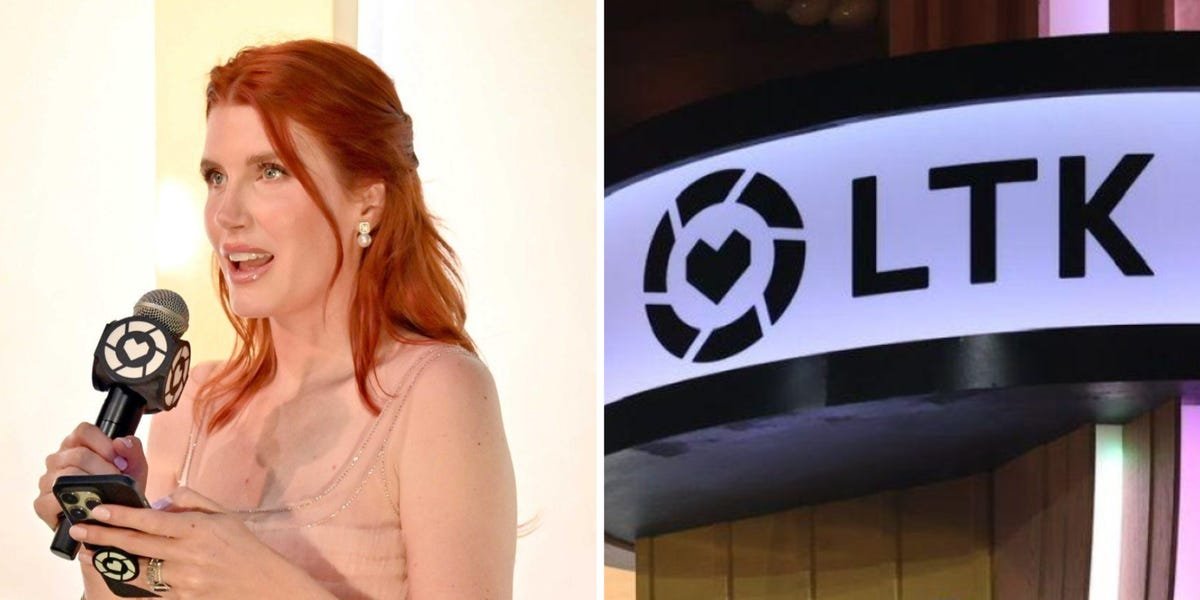
SoftBank-backed unicorn LTK lays off staff and doubles down on new tech for brands

LTK, a Softbank-backed startup and creator economy unicorn, let go of some staff on Thursday as part of a reorganization, a company spokesperson confirmed to Business Insider.

The cuts were designed to refocus LTK’s business around its revamped brand platform and to account for structural changes to internal teams like marketing, according to the company.

The job reductions, which hit a variety of roles including software engineers and staffers who worked with creators, affected a low single-digit percentage of LTK’s overall head count, which numbers over 550 employees, they said.

“LTK recently completed a targeted organizational restructure to ensure we are aligned around the skills and priorities required for our next phase of growth,” the spokesperson said. “This was not a broad-based layoff, but a strategic realignment focused on strengthening performance and positioning the business for long-term success.”

LTK, previously known as RewardStyle, was founded around 15 years ago by president Amber Venz Box. The company, which says it’s profitable and doubled its EBITDA in 2025, has raised a little over $300 million in its lifetime. Most of that capital came in a 2021 round from SoftBank’s Vision Fund 2, which valued the startup at $2 billion.

Over the last decade, LTK has established itself as one of the leading players in affiliate marketing, building a network of influencers who promote products on social media in exchange for commissions.

Recently, the company has made a series of moves to establish itself beyond social media affiliate marketing.

The company relaunched its app for influencer-driven shopping, called LTK, in early 2025, to add more consumer-facing features as it sought to build its own brand identity with consumers.

In late 2025, the company announced it was revamping its platform for brands, offering features such as creator discovery and performance tracking at no cost. LTK makes money by collecting a commission on sales. The company said that over 1,000 brands have been onboarded onto the platform.

LTK is one of several creator economy startups that have focused their businesses on e-commerce. Other big players in the space include affiliate platform ShopMy and live-selling app Whatnot, which in October raised $225 million at an $11.5 billion valuation.


Source link

What-we-know-about-secretive-North-Korean-leader-Kim-Jong.jpeg

What we know about secretive North Korean leader Kim Jong Un’s daughter, Kim Ju Ae, a potential heir

Updated

  • Kim Jong Un is believed to have 3 children, including one confirmed daughter, Kim Ju Ae.
  • Kim Ju Ae has recently made several appearances in North Korean media since November.
  • Her seat in the global spotlight has stirred speculation about North Korea’s next successor.

The daughter of North Korean leader Kim Jong Un has been showing up in headlines and rare public appearances in recent weeks — once again fueling speculation that the child is being groomed to be Kim’s heir apparent.

In a February 12 closed-door briefing with the National Intelligence Service, South Korea’s spy agency, lawmakers were told the daughter has been described to be in the “successor-designate stage,” Lee Seong Kweun, a South Korean lawmaker, said, according to a report from The Associated Press.

“In the past, (NIS) described Kim Ju Ae as being in the midst of ‘successor training.’ What was notable today is that they used the term ‘successor-designate stage,’ a shift that’s quite significant,” Lee said, according to the report.

Kim’s daughter, who is believed to be around 13 years old, has made several high-profile appearances in recent years, which is a rare move for the secretive family. The daughter was first seen in images shared by state media in November 2022.

That unexpected public display has raised questions around whether the North Korean leader is signaling the next heir to the Kim dynasty, though experts have previously said that it’s too early to speculate — especially as the seat is typically reserved for a male heir.

Still, little is known or has been confirmed about the daughter herself. Kim’s private life, including the names of his children, are generally regarded state secrets.

Here’s what we know so far about Kim Jong Un’s daughter.

What is Kim Jong Un’s daughter’s name?

This undated photo provided on Nov. 27, 2022, by the North Korean government shows North Korean leader Kim Jong Un, left, and his daughter, right.

Korean Central News Agency/Korea News Service via Associated Press

Her real name was never revealed by state officials or outlets.

The first person to acknowledge the existence of Kim Jong Un’s daughter was NBA player Dennis Rodman, who developed a relationship with the North Korean leader during his 2013 visit to Pyongyang.

In an interview with The Guardian, he revealed that Kim Jong Un and his wife Ri Sol Ju had a baby.

“I held their baby, Ju-ae, and spoke with Ms. Ri as well. He’s a good dad and has a beautiful family. Kim told me, ‘I’ll see you in December,'” Rodman told the outlet.

According to a recent report from Radio Free Asia, local governments in the cities of Jeongju and Yongsong have ordered women named Ju Ae to change the names on their birth certificates — another indication that may confirm the daughter’s identity.

How old is she?


Kim Ju Ae and Kim Jong Un

Kim Jong Un and his daughter Ju Ae inspect the Milyong Hotel in the Samjiyon tourist district of Ryanggang Province.

KCNA VIA KNS/AFP via Getty Images

The South Korean National Intelligence Service believes Ju Ae was born around January 2013, according to The Chosunilbo, aging her at around 13 years old.

Ju Ae is believed to be the second child, according to the National Intelligence Service.

Kim Jong Un and Ri Sol Ju may have had their first child in the summer of 2010 and a third child around the beginning of 2017. Both of their sexes remain unconfirmed.

South Korean lawmakers have said they’ve received tips that the first child may be a boy, CNN reported.

What have North Korean officials and state media said about the daughter?


Kim Jong Un's daughter Kim Ju Ae

Kim Jong Un, center, and his daughter, center left, at a sports game.

Korean Central News Agency/Korea News Service via AP

When the North Korean state media outlet KCNA released pictures of Ju Ae at the missile testing site, the agency reported that Kim Jong Un was there “with his beloved daughter and wife.”

During a banquet celebrating the 75th anniversary of the founding of the Korean People’s Army in February, Rodong Sinmun reported that Kim Jong Un arrived at the lodging quarters with his “respected daughter” — a title also conferred on the North Korean leader in the report.

According to former CIA officer Andrew Kim, who was involved in diplomatic efforts between the US and North Korea, Kim Jong Un may have made a rare comment about his personal life to the then-Secretary of State Mike Pompeo back in April 2018.

“‘I’m a father and a husband. And I have children,” the former CIA officer recalled Kim Jong Un telling Pompeo. “‘And I don’t want my children to carry the nuclear weapon on their back their whole life.’ That was his answer.”

When did the public first see Kim’s daughter?


Kim Jong Un and his second born Kim Ju Ae stands next to uniformed North Koreans.

Kim Jong Un and his second-born, Kim Ju Ae, stands in front of a intercontinental ballistic missile.

KCNA/Pool/Latin America News Agency via Reuters Connect

Kim Ju Ae was first unveiled to the public in images released by the state media in November 2022.

The images showed the father-daughter pair touring an intercontinental ballistic missile testing site. A few months later, she was seen, front and center, at official gatherings, including an anniversary banquet for the North Korean army.

The public display of Kim’s daughter is a notable break from tradition as Kim’s private life is generally treated as state secrets.

A verified photo of Kim Jong Un wasn’t revealed until he was around 26 years old in 2010, a year before the death of his father, Kim Jong Il.

Could Kim Ju Ae succeed her father?


Kim Ju Ae

North Korean leader Kim Jong Un and daughter Kim Ju Ae attend a military parade to mark the 75th founding anniversary of North Korea’s army, at Kim Il Sung Square in Pyongyang, North Korea, February 8, 2023

North Korea’s Korean Central News Agency

Experts have speculated whether Kim Jong Un was signaling his next successor with the repeated public showings of Ju Ae. 

Cheong Seong Chang, a senior analyst at the Sejong Institute in South Korea, previously told CNN that the daughter’s appearance at the testing site and the state outlet’s description of the “beloved” daughter could be the latest sign that Kim Jong Un has chosen his next heir.

“Considering these, there is no longer any doubt that Kim Ju Ae has been appointed as the successor to Kim Jong Un, and it is necessary to pay attention to how this will affect North Korea’s domestic and foreign policies in the mid- to long-term, and how North Koreans will accept the succession of the fourth generation,” Cheong said.

But Duyon Kim, a senior analyst at the Center for a New American Security in Washington, DC, warned that it’s too early to draw conclusions.

“We can only speculate at this point,” Kim told The Associated Press,”(Kim Jong Un is) obviously showing her off intentionally and, at a minimum, he seems to be trying to reiterate the importance, status, and legitimacy of a direct Kim bloodline offspring. It’s too soon to assume that she will be his heir because the son has always succeeded the throne in North Korea.”

Who else could succeed Kim Jong Un?


Kim Yo Jong

Kim Yo Jong, sister of North Korea’s leader Kim Jong Un, attends a wreath-laying ceremony at Ho Chi Minh Mausoleum in Hanoi, Vietnam, on March 2, 2019.

REUTERS/Jorge Silva/Pool

There has been speculation about Kim Jong Un’s younger sister, Kim Yo Jong, being a potential contender.

Currently, Kim Yo Jong serves as the only woman on the State Affairs Commission, North Korea’s policy-making body.

The South Korean National Intelligence Service previously said in 2020 that the sister could be the country’s “de facto second in command,” CNN reported, citing Kim Byung-kee, a South Korean parliament member who attended a briefing with the agency at the time.

David Straub, a former senior diplomat at the US embassy in Seoul, told The Daily Beast that Kim Jong Un’s recent flaunting of his daughter may be a troubling sign for the leader’s sister if he truly is considering putting Ju Ae at the top of the hierarchy.

“Kim had both his uncle and his half-brother murdered,” Straub told the outlet, referring to Kim Jong Nam, who was assassinated in Malaysia in 2017 with a chemical nerve agent. Kim Jong Nam was widely considered to be the next leader of North Korea after Kim Jong Il.

“I’ll bet everyone in the Kim clan remembered, perhaps especially Yo Jong,” Straub said.


Source link

Meta-says-it-wont-chop-the-bottom-5-performers-this.jpeg

Meta says it won’t chop the bottom 5% performers this year

  • Meta denies plans for new performance-based layoffs amid online speculation.
  • Meta previously considered annual job cuts based on performance to manage low performers.
  • Meta recently cut 10% of its Reality Labs division, affecting over 1,000 employees.

Meta says it will not have a fresh round of performance-based layoffs, even as a smattering of online chatter has raised questions about whether the social media giant will quietly restart its performance-driven purge.

“These are individual cases not related to any company wide initiatives,” a Meta spokesperson told Business Insider when asked about a recent restructuring. “For example we are not doing any 5% low performers like we did last year.”

That’s a notable shift in tone from early 2025, when Business Insider reported that an internal FAQ circulating at Meta suggested performance-based job cuts could become an annual practice, with the company saying it “may use future performance cycles” to move out its lowest performers. Early last year, Meta cut 5% of its workforce, saying it was focusing on its lowest performers.

The clarification also comes as Meta continues to reshape other parts of the business. Last month, the company cut about 10% of its Reality Labs division, a move that affected over 1,000 employees.

Have a tip? Contact Pranav Dixit via email at pranavdixit@protonmail.com or Signal at 1-408-905-9124. Use a personal email address and a nonwork device; here’s our guide to sharing information securely.


Source link

Headshot of Chris Panella.

US Army leaders say soldiers are drowning in so much battlefield data that AI is needed to make sense of it all

Army leaders say the modern battlefield is so saturated with sensors and networked weapons generating more data than soldiers can realistically process on their own that artificial intelligence is needed to meaningfully sort it all.

For years, the Army’s focus was on fielding more sensors for battlefield information and awareness, but now the service is also having to think about information overload and managing the massive amounts of data coming in.

During a recent US Army and NATO exercise in Europe, troops used a homegrown AI system to consume and sort data. The value wasn’t strictly that the AI could do it faster but rather that it could remember context and patterns that humans couldn’t.

The case from the Dynamic Front exercise is another example of how the US military is increasingly implementing AI and automation into everything from enemy attack simulations to paperwork.

“The modern battlefield, what we’re already seeing across the globe, it is swimming in sensors, and we are drowning in data,” Col. Jeff Pickler, the Army 2nd Multi-Domain Task Force commander, said at a media roundtable on Dynamic Front.

There aren’t enough people to decipher all the available information, he said. “They will never be able to fully process all of that.”


Two soldiers stand near an artillery piece about to fire in a wintry landscape.

This year’s Dynamic Front included almost 2,000 US personnel and almost 4,000 personnel from allies and partners.

US Army photo by Kevin Sterling Payne


The software aimed at addressing that problem remains in beta testing. In the next iteration of Dynamic Front — which will merge with another exercise, Arcane Front, to pair technology experimentation with theater-level combat rehearsals — Army leaders say they intend to test the AI at a larger scale.

“If we’re looking at a target set in the European theater where we think we’re going to need to process upwards of 1,500 targets a day, that’s beyond the human scope,” Pickler said. “The answer to the equation there is in AI and automations.”

During a potential large-scale conflict in Europe, AI could assist in locating and assessing those targets.

The system can do this quickly, but the speed isn’t the main benefit. AI can remember patterns that humans might forget or not even notice. Pickler gave an example of AI realizing that unrelated shipping reports, a local power outage, and a fertilizer delivery together might suggest missile fueling activity.

“So the difference isn’t seconds versus minutes — it’s minutes instead of months. Not because the machine scans quickly, but because it keeps context across sources that humans can’t hold in memory,” Pickler said after the roundtable.

“It doesn’t replace analysts by reading faster,” he said, “it replaces the weeks analysts spend reconnecting information spread across thousands of reports.”


Two soldiers sit at a table working on laptops.

AI, autonomy, and machine learning are at the forefront of the Army’s modernization efforts.

US Army photo by Capt. Regina Koesters


In a conflict scenario, that could mean analysts reach a clearer picture of the battlefield faster. Correlations between data gathered from different sensors could surface more quickly. If an adversary were fueling, arming, or moving weapons in ways that were not immediately obvious, AI could help flag those links.

Humans, though, would still decide how to respond.

Soldiers have seen success with iterating on the current AI model, the Army said. It’s been retooled during testing, and humans remain in the loop, reviewing outputs at multiple stages.

The goal is to continue increasing the overlap the model would have with human-produced information. In a targeting example, a milestone would be if AI achieved 90 to 95% agreement with humans on 100 target sets.

The Army’s push for AI and automation is also driving the development of its Next Generation Command and Control software, a priority initiative.

The technology being developed by vendor teams including Anduril, Palantir, and Lockheed Martin uses AI and machine learning to provide commanders and soldiers with real-time data on ammunition levels, maintenance needs, intelligence feeds, targeting, and simulated enemy attacks.

But AI is also changing other aspects of how the Army works. Autonomous features in drones, weapons, and targeting might be at the forefront, but behind the scenes, personnel are using new tools, redesigned workflows, and data integration for recruiting, maintenance, and inventors. These are manual tasks that the service believes can be improved with AI.


Source link

6-of-the-best-and-5-of-the-worst-looks.jpeg

6 of the best and 5 of the worst looks at New York Fashion Week 2026

  • New York Fashion Week runs from February 11 to February 16 this year.
  • Celebrities including Anne Hathaway, Pamela Anderson, and Elle Fanning have attended so far.
  • The best looks have sparkled and stood out, while some of the worst were mismatched and understated.

The best of fall and winter fashion is officially on display in the Big Apple.

The first New York Fashion Week of 2026 kicked off on February 11 and will continue through February 16.

Designers like Ralph Lauren and Coach have showcased their new styles, while celebrities, including Anne Hathaway, have made fashionable appearances at runway shows.

Here’s a look at the best and worst A-list looks we’ve seen.

Anne Hathaway was stunning in a black Ralph Lauren gown.

Anne Hathaway at the Ralph Lauren fall runway show during New York Fashion Week.

Lexie Moreland/Getty Images

She attended the designer’s fall runway show wearing a high-neck halter gown made from gauze-like fabric.

It wrapped around her body, creating a subtle see-through effect, and its skirt extended into a short train.

She wore it with a fuzzy jacket that she carried around her waist.

Pamela Anderson’s black-and-white outfit missed the mark.


Pamela Anderson at the Tory Burch fall/winter runway show during New York Fashion Week.

Pamela Anderson at the Tory Burch fall/winter runway show during New York Fashion Week.

Dimitrios Kambouris/Getty Images

She made an appearance at the Tory Burch fall/winter runway show wearing a preppy look from the brand. It comprised a white pleated skirt with a black, button-up blouse tucked in.

Unfortunately, the two pieces sat loosely on Anderson and appeared too formal.

Her leather belt, sheer tights, pointed heels, and black purse added some fun to the look, but the base layers were ultimately too simple for them to work.

Lili Reinhart was chic in a statement skirt.


Lili Reinhart at the Ralph Lauren fall runway show during New York Fashion Week.

Lili Reinhart at the Ralph Lauren fall runway show during New York Fashion Week.

The Hapa Blonde/Getty Images

While entering the Ralph Lauren show, Reinhart was photographed wearing a brown tweed blazer as a top with a thick brown belt holding it closed at the waist.

She also wore a long black skirt covered in leather fringe, which added texture and contrast to the ensemble.

High black boots and a small brown purse completed the fun, fashion-forward look.

Ana Amelia Batlle Cabral had a sharp fashion moment, but Marcello Hernández’s look needed one tweak.


Ana Amelia Batlle Cabral and Marcello Hernández at the Tory Burch fall/winter runway show during New York Fashion Week.

Ana Amelia Batlle Cabral and Marcello Hernández at the Tory Burch fall/winter runway show during New York Fashion Week.

Dimitrios Kambouris/Getty Images

The couple attended the Tory Burch show together in contrasting outfits.

Cabral, an architect, wore a blue pleated skirt atop a darker, unbuttoned blazer, and brown Tory Burch heels with silver embellishments. The look was stylish and sharp.

Then there was Hernández, the “Saturday Night Live” comedian, who opted for khaki pants, suede sneakers, and a two-toned sweater.

Though the latter two pieces looked great on him, his trousers could have benefited from a bit of steaming and tailoring.

Amanda Seyfried’s mixed metals worked for her.


Amanda Seyfried at the Tory Burch fall/winter runway show during New York Fashion Week.

Amanda Seyfried at the Tory Burch fall/winter runway show during New York Fashion Week.

The Hapa Blonde/Getty Images

Also at the Tory Burch show, Seyfried wore a golden, long-sleeved blouse atop a blue midi skirt with silver stripes. She also wore white heels with silver adornments and carried a blue purse.

The mix of two metallic shades with blue tones created a unique, fun color combination that complemented her hair and skin tone.

Suni Lee’s multicolored look overwhelmed her.


Sunisa Lee at the Tory Burch fall/winter runway show during New York Fashion Week.

Sunisa Lee at the Tory Burch fall/winter runway show during New York Fashion Week.

The Hapa Blonde/Getty Images

Outside the Tory Burch runway show, the Olympic gymnast was photographed wearing an oversize blue jacket with a form-fitting wrap skirt in a vibrant red shade.

The two pieces were drastically different in style, and they overwhelmed her petite frame. They also didn’t match the lime-green top she wore or her black accessories.

Caleb McLaughlin was cool and casual at the Coach show.


Caleb McLaughlin at the Coach fall runway show during New York Fashion Week.

Caleb McLaughlin at the Coach fall runway show during New York Fashion Week.

Gilbert Flores/Getty Images

The “Stranger Things” actor attended the show in blue jeans, a button-up top, and a leather jacket that matched his sneakers and Coach purse.

The latter piece was especially fun. It featured a prominent pocket reminiscent of a coin purse and two keychains that looked like miniature books.

McLaughlin has been one of the best-dressed men at New York Fashion Week so far.

Elle Fanning’s outfit had potential, but it needed a change.


Elle Fanning at the Coach fall runway show during New York Fashion Week.

Elle Fanning at the Coach fall runway show during New York Fashion Week.

The Hapa Blonde/Getty Images

Fanning entered the Coach show in a white gown with a mesh, star-print overlay. It was fun, feminine, and the perfect piece to pair with her cropped leather jacket and brown purse.

That said, she also wore thick white boots with the outfit. A simple pair of heels or flats would have been more in line with the look.

Kelsey Merritt stood out at the Carolina Herrera show.


Kelsey Merritt at the Carolina Herrera fall runway show during New York Fashion Week.

Kelsey Merritt at the Carolina Herrera fall runway show during New York Fashion Week.

Gilbert Flores/Getty Images

The model sat in the stands wearing skinny black pants with a billowing blouse. The semi-sheer white garment had a high neckline, balloon sleeves, and extra fabric at the waist that extended into a train.

The top piece was dramatic and memorable, while her pants were perfectly tailored to highlight her dramatically pointed heels.

Ben Platt needed more color variety in his New York Fashion Week look.


Ben Platt at the Michael Kors fall/winter runway show during New York Fashion Week.

Ben Platt at the Michael Kors fall/winter runway show during New York Fashion Week.

TheStewartofNY/Getty Images

For the Michael Kors runway show, the actor wore an all-white ensemble that included trousers, a loose-fitting blouse, sneakers, and a trench coat.

The outfit would have worked for him if it featured more than one color. Because the entire ensemble was stark white, each piece blended into the others, creating the illusion that he was wearing a baggy jumpsuit.


Source link

A woman in glasses wearing a blue dress standing in front of a bush.

I used an AI-powered app to lose 70 pounds. I reversed my diabetes and can keep up with my 8-year-old.

This interview is based on a conversation with Lyle Wallace, 45, a Dallas pastor. It has been edited for length and clarity.

I hit 6 feet 3 inches tall as a freshman in high school and weighed around 185 pounds.

Then, while playing a lot of sports like football and basketball during my junior and senior years, I ate a lot of protein and built a ton of muscle, eventually reaching 230 pounds.

It was all good because I was running around doing all sorts of exercise, and my metabolism was fast. That all changed when I started Bible college in upstate New York, and my physical health became less of a priority.

My job was stressful, and I found it hard to detach

The weight crept on. Then, when I entered the ministry, I found myself eating out a lot with the young members of the congregation. Sitting at a table together was a good way to bond and establish trust.

The only trouble was that we went to fast food places like Taco Bell or Mexican restaurants, where you fill up on chips and salsa before the main course arrives.

The job was stressful because I found it difficult to detach from other people’s emotions as they dealt with bad stuff like domestic violence and sexual abuse.


An overweight man kneeling on a dock with a young boy

Wallace weighed over 285 pounds at his heaviest

Courtesy of Lyle Wallace


I turned to food as an outlet and became less healthy by the month. I had terrible digestive issues and bouts of diverticulitis. I had several colonoscopies and liver biopsies in my 20s and 30s and was found to have a fatty liver.

They should have been warning signs, but I ignored them and stayed sedentary. I’d sit in my office studying, writing sermons, and doing paperwork. My metabolism slowed down as I got older, but I didn’t change my habits.

I had problems with tendonitis, with symptoms mimicking a heart attack, pressure on my joints, and suffered excruciating pain from a bad back. I had spine surgery in 2019.

I was prescribed Metformin

My wife, Nicole, would be on top of me about the causes, but I didn’t face facts. It was only when I was diagnosed with diabetes in January 2023 that I became seriously worried.

My dad was diabetic and needed three or four insulin shots a day. I’m terrified of needles and didn’t want to go down the same route. The scale registered over 285 pounds.

I was prescribed Metformin, but not given any advice about improving my lifestyle. My blood sugar levels actually increased — one of my A1C tests showed 8.0 — and I despaired.

Still, it was a wake-up call. My health insurance company encouraged me to sign up for an app called Twin Health, which created an AI-powered “digital twin” of my metabolism.


A man standing in a doorway

Wallace at his current weight of 215 pounds after reversing his diabetes.

Courtesy of Lyle Wallace


It collected my health information, including data from lab tests, a smart scale, a blood pressure cuff, and real-time glucose monitor sensors, and made personalized recommendations for nutrition, sleep, and exercise.

The app advised me what to eat and when. I learned that consuming protein and fiber on my plate before any carbohydrates helped my metabolism. Nicole and I scanned barcodes at the supermarket to assess the suitability of certain foods and prevent sugar spikes.

I’ve reversed my diabetes

I increased my physical activity by building up to walking four miles a day, without causing back pain. The other day, I ran after my 8-year-old daughter and her cousin and overtook them. They couldn’t believe it.

My current weight is 215 pounds, 70 pounds lighter than before. I’ve gone from a 42-inch to a 36-inch waist and lost 2.5 inches off my collar size.

Best of all, I’ve reversed my diabetes — reducing my A1C to 5.1 —and am medication-free. People in my congregation keep asking how I did it. I’m not a particularly high-tech guy, but AI worked wonders for me.


Source link