How-we-spent-1600-on-a-2-day-trip-to-Disney.jpeg

How we spent $1,600 on a 2-day trip to Disney World — and what we’d do differently next time

I’ve been to Disney World many times, and I like to think I know how to do it on a “budget” … at least, a loose one.

Recently, my partner and I planned a last-minute trip to the theme park on our way to visit family in Southern Florida for the holidays.

Between flights, transportation to and from the airport, lodging, park tickets, food, and souvenirs, we spent about $1,600, or $800 each … for about 48 hours in the Disney bubble.

Here’s a look at what we spent, ways we saved, and what we might do differently next time.

We stuck with a value resort since we wouldn’t be spending much time in our room


Author and their partner with suitcases in front of All-Star music hotel

All-Star Music is a value resort at Disney.

Jordyn Bradley


We spent $237 on our flights from Fort Myers, Florida, to Orlando and landed a few hours before we planned to visit Disney World.

By the time we arrived at our value resort, All-Star Music, our room was ready for check-in ($319 for two nights).

We tend to choose value resorts because they are the cheapest hotels on Disney property. Plus, stays come with complimentary bus transportation to the parks and Disney Springs.

All-Star Music was the cheapest of the five Disney value resorts when we booked, and our room provided us with enough space for our short stay.

After grabbing some snacks at the hotel food court ($25), we took a much-needed nap and got ready to visit Magic Kingdom.

Since we attended a seasonal event, we didn’t need buy separate park tickets


Author and their partner smiling with Mickey and Minnie in festive outfits

Mickey’s Very Merry Christmas Party was fun.

Jordyn Bradley


Fortunately, past me unknowingly helped me save during the trip.

I had two unused tickets to last year’s Mickey’s Very Merry Christmas Party — an additional ticketed event held at Magic Kingdom — that I was able to put toward a new party date. I just had to pay the difference, which was $21 for both tickets.

These tickets typically run $169 to $209 per person, and they felt virtually free since I’d already paid for them in the past.

We also didn’t need to buy a park ticket because we were able to enter Magic Kingdom at 4 p.m. on our event day — and we could stay until midnight.

Several drinks and treats were included with our ticket


Author Jordyn Bradley and partner at magic kingdom at night

Our Mickey’s Very Merry Christmas Party tickets came with some freebies.

Jordyn Bradley


When we arrived at Mickey’s Very Merry Christmas Party, we each got an ornament and a Mickey-shaped peppermint marshmallow.

Our ticket also included festive treats and drinks, like cookies and hot chocolate, that we picked up throughout the evening. I’d estimate we consumed at least $30 worth of treats.

We got our sugar fill with those and purchased a few savory bites, like my favorite meal at Magic Kingdom, the ham-and-Gruyère croissant sandwich with chips ($11) at Gaston’s Tavern.

We also got popcorn for only $2.50 because we got a refill in our reusable popcorn bucket — it’s a must-pack item for every Disney trip.

I kept my souvenir purchases to a pair of mix-and-match character ears ($46 for a headband and two characters to go on it) and a commemorative event pin ($23).

The party also included performances, a holiday parade, fireworks, character meet and greets, and access to classic rides (which sometimes have shorter waits than a normal park day).

We got to ride all the Magic Kingdom rides we wanted to (some multiple times) without having to pay extra for line-skipping Lightning Lane passes.

A Magic Kingdom ticket on its own can run upwards of $200 depending on the day, so the special event add-ons, like unique character meet and greets and complimentary snacks, definitely make the ticket price worth it.

These events are my hack to a cheaper Disney day if you’re down to have a late night and stay in one park instead of opting for a flexible-but-pricier park-hopper pass.

If it’s your first time at Magic Kingdom and you can get a one-day ticket for the same price or less than the party ticket, I’d stick with the former so you can go at your own pace.

Our second day was focused on eating around the world at Epcot, and we didn’t spare any expense


piece of carrot cake on plate

I don’t regret buying the carrot cake.

Jordyn Bradley


We purchased two single-day tickets to Epcot for our second day, which cost us $381.

On longer trips, we normally opt for the flexibility of park-hoppers, but we didn’t want to spend our limited time traveling between parks. Plus, the flexible multi-park ticket would’ve cost over $70 more per person.

Since we were staying in Epcot, we didn’t buy Lightning Lane passes.

I don’t think they’re worth it here because the park doesn’t have many rides — plus, we could use single-rider lanes to skip large waits at both Remy’s Ratatouille Adventure and Test Track.

Most of our money was spent at on food and drinks from booths at Epcot International Food and Wine Festival.


Flauta de Barbacoa and Strawberry-Pomegranate in Epcot

We got a lot of drinks and bites during the Epcot International Food and Wine Festival.

Jordyn Bradley


We revisited festival classics, like the filet mignon with mashed potatoes ($20 for two orders) from the Canada pavilion, and tried some new favorites, like the flauta de barbacoa ($9) from the booth in Mexico. We loved the latter so much we got it twice.

Other favorites included the warm carrot cake with cream-cheese icing ($5), which I get every year, and my favorite drink, the Ottawa Apple ($16.50).


Drink and chicken and dumplings in Epcot

The chicken dumplings we had were just OK.

Jordyn Bradley


Some bites were just OK, like the chicken dumplings ($6) in the China pavilion.

However, I’m glad we looked into festival menus in advance to plan which booths we wanted to prioritize. This helped us save time and money while getting me more excited about our trip.

I shelled out the most money on collectible pins


Author and their parter with Rafiki at Disney

I often meet characters and trade pins when I visit Disney.

Jordyn Bradley


Every time I go to Disney, I know I’m going to put most of my souvenir budget toward collectible enamel pins, and this trip was no exception.

Many of these pins can only be purchased at Disney parks, and collecting and trading them is a popular hobby.

On this trip, I was trying to complete a set and only needed one more pin, so I bought multiple mystery two-packs at about $23 each.

Ultimately, I spent $165 on mystery packs, which is more than my share of the hotel. I didn’t complete my set and I ended up with way more pins than I wanted (or needed).

Next time, I’ll buy one or two pins that I can pick out myself instead of mystery packs. I also plan to hold off on buying more until I can swap the ones I don’t want at one of the trading stations in the parks.

We ended our trip with a free activity

After our full Epcot day, our last afternoon was spent walking around Disney Springs.

The shopping and dining spot has free parking and is a nice place to wander if you’re wanting to be part of the Disney bubble without forking over hundreds for tickets.

Then, we headed to the airport for our flights home ($197).

All in all, we enjoyed ourselves and made the most of our 48 hours


Author Jordyn Bradley hugging  Donald Duck

I didn’t calculate what I spent until I got home, but I didn’t shy away from lots of snacks and mystery pin packs, so it’s not surprising how we got there.

Jordyn Bradley


Many people could spend what we did on our two-day trip and stay at resorts with nicer amenities or have more park days and sit-down meals.

However, because this trip was last-minute, we were happy with anything we made the time for, and since it was shorter, we felt better about having a higher food and souvenir budget.

Those were our priorities, especially since we never spend enough time at our hotel to justify booking a nicer one at a higher nightly rate.

We could’ve made the trip more affordable by spending less on souvenirs, which we will likely do next time. However, now I have more pins to trade for my next trip — and a way to remember one of our favorites.


Source link

Talia Lakritz

Who is ‘Quad God’ figure skater Ilia Malinin?

You may recognize US figure skater Ilia Malinin from his gravity-defying backflips and quadruple jumps.

Or perhaps you know him simply as the “Quad God.”

Malinin, 21, is a two-time world champion and one of Team USA’s breakout figure skating stars of the 2026 Milan Cortina Olympics.

Here’s what to know about Malinin’s background and Olympic career.

Who are Ilia Malinin’s parents?


Roman Skorniakov (left) and Tatiana Malinina both competed in the Olympics.

Ilia Malinin’s parents, Roman Skorniakov (left) and Tatiana Malinina, both competed in the Olympics.

Jamie Squire/Getty Images ; George Frey/AFP via Getty Images


Malinin’s parents, Tatiana Malinina and Roman Skorniakov, were born in Russia and represented Uzbekistan at the 1998 Olympics in Nagano and the 2002 Olympics in Salt Lake City.

Now, they serve as his coaches.

Where was Ilia Malinin born?


Ilia Malinin in the ISU Junior Grand Prix of Figure Skating in 2019.

Ilia Malinin in the ISU Junior Grand Prix of Figure Skating in 2019.

Patrick Smith – International Skating Union/International Skating Union via Getty Images


Malinin was born in Fairfax, Virginia, and began figure skating at 7 years old.

Malinin’s younger sister, Ellie “Liza” Beatrice Malinina, is also a competitive figure skater.

He trains in Reston, Virginia. When he’s not figure skating, he’s a student at the nearby George Mason University majoring in exploratory studies.

Why is Ilia Malinin nicknamed the “Quad God”?


Ilia Malinin during his short program at the 2026 Milan Cortina Olympics.

Ilia Malinin during his short program at the 2026 Milan Cortina Olympics.

Jamie Squire/Getty Images


Malinin is the first and only skater to ever land a quadruple axel in competition, and began using the nickname “Quad God” when he was 13 years old.

Malinin helped Team USA secure the gold medal in the team figure skating competition on Sunday. He landed five quadruple jumps in his free skate, but has yet to attempt a quadruple axel at the 2026 Olympics. While he had planned to execute a quadruple axel during the Team Event, he substituted a triple axel instead.

Are Ilia Malinin’s backflips allowed?


Ilia Malinin backflips on the ice.

Ilia Malinin’s routines have also included backflips.

Tim Clayton/Getty Images


Malinin has also included backflips in his Olympic routines — a feat with a complicated history.

During the 1976 Olympics, American figure skater Terry Kubicka performed the first-ever backflip, but the International Skating Union banned the move shortly thereafter in 1977, saying it was too dangerous.

In 1998, French figure skater Surya Bonaly became the first Olympic figure skater to land a backflip on one blade during her free skate, but was penalized by the judges since the move was still illegal in competition.

The International Skating Union lifted the ban on backflips in 2024. During the Team Event this year, Malinin landed a backflip on one skate just as Bonaly had, but this time, it was permitted.

How much does Ilia Malinin make?


Ilia Malinin at a press conference at the Olympics.

Ilia Malinin at a press conference at the Olympics.

Mike Lawrie/Getty Images


Malinin is believed to be the highest-paid figure skater at the 2026 Olympics with an estimated income of $700,000 from sponsorships over the last year, Forbes reported.

According to Malinin’s website, his corporate partners include Coca-Cola, Samsung, Google, Xfinity, Dick’s Sporting Goods, and Honda.

When is Ilia Malinin competing?


Olympic gold medalist Ilia Malinin.

Ilia Malinin at the medal ceremony for the Team Event at the Milan Cortina Olympics.

Andy Cheung/Getty Images


Having already won gold in the team competition, Malinin will skate in the individual Men’s Short Program on February 10 and the individual Men’s Free Skate on February 13.

See Business Insider’s full guide to watching Olympic figure skating for more information about how to catch Malinin on the ice.


Source link

Bad-Bunnys-custom-Zara-Super-Bowl-shirt-is-popping-up.jpeg

Bad Bunny’s custom Zara Super Bowl shirt is popping up on resale sites and fetching high price tags

  • Bad Bunny’s Super Bowl shirt has led to lookalikes appearing on resale sites such as eBay and Vinted.
  • Some of the Zara-designed shirts are being listed for thousands of dollars.
  • The shirts were reportedly given to employees at Zara’s parent company and weren’t intended for sale.

Shirts inspired by Bad Bunny’s Super Bowl outfit are fetching high price tags on resale sites.

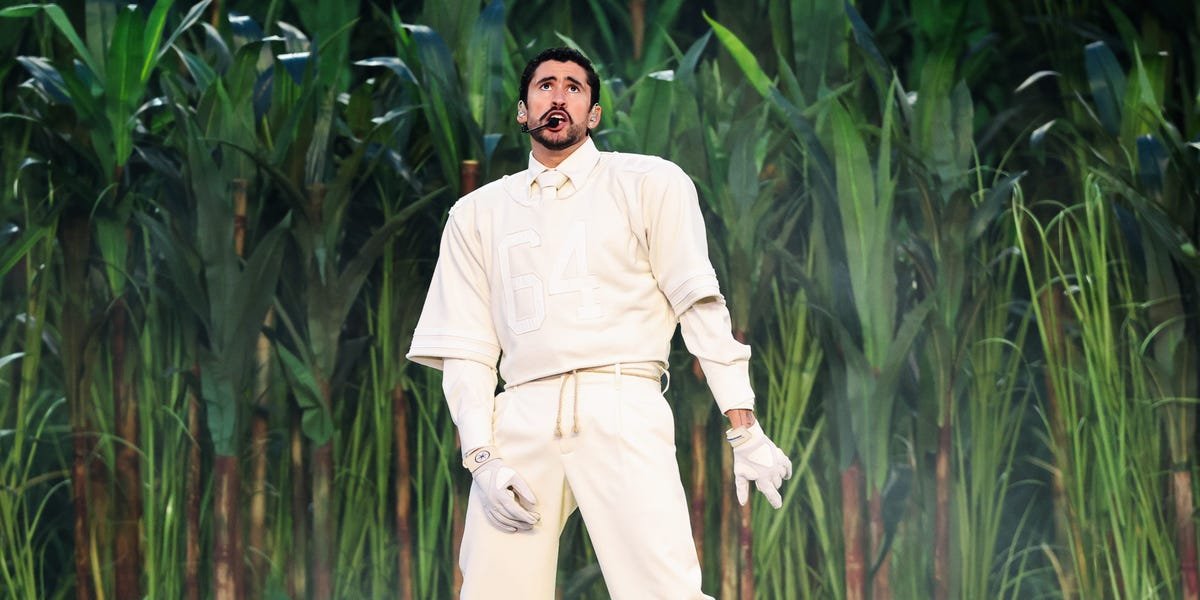
The Puerto Rican singer wore an ensemble designed by retail giant Zara during his Super Bowl LX performance on Sunday. In the days following the show, similar T-shirts have popped up on resale platforms such as eBay and Vinted.

They’ve appeared in listings that feature a thank-you card from Bad Bunny, whose name is Benito Antonio Martínez Ocasio, and tags that state that the garment is not intended for sale.

A limited number of the tops were given to some employees at Zara’s parent company, Inditex, to commemorate the performance, multiple outlets reported. In the thank-you note, the pop star praised the time, talent, and heart that went into the project.

Zara and Inditex did not immediately respond to requests for comment by Business Insider.


Vinted listing

Sellers posted the T-shirts along with a thank-you card from Bad Bunny.

Vinted


As of Tuesday afternoon, the shirts were being listed for between 500 euros ($595) and thousands of dollars on eBay and Vinted, with at least one Vinted post asking for nearly $10,000.

Some of the cheaper options came without the thank-you note.

“This garment has been created as a special gift from Benito to Puerto Rico,” read the tag on one shirt, which was listed without the thank-you note.

The jersey features the name Ocasio across the back and the number 64, in honor of his late uncle, representatives for Bad Bunny told Complex.


Source link

Nancy-Guthrie-update-Authorities-release-images-of-armed-individual-from.jpeg

Nancy Guthrie update: Authorities release images of ‘armed individual’ from surveillance footage

Authorities investigating the mysterious disappearance of “Today” show host Savannah Guthrie’s mother, Nancy Guthrie, have released surveillance images of a person of interest in the case.

The photos, released to the public by the FBI on Tuesday, shows a masked person captured on the Nest doorbell camera on Nancy Guthrie’s home.

Up until this point, law enforcement officials have not identified any persons of interest or suspects in the case.

Authorities believe 84-year-old Nancy Guthrie was taken from her Arizona home against her will 10 days ago.

The elderly woman, who has limited mobility, a pacemaker, and depends on daily medication for a heart condition, was reported missing by her family on February 1 after she was last seen the night before when they dropped her off at home following a dinner.

Pima County Sheriff Chris Nanos has said that Nancy Guthrie’s doorbell camera had been removed and that blood discovered on her porch matched back to her.

The case has captured national attention amid reports of purported ransom notes and emotional video pleas by Savannah Guthrie and her siblings.

On Monday, the famed NBC anchor posted a new Instagram video, telling her nearly two million followers: “We are at an hour of desperation, and we need your help.”

“Law enforcement is working tirelessly around the clock trying to bring her home, trying to find her. She was taken, and we don’t know where,” Savannath Guthrie said as she called the situation a “nightmare.”

The FBI, which is assisting in the case, has offered a reward of up to $50,000 for information related to Nancy Guthrie’s disappearance.


Source link

Goldmans-CEO-lays-out-the-3-forces-lining-up-to.jpeg

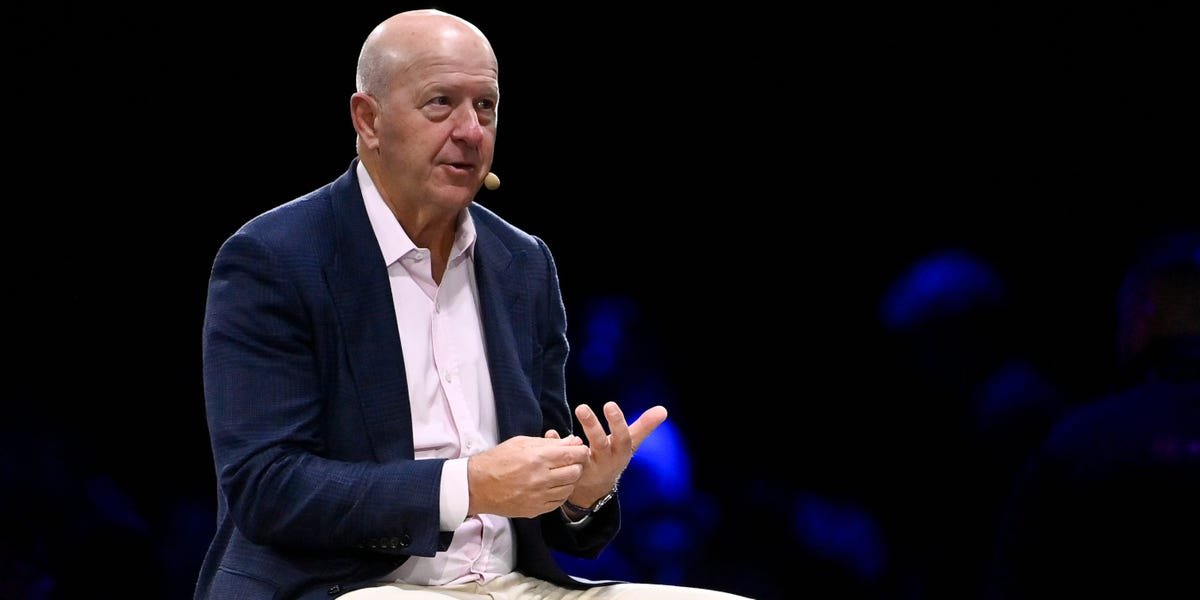
Goldman’s CEO lays out the 3 forces lining up to make this a breakout year for dealmaking

David Solomon is officially done playing defense.

The Goldman Sachs CEO has steered the bank through several grueling years for the industry, including a multi-year drought in private equity spending and extreme trading volatility. But after a booming 2025, Solomon told investors at a UBS financial services conference on Tuesday that the firm is entering 2026 with the wind at its back.

Solomon praised policymakers in Washington for spurring acquisitive appetites. “You have a massive deregulatory trend in the United States after a very tough regulatory period in the United States, across all industries,” Solomon said.

The receptive comments about the government’s heightened support for M&A came just months after President Donald Trump lashed out at Solomon on Truth Social in August, mocking his former side gig as a DJ and encouraging him to step down from the CEO throne. Trump’s rebuke came after a Goldman Sachs economist suggested that tariff policies could cost consumers.

Despite that dustup, Solomon is now leaning into the administration’s growth-oriented agenda, arguing that the friction of the past has been replaced by a “constructive” new reality for the banking sector.

Here are the three factors Solomon named on Tuesday that have left him feeling bullish about 2026’s dealmaking forecast.

From a ‘no’ to a ‘maybe’

Solomon thinks that, coming off strong results last quarter, 2026 will represent an inflection point for the global mood toward M&A. For the past five years, he said, strategic buyers had encountered a “different regulatory regime,” adding: “Whatever the question was, the answer was no.”

“Now, whatever the question is, the answer’s maybe,” he told UBS Erika Najarian, who hosted the discussion.

That, too, he said, could drive a resurgence in the IPO market, which has been expected to return this year. And in terms of mergers and the kind of corporate dealmaking that is Goldman’s bread and butter, “this could be a top decile” year, Solomon said.

And one major driver he pointed to is cash-rich, asset-heavy private equity sponsors.

The PE gambit

A key pipeline for Goldman has been banking for the world’s top private equity sponsors, many of whom held assets longer than their own investors would like while waiting out a period of lackluster valuations and uncomfortably high interest rates.

That’s left limited partners hungry for capital returns to reinvest in future deals, the secondaries and continuation vehicles markets booming, and banks praying that 2026 is the year that their private equity clients finally indicate they’re ready for action.

Solomon said the pressure for sponsors to return capital to their investors has reached a breaking point.

“We’re reaching a point in time where that unlock” is starting to occur, Solomon said. He pointed to mounting “pressure from the LP community and the cycle life of fundraising has reached a point in time for most of these firms that they can’t get into the valuation debate as much. They’ve got to move forward.”

The downstream effects of AI investments

Solomon has been on a mission to make Goldman AI-ready and has pointed to the massive investment in the space. “The need for capital to continue on this technology cycle is going to have an impact on the overall capital-raising cycle, so I see all this stuff accelerating, and I feel pretty good about it,” he said. He cited mega-tech names that have turned to the debt market to raise liquidity for AI-related projects.

It won’t always be smooth sailing, Solomon conceded, framing Trump’s governing style as something of an open question for markets. “He also has a tendency in policy to move from policy action to policy action,” he said. “I’d still say there’s uncertainty around trade. There is uncertainty around inflation, and there’s uncertainty on geopolitics.”

But, he concluded, “I think the likely outcome in 2026 is we’re going to have a pretty constructive year for capital markets, a pretty constructive year for M&A — particularly large-cap, strategic M&A — and the result of that should be very favorable for the people in this room.”


Source link

How-Reco-raised-30-million-and-grew-an-additional-400.jpeg

How Reco raised $30 million and grew an additional 400% last year as companies sprint into AI

New York-based cybersecurity startup Reco has raised $30 million in Series B funding as companies rapidly expand their AI use.

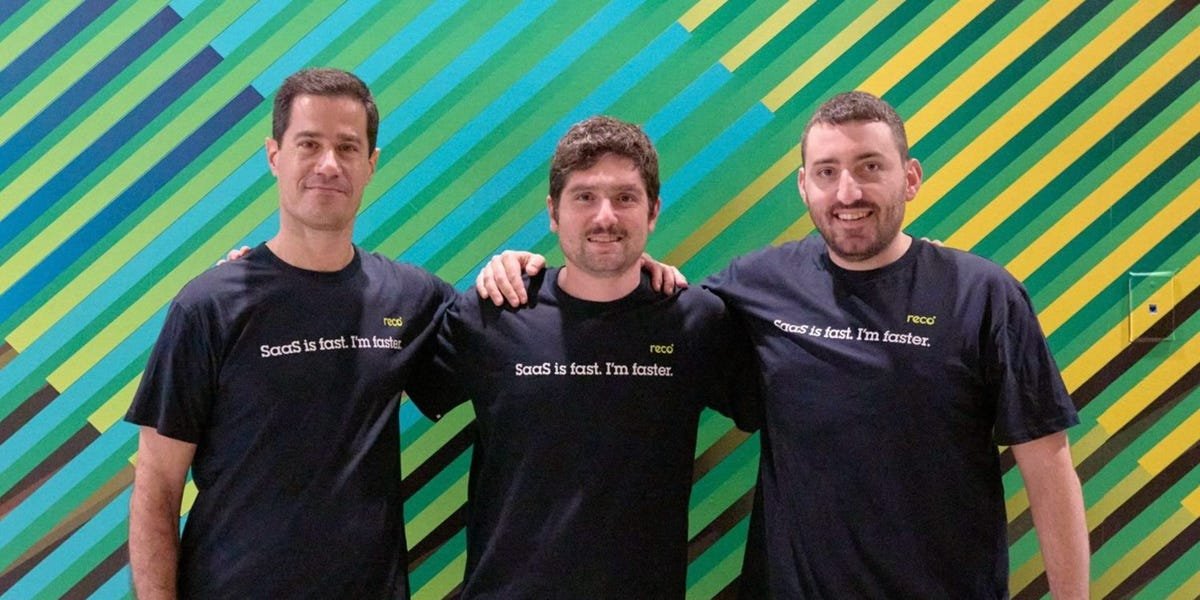
Ofer Klein, Gal Nakash, and Tal Shapira founded Reco in 2020 to fill the gap between a company’s existing cybersecurity protections and the other tech tools employees use, which is often AI.

“AI adoption has accelerated exponentially, and companies that blocked AI access a year ago cannot block it anymore,” Klein told Business Insider. “And I’m not talking about small mom-and-pop shops; I’m talking about the biggest banks, insurance, healthcare, pharma, and hospitals.”

Zeev Ventures led its latest round, with participation from all existing investors, which includes Insight Partners and Boldstart Ventures. New corporate investors for this round include Workday Ventures, TIAA Ventures, S Ventures, and Quadrille Capital.

“My investment strategy has always been to double down on what’s working,” Oren Zeev, the famed seed investor behind Zeev Ventures, said in a statement. “I’ve seen this pattern with successful companies like Navan and Tipalti, and I’m seeing it again with Reco. The signals we see show rapidly growing market demand for AI SaaS security, and we are experiencing exceptional growth.”

While software-as-a-service (SaaS) stocks have recently plunged amid concerns about AI disruption, Zeev sees a “massive” opportunity in AI for security.

After growing 500% year-over-year in 2024, Reco said it grew an additional 400% in 2025, driven by a sharp increase in business AI adoption.

Cybersecurity startups also raised nearly $14 billion in 2025, according to Pinpoint Search Group. That represented a 47% increase from 2024 and the most funding since 2021.

Klein said Reco began pulling in far larger companies than expected, repeatedly beating internal plans as AI went from blocked to mandatory.

“We built a plan, and we overachieved, and we updated the plan, and we overachieved again,” said Klein. “We said, ‘OK, enough is enough, let’s take more money and double down on AI SaaS.”‘

Klein said the biggest challenge for Reco now is keeping up with demand.

“The business is driving this huge traction into AI enablement,” he said. “Our biggest challenge right now: how we grow fast enough to meet this market need.”

Klein’s cofounders also bring in experience from working with the government. Nakash previously headed research at the Office of the Prime Minister of Israel, while Shapira holds a machine learning Ph.D. and also worked at Israel’s Office of the Prime Minister.

Reco faces competition from Torq, backed by Insight Partners and now valued at $1.2 billion, according to PitchBook. It also competes with Blackstone-backed Cyera, recently valued at $9 billion.


Source link

A headshot of Insider's Pete Syme

Jet fuel shortage in Cuba forces airlines to cancel flights and send empty planes to pick up passengers

Cuba has warned airlines that it has no jet fuel, forcing some carriers to cancel flights, add refueling stops, or carry extra fuel.

Cuban aviation authorities issued a monthlong advisory on Monday that said jet fuel is unavailable at all of the country’s international airports.

The country relies heavily on Venezuela for much of its jet fuel, but supplies have been hit by US sanctions that have constrained Venezuelan oil exports. President Donald Trump has also threatened tariffs on countries that sell oil or petroleum products to Cuba.

Because of this, the country is running out of jet fuel, and therefore, airlines cannot refuel their planes on the island.

From the US, American Airlines, Delta Air Lines, and Southwest Airlines all operate direct flights to Cuba.

American and Delta said they are operating as usual. In a statement to Business Insider, Southwest said that it was requiring any aircraft flying there to also carry enough fuel to reach its next destination.

Some Canadian airlines are canceling flights entirely.

Air Canada, which had operated 32 flights a week to and from Cuba before, said it would suspend service to the country on Monday.

It will send empty planes to pick up some 3,000 customers who have already traveled to the island. These flights will be loaded with extra fuel, although the airline said refueling stops on the return leg may also be necessary.

Canadian airlines WestJet and Air Transat also said they would operate empty aircraft to help their customers. Air Transat said it would suspend flights to Cuba until at least April 30.

Several international airlines serve Cuba, and many of them are still operating flights. However, some of these will have to stop to refuel elsewhere.

Air Europa, a Spanish airline, said its flights from Havana to Madrid would stop in Santo Domingo, in the Dominican Republic, about two hours away.

“We apologise for any inconvenience this situation, which is beyond Air Europa’s control, may cause you,” it said in a travel alert.

Iberia, the Spanish flag carrier, Air France, and Turkish Airlines also fly to Cuba. They did not immediately respond to requests for comment, although it seems likely the distance would necessitate a refuelling stop.


Source link

Brad-Karp-resigns-from-the-Union-College-board-after-Epstein.jpeg

Brad Karp resigns from the Union College board after Epstein files fallout

  • Brad Karp has resigned from Union College’s board of trustees.
  • This news comes after Karp’s resignation as chairman of Big Law firm Paul Weiss earlier this month.
  • Karp is one of the elite names that appear in the Epstein files.

Top US lawyer Brad Karp has resigned from Union College’s board of trustees as he faces scrutiny from his ties to the late sex offender Jeffrey Epstein.

Karp has been removed from the list of trustees on his alma mater’s website, from which he graduated in 1981.

Union College’s board chair Julie Greifer Swidler could not be reached for immediate comment. In a statement to local media, Greifer Swidler said Karp had resigned from the board.

“The Board of Trustees and College leadership look forward to continuing our efforts to prepare our outstanding students to lead with wisdom, empathy and courage, while ensuring that Union thrives for decades to come,” she said.

Karp’s departure from the board follows his resignation as chairman of the Big Law firm Paul Weiss last week.

Karp is among the names to appear in 3 million documents released by the Justice Department from its investigation into Epstein.

“Recent reporting has created a distraction and has placed a focus on me that is not in the best interests of the firm,” Karp said in a statement in Paul Weiss’ news release announcing the news.

This story is developing. Please check back fror updates.


Source link

photo-of-Ana-Altchek

Salesforce exec shares the advice he gives entry-level talent: ‘Hard isn’t necessarily bad.’

As companies rethink how they train early-career workers in a job market shaped by AI, Salesforce executive Andy White said resilience is top of mind for him — both at work and at home.

White oversees Salesforce’s implementation of Slackbot, an AI personal agent that generates responses based on conversations, files, and workflows inside Slack.

As White raises his son and daughter during a period of rapid technological change, he said he preaches to his kids the importance of powering through moments that don’t go as planned. He said resilience is pivotal and that it’s important for people to focus on doing the hard things and being OK when things don’t go as expected.

The senior vice president of business technology said he recently spoke with his daughter about the importance of dealing with situations rather than merely labeling them as “good” or “bad.”

“Hard is hard,” White told Business Insider. “Hard isn’t necessarily bad.”

Expectations, he said, are the “destroyer of hope and joy,” and that when things don’t go as planned, it often turns out to be a good thing down the line, even if it doesn’t seem that way in the moment.

“It’s when we look back, and it’s like, ‘Oh man, I’m glad that didn’t go the way I expected,'” White said. “But when you’re in it, it’s really hard.”

The importance of persistence

The resilience lesson is one White also thinks is relevant for entry-level workers. While junior hires often arrive ready to use new tools and deliver a “pretty high output,” he said, persistence is an area where some still need to grow.

He described today’s entry-level talent pool as “incredibly capable, very bright, and very driven,” with a stronger grasp of how to use AI tools to solve problems.

“They’re much more fluent at being able to leverage AI tooling in the flow of their work,” White said.

However, he said the group sometimes struggles when it comes to working through challenges.

“There’s more willingness to give up sooner,” he said, adding that this trait doesn’t apply across the board.

Finding confidence

White said he’s seen AI tools, such as the company’s recently upgraded Slackbot, help boost entry-level workers’ confidence. He said they could help reduce feelings of imposter syndrome by helping early-career workers navigate challenging situations that arise at work.

With that said, White added that workers need to stay balanced and not let tools make them “overly confident.” He said workers need to bring skepticism to “any kind of information” they get, and be diligent about reviewing sources and citations when using AI.

“If you don’t believe something, read the citation, and if it doesn’t have a citation, you have to assume it’s a hallucination,” White said, adding that he tells his kids the same thing.


Source link

Meet-Molly-OShea-the-VC-turned-podcaster-who-gets-execs-like-Alex.jpeg

Meet Molly O’Shea, the VC-turned-podcaster who gets execs like Alex Karp and Palmer Luckey talking

Molly O’Shea is a name-dropper. There’s good reason for that.

I count 29 big names in tech mentioned over our hourlong call. She told me about recently moderating a panel with Kalshi cofounders Tarek Mansour and Luana Lopes Lara. Ken Griffin took the stage after her. O’Shea breezily referenced talking about the state of new media with the TBPN bros in Peter Thiel’s house.

But it’s O’Shea’s access to executives like these that keeps her audience coming back. The podcaster is deeply immersed in Silicon Valley culture, having several years of venture capital experience under her belt.

“I am institutionally trained not to get canceled,” she said. “A lot of these people really trust me. I think it’s a wonderful component that I come in from the industry.”

Her podcast’s name, Sourcery, references “sourcing deals,” but it better represents O’Shea’s talent herself. She’s clearly sourced up, sporting an ever-growing rolodex of tech’s biggest names.

After buzzy interviews with Palantir CEO Alex Karp and Anduril cofounder Palmer Luckey, O’Shea’s platform has quickly grown. So have her critics, some of whom say she should ask tougher questions.

But her core audience — investors in the world of tech and finance — seem to love that she’s in the know.

From in-house VC newsletter to ‘monk mode’

O’Shea considers herself the first of her family to chase a “capitalistic pursuit.”

“It’s funny, there’s not many business-oriented people in my family,” she said. “My dad had a marketing agency for most of my life, but again, it was a marketing agency. My mom is a home designer and she used to be a creative director.”

She went to New York University for studio art but pivoted to entrepreneurship after learning how low the average artist’s salary was. Eventually, she narrowed in on venture capital.

O’Shea got her start working for the father of a college friend, a secondaries investor for a family office. She moved to Miami to work for him before coming back to New York as an analyst at the Global Public Offering Fund.

She then went to the seed and Series A investment firm TMV — then called Trail Mix Ventures — as an associate. She started Sourcery there as an in-house newsletter, but only made it public when she started at New York Life Ventures as a senior associate. She shared it with friends, and it eventually grew a readership.

Then Upfront Ventures’ Greg Bettinelli reached out with a job offer.

“I was a reader of her email newsletter,” Bettinelli later wrote when asked about the offer. “We were looking to hire a new investor for Upfront Ventures and I reached out as I appreciated what she built as what I think was a side project at the time.”

O’Shea said she was on a boat in the Mediterranean when she got Bettinelli’s offer. She met him in the Hamptons. “It’s like the bougiest story ever,” she said.

O’Shea moved to Los Angeles for Upfront Ventures. She’s stayed in the city and prefers it to New York. “You get so much more for your money,” she said. “I have a hot tub!”


Sourcery host Molly O'Shea is pictured.

Before O’Shea was a full-time podcaster, she worked for TMV, New York Life Ventures, and Upfront Ventures.

Molly O’Shea


Then Elon Musk took over X, partially open-sourced the algorithm, and launched ad-revenue share programs. O’Shea said, “Game on.”

She started posting more, and her follower count grew. Erik Torenberg of the podcast network Turpentine asked if she wanted to start a podcast about deals, linked to her newsletter.

While O’Shea declined to disclose exactly how much she earns, she said the Sourcery newsletter began generating revenue when it added subscriptions. That includes a $600 “I can expense it” annual tier she said “plenty of people” were willing to pay for.

Sourcery is now her full-time job and a top-200 podcast in Apple Podcasts’ investing category. She employs a “lean team” to help her film, edit, and promote.

The Palantir and Anduril interviews helped generate more interview interest. (Her next guest: Jake Paul.)

After an “insane” end to 2025, O’Shea said she spent January locked-in and focused on laying the foundation for the rest of the new year.

“I’m going into monk mode.”

Getting Karp and Luckey to say yes

O’Shea’s network is big, and her show keeps making it bigger.

Andreessen Horowitz’s Alex Immerman told her he watched her Kalshi video before investing in the company, she said. “I know plenty of people — I won’t name them — that have put millions of dollars into these companies that I’ve profiled,” she said.

That seems to be how O’Shea lands many of her guests: knowing the right people. I spoke to two early interviewees. Oden Technologies cofounder Willem Sundblad was introduced to O’Shea through an investor. Contrary general partner Kyle Harrison met her in 2018 and once considered hiring her while at Coatue Management.

“A lot of these relationships start first as friendships,” Harrison said. “We’ve enjoyed talking to each other off the record, so talking on the record is just as much fun.”

The Karp interview was a right-place, right-time situation. She was at the Hill and Valley Forum in 2025, where Karp was speaking. O’Shea said Palantir’s Eliano Younes recognized her from Pirate Wires and introduced her to Shyam Sankar, the company’s CTO.

Then she published a list of her 100 dream guests. Listed No. 1 was Ivanka Trump. Palantir staff noticed Karp wasn’t on the list, O’Shea said, and she amended it, making him 1B. That set the interview in motion.


Molly O'Shea is pictured with Palantir CEO Alex Karp

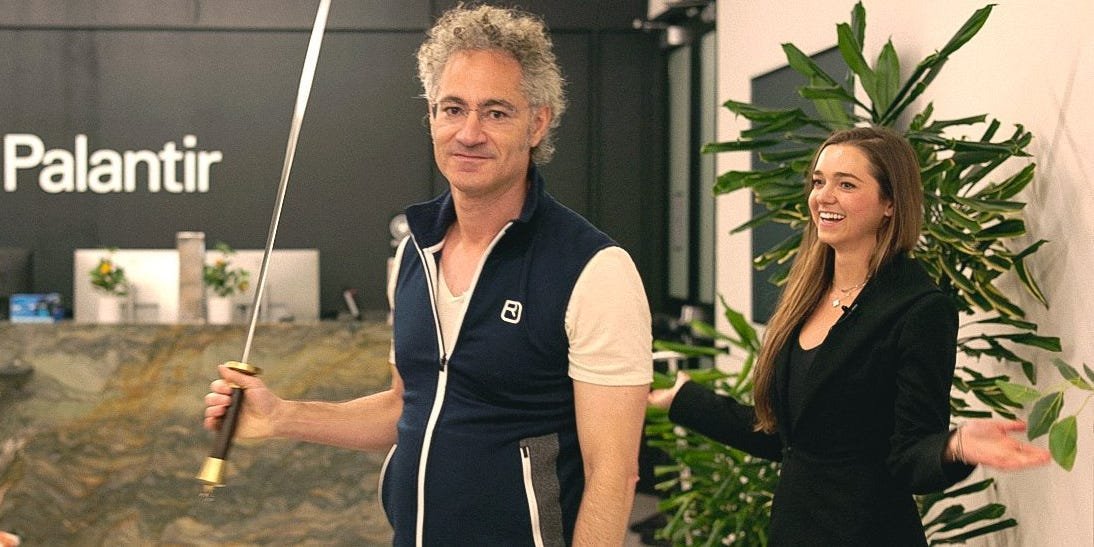
A clip of Karp brandishing a sword thrust O’Shea’s podcast into the limelight — and got the trolls commenting.

Molly O’Shea


Her Anduril series also sprang from the Sourcery 100 list. She put Anduril cofounders Palmer Luckey and Trae Stephens on the list. Matt Grimm commented and helped her set up an interview.

The Karp interview was her biggest by far. The full-length podcast has 4.3 million views on X — and that’s not including the various clips she publishes separately.

It also made her confront the challenges of being on camera.

She published the video on a Tuesday in the back of a taxi in London. She went offline on Wednesday and woke up to hundreds of texts on Thursday asking if she was OK.

In the interview, O’Shea wore an Alaïa dress her friend had lent her. She said she liked being able to “show some femininity and personal style.” Some X users mocked her attire. (Others pointed out that Karp was wearing a t-shirt.)

O’Shea said she was glad to be offline at the time and not glued to her phone watching the comments, and grateful for the women who reached out.

“There were a lot of really horrible tweets, and a lot of really disgusting things that I wish I did not see,” she said. “The internet is a scary place.”

The ‘tough questions’ question

In November, The Guardian published a feature about the “friendly media bubble” that turns CEO interview subjects into stars. O’Shea was the lead anecdote. The piece closed with her asking Karp what type of cupcake he would want to be.

O’Shea knows that some people want her to ask “harder questions.” Her response: “If you want to have criticism of a company, how about do some research on it.”


Molly O'Shea

What does O’Shea say to those who think she went too easy on Karp? “How about read the biography,” she said. “That’s a good starting point.”

Sourcery/Molly O’Shea


That doesn’t mean she won’t ask the kind of in-the-weeds technical question about deal structure or strategy that you’d expect from someone with VC roots. The conversations can also veer off of investment talk.

Take a recent interview with the lightning rod venture capitalist Shaun Maguire of Sequoia — who generated widespread backlash after saying Zohran Mamdani was a secret “Islamist” who “comes from a culture of lying.” At one point, she’s asking him about the economics of telecommunications. At another, Maguire is calling Mamdani a communist and a terrorist-supporter.

O’Shea maintains that hard questions aren’t the purpose of her podcast. She’ll sprinkle one in every so often, she said, but the goal is mostly to be a resource. Sourcery is a place for investors to get information about a subject’s views — don’t expect O’Shea to dig in on a guest’s recent scandal or push back on a controversial position.

“If you want to know about lawsuits, I don’t know, go read lawsuits,” she said.

O’Shea is clearly proud of her work. She described a recent nap, dozing off to the “All-In” podcast. She woke up to a new podcast on, and thought: “Holy crap, what is this amazing interview?” It was her own.

Ending our call, I asked if she had a media analogy for herself. TBPN is often called the “SportsCenter of Silicon Valley.” What is Sourcery?

She waffled back and forth; maybe she’s “30 for 30,” maybe she’s Martha Stewart.

Later that day, she emailed me her answer: Barbara Walters, who, incidentally, was famous for her hard-hitting questions.

“Absolute legend,” O’Shea wrote.


Source link