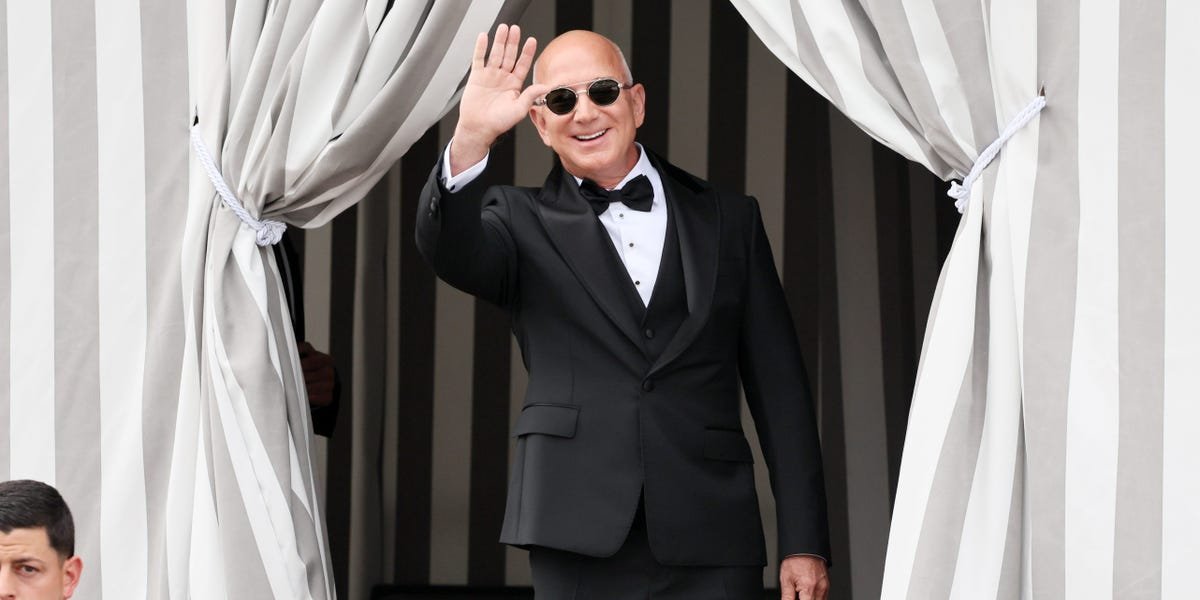
Jamie Heller, incoming Editor-in-Chief

What’s the future of the software business look like? Our top tech columnist weighs in.

The future of software

Software stocks had a brutal week, aside from a Friday rally, extending what has been a rough year for the industry. I touched base with our tech columnist, Ali Barr, the best I know on AI business models. He also wrote this piece in the midst of the selloff.

Ali, you’ve been covering AI adoption and costs by big business since you started our Tech Memo newsletter. What’s your gut on whether the recent selloff was overblown?

Software business models have underpinned the tech industry for decades. Companies invest heavily upfront to build software, but each additional copy costs almost nothing to distribute. So revenue scales faster than costs, driving fat profit margins. That dynamic helps explain why Microsoft, the world’s largest software company, is so valuable.

AI challenges this model. If this new technology makes employees more productive, companies may need fewer software subscriptions. And as AI tools improve, businesses could replace existing software with AI-driven workflows or even build their own software using AI coding tools. Finally, if software companies embrace AI, that could make their services more expensive to run than traditional software. That would mean rising usage doesn’t automatically translate into soaring profitability.

If software in the AI era becomes less profitable and grows more slowly, then it’s logical that the stock prices of software companies might fall. A lot.

Big Tech spending on AI data centers and other infrastructure is set to soar again this year. How will these companies generate a return on these huge investments?

The numbers are breathtaking. Just two companies, Google and Amazon, are planning capex of almost $400 billion in 2026. A couple more years of the same, and that’s more than $1 trillion.

To get a return on this, they will have to come up with new revenue of well over $1 trillion in future years. AI is amazing and really useful, but it’s hard for some investors to see how this happens. Even if new AI products are awesome, do consumers and companies have enough money to buy all this stuff? I don’t know. One outcome could be that Big Tech giants make do with slimmer profit margins in an AI future. That’s similar to the concerns that have hammered software stocks lately.

Who are the most-interesting people to watch in the sector?

I pay attention to Andrej Karpathy. He was director of AI at Tesla and a founding member of OpenAI. He’s pretty independent nowadays, which means what he says about AI can be trusted more. Bonus: He coined the term “vibe coding.”

Aditya Agarwal was Facebook’s first head of product engineering. He was also CTO and VP of engineering at Dropbox. He’s a coding powerhouse. Recently, he used Claude to do some coding and was stunned by the power of this tool. “I am filled with wonder and also a profound sadness,” he wrote on X. “We will never ever write code by hand again. It doesn’t make any sense to do so. Something I was very good at is now free and abundant.”

I’m usually skeptical, but the start of 2026 feels like a moment of highly disruptive — and destructive — change.



Source link

Why-more-CEOs-and-boards-are-worrying-about-security-The.jpeg

Why more CEOs and boards are worrying about security: ‘The risk is everywhere.’

For decades, executive security followed a familiar playbook: Most CEOs traveled freely at home, accepted protection only in high-risk foreign countries, and treated personal safety as a private concern rather than a boardroom imperative.

That world no longer exists.

Mentions of exec security protocols are popping up in more proxy filings, and companies like Starbucks are changing corporate jet policies due to what it calls “significant heightened security concerns.”

These moves follow the December 2024 killing of UnitedHealthcare CEO Brian Thompson in New York City and a shooting at a Park Avenue office building about eight months later.

Both instances shattered long-held assumptions that corporate leaders were at least somewhat insulated from the types of violence more often associated with politicians or celebrities, several security executives told Business Insider.

There isn’t a distinction between low-, medium-, or high-risk anymore, said Dale Buckner, head of the security firm Global Guardian, which works with Fortune 1000 companies.

“The risk is everywhere,” he said.

The news of the disappearance of “Today” co-host Savannah Guthrie’s mother, Nancy, has only added to a sense of unease for high-profile leaders, several of these execs said.

Boards step in

Buckner, a retired US Army colonel who served for more than two decades, said his firm has briefed more boards in the past 11 months than in the previous 14 years combined. Increasingly, Buckner said, boards view CEOs and other C-suite members as assets that must be protected, even if some leaders are leery of perceived constraints on their freedom.

“The board is overruling the CEO who is going, ‘I don’t need this,'” he said.

In regulatory filings, companies have begun to spell out their decisions. Starbucks said last month that, following a security review, it recommended that CEO Brian Niccol use company aircraft for both personal and work travel. While it’s made that recommendation before, the company lifted a spending cap it had in place for personal travel and will instead review those costs each quarter.

Unlike in its previous proxy a year earlier, Starbucks also cited “the existence of credible threat actors.”

Those concerns extend beyond the coffee chain.

Disney requires Bob Iger, who is set to step down as CEO next month, to use company aircraft for both business and personal travel. A security consultant identified “bona-fide, business-related security concerns” for Iger, Disney said in a January filing. That language didn’t appear in the company’s prior filing.

Meatpacking giant Tyson Foods said it hired a consultant during its fiscal year that ended in September to review risks associated with its senior management team “based on the evolving security environment for corporate executives.” One resulting change: requiring certain execs to use company aircraft for both business and personal travel.

Proxy filings by large US public companies that mention “executive security” or “corporate security” rose from 69 in 2023 to 87 in 2025, according to an AlphaSense analysis.

Representatives from Starbucks, Disney, and Tyson Foods didn’t respond to Business Insider’s requests for comment on the nature of the threats executives face.

18 armed agents

While high-profile CEOs have long had protection in high-risk zones, Buckner said what’s grown more common is keeping executives under a 24/7 safety umbrella.

Buckner said that the protocol for one of his protectees, a Fortune 500 CEO, includes 18 armed agents, camera surveillance of the executive’s home, and monitoring of its WiFi network. A former garage on the property now serves as an “op center,” he said.

“I have two to four roving armed agents around their home, 24 hours a day,” Buckner said.

It can be a challenge to determine whether something that starts as disapproval over a company or leader could morph into something more nefarious, security veterans said.

A threat might start out as a joke in poor taste, and a group targeting a company might pick it up. Then, all of a sudden, it becomes a real risk, said Lisa Kaplan, founder and CEO of the risk-intelligence firm Alethea.

‘The reality of risk’

Caleb Gilbert, founder of White Glove Protection Group, a security firm serving large companies and family offices, said the range of people who feel threatened has widened over the past six months.

“The reality of risk is resonating with more people. And that’s different than I’ve seen in the last 30 years,” he said.

One reason is that the cadence of high-profile incidents — from the attempted assassination of President Donald Trump in 2024 to the killing of conservative activist Charlie Kirk in September — hasn’t seemed to slow, Gilbert said. While attacks on business leaders remain rare, many nonetheless feel rattled, he said.

“It used to be where something bad would happen, there’d be time in between, and the executives would forget about it,” Gilbert said. Now, “with the security-minded glasses that they put on, it’s brought everything into focus.”

The cost of protection is part of that view. A small protective detail can cost about $1 million a year, while a full-scale operation can reach $30 million, he said.

In some cases, Gilbert said, even without a board’s prodding, executives are “willing to give up personal liberties that they cherished before for the sake of feeling safe.”

The apparent kidnapping of Nancy Guthrie could lead to demand from executives to detect threats against parents, Kaplan said. Typically, she receives requests from executives to monitor risks to their children.

Buckner said he recently spoke to a group of CEOs in Washington, DC, on security threats. Many reported feeling unnerved, he said.

“It’s palatable,” he said. “They’re scared that they’re in a new world order. They’re not quite sure how to navigate it.”


Source link

Lloyd Lee

Why Waymo believes robotaxis must be safer than human drivers

If people can drive with their eyes, can an AI drive only with cameras?

Tesla leans on that analogy to defend its hotly debated cameras-only approach to autonomous cars.

“It should be solved with cameras just like how every other human or animal lives around this world,” Ashok Elluswamy, Tesla’s vice president of AI, said at the ScaledML Conference on January 29. “Self-driving problem is thought of as a sensor problem. It’s actually not a sensor problem, it’s an AI problem.”

Alphabet’s Waymo has a fundamentally different engineering approach to autonomy. Srikanth Thirumalai, Waymo’s vice president of onboard software, pushed back on Elluswamy’s comparison.

“I think the bar is higher than human driving,” he told Business Insider.

The contrast between Waymo and Tesla goes beyond philosophy and is built into the hardware.

Tesla wants to reach autonomy with fewer than 10 cameras and an AI trained on billions of miles of real-world driving data. Waymo also relies on AI, but is paired with a multi-sensor system — 29 cameras, five lidars, and six radars — to give the AI driver different ways to perceive an environment. The Alphabet company has so far deployed about 2,500 robotaxis across multiple US cities.

The debate often boils down to cost and safety: More sensors could increase costs, which could be a barrier to scale. Fewer sensors could present safety challenges, some say, which is another constraint for mass robotaxi adoption.


Srikanth Thirumalai

Srikanth Thirumalai, Waymo’s vice president of onboard software

Lloyd Lee/BI


Thirumalai manages a team of more than 600 people building Waymo’s AI driver software. During a rare interview at Waymo’s HQ, which spans multiple buildings, the vice president told Business Insider he expects the sensor suite to shrink over time as the hardware improves and gets cheaper. But he framed the lidar or no-lidar debate as a distraction from the company’s safety-oriented objective.

“Given where the technology is right now, the question is what is it going to take for that product to be safe?” he said. “So you work backwards from that safety bar and say, ‘What does it take to build a safe product?’ And then keep pushing and iterating and innovating to reduce the cost of the sensors, and to improve the quality of the software and how it uses the sensors.”

The soft-spoken Thirumalai looked to the future and explained his position.

“In three to five years, will our sensor stack look different than it is right now? Absolutely.”

Waymo has previously said it expects the next generation of robotaxis to have fewer sensors: 13 cameras, four lidars, and six radars. A Waymo spokesperson previously told Business Insider that the company expects to serve public riders by late 2026.

A Tesla spokesperson did not respond to a request for comment.

How safe should a robotaxi be?

Humans can be bad drivers. They’re easily distracted, swayed by emotions, and can be slow to make the right decisions. Leaders in autonomy will say they’re driven by a mission to build something safer than humans. The challenge is defining what “safer” means in a way that regulators, riders, and engineers can measure.

“This notion of what the bar is is a very important question,” Thirumalai said. “And one that we have only refined over the years, and in some cases, we’re still sort of discovering what the bar is.”

Instead of an arbitrary goalpost that says robots will be multiple times safer than a human driver, Thirumalai said Waymo looks at individual driving cases and assesses how often those events can occur.

“We break it down and say, ‘Well, how often do those events actually occur per million miles of driving? And how serious are those events?” he said, adding that his team can then aim for a lower incident rate.

Thirumalai and even Waymo’s top brass aren’t selling perfection. A human fatality caused by a robotaxi isn’t a matter of if but when, Waymo co-CEO Tekedra Mawakana has said.

Reports and videos shared across social media have shown that AVs can make mistakes, whether in school zones, emergency response scenes, bad weather, or even seemingly ordinary driving scenarios.

“People might say, ‘Hey, look, this is AI. We never want it to make a mistake.’ That is an unachievable bar,” Thirumalai said.


Source link

Lloyd Lee

Savannah Guthrie says family ‘will pay’ for their mother’s return in video plea to possible kidnapper

Savannah Guthrie has made a direct plea to her mother’s potential abductor: “We will pay.”

In a new, 20-second video posted on her Instagram account on Saturday, Guthrie said her family had received someone’s “message” and were begging for the return of her mother, Nancy Guthrie, 84, who has been reported missing since Sunday.

“We received your message, and we understand,” Guthrie said, sitting between her two siblings in the video. “We beg you now to return our mother to us so that we can celebrate with her. This is the only way we will have peace. This is very valuable to us, and we will pay.”

Guthrie did not identify a specific individual. It’s also unclear what message Guthrie was referring to.

The Pima County Sheriff’s Department and the FBI said in a statement on Friday that they were aware of a new message regarding Nancy Guthrie.

“Investigators are actively inspecting the information provided in the message for its authenticity,” the sheriff’s department wrote.

A spokesperson for the Pima County Sheriff’s Department did not immediately respond to a request for comment. An FBI spokesperson said the agency did not have further information to provide.

There have been reports of multiple ransom notes. Federal officials arrested a California man on Thursday, accusing him of sending a fake ransom note to the Guthrie family.

Officials have not identified a suspect but have said that the incident may have involved a kidnapping or abduction.

Guthrie’s mother was last seen at her home located just outside Tucson.

Authorities said blood confirmed to belong to the elder Guthrie was found on the porch, and the doorbell camera had been disconnected, leaving investigators without crucial evidence.

Her daughter, a veteran news anchor of nearly three decades, said that her mother’s health is “fragile” and requires daily medication.

“We are ready to talk. However, we live in a world where voices and images are easily manipulated,” the younger Guthrie said in a video posted on Wednesday. “We need to know, without a doubt, that she is alive, and that you have her. We want to hear from you, and we are ready to listen. Please, reach out to us.”


Source link

Jeff-Bezos-speaks-out-about-The-Washington-Post-for-the.jpeg

Jeff Bezos speaks out about The Washington Post for the first time since mass layoffs — and focuses on ‘data’

Washington Post owner Jeff Bezos gave his first public statement since the paper enacted massive job cuts this week, and it focused on “data” and understanding reader interests.

The billionaire Amazon founder, who built one of the world’s most valuable companies with a relentless focus on customer satisfaction, indicated he wanted to see that same energy at the Post.

“The Post has an essential journalistic mission and an extraordinary opportunity,” Bezos wrote. “Each and every day our readers give us a roadmap to success. The data tells us what is valuable and where to focus.”

Bezos’ statement came as Post CEO Will Lewis announced he was stepping down, to be replaced in an interim capacity by Post CFO Jeff D’Onofrio.

Bezos’ statement struck a similar tone to comments made by the paper’s top editor, Matt Murray, in addressing staff earlier this week.

“Today is about positioning ourselves to become more essential to people’s lives in what has become a more crowded, competitive, and complicated media landscape,” Murray said during a staff call on Wednesday. “For too long, we’ve operated with a structure that’s too rooted in the days when we were a quasi-monopoly local newspaper.”

Murray sent staffers a detailed memo on Wednesday that outlined focus areas in which he said the Post demonstrates “authority, distinctiveness, and impact.” Those priority areas will include politics, national affairs, national security, and other forces “shaping our future,” like science and business, Murray wrote.

Murray spoke repeatedly about focusing on areas of reader interest and understanding audience data in an appearance following the layoffs on the Puck podcast “The Grill Room.”

The messaging from Bezos and Murray could help appease some critics who have seen moves by the Post in recent years as rooted in political ideology and not data — though it will be difficult to win them over.

The Post faced a revolt both inside the newsroom and among readers when Bezos made a late-hour call in 2024 that the paper wouldn’t endorse a presidential candidate for the first time in 36 years. NPR reported that more than 200,000 subscriptions were canceled in the days following.

The paper faced another round of criticism in February 2025 when Bezos decided to reorient the Post’s opinion section — generally considered the owner’s prerogative — around personal liberties and free markets.

Former Post executive editor Martin Baron, who worked closely with Bezos during his tenure as top editor, wrote in a LinkedIn post after the layoffs that the paper’s challenges had been made “infinitely worse by ill-conceived decisions that came from the very top.”

Critics of Bezos’ moves have said he should consider financially supporting the paper, given its role in society.

“It just seems heartbreaking that he doesn’t feel the paper is important enough to bankroll,” Sally Quinn, the longtime journalist and widow of former Post executive editor, Ben Bradlee, said this week on CNN.

Bezos said in his statement that he felt the Post’s leadership going forward could build an “exciting and thriving next chapter” for the paper.


Source link

A person holds a protest sign which reads

Washington Post union calls for Jeff Bezos to sell the paper after CEO resigns


Tom Williams/CQ-Roll Call, Inc via Getty Images

  • The Washington Post’s CEO, Will Lewis, departed the paper on Saturday following sweeping layoffs.
  • The Post’s union, in a statement, called Lewis’ exit “overdue.”
  • The union also called for Jeff Bezos, who owns The Post, to sell the publication.

Unionized staffers from The Washington Post issued a statement supporting the abrupt Saturday departure of the publication’s CEO, Will Lewis, and called for Jeff Bezos to sell the paper.

“Will Lewis’s exit is long overdue,” the Washington Post Guild’s statement, which was published on X, read. “His legacy will be the attempted destruction of a great American journalism institution. But it’s not too late to save The Post. Jeff Bezos must immediately rescind these layoffs or sell the paper to someone willing to invest in its future.”

Representatives for the Post union did not immediately respond to a request for comment from Business Insider.

On social media, laid-off reporters celebrated the news of Lewis’ departure. Jada Yuan, a former culture writer at the Post, wrote that she had “never been more thrilled with a news alert.”

“Will Lewis, the absent, ineffective publisher of @washingtonpost has resigned. Or been fired,” she added. “It sucks that it happened after he couldn’t even show up on zoom to lay off 1/3 of the company. But the important thing is he’s gone.”

Lewis’ exit was announced Saturday afternoon, just days after sweeping layoffs hit the legacy publication, leaving hundreds of reporters out of work.

The publication’s unionized employees held a “Save the Post” rally earlier this week, focused on Bezos and Lewis, and said there were risks to press freedom and independent news if legacy publications like the Post are unable to continue operating.


Source link

Will-Lewis-couldnt-fix-the-Washington-Post-Thats-on-Jeff.jpeg

Will Lewis couldn’t fix the Washington Post. That’s on Jeff Bezos.

Will Lewis, the former CEO and publisher of the Washington Post, had a terrible tenure at the paper. The two years he spent there, which ended Saturday with a two-paragraph memo, are chiefly notable for a series of cuts and layoffs, culminating in a 30% bloodletting days ago.

But let’s be clear: This one is on Jeff Bezos.

Most obviously, that’s because Bezos owns the Post, and Bezos was the one who hired Lewis to run the business for him.

Bezos was also the one signing off on Lewis’s actions at the paper, which mostly amounted to making the paper smaller while telling the staff that “people are not reading your stuff.”

And slightly less obviously, it was Bezos who dramatically worsened the Post’s business outlook. He decided not to endorse a presidential candidate in 2024, weeks before the election — a move that outraged many Post readers, who saw the non-endorsement as an attempt to cater to Donald Trump.

That led to more than 250,000 subscriber cancellations, a huge problem for a paper whose circulation peaked at 3 million in 2021.

The best case argument you could make for Lewis era at the Post, if you are inclined, would go something like this: Bezos, who bought the Post in 2013 and then invested heavily in staff, realized a few years ago that he now employed many more people than his business would support. So he brought Lewis in to do the grim work of shrinking the publication. Now that work is done, so Lewis can do something else and Bezos can find someone to help the Post grow again.

But the timing of Lewis’ departure — late afternoon on a Saturday, following days of howling from Post employees and many others about Lewis and Bezos’ stewardship of the paper — suggests this was not a long-in-the-making move.

And again, whether Lewis jumped or was pushed doesn’t matter in the end. The Washington Post is Jeff Bezos. He gets praise if things are going well — which, for several years after his purchase, seemed to be the case — and blame when it doesn’t.

Here I’ll also point out that Bezos, who has no problem being seen jet-setting around the world in a style befitting the world’s fourth-richest man, has been totally MIA during his paper’s recent turmoil.

On Saturday, when the paper announced it had promoted Post CFO Jeff D’Onofrio to acting publisher and CEO, Bezos finally attached his name to a public statement, promising that the new Post would thrive by giving readers things they wanted to read.

“The data tells us what is valuable and where to focus,” he said in a Post press release.

That might qualify for an insight 30 years ago, when newspapers were struggling to respond to the internet. Now that’s table stakes, and you would hope the guy who created Amazon has more up his sleeve.

I have a bunch of ideas,” for the Post, Bezos said in the fall of 2024. “I’m working on that right now.”

We’re still waiting.


Source link

Hims-Hers-removes-a-knock-off-weight-loss-drug-days.jpeg

Hims & Hers removes a knock-off weight loss drug days after introducing it

Hims & Hers unveiled a once-a-day weight-loss pill this week, calling it an alternative for needle-averse customers and those looking for smaller doses.

It was essentially a cheaper copy of the Wegovy pill that the pharmaceutical company, Novo Nordisk, released earlier this year.

About 48 hours later, the telehealth company said it would stop selling it.

“Since launching the compounded semaglutide pill on our platform, we’ve had constructive conversations with stakeholders across the industry,” Hims & Hers said in a statement shared with Business Insider on Sunday. “As a result, we have decided to stop offering access to this treatment.

When Hims & Hers first made the compounded semaglutide pill available to customers on Thursday, the company said it met “rigorous clinical standards.”

“We adhere to all federal and state standards for compounding, and all active pharmaceutical ingredients (APIs) in compounded treatments are sourced exclusively from FDA-registered facilities,” the company said.

Compounding a new version of existing drugs typically occurs when those drugs are facing a shortage, which has periodically been the case in recent years for some of the most popular weight-loss and diabetes drugs on the market.

However, the Food and Drug Administration called out Hims & Hers in a statement issued the following day.

The agency said it intends to restrict certain ingredients used in non-FDA-approved compounded drugs that are “mass-marketed by companies — including Hims & Hers and other compounding pharmacies — as similar alternatives to FDA-approved drugs.”

“Entities engaged in the manufacture, distribution, or marketing of unapproved compounded GLP-1 products should be aware that failure to adequately address any violations may result in legal action without further notice, including, without limitation, seizure and injunction,” the agency said.

Although weight-loss medications aren’t new, Novo Nordisk breathed new life into the industry with its product, Ozempic, around 2022. The company marketed Ozempic as an injectable type 2 diabetes medication, but doctors began prescribing it to patients to address obesity. As a result of rising demands, Novo Nordisk developed Wegovy, a drug specifically geared toward managing weight.

Both those drugs were administered only by injection until Wegovy launched its oral version in January.

Many health-focused companies have developed off-brand versions of the medications to cash in on soaring demand.


Source link

Headshot of Peter Gelling

Read the memos sent to staff announcing Washington Post publisher Will Lewis’ resignation

Will Lewis’ two-year tenure as publisher of the Washington Post is over.

His time leading the nearly 150-year-old newspaper, which was bought by billionaire Jeff Bezos in 2013, was marked by buyouts and shrinking coverage. Most recently, on Wednesday, the Post laid off hundreds of journalists, many of them covering foreign affairs.

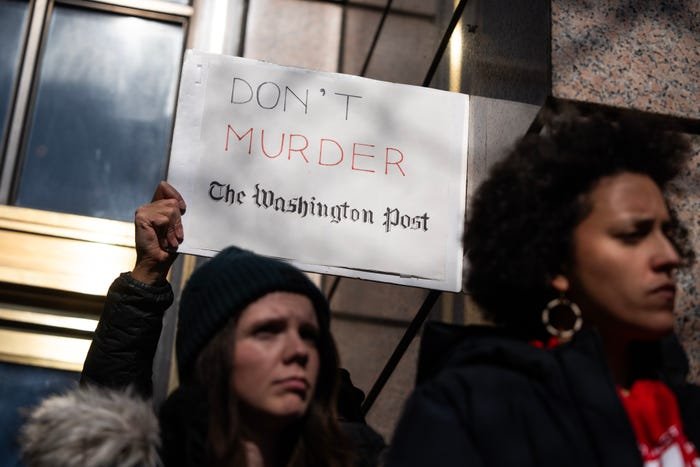
Employees and supporters gathered outside the Post’s offices on Saturday to protest the drastic cuts.

“Each and every day our readers give us a roadmap to success. The data tells us what is valuable and where to focus,” Bezos said in a statement on Saturday, his first public comments since the layoffs. “Jeff, along with Matt and Adam, are positioned to lead The Post into an exciting and thriving next chapter.”

Below are the text of memos emailed to Post staff announcing Lewis’ departure and the appointment of Chief Financial Officer Jeff D’Onofrio as acting publisher.

Will Lewis’ email to staff

“All – after two years of transformation at The Washington Post, now is the right time for me to step aside. I want to thank Jeff bezos for his support and leadership throughout my tenure as CEO and Publisher. The institution could not have a better owner.

During my tenure, difficult decisions have been taken in order to ensure the sustainable future of The post so it can for many years ahead publish high-quality nonpartisan news to millions of customers each day.

With gratitude, Will”

Post PR email announcing D’Onofrio’s appointment

“The Washington Post is announcing Jeff D’Onofrio as its acting Publisher and CEO, effective immediately.

D’Onofrio, a strategic business leader and proven architect of the new media landscape, joined The Post in June 2025 as Chief Financial Officer following leadership roles across global companies including Raptive, Tumblr, Yahoo and Google. He succeeds William Lewis, who has served as Publisher and CEO for the past two years.

“The Post’s resolute commitment to writing the first rough draft of history anchors and imprints its future,” said D’Onofrio. “I am honored to become part of charting that future and to take the lead in securing both the legacy and business of this fierce, storied American institution.”

“The Post has an essential journalistic mission and an extraordinary opportunity. Each and every day our readers give us a roadmap to success. The data tells us what is valuable and where to focus,” said Jeff Bezos, owner of The Washington Post. “Jeff, along with Matt and Adam, are positioned to lead The Post into an exciting and thriving next chapter.”

D’Onofrio served as Chief Financial Officer for Raptive, the largest digital ad management company serving over 6,000 creators and publishers. He oversaw the finance, human resources and data and analytics teams, while negotiating key partnerships and acquisitions that helped power Raptive to impressive revenue and profit growth.

Immediately prior to his role at Raptive, D’Onofrio was Chief Executive Officer at Tumblr and held other key leadership positions there including President, Chief Operating Officer, and CFO. His expert fluency in both today’s media business landscape also grew from his leadership and management roles at Google, Zagat, Yahoo!, and Major League Baseball (MLB Advanced Media).”


Source link

Washington-Post-publisher-Will-Lewis-is-out-days-after-sweeping.jpeg

Washington Post publisher Will Lewis is out days after sweeping layoffs

  • The Washington Post’s chief executive, Will Lewis, announced his departure on Saturday.
  • Jeff D’Onofrio will serve as the interim CEO and publisher, effective February 7.
  • Lewis’ departure comes days after sweeping layoffs at the legacy publication.

Will Lewis is out as chief executive at the Washington Post, days after sweeping layoffs hit the legacy publication and following a rocky two-year tenure that saw the Post struggle to stabilize its business.

The newspaper said Saturday that Jeff D’Onofrio, CFO, would serve as the interim CEO and publisher, effective immediately.

Lewis’s departure comes after hundreds of Washington Post journalists were laid off across the company this week, in what executive editor Matt Murray described in a memo as part of a strategic reset. The cuts were felt across the newsroom, including the sports section, international, books, DC metro, and audio.

As news of the layoffs spread, Lewis came under widespread public criticism, both for the financial challenges at the Post and for not participating in the dissemination of the news. After Murray made the staff-cut announcements himself, Lewis was seen attending Super Bowl festivities.

In a note Saturday, Lewis said “now is the right time for me to step aside” and thanked Jeff Bezos, the paper’s owner.

D’Onofrio, who joined the Post in June 2025, said in an email to staffers on Saturday: “This is a challenging time across all media organizations, and The Post is unfortunately no exception.”

This is a developing story. Please check back for updates.


Source link