Russia-says-the-US-is-pushing-its-companies-out-of.jpeg

Russia says the US is pushing its companies out of Venezuela’s energy sector

Russia said the United States is pushing Russian companies out of Venezuela’s energy sector.

“Right now, following Venezuela and what is happening there, our companies are quite openly being pushed out of Venezuela,” Russian Foreign Minister Sergei Lavrov said in an interview with RT, a state-linked media network.

The US launched a military operation in early January that resulted in the capture of then-Venezuelan President Nicolás Maduro.

In the interview published on Thursday, Lavrov linked the US’s pressure on Russian companies to broader efforts to curb Moscow’s role in global oil markets.

Lavrov cited recent sanctions against Rosneft and Lukoil, as well as tariffs and restrictions on countries purchasing Russian oil, including India.

“Everywhere it is being said that Russian oil and Russian gas will be replaced by American oil and American liquefied natural gas,” Lavrov said.

Russia’s investments in Venezuela at risk

Russia now faces the prospect of significant financial losses in Venezuela following the US operation, which has upended decades of strategic cooperation between Moscow and Caracas spanning energy, defense, and diplomacy.

Energy ties played a central role, reflecting the importance of the oil sector to Russia’s economy.

A former US ambassador-at-large for the former Soviet Union warned last month that Russia’s exposure in Venezuela could translate into concrete losses.

“Russian investments in Venezuela’s oil industry over the last twenty years will now have to be, formally or informally, written off,” wrote Stephen Sestanovich, the George F. Kennan senior fellow for Russian and Eurasian studies at the Council on Foreign Relations.

Loans for Venezuela’s purchase of Russian weapons could meet the same fate, while trade between the two countries could also come to a halt, Sestanovich added.

That would come at a sensitive moment for Russia’s economy.

As the war in Ukraine approaches its fifth year, sweeping Western sanctions and lower oil prices are weighing on budget revenues that fund President Vladimir Putin’s war chest. In January, Russia’s oil revenue plunged to its lowest level in over five years.

At least one Russian state-owned oil company has moved to ringfence its exposure. Last month, Roszarubezhneft said that all of its Venezuelan assets are owned by the Russian state.


Source link

Aditi Bharade

AI is now part of Coach and Kate Spade designers’ workflow

Coach and Kate Spade designers have added AI to their design workflow.

On a Thursday earnings call, CEO Joanne Crevoiserat was asked how and where Tapestry is investing in AI.

She answered that Coach and Kate Spade’s designers now use AI in their day-to-day work, but the design process starts with hand-drawn sketches.

“So there is still a human and a need for design eye, right,” Crevoiserat said. “They do a sketch. But what AI helps is they can iterate on that sketch.”

“They can do color multipliers. They can make design tweaks, much faster than we could in the past,” she added.

She said AI tools have sped up the supply chain and product development timelines, which then drive the company’s growth.

Coach and Kate Spade are both known for their affordable luxury handbags, popular with aspirational luxury shoppers.

Tapestry isn’t the only fashion company that’s invited AI into its design studios.

A designer for the fashion label Alice + Olivia told The Wall Street Journal in January that she sees AI as a “creativity explosion,” and that the brand’s recent collection featured tarot-card-inspired prints generated with AI tools like Leonardo AI and Adobe Firefly.

An IT and tech director for LVMH told the Journal in June that design teams in the French luxury giant are using AI to generate mood boards for inspiration.

Smaller independent designers are also using AI in their processes. Business Insider reported in September that Jasline Ang, a silk designer in Singapore who worked at Goyard and Louis Vuitton, uses ChatGPT and Midjourney to create visuals for her social media campaigns. However, Ang said the tools have not been helpful in her artmaking itself.

Tapestry reported second-quarter revenue of $2.5 billion, a 14% increase from the same period last year. The company’s stock rose more than 10% after the strong earnings. It’s up 95% in the past year.

Coach’s sales contributed heavily to the company’s success in the last quarter, rising about 25% year over year. Crevoiserat said this was driven by Coach’s Tabby handbag collection, which is popular with Gen Z customers, Tapestry’s target audience.

However, Kate Spade reported a 14% drop in revenue in the last quarter compared to last year, to $360 million. Crevoiserat said this was because there had been a deliberate attempt to reduce Kate Spade’s promotional activity.


Source link

Katherine Li, West Coast breaking news reporter at the Business Insider.

Anthropic and OpenAI release dueling AI models on the same day in an escalating rivalry

The rivalry between OpenAI and Anthropic intensified this week.

The two companies released dueling new AI models on Thursday and had back-to-back podcast appearances on “TBPN.”

On Thursday, Anthropic unveiled Claude Opus 4.6, an upgraded model that the company says would improve performance on office productivity and coding tasks, with an expanded “context window” that allows it to work through longer documents and more complex projects in a single session.

Meanwhile, OpenAI punched back with its own new coding-focused model called GPT-5.3-Codex, which the company says runs faster, uses fewer computing resources, and can generate and manage complex software from English instructions. The new version also comes alongside a stand-alone Codex desktop app.

Both Sam Altman, the OpenAI CEO, and Sholto Douglas, one of Anthropic’s leading researchers, appeared on the “TBPN” podcast in back-to-back chats with show host John Coogan and Jordi Hays.

“I think we will be heading towards a workflow where a lot of people just feel like they’re managing a team of agents,” said Altman. “And as the agents get better, they’ll keep operating at a higher and higher level of abstraction.”

Douglas, who appeared in the subsequent timeslot, told Coogan and Hays that users have been comparing previous Anthropic and OpenAI models, and they have noticed some key differences.

“The OpenAI models were a bit better at trying really, really, really hard on tough problems, but the Anthropic models were much faster and so forth,” Douglas said.

“And so they worked on speed while we worked on making the models much, much better at really, really tough problems,” Douglas added of the Opus 4.6.

The latest release is part of a long-running competition between Anthropic and OpenAI, dating back to 2021, when a group of OpenAI researchers left to form Anthropic, aiming to develop safer and more controlled AI systems.

A big week for Anthropic

This week, Anthropic’s launch of industry-specific plugins triggered a stock market sell-off as Wall Street worried about AI’s impact on software.

Anthropic also took a subtle shot at OpenAI with a series of ads released this week, including one that will air during the Super Bowl.

The ads feature unnamed humanized AIs dropping ads in the middle of their advice, alongside the promise that its model, Claude, will remain ad-free.

OpenAI announced in January that ads are coming to ChatGPT for users of the free version.

Altman subsequently hit back, calling Anthropic “dishonest” and defending ChatGPT as a product that brings AI “to billions of people who can’t pay for subscriptions.” He also clarified that the ads will be “clearly labeled” to differentiate themselves from the chatbot’s answers to queries.

“We are not stupid. We respect our users. We understand that if we did something like what those ads depict, people would rightfully stop using the product,” Altman told the “TBPN” podcast on Thursday.

“Our first principle with ads is that we’re not going to put stuff into the LLM stream,” Altman added. “That would feel crazy dystopic, like a bad sci-fi movie.”


Source link

Savannah-Guthries-brother-pleads-in-new-video-for-a-way.jpeg

Savannah Guthrie’s brother pleads in new video for a ‘way to communicate’ with their mother’s possible captors

Savannah Guthrie’s brother, Camron Guthrie, has released a new video on behalf of his family, addressing those who may have their mother.

In the new 21-second video uploaded to Savannah’s Instagram page on Thursday, Camron pleads for those responsible “to reach out.”

“This is Camron Guthrie. I’m speaking for the Guthrie family. Whoever is out there holding our mother, we want to hear from you. We haven’t heard anything directly. We need you to reach out, and we need a way to communicate with you so we can move forward,” Camron said.

He then reiterated the family’s request for proof that their mother is in the captor’s custody.

“But first, we have to know that you have our mom. We want to talk to you, and we are waiting for contact,” Camron said.

Guthrie’s mother, Nancy Guthrie, has been missing since Sunday. She was last seen at her home in Tucson, Arizona. Officials told NBC Nightly News on Monday that they believe she was “taken out of her home against her will.”

The video comes a day after Savannah, Camron, and their sister, Annie, issued a joint plea for their mother’s safe return.

“Everyone is looking for you, Mommy, everywhere. We will not rest. Your children will not rest until we are together again,” Savannah said in Wednesday’s video. “We speak to you every moment. And we pray without ceasing, and we rejoice in advance for the day that we hold you in our arms again. We love you, Mommy.”

In a statement uploaded to the sheriff department’s X account on Wednesday, Nanos said investigators “have not identified a suspect or person of interest in this case,” and cautioned the public against “the sharing of unverified accusations or false information.”

On Thursday, the sheriff’s department released a timeline with new details, noting that Nancy Guthrie’s doorbell camera was disconnected and later detected a person, though no video was available. Sheriff Chris Nanos also confirmed that the blood found on the porch belonged to her.


Source link

The-overnight-scramble-to-prep-an-NFL-stadium.jpeg

The overnight scramble to prep an NFL stadium

Mercedes-Benz Stadium in Atlanta has hosted everything from Super Bowl weekend to concerts by Beyoncé and Taylor Swift. It’s also set to host matches during the 2026 FIFA World Cup. On its busiest weekends, the stadium holds major events on back-to-back days. When that happens, more than 1,000 employees work through the night to flip the site in under 18 hours, cleaning the stadium, repainting the field, and preparing thousands of meals. We spent 24 hours with the team as it switched from a Saturday night college football championship to a Sunday afternoon NFL game between the Atlanta Falcons and a 2026 Super Bowl team, the Seattle Seahawks.


Source link

Feds-charge-a-California-man-with-trying-to-profit-from.jpeg

Feds charge a California man with trying to profit from Nancy Guthrie’s disappearance with a bogus ransom

Derrick Callella of California was arrested and charged Thursday over a fake ransom demand for Nancy Guthrie, the mother of “Today” show host Savannah Guthrie.

“Did you get the bitcoin were [sic] waiting on our end for the transaction,” Callella allegedly texted two family members of Nancy Guthrie on Wednesday, following reports of a ransom demand tied to the woman’s disappearance that listed a Bitcoin wallet address.

The criminal complaint, filed in Arizona federal court, says that Callella admitted to sending the messages. It was not immediately clear whether Callella had retained an attorney.

Authorities believe the 84-year-old Nancy Guthrie was taken from her ranch-style home just outside Tucson, Arizona, in the Catalina Foothills five days ago.

An FBI official announced the arrest of the “total imposter” on Thursday at a press conference over Nancy Guthrie’s disappearance.

“To those imposters who are trying to take advantage and profit from this situation, we will investigate and ensure you are held accountable for your actions,” FBI Phoenix’s special agent in charge, Heith Janke, said at the press conference.

Janke also issued a message to anyone involved in Nancy Guthrie’s disappearance, urging them to “do the right thing.”

“This is an 84-year-old grandma that needs vital medication for her well-being,” Janke said.

The FBI is offering a reward of up to $50,000 for information leading to the recovery of Nancy Guthrie or the arrest and conviction of anyone involved in her disappearance, Janke announced.

Authorities said that an additional ransom letter regarding Nancy Guthrie, sent to local and national media outlets, is being taken “seriously.”

That note made a monetary “demand” for 5 p.m. local time Thursday, said Janke.

“If a transfer wasn’t made, then I think a second demand was for next Monday,” Janke said, declining to provide other specifics.

An Apple Watch and a floodlight were also mentioned in ransom letters, Janke said.

“We’re not going to go into specifics. It’s very important that we keep this investigation moving forward, and we don’t want to put more facts out there that others then can use to try to profit from this,” he said.


A timeline of Nancy Guthrie's disappearance.

Police have outlined a timeline surrounding Nancy Guthrie’s disappearance.

Pima County Sheriff’s Department


Authorities revealed new details around the timeline of Nancy Guthrie’s disappearance on Thursday and confirmed that the blood discovered on the elderly woman’s porch belonged to her.

Nancy Guthrie was dropped off at her home by her family just before 10 p.m. on January 31. At 1:47 a.m. MST the next day, the woman’s doorbell camera disconnected, police said.

At 2:12 a.m., the doorbell software detected a person on the camera, but there was no available video footage, Pima County Sheriff Chris Nanos said during the Thursday press conference. Minutes later, Nancy Guthrie’s pacemaker app showed a disconnect from her phone.

Her family checked in on her at 11:56 a.m. and called 911 shortly after, police said.

Nanos said that Nancy Guthrie’s doorbell camera had also been removed. No suspects or persons of interest have yet been identified in the case, the sheriff said.

On Wednesday, in an emotional video post alongside her siblings, Savannah Guthrie pleaded to her mother’s possible abductors to “please reach out to us.”

“We, too, have heard the reports about a ransom letter in the media. As a family, we are doing everything that we can. We are ready to talk,” the famed NBC anchor said, adding, “We want to hear from you, and we are ready to listen.”

Nancy Guthrie suffers from physical ailments and requires daily medications that, if not taken every 24 hours, could have life-threatening consequences.

“Right now, we believe Nancy is still out there. We want her home,” Nanos said.


Source link

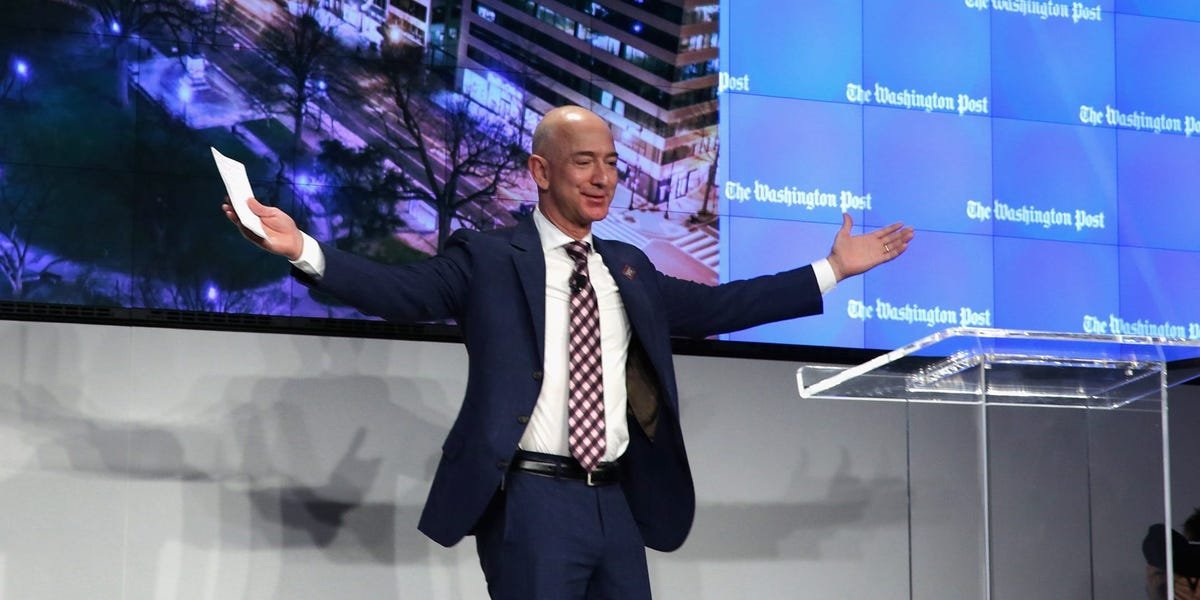
After-Jeff-Bezos-bought-the-Washington-Post-things-went-great.jpeg

After Jeff Bezos bought the Washington Post, things went great — for a while. I asked an insider what happened.

Lots of people are angry at Jeff Bezos because of the massive cuts he’s ordered at his Washington Post. But a decade ago, Bezos was widely celebrated for his ownership of the Post, which he had bought for $250 million in 2013.

Under Bezos’ ownership, the Post made huge investments in tech and staff. And readers loved the results — especially during the first Trump era, when the paper turned profitable.

Now things are very different: The Post says it has been losing gobs of money for the past few years, and Bezos has made a series of moves interpreted as a shift toward Trump — which spurred reader revolts, which made things even worse. And all of that led to this week’s cuts.

I talked to Erik Wemple, a New York Times media reporter who previously worked at the Post for 14 years, to try to reconcile the two eras of Bezos and the Post, and to get a sense of what might happen next. You can hear our entire chat on my Channels podcast; what follows is an edited excerpt from our conversation.

Peter Kafka: What shape was the Post in when Bezos bought it in 2013?

Erik Wemple: The Graham family, which had owned the Post forever, was an amazing steward for the paper. But they had to scale back their newsroom, because the internet had blown holes in classified ads. Classifieds used to be huge at The Washington Post.

At the time Bezos bought it in 2013, it was not dysfunctional. These were really good journalists, but the paper was in a bit of a funk. It wasn’t a reclamation project, but it had seen better days.

It was faded when he bought it.

Correct. And when Bezos came in 2013, he really wowed the staff. We all asked him questions. He answered those questions with tremendous enthusiasm and competence. He seemed really energized by this.

What did he think he was going to do?

When he came in, he was energetic, but deferential on the particulars of running the newspaper. He’s like, “You know what? I’m not in this business, but I do know how to organize discussions about the future of a business.” And that’s what he did. I was in one of them; it was really remarkable.

He had these things that he believed in. He was important in guiding conversations. And it was really remarkable because he backed it up with money. He invested in the newspaper. He invested in political coverage, big time. Investigative went up. International got a huge, huge boost. And the technology did too.

This is exactly what you want from your billionaire tech owner: Give us a bunch of money. Improve our tech. Also, stay away. Don’t tell us what to do.

That was exactly the sentiment. And one of the things you mentioned in there is really worth pausing on for a second, which is the lack of intervention, the lack of meddling. He just sort of looked on. And the newsroom really, really, really roared. Especially in the first Trump period.

So not only does this produce great journalism, it seems like it becomes a business success story — the paper becomes profitable again. Then, after Trump left the White House, there was a lot of hand-wringing about what happens after the Trump bump. People expected audiences to decline across lots of different publications, and that happened, so it makes sense that the Post would struggle a bit. But the numbers you hear about the reported losses — $77 million in 2023, $100 million in 2024 — are staggering. I still don’t understand how you can swing to losses like that just because your traffic goes down. What am I missing?

I share your knowledge gap.

One of the things that has been reported and pretty well substantiated is they may have over-indexed on staff growth. They vaulted up over a thousand in early 2021, up to 1,100. So I think they got ahead of themselves, and they had to pair that back. That’s one of the things.

Another consideration is that the digital advertising market sort of dried up, so that was a big deal.

It’s all somewhat of a mystery, but I don’t doubt that there are meaningful losses.

Can this just be as simple as the Post overhiring? Lots of companies have done that — the tech guys did during the pandemic.

No, I don’t think so. Especially if you look at the more recent past, when they tinkered with the opinion side and shot themselves in the foot.

In October 2024, the Post announced it would not be endorsing a candidate in the presidential election. And that happened after the Washington Post editorial board had drafted an editorial in favor of Kamala Harris. And hell broke loose — a subscription desertion of hundreds of thousands.

That’s an astonishing number. I remember thinking that it couldn’t be real.

The cause and effect could not have been more direct. People said, “No way. I’m not giving my money to this organization.”

The Post has continued to do lots of news reporting that is critical of the Trump administration. Which made me curious about this line in editor Matt Murray’s explanation of the cuts this week. He praises the work the paper has done, and then points out problems, and says “even as we produce much excellent work, we too often write from one perspective, for one slice of the audience.”

It almost sounds like what David Ellison and Bari Weiss say about remaking CBS News. Does that mean we should expect the Post’s news reporting to change in some sort of ideological way?

If Matt Murray or any of his top editors had actually edited that memo, they would’ve asked for specifics. And they would’ve put a big question mark alongside that and ask, “What the hell are you talking about here? Why are you speaking in such elliptical language? Why are you trying to whisper to the newsroom some message that you’re not willing to articulate?”

We need to ask him exactly what he’s saying. I think that that is coded language, and I think that could be political.

It’s a strange thing for the executive editor to be saying. It’s almost as if he’s asking for some force to adjust the newsroom cadence and its sensibility — when he has the power to do that.

(Editor’s note: Business Insider contacted the Post for comment, but didn’t hear back immediately.)

Why does Jeff Bezos own The Washington Post? It seems to be nothing but a headache for him the last few years. It doesn’t seem like it helps him curry favor with Donald Trump. It’s not like he’s using it to buy the “Melania” documentary for $75 million. What is the upside for him, and why does he continue to own it, do you think?

Erik Wemple: I have no idea. That is something all of us in the media trade have been trying to figure out. It is entirely a black box.

Many years ago, he seemed to be deriving a great deal of satisfaction from this. There was a close bond between The Washington Post Establishment and Bezos. I’m pretty sure it isn’t as strong as it once was.

So I think that the enjoyment he got from his association with his institution has probably faded.

But in 2024, he said, “We saved The Washington Post once, and we’re going to save it a second time.” So there’s another challenge, right? I guess that that would be something that he would derive some pleasure from. And I would imagine that if he wanted to get really involved and engaged, the way he was back in 2013-2015, the newsroom would welcome that.

A lot of the success stories we hear about in digital media these days are specifically publications that are focused largely or entirely on Washington, DC: Politico, Axios, Punchbowl, Semafor. Some of them have direct DNA from The Washington Post. Is there any chance of the Post reclaiming any of that, either through an acquisition or just by focusing on Washington and policy?

They have this Washington Post Intelligence thing now, which is sort of akin to that. But I don’t know if there are new streams of revenue opening up at the Post. And I think that that’s one of the reasons that the staff is so disaffected and so disappointed in the current management — they don’t see any sort of progress towards new business.

They’re just seeing cuts.

I think they’re seeing cuts. And also a fair amount of silence. I don’t think that they’re getting the feedback from management that they deserve.




Source link

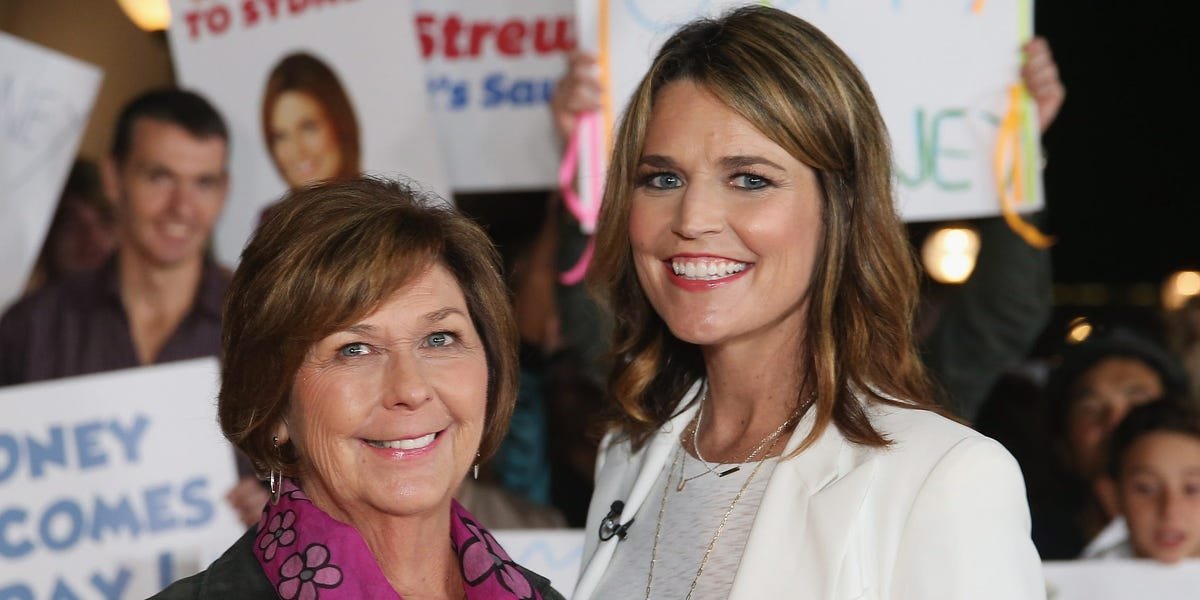
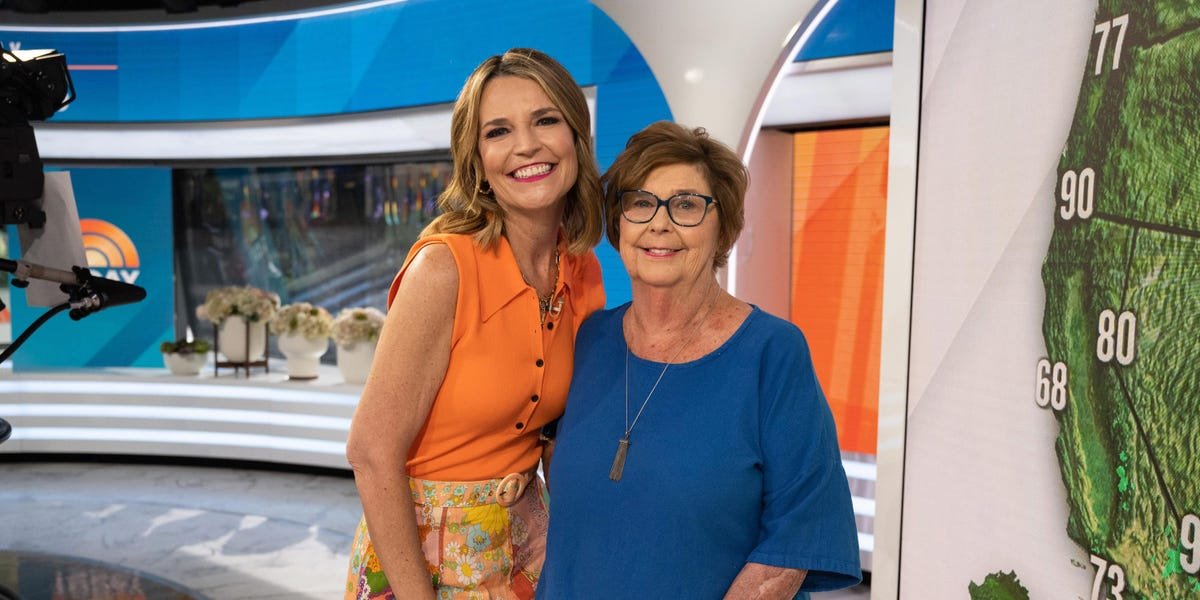
How-Savannah-Guthries-mom-has-helped-shape-the-Today-anchors.jpeg

How Savannah Guthrie’s mom has helped shape the ‘Today’ anchor’s career

In a 2019 graduation speech at George Washington University, she said leaving law was “one of the biggest, craziest jumps” she ever made.

“It wasn’t a cliff; it was the federal courthouse here in Washington, DC,” she said.

Months before she was due to start as a law clerk for a federal judge, she had an epiphany.

“It wasn’t my dream,” she said. “What I really wanted was to go back to my roots in journalism. I still had that nagging hope that one day I could really make it in television news.”

Guthrie spoke with the judge. He asked why she didn’t come work for him for a year, since it would help her career, especially since she didn’t have a job lined up.

“And that’s when I looked at him and told him: ‘I know you’re right. What you say makes perfect sense,'” she said. “‘But I also know myself, and if I don’t do this, right this minute, I will never have the guts again.'”

From 2004 to 2006, she was Court TV’s legal-affairs correspondent.

She covered cases like the Zacarias Moussaoui trial, the Boston clergy sex-abuse scandal, and the Scooter Libby case.


Source link

Im-an-American-raising-my-child-in-Denmark-Kids-here.jpeg

I’m an American raising my child in Denmark. Kids here are trusted to take risks — and parenting feels easier.

Growing up, I knew two things: I wanted to be a mother and to live abroad one day.

Both came true when I met my Danish husband while traveling solo almost a decade ago. Not long after, I moved from New York City to Copenhagen, which was ranked first in the Happy City Index for 2025.

We had our Danish-American son, Aksel, just over three years ago, and today we live in central Copenhagen. I now experience Danish society more fully through the reality of raising him here.

Having Aksel made me understand why Denmark earns its praise. Here, parents are encouraged to trust children’s independence and rely on community support. In the US, parenting is more often shaped by caution and a stronger emphasis on individual responsibility.

My son goes on adventures at day care

This may be my favorite example of that trust: one afternoon, when Aksel was about a year old, I picked him up from vuggestue (day care) and learned his class had gone on a field trip earlier that day. I didn’t sign a permission slip, nor did I receive an email.

Since then, I’ve been surprised by updates to Denmark’s parent-teacher app, Aula. I’ll receive photos of Aksel riding the Metro or exploring Rosenborg Castle during school hours, all without my prior knowledge.

Growing up in the Connecticut suburbs, that would have been unthinkable. I remember even a trip to the town center (just a five-minute walk from my high school) required signed permission slips and repeated reminders to parents.

This is because a stronger suing culture in the US often means safety concerns extend beyond protection to liability. Denmark operates on a different premise, with little fear of lawsuits by parents and a general trust in educators and parents to exercise judgment.

Public life in Denmark is child-centric

That child-first mentality extends into public life. When Aksel was an infant, I used to refer to Copenhagen’s mall as the “milk stop” because there were always proper family rooms for feeding and changing (including in men’s bathrooms!). Restaurants often include play areas, and even formal dining establishments have offered Aksel a highchair.

In contrast, when traveling with Aksel in the US, I always feel as if I’m somehow disrupting adult systems. For example, I remember meticulously planning subway routes in Manhattan because so few stations are stroller-friendly.

In Denmark, public spaces actively accommodate families, reducing stress by meeting children’s needs without explanation. Accessibility features like ramps built into staircases are standard, and the idea of “play” is prioritized. Copenhagen is even designed so that anyone can walk to a beach or park in 15 minutes.

That same thinking shows up in everyday transportation. Like many parents here, I take Aksel to daycare on a cargo bike (the Danish equivalent of the “soccer mom van”) because Denmark invests in supporting it.

Childcare is affordable and accessible

When I signed Aksel up for public day care, I was surprised by how straightforward and accessible the process was, thanks to a centralized system supported by government subsidies that make quality childcare affordable.

There is far less stay-at-home parenting in Denmark because childcare is treated as a public good, something families are expected to need rather than justify. In fact, Denmark leads the European Union in the share of children attending formal childcare each week.

And in this family-first society, even parents in corporate roles usually pick up their kids by 4 p.m. on weekdays, a sharp contrast to the late work hours typical in the US. Here, work simply isn’t given the same priority as family, which, as a “workaholic American,” I’m learning to adjust to.

Children are trusted to take risks

My mom group describes Danish playgrounds as coming “with a side of danger.” This is because risky play is more valued in Denmark than in the US. In day care, kids routinely use tools, work with fire, and learn by doing, because the belief is that resilience is built through experience, not by avoiding discomfort.

At first, this approach was uncomfortable for me because I was used to the American “helicopter mom” mentality. Over time, I realized what seemed like a lack of parental control in Denmark was actually just an expression of trust in educators, institutions, and, of course, children themselves.

Parenting here feels collective

A friend once told me that parenting in the US often feels like defensive driving: constantly anticipating risks and advocating for your child.

That’s a marked contrast to Denmark, where I don’t feel compelled to stay on alert all the time. Whether Aksel’s on an unannounced school field trip or learning to bike at a staffed playground (while I watch from a distance), trusting his safety is the norm, not the exception.

Denmark isn’t perfect, and parenting as an expat has its unique challenges. Still, raising my son in this trust-based, child-centered society has given us what every parent seeks: a genuine sense of community and support.


Source link

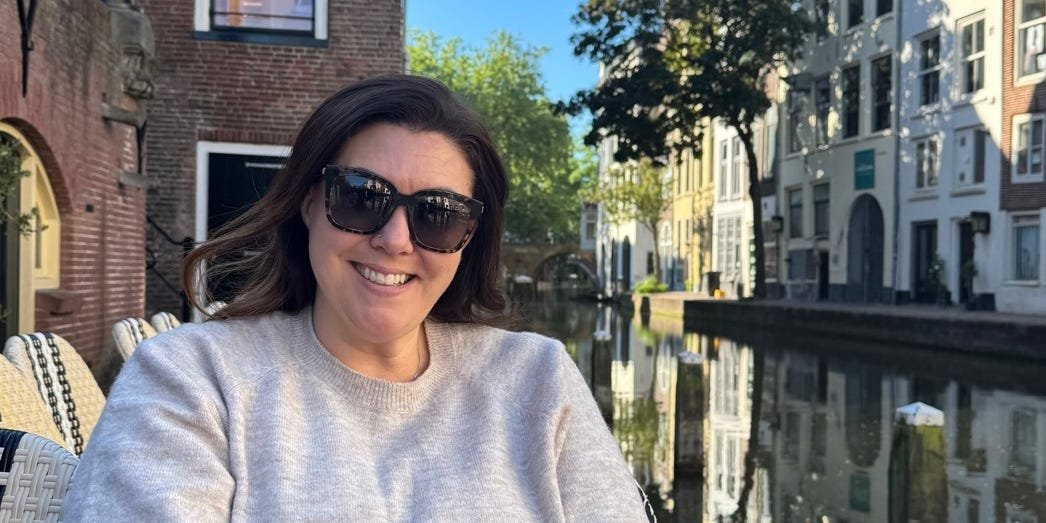
When-I-moved-my-family-from-the-US-to-the.jpeg

When I moved my family from the US to the Netherlands over a year ago, I wish I’d avoided these 5 mistakes

The day my son burst into tears at our kitchen table in Utrecht, I realized my meticulous spreadsheets and research hadn’t prepared us for everything.

“Mom, I’m the only one who doesn’t understand anything,” he said, pushing away his untouched dinner. “Everyone else is so far ahead, and I can’t follow anything.”

That moment, hearing him talk about feeling behind in school, crystallized my first major mistake in our move from Atlanta to the Netherlands in May 2024.

Although our relocation has transformed our lives in incredible ways — offering everything from better healthcare to true work-life balance — there were several costly missteps I wish someone had warned me about.

For one, I hadn’t anticipated how challenging it would be for my kids in the first six months as they adjusted to everything in their lives being new.

Here’s what I learned the hard way, hoping to save other American families from the same expensive and stressful situations.

Assuming we didn’t need to rush learning Dutch was a mistake


Houses along water in the netherlands

Learning Dutch has helped us feel more at home in the Netherlands.

Alexander Spatari/Getty Images


“Je spreekt Nederlands?” (“Do you speak Dutch?”) became a daily reminder of my biggest oversight.

Yes, more than 90% of the Dutch people speak English, but that comfort led me to postpone our family’s learning Dutch. Big mistake.

Those casual chats at early honkbal (baseball) games or neighborhood parties just weren’t the same when we couldn’t participate in Dutch conversations.

My teenager also spent extra months in taalschool (immersive language school), missing out on crucial social connections. Had we started learning before our move, he could’ve completed language school in one year instead of the extended period he needed.

I learned an expensive lesson about taxes and timing

In the Netherlands, the 30% ruling is a tax advantage that allows eligible highly skilled immigrants to receive up to 30% of their salary tax-free for five years.

The catch? You must apply within four months of starting work. Now picture my face when I realized I’d missed the deadline, thus leaving over 30,000 euros on the table.

Though I eventually secured this retroactively, those six months without the full benefits taught me an expensive lesson about Dutch bureaucracy timing.

Not fully understanding the Dutch healthcare system also cost me

Back home in the US, I was used to navigating complex insurance systems and retroactive claims. The Dutch healthcare system operates with different rules, though, and my failure to understand them has cost us unnecessarily.

My American insurance mindset hit a wall when my son needed to have a cavity filled.

In the Netherlands, basic healthcare is universally accessible. I pay 156 euros a month for my policy, which includes my kids at no extra cost and a 385-euro yearly deductible.

However, you have to connect your child’s BSN (Dutch Social Security number) to your insurance for them to be covered, which I didn’t know I had to do at the time.

This meant I paid out of pocket for my son’s procedure — I couldn’t get reimbursed, even after calling my insurance company.

It took too long to ditch my American work mentality


Boats in the netherland in canals at night

It took me a bit to embrace the local attitude toward work-life balance.

Amith Nag Photography/Getty Images


While my Dutch neighbors enjoyed long family dinners and evening bike rides along the canals, I was still chained to my laptop at 10 p.m., taking calls with US colleagues.

My American work habits followed me across the Atlantic like an unwanted houseguest. The stress and burnout I’d hoped to escape caught up with me within months.

It took retiring from corporate America and starting my own business to finally embrace the Dutch approach to work-life balance — and my health has thanked me for it.

Not properly planning when to exchange currency got expensive

Watching the dollar-euro exchange rate swing from about 0.98 euros per dollar highs to 0.83 euros per dollar lows over the past year and a half taught me an expensive lesson about timing.

Each major transfer — housing deposits, US credit-card payments, moving expenses — became a gamble because I hadn’t developed a proper currency strategy.

Instead of planning strategic exchanges when rates were favorable, I made last-minute transfers whenever bills came due, often at the worst possible rates and with hefty fees tacked on.

Our missteps have become valuable lessons that shaped our successful integration into Dutch life


Lauren McDonnell smiling

I’m glad I moved my family to the Netherlands.

Lauren McDonnell


Despite our early mistakes, the Netherlands has given us exactly what we hoped for: a better quality of life, true work-life balance, and a fresh perspective on what’s possible for an American family abroad.

Now, a year and a half later, my sons can easily switch between Dutch and English, and those tearful kitchen moments are just memories that remind us how far we’ve come.

Moving abroad is complex, but having the right guidance can help you avoid these common pitfalls and create a smoother transition for your family.

So, if you’re considering a move to the Netherlands, learn from my mistakes.

Start preparing early (especially with language learning), understand the tax benefits available to you, research the healthcare system thoroughly, be ready to adapt your work mindset, and plan your currency exchanges strategically.

Your future self — and your bank account — will thank you.


Source link