This as-told-to essay is based on a conversation with Ivan Ureña-Valdes, who has worked at Block for nearly four years as a data analyst. It has been edited for length and clarity.
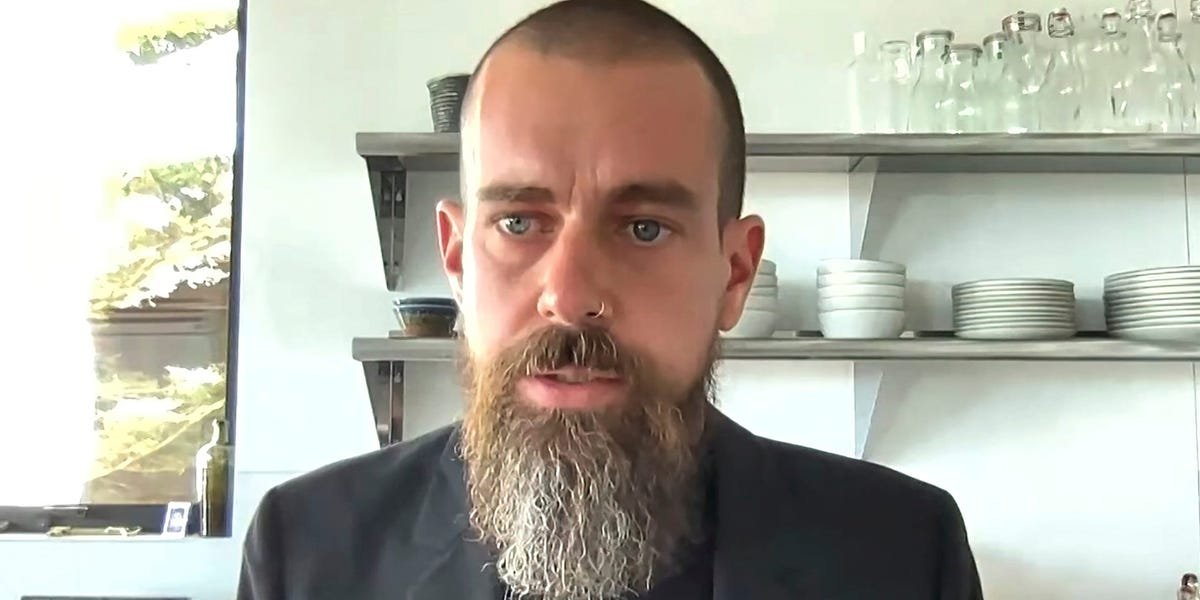
When I got an email from Jack Dorsey, I was in the middle of interviewing someone for a role at Block.
It was pretty strange because, in the past, with layoffs, I knew people had their access cut almost immediately.
A coworker messaged me: “Hey, are you okay?” My heart started racing. I knew from that message it meant that I was probably getting laid off.
I felt really bad because I was in the middle of interviewing someone. I had to tell them, “I was actually just let go from the company. I probably won’t be able to submit your feedback in time. Please reach out to your recruiter.”
Every time Lee Chong Ming publishes a story, you’ll get an alert straight to your inbox!
Stay connected to Lee Chong Ming and get more of their work as it publishes.
I’m the sole provider for my family. It was tough.
I had a hunch that AI would lead to cuts at some point
We knew there were many performance cuts happening around right now, and those have largely finished. I had no idea this cut was coming.
For 4,000-plus people to be cut without anybody knowing, that tells me decisions were made very high up.
I’ve survived three rounds of layoffs, some companywide, some engineering organization-wide. I knew I wasn’t being let go for performance-related reasons. I was in the middle of working on two large projects, probably the largest projects I’d worked on since joining the company.
I had a hunch that, at some point, the company would cut people because of AI. I just didn’t think it would be right now.
Working at Block, I saw how AI was automating tasks away
I appreciate Jack for his honesty. It’s much fairer of him to come straight out and say why it happened — that it’s because of AI and the vision he sees.
I’m honestly grateful for the generous severance and benefits. It definitely helps make the rough situation a bit easier.
I’ve felt the rumblings of AI disruption for a while now, especially since Anthropic launched Opus 4.5 late last year.
Jack loves AI and was constantly pushing us to use it. I got to use these tools as much as possible every single day.
I could see in my own work very quickly how much of it was already being automated. So much of the data analyst world is finding the right dataset, writing something that will allow you to pull the data set that you want, and then generating output. Every single one of those steps is significantly faster and easier because of AI.
It was definitely a “whoa” moment when I realized just how powerful things had gotten.
AI will continue to replace jobs
I 100% think that more disruption and more of these types of cuts will probably come at other companies, which is unfortunate.
I’m much more pessimistic about all of it than many other people probably are.
Given that we live in the US, where growth is everything, it’s inevitable that AI will continue to replace people wherever it’s financially beneficial to do so.
I’m optimistic that I can find a job in the general data field, whether it’s something I’m extremely passionate about or pays as much as I did before. It will be difficult to find something that matches the environment I was working in because I had developed really strong ties with my coworkers. The pay was fair within the data analytics or business intelligence world, and the role was remote.
There are incredible companies out there doing great work, though I am nervous about the industry as a whole and the competitiveness as I search for that perfect next role. Some people are getting really, really high salaries at AI companies, while tons of people at Block are getting laid off.
Do you have a story to share about tech layoffs? Contact this reporter at cmlee@businessinsider.com or on Signal at cmlee.81.
This story is available exclusively to Business Insider
subscribers. Become an Insider
and start reading now. Have an account? .
Faye Bradley was born and raised in Hong Kong with a Chinese mom.
When she first started seeing “Chinamaxxing” on social media, she felt a surprising sense of pride.
Even though these habits are trending now, they’ve been part of her life for years.
When I first saw “Chinamaxxing” on my feed, I was surprised by how happy it made me.
The viral trend — where people share Chinese lifestyle hacks, from wearing red for luck during Lunar New Year to banning outdoor shoes indoors — felt like watching the world embrace the culture I grew up with.
Around the same time, another phrase was everywhere: “You met me at a very Chinese time in my life.” The line went viral after Hong Kong-born stand-up comedian Jimmy O Yang posted a video of himself singing the well-known Chinese song “Yi Jian Mei” on Instagram in November, with those words splashed across the screen. The clip has since drawn more than 6.5 million views.
It was around the same time that New Jersey TikTok creator Sherry Zhu started sharing wellness tips with her “Chinese baddies.”
Summers in Hong Kong get hot, but Bradley’s mom always discouraged cold water. Proivded by Faye Bradley
Growing up in Hong Kong, I followed these habits long before they had a name. My mom talked constantly about balance: hot versus cold foods, drying your hair before bed, and the little miracles of White Flower Oil.
Watching the internet embrace these traditions made me reflect. Some explanations oversimplify centuries-old practices — feng shui isn’t just moving your desk, and traditional Chinese medicine (TCM) isn’t just a trendy tea. But the curiosity feels genuine.
Here are four simple things my mom taught me years ago that I still swear by.
1. The herbal ointment is a cure-all
Bradley’s mom would use White Flower Oil for aches, pains, and motion sickness; she now does the same. Provided by Faye Bradley
Growing up, my mom would reach for a tiny bottle of White Flower Oil, a concentrated ointment, whenever my brother or I complained about tummy aches.
A dab of the concentrated herbal ointment — that has a sharp smell that combines menthol, eucalyptus, and a hint of lavender — on my belly, temples, or behind my ears, and relief would follow almost instantly.
Today, I carry a small bottle whenever I travel and keep one at my bedside.
It’s also a staple for motion sickness, muscle aches, or even mild stomach pain.
2. Start every morning with a hot cup of water
Hot water helps her with digestion and circulation. Provided by Faye Bradley
My mom had firm rules about drinks. Hong Kong summers are stifling — often 90 degrees Fahrenheit and humid — yet anything cold in the morning was discouraged.
In TCM, hot water is believed to support digestion and circulation, while cold drinks can “shock” the body and disrupt internal balance.
Switching to hot water first thing in the morning may sound trivial, but it transformed my mornings. My energy feels steadier, my stomach calmer, and I start the day feeling grounded instead of jolted awake.
I used to brush off her advice, but after seeing my friends do the same, I began incorporating it into my routine in my late teens.
To think she was right all along.
3. Never go to bed with wet hair
She avoid going to sleep with wet hair. Provided by Faye Bradley
“You’ll get sick!” my mom would yell every time I tried to crawl into bed with damp hair.
I used to roll my eyes, but now, decades later, I have to admit she was right. Sleeping with wet hair often leaves me stiff, chilled, and inexplicably irritable — not just uncomfortable, but subtly disruptive to my body’s rhythm and sleep quality.
For me, blow-drying signals closure: a pause at the end of the day and a small act of respect for my body. By keeping warm and dry before bed, I wake up more rested, my muscles looser, and my mind calmer.
4. Don’t underestimate the rice cooker
Rick cookers can do more than make rice. Provided by Faye Bradley
I remember heading off to university in the UK and asking my future British flatmates in a group chat whether anyone was bringing a rice cooker. “What’s that?” they replied. “We just boil rice in a pan.” I was stunned. When I moved in, I quickly realized I couldn’t live without one. It makes the rice taste better.
And my rice cooker isn’t just for rice. My mom taught me it’s perfect for complete meals: chicken, vegetables, and rice all in one pot. The magic isn’t just convenience — steaming keeps food tender, flavorful, and healthy, locking in nutrients while reducing oil. It’s practical, too, with fewer pots to scrub.
It’s heartening to see these traditions embraced more widely. For me, they’ve always been simple acts of care; practical, grounding habits shaped by generations before us.
Ukraine just gave us an extended look at one of its emerging tactics against Russia’s Shaheds: using helicopters to shoot the drones from above.
The Ukrainian navy published a two-minute montage of such operations on Thursday, saying that a helicopter crew had destroyed eight Shahed exploding drones and Gerbera decoy drones in a single day.
Cockpit and gun camera footage showed the Ukrainians engaging at least five delta-wing drones in flight, with another clip showing unidentified wreckage smoking on the ground.
Some clips indicate that at least one aerial engagement happened in the early morning or at night. Thermal footage from a gun camera showed the operator firing at a delta-wing drone, tracking its flight above open terrain before a screen flash indicates the drone was destroyed.
Other standard optical footage, filmed from a gun camera or the cockpit, appears to show several drones being destroyed high above the clouds or over water near a coastal settlement.
Additionally, an M134 minigun can be seen mounted from a helicopter’s side door, though the videos didn’t show the weapon itself in action.
The clips indicate some of the ideal conditions for downing a Shahed.
For one, the helicopter has to match the drone’s speed and trajectory and gain enough altitude to allow the minigun to fire downward at the Shahed. The chopper crew also needs to come within visual range of the drone to engage.
The footage comes several months after Ukraine said it would officially begin incorporating helicopter crews into its air defense network against Russia’s one-way attack drones, which Moscow uses in mass waves to pressure Ukrainian cities.
Because Russia mass-produces the Shahed and Gerbera, Kyiv has sought more inexpensive means, such as machine guns, instead of traditional antiaircraft missiles to counter them.
Ukraine’s commander in chief, Gen. Oleksandr Syrskyi, said in October that helicopters could sometimes destroy up to 40% of Russian Shaheds and Gerberas in one area.
Thermal and infrared cameras, such as the one seen in the latest footage, were among the systems that Syrskyi said would be equipped on such helicopters to improve their effectiveness.
Ukraine also uses ground crews with interceptor drones or truck-mounted machine guns to destroy Shaheds, but a helicopter crew can reposition much faster to engage multiple threats or hunt down a Russian drone that changes its flight trajectory.
The latter scenario became increasingly common as Russia was found to be outfitting Shaheds with more advanced communications and guidance systems, and, in rare cases, artificial intelligence.
Helicopters also allow for engagements at higher altitudes. Russia often directs its Shaheds to approach their targets at above 6,500 feet before swooping down to attack, making it more difficult for ground-based crews to hit the drones.
Aside from helicopters, Ukrainian troops have also been seen using M134 miniguns on turboprop planes to shoot down Shaheds.
Meanwhile, Russia has since been reported to be attempting to counter the Ukrainian helicopters by equipping its Shaheds with R-60 air-to-air missiles.
In November, Ukraine’s deputy minister of defense for innovation told Business Insider’s Jake Epstein that Moscow was also directly targeting patrolling helicopters and aircraft with Shaheds.
Anthropic’s CEO is prepared to walk away from its contract with the military, according to a new statement published on Thursday.
In a blog post, CEO Dario Amodei said that the company “cannot in good conscience accede” to the request of the Defense Department concerning safeguards around its frontier model, Claude.
On Tuesday, Defense Secretary Pete Hegseth gave Anthropic an ultimatum to agree with the military’s terms over the use of Claude or get blacklisted by the government.
Defense officials gave Anthropic until Friday evening to agree to the terms.
The terms were not clarified, but the issue, according to Amodei’s statement, appears to revolve around two red lines Anthropic is not willing to cross when it comes to how Claude is deployed: mass domestic surveillance and fully autonomous weapons.
A spokesperson for Anthropic declined to comment.
Hours before Amodei put out a statement, Sean Parnell, a Pentagon spokesperson, posted on X that the department had no interest in using AI to conduct mass surveillance of US citizens or to develop autonomous weapons.
And several hours after Amodei released his statement, the Department’s undersecretary for research and engineering, Emil Michael, lashed out at the CEO in a social media post.
“It’s a shame that @DarioAmodei is a liar and has a God-complex. He wants nothing more than to try to personally control the US Military and is ok putting our nation’s safety at risk,” Michael wrote on X.
“The @DeptofWar will ALWAYS adhere to the law but not bend to whims of any one for-profit tech company,” added Michael, who was previously Uber’s chief business officer.
A person familiar with the negotiations told Business Insider the department provided a new proposal just 36 hours before Hegseth’s deadline, and the language around the provisions on mass surveillance and autonomous weapons allowed for “any lawful use” of Anthropic’s AI.
The person said that the additions essentially gave the military to discretion to set aside Anthropic’s red lines and use Claude as it sees fit.
A senior Pentagon official told Business Insider on Tuesday that the department will consider invoking the Defense Production Act — a wartime law that would essentially give the president control over Anthropic’s resources in the interest of national security — and deem the company a supply chain risk.
Both uses of the national authorities would be unprecedented, experts told Business Insider, considering that the levers are being used as a negotiating tactic and against an American company.
“I’m not aware of this ever having been used as a weapon in a negotiating posture,” Dean Ball, an ex-senior policy advisor for the White House Office of Science and Technology Policy, told Business Insider.
Amodei wrote in his blog post that the two threats are “inherently contradictory: one labels us a security risk; the other labels Claude as essential to national security.”
The CEO wrote that Anthropic hopes the government will “reconsider” its position on the safeguards and that the company’s preference is to continue working with the military.
“Should the Department choose to offboard Anthropic, we will work to enable a smooth transition to another provider, avoiding any disruption to ongoing military planning, operations, or other critical missions,” Amodei wrote.
It’s not yet clear how the Pentagon plans to respond.
February 27, 2026: This story was updated to reflect a public statement by Emil Michael, the Pentagon’s undersecretary for research and engineering, about Amodei.
This story is available exclusively to Business Insider
subscribers. Become an Insider
and start reading now. Have an account? .
Jack Dorsey announced major layoffs at Block, cutting nearly half of its workforce.
Dorsey said AI was behind the cuts, and the company’s stock rose over 20% in after-hours trading.
Tech and VC leaders have reacted to Block’s layoffs, with some calling it a sign of what’s to come.
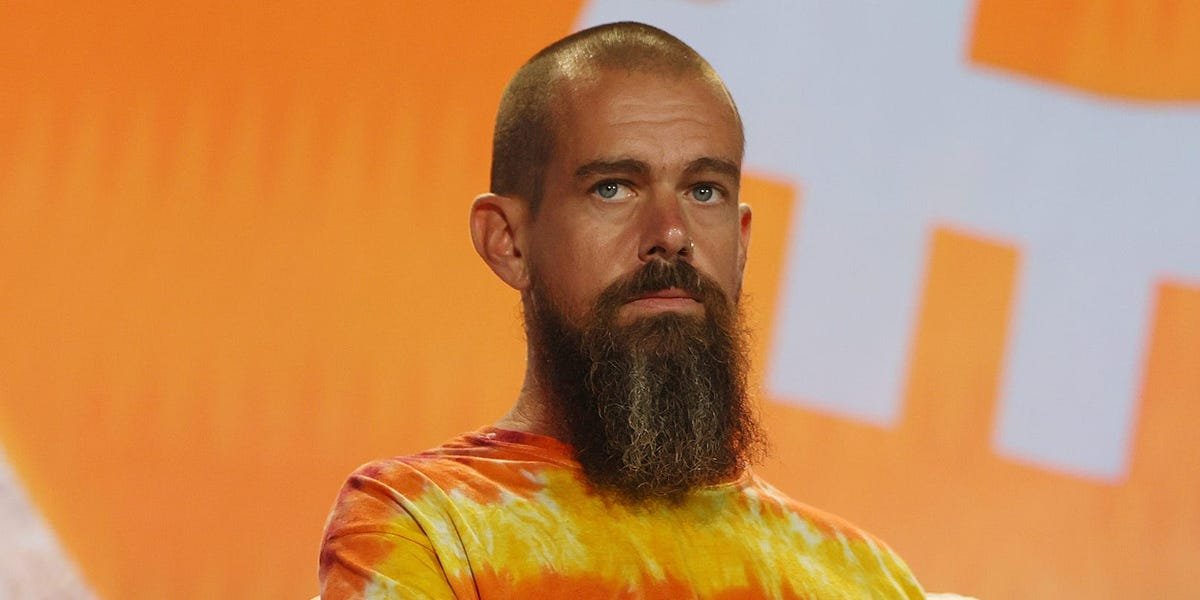
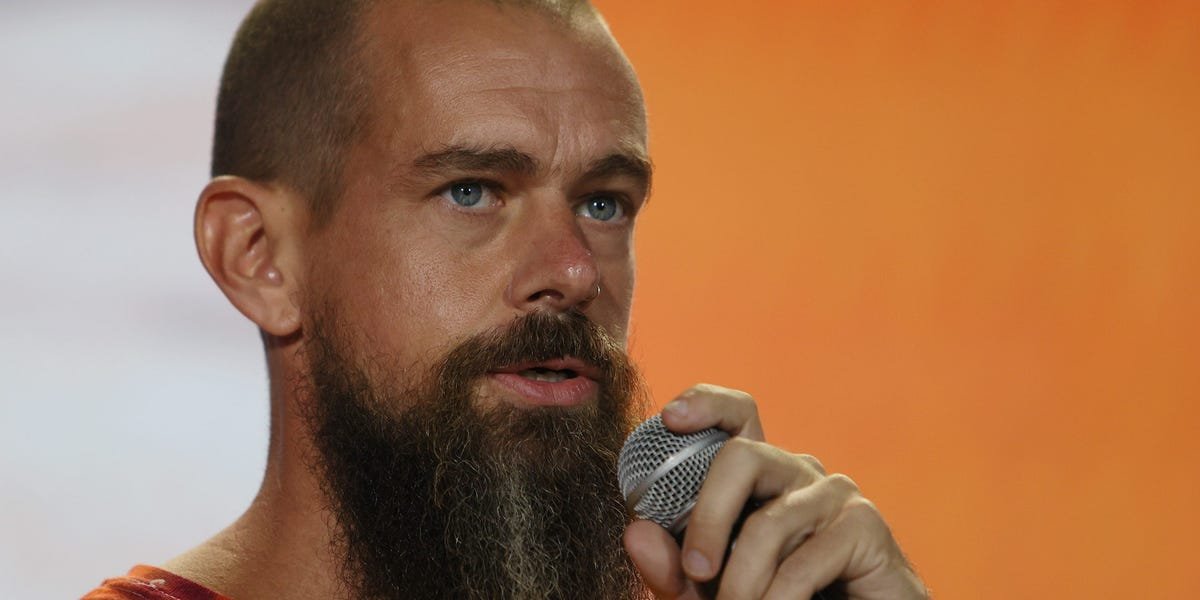
Jack Dorsey’s announcement on Thursday that Block was slashing its workforce nearly in half sent shockwaves through the tech world.
Dorsey, Block’s CEO and cofounder, said AI was rapidly changing work at the financial services company, which owns Square, Cash App, and Afterpay.
“A significantly smaller team using the tools we’re building can do more and do it better,” he said on Thursday’s earnings call, shortly after the reduction in force was shared on X.
“I had two options: cut gradually over months or years as this shift plays out, or be honest about where we are and act on it now,” he wrote in a memo. “I chose the latter.”
Block’s stock was up over 20% in after-hours trading following the announcement. Shares were down more than 16% in the last year as of market close on Thursday.
Leaders in tech and venture capital quickly reacted to the news, with some saying it could be the first of what’s to come as AI fundamentally transforms companies and the nature of work. Others were more skeptical of AI’s role.
Here’s what smart people are saying about the job cuts at Block.
Balaji Srinivasan
“This is the first AI cut,” tech investor Balaji Srinivasan said on X. “And it will send shockwaves.”
The Silicon Valley venture capitalist said the Block cuts were a “signal to everyone in tech: get good now. Become indispensable. Work nights and weekends. Learn the AI tools and raise your game. Or you might not make the cut, as an employee or as a company.”
Aakash Gupta
“Block is the canary in the coal mine,” Aakash Gupta, host of “The Growth Podcast,” said on X. “And they’re not alone.”
Gupta said Dorsey “said the quiet part out loud: intelligence tools paired with smaller teams have already changed what it means to run a company.”
“Block went from 10,000 to 6,000 while growing revenue and raising guidance. Every CEO running a company with more than a few thousand employees is doing this math tonight,” he added. “The canary just stopped singing.”
Ben Carlson
Ben Carlson, a financial analyst and director at Ritholtz Wealth Management, expressed skepticism that the cuts were purely driven by AI innovation, sharing a chart that shows Block’s share price is down sharply from its high point in 2021.
“Maybe Block laying off a ton of employees is a sign that AI is gonna destroy everything,” he wrote on X. “Or maybe the stock is down 80% from the highs and they overhired and AI is a convenient excuse.”
Jason Calacanis
Jason Calacanis, angel investor and co-host of the “All-In” podcast, praised Dorsey for the cuts.
“Leadership is hard, but this feels like (another) visionary move,” he said on X. “Have never sold a share, since being a private investor in square.”
Jessica Verrilli
“Feels inevitable this is about to ripple through every public company,” Jessica Verrilli, cofounder of VC firm Adverb Ventures, said on X. “We’ve gotta find a way to make everyone an owner w/ some exposure to the upside as the # of employees falls off a cliff.”
Shaun Maguire
“Respect to @jack for doing the hard thing,” Shaun Maguire, partner at Sequoia Capital, wrote on X. “While doing it intentionally and owning the decision.”
Clara Shih
“Square is just the beginning,” Clara Shih, a startup investor and senior advisor at Meta, said in an X post. “Every CEO faces the same decision today that manufacturing CEOs did in 2000: do a big layoff or your competitor will, pass on cost savings to customers and investors, and beat you.”
“In 2000, jobs were lost to Shenzhen. In 2026, jobs will be lost to AI,” she added.
Matt Shumer
Matt Shumer, an AI CEO who wrote the viral “Something Big is Happening” essay earlier this month, said this is “one of the first major examples of AI driving layoffs, but certainly not the last.”
“If you’re saying ‘this won’t happen to me’, re-evaluate your thoughts. Now,” he said on X. “It may be the most important thing you do.”
One might assume that TV personalities appear on Peacock’s murder-mystery competition show “The Traitors” for a paycheck and attention. But the savviest among the cast know the show’s real prize is something money can’t buy: redemption.
The series, a “Mafia”-esque game in which contestants must guess what “Traitors” are among them, while the Traitors must lie their way to the end of the game, might not seem like the friendliest environment for a celebrity or reality star looking to rehabilitate their image.
But over four seasons, the show has made viral stars and renewed celebrities out of several of its famous cast members, earning a reputation as the best cottage industry for celebrity image rehab this side of “Dancing with the Stars.”
Who knew a show about lying and manipulating could make you so beloved?
The making of a ‘Traitors’ star
“The Traitors” has always had a taste for the devilish ones. Hosted with campy flourish by Alan Cumming and filmed in a 19th-century castle in the Scottish Highlands, the show leans heavily into its calling card as a game of deception. As such, it’s attracted all manner of niche celebrities, many of whom come from competition shows like “Survivor,” “Big Brother,” and MTV’s “The Challenge,” which require strategy; or social reality shows like Bravo’s “Real Housewives,” which arguably relies on a fair amount of interpersonal strategizing and lying for sport.
Every time Callie publishes a story, you’ll get an alert straight to your inbox!
Stay connected to Callie and get more of their work as it publishes.
But the breakout star of “The Traitors” season four — which has been viewed for billions of minutes on Peacock since its January premiere, its biggest audience yet — isn’t a gamer or a Housewife. It’s someone who caught the casting director’s attention not by strategizing and scheming, but by coupling up and kissing on cue.
Rob Rausch on season four of “The Traitors.”
Euan Cherry/Peacock
Rob Rausch emerged from the neon-lit “Love Island” Villa in 2024 with a polarizing reputation. He’d dated and then promptly dumped Leah Kateb, a season six fan favorite, to chase a hot new bombshell who’d caught his eye. (No, really, the newcomers on “Love Island” are called “bombshells.”) While Kateb struggled with hurt and confusion about his change of heart, viewers grew suspicious of Rausch’s Southern charm and snake tattoos; save for one memorable meltdown, Rausch was mostly inscrutable as the Villa’s chaos swirled around him. In a postmortem interview with Alex Cooper, he summarized the feedback he received online: “Basically, I’m a toxic gaslighter, but I’m hot enough that it doesn’t matter.”
Rausch has said he turned down “The Traitors” multiple times because he didn’t want more drama. But from the moment he set foot on Scottish soil to film season four, he shrewdly leveraged his past drama to draw the spotlight.
“I honestly think I’ll make a good Traitor. I’m hard to read,” Rausch said in the season four premiere. “I’ve been told that by every girl I’ve ever dated.”
When Rausch was selected for the titular role, he picked off his costars one by one — including his fellow Traitors — with ease while remaining impressively unsuspected. In addition to earning praise for his strategic gameplay and knack for social manipulation, he was shown sticking up for his friends, playfully meowing at the camera, and quoting Mark Twain.
In one of the final episodes, fellow Traitor Eric Nam compared Rob to an eagle soaring above the fray, his feathers unruffled. Fellow cast member and “Real Housewives” star Dorinda Medley even said she was flattered to be targeted by Rausch for elimination. “He can do no wrong in my book,” she said. “I’m getting murdered, and I have butterflies.”
The viewers at home agreed. The qualities that made Rausch a villain in the “Love Island” Villa were the same ones that led to success and stardom in the “Traitors” castle, where everyone has signed up for a game of paranoia and deception.
“Rob came in carrying a ‘Love Island’ reputation for manipulation layered over with charm, and ‘The Traitors’ is essentially a format where those two qualities stop being a liability and start being a competitive advantage,” Evan Nierman, CEO of the global PR firm Red Banyan, told Business Insider.
As the season unfolded, Rausch’s scene-stealing moves inspired flattering headlines and countless TikTok fancams set to songs like Saweetie’s “My Type,” Kendrick Lamar’s “Like That,” and Taylor Swift’s “Cancelled!” On his own Instagram page, Rausch has flaunted brand partnerships with Sonic and Celsius, as well as his clothing brand, Creek Rat, to over 1.7 million followers.
Out of “Love Island” infamy, a star was born. With the space to show more of his personality in a different context outside of a dating series, Nierman said “The Traitors” has given Rausch a “multi-dimensional public profile.”
“Viewers observe you problem-solving under pressure, forming real friendships, navigating betrayal, and handling the game’s emotional weight in real time,” he said. “That’s character evidence more persuasive than anything a publicist could engineer from the outside.”
For reality stars, getting cast on ‘The Traitors’ is the hottest ticket in Hollywood
Rob Rausch makes his case at the “Traitors” roundtable on season four.
Euan Cherry/Peacock via Getty Images
Since the first US season debuted in 2023, “The Traitors” has become appointment TV for reality fans.
Juliana Martins, celebrity publicist and Founder of Eleven11 Media Relations, said she’s had requests coming in “left and right” from talent agents asking how they can get their clients cast on “The Traitors.”
“A show like this, from a publicity perspective, is phenomenal,” Martins said. “It’s also so competitive to get on now because everybody wants it.”
Because the game requires a certain amount of backstabbing and deception, even from the so-called Faithfuls — whose job it is to stay alive and sniff out the Traitors while voting to boot one player per episode — the show is high risk, high reward for those looking to reenter the news cycle.
“It really catapults reality stars into other opportunities,” Martins explained. “Dylan Efron, for example, reached a broader audience through ‘Traitors,’ and then he went on to do ‘Dancing With the Stars.'”
Efron, previously best known as Zac Efron’s younger brother, appeared on season three and — spoiler alert! — won the show with a small group of Faithfuls, including former “Bachelorette” Gabby Windey, who said appearing on “The Traitors” was “the best thing I’ve done for my career.”
Rob Mariano, aka “Survivor” legend Boston Rob, also starred on season three and parlayed his renewed visibility into a cohosting gig on the official “Traitors” podcast. He and Efron have transformed their in-castle “bromance” into a professional partnership.
“For legacy reality stars like Boston Rob, returning to a really popular series can reintroduce them to a new audience, new viewers, while also still re-engaging fans,” Martins said. “It can lead to future casting opportunities, brand partnerships, hosting gigs, and other opportunities that really contribute to their career longevity and their overall perception.”
Rob Mariano and Alan Cumming on “The Traitors” season three.
Euan Cherry/Peacock via Getty Images
Peter Weber, a former “Bachelor” star, received a hero’s edit on season two thanks to his bold gameplay, keen instincts, and self-branding as the ultimate Faithful.
Martins, who previously worked with Weber on the promotional campaign for his 2021 children’s book and has advised him on other projects, attributed his success on “The Traitors” to the show’s unique format.
“Most reality shows are built around a specific narrative framework. ‘The Bachelor’ centers on finding one true love, and because of that structure, that editing and the storytelling, they’re designed to support that one core goal and theme, which I think limits how somebody can fully show their personality,” Martins explained.
By contrast, a show like “The Traitors” is more playful and less precious about hemming in its contestants. Part of its charm is the varied cast of characters, all trying to suss out each other’s quirks and peculiarities.
“In Peter Weber’s case, viewers really saw qualities that have been a part of who he is, but weren’t really highlighted on his original seasons of ‘The Bachelorette’ or ‘The Bachelor,'” Martins said. “‘The Traitors’ gave audiences a fuller understanding of him, rather than redefining him.”
Still, that opportunity for a less restricted, more complex arc can be a double-edged sword (or, in the case of “The Traitors,” a double-edged dagger).
“The exposure can cut both ways,” Martins said. “The ‘Traitors’ format does leave very little room to hide.”
Not everyone on ‘The Traitors’ can pull off a redemption arc
Lisa Rinna and Colton Underwood, center, on “The Traitors” season four.
Euan Cherry/Peacock via Getty Images
Season four’s resident “Bachelor” star is Colton Underwood, a former pro football player who had a tumultuous ride on the dating show. (His most famous scene involved him hopping a massive fence to escape the camera crew.)
After coming out as gay in 2021, Underwood found himself back in the reality TV conversation with “The Traitors. Though he was hoping to be cast as a Traitor, he was ultimately made a Faithful, , and his aggressive gameplay ultimately made him a target both in the castle and on social media. He flung out accusations and dominated the roundtable debates. After he rallied his castmates to erroneously banish Tiffany Mitchell, she wrote on X, “It’s actually fuck Colton Underwood and I said that shit.”
Though Underwood did accurately guess that “Real Housewives” alum Lisa Rinna was a Traitor, he did so in a memorable scene where he threatened to blackmail her in the game, detailing a plan to “hold her hostage.” This language prompted many viewers to recirculate stalking accusations from Underwood’s ex-girlfriend, Cassie Randolph, who filed a restraining order against him in 2020. (She later dropped the order, and Underwood said at the time that he and Randolph “were able to reach a private agreement.”)
If Underwood hoped to use “The Traitors” to recover or distract from his past, it backfired. Many viewers criticized his energy as off-putting, unlikable, and overconfident. The Cut published an article titled, “Colton Underwood’s Reality-TV Rebrand Isn’t Going Very Well.” Meanwhile, Rausch is the latest star of the publication’s “Dream Date” series.
In a statement to Business Insider, Underwood’s representative said he had “the best time” on the show.
“Colton came into Traitors Season 4 as a fan of the franchise ready to play the game. Since leaving the castle, he has continued to expand his network and slate. His involvement in the show is one he’s truly grateful for.”
Historically, villains from other TV shows have fared well on “The Traitors.” Infamous “Vanderpump Rules” star Tom Sandoval was dubbed by The New York Times as “the most hated man in America” after a very public cheating scandal, but bumbled through “The Traitors” season three with little to no backlash.
“I was like, Tom Sandoval’s here? Damn, this guy’s still getting gigs? It’s good controversy,” Windey told Variety. “And then who knew? He actually kind of redeemed himself — he was the village idiot.”
Phaedra Parks and Alan Cumming on “The Traitors” season two.
Euan Cherry/Peacock via Getty Images
Nierman also cited Phaedra Parks — who was fired from “The Real Housewives of Atlanta” in 2017 after admitting to spreading harmful rumors about a fellow Housewife — as a cast member who had a massive reputational shift after appearing on “The Traitors.” In a game that rewards wit and discernment, her snappy one-liners and cutting takedowns at the round table went viral, and the moments helped all be forgiven by viewers. Her return to “Real Housewives” was announced shortly thereafter.
Vanzil Burke, who was Parks’ manager at the time, said the rumor-spreading scandal “almost destroyed” Parks’ career, but her popularity on “The Traitors” reopened doors for her.
“It was needed for her professional career,” Burke told Business Insider. “I had no doubt that she would go in, read the room, and handle it.”
Being a Traitor allowed Parks to play up her “bad girl” persona, Burke said, while also proving to viewers that she’d matured and mellowed since she last appeared onscreen.
Still, as with every PR maneuver, one size doesn’t fit all.
Rausch, Sandoval, and Parks read as authentic because they didn’t try to hide their notoriety, turning their perceived flaws — cunning, cluelessness, and shady reads, respectively — into assets. On the flip side, Nierman said Underwood lacked humility and self-awareness.
“The foundational rule of reputation repair is showing people you understand why they distrust you,” Nierman said. “Colton walked into the castle and did the opposite by immediately positioning himself as the leader of the Faithfuls in a way that confirmed every instinct that viewers already had about his controlling tendencies.”
“If the arc feels like a calculated PR move rather than genuine growth, then audiences will not only reject it but be even more against you,” Nierman added.
Ultimately, the real winners of “The Traitors” aren’t the players who go home with a portion of the prize pot (somewhere around $250,000, depending on their success in challenges). It’s the players who emerge with the public’s favor, a busy phone line, and maybe even a comeback story.
Jack Dorsey said he’s still hiring for his fintech company Block — even after he just laid off 40% of its workforce.
The cofounder said during an earnings call on Thursday that he expects to bring in more senior AI engineering talent to the team. The company’s stock was up nearly 23% after trading hours as of 7 p.m. Eastern Time.
On Thursday, Dorsey said in a memo to employees that Block was cutting its head count from 10,000 people to “just under 6,000.” The reason, he said, was because AI is unlocking “a new way of working” with “smaller and flatter teams.”
“We’re not making this decision because we’re in trouble. Our business is strong. Gross profit continues to grow, we continue to serve more and more customers, and profitability is improving,” Dorsey wrote in the memo. “But something has changed.”
Dorsey said in an earnings call on Thursday that AI tools have increased productivity at the company with a 40% increase in production code shipment per engineer since September.
Every time Lloyd publishes a story, you’ll get an alert straight to your inbox!
Stay connected to Lloyd and get more of their work as it publishes.
“We’ve seen engineering work that would have taken weeks to complete be done by a small team in a fraction of the time with agentic coding tools,” he said.
Despite the layoffs, Dorsey said during the call that Block expects to invest in hiring.
“We see meaningful opportunity to invest in our people and invest in hiring, invest in retaining a world-class team to deliver for our customers; ultimately, we expect to hire some more senior AI engineering talent who will continue to level up our engineering and product capabilities,” he said.
Dorsey and a spokesperson for Block did not immediately respond to a request for comment.
AI’s impact is being felt across industries and roles, as companies find ways to automate work. One study by Stanford University researchers found that early-career positions in fields such as software engineering and customer service are on the decline.
Some workers have also said that their responsibilities have increased with AI. A software engineer told Business Insider that the simultaneous increase in productivity and workload is leading to “AI fatigue.”
CEO Jack Dorsey is departing from the classic tech layoff playbook — and it could be a sign of what’s to come.
In a post on X on Thursday, the billionaire said he’s slashing nearly half Block’s workforce, cutting its over 10,000-person staff to just under 6,000. He said that he is doing this despite the business being strong and profits growing.
In tech’s hardcore era, many companies have paired down teams through repeated rounds of layoffs. Dorsey’s massive chop stands alone, however.
In his memo, the cofounder and CEO said repeated rounds of layoffs are “destructive to morale,” focus, and to the trust of customers and shareholders. He said he’d rather do the cuts in one fell swoop.
“I’d rather take a hard, clear action now and build from a position we believe in than manage a slow reduction of people toward the same outcome,” Dorsey wrote in the post.
The company appears to have conducted repeated rounds of cuts in recent months, Wired reported.
Because repeated cuts create “layoff fatigue and chronic anxiety,” as well as drops in morale and productivity, it’s better to make a single reduction rather than piecemeal ones, Brooks Holtom, a professor of management at Georgetown University, told Business Insider.
Nevertheless, the size of the cut is notable, he said.
“This is a pretty extreme example in terms of the amount of people that are being let go all at once, but the packages are relatively generous,” Holtom said.
‘A new way of working’
The move to lay off over 40% of the company’s workforce signals a departure from the typical pattern followed by other Big Tech companies. It also raises the question of whether other firms will follow a similar trend, and some industry leaders have already commented on the move.
“Feels inevitable this is about to ripple through every public company. We’ve gotta find a way to make everyone an owner w/ some exposure to the upside as the # of employees falls off a cliff,” Jessica Verrilli, managing director and cofounder at Adverb Ventures said in a post on X.
Dorsey said that he’s adapting to an era in which technology is dramatically changing the workplace.
“We’re already seeing that the intelligence tools we’re creating and using, paired with smaller and flatter teams, are enabling a new way of working which fundamentally changes what it means to build and run a company,” Dorsey said in his memo on X.
In the company’s earnings call on Thursday, he said that more companies will follow suit in using AI to drive efficiency gains. Block is already ahead of the trend that “all companies will eventually” adopt, Dorsey said.
Michael Blank, an assistant professor of finance at Stanford Business School, told Business Insiderthat there could be a race among CEOs to convince investors that their companies are better positioned than their rivals to adopt abruptly changing AI technologies. Mass layoffs would be a potentially inexpensive way to signal that, he said.
Shares of Block were up over 20% in after-hours trading.
An uncertain future for white-collar workers
Block’s layoffs come in the wake of a viral report from research firm Citrini on February 22, that raised fears about the impact of AI and sent stocks tumbling. Citrini, a firm focused on thematic equity investing, laid out a predictive scenario in which AI continues to grow but proves detrimental to the broader economy.
A number of tech leaders have also been warning of a fundamental erosion of white-collar work.
Anthropic CEO Dario Amodei has sounded the alarm about a looming white-collar “bloodbath,” while Meta CEO Mark Zuckerberg has said AI is reshaping what individual employees can achieve.
Meanwhile, companies like Klarna have been more explicit about replacing human workers. CEO Sebastian Siemiatkowski said its workforce has halved over the last four years and will shrink further in the coming years. The company had 7,000 employees in 2022 and he said he expects the company’s workforce to drop below 2,000 by 2030.
Not everyone is convinced the end times are here for desk workers. While the World Economic Forum’s 2026 Global Risk report predicts that 92 million workers will be displaced by 2030, it also said 170 million roles will be created in that time frame, resulting in a net increase.
Block CEO Jack Dorsey issued a warning about the impact of AI on employment, particularly for other companies
After announcing he’s cutting about 40% of Block’s 11,000 employees, Dorsey outlined Block’s next phase as a “smaller, faster, intelligence-native company” in his opening remarks during the company’s earnings call on Thursday.
“I don’t think we’re early to this realization. I think most companies are late,” he said.
AI, he said, is dramatically accelerating work inside Block.
“A significantly smaller team using the tools we’re building can do more and do it better. And intelligence tool capabilities are compounding faster every single week,” Dorsey said
Dorsey pointed to a sharp jump in AI capabilities late last year, surpassing Block’s own internal tool, Goose, which it uses to speed up coding and other repetitive work.
“Something happened in December last year where the models just got an order of magnitude more capable and more intelligent,” he said.
Dorsey predicted more companies will follow suit, using AI to drive efficiency gains. Block, he said, is moving ahead of a trend that “all companies will eventually” embrace.
The Bay Area tech company, which owns Square, Cash App, and Tidal, had “a lot of duplication” that needed to be streamlined, Dorsey said.
Block CFO Amrita Ahuja said that at Block, engineering work that would have taken weeks now takes a fraction of the time thanks to AI coding tools.
Output per engineer is up by more than 40% since September, she added.
Although Block is shedding over 4,000 people from its 10,000-strong workforce, it’s expanding in one area — senior engineering talent focused on AI, Ahuja said.
For years, Brittany Nemandoust struggled to keep her small business afloat.
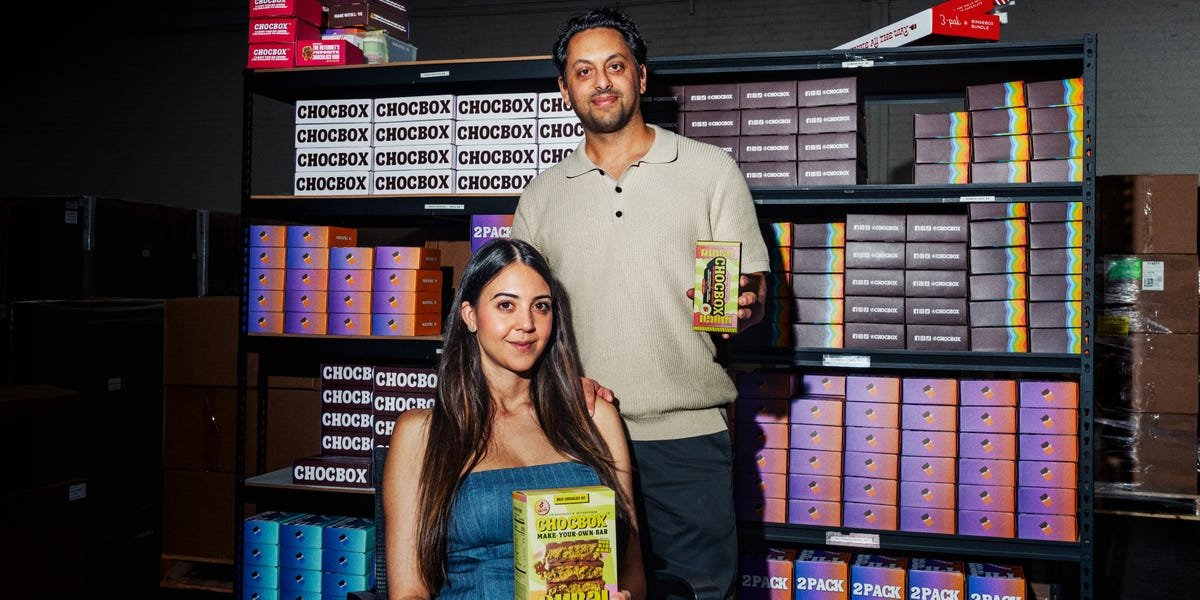
Chocbox, her DIY chocolate-making kit company, started as a pandemic project after shutdowns left her temporarily out of work as a dental hygienist. When she returned to the dental office, the business remained a side hustle.
Sales fluctuated, spiking over the holidays and slowing down during the spring and summer.
Around April 2024, she and her husband, Kevin, sat down to discuss whether it was time to shut it down. Sales weren’t enough to cover expenses, including rent for a small office in Los Angeles and payroll for a part-time employee, and Nemandoust had taken on credit-card debt to keep the company running.
On paper, closing made sense. But she wasn’t ready to give it up.
“I was really optimistic. I’m like, ‘I know that it’s going to happen at some point. It’s going to blow up,'” she told Business Insider. “I just had a feeling.”
Each Chocbox kit includes a chocolate mold, pre-measured ingredients, and step-by-step instructions.
Ethan Noah Roy for BI
A few weeks later, an opportunity emerged. Nemandoust had noticed videos of a thick, pistachio-filled “Dubai chocolate” bar flooding TikTok. Influencers were trying to recreate it at home, and comment sections were filled with the same questions: Where do you get these ingredients? How do you make this?
Unlike most viewers, she already ran a chocolate kit business. Plus, years earlier, she had custom-designed a chocolate mold that was 20-30% thicker than standard molds — originally, she said, because she felt customers deserved a more substantial bar. That thickness turned out to be exactly what the viral Dubai bar required.
The couple went to a Middle Eastern grocery store in their neighborhood, bought pistachio cream and kataifi pastry, and tested their own version. Then, they filmed a video of the two of them breaking the bar in half and tasting it.
“It wasn’t a pretty video. It was just very raw,” she said, but the response was immediate.
Within 20 minutes, the video had 500 views, more than her videos typically received. Minutes later, the count doubled. By the end of the day, more than 100,000 people had viewed the video, and orders were pouring in. She hit TikTok’s daily cap for new sellers, 100 orders, that day and again the next.
There was just one problem: She didn’t have hundreds of kits ready to ship.
Managing quick growth after a viral moment
Going viral was exhilarating, but chaotic.
Two ingredients in particular — kataifi and pistachio cream — were difficult to source. Online suppliers were sold out, so she and Kevin started calling Turkish markets across Los Angeles. They even phoned gelato shops, knowing pistachio cream is often used in pistachio ice cream.
They also needed extra hands to pack orders, so they called friends, family, and anyone willing to pack boxes at odd hours.
“When you go viral, you need it now,” Nemandoust said. “You don’t have time to go through a hiring process or wait a week for a bulk order of items. You need it ASAP.”
Nemandoust launched Chocbox from her parents’ home during the pandemic. Today, she operates the business out of a 6,000-square-foot warehouse in Los Angeles.
Ethan Noah Roy for BI
In addition to pulling from every resource they had, they worked 15-hour days, waking up around 6 a.m. and finishing late at night. They often livestreamed their long days, which helped build their community that would be integral to sustained success.
“We would be up and just livestream at like 11 pm at night, blasting music, and I honestly think that’s how we started building our community — showing people the rawness of what it means to go viral,” she said.
As chaotic as that time was, the couple still focused on building systems to keep up with demand. They created instructions for assembling a kit, for how it should look when complete, and for packaging and labeling it correctly. They printed photos of finished kits and taped them to the walls, and recorded short videos demonstrating the packing process so new helpers and employees could avoid mistakes.
“The worst thing you can do when you go viral is not fulfill orders,” Kevin, who quit his corporate job in 2025 to help grow Chocbox, said. “People are dying for your product, and if you don’t send it, that can almost instantly kill your momentum.”
They also resisted the temptation to assume the viral spike would last forever. Instead, they focused on turning a moment into infrastructure: improving sourcing, tightening operations, and gradually expanding capacity. They moved from a 5-by-6-foot cubicle to larger office spaces in the same building, eventually upgrading to a 6,000-square-foot warehouse. Today, they employ eight people.
Strategies to build a lasting business
Going viral brought new customers, but didn’t guarantee customer retention. To create a lasting business, they’ve focused on building a community and creating the best possible product.
Nemandoust regularly hosts livestreams on TikTok to showcase products and connect with customers.
Ethan Noah Roy for BI
From the start, Nemandoust leaned into community-building. She livestreamed on TikTok, assembling kits in real time, answering questions, and interacting directly with viewers.
“I want people to think of me when they think of Chocbox,” she said. “I want to be part of the brand.”
The livestreams weren’t just sales channels. They became a means of building trust. Customers watched orders being packed, saw the behind-the-scenes scramble, and felt included in the growth.
Affiliates became another key pillar. TikTok’s native affiliate system allowed creators to tag Chocbox products in their videos and earn commissions. At first, influencers were simply buying the kits themselves and posting about them. Over time, the couple built a more intentional network of roughly 30 highly engaged affiliates, whom they call “Chocboxers.”
“We invest in them, and they invest in us,” Kevin said, noting that some of their affiliates earn thousands of dollars a month in commission. “They’re an extension of our brand.”
Beyond community, they’ve maintained discipline in their product strategy and kept a tight focus on a hero product: the chocolate-making kit. They later added refill kits and a jarred version of their pistachio filling, branded as “Dubai Dip,” but resisted flooding their website with dozens of flavors.
The Nemandousts in their Los Angeles warehouse.
Ethan Noah Roy for BI
“When we release products, they have to be really good,” Nemandoust said. “It’s never going to be mediocre.”
They’re constantly engaging with their customers, asking them what they want and using that feedback to create products that excite their community.
Today, both Brittany and Kevin work on Chocbox full time. Sales still fluctuate seasonally — peaking during the holidays and around Valentine’s Day, slowing in summer — and growth still comes with stress, but the conversation they had in April 2024 feels distant now.
They said the company recently surpassed 300,000 units sold on TikTok Shop. Just a couple of years ago, they were preparing to shut Chocbox down. From the outside, the milestone looks like an overnight success. It’s anything but, said Kevin: “If people really knew how hard it was behind the scenes, the amount of turbulence it took to get here is insane.”
That turbulence, the couple says, is the part most aspiring founders don’t see. At the end of the day, starting and maintaining a small business is “really hard,” he said. But if you want to do it, “the only thing getting in the way of starting a business is truly yourself. Just start.”