

Chong Ming Lee, Junior News Reporter at Business Insider's Singapore bureau.

I’m a 78-year-old retiree who’s vibe coding. Being out of the workforce doesn’t mean we can’t use AI like tech pros.

This as-told-to essay is based on a conversation with Lewis Dickson, a 78-year-old retiree and technology consultant. It’s been edited for length and clarity.

I’ve been in technology for a long time. I worked for IBM in the late 1970s. I did technology consulting for a Fortune 500 company in Atlanta from 2015 to 2024. I’ve taught many engineers and customers over the years.

I’m in semi-retirement mode now. Technology isn’t work to me — it’s fun.

When ChatGPT came out, I jumped on it. About six or eight months ago, when vibe coding became hot, I said, “Well, I need to try this out.”

I researched and found Emergent. What I liked is that they had the full stack. I didn’t have to connect anything or get my developers on the line to handle the back-end. I could just get on there and start.

I began with a couple of simple things. Now I’ve probably done a dozen or more vibe-coded apps.

The last two were for this AED company. They wanted the ability to access their existing camera provider’s website and extract their data. So I vibe-coded an app that would do that — pull that data in.

I also vibe-coded an AI voice app for them. It’s a web app, so you go to it on your phone, hit a button, and ask, “What’s our AED status?” It checks the database, then returns the information.

When I first showed the CEO a demo, he lit up. He thought it was the coolest thing he’d ever seen.

Older people can move fast

Most people think an old guy like me would have a flip phone.

When I started as a ham radio operator at 13, I was using Morse code on tubes, transmitters, and receivers. To go from that to what we’ve gone through with phones and cellphones, and then to watch that transition over the years into AI and be closely involved, I just love the technology — both the hardware and the software.

A lot of young kids today are into software but don’t know much about the hardware piece. Having a wide background comes in handy.

There’s often an assumption that gray hair means outdated technology skills. I understand where that perception comes from, but it’s not always accurate.

Many of us have moved just as quickly with the rise of AI as younger professionals. The advantage we bring is perspective: decades of experience that allow us to apply AI strategically, not just technically.

Some people would say older people retire and lose purpose. I’ve never had that problem because I’ve always had a passion for doing technical things.

I’m constantly on my laptop and phone, doing something related to AI and learning. You’ve got to watch a lot of YouTube and social media, learn what’s coming and what’s new.

How seniors can use AI for everyday life

I’m teaching AI to seniors now. In my class back in November, we were talking about data centers, what’s behind AI.

There’s a lady named Sue who’s 100 years old. Near the end of the class, Sue came up and asked, “What’s a semiconductor?”

I have a hardware background, so I answered her question at a very high level. She listened intently and wrote down a few notes.

After that class, I thought, “I need to do more for her.” So I used AI to create a video that went through the evolution of tubes in the 20s and 30s — things they could relate to — and old radios and TVs. Then we went to transistors in the late 40s and 50s, and what that meant.

The seniors I taught have now learned enough to take over their internal resident newsletter and use AI to help write it. They also created images for the newsletter with AI.

They are using AI to shop, check for bargains, and research their items.

I’ve shown them how to recognize different plants and birds with AI. They’ll walk through their garden area, take a picture, and ask ChatGPT or Gemini.

Do you have a story to share about vibe coding? Contact this reporter at cmlee@businessinsider.com.


Source link

My-78-year-old-grandfather-visits-me-regularly-since-I-moved-to.jpeg

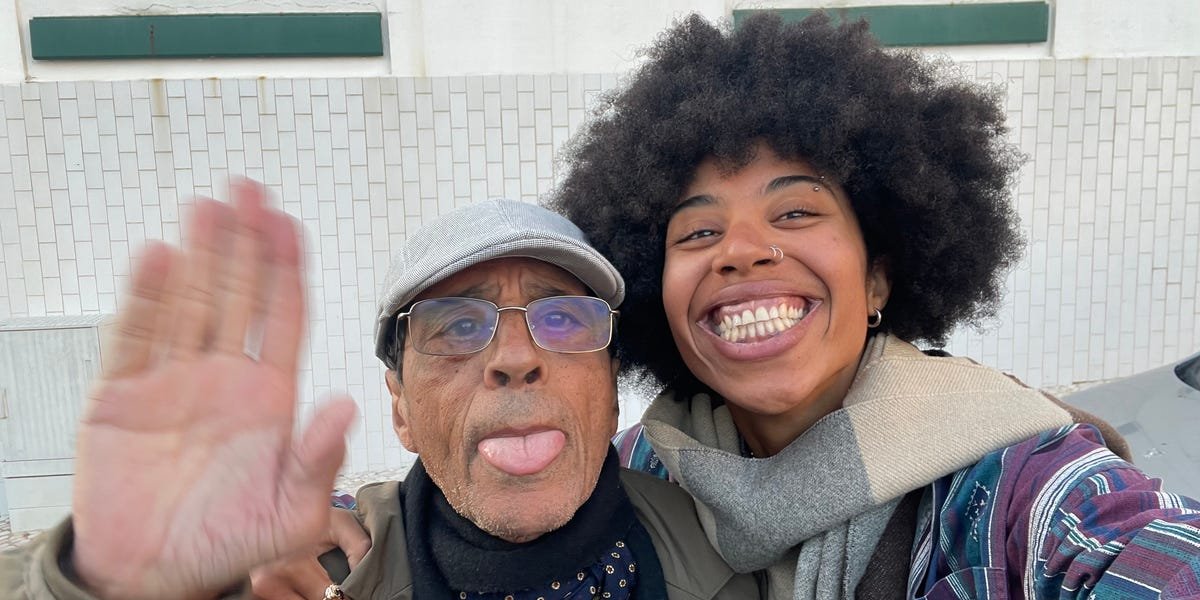
My 78-year-old grandfather visits me regularly since I moved to Portugal. I cherish our relationship.

I cannot recall my first memory of my grandfather, Geraldo. Maybe because he was always there.

When I was born, he split his time between Paris, where I lived, so he could watch me grow, and Rio de Janeiro, where he now lives full-time. Picking me up from school, dealing with my tantrums, and taking me to the movies. After I moved to New York when I was 6, he came to visit frequently, and I spent a month in Rio with him every summer.

When I moved to Portugal at 23, I hoped my grandfather would visit me, but I couldn’t have dreamt of what our relationship would become. It’s only been two and a half years, and he’s already visited five times. I should get him a frequent visitor card.

I love caring for him

There is something truly marvelous about caring for those who cared for you. Driving him around, making him tartar and banana pancakes, even just pouring him coffee; these simple things fill me with joy.


Man sitting for lunch

The author’s 78-year-old grandfather visits her in Portugal often.

Courtesy of the author


He is one of my favorite family members. He makes me laugh an exorbitant amount with his funny facial expressions, ridiculous reactions, and cynical jokes. One time he visited, I made iced coffee, and he eyed me like I was insane.

I cherish our time together

He finds joy in everything. He’s said things to me like “This coffee is terrific,” or “The octopus salad is even better than the one yesterday,” and “It’s so beautiful to see you like this.”

Not only does his attitude make him the best guest — so easy to please — but it also fills me with hope that I, too, will age like him, able to see the beauty in all that lies around.


Grandfather at airport

Courtesy of the author


That’s not to say that he doesn’t love to complain about just about everything; he is an old man who spent decades living in France, after all, but it’s always with a cheeky tinge. The weather was particularly gruesome on his last visit. When in Rio, he complains because it’s dangerous, loud, and unbearably hot. He jokes that he’s going to move here, or we could swap houses, and honestly, I’m considering it.

He was diagnosed with early-stage Alzheimer’s

My grandfather was 62 when I was born, which means I got to know him as an adult. I get to take him to lunch, introduce him to my friends — they all love him — and hear his stories. I realize it isn’t something everyone gets. For that, I am eternally grateful. It’s easy to think that intergenerational relationships are most valuable in childhood, but they can flourish most in adulthood.


Woman and grandfather at the beach

Courtesy of the author


Since his first visit to Portugal, my grandfather has been diagnosed with early-stage Alzheimer’s. I witnessed him constantly searching for his wallet and phone, how he accidentally left my apartment door open, sending me into a “where’s-my-cat-frenzy,” and how he asked over and over which day we were flying to France. At first, I was unable to comprehend how memory can fail my PhD professor’s grandfather. Then I thought of all the people who would dream of having this much time with theirs.

We probably only have a few good years left. Sometimes I catch myself crying about what’s to come. I know grief well, so I know the devastation I will feel, but instead of letting it consume me, I choose to turn it into a “yes” to every opportunity to see him, host him, show him more of my life, and learn all I can from his.

So I take many photos, hug him as much as I can, hope for more visits, and share this advice: if your grandparents can still travel, have them come visit. In the future, you will thank yourself.


Source link