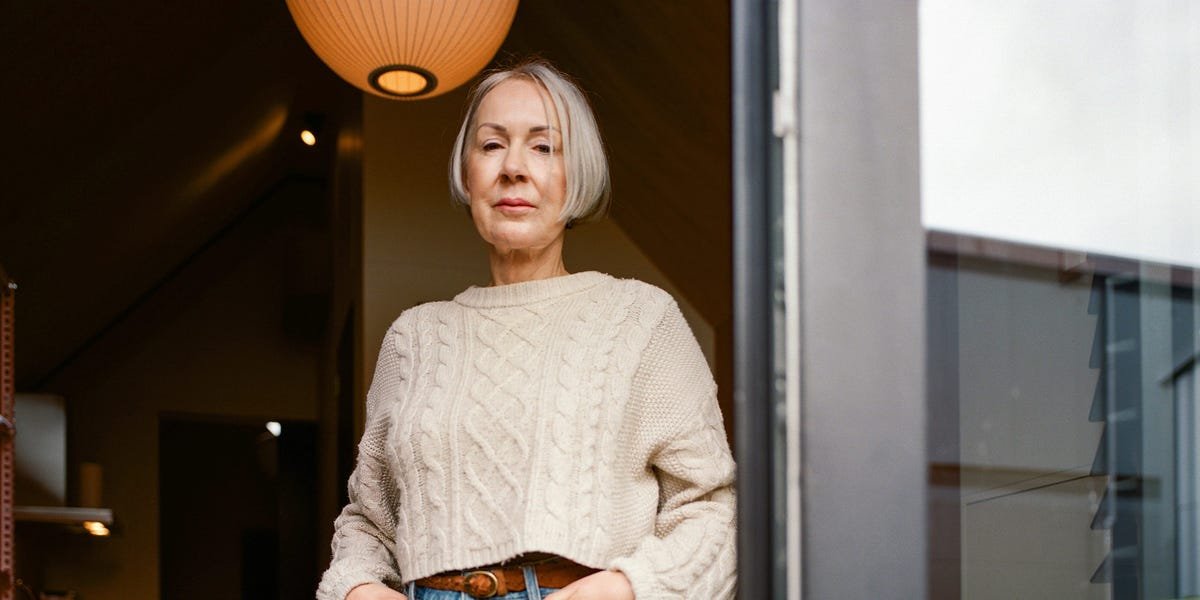
Im-a-64-year-old-retiree-who-bought-a-tiny-home-after.jpeg

I’m a 64-year-old retiree who bought a tiny home after my divorce. It gave me a fresh start I could afford.

This as-told-to essay is based on a conversation with Margot Hollander, 64, a retired dance teacher and project manager. She lives in the Dutch tiny home village of Minitopia, Eindhoven. The piece has been edited for length and clarity.

After my divorce, I had to find somewhere to live. The rental market was tough, and as a retiree, my options for buying were limited without a mortgage.

I first came across Eindhoven’s Minitopia project in the news a few years back. When I started looking for a home in late 2023, at age 62, I found a tiny house there on a real-estate website. I booked a viewing and quickly made an offer.

I paid about $143,000 in cash for the tiny house, which was as much as I could afford. I moved into the Minitopia tiny village in January 2024. I’m very happy to have bought it at this point in my life.

Buying a tiny house was a chance to start fresh after my divorce


Margot Hollander

Hollander said her tiny home is spacious enough for her and her dog. 

Samira Kafala for BI


While I was very happy to move into a tiny home, there was a lot of downsizing involved, having moved from a regular-sized house also in Eindhoven. Even now, I’m still getting rid of clothes, shoes, and all the unnecessary things you accumulate over the years.

I think it’s good for your mind to downsize, and I’m happy to be living with less stuff.

It was a model home when I bought it, with the walls and floors finished, and the kitchen and bathroom already fitted. I enjoy interior design and added my own touches, such as shutters and new furniture.

I chose not to bring any furnishings from my old house. I wanted a fresh start. I’ve filled it with artwork that makes it feel like my own. That was important to me. After the divorce, moving here has given me independence.

I’ve found it easy to make friends

It’s easy to get to know people who live in Minitopia. The Eindhoven tiny home village is Minitopia’s largest, with space for 100 tiny houses. I meet people every time I take my dog out for a walk, and most are open and chatty.

You don’t need to make plans to go for a drink here; you can just easily fall into conversation with your neighbors. It’s the simple things, like making small talk on the way to the parking lot, that give me such a good feeling about living here.

I don’t come across too many other retired people like me. Minitopia Eindhoven is a real mix of young and old, single and married, and people with and without children. That diversity is what makes it feel like a proper community.

I wouldn’t want too many other retirees to move in. I don’t want it to become a retirement village.

As a retiree, it works well for me financially


Margot Hollander tiny home

Hollander’s tiny home was fitted out before she bought it. 

Samira Kafala for BI


I used to be a dance teacher and also worked in project management in the housing sector. Once you’re retired, it’s important to live within your means so you still have money left for other things.

The more you spend on housing, the less you have to put toward your hobbies. I like to spend my money on sports.

Financially, the tiny house works very well for me. I’ve found it’s much cheaper to run than the regular house I lived in before. I have solar panels, so I’m not paying for electricity at the moment. The ground rent at Minitopia, which is a few hundred euros a month, is far lower than what I’d have paid to rent a larger home.

I hope this is my forever home

While the house is relatively small, I have more than enough space for my small dog and me. It’s not somewhere you can easily host big dinners, but that’s what I like about it. I prefer one-on-one contact to large groups.

Overall, I see very few inconveniences to living here. I like my tiny house and the community very much.

I hope this will be my last home, though I hope I’ve got plenty of years left in it yet.



Source link

I-quit-my-job-because-I-couldnt-afford-to-rent.jpeg

I quit my job because I couldn’t afford to rent or buy a house. I then moved to Thailand, where the cost of living is cheaper.

My stable job in the UK allowed me to save, but rental prices in my area would have taken up a huge portion of my income. Each month, I withdrew from my savings as everyday expenses became luxuries. I still had bills to pay, such as car finance, insurance, gas, phone, and a contribution to my parents’ mortgage.

I couldn’t move out of my parents’ house at 28. My goal was to buy my own place, but this was unrealistic. Renting was just as high as a monthly mortgage payment. Saving for a down payment while renting in the UK was impossible on a single average salary.

Even though I was employed, I couldn’t afford the life I wanted. I felt like I was surviving, not living. I was craving financial freedom and independence, but the UK couldn’t offer them.

Two years prior, I had traveled around Thailand and fallen in love with the food, the pace of life, and the value for money. It was a country that had always been on my mind, and eventually I reached a point where I couldn’t live comfortably in the UK anymore. I felt financially stuck and embarrassed that I was still living with my parents.

The only way out was to quit my job, become a freelancer, and relocate to Bangkok — a city filled with opportunity where housing costs half as much as in the UK.

Staying in the UK no longer felt sustainable

For months, I was figuring out what to do. I could spend years trying to catch up, or I could change my environment and live a more affordable lifestyle.

After researching Thailand and reminiscing about my travels there, I realized it was the perfect country to start my own business as a freelance writer.

While I was backpacking there previously, I ate freshly cooked meals for as little as $1. I looked into rental listings in Bangkok, and I was shocked. A modern one-bedroom condominium with a gym and swimming pool costs as little as $400 a month.


Sally seaton sitting at a table in a restaurant with bangkok skyline in the background

The author in Thailand.


In comparison, the average rent in my area of the UK was around $1,200 — more than a third of my monthly salary before bills. In Bangkok, I could pay half that and have more space and amenities.

I had been building a freelance writing business alongside my 9 to 5 job to create freedom to live in Thailand. By the time I decided to leave, I had one client secured. It didn’t guarantee stability, but there was no positive future for me in the UK.

Last June, I handed in my notice and booked a one-way flight to Bangkok. Within a month, I said my goodbyes, packed up my life, and left the UK behind.

My life in Thailand costs less, I get more, and I’m happier

Moving to a new country alone and starting my own business was terrifying, but I knew it would eventually give me the financial independence I couldn’t find in the UK.

Now that I’m my own boss, I still work hard. But the difference is that I’m building something for myself. In the eight months I’ve lived in Bangkok, my client base has grown. I earn slightly less, but my money stretches further.

I rent my own condominium for $500 a month, which includes a swimming pool, a gym, and a coworking space. My electricity bill is $40 a month, and water costs just $2.

Things that once felt like luxury in the UK are now part of my everyday life. I buy fresh fruit from local markets. I pay $6 an hour for a weekly cleaner. I don’t cook; I eat out every day without calculating whether I should skip it to save money.

Getting around is affordable, too. I no longer own a car. A train journey costs around $1, and bike rental rides start at $1.

Since moving to Thailand, I’ve embraced what the Thais call “sabai sabai” — a stress-free way of life. For the first time in years, I feel fulfilled, financially free, and happy.


Source link

Jacob Zinkula

I was laid off in my 60s and can’t find a job after 11 months. I wish I could retire, but I can’t afford it.

This as-told-to essay is based on a conversation with Robin Peppers Daniel, a job seeker in her early 60s who lives in South Carolina. The following has been edited for length and clarity.

Last April, I received a notification that I had 30 minutes before I would lose all of my work access — and that within an hour, I would receive some paperwork. Then my boss called me with the news: I, along with several colleagues, had been laid off.

I was working for Wells Fargo in a management role, and had some suspicion that a layoff was coming. This wasn’t my first layoff. In 2018, I was laid off from Walmart, where I worked as an instructional design manager.

A little over a year later, I started working for Wells Fargo as an external regulatory reporting consultant and was later promoted to a lead control management officer role.

My last working day at Wells Fargo was in April, but I was technically still employed and received paychecks through mid-June, followed by a few months of severance. Nearly a year after being laid off, I’m still looking for a full-time role.

My search strategies haven’t landed me a role so far

After some reorganization about a year earlier, there was redundancy in certain areas, and I felt like my workload started to dry up. My husband and I decided to start financially preparing, which proved to be beneficial.

I’d already been casually looking for work, partially because I’d felt for a while that the role wasn’t a good fit for me. But it wasn’t until I was laid off that I updated my LinkedIn profile, and not until around June that I began actively searching for roles. I was initially focused on banking and corporate trainer roles, but I’ve become open to any position where my skills are transferable.

In terms of my job search strategies, I adopted the “open to work” banner on LinkedIn and posted that I was seeking work, which helped me connect with people who said they’d be open to referring me for roles. I’ve also tried looking for job postings on company websites rather than only on LinkedIn, where I’ve found that some postings can be outdated.

Despite these strategies, I was still struggling to land a job. There was one opportunity last year that I thought might work out. I had a referral from a former coworker who said she’d spoken about me to the hiring manager. After three interviews, I waited several weeks and eventually heard they were going in another direction.

I pick up substitute teaching shifts when I can, but I’m still unemployed

My husband and I have enough savings to be financially stable for roughly the next 18 months. In a perfect world, I would retire and get out of this work rat race, but right now, I unfortunately can’t afford to.

Last August, I applied to be a substitute teacher in my area so I could have some form of income once my unemployment benefits ran out. I used to substitute teach when my daughter was preschool age, and I enjoyed it.

However, I had to be very strategic about taking on substitute work. I live in South Carolina, but I worked in North Carolina — and was therefore subject to that state’s unemployment system. In North Carolina, you can earn a maximum of $350 a week in unemployment benefits for up to 12 weeks — $4,200 total. You can also earn up to $70 a week without impacting your unemployment check.

A full week of substitute teaching paid about $550, and depending on how many days I was needed, I had to make sure what I’d gain in income would offset what I’d lose that week in unemployment benefits.

I’m now considering teaching full-time

I’m pursuing an alternative teaching pathway in South Carolina that would eventually allow me to work as a full-time teacher after the initial testing is complete. The salary wouldn’t be what I earned in banking, but it would allow me to do something that I enjoy.

I’ve also started exploring part-time options that could hopefully provide me with income and benefits, including a small web design business my husband and I have run for years and a small skincare products business.

Read more about people who’ve found themselves at a corporate crossroads

I’ve realized this could be a really long-term unemployment spell

During much of my job search, I was fairly optimistic because I’d previously found full-time jobs through my network. Over time, I’ve realized that I could be unemployed for a while.

I think my age might be holding me back in my job search, and that some employers view me as overqualified, given my past work experience and education. As a result, I’ve been conscious of the way I present and talk about my experience level.

Nowadays, I’m only half-heartedly looking for full-time work. If a job posting has more than 100 applicants, I don’t apply. I’ve resigned myself to semi-retirement.

If I have any advice for struggling job seekers, it’s that tapping into my network and family has been the biggest help for me, even if it hasn’t led to a job yet. I’ve had some former coworkers — more acquaintances than friends — reach out to tell me about jobs. I really believe that in this market — where AI might be the one reviewing your résumé — it’s all about networking.


Source link

I-moved-from-Southern-California-to-Michigan-so-I-could.jpeg

I moved from Southern California to Michigan so I could afford to buy a home. Living here changed me in surprising ways.

Born and raised in Orange County, I never considered leaving California until I got married.

We wanted to buy a house and start a family, but generally, the ones we could afford were fixer-uppers in neighborhoods we didn’t love.

So, we began looking at other states where we had family. My husband, who moved from Michigan to Los Angeles in middle school, swore he would never go back — and I couldn’t identify Michigan on a map or tell you one fact about it.

We didn’t want to be beholden to a big mortgage, though, and in Michigan, we could purchase an affordable home in a town known for having some of the state’s top public schools. Even better, we’d be welcomed by my husband’s big Italian family, who lived nearby.

When we told our friends we were moving to Michigan, they were shocked. All any Californian knew about Michigan was that it was cold and snowy — why would anyone choose that?

Now, 20 years later, I can confidently say it was a great decision.

When I first moved to Michigan, I experienced some culture shock


Fresh produce at a farmers market in Michigan.

At first, I had to adjust to the feeling of making small talk at markets and shops.

Kristi Valentini


In Orange County, I was the kind of person who would bury my nose in a magazine to avoid chatting with a hairdresser. I rushed through the checkout line and never said, “How are you doing?” to someone I didn’t know.

If small talk was ever forced upon me, I gave away as little about myself as possible. I never understood the point in discussing my life — or even something as simple as the weather — with someone I didn’t know.

In Michigan, though, small talk is unavoidable. I quickly learned that there’s no getting around friendly cashiers and shop owners. I was begrudgingly polite, but it initially took some effort to hide my impatience.

Chatting with neighbors feels much more commonplace here, too, especially because my subdivision doesn’t allow fences.

I was shocked to go from Orange County’s 6-foot cinder-block backyard walls to wide-open lawns and zero privacy, practically forcing me to interact with my new neighbors any time I gardened or enjoyed a glass of wine on the patio.

Over time, I noticed that having friendly neighbors and being a part of a community made me feel safer and more relaxed


A green backyard in Michigan with several trees.

My new neighborhood has less privacy than my old home did, but I’m glad I’ve gotten to know my neighbors.

Kristi Valentini


The kindness of Michiganders started to change me.

In my first year of living in Michigan, our mailbox got hit by a car while my husband and I were at the gym. Our neighbors had cleaned up the mess and gotten the driver’s info for us by the time we got home.

I was so surprised they would do that for us; it struck me as something that probably wouldn’t have happened back in California.

Then, when we had a baby three years into living here, another neighbor further down the street — one I hadn’t even met yet — brought us dinner just because she saw a baby announcement sign in our yard. I was touched that a stranger would go out of their way to do that for us.

When we started taking our kids trick-or-treating for Halloween, I discovered that Midwesterners do that differently, too. They didn’t just spoil the kids. They set up tables of spiked hot chocolate and Jell-O shots for the adults and invited people to warm up by their driveway bonfires. It became a community event.

Eventually, I found myself initiating connections with neighbors, too — and even starting up some small talk. It began with other dog-walkers in my neighborhood as our pups sniffed each other, and at the grocery store as a pleasant way to pass the time while being rung up.

Living in Michigan has changed what I value in a hometown


The writer posing with her two children in costumes on Halloween.

Living in Michigan has made me appreciate community in a new way.

Kristi Valentini


When I visited California to see friends and family a few years after living in Michigan, I could tell how much I’d changed already. It seemed rude to me when people didn’t say hi when passing me on a sidewalk, or when cashiers didn’t make chit-chat.

Because now, I’m the kind of person who makes caramel apples for my neighbors. I chat with fellow shoppers about candle scents in Crate and Barrel and know about my hairdresser’s children and chickens.

I even decorate my front porch — something I’ve noticed that nearly everyone in my neighborhood does. Seasonal wreaths and flowerpots, chairs with pillows and throw blankets, encourage people passing by to come on up and say hi.

I do sometimes miss California’s backyard privacy, and I’ll never stop using SoCal slang like “cool” and “dude.” Still, I’m glad I moved to a place that helped me become a friendlier person and taught me the value of community. I couldn’t imagine raising my children anywhere else.


Source link

Eliza Relman

Three generations live next door — and it’s helping this family afford both housing and elder care

Lauren McCadney had always wanted to live next door to friends or family. In her late 50s, she finally made that happen, though not the way she’d planned.

In 2020, Lauren’s mother, who had been living with her brother and his family in Frederick, Maryland, died. Lauren, who was going through a difficult divorce and doesn’t have children, decided she wanted to be closer to her family and help her brother care for their dad, who was dealing with his own health challenges.

In 2021, she moved from her home in Chicago to Maryland, renting a house a few blocks away from her brother, James, her sister-in-law, Lorri, and twin 20-year-old nephews, Drew and Carter. In 2023, the five-bedroom house next door to James and Lorri went on the market, and Lauren bought it and moved in with her sister, Cheryl.


Lauuren McCadney's family home.

Seven family members across three generations live next door.

Charlotte Kesl for BI


Now the seven family members live between the two houses, sharing caregiving responsibilities for James Sr., the family patriarch, and forming what they call a family compound.

Multigenerational living was once the norm in the US. Before World War II, it was almost unheard of for older adults to live independently or to receive care outside their families, while younger people often waited until marriage to move out. That changed for millions of American families as they lived farther apart, independent living services for older people became more accessible, and more women joined the workforce.

Now, as the costs of housing, long-term care for seniors, and childcare soar, that trend is beginning to reverse. The McCadneys are one of a growing number of American families moving back in together — or never separating in the first place. The number of people in the US living in multigenerational households — those with two or more adult generations — quadrupled between 1971 and 2021, according to Pew Research.

“I feel very blessed and fortunate that we have the situation we have,” Lauren said, “because I have friends who are the primary solo caregiver, and that is hard.”


Lauuren McCadney and family.

The McCadneys split caregiving duties and expenses.

Charlotte Kesl for BI


Sharing caregiving and expenses

The McCadney family splits caregiving duties — and everyone saves money in their arrangement.

Lauren, who retired from her career in tech marketing in 2024, renovated her house to suit her family’s needs, refinishing the basement into a separate living space for Cheryl and making the first floor accessible for their father, who has a neurological condition that makes walking difficult and affects his memory.

Cheryl, who pays below-market rent, takes care of Lauren’s dog while she’s on vacation. Their brother manages most of their father’s personal and medical care, while Cheryl spends a lot of time with him during the day. Lauren likes to take her father, who uses a scooter, to restaurants, breweries, and concerts.

When any family member goes on vacation or is otherwise occupied, they know another family member will be there to take care of the elder James.

By not putting the elder James in assisted living or a nursing home, the family is saving significant sums. “Unless you’re a billionaire, I don’t think that most people have the luxury of saying cost is not a consideration,” Lauren said.


Lauuren McCadney's father.

The family is saving a significant amount of money by taking care of the elder James at home.

Charlotte Kesl for BI


They also appreciate the peace of mind that comes from knowing their dad is being cared for by family. Plus, James Sr. wasn’t keen on moving into a facility.

“We know that he’s going to get much better care, and from a socialization perspective, from a stimulation perspective, from having a reason to get out of bed perspective,” Lauren said. “That’s something you cannot put a price on.”

Drew and Carter, who save on rent by living at home, also chip in, including by helping Lauren. They mow their aunt’s lawn, give her rides to the airport, and recently drove her to and from eye surgery.

“I do love that my boys have lived their formative years in a multigenerational household,” said Lorri, who’s a teacher. “It is, hopefully, clear to them that love is an action.”

Navigating challenges and an uncertain future

There are real challenges with caring for an aging family member. The siblings don’t have as much flexibility or privacy as they otherwise would. Cheryl said that before she moved in with Lauren, she “had grown accustomed to living alone and having flexibility to decide when to or not to interact with others.” Living with family has changed that.


Lauuren McCadney

The family aims to strike a balance between all three generations.

Charlotte Kesl for BI


James and Lorri are sandwiched between caring for their kids and their parents, all while juggling full-time jobs. Even as the couple is on the precipice of becoming empty-nesters, they’re responsible for someone who’s ever more dependent on them.

“I know there are times when James is exhausted and or frustrated,” Lorri said, “and as his wife, that’s hard to watch.”

James, who works for Maryland’s Department of Human Services, said there’s a constant balance to strike in doing right by all of his family members.

“Am I taking anything away from my children, or did I take anything away from them?” he said. “We hope that we’re doing all the right things.”


Lauuren McCadney and family.

Multigenerational living is on the rise.

Charlotte Kesl for BI


The McCadneys don’t know how long they’ll stay where they are. Lauren’s house requires a lot of maintenance that she’d rather not have to deal with as she ages. Lorri and James hope to someday downsize and spend more time at the beach in their travel trailer. As long as the elder James is living with them, the couple said they’ll stay in their home.

Lauren doesn’t know who will take care of her when she’s older. She and her friends talk about buying a piece of land and building several small homes on it, creating their own communal living arrangement where they could share a caregiver and help each other out.

“A lot of my friends are sitting around right now having this conversation, which is, ‘We don’t have kids, who’s taking care of us? How do we do this?'” she said.

While so much about the future is uncertain, she’s taking one day at a time for now.

“I’m just happy that everything works for right now,” she said.


Source link