
Snap-is-the-latest-high-profile-company-to-double-down-on.jpeg

Snap is the latest high-profile company to double down on small, AI-powered ‘squads’ amid layoffs

Score another one for tiny teams.

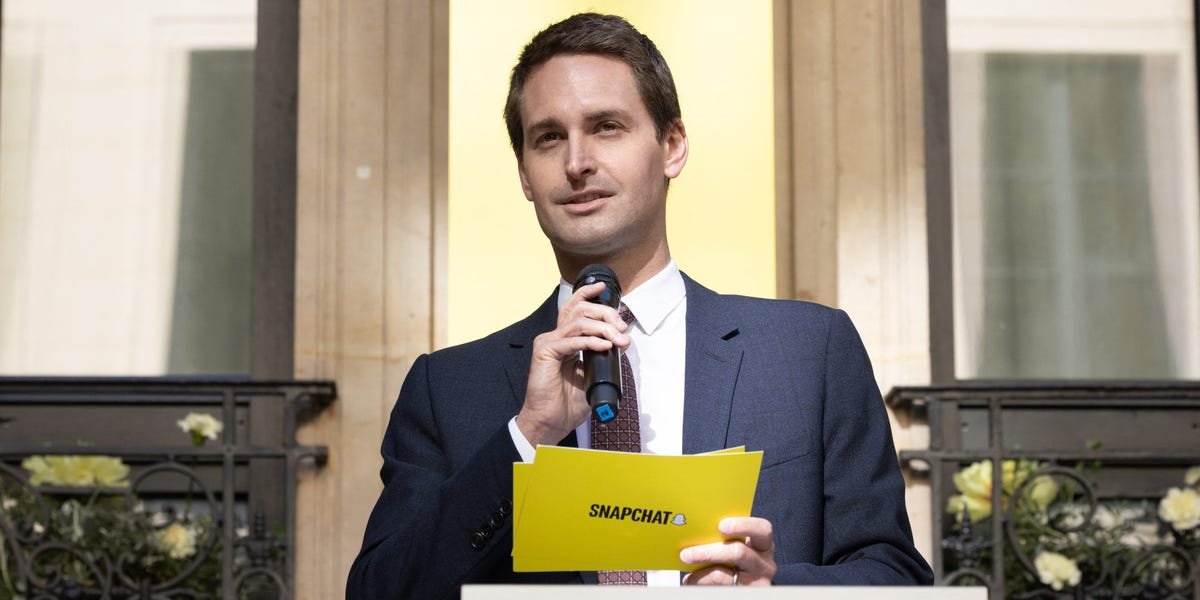
On Wednesday, Snap CEO Evan Spiegel framed plans to slash 1,000 jobs as part of a shift the social-media company started last year toward organizing employees into small, AI-powered “squads.” He said the strategy is already playing out as AI cuts repetitive tasks and speeds up execution.

Leaders at several other big companies have recently made similar remarks about the benefits of leaner workforces and the role that AI plays in making small teams highly productive. In some cases, the comments were linked to layoffs.

“It would be disingenuous to pretend AI doesn’t change the mix of skills we need or the number of roles required in certain areas. It does,” Mike Cannon-Brookes, CEO of software company Atlassian, wrote last month in a securities filing about plans to cut 1,600 jobs.

“We’re starting to see projects that used to require big teams now be accomplished by a single very talented person,” Meta chief Mark Zuckerberg said on a January earnings call with analysts.

The tiny team trend isn’t limited to Big Tech. JPMorgan boss Jamie Dimon said in his annual letter to shareholders this month that “the real competitive battles” are waged by small, laser-focused teams.

Embracing startup culture

While startup founders have long prioritized scrappiness, the philosophy has been gaining traction among established businesses in recent years due to the AI boom. The technology allows just a few workers, or in some cases individuals, to carry out what previously required large teams, proponents say.

“We’re going to see 10-person companies with billion-dollar valuations pretty soon,” OpenAI CEO Sam Altman predicted in February 2024.

Leaner teams reflect a related shift away from middle managers and toward flatter hierarchies. Earlier this month, Block CEO Jack Dorsey described the “most ideal” setup as one where all 6,000 of the payments company’s employees report directly to him, while Amazon boss Andy Jassy said that flattening the tech giant’s structure has improved its speed.

Benefiting from shrinking teams requires changing how work gets done, said Erik Brynjolfsson, an economics professor at Stanford University.

“The winners won’t simply be the leanest organizations,” he said. “They’ll be the ones that best redesign work so humans and AI complement each other.”

Bias, morale, and pipeline problems

Going too small can be dicey, said Matt Poepsel, vice president of talent optimization at the Predictive Index, an HR software company. Workers who rely solely on AI for decision-making might amplify personal biases, he said, whereas groups provide checks and balances.

“AI is programmed to try to keep you using it,” said Poepsel. “That’s why I refer to it as the silicon sycophant, because it’s wired for a very different outcome.”

Companies going down the tiny team path also risk hurting morale, which can negatively impact business outcomes, said Alex Lovell, a political psychologist at O.C. Tanner, an employee-recognition software company.

Engagement is driven by interaction with colleagues and leaders, he said, and without that, “inspiration can decay.”

Another potential downside is that tiny teams can diminish talent pipelines, said Soumitra Shukla, a research fellow at Harvard Business School. Cutting entry-level roles, for example, can lead to shortages of experienced workers.

“You don’t have as many people to promote to seniors,” he said.

Further, early-stage professionals may start to question their ability to climb the corporate ladder at companies embracing tiny teams, added Shukla, also a researcher at The Burning Glass Institute, a nonprofit research organization that studies the future of work and learning.

“Junior talent is not going to be junior forever,” he said.



Source link

Inside-Targets-AI-powered-turnaround-plan.jpeg

Inside Target’s AI-powered turnaround plan

Generative AI couldn’t have come along at a better time for Target.

That’s the assessment Target’s tech chief, Prat Vemana, told Business Insider after newly minted CEO Michael Fiddelke spent the morning laying out an ambitious turnaround strategy at the retailer’s Minneapolis headquarters.

The company had just reported its 13th consecutive quarter of weak sales — a stretch that saw big box competitors like Walmart and Costco gain market share — and leaders from across the organization were assembled to make the case that it was a new day at Target.

“I couldn’t have asked for a better time for AI to show up, because now we have a need. We have a bold agenda ahead of us,” Vemana said.


Target CEO Michael Fiddelke speaks at the 2026 financial community meeting.

Target CEO Michael Fiddelke, who officially started in his new role in February, speaks at the retailer’s 2026 financial community meeting.

Dominick Reuter/Business Insider


By the numbers for the coming year alone, Target’s agenda is indeed bold: $1 billion in additional capital investments, $1 billion more in new operational commitments, 30 new stores, 130 remodels, overhauls to as much as 75% of the assortment in certain categories, and blisteringly fast product releases.

Fiddelke said the work is already paying off with an acceleration in February sales, and the company expects to report sales growth in every quarter of 2026.

Underpinning the success or failure of nearly every aspect of that strategy are a host of AI-powered tools developed by Vemana’s teams.

“Tech is a through-line in everything that we do,” Vemana said.

Target has a long tech legacy, but the competition is as fierce as ever

Target has long based marketing and operational decisions on vast troves of data, and it was an early mover in applying machine learning to its business.

The company’s predictive analytics department even became the subject of controversy in 2012 when it was revealed that buyer behavior could be used to infer something about a shopper so intimate as a pregnancy. (Whether or not it actually did is unclear.)

A decade-plus later, that almost seems quaint in the age of Meta AI glasses, Ring doorbells, and hackable robot vacuums. Indeed, an entire industry now generates astronomical revenues by anticipating users’ tiniest impulses.


A Target shopping cart outside a store.

Target has long used machine learning in its business, but now its rival are too.

Dominick Reuter/Business Insider


And in just the last few years, generative AI technologies started running laps around what their ML predecessors could do. Meanwhile giants like Amazon and Walmart are reaping the advantages that come with scale.

In other words, the competition caught up, and machine learning that was once such an advantage for Target is arguably less of a leg up in the hyper-paced world of AI.

But as companies around the world cite AI in trimming their tech workforces, Vemana said he needs his teams in the US and India to match the output of an even larger company.

“Generative AI actually opened up a completely other dimension of growth,” he said.

Target is investing in tools to help teams save time — and predict trends

For Target’s apparel teams, a new Trend Brain platform combines visual analysis of fashion photos with social media sentiment analysis in an effort to predict what styles will take off in the next season.

That lets designers pull a new designs together in a matter of weeks rather than months, positioning Target to rotate through collections nearly twice as fast as before, said Gena Fox, Target’s head of apparel.

It also gives the company an early alert for products that might not sell as strongly.

“We saw really early that polka dots were trending,” she added, referring to a line of swimsuits. “So we were actually able to go back and buy into that more and then move out of styles that weren’t performing as well.”


Target fashion designed using the company's Trend Brain

Target’s “Western Edit” series was designed using the Trend Brain platform.

Dominick Reuter/Business Insider


Trend Brain offers another advantage when it comes to handling the endless details of designing a fashion campaign.

“After a few hours of this, you’re going to skip a few things, right?” Vemana said. “AI doesn’t get tired.”

And as that product arrives in stores, managers and associates now have a new suite of Target-designed tools on their handheld Zebra scanners that simplify everything from planning displays, to prioritizing restocking tasks, to getting immediate support without having to go find a desktop computer and fill out forms.

“We really care about human touch — that’s what matters,” Vemana said. “Anything that gives time back to the team, they give back to the guest, and guest is happy.”

Meeting customers where and how they shop

Agentic shopping grabbed headlines last fall, and Target is among the first retailers to offer multi-item baskets through ChatGPT. It’s also one of Google’s partners in developing the open commerce protocol on Gemini.

But beyond those more obvious applications, Vemana said AI is helping the Target team deliver improvements to how customers shop with its app.

For starters, the executive said the way generative AI handles information required a complete overhaul of the app’s code base — a task that AI coding companions made much faster.


Target app's list scanning feature

Target’s app is increasingly packed with AI features.

Dominick Reuter/Business Insider


“We’ve rewritten the entire app already — what would have taken years and years — in, like, 18 months,” he said.

And with a third of in-store shoppers using the app during their visits, the changes aren’t just for chatbots.

The app itself now has several customer-friendly features, like shopping list scanner tool that converts handwritten notes into a shoppable list, to a store mode that pins list items on a map of an actual location.

Target didn’t break out the full size of its AI investment, and a big question for companies implementing AI is whether the capital required to deploy it will generate a positive return on investment.

Vemana emphasized that Target views the tech as essential for its growth plan.

“It’s not just doing AI for the sake of doing AI,” he said. “We are foundationally strengthening so that we have the right kind of AI applied in the right places.”


Source link

A woman in glasses wearing a blue dress standing in front of a bush.

I used an AI-powered app to lose 70 pounds. I reversed my diabetes and can keep up with my 8-year-old.

This interview is based on a conversation with Lyle Wallace, 45, a Dallas pastor. It has been edited for length and clarity.

I hit 6 feet 3 inches tall as a freshman in high school and weighed around 185 pounds.

Then, while playing a lot of sports like football and basketball during my junior and senior years, I ate a lot of protein and built a ton of muscle, eventually reaching 230 pounds.

It was all good because I was running around doing all sorts of exercise, and my metabolism was fast. That all changed when I started Bible college in upstate New York, and my physical health became less of a priority.

My job was stressful, and I found it hard to detach

The weight crept on. Then, when I entered the ministry, I found myself eating out a lot with the young members of the congregation. Sitting at a table together was a good way to bond and establish trust.

The only trouble was that we went to fast food places like Taco Bell or Mexican restaurants, where you fill up on chips and salsa before the main course arrives.

The job was stressful because I found it difficult to detach from other people’s emotions as they dealt with bad stuff like domestic violence and sexual abuse.


An overweight man kneeling on a dock with a young boy

Wallace weighed over 285 pounds at his heaviest

Courtesy of Lyle Wallace


I turned to food as an outlet and became less healthy by the month. I had terrible digestive issues and bouts of diverticulitis. I had several colonoscopies and liver biopsies in my 20s and 30s and was found to have a fatty liver.

They should have been warning signs, but I ignored them and stayed sedentary. I’d sit in my office studying, writing sermons, and doing paperwork. My metabolism slowed down as I got older, but I didn’t change my habits.

I had problems with tendonitis, with symptoms mimicking a heart attack, pressure on my joints, and suffered excruciating pain from a bad back. I had spine surgery in 2019.

I was prescribed Metformin

My wife, Nicole, would be on top of me about the causes, but I didn’t face facts. It was only when I was diagnosed with diabetes in January 2023 that I became seriously worried.

My dad was diabetic and needed three or four insulin shots a day. I’m terrified of needles and didn’t want to go down the same route. The scale registered over 285 pounds.

I was prescribed Metformin, but not given any advice about improving my lifestyle. My blood sugar levels actually increased — one of my A1C tests showed 8.0 — and I despaired.

Still, it was a wake-up call. My health insurance company encouraged me to sign up for an app called Twin Health, which created an AI-powered “digital twin” of my metabolism.


A man standing in a doorway

Wallace at his current weight of 215 pounds after reversing his diabetes.

Courtesy of Lyle Wallace


It collected my health information, including data from lab tests, a smart scale, a blood pressure cuff, and real-time glucose monitor sensors, and made personalized recommendations for nutrition, sleep, and exercise.

The app advised me what to eat and when. I learned that consuming protein and fiber on my plate before any carbohydrates helped my metabolism. Nicole and I scanned barcodes at the supermarket to assess the suitability of certain foods and prevent sugar spikes.

I’ve reversed my diabetes

I increased my physical activity by building up to walking four miles a day, without causing back pain. The other day, I ran after my 8-year-old daughter and her cousin and overtook them. They couldn’t believe it.

My current weight is 215 pounds, 70 pounds lighter than before. I’ve gone from a 42-inch to a 36-inch waist and lost 2.5 inches off my collar size.

Best of all, I’ve reversed my diabetes — reducing my A1C to 5.1 —and am medication-free. People in my congregation keep asking how I did it. I’m not a particularly high-tech guy, but AI worked wonders for me.


Source link