
The-gloves-are-off-in-the-feud-between-Sam-Altman.jpeg

The gloves are off in the feud between Sam Altman and Elon Musk

  • Sam Altman and Elon Musk escalated their long-running feud on Tuesday in a series of posts on X.
  • Each of the tech giants traded barbs about deaths and safety concerns tied to each other’s products.
  • The pair is in the middle of a lengthy legal battle over OpenAI’s status as a for-profit entity.

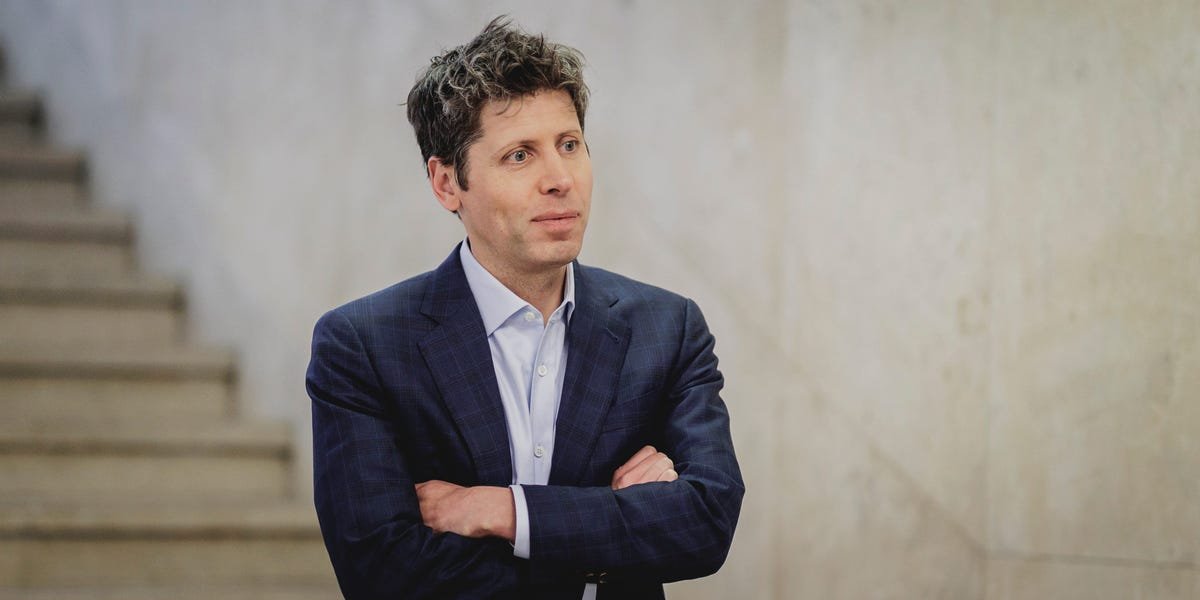
Sam Altman and Elon Musk are at it again, with each of the tech titans taking aim at the other in a series of heated posts on X.

Musk appeared to start the latest escalation early on Tuesday morning, when he posted “Don’t let your loved ones use ChatGPT” in response to a post that use of OpenAI’s chatbot had been linked to the deaths of children and adults since it was released in 2022.

Altman fired back, first in defense of ChatGPT and OpenAI’s desire to protect its users, and then blasting Tesla’s Autopilot technology calling it unsafe.

“It is genuinely hard; we need to protect vulnerable users, while also making sure our guardrails still allow all of our users to benefit from our tools,” Altman said.

Altman continued, calling out Autopilot.

“I only ever rode in a car using it once, some time ago, but my first thought was that it was far from a safe thing for Tesla to have released,” he wrote. “I won’t even start on some of the Grok decisions.”

Altman added: “You take ‘every accusation is a confession’ so far.”

Representatives for Musk and Altman did not immediately respond to requests for comment from Business Insider.

The social media feud comes as the pair is stuck in the middle of a long-running legal battle over OpenAI’s status as a nonprofit company. Musk sued Altman, and other leaders of OpenAI, alleging that they misled him when they decided to pursue a for-profit structure, moving the company away from its original nonprofit mission.

Musk said he donated $38 million to OpenAI when it was originally founded as a nonprofit.

This is a developing story. Check back for updates.


Source link

Sam-Altman-says-OpenAI-has-gone-code-red-multiple-times.jpeg

Sam Altman says OpenAI has gone ‘code red’ multiple times — and they’ll do it again

“Code red” isn’t a one-off at OpenAI.

CEO Sam Altman said on an episode of the “Big Technology Podcast” published Thursday that the company has entered emergency mode multiple times in response to competitive threats — and expects to continue doing so as rivals close in.

“It’s good to be paranoid and act quickly when a potential competitive threat emerges,” Altman said.

“My guess is we’ll be doing these once maybe twice a year for a long time, and that’s part of really just making sure that we win in our space,” he added.

Altman said that OpenAI had gone “code red” earlier this year when China’s DeepSeek emerged. DeepSeek shocked the tech industry in January when it said its AI model matches top competitors like ChatGPT’s o1 at a fraction of the cost.

OpenAI entered “code red” earlier this month, about two weeks after Google released its latest AI chatbot, Gemini 3. The model drew widespread praise after its release in November, with Google touting it as its most advanced model to date. Altman reportedly told staff in an internal Slack memo that OpenAI would prioritize ChatGPT while pushing back other product plans.

Altman said in the podcast episode that Google’s Gemini 3 did not have “the impact we were worried it might.”

“But it did — in the same way that Deepseek did — identify some weaknesses in our product offering strategy, and we’re addressing those very quickly,” he added.

Since OpenAI entered “code red,” the company has moved quickly to ship new upgrades and features.

Last week, it rolled out a more advanced AI model aimed at improving ChatGPT’s performance across professional work, coding, and scientific tasks. OpenAI also unveiled a new image-generation model earlier this week.

Altman said the company will not be in code red “that much longer.”

“Historically, these have been kind of like six- or eight-week things for us,” he added.

The state of “code red” has also been a precedent for other tech companies. In 2022, Google declared an internal “code red” after ChatGPT’s debut. The search giant was lagging in consumer AI, despite having funded much of the research that made the AI boom possible.


Source link

Elon-Musk-just-hit-Sam-Altman-with-an-800-billion.jpeg

Elon Musk just hit Sam Altman with an $800 billion counterpunch

If Elon Musk and Sam Altman like each other, they hide it well.

In the latest turn in the rivalry, the two are battling over the top spot on the list of the world’s most valuable private companies.

While the two cofounded OpenAI together back in 2015, the partnership has frayed spectacularly since.

Musk left OpenAI in 2018 and later founded rival startup, xAI. Musk or his company, xAI, has filed lawsuits against OpenAI.

OpenAI held a secondary share sale in October that valued it at $500 billion, taking the lead from Musk’s SpaceX by a cool $100 billion.

Not one to cede ground to a rival, Musk is now planning his own secondary share sale at SpaceX, according to an internal letter to employees seen by multiple outlets. It would value the company at a whopping $800 billion. If that happens soon, it means Musk would have only let Altman hold the mantle for a couple of months.

Musk also confirmed on X this week that the company is exploring a blockbuster initial public offering, which might be the only way OpenAI can regain its lead as a private company. OpenAI this year restructured its business, which would allow it to also pursue its own eye-watering IPO in the future.

While this valuation battle between the two billionaires is maybe cringeworthy theater for the average earner, it underscores a significant shift: investors are pouring unprecedented money into technologies once viewed as speculative science projects.

SpaceX, which aims to make life multi-planetary and colonize Mars, and OpenAI, which seeks to develop a theoretical AI that can reason like humans, are two of the most visible examples, but they are part of a broader surge in frontier-tech valuations. AI, robotics, and defense tech startups have all notched multibillion-dollar valuations in the past year — bubble be damned.


Source link