Amazon-CEO-Andy-Jassys-pay-rose-to-21-million-in.jpeg

Amazon CEO Andy Jassy’s pay rose to $2.1 million in 2025 as security and travel costs climbed

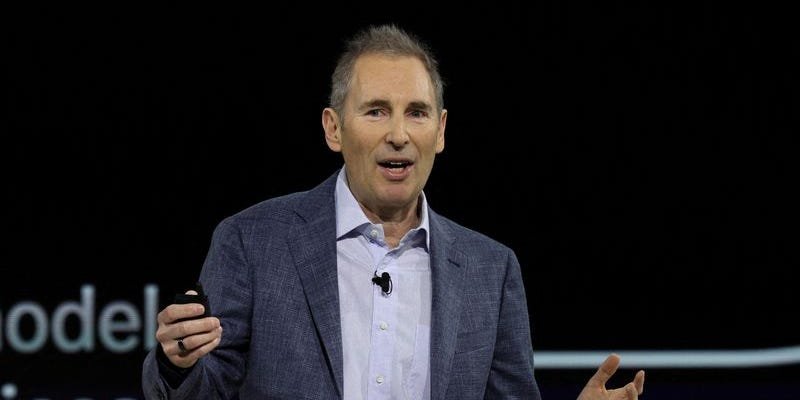
Amazon CEO Andy Jassy’s total compensation was about $2.1 million last year — a roughly 30% increase from 2024.

Last year, Jassy earned a base salary of $365,000, and business travel and security expenses totaling $1.7 million largely boosted his pay year over year, according to the company’s annual proxy statement, published Thursday.

His total pay has fallen since 2021, the last year he received a stock award from Amazon, and Jassy’s first year as CEO. That year, his annual compensation totaled over $200 million.

In 2025, Jassy also had $43 million in stock awards that vested, and $242 million in restricted stock that had not vested as of December 31, according to the filing. It’s common for CEOs to hold far more in company stock than they are paid in salary.

Amazon’s stock price rose about 4% in 2025.

In 2024, Jassy’s compensation totaled almost $1.6 million, including a base salary of $365,000 and more than $1.1 million in security and travel expenses. He had more than $274 million in restricted Amazon stock at the end of that year, according to an earlier company filing.

Jeff Bezos, Amazon’s founder, executive chair, and former CEO, was the company’s second-highest-paid executive in 2025. His total compensation was nearly $1.7 million, including a salary of nearly $82,000. Bezos is worth $243 billion, making him the world’s fourth-richest person, according to the Bloomberg Billionaire Index.

Do you have a story idea to share? Contact this reporter at abitter@businessinsider.com or via encrypted messaging app Signal at 808-854-4501. Use a personal email address, a nonwork WiFi network, and a nonwork device; here’s our guide to sharing information securely.


Source link

Im-an-Amazon-tech-lead-who-got-promoted-by-building.jpeg

I’m an Amazon tech lead who got promoted by building AI products. Here are my top vibe coding tips.

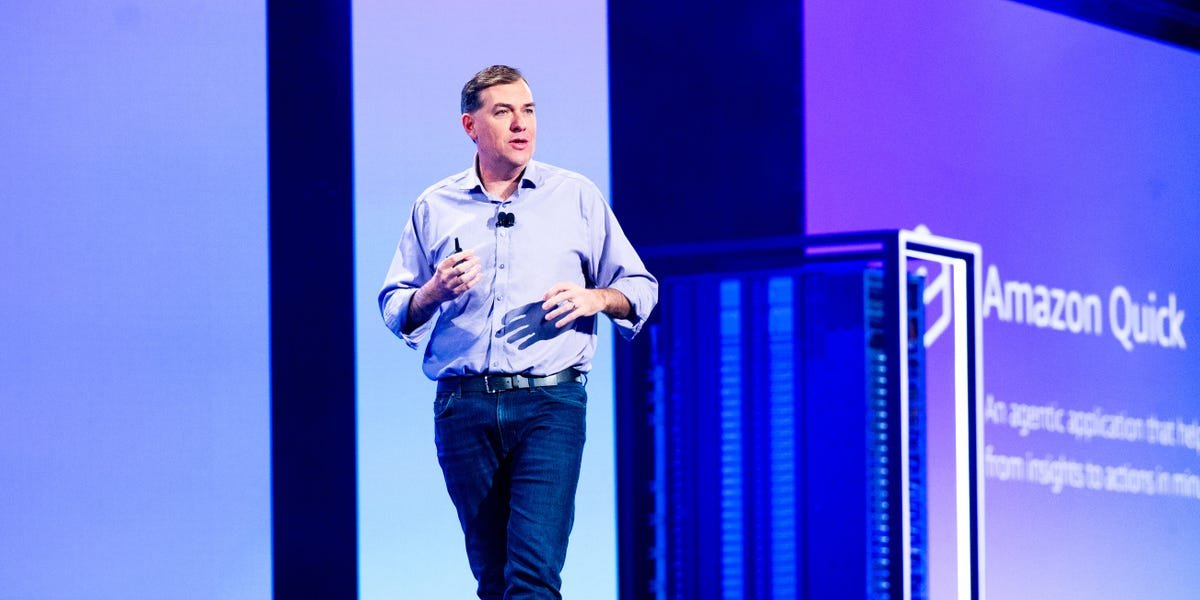
This as-told-to essay is based on a conversation with Anni Chen, who has worked in Amazon software engineering for about three-and-a-half years. It has been edited for length and clarity. Business Insider has verified her employment history.

AI helped me code, but more importantly, it helped with turning it into products. It’s the combination of grasping AI and translating it into scalable products that helped me get promoted faster.

I started off as a Software Engineer I, an entry-level role, in 2022. I was in the recommendations team working on serving recommendation widgets.

About two years ago, I started working on AI products on the side. That became huge and eventually spun off into its own team, which I’m a founding engineer of.

I was promoted in the recommendations team to Software Engineer II, and then I got promoted in the current team to senior engineer.

I focus on what we call memory, which powers personalization in generative AI experiences across Amazon.

AI writes 95% of my code

I started using AI as a side project to generate engaging titles for recommendation widgets when ChatGPT and Claude emerged. I saw how powerful it is in generating something really creative.

I started thinking: whenever I have a question or I want to code something up, I’ll just ask AI for help first before I attempt it.

I saw that the solution it came up with was leveling up my own code, and it helped me code more, too. Now I would say almost 95% of the code authored by me is written by AI.

I’m not just using AI to code; I also integrate AI’s output into products. I need to have a deep understanding of how AI works, what works well, and what doesn’t.

I have to be open and receptive to new models and tools coming out that can help with product iterations and make products better.

I work as a tech lead on large-scale LLM-driven systems in production environments, so I have a front-row seat to how AI-assisted workflows behave, not just in prototypes but under real-world scale and cross-team collaboration.

Top tips for vibe coding

The first tip is understanding the inner workings of LLMs and where they might fail.

LLMs are pre-trained — they’re trained on a large corpus, and it’s a probabilistic game. It’s followed by supervised fine-tuning, so the model will answer based on the structuring of a question and the answering format. Lastly, it’s followed by RLHF — reinforcement learning from human feedback.

By understanding these three steps, you can know, for example, when the LLM will not understand what you’re talking about, and when it needs domain knowledge from you. You will know when to use a new window or why hallucinations happen.

By understanding the limitations of the context window, you know when to break problems down. You will learn how to follow the structure to break things down into lower levels, and then you slowly focus on each component and generate.

By understanding the inner workings, you also know that you have to explain things to a peer. If you don’t explain in detail, it will default all those assumptions to the most common pattern, but that might not fit your use case.

My second tip: Think before vibe coding.

If you check the answer first, then your thoughts will be swayed by the answers. Compare your thoughts versus the LLM’s and see what the gaps are — what you didn’t know, and why the answer differs. From there, you know what implicit assumptions you haven’t told the LLM.

Thirdly, prompt for hard questions. Ask questions like what is the fallback when there is an error, or how this is going to scale? This is like a teacher asking a student, or a senior engineer asking a junior engineer to make sure the hard cases are covered. If you want the product to scale, think about it from day one and be conscious about asking those scaling questions.

Lastly, review and understand. Always review at each step, not just review after the whole code is generated. This ensures errors stop early rather than cascading all the way to the end, where you need to redo everything.

Creating wrong code is very dangerous. The presence of code makes people think, “Okay, this is good, it’s working.” But wrong code that enters production can cause more damage than the absence of functionality.

Understanding code is still important

You have to understand your own code. AI lowers the barrier to writing code, but not the responsibility for understanding it.

If something goes wrong and the code was committed by you, you’re the one responsible.

Imagine your code breaks in production, and you need to fix it, and you say, “I also don’t know, AI told me.” That’s not the correct way.

I don’t think we can entrust AI with such high-stakes tasks yet.

Understanding becomes easier with AI because it’s also a perfect learning opportunity. You can simply open another window and ask it to explain the concept.

If you ask in the same window about what it produced, it will explain only in that context. But you want to understand the concept more generally and see whether it makes sense to apply in this case.

Do you have a story to share about coding with AI? Contact this reporter at cmlee@businessinsider.com.


Source link

Amazon-is-down-in-an-apparent-outage-affecting-tens-of.jpeg

Amazon is down in an apparent outage affecting tens of thousands of shoppers

  • Amazon faced an outage affecting tens of thousands of shoppers globally on Thursday afternoon.
  • Downdetector reports surged complaints of Amazon issues, peaking at 20,000 by 3:49 p.m. ET.
  • Amazon’s outage involved checkout and pricing errors, unrelated to AWS issues from October 2025.

Amazon appears to be experiencing an outage, and tens of thousands of shoppers say they’re having trouble accessing Amazon’s services.

According to outage tracker Downdetector, reports of issues surged Thursday afternoon, reaching about 20,000 by 3:49 p.m. ET on March 5. Complaints first spiked around 2:30 p.m., when roughly 18,000 users reported problems. The number briefly dipped to around 16,000 before climbing again.

Users on Downdetector said the problems ranged from checkout and payment failures to incorrect or fluctuating prices appearing on product listings.

“We’re sorry that some customers may be experiencing issues while shopping,” Amazon said in a statement to Business Insider. “We appreciate customers’ patience as we work to resolve the issue.”

The outage does not appear to be related to Amazon Web Services. When AWS experienced an outage in October 2025, it knocked out a slew of other apps that rely on the cloud service, including Wordle, Slack, Snapchat, and Reddit.

That outage was attributed to a DNS error in Amazon’s Virginia data center.


Source link

Amazon-says-3-data-centers-damaged-by-drone-strikes-in.jpeg

Amazon says 3 data centers damaged by drone strikes in Middle East

Amazon said three of its data centers in the Middle East were damaged by drone strikes due to the US-Iran conflict in the region.

Two facilities in the United Arab Emirates sustained direct hits, while a third facility in Bahrain was damaged by a drone strike “in close proximity,” the company said in an update on its AWS cloud service dashboard on Monday afternoon.

“These strikes have caused structural damage, disrupted power delivery to our infrastructure, and in some cases required fire suppression activities that resulted in additional water damage. We are working closely with local authorities and prioritizing the safety of our personnel throughout our recovery efforts,” the company added in the update.

Have a tip? Contact this reporter via email at ekim@businessinsider.com or Signal, Telegram, or WhatsApp at 650-942-3061. Use a personal email address, a nonwork WiFi network, and a nonwork device; here’s our guide to sharing information securely.


Source link

Eugene Kim headshot

Amazon closes warehouses and suspends deliveries across Abu Dhabi

Amazon closed its fulfillment center operations in Abu Dhabi and suspended deliveries across the region, as the company responds to escalating instability that is rippling across its Middle East network.

The e-commerce giant shared the updates in an internal memo this week, which was seen by Business Insider. As a result, customers in the region are experiencing delivery and return delays, the memo said.

Amazon employees in Saudi Arabia and Jordan have been instructed to remain indoors, the memo added. Many Amazon employees across the region are transitioning to work from home this week, while all business travel to Israel and Lebanon has been blocked.

No employee safety issues have been reported so far, the memo said.

Amazon’s spokesperson wasn’t immediately available for comment.

The disruption highlights how quickly geopolitical tensions can strain global supply chains. Amazon has spent years expanding its logistics footprint in the Middle East, after acquiring Souq.com for roughly $600 million in 2017. The UAE anchors that network, which also includes Amazon marketplaces in Saudi Arabia, Egypt, and Turkey.

The shutdown in Abu Dhabi is expected to reduce network capacity across Amazon’s Middle Eastern businesses, according to the memo. The company has placed additional operational support on standby as it manages disruptions and monitors the situation.

The impact extends well beyond Amazon’s own warehouses. Nearly 300,000 third-party sellers in the region are facing shipment delays and potential order cancellations as logistics channels tighten, according to the memo. Many of these sellers rely on Amazon’s fulfillment and cross-border shipping infrastructure to move goods between Gulf countries.

Amazon did not specify how long deliveries in Abu Dhabi would remain suspended.

The US-Iran conflict in the region has also caused a power outage at one of Amazon’s data centers, the company announced on Sunday. Amazon said it could take at least a day to repair the damage.

Have a tip? Contact this reporter via email at ekim@businessinsider.com or Signal, Telegram, or WhatsApp at 650-942-3061. Use a personal email address, a nonwork WiFi network, and a nonwork device; here’s our guide to sharing information securely.


Source link