
I-was-a-broke-American-living-in-New-Zealand-A.jpeg

I was a broke American living in New Zealand. A viral TikTok turned my taco stand into 3 restaurants.

This as-told-to essay is based on a conversation with Sean Yarbrough, owner of Broke Boy Taco. It has been edited for length and clarity.

In 2022, I was flipping burgers when the owner of the burger joint asked me what I missed most about the US.

I moved to New Zealand in 2021, and what I missed most was Mexican food. My boss asked if I knew how to cook tacos, and after I told him I did, he said I could cook them the next day. I did, and we tasted them. He told me I should quit my job and sell the tacos. They were that good.

The thing was, I didn’t have any idea where to start. He told me to just buy a little flat-top grill, set up an Instagram account, and start cooking.

I was able to quit my job

A buddy of mine said I should call my venture Broke Boy Taco, and since I’ve been a broke boy my whole life, I decided to go with it.

I figured it couldn’t be all that hard — just buy ingredients, get a table, make a sign, and take a picture to tell people where I was. The burger joint I was working at — Ralph’s — reposted anything I’d put up, so I got a whole bunch of their customers to start.


Sean Yarbrough posing for photo

Sean Yarbrough is the owner of Broke Boy Taco in New Zealand. 

Courtesy of Sean Yarbrough


First, 20 people showed up when I set up outside for the first time. The second time, 40 people showed up. After that, I would say it just doubled every time I cooked, which ended up being once every three weeks to start.

Once I reached 100 customers consistently, I knew I could afford to quit my job and start selling tacos three times a week.

A restaurant owner reached out to me and said they were looking for someone to take over their kitchen because it was sitting empty. I took my little grill and cooked tacos there for six months, paying him 10% of whatever I made.

TikTok really helped my business

Even though I had been cooking a variety of tacos, I decided to put only three items on my menu: Coke, Birria (slow-cooked beef) tacos, and Birria ramen. It was what I liked most, and what I cooked best.

I asked a friend to record a video of me cooking on his phone and then post it to TikTok and Instagram. The next morning, I woke to thousands of new followers. When I showed up at work the next day at noon to open at 5 p.m., people were already lining up for my tacos.


Sean Yarbrough headshot

Sean Yarbrough’s friend posted about his tacos on TikTok. 

Courtesy of Sean Yarbrough


The minute I saw all those people, I knew I had hit the lottery. If I could convince people to come and try my food, I knew they’d be return customers.

I was homeless most of my childhood

As I shared with people about my story — how I’d been homeless in Kentucky for most of my childhood, how I had been a drug addict and alcoholic, how I had been in jail — they were curious to know who I was and how my tacos tasted. I wasn’t just some rich business owner who wanted to generate income. I just wanted to cook good food.

I saved money, with my eye on buying my own restaurant, and that’s what I did in October 2023.

I kept seeing that a big UFC start would show up in line to buy tacos. People were always surrounding him while he waited to get photos. I told him that if he let me know he was coming, I could get his order ready for when he arrived. We became friends, and he later told me he wanted to invest in my business, so I used the money he invested to buy a food truck.

And then I opened two more restaurants.

It’s all happened in less than three years and feels completely bizarre. It’s unbelievable that people know who I am — this guy from Kentucky cooking tacos in New Zealand. People want photos with me, and know the name of my cat.

I’ve been able to buy my first car — the first car I’ve ever bought — because of Broke Boy Taco.

Sometimes, I think back and ask if I’d change anything, because there was a lot of difficult stuff that got me to this point. I suppose, though, I might not have gotten to where I am if anything had been different.

I’m exhausted from sleeping an average of four or five hours each night, but I’m so happy. I’ve got this opportunity, and I can’t let it go. I’m keeping my head down, staying focused. If this much has happened in such a short space of time, imagine what’s ahead.




Source link

Im-an-American-who-moved-to-the-UK-5-years.jpeg

I’m an American who moved to the UK 5 years ago. Here are 9 things I wish I’d known before living abroad.

  • After spending most of my life in the US, I moved to the English countryside five years ago.
  • I expected a culture shift, but I didn’t realize that even small talk would look different here.
  • I wish I’d known that many groceries here tend to expire faster and that I’d be walking much more.

Having grown up watching the “Harry Potter” movies and “The Parent Trap” on repeat, part of me always dreamed of moving to England — but the reality of living here has been full of ups and downs.

I was born and raised in Portland, Oregon, and went to college in Orange County, California. I lived abroad for a couple of years before meeting my British husband and settling down in the UK countryside.

Even though the lack of a language barrier made this an easier adjustment than some of my other moves, there have still been more moments of culture shock than I expected.

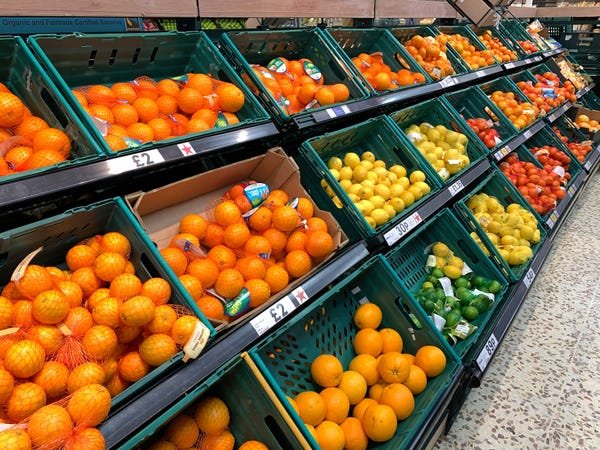
Groceries seem to expire faster, but they taste fresher.

In my experience, groceries in the UK taste much fresher.

Wirestock Creators/Shutterstock

I’ve found that some perishables can go stale very quickly here. Part of the reason is that a lot of the preservatives we add to produce in the US aren’t allowed in the UK.

Though a chicken breast or parsley would have lasted me at least a week in the US, these same goods expire within three to four days in the UK.

This has made grocery shopping a new kind of challenge, but my meals taste a lot fresher.

Non-gel, roll-on deodorant feels practically nonexistent.


A drugstore aisle in the UK.

Since moving to the UK, I’ve had a difficult time finding my favorite type of deodorant.

1000 Words/Shutterstock

One thing that was nearly impossible to find for my first three years living in the UK? A non-aerosol deodorant.

I came across a couple of sticks (also called roll-ons) in stores here, but the formulas were all gel-based. Now, whenever I’m back in the US, I stock up on my favorite non-gel, roll-on deodorants.

Conversational language is very different.


The writer poses in front of the doorway to a garden in the UK.

I was surprised to learn that casual communication is pretty different in the UK.

Nishaa Sharma

I came to the UK knowing that some words would take on new meanings: Underwear would become “pants,” for instance, and pants would become “trousers.”

Still, I didn’t expect casual small talk to look so different. It’s not uncommon to hear “You all right?” or “You OK?” while patronizing a supermarket or café.

As I quickly learned, people asking these questions usually aren’t worried about me having a bad day. They’re basically asking, “What’s up?”

The humor is much drier.


A close-up of people's hands holding pints of beer and cheersing.

I’ve had a few uncomfortable moments adjusting to British humor.

Tint Media/Shutterstock

I don’t have the strongest sarcasm detector, which made adjusting to the British sense of humor a challenge.

It took me a solid two years to get used to the self-deprecating, dry jokes here. As a sensitive soul used to America’s brand of straightforward humor, I even had to ask those around me to dial down the jabs.

Almost everything closes early — especially on Sundays.


A town center in the UK.

Even fast-food restaurants tend to close at about 10 or 11 p.m. in my UK town.

Pete Stuart/Shutterstock

Outside major cities such as London, Birmingham, and Manchester, it’s unusual to find shops open after 5 p.m. — or 6 p.m., if you’re lucky. Even grocery stores typically close by 8 p.m. on weekdays.

On Sundays, most local shops and eateries shut down even earlier. Pubs typically serve Sunday roast dinner between 12 and 4 p.m., and the average town center is fully quiet by 4 p.m.

This was an adjustment for me. Growing up in Oregon, grocery stores were typically open until 9 p.m., and some near my college in Southern California didn’t even close until 1 a.m.

I find myself walking much more often.


A nature trail in the UK.

There’s no shortage of nature trails throughout the UK.

edhphotography/Shutterstock

In most of the US, having a car is a necessity.

In the UK, meanwhile, many of the town centers I’ve lived around — and explored — are designed to be more walkable, with roads limited to pedestrian, bus, and cyclist access only.

The UK’s walking culture has also affected my social life and leisure activities. Though I lived near some beautiful greenery in the US, I often had to drive to visit a walkable nature trail.

Here in Southwest England, though, I’ve found many nature pathways in both bigger cities and smaller towns. Now, walks are a major part of our weekends and social lives.

The average salary is lower here — but the PTO allowances are higher.


A town street in Somerset, UK.

I was surprised and disappointed by UK salaries.

Helen Hotson/Shutterstock

One of the biggest drawbacks of living and working in the UK is that the pay is generally lower.

For example, according to data from the Office for National Statistics, the median household income in the UK in 2024 was £36,700.

The same year, census data showed that the median household income in the US was just over $83,000 — a salary that would’ve been worth at least £60,000 at the time.

On the plus side, full-time employees receive a minimum of 28 paid days off a year here in the UK, whereas US workers aren’t guaranteed any.

We also have a universal healthcare system in the UK, which helps bridge the pay gap in some ways.

The country feels pretty well-connected by public transportation.


Tower Bridge in London on a cloudy day.

Whenever I travel to London, I have an easy time getting around.

Nishaa Sharma

Even though I live in a remote town in the countryside, accessing the major cities is still easy. Many of the UK’s buses and trains run almost every hour.

Whenever I’m in London, I find the nation’s capital easier to navigate than many US cities. The city’s tube system is intuitive and fast, with tubes departing roughly every five minutes.

On the other hand, many trains I’d used to travel between US cities felt slower and more outdated. When I was in college, even getting around a major city such as Los Angeles felt next to impossible without a car.

Still, trains within the UK cost more than flights to mainland Europe.


A train on an autumn day in the UK.

Train prices in the UK can vary.

David Hughes/Shutterstock

Though trains to London are frequent and fast, they can also be really expensive.

A weekday round-trip ticket can cost up to £150 from where I live, nearly triple the price of a budget flight to Spain, Croatia, or Greece.

On the flip side, though, the accessibility of mainland Europe is one of the best parts of living here — and makes planning those extra PTO days I’ve banked much more fun.

This story was originally published on June 2, 2025, and most recently updated on March 9, 2026.


Source link

Im-an-American-married-to-a-French-man-We-have.jpeg

I’m an American married to a French man. We have a lot in common, but there are a few cultural divides we can’t bridge.

I moved from New York to Berlin as a single woman in 2017.

Finding love wasn’t at the top of my to-do list, but I was open to the possibility — and aware that the odds of making a dating-app match with someone of another nationality were much higher than if I had stayed stateside.

So I wasn’t exactly surprised when a dashing Frenchman, who’d eventually become my husband, whisked me off my feet.

We managed to ignore the cultural divide during those first six months of honeymoon-phase bliss. It was easy since he was fluent in English and I had a basic knowledge of French, but the longer we went on, the harder it became to pretend we hadn’t had upbringings in countries thousands of miles apart.

We’re lucky to have a lot of common interests and have agreed on our major values since day one — but we’ve come to accept that there are some ways I’ll always be a little too American for him and he a little too French for me.

We have opposite approaches to self-medication


The writer and her husband posing in the bleachers at a sporting event.

The first time my husband saw how much ibuprofen I owned, he was shocked.

Audrey Bruno


Reliable health insurance was never a sure thing for my family when I was growing up.

That meant that we’d often treat illnesses on our own when possible, keeping the medicine cabinet stocked at all times with Costco-sized bottles of every over-the-counter painkiller you can imagine.

I didn’t think twice when I packed my suitcase with several bottles of ibuprofen, but they were a shock to my husband the first time I took one out in front of him.

In France, painkillers like ibuprofen and acetaminophen aren’t easy to buy in bulk or get at the grocery store — and even at pharmacies, you can’t grab them off the shelf yourself.

Instead, you have to get them straight from the pharmacist, who will then typically debrief you on proper usage and dosage.

From his point of view, I take way too much ibuprofen … but on the other hand, the natural remedies he has always used often don’t cut it for me.

Just this week, I came down with a cold, and he brought me a homeopathic essential-oil treatment when I asked him to pick up medicine. I’ve been using it to appease him, but you better believe I also sent him back to get the ibuprofen I really needed.

My husband’s French dining habits are different from my laid-back, American approach

My husband and I often have trouble aligning when and what we eat because of our different appetites and cultural approaches to dining.

In France, eating routines tend to be pretty rigid. Lunch happens at noon sharp, breakfast is always sweet, and the only time of day most people snack is at 4 p.m. for their “goûter” — the childhood habit of taking a sugary, late-afternoon treat that many French folks, including my husband, carry with them long after they’ve left the schoolyard.

My approach, meanwhile, mirrors the free-form way I ate in the US. Snacks are always on hand, breakfast is often skipped, and dinnertime could easily take place early one night and late the next.

Neither of us has been able to fully adapt to the other’s eating style, but we try to make time to enjoy at least one meal together a day — usually dinner. That way, we can find something we agree on, and a time to eat it, and get what we both want the rest of the time.

We often don’t agree on how or when to share our personal space


The writer and her husband kissing on a pathway, with a green landscape in the background.

We’ve been able to bridge the cultural differences we have.

Audrey Bruno


I’ve always had an open-door policy for friends and family, and welcomed the opportunity to hire a housesitter or leave my apartment to a friend to watch my cats when I’m out of town.

I don’t mind if they make themselves at home while they’re at it — whether that means sleeping in my bed or using my shampoo and conditioner — possibly because I grew up watching my own parents always offer the same.

This, however, is out of the realm of possibility for my husband. The first time I proposed such an idea before a long vacation, he shut it down.

“In France, people don’t do that,” he said. “We want to sleep in our own beds at the end of the day.” Friends will swing by to feed the cats and change the litter, but that’s it.

There’s also a limit to how long he feels comfortable hosting guests when we are on the premises — but he’s learned to adapt to longer stays in order to accommodate my loved ones who have to travel from afar.

When we first met, the longest stretch he could tolerate was a long weekend, but we’ve since hosted my California-based siblings for several weeks with no complaints on his end (OK, maybe just a few).

So, although we may both never be totally on board with each other’s cultural quirks, at least we know that we’ll always try to meet in the middle.


Source link

Im-a-British-mom-in-the-US-who-only-connected.jpeg

I’m a British mom in the US who only connected with other Brits. Now, in my 50s, my closest friends are American.

My move to San Diego came at the end of a long, restless journey around the world.

I left London for Australia at 22, not long after my mom died. I’d spent the final year of her life as her full-time caregiver as she battled with cancer.

When she was gone, I needed to escape my hometown.

I’ll never forget my friend seeing me off, excitedly saying, “You’re so lucky to move to Australia!” I forced a smile because I felt the complete opposite. I was literally running away from my grief.

For the next 15 years, I moved countries every few years, filling my life with adventure while trying to find purpose. Distraction is powerful, and it worked to some degree.

Melbourne came first, then Los Angeles, back to Sydney, and eventually Dubai in the Middle East. I chased my dream of becoming an actor, built a journalism career, and went on overland camping trips through India and Africa.

Deep down, though, I knew I was seeking a “big life” to avoid the sadness of losing my mom.


Mother and daughter on the beach together.

Collins left London at 22, after her mom died.

Provided by Madeleine Collins


Building bonds far from home

Wherever I lived as an expat, I formed close friendships with local women — apart from Dubai, where friendships with Emirati women were either discouraged or impossible.

Often, my closest friends were the women I lived with. Some of my roommates had family nearby and folded me into their lives. I spent Christmases with them and found comfort in borrowed families.

None of them were British, and I never sought that out. As a result, some of my dearest friends are now scattered across the globe.

Motherhood changed everything

I met my husband during a vacation to his native South Africa, and we bonded over our shared experiences of travel and adventure.

However, when we moved to San Diego with our baby daughter in 2009, everything — including, apparently, me — changed.

Suddenly, the unknown scared me. Adventure was replaced by Target and Trader Joe’s runs, and surviving sleep deprivation.

I joined local moms’ groups but felt out of sync. The language was different — “dummy” became “pacifier,” “pram” became “stroller” — but the deeper disconnect came from conversations I couldn’t join. Many women had grandparents nearby who helped with childcare or stepped in on weekends. I had no one, and constantly felt like an outsider.

It was hard to tell whether we had anything in common beyond motherhood, and I often wondered whether people assumed I’d eventually move back to England.

Luckily, I found a nearby British mom’s group. One friendship led to another, and soon I discovered a whole network of us in San Diego.

It felt comforting: the shared humor, the homesickness, the feeling of being outsiders together. The kinship was powerful, but it also marked a shift in me that I didn’t like.

The expat bubble I didn’t recognize

At some point, I noticed I’d become someone I didn’t recognize. I often joked that I only wanted English friends — and I meant it. It turned into a casual “them and us” mentality, even though we all felt lucky to live in California.

For someone who had moved country so many times and embraced all the challenges that come with it, I became cocooned in an expat bubble of my own making.

It felt wrong — embarrassing, even — to live in a country while avoiding the people from here. I worried that this smaller, more fearful version of myself was permanent.


A group of four women in their 50s.

In her 50s, she made friends with American women in her book club.

Provided by Madeleine Collins


Turning 50, and opening up again

Then I hit my 50s, and things changed again.

Because I had children in my early 40s, most of my English friends were about a decade younger than me, and they couldn’t relate to my new midlife woes. Mentioning HRT over dinner was met with silence and a sympathetic smile. I found myself prefacing everything with, “Well, because I’m older…”

Around that time, I joined my neighborhood book club, which was made up entirely of American women in their late 40s, 50s, and 60s. They were funny, warm, and deeply interesting. The group included women from all walks of life, from a nanny to a scientist.

After discussing the book each month, conversations quickly turned personal. We bonded over menopause, parenting teenagers, and aging parents. These women became my people.

Finding a sense of belonging

I still value my English friends in San Diego, but my American friendships have instilled in me a sense of belonging.

They laugh at my English-isms, which I love, but I’ve learned that belonging isn’t about shared accents or passports. It’s about shared seasons of life.

While I would still move home to be near my extended family, my husband doesn’t want to, and our children are in the education system here now. This season isn’t changing any time soon, and I’m finally happy about that.

Do you have a story to share about living abroad? Contact the editor at akarplus@businessinsider.com.


Source link

Headshot of Chris Panella.

Top American admiral in the Middle East says the US struck an Iranian drone carrier. He said ‘it’s on fire.’

The US struck an Iranian drone carrier, and the vessel is currently on fire, the top American admiral in the Middle East said.

Iran’s drone carriers are specialized crewed combat vessels capable of launching a mix of one-way attack drones and uncrewed reconnaissance and strike platforms. Destroying Iran’s naval forces, including warships, has been named a priority by US President Donald Trump and other officials in Operation Epic Fury.

On Thursday afternoon, Adm. Brad Cooper, commander of US Central Command overseeing the Middle East, said, “In just the last few hours, we hit an Iranian drone carrier ship, roughly the size of a World War II aircraft carrier, and as we speak, it’s on fire.”

Cooper didn’t elaborate on where the carrier was located or what it kind of munition hit it. He said that US forces have sunk over 30 Iranian vessels since the start of Operation Epic Fury last weekend.

Tehran has multiple vessels capable of serving as launch platforms for drones, including a former tanker converted into a forward base ship that was seen smoking at its home port in recent satellite images, but Iran’s dedicated, purpose-built drone carrier is the IRIS Shahid Bagheri.

Cooper didn’t identify the targeted Iranian vessel.

The Shahid Bagheri, formerly a container ship before it was reworked and commissioned into the navy last year.

The Iranian vessel features a ski jump-style ramp, one similar in some respects to those on Soviet-built carriers like the Russian Admiral Kuznetsov or Chinese derivatives, that are used to launch aircraft. The vessel can launch a mix of different drones.

During Thursday’s briefing, Cooper also offered several other updates on the US war in Iran. He said that within the last 72 hours, US bombers had struck nearly 200 targets “deep inside of Iran, including around Tehran.” In the last hour, he said at the 5 pm EST event, US Air Force B-2 Spirit bombers dropped “dozens” of 2,000-pound penetrative bombs on buried ballistic missile launchers.

The last day of operations, compared to the start of the conflict, has seen dramatic decreases in Iranian attacks beyond its borders, Cooper said. Ballistic missile attacks are down by 90% and the drone attacks are down by 83%. Reductions in these attacks reduces the strain on air defenders and interceptor stockpiles.

US forces have also targeted Iran’s equivalent of US Space Command, Cooper said, “which degrades their ability to threaten Americans.”


Source link

Trump-warns-of-more-US-troop-deaths-after-3-American.jpeg

Trump warns of more US troop deaths after 3 American service members were killed in the Iran conflict

Three American service members have been killed and five seriously wounded as part of combat operations against Iran, the US military said on Sunday.

It is the military’s first acknowledgement of any US losses since American forces began striking Iran alongside Israel on Saturday.

“Several others sustained minor shrapnel injuries and concussions — and are in the process of being returned to duty,” said US Central Command, which oversees Middle East operations.

CENTCOM did not specify how or where the service members were killed and wounded or whether the losses were sustained during offensive or defensive operations. It declined to offer additional information.

“The situation is fluid, so out of respect for the families, we will withhold additional information, including the identities of our fallen warriors, until 24 hours after next of kin have been notified,” CENTCOM said in a statement, adding that combat operations will continue.

President Donald Trump on Sunday vowed vengeance for the service members killed.

“As one nation, we grieve for the true American patriots who have made the ultimate sacrifice for our nation, even as we continue the righteous mission for which they gave their lives,” he said.

“And sadly, there will likely be more,” Trump added. “Before it ends. That’s the way it is.”

Trump had said on Saturday that the US could suffer losses as a result of the conflict with Iran.


A missile launches from a US warship during operations against Iran.

The US military did not say where or how the casualties occurred.

US Central Command


“The lives of courageous American heroes may be lost, and we may have casualties. That often happens in war,” Trump said in a video address to the nation. “But we’re doing this — not for now — we’re doing this for the future, and it is a noble mission.”

Dozens of people have been killed and wounded by Iranian strikes in Israel and the United Arab Emirates, and hundreds of people in Iran have been killed and wounded by US and Israeli strikes, according to local authorities.

The Israeli military said on Sunday that it has killed 40 senior Iranian commanders, as well as the country’s Supreme Leader Ayatollah Ali Khamenei.

A wide range of American forces — on land, in the air, and at sea — have participated in the airstrikes against Iran, targeting the Islamic Revolutionary Guard Corps’ (IRGC) command and control facilities, air defenses, missile and drone launch sites, and military airfields.

US forces have also been involved in air defense operations to shield American assets and allies across the Middle East from hundreds of Iran’s retaliatory missile and drone attacks.

Iran has fired missiles at US forces based in Qatar, Kuwait, Bahrain, and the UAE and has also targeted other Middle East countries, including Israel, Saudi Arabia, Oman, and Iraq.


Source link

What-to-do-if-youre-an-American-in-the-Middle.jpeg

What to do if you’re an American in the Middle East right now

Americans in many Middle Eastern countries have been advised to shelter in place after the US and Israel launched strikes against Iran on Saturday.

The US Department of State Consular Affairs and related embassies posted on X that US citizens in countries including Iran, Bahrain, Jordan, UAE, Qatar, were advised to shelter in place until further notice.

Hours later it posted guidance for US citizens in Iraq, advising them to “exercise increased caution, limit their movements, and be prepared to shelter in place.”

“There are reports of missiles, drones, or rockets in Iraqi airspace. The security environment remains complex and can change quickly,” the US Department of State Consular Affairs wrote.

“If you are in Iraq, you should review your personal security plan and evaluate options to shelter in place or depart Iraq should the situation deteriorate,” it continued.

The US Embassy in Jerusalem said it had directed all US government employees and their families to shelter in place, and that Israel had closed airspace to all civilian flights.

The US Department of State Consular Affairs also warned of imminent drone and missile attacks in Bahrain.

Read more of our coverage:

The US Embassy in Beirut wrote that the Department of State “urges U.S. citizens to depart Lebanon now while commercial options remain available.”

Iran, Iraq, Kuwait, Bahrain, and Qatar have closed their airspaces. A video shared on Flightradar24 showed airplanes leaving the region.

Of the approximately 3,400 flights scheduled to the region, 230 were cancelled as of 12 p.m. Central European time, while 40 due to fly on Sunday were preemptively cancelled.

Airports in the region shared travel updates online. Dubai Airports said all flights at Dubai International and Dubai World Central – Al Maktoum International were suspended until further notice. It advised passengers not to travel to those airports at this time, and to contact their respective airlines for updates on flights.

King Abdulaziz International Airport in Saudi Arabia, Hamad International Airport in Doha, and Abu Dhabi Airports gave similar advice to passengers.

In a video statement posted on social media on Saturday, President Donald Trump vowed to destroy Iran’s missile program and navy and said the objective of the strikes is to “defend the American people by eliminating imminent threats.”

“My administration has taken every possible step to minimize the risk to US personnel in the region. Even so — and I do not make this statement lightly — the Iranian regime seeks to kill,” Trump said.

“The lives of courageous American heroes may be lost, and we may have casualties. That often happens in war,” Trump continued.

This is a breaking story and will be updated.


Source link