
Summer-travel-is-getting-more-expensive-and-chaotic-More-Americans.jpeg

Summer travel is getting more expensive and chaotic. More Americans are staying home.

The Crook family is trying to ignore one thing hanging over their approaching Hawaiian vacation: the fact that it might not happen. Granted, it wouldn’t be the first time they’ve changed plans this year. They initially wanted to go to Cancún, but they scrapped that idea due to unrest in Mexico in February. They instead pivoted to Maui, but the getaway is on the books in pencil, not pen. They intentionally booked accommodations with lax cancellation policies, and if they wind up dropping their flights, at least they’ll get to keep the airline credit. “Everything’s kind of hedged,” says Colin Crook, 51, the California family’s patriarch.

Crook’s wife is a teacher, meaning there’s little wiggle room for vacations outside the summer months. He does freelance PR, which is more flexible in terms of scheduling but less stable in terms of job security. “The economic uncertainty of being a laptop warrior — as an email professional or a white-collar professional right now — it’s just very up in the air,” he says. “With everything going on in the economy and the world, we just feel like it’s like month to month, what can we do?”

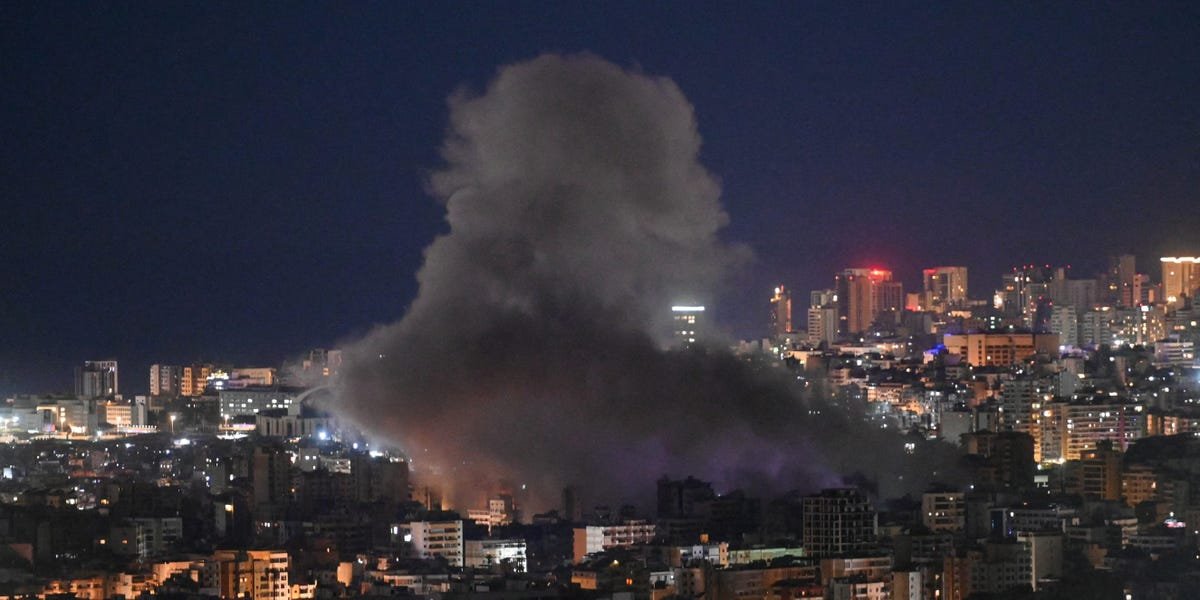
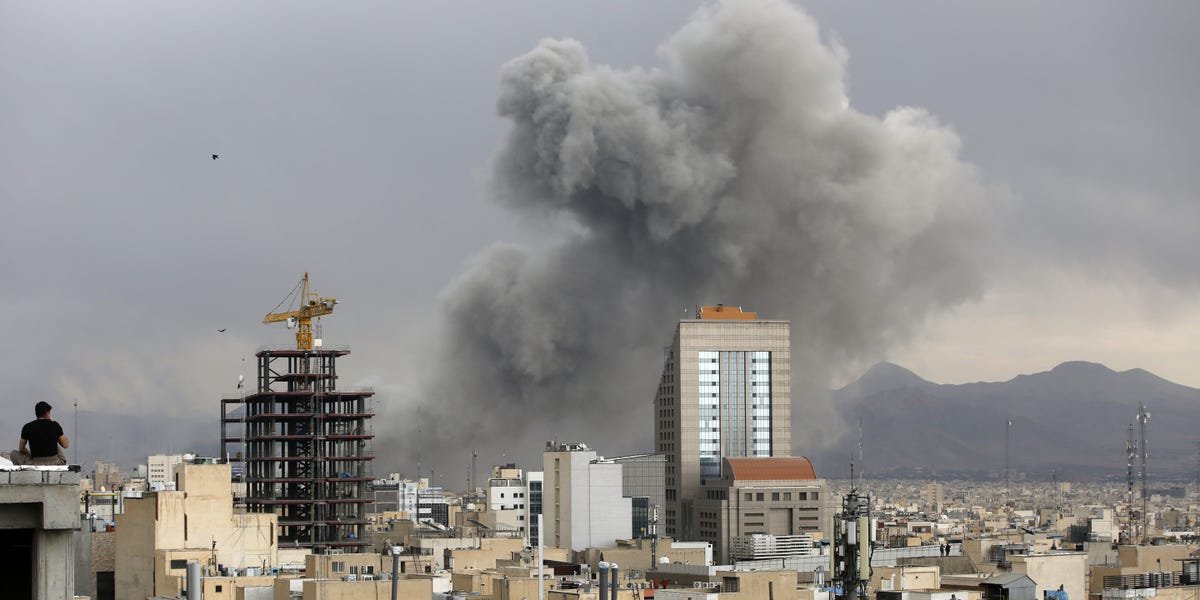
Many Americans are weighing similar issues. It’s a complicated moment for travel planning. The United States’ war in Iran has caused major travel disruptions in the Middle East, and it’s led to a spike in oil prices, making fuel and gas — and therefore flights and drives — more expensive. It’s upped anxiety for consumers and workers who are already on edge about inflation, the job market, and a potential recession. Americans aren’t exactly feeling the love from foreign hosts as of late, either, given the White House’s antagonistic foreign policy stances and general tourism fatigue in some desirable destinations.

With the spring and summer travel seasons upon us, Americans are considering a pared-down option: staying local. Taking a getaway without actually getting away can save money, avoid travel chaos, and represent a low-lift, low-stress option for some R&R. When a lot about the world feels uncertain, there’s a comforting level of security in sticking close to home. And hey, 11 US cities have World Cup matches, so you may be able to afford tickets instead of an increasingly expensive flight to France.

While hope springs eternal for a Hawaiian holiday, Crook has set a mental deadline of mid-April to decide whether to pull the plug. If he does, there are options closer to home. “We might just be camping a lot this summer, which is fine, right?” he says.

While 2025 was the year of the road trip, 2026 may be the year of the staycation.


Some Americans appear to be cooling on international jaunts, including frequent foreign travelers. Polling last fall by YouGov found that 43% of respondents who travel abroad regularly did so less over the past year, citing personal issues, economic uncertainty, and rising travel costs. A recent analysis by Cirium, an aviation analytics company, found that third-party air travel bookings from US hubs to major European cities this summer have fallen by 11% compared to last year. (The number of Europeans coming to the US is down even more sharply.)

“Consistent with prior episodes, I anticipate a move toward closer, less expensive vacation destinations will occur naturally, as a function of economic concerns driving greater affordability, and geopolitics driving some away from areas with greater perceived risk,” says Bob Mann, an aviation analyst.

There’s really not necessarily a ceiling on how high prices will go.

People aren’t just thinking twice about going abroad — they’re taking a hard look at where they’re going Stateside. For spring break 2026, some people are planning to stick close to home or skip a trip entirely, due to economic concerns and TSA headaches. While high gas and fuel prices don’t appear to be significantly affecting domestic summer travel plans yet, that could change as the warmer months approach, especially if the price at the pump stays elevated.

Many people feel stuck between a rock and a hard place: Do they book a flight now out of fear the cost equation will get worse, or do they hold off and hope for some relief? And if they do eschew the plane ticket, how good will they feel about that July road trip if gas is $4, $5, or $6 a gallon?

Patrick De Haan, the head of petroleum analysis at GasBuddy, a fuel price-tracking app, tells me the outlook is extremely murky, given the ongoing conflict in Iran and its effective blockage of the Strait of Hormuz, the world’s most important oil route. Gas prices are already up by $1 per gallon over the past month.

“As long as the situation continues and the Strait of Hormuz sees no meaningful improvement in terms of ships navigating through, gas prices will continue to go up. And there’s really not necessarily a ceiling on how high prices will go,” he says.

Cruises may not be immune to the economic context, either. Many cruise lines added fuel surcharges in 2008 to offset rising oil prices, and there are concerns they could do so again. One line, in Asia, already has, and it’s in the fine print for many cruise lines that they can, whether you’ve booked already or not. Royal Ahmadi, the senior vice president and general manager of The Vacation Group, a leisure travel agency that focuses on cruises, tells me he thinks cruise lines are better prepared to absorb the blow. “They already pre-planned a lot of that stuff, so this way they don’t have to raise the prices to accommodate that,” he says. Above all, his clients are concerned about TSA lines, but he says they’re generally forging ahead with bookings for now.

It’s not only the direct cost of travel that’s making people sweat. Americans may see their budgets tighten thanks to exceptionally high diesel prices. Since diesel is used by trucks to transport all the basics we need, it could lead to higher prices across the board — leaving families with less money to book a faraway vacation.

“The 2008 buzzword ‘staycation’ is coming back,” De Haan says — a tough comparison given that it was a moment when the economy was in freefall and gas prices exploded.


Economics aside, there are other reasons people might want to keep their adventures a little less adventurous.

Concerns about overtourism sparked a backlash against foreign visitors in popular destinations such as Italy, Spain, and Japan. Americans: If you’re frustrated to be surrounded by a bunch of other Americans in Barcelona, imagine how the Barcelonans feel. The city is doubling its tourist tax to drive home the point.

Donald Trump’s foreign policy isn’t helping either. The president has alienated multiple allies, including Canada and many European Union countries, over issues such as trade and defense. US strikes in the Middle East have caused global disruption. As much as foreigners are aware that individual American tourists are not responsible for the White House’s decisions, they may not be thrilled to welcome a brigade of star-spangled visitors, either.

It’s just uncertainty in every aspect of the travel experience right now.

Safety concerns are playing a factor for some Americans as well. In February, drug cartel violence broke out in Mexico, leaving many travelers stranded. Of course, spending a week completely protected and locked in a high-end resort is not the worst-case scenario, but it’s not ideal, either. In the wake of the US and Israel’s attacks on Iran and Iran’s retaliation, many people found themselves in places in the Middle East that became dangerous overnight. The US State Department recently issued a “worldwide caution” alert, warning Americans everywhere to be extra careful.

Dan Ahern, 27, tells me he’s “monitoring the situation” ahead of his June trip to Armenia, which shares a short border with Iran. The New York-based communications professional’s travel plans are full-speed ahead for now, though he’s keeping an eye on the news and the State Department’s travel advisory list on his radar. He’s also worried about anti-American sentiment. “It’s just uncertainty in every aspect of the travel experience right now,” he says.


Not every vacation needs to be a staycation, but if there’s ever a year to do it, 2026 could be it.

Many domestic destinations could use an economic boost, especially due to the drop in international tourism to the US. That means shorter lines and better deals in places such as Disney World or the Grand Canyon that are typically swamped with foreign visitors.

World Cup matches will be within striking distance, literally and figuratively, for many Americans, especially as lower-priced tickets become available. For someone in New York or New Jersey, MetLife Stadium is only a (slightly miserable) train or bus ride away.

There are no TSA lines required for finally cleaning out your closet, catching up on your reading, or visiting that cute local gallery you’ve been meaning to check out.

There’s freedom in exploring an island in Greece. There’s also freedom in knowing you don’t need to respond to a 7 am email from your boss for a week, even if you’re not responding from the comfort of your own bed.


Emily Stewart is a senior correspondent at Business Insider, writing about business and the economy.

Business Insider’s Discourse stories provide perspectives on the day’s most pressing issues, informed by analysis, reporting, and expertise.


Source link

The-State-Department-says-its-boosting-flights-across-the-Middle.jpeg

The State Department says it’s boosting flights across the Middle East to get Americans home

US embassies in the Middle East are changing their language about helping US citizens evacuate from the region.

Previously, multiple embassies said they were unable to assist citizens in leaving, urging them to evacuate by commercial means. The embassy in Jerusalem said in a notice on Tuesday: “The US Embassy is not in a position at this time to evacuate or directly assist Americans in departing Israel.”

However, they are now issuing notices telling Americans that government assistance is available.

In an X post late on Wednesday, the US Department of State said, “Today, a Department of State charter flight of American citizens departed the Middle East in route to the United States, as part of our ongoing efforts to assist Americans return home.”

It added that “additional flights will be surged across the region.”

The post did not say which Middle Eastern country the charter flight on Wednesday had departed from. The State Department post included photos showing consular staff standing next to US Embassy banners at an airport, with the country’s name blurred on the signage.

The embassy in Jerusalem said in a late Wednesday notice that the US government is “ready to help Americans leave the Middle East if you choose to take advantage of the options available.”

A security alert by the US embassy in Kuwait communicated the same message.

In the notice, the embassy added a link to a crisis intake form, which included the option, “I am seeking U.S. government departure assistance.”

The US embassy in Riyadh, Saudi Arabia, said in an X post on Wednesday that “Americans trying to get home from Israel, Saudi Arabia, the United Arab Emirates, or Qatar,” should fill out the crisis intake form.

The Wednesday notice from the embassy in Doha, Qatar, however, said it’s “currently exploring options to assist U.S. citizens in reaching a safe destination,” but did not provide a link to the crisis intake form.

The State Department said on Monday that Americans in the following countries should vacate: Bahrain, Egypt, Iran, Iraq, Israel, the West Bank and Gaza, Jordan, Kuwait, Lebanon, Oman, Qatar, Saudi Arabia, Syria, the United Arab Emirates, and Yemen.

In a Monday X post, the US Department of State Consular Affairs shared three steps for US citizens in the region to follow:

1) Enroll in http://step.state.gov for security updates from the nearest US Embassy.

2) Follow @travelgov on social media or the WhatsApp channel “U.S. Department of State – Security Updates for U.S. Citizens.”

3) For emergency assistance, call:

  • +1-202-501-4444 from overseas
  • +1-888-407-4747 from the US and Canada

Air travel remains disrupted

Meanwhile, commercial air travel remains disrupted. Most airports in the region, such as Dubai International Airport and Zayed International Airport in Abu Dhabi, are telling customers not to come unless their airlines have confirmed their flights. Travellers in the region spoke to Business Insider about feeling stranded and terrified.

Some Emirates flights have resumed, prioritizing travelers with earlier bookings. The airline said in a Wednesday X post that it continues to operate a “limited flight schedule,” and data from FlightRadar24 shows that Emirates has scheduled flights on Thursday to Warsaw, San Francisco, Chicago, Tokyo, and other destinations.

Representatives for the State Department did not respond to a request for comment from Business Insider.


Source link

Multiple-US-embassies-are-telling-Americans-they-cannot-evacuate-or.jpeg

Multiple US embassies are telling Americans they cannot evacuate or help them get out of the Middle East

American citizens across the Middle East are attempting to follow official advice and evacuate as conflict escalates in the region following US and Israeli attacks on Iran on Saturday.

But multiple US embassies have said they are unable to help citizens trying to leave.

“The U.S. Embassy is not in a position at this time to evacuate or directly assist Americans in departing Israel,” the US Embassy in Jerusalem said in a post on X on Tuesday.

The embassy shared that the Israeli Ministry of Tourism was operating shuttles to a border crossing between Egypt and Israel at the town of Taba.

“If you choose to avail yourself of this option to depart, the US government cannot guarantee your safety,” said the US embassy, adding that they were sharing the information “as a courtesy to those wishing to leave Israel.”

President Donald Trump was asked in the Oval Office on Tuesday why evacuations hadn’t been planned beforehand, and whether he would charter planes to evacuate Americans from the region.

Trump largely didn’t address the question, other than to note how quickly the conflict broke out.

“It happened all very quickly,” Trump said. “I thought we were going to have a situation where we were going to be attacked.”

In Qatar, where Iranian retaliatory strikes have hit key energy facilities, the country’s US embassy issued a travel advisory on Tuesday, also warning American citizens they were unable to help them evacuate, saying that they should “take advantage of commercial transportation options.”

The US embassy in Qatar advised Americans who chose to stay to create a contingency plan, but said that “these alternative plans should not rely on the US government for assisted departure or evacuation.”

Most US embassies in the region have suspended normal operations as staff shelter in place, and some have shut down entirely due to heightened security risks.

On Tuesday, the US Embassy in Saudi Arabia issued a stark warning to citizens to stay away from its consulate in Dhahran, a coastal city in the east of Saudi Arabia, due to “a threat of imminent missile and UAV attacks” over the city.

“Do not come to the US Consulate,” the US Embassy in Saudi Arabia said.

On Monday, the US embassy in Jordan announced that all its personnel had temporarily departed the Embassy compound “due to a threat.” It did not specify the threat.

Iran has launched a barrage of retaliatory missiles against US allies in the region, hitting sites including US military bases, Dubai’s Burj Al Arab hotel, and the US embassy in Riyadh.

The list of countries Americans are being urged to depart from immediately is as follows: Bahrain, Egypt, Iran, Iraq, Israel, the West Bank, and Gaza, Jordan, Kuwait, Lebanon, Oman, Qatar, Saudi Arabia, Syria, the United Arab Emirates, and Yemen.

Iran, Iraq, Kuwait, Bahrain, and Qatar have closed their airspaces.

As of Tuesday, Dubai International has resumed limited flight services but continues to instruct travelers not to come to the airport unless their flight has been confirmed.

Wealthy travelers and expats in the UAE have turned to private jets and chauffeured drivers to help them flee the region, but many have been caught up in lengthy border crossings amid the rush to Saudi Arabia and Oman, where some flights were still departing.

Monica Marks, a professor at NYU Abu Dhabi, posted on X, wondering how Americans are supposed to leave the Middle East without government help.


Source link

Puerto-Vallarta-became-a-favorite-escape-for-Americans-Now-some.jpeg

Puerto Vallarta became a favorite escape for Americans. Now some are rethinking Mexico travel.

Hannah Donovan is four months pregnant. And with two little ones already at home, she and her husband had been banking on one family trip before life got even more hectic.

Puerto Vallarta was meant to be a babymoon — a chance to meet up with family nearby, soak up the sun, and actually relax for a few days.

However, less than 24 hours before they were set to head to their airport in Idaho, videos and pictures of burning cars and billowing smoke began circulating on social media.

Donovan said the images she saw online followed reports that Mexican forces carried out an operation on Sunday in Tapalpa, Jalisco, that killed Nemesio “El Mencho” Oseguera Cervantes, the leader of the Jalisco New Generation Cartel. The incident sparked retaliatory violence across multiple cities in Mexico, including in Puerto Vallarta.

The Donovans have since canceled their trip to Mexico and will play it by ear on whether they’ll try to visit Puerto Vallarta later.

“We’re incredibly grateful we’re not there, but we’re worried about the people who are, including travelers and our family who live there,” Donovan, 28, told Business Insider. “We’re definitely a little traumatized by the situation.”

Americans are rethinking their travel plans to Puerto Vallarta

The Donovans are among many Americans rethinking trips, moves, and stays in the region after chaos flared across parts of Mexico following the killing of Oseguera Cervantes on Sunday. Four people at the scene were killed, according to authorities. Three others — including Oseguera Cervantes — were wounded and later died, and two people were arrested. Three members of the armed forces were also wounded.

It comes after President Donald Trump designated the cartel a foreign terrorist organization. White House press secretary Karoline Leavitt said the US provided intelligence support for the operation, but stopped short of offering details on how. The administration has prioritized cracking down on Latin American cartels, urging leaders to take a harder line and deploying military force against suspected drug-smuggling vessels in the eastern Pacific and Caribbean.

In the hours since, the US and Canadian governments have urged citizens in some areas to shelter in place, and said most domestic and international flights in Guadalajara and Puerto Vallarta were grounded. On Monday, Mexican President Claudia Sheinbaum called for calm in the country, but many of those flights remained canceled.


Smoke over the city of Puerto Vallarta.

Smoke over the city of Puerto Vallarta.

@morelifediares via Instagram/Youtube/@morelifediares via REUTERS


Mexico has become increasingly popular with American tourists, drawn by its vibrant nightlife, strong culinary scene, and affordability compared to other trendy international destinations such as France and Japan.

“Americans, especially on the West Coast, have long used it as an inexpensive place to go on vacation,” Robin Ingle, a specialist in travel security, told Business Insider.

Mexico has also seen a surge in tourism from people who previously would have traveled to the US but are avoiding the country for various political or financial reasons, he said.

“A lot of the people I’ve spoken to over the weekend would have gone to places like Florida, California, Arizona — now they’re going to Mexico instead,” he said of the tourists he’s spoken to since cartel violence broke out.

But as unrest spreads, some Americans who had planned to vacation or relocate there, or who are already in Mexico, are watching those plans unravel.

Business Insider spoke with three of them about what comes next.

Doug Howell will return to the US if things get worse

Doug Howell, a retired sales and distribution executive from the Spokane, Washington area, bought a rental place in Puerto Vallarta and now spends roughly six months a year there — a routine he’s kept up for the past 20 years.

“It’s very vibrant,” Howell, 63, told Business Insider. “I like to walk around the neighborhoods, everything is pretty close, or a short bus ride away if you want to check out the beaches or the waterfalls. There’s always something to do, and the food is incredible.”


Doug Howell and his two daughters at a restaurant in Mexico.

Doug Howell and his daughters.

Courtesy of Doug Howell


On Sunday, Howell said he was standing on his balcony when he started hearing explosions, then saw plumes of smoke rising nearby. Before long, he said, he noticed highways and roads in and out of the area had been blocked off.

He was scared at first, he said, and hunkered down with neighbors.”We just stayed inside all day yesterday, and I didn’t go anywhere,” he recalled. “They actually bombed a store on a corner and a car on the bridge that’s not even a quarter of a mile away.”

By Monday, Howell, a member of MedJetHorizon — a global air medical transport and security response membership that provides evacuations — said things had calmed down in his neighborhood.

“They’re already on it today, and people are supporting each other in the community — that’s what I like about it,” he said. “One question everybody asks me: Is it safe? And it’s like, yeah, it is, unless you go to the wrong place at the wrong time. And that’s anywhere in the world.”

For now, Howell plans to stay in Mexico, but if things worsen, he said he plans to return to the States.

Linda Armijo worries about the future of the city

Linda Armijo and her husband have been visiting Puerto Vallarta for the past 25 years.

In January, they returned for a three-month stay in the city’s Marina Vallarta district, an upscale, waterfront area in northern Puerto Vallarta.

Armijo said that on Sunday, after her husband’s massage therapist warned that roads downtown were blocked, she went up to the rooftop terrace of their condo, which overlooks the city. From there, she said she could see five or six plumes of smoke.


A husband and wife take a selfie, smiling at the camera.

Linda Armijo and her husband have been spending time in Puerto Vallarta for 25 years.

Courtesy of Linda Armijo


Smoke isn’t entirely unusual in Puerto Vallarta — controlled burns are common — but Armijo said this was more than she typically sees. “I came down to our condo and told Anthony, ‘There’s something going on, there are fires everywhere,'” she recalled.

Armijo said the city was hit by a series of disruptions, including the blast of an engine as a car was set on fire, interruptions to water service, and highways and roads blocked off. Although the uncertainty has left tourists and locals scrambling, they’re relying on each other to get by.

“I met two girls from LA who are renting a condo upstairs. They were meant to fly out yesterday, and threw away all their food and supplies before learning their flight was canceled. I shared some water with them,” Armijo said. She added that a building worker told her they were also accommodating those who needed to extend their stay.


People on the street, surrounded by trees, and observing smoke.

Tourists watching fires in Puerto Vallarta.

Stringer/REUTERS


Armijo plans to stay put for now and said she isn’t especially worried about her safety. Instead, she’s thinking about what this could mean for the city.

“I feel safe in my building, and we have plenty of food and water,” the Spanish-speaker said. “It’s a minor inconvenience not being able to leave, but my biggest emotions are sadness and concern for the people of Puerto Vallarta.”

Long-term impact

In the near term, Ingle, the travel security specialist, said he expects to see an impact on the tourism scene.

“I know there’s going to be a blowback in the next month, people deciding not to go, because there’s a percentage of the population that doesn’t want to take risks,” he said. “Governments are putting out warnings, and that affects travel insurance.”

When it comes to the long-term impact, however, Ingle doesn’t see this weekend’s violence creating a lasting stain on Puerto Vallarta’s ability to attract tourists.

“If all the violence dies down quickly and gets cleaned up, I think this will go away,” Ingle said. “Normally, this will take a couple days, and then it will fix itself.”

“That doesn’t mean it’s without risk,” he added.


Source link

Kelsey Vlamis's face on gray background.

Democrats demand Trump issue $1,700 tariff refunds to Americans after Supreme Court ruling

President Donald Trump previously promised Americans tariff dividend checks, but if Democrats have their way, he could be issuing refunds instead.

After a Supreme Court ruling on Friday struck down Trump’s tariffs levied under the International Emergency Economic Powers Act, Democratic lawmakers were quick to demand that the president repay Americans through tariff refunds.

“Donald Trump should return that money immediately. He has an obligation,” California Gov. Gavin Newsom said on Friday. “$1,751 per family that were taxed by Donald Trump. He took hundreds of billions of dollars from working folks, from the ag community, from small businesses for this vanity play, this illegal action, and he finally was held to account. The rule of law won out.”

Illinois Gov. JB Pritzker sent a letter to Trump calling for refunds to families in his state.

“Your tariff taxes wreaked havoc on farmers, enrage our allies, and sent grocery store prices through the roof,” Pritzker said in the letter. “On behalf of the people of Illinois, I demand a refund of $1,700 for every family in Illinois.”

The governor also sent an invoice billing that amount for more than 5.1 million Illinois families, totaling more than $8.6 billion. The invoice said it was “PAST DUE – DELINQUENT.”

When reached for comment, White House spokesman Kush Desai responded in part by saying if Pritzker “really cared about delivering economic relief for Illinois, he’d start with his own state government instead of chasing another stupid headline.”

The offices of Newsom and Pritzker did not respond to requests for comment.

Both Newsom and Pritzker are considered potential candidates for the presidential election in 2028, and they’ve both been highly critical of Trump.

The governors appeared to be basing their requests for refunds of that amount on a report released this month by Democrats on the Joint Economic Committee in Congress. The report found American families paid an average of $1,745 in tariff costs between February 2025 and January 2026, for a total of over $231 billion paid by consumers.

Other studies, including from Harvard Business School and The Budget Lab at Yale, have found that tariff costs are largely paid by American businesses and consumers.

The Supreme Court on Friday ruled that tariffs issued under the IEEPA, a national security act, had exceeded the president’s authority. Trump denounced the decision and said he would pursue additional tariffs through other avenues.

In November, Trump touted the money being collected from tariffs and floated the idea of sending $2,000 tariff dividend checks to middle and low-income Americans, though issuing such checks would likely have required an act of Congress. In January, Trump gave mixed messages about his plans for tariff rebate checks.

Now, with the IEEPA tariffs struck down, it’s likely some American businesses will try to receive refunds for the tariff costs they paid.

Despite Democrats’ stance on the issue, there’s a lot of uncertainty about whether or how refunds would happen.

The Supreme Court ruling did not touch on issuing tariff refunds.

When Trump was asked Friday if the government would now have to issue refunds, he said, “I guess it has to get litigated for the next two years.”

Treasury Secretary Scott Bessent said Friday it was “unlikely” Americans would receive tariff refunds.

“I got a feeling the American people won’t see it,” Bessent said, adding, “My sense is that could be dragged out for weeks, months, years.”


Source link

Theron Mohamed — Profile Picture

Vinod Khosla suggests scrapping taxes for most Americans in response to AI job losses

If artificial intelligence eliminates millions of jobs, it might make sense to scrap income taxes for the vast majority of Americans and target capital instead, Vinod Khosla says.

“AI will transform economies and need a rethink of capitalism & equity,” the billionaire venture capitalist wrote in an X post on Monday. “Labor portion of economy (vs capital) will decline sharply. Should we eliminate preferential treatment of capital gains tax and equalize to ordinary income?”

Khosla — who cofounded Sun Microsystems and made the first VC investment in OpenAI — was making the point that AI replacing labor on a grand scale might warrant greater taxes on assets such as stocks and real estate.

The veteran financier, who founded Khosla Ventures after leaving Kleiner Perkins, attached a video highlighting some of the jobs that could be taken by AI, from accountants and therapists to truck drivers and chip designers.

Khosla said in a follow-up post that ramping up taxes on capital would generate so much revenue that the government could scrap taxes for most of the roughly 150 million US taxpayers.

“Could easily eliminate bottom 125 million taxpayers from the tax rolls and be revenue neutral at the same time with a capital gains tax equal to ordinary income and a few other tweaks,” he wrote.

He added that tax breaks such as carrying over tax losses and tax-free borrowing against unrealized gains — which he called a “true abuse!” — are “special interest goodies inserted by lobbyists and campaign contributions, not true capitalism.”

Khosla didn’t address common critiques of higher taxes, including that they can discourage entrepreneurship and investment, that collecting them can be tricky, and that wealthy people may leave the country to avoid them.

Khosla has previously underscored that the advent of AI may require sweeping policy changes. He estimated in late 2024 that in 25 years’ time, AI could be doing 80% of the work in 80% of all jobs, and universal basic income might be needed to compensate for job destruction.

“As AI reduces the need for human labor, UBI could become crucial, with governments playing a key role in regulating AI’s impact and ensuring equitable wealth distribution,” he wrote on his firm’s website.

Khosla isn’t alone in predicting AI will change the fabric of society. Elon Musk suggested late last year that work could become “optional” and money might become “irrelevant” if advances in AI and robotics generate abundant resources for all.

Moreover, the Tesla and SpaceX CEO recently said that retirement savings may not be needed in 10 or 20 years, as everyone might have “whatever stuff they want.”

However, skeptics such as Michael Burry of “The Big Short” fame have cautioned the AI boom is a speculative bubble, tech companies are overinvesting in microchips and data centers that will quickly become obsolete, and true AI is further away than many think.


Source link

Americans-arent-flocking-to-Florida-like-they-used-to-Higher.jpeg

Americans aren’t flocking to Florida like they used to. Higher prices are a big reason.

Kimberly Jones was born and raised in Miami, and planned to live her whole life there. It’s where she met her husband, raised her children, and built a four-decade career in logistics.

But in 2025, Jones did something she never expected: She and her husband left Plantation, Florida — nearly 20 minutes west of Fort Lauderdale — for a small rural town about an hour outside Charlotte, North Carolina.

“It was not an easy decision,” Jones, 60, told Business Insider. “Affordability was part of it, but we were also looking forward to having a slower pace of life. I lived in South Florida my entire life — and it’s not anything like what it used to be.”

Jones said Southern Florida’s population growth has made the area increasingly unrecognizable — and, for her, unlivable — pointing to hyper-development in residential construction and the gridlocked traffic she calls “ridiculous.”

“If there’s a corner available, they will build a high-rise on it,” she said. “It’s turning into an overly congested, expensive city. I used to spend two and a half hours a day in the car just going to and from work.”

People are still moving to Florida, but they’re not flocking to it like they used to. Net domestic migration — or the number of people moving into the state from elsewhere in the country minus those moving out to other parts of the US — has been steadily cooling in recent years.

There are a few likely reasons behind the cooler estimates in the Sunshine State. For some, the tax benefits of living in the state don’t outweigh the increase in cost of living. It’s more expensive to buy a home than a few years ago, and property insurance has been higher than in other states.

High housing costs have made Florida less attractive

In recent years, Florida has drawn an influx of newcomers chasing its affordability, driven in large part by its wide range of relatively lower-cost housing and lack of state income tax. Others are lured by its business-friendly tax environment and strong job market.

But the surge of newcomers has created a host of challenges for native and longtime residents who have watched home prices and rents climb, especially in popular cities like Miami and Orlando. It’s prompted some to move to less expensive cities and suburbs elsewhere in the state, or to leave Florida entirely.

“Affordability often drives a lot of domestic moves,” Jed Kolko, senior fellow at the Peterson Institute for International Economics, told Business Insider. “People tend to move toward less expensive places. In recent years, Florida’s gotten a lot more expensive, so Florida doesn’t look as affordable compared to other places as it did even just a few years ago.”

In December 2020, Florida’s median home-sale price was $298,100; by December 2025, the most recent month with available data, it had climbed to $412,100, Redfin data showed. In addition to higher home prices and rents squeezing residents, home and flood insurance costs have increased, as more frequent and severe natural disasters push homeowners’ premiums higher.


Homes flooded in Florida

Homes flooded in Florida.

Bilanol/Getty Images


Take Debra Pamplin, who moved from Florida back to the Midwest after 11 years. In 2013, Pamplin moved from her hometown of Missouri to Jacksonville, Florida. During her time there, though, she soured on the area’s traffic, high insurance costs, uncomfortable heat and humidity, and mosquitoes. Pamplin has valued living in the Midwest much more.

“I’d often have to cut spending in other parts of my life just to cover my high monthly insurance costs,” she said in a 2024 Business Insider story. “Now that I’m out of Florida, my monthly insurance expenses are lower, giving me breathing room to spend my money on more fun stuff.”

Florida hasn’t completely lost its appeal

Mariya Letdin, an associate professor of real estate at Florida State University, told Business Insider that even as net migration slows, Florida is “still a popular destination,” but she expects its population will continue to grow slowly.

Aside from slower growth, the profile of who’s moving to Florida is shifting, too.

Michael Martirena, a real estate agent with Compass in South Florida, told Business Insider he’s seen a change in the clients he works with, which he attributes in part to higher housing costs.

“Let’s go back three years ago, pre-pandemic, everyone was coming down here. It didn’t matter what socioeconomic class people were from; they just wanted to come to Florida.” Now, he said, he’s working with more buyers from abroad, as well as wealthy American buyers.

Hamilton Lombard, a demographic researcher based in Virginia, said immigrants moving elsewhere within the US could also be a factor as to why Florida’s domestic migration has weakened. Census data showed that non-citizens who moved between states in the past year from Florida increased from about 30,000 in 2022 to 53,500 in 2024, the latest year available.

Florida’s net international migration has also been cooling, but remains positive, meaning more people are immigrating to Florida from other countries than leaving for destinations outside the US.

“International and affluent buyers still continue to come down to Florida, whether it’s for tax purposes or geopolitical reasons or what’s going on in their states,” Martirena said, adding that a lot of his clientele comes from countries like Dubai, Madrid, and London.


Source link

Kelsey Vlamis's face on gray background.

US tariffs are paid almost entirely by Americans, a German study finds

A favorite tool of President Donald Trump has been costing Americans, according to new study.

The brunt of US tariffs — 96% — have been paid by US buyers, research from the Kiel Institute for the World Economy, a German think tank, found, while about 4% of the tariff burden was paid by foreign exporters.

“American importers and consumers bear nearly all the cost,” the researchers said of the tariffs.

The study, published Monday, said that the $200 billion increase in customs revenue that the US government raised in 2025 was a “tax paid almost entirely by Americans.”

The research contradicts Trump’s messaging that tariff costs would not be paid by Americans, but by other countries and overseas exporters. The president’s aggressive tariff policy launched last year placed additional duties on dozens of trade partners, including China, India, and the European Union.

The Kiel Institute study examined more than 25 million shipment records, worth nearly $4 trillion, between January 2024 and November 2025. The researchers found that there was a “near-complete pass-through” of the tariffs.

“US import prices rise nearly one-for-one with tariffs, while trade volumes contract,” the study said.

The findings echo other research that has found Americans are paying for tariffs, including from Harvard Business School and The Budget Lab at Yale. Analysts at Deutsche Bank and Bank of America also said last year that Americans were the ones paying for the tariffs.

The Kiel study said American importers and wholesalers are first hit by the tariff cost, followed by manufacturers and retailers, all of which must choose whether to absorb the tariff or pass it on to their customers. American consumers are then hit by increased prices, both on imported goods or American-made products that use foreign inputs. There’s been more limited availability of goods in the US, the researchers found.

Trump has continued to use tariffs, saying on Saturday that he would impose additional tariffs on Denmark and other European countries unless they agree to a deal that would transfer Greenland to the US.

Many of Trump’s tariff policies could also be undone. The Supreme Court is expected to rule soon on the legality of a host of Trump’s tariffs that were instituted under an emergency national security law. Trump has said the US would be “screwed” if the tariffs are overturned.


Source link