

Layoff-announcements-are-reading-more-like-AI-era-manifestos.jpeg

Layoff announcements are reading more like AI-era manifestos

Big Tech leaders once pointed to the economy when cutting jobs. Now they point to AI.

Recent layoff memos — including those from Block and Atlassian — read less like apologetic explanations of economic headwinds or cost-cutting initiatives, and more like strategic manifestos for the AI era.

Block’s Jack Dorsey and Atlassian’s Mike Cannon-Brookes both frankly highlight profound shifts in how they see technology reshaping work and, therefore, how many workers they’ll need in the years to come.

New technology, combined with smaller and flatter teams, Dorsey wrote in his late-February memo, is “enabling a new way of working which fundamentally changes what it means to build and run a company.” He said on February 26th that the company would cut more than 40% of its workforce.

Atlassian, the software company that makes productivity tools like Jira and Trello, announced a cut of about 10% on Wednesday. In his memo, Cannon-Brookes didn’t just detail severance packages or highlight factors like macroeconomic pressures — the usual fodder of such missives.

He instead laid out the company’s AI philosophy and how it was restructuring in response, using boldface for emphasis: “We fundamentally believe people and AI create the best outcomes.”

The stepped-up focus on where companies need to go — rather than the economic constraints that might have led them to make the cuts — is new, Rick Wargo, managing partner and global technology practice leader at the executive search firm Boyden, told Business Insider.

“As things have progressed, they’ve come to realize that different skills are needed than perhaps what they hired for,” he said of business leaders.

A new AI era

Recently, other leaders have also cited AI’s impact when making cuts, including Meta, Angi, and WiseTech. In June, Amazon’s Andy Jassy wrote that the company’s AI push would mean the company’s corporate workforce would shrink, though in subsequent reductions, Amazon identified the need for a cultural reset.

Both Dorsey and Cannon-Brookes said the cuts aren’t a symptom of an ailing business and used their layoff memos to make the case for their visions for their respective companies in the new AI age. Dorsey said that the company’s profitability is improving.

The company’s CFO also said during the company’s fourth-quarter earnings call that, because of AI, the code each of its engineers ships has increased by more than 40% since September.

“We’ve seen engineering work that would have taken weeks to complete be done by a small team in a fraction of the time with agentic coding tools,” said Amrita Ahuja, who is also the company’s COO.

At Atlassian, Cannon-Brookes wrote, “We have momentum.” He went on to highlight gains in cloud revenue and other metrics.

Layoff memos often highlight a company’s strength and stability. These latest notes go further than some by outlining leadership’s priorities for those who remain.

Cannon-Brookes framed Atlassian’s cutbacks as being about adaptation: “We are reshaping our skill mix and changing how we work to build for the future,” he wrote.

The limits of AI

Amid the waves of tech layoffs, there has been much discussion about whether AI is at the root of these reductions — even when it’s explicitly framed that way.

AI likely doesn’t account for all the layoffs tech companies are making, Will Wilson, CEO and cofounder of Antithesis, an autonomous software-testing platform, told Business Insider.

“It’s not like growing companies have stopped hiring people,” he said.

Yet Wilson said that as AI improves, the chance it could replace workers increases.

Previously, the technology provided little, if any, productivity benefit to most people, Wilson said. Now, he said, it’s clearly offering some efficiency windfall in areas like coding.

Even so, there are limits to how much companies that go big on AI will be able to cut, said Josh Bersin, ​CEO of The Josh Bersin Company, a consulting firm. AI can automate something like code generation, but it doesn’t eliminate the need for workers, he said.

“You have to check the code,” Bersin told Business Insider. “You still have to test it. You still have to update it. You still have to maintain it. You still need to do the production management.”

No matter the debate over how much AI is driving the cuts versus just age-old business imperatives, some leaders are using layoff announcements to lay out their vision for how their companies will navigate this new moment.

Cannon-Brookes ended his message by saying that Atlassian had navigated multiple tech shifts and market cycles — and thrived while doing so.

“This will require continual adaptation. Decisiveness,” he wrote. “And making hard decisions to set Atlassian up strongly for the long term.”



Source link

Lloyd Lee

Lucid Motors: 5 big announcements on autonomy, robotaxi bet

Lucid Motors is making a big swing toward autonomy, pursuing self-driving in personal cars and a two-seater robotaxi that would rival Tesla’s Cybercab.

During the company’s investor day in New York City on Thursday, interim CEO Marc Winterhoff said Lucid Motors’ investment in robotaxis and autonomy will play a key role in bringing the company to profitability.

“L4 is our north star — to get there as fast as possible,” he said, “and in the end, be a profitable company and cash-flow positive.”

Lucid Motors executives laid out the road map for its robotaxi, which includes a “business-to-business” strategy partnering with companies like Uber, and a timeline for deploying self-driving technology for consumer vehicles by 2029.

With its current portfolio of luxury EV sedans and newly announced investments in midsize SUVs and autonomous driving, Lucid said in its presentation that it expects to target a market that will grow to more than $700 billion by 2035.

Here are the five biggest announcements the EV maker made on autonomy.

Uber partnership deepens

Lucid’s robotaxi partnership with Uber may go beyond the Gravity SUVs that the ride-hailing company has agreed to use for its self-driving fleet.

Lucid said it’s entering the midsize EV market, directly competing with the Tesla Model Y, with two new cars called Lucid Cosmos and Lucid Earth. Starting prices for the EVs will be under $50,000, the company said.

With those midsize SUVs, Lucid said it’s in “advanced discussions” with Uber to scale the ride-hailing company’s robotaxi vehicle platform.

Lucid announced last year that it committed 20,000 Gravity units for Uber’s robotaxis, while the ride-hailing giant has invested $300 million into the EV maker.

Lucid robotaxis set for 2026 launch

The company reaffirmed on Thursday that the commercial launch of Uber’s robotaxi service, through a partnership with Nuro and Lucid, is “on track” for late 2026.

Lucid’s VP of autonomy and advanced driver assistance systems, Kai Stepper, said on Thursday that Uber has been given 80 Gravity SUVs within the past half year for data collection and testing in the San Francisco Bay Area.

Lucid will take on Tesla’s Cybercab

Lucid unveiled a concept for its two-seater robotaxi called “Lunar.”

The car is purpose-built, much like Tesla’s Cybercab or Zoox’s robotaxi, which means the vehicle has no pedals or steering wheel. The concept car that was shown during the presentation included a large console screen that stretched across the dashboard.

Winterhoff said the Lunar will be based on the same platform as the new midsize EVs, allowing for quick ramp-up of production.

The executive said the company expects operating costs to be 40% lower than the robotaxis in the current market; although he did not specify an operator.

Lucid did not explicitly say whether Lunar would be deployed through its partnership with Uber, but Winterhoff revealed the concept car during his conversation with Andrew Macdonald, Uber’s chief operating officer.

“First of all, I feel like I’m sitting in a personal theater with a comfy chair and lots of leg room and the media center in front of me,” Macdonald said. “Second of all, I think our customers are going to love it.”

‘Full Self-Driving’ tech comes to Lucid

Lucid is also betting on self-driving in personally owned cars, outlining a timeline for fully autonomous driving, or Level 4 autonomy, during its investor day.

The company said it expects to deploy hands-free highway driving in the second quarter of 2026; hands-free highway and city driving by 2027; Level 3 autonomy, which allows for eyes-off driving, in 2028; and Level 4 autonomy, or the autonomous driving seen in Waymo’s robotaxi, in 2029.

Winterhoff said during the presentation that the software will be comparable to FSD, or Tesla’s Full Self-Driving, “or better.”

The company did not indicate whether this will enable Lucid to pursue its own robotaxi service. Stepper said Lucid is pursuing a business-to-business strategy for autonomous ride-hailing programs.

Subscription will be a key revenue driver

Lucid is joining a slew of automakers hoping to increase revenue through subscriptions to its self-driving technology.

The company revealed a tiered subscription service for its ADAS, called DreamDrive Pro, that ranges from $69 per month to $199 a month.

The specific features for each tier were not detailed, but the service will range from Level 2+ driving to Level 4 driving.

“Autonomy subscriptions are the single biggest software monetization opportunity,” the company said in its slide deck.


Source link

Here-are-the-biggest-announcements-coming-out-of-the-2026.jpeg

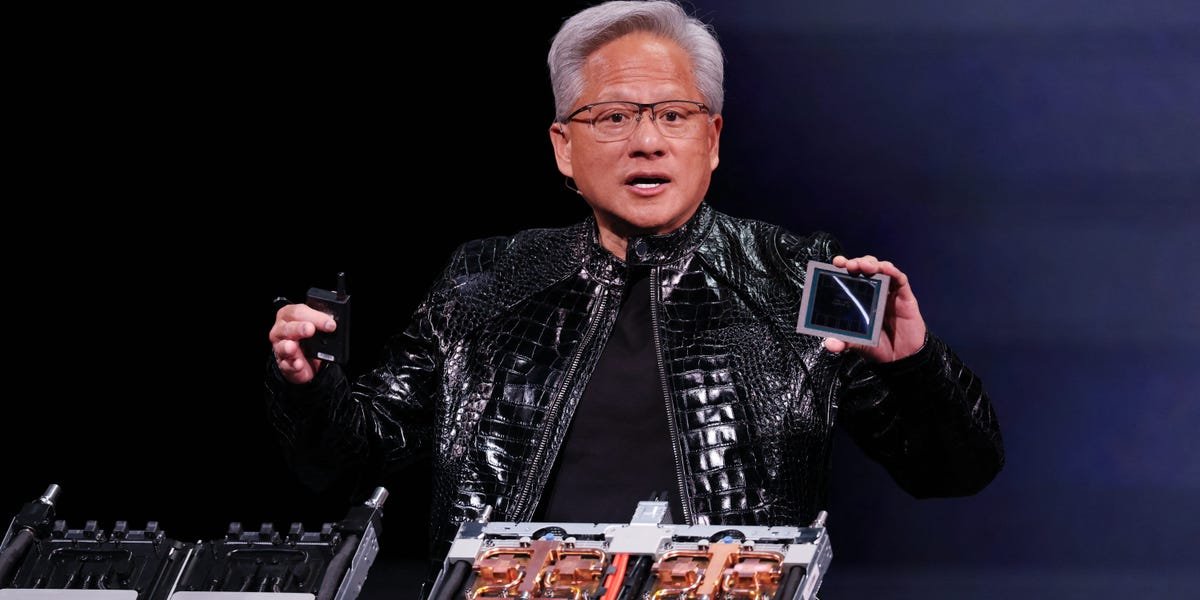
Here are the biggest announcements coming out of the 2026 Consumer Electronics Show, starting with Nvidia’s Vera Rubin chips

On Monday, ahead of the Consumer Electronics Show, Huang officially introduced the Vera Rubin architecture, which is now in production and expected to ramp up in volume in the second half of the year. This move follows a blockbuster year for its Blackwell chip, as demand for AI infrastructure continued to surge.

In a press briefing ahead of Huang’s keynote, Dion Harris, Nvidia’s senior director of HPC and AI infrastructure solutions, described Vera Rubin as “six chips that make one AI supercomputer.”

“Vera Rubin is designed to address this fundamental challenge that we have: The amount of computation necessary for AI is skyrocketing,” Huang told the audience during a presentation at the CES.

Huang added that compared to the Blackwell model, Rubin marks a leap in performance, with more than triple the speed, could run inference five times faster, and can deliver significantly more inference compute per watt of energy.

Rubin was first announced in 2024 and has been slated to replace Blackwell ever since. The early debut comes months ahead of the late-2026 timeline Nvidia had previously projected.

Named after astronomer Vera Rubin, who discovered the existence of dark matter, Nvidia said in a press release that the architecture is designed to support more complex, agent-style AI workloads, as well as more networking and data movement.

The Rubin systems are already lined up for deployment across much of the cloud industry. Nvidia said partners, including Amazon Web Services, OpenAI, Anthropic, alongside the upcoming Doudna system at Lawrence Berkeley National Laboratory, all plan to use the new platform.

The accelerated launch comes shortly after Nvidia reported record data center revenue, up 66% from a year earlier, driven largely by demand for Blackwell and Blackwell Ultra GPUs. Those chips have become a benchmark for the current AI boom are widely seen as a test of whether spending on AI infrastructure is sustainable.

Huang has previously estimated that between $3 trillion and $4 trillion could be spent globally on AI infrastructure over the next five years. Nvidia said products and services built on the Rubin platform will begin rolling out from partners in the second half of 2026.


Source link