
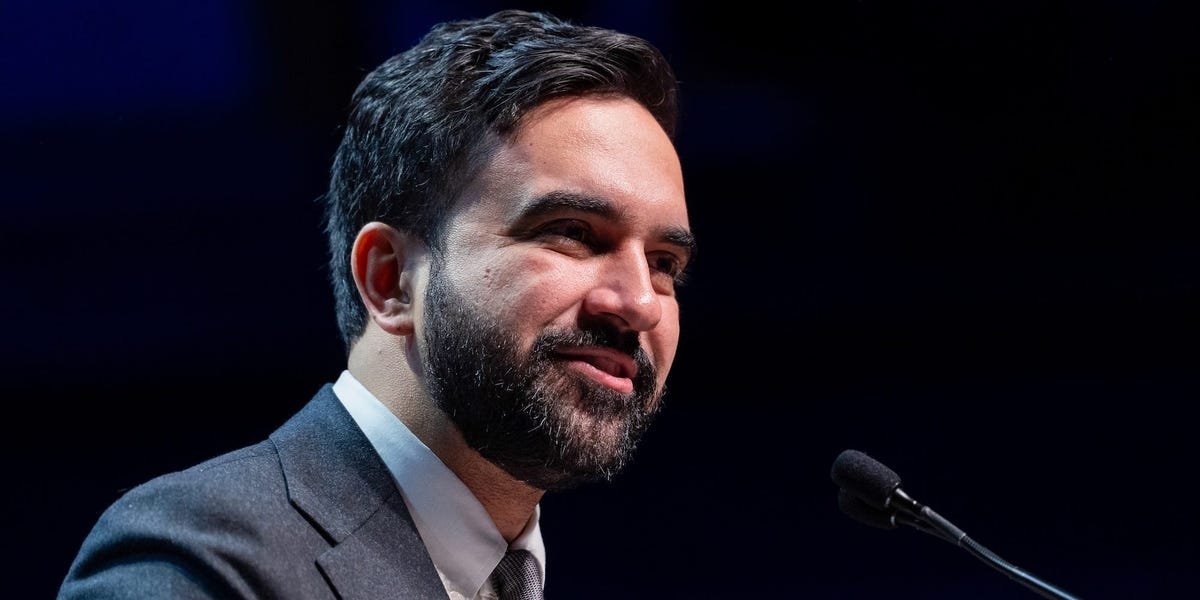
What-smart-people-are-saying-about-NYCs-proposed-annual-pied-a-terre.jpeg

What smart people are saying about NYC’s proposed annual pied-à-terre tax on homes worth $5 million

New York City’s new mayor, Zohran Mamdani, is making good on his campaign promise of taxing the rich.

On Thursday, Mamdani and New York Governor Kathy Hochul jointly announced a new tax proposal aimed at wealthy people who own second homes in the city.

The proposed pied-à-terre tax would tax luxury homes worth more than $5 million and could raise up to $500 million in revenue for New York City, according to the Hochul Administration.

The policy is splitting expert opinion — dividing academics, think tank researchers, and analysts among familiar lines.

Supporters see it as a practical way to raise revenue from the ultrawealthy, while critics argue it’s a narrow fix that could have unintended consequences for the housing market.

Here’s how smart people are reacting to the news so far.

Emily Eisner, Acting Executive Director at the Fiscal Policy Institute: ‘Much-needed revenue’

Eisner, in a statement published Tuesday by the Fiscal Policy Institute, framed the proposal as part of a broader effort to align New York City’s tax system with its growing wealth.

The tax “will raise much-needed revenue from wealthy property owners who do not reside in the city,” she wrote. “This is an important step in building a tax code that reflects the city’s immense wealth and can fund deep investments in its workforce, housing, and transit infrastructure.”

The Fiscal Policy Institute is a nonpartisan think tank focused on analyzing issues related to the fairness of New York’s tax system.

Over the past 15 years, New York City’s revenues have failed to keep pace with its economic growth, leaving the tax system increasingly out of sync with underlying conditions, Eisner said in her statement. That gap has contributed to pressure on public services and, she said, stems in large part from the city’s limited authority to adjust its tax structure in response to rising inequality.

Gabriel Zucman, professor at the Paris School of Economics: ‘Absolutely nobody leaves’

Speaking at Mayor Zohran Mamdani’s Tax Day forum, Zucman, a professor of economics at the Paris School of Economics, pushed back on one of the central objections of the tax — that it will drive wealthy homeowners out of New York.

“It is largely indeed a myth,” he said, adding that the more accurate term is “propaganda.”

He said that whenever any level of government — city, state, or country — considers even a modest tax increase on the very wealthy, it often triggers warnings about people leaving. The narrative, he said, is used to push back against higher taxes.

The research, however, shows the opposite.

“There’s a lot of work, careful empirical studies that have been conducted exploiting tax variation, tax increases or tax cuts, and [seeing] how this correlates with migration,” he said. “The overwhelming conclusion is that it’s not the case that absolutely nobody leaves.”

Nicole Gelinas, Senior Fellow at the Manhattan Institute: ‘Gimmicky’

Gelinas told the Jewish News Syndicate that the proposal cannot be considered full tax reform. Instead, she said, it’s “one gimmicky, tax-the-rich idea essentially as a marketing ploy as the state budget remains stalled.”

Gelinas is a senior fellow at the Manhattan Institute, a public policy think tank that focuses on urban violence and public sector reform. She’s also a journalist who serves as a contributing editor of City Journal — which is published by the Manhattan Institute — and a contributing opinion writer at the New York Times, where she writes about urban policy and politics.

She told the JNS that while the proposal may sound good to most people without second homes, it isn’t a “rational tax strategy.”

A better option, she said, would be “gently discouraging keeping a house or apartment unoccupied” as part of a broader reform of property taxes.

Bess Freedman, CEO of Brown Harris Stevens: ‘Impacting homeowners at all levels’

According to Jewish New Syndicate, Freedman, the CEO of the real estate brokerage Brown Harris Stevens, wrote a memo to her staff saying the effects of the tax could extend well beyond the extremely rich.

“While this proposal is being framed as a tax on the ultrawealthy, the reality is that its impact would extend far beyond a narrow segment of the market,” she said.

Freedman said that a decline in luxury property values would ripple through the broader market, compressing prices and ultimately “impacting homeowners at all levels.”

James Whelan, President of the Real Estate Board of New York: ‘Lost construction jobs’

Whelan, the president of the Real Estate Board of New York, raised concerns about the broader economic impact, arguing the tax could discourage investment in the city.

“This annual tax will weaken the city’s broader economy — all without addressing its fiscal problems in the first place. Its impact will reach far beyond a small group of owners,” Whelan wrote in a statement to Business Insider. “It will not raise the amount of revenue expected, but will eliminate thousands of construction jobs, lower property values, and raise costs for New Yorkers.”

He also noted that the state should shift its focus to “policies that encourage investment and housing production to create a more affordable city, not ones that stifle its growth.”



Source link

My-grandparents-are-87-and-90-years-old-They-still.jpeg

My grandparents are 87 and 90 years old. They still babysit my 7 kids, and host an annual cousin sleepover every year.

This as-told-to essay is based on a conversation with Lauren Brusie, mom of seven. It has been edited for length and clarity.

Last year, my 87-year-old grandmother, Doris, and 90-year-old grandfather, Jerry, hosted nine of their 14 great-grandchildren for a Christmas sleepover at their house. It’s an annual tradition they started several years ago that involves a night of eating cookies and ice cream, kids playing, boys wrestling, and movie watching, all culminating in Doris and Jerry waking up bright and early the very next day to cook breakfast for everyone, smiling and chipper as ever.

As their 34-year-old granddaughter, I’m not sure how they have the energy they do.

They are the most joyful, generous, busy, and amazing people I know, and they have been a constant presence in my life. They were always there. For all six of us grandchildren, for every game, every school event, they were there. We spent our weekends with them, holidays with them, and summers at their cabin.

They’ve definitely helped shape my cousins and me, and they continue to maintain that loving presence and involvement with all their great-grandchildren, including my seven children.

My grandparents have been there for my kids since day one

Just like I can’t remember a day in my own life without my grandparents in it, neither do my kids. They were waiting outside the door for their first great-grandchild, my daughter, to be born, and they’ve been there for everything, just like they were for me.

We even lived next door to them for a few years, and we spent every day with them. They are two of the people my kids are most comfortable with, and because of that, they are often our first choice for babysitters on a quick errand. The kids just love to be with them.

We have since moved, but they still stop by at least once a week, call the kids, attend their sporting events, and even help me with running them to and from practice or school.

One of their most beloved traditions is taking out each great-grandchild for a birthday lunch/shopping trip to spend one-on-one time with them. They had a rule that the child needed to be 4 years old, but they have bent it twice now for two of my younger children, taking them on their third birthdays because they were just so excited about it.

Both of my grandparents are in great health, and while some of their longevity and energy is probably genetic, I think their overall joy and love of people has kept them going. They always have something going on with others, whether it’s hanging out with their camping club, golf leagues, bowling leagues, card nights, casino trips, or following us kids around. They’ve always just worked hard and enjoyed life.

They are the biggest blessing in our lives

I’m not sure how to put into words what our relationship with my grandparents means. I’m aware of how unique this is, and I’ve never taken a moment with them for granted. I don’t think my kids will understand it all until they’re older, so for now, I just try to take as many pictures as I can so they’ll know how truly blessed and loved they were by these amazing people.

As life has gotten busier and the kids have gotten older, we make it a priority to continue our relationship with my grandparents. For instance, we’ll stop in to visit, and we try to do malt nights on the weekends with them, just like I did as a kid.

I also try to make them my first call if I do need help with the kids. It gives them purpose, and it really does help me too!

I don’t know anyone who has great-grandparents so involved in their family’s lives

When I try to think of anyone who, like my kids, has not just their grandparents, but their great-grandparents so actively involved, it’s not even a close comparison. And it’s not just my kids — Doris and Jerry still travel all over the state to attend events and visit my cousins and their kids, too. I know my cousins feel the exact same way I do about our grandparents: they are the most incredible people we know, and we’re so lucky to have them.

I am not sure I even appreciated how amazing they were when I was a kid. It took me having my own kids to realize that the relationship I had with them wasn’t necessarily normal either. They are truly one of a kind.

There is so much that inspires me about my grandparents, like their joy and how they’ve dealt with all the ups and downs of life. And let’s be honest: I’d love to have their energy too, but I’ll never count on that!

My grandparents are also so humble about their involvement. Doris simply says that the reason they spend so much time with all of us is because they love us, so why wouldn’t they want to be with us?

Both of them attribute their energy and longevity to being “lucky” and hope that all their grandchildren and great-grandchildren will remember that they were good to them and loved them. I’d say mission accomplished!


Source link

OpenAI-could-generate-25-billion-in-annual-ad-revenue-by.jpeg

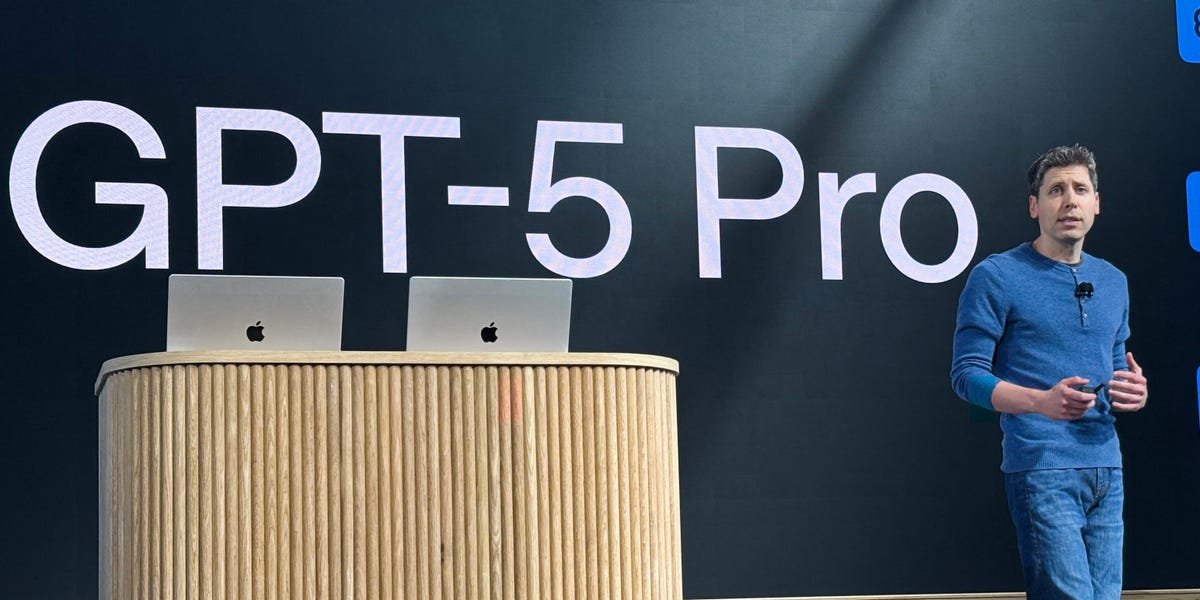
OpenAI could generate $25 billion in annual ad revenue by 2030, and that should worry Google, top tech analyst says

Advertising could become a $25 billion business for OpenAI — and pose a threat to Google, according to new estimates on Monday from a top tech analyst.

Evercore ISI’s Mark Mahaney sees the startup generating that level of annual ad revenue by 2030 if it executes well on rolling out this new business.

OpenAI said on Friday that free and Go users of ChatGPT would start seeing ads “in the coming weeks.” OpenAI also laid out its advertising principles, such as clearly labeling them and not sharing user conversations with advertisers.

“A path to generating several billion dollars in ad revenue in 2026, going to $25B+ by 2030, seems reasonable,” Mahaney wrote in a note to investors.

That’s based on the likely scale of ChatGPT by that time, the proven monetization of high-intent performance marketing platforms, and the current size of this market, the analyst added.

OpenAI’s revenue is growing fast already. CFO Sarah Friar said in a recent blog post that the startup’s annualized revenue topped $20 billion in 2025, up from $2 billion in 2023. However, there are big question marks over OpenAI’s losses and whether it can become profitable in the future.

Advertising could be one way for OpenAI to boost its top and bottom lines.

Mahaney noted that Google’s Search and YouTube businesses likely generated close to $300 billion in ad revenue in 2025, with Meta generating an additional $180 billion. These are highly profitable operations, with operating profit margins of 40%, according to the analyst.

ChatGPT has almost 1 billion weekly average users, many of whom share valuable details with the chatbot, such as what they want and need. Advertisers are willing to pay up for access to this treasure trove. This is the type of intent-based information that forms the backbone of the massive digital ad businesses run by Google and Meta.

OpenAI has said that initial test ads will appear at the bottom of ChatGPT answers and be relevant to the user’s conversation with the chatbot. That approach might not be too intrusive for users, while still being attractive to advertisers, Mahaney said.

“OpenAI’s move directly challenges this core revenue stream by offering an alternative, highly engaging platform for users to discover products and services,” Mahaney wrote. “If ChatGPT can successfully integrate ads that are helpful rather than intrusive, it could siphon off valuable commercial queries that traditionally go to Google.”

The analyst also warned that if OpenAI can develop a “conversational” ad format, where users research and discuss potential purchases within ChatGPT, that could prompt advertisers to shift some of their marketing budgets because this is “high-intent engagement.”

Even if ChatGPT goes all-in on ads, though, don’t expect the chatbot to take Google’s share of the market overnight, Mahaney added.

OpenAI will still have to compete with the tech ecosystem that Google has spent years creating, such as its Chrome web browser, as well as web users’ habit of Googling stuff when they need an answer, Mahaney wrote.


Source link