This as-told-to essay is based on a conversation Dani Aravich, Paralympian and cofounder of Culxtured. It has been edited for length and clarity.
I grew up in Boise, Idaho, playing all the typical sports — soccer, basketball, softball — and eventually got recruited to a Division I school to compete in track and field.
After college, I worked for an NBA team. And while working there, I learned about the Paralympics for the very first time. It had never really been on my family’s radar growing up, so it never felt like an option for me as a kid.
Learning about the Paralympics also meant being introduced to the disability community in a way I never had before. I hadn’t grown up around many people with disabilities, and suddenly I was meeting all these athletes who, like me, had disabilities and were fiercely competitive in sport.
It was a little overwhelming at first, but also really exciting.
I started thinking about the Paralympic Games
I started diving into everything I could find about the Paralympics and eventually learned that I actually qualified for a classification.
That’s when the dream began to form. Maybe I could make the Trials for the Tokyo 2020 Paralympic Games.
In 2019, I started running again, mostly training on my own while working full-time. I went to my first para track meet that year and met other women who were missing a hand or had arm impairments like mine. For the first time, it felt like I might truly be competing on an even playing field.
But that same day, I nearly walked away from it all.
I was running well until I fell on the track with 10 meters left in the race. I remember thinking maybe that was my sign to quit and go back to the traditional career path I had been on.
My mom — who had actually been hesitant about me stepping away from my business career in the first place — was the one who told me I had already put months of work into this goal. I owed it to myself to at least see it through and not let one fall end the dream.
So I kept going.
I decided to focus on Nordic skiing
Not long after that, I was invited to try Para cross-country skiing at a camp. I had downhill skied before, but cross-country skiing is a completely different sport.
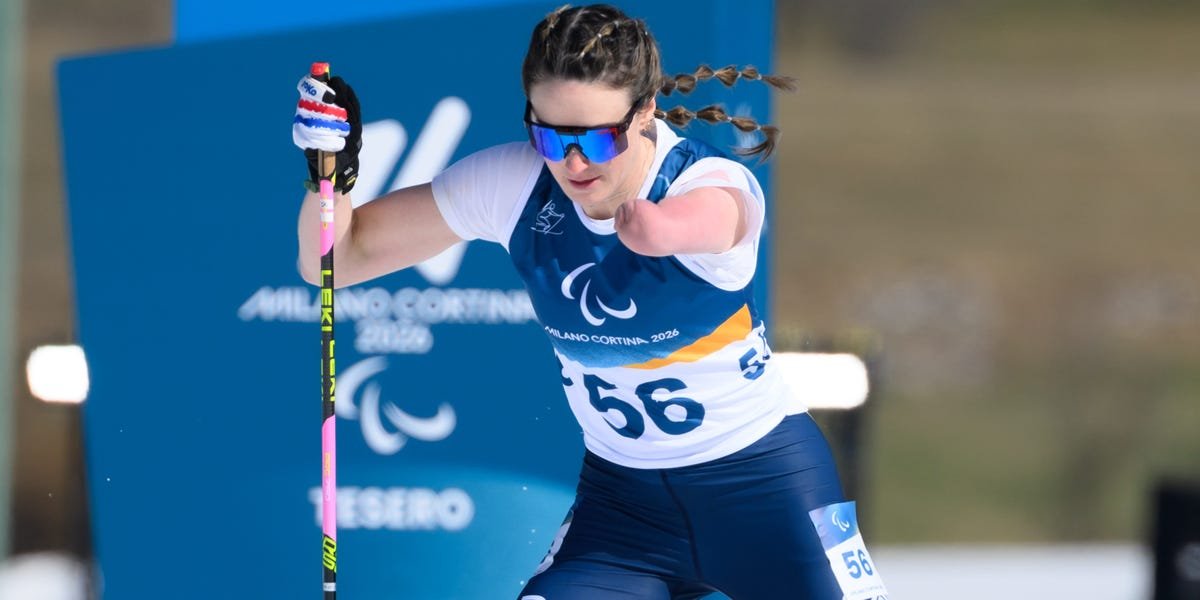
In 2021, I competed in the T47 women’s 400m at the Tokyo Paralympic Games (which were delayed a year because of COVID). Just six months later, I competed again at the Beijing 2022 Paralympic Winter Games.
After that, I made the decision to step away from track and focus fully on Nordic skiing, leading into the 2026 Paralympic Winter Games in Italy.
Mark Reis/Mark Reis
And here I am now.
The dream of becoming a Paralympian came much later in life for me than it does for a lot of athletes. Mostly because I didn’t even know it existed growing up. I had never seen it in the media, never heard about it as a possibility.
This year, I’ve been in Europe since early January, first for the World Cup season, now the Paralympics.
One of the things that’s made these Paralympics especially meaningful is being able to invite friends and family to come watch in person. Four years ago, that wasn’t possible because of Covid restrictions.
I love seeing kids watch us race
For Nordic skiing, we’re based in a tiny town in Italy, which is pretty remote from some of the other venues. But the town has completely embraced the Games. One of my favorite moments has been watching local school kids come out to watch us race.
And it really does feel like the Paralympics are growing.
More people are watching. The media is paying attention to the drama and intensity of the competition. Online engagement is growing. It finally feels like the world is starting to see these athletes the way we’ve always known them to be — elite.
Once people watch the Paralympics, they realize the competition is just as intense as the Olympics. And once they see that, they’re hooked.
More broadly, I think society is shifting in a really positive direction when it comes to diversity and inclusion. Humanizing disability and making it something we talk about openly — rather than something hidden away — is incredibly important.
Not just for the Paralympics. But for society as a whole.