Gilded-Age-townhouse-sells-for-345-million-in-NYC-ending.jpeg

Gilded Age townhouse sells for $34.5 million in NYC, ending 2 sisters’ heated bankruptcy battle

A Gilded Age Manhattan townhouse, the subject of a contentious and lengthy bankruptcy battle by two sisters in their 80s, has been sold for $34.5 million.

The sale, to an LLC whose owner has remained anonymous, closed Tuesday, according to court documents.

Fashion heiress Marianne Nestor and her sister, Peggy Nestor, both self-represented, had fought against foreclosure for six years and in at least three courthouses, most recently in federal bankruptcy court in Manhattan.

“Miserably difficult,” their main opponent, bankruptcy trustee Albert Togut, said during a hearing last week, in describing his war with the litigious siblings — including what he characterized as years of battling a “litigation cloud” filled with “frivolous appeals and objections.”

The sisters had purchased the home together in 1984.

Six years ago, creditors began litigating for its sale to collect on millions of dollars in mortgages and liens against the property.

Peggy Nestor, by then the sole owner, according to their own sworn statements, filed for federal bankruptcy nearly four years ago to keep it from being sold in New York state court. Debts collateralized by property had swollen past $30 million by the time the judge ordered it to be sold — and the occupants removed.

They were forcibly evicted two years ago after the bankruptcy judge found that they had repeatedly refused to let Togut, his lawyers, and court-appointed realtors inside to market and sell the 1901 property.

“I’m suing everybody,” Marianne Nestor told Business Insider, when told Tuesday night of the closing. “They’re crooked as hell,” she said of Togut and US Bankruptcy Judge Michael Wiles.

Marianne is the widow of fashion designer Oleg Cassini, widely credited with creating Jacqueline Kennedy’s “look” as First Lady.

Cassini had used the townhouse as a design studio and showroom until his death on March 17, 2006 — twenty years to the day before the sale closed.

“Today is the day that he died, OK?” Marianne said in a lengthy phone call, during which she called the sale “totally incorrect,” “a set up,” “deed fraud,” and “like Germany in the 1940s.”

“Leave out the F-words,” she asked Business Insider.

The sisters continue to argue that they could have purchased the property back themselves, that it is “rent-stabilized,” and that they remain its 50-50 owners, contentions repeatedly rejected by the judge.

They still have open three cases in federal and state court in Manhattan that challenge Togut’s authority and his appointment as trustee, and accuse him and a former attorney for Peggy Nestor of impropriety.

A lawyer for Togut’s firm declined to comment on the closing when contacted earlier Tuesday.

After taxes, a $1.4 million broker commission, and other closing costs, the net proceeds of the sale will be $32 million, according to court documents — a sum that still won’t cover a decade-long accumulation of debts against the property.

It is unclear where the sisters have been living since US Marshals evicted them from the townhouse; Marianne Nestor has declined to say.

The two continue to have access to a $5 million brick mansion in Norwalk, Connecticut, purchased by Peggy Nestor in 2021.

But in January, the bankruptcy judge found that Peggy had improperly tried to transfer the mansion for $1 to a third sister, Brenda, who lives in Palm Beach.

The judge ordered that the seven-bedroom, 9,800-square-foot mansion, which overlooks Long Island Sound, must also be sold to satisfy Peggy’s debts.

The Norwalk property’s sale remains pending.


Source link

Jacob Shamsian hollis unsmiling headshot cassidy edit 2

The battle over Trump tariff refunds is next — and it will be messy

The Supreme Court on Friday overturned the centerpiece of President Donald Trump’s tariff plans, ruling the federal government illegally collected over $133 billion in taxes from American businesses.

Now comes the battle over refunds for tariffs paid, which Trump on Friday predicted could take years.

“I guess it has to get litigated for the next two years,” he said at a White House press conference, while blasting the ruling as “terrible” and “defective.”

One reason: Over 1,000 companies have filed lawsuits to claw back money from the government if the Supreme Court overturned Trump’s tariffs justified by the International Emergency Economic Powers Act.

In his dissenting opinion, Justice Brett Kavanaugh also predicted the process could become a “mess,” citing refund requests tallying “billions of dollars to importers,” even as some importers have already passed those costs to consumers.

Here are all your questions about tariff refunds, answered by experts.

Alright, who do I ask to get a refund?

Typically, the refund process would be handled by Customs and Border Protection, which collected the tariffs in the first place.

In order for that to happen, the Trump administration would need to establish a process for handling refund requests. The White House, which didn’t return Business Insider’s request for comment, has yet to signal plans to do this, said Rachel Brewster, a professor of international trade at Duke Law School.

Without a formal process in place, claims will be litigated in the Court of International Trade, which will order CPB to issue refunds to specific companies, Brewster said.

OK, so how will the court handle the process?

In the past, the Court of International Trade has ordered refunds when it has found particular taxes to be invalid — albeit on a smaller scale, according to Daniel Mach, a commercial litigator at Bryan Cave.

It’ll likely turn to the process that followed a 1998 Supreme Court decision to overturn a harbor maintenance tax, which also resulted in refunds, Mach said.

“It’s been a while,” Mach said. “Everyone’s going to be kind of figuring out the ropes as they go. But at the end of the day, it’s not an unsolvable problem.”

Given the number of claims, the Court of International Trade is likely to appoint an administrator or special master to consider each of them, rather than handling the lawsuits piecemeal, Mach said.

Groups that advocated for the Supreme Court to overturn the IEEPA tariffs have urged the Court of International Trade to develop a smooth process for refunds.

“The refunds will serve as an economic boost and allow companies to reinvest in their operations, their employees and their customers,” said David French, an executive at the National Retail Federation, in a statement.

OK, that sounds messy. How long will it take to get a refund?

The whole refund process — whether through CPB or through a class-action or administrative processes in court — could take up to two years, according to Brewster.

Have a lot of companies asked for refunds?

Yes! The cases that went to the Supreme Court were groups of small companies, including a wine importer and an educational toy retailer. But several massive corporations, including Toyota and Costco, have also filed refund lawsuits.

What about me? My Shein order was more expensive than expected.

You can try to get a refund for personal orders hit by tariffs, but it’ll be complicated.

In asking CPB or a court for a refund, you’ll have to distinguish tariffs you paid pursuant to IEEPA, which were overturned, and the tariffs justified by other laws, which remain on the books.

Individual lawsuits for IEEPA tariffs on individual retailer orders, like from Temu and Shein, likely won’t be worthwhile. The legal fees would likely exceed any potential refund. But it’s possible that some enterprising litigators would put together a class-action lawsuit to make it worthwhile, Brewster predicted.

“It was an illegally imposed tax,” she said. “So in theory, everyone is entitled to a refund.”

With reporting by Brent Griffins


Source link

OpenAI-Meta-and-Apples-latest-battle-Breaking-your-phone-addiction.jpeg

OpenAI, Meta, and Apple’s latest battle: Breaking your phone addiction

The average American picks up their phone more than 200 times a day. Teens are pinged with some 250 notifications a day — during school, after school, and overnight. The apps meant to prevent you from checking apps have done little to stop the problem. Now, some of the tech companies that helped create our screen dependence are trying to disrupt it.

Later this year, OpenAI plans to debut a small, screenless device that Sam Altman describes as more “peaceful” than a smartphone. Apple, the Oz of screentime, is developing smart glasses, a pin, and AirPods with more AI built in, according to a Tuesday report from Bloomberg, with the rumored pendants featuring microphones and cameras to be the “eyes and ears” of the iPhone. Meta has teased its fully augmented reality Orion glasses since 2024. While that device doesn’t have a release date, the company last year sold some 7 million pairs of its smart glasses, which is the start of the post-smartphone future Mark Zuckerberg has predicted. Eventual smart specs could be more screen all-the-time than screenless, but they also rely on AI to make the experience much more hands-free than swiping and scrolling on a phone.

Could AI be what finally breaks our phone addiction?

Since 2007, no device out of Silicon Valley has captured universal imagination the way Steve Jobs did when he put your iPod, your phone, and the internet together on a 3.5-inch screen. Competitors have tried for a decade-plus to get people to shift us from the iPhone to smart glasses, and largely failed. The awe around smartphones has turned to derision, as excessive screen time is linked to disrupted sleep, anxiety, and fractured attention. Now, developers are hoping the AI boom can give us the next big thing.

Beating the smartphone would mean replacing a device that 91% of American adults now carry — a device for which millions of apps have been developed and people now depend on in lieu of wallets and cameras and health monitors. New AI devices can’t just copy what smartphones do, says Ramon Llamas, a research director at a technology intelligence firm IDC: They have to show they have a solution to an everyday problem. If they don’t, Llama says, “these things are just gonna really end up as solutions looking for a problem to solve.”


Critiques of screen time can be as blunt and smoothbrained as what the critics say excessive screen time makes you. A seven-hour daily log may seem like a staggering amount of dependence, but what did the person spend those seven hours doing? Doomscrolling late into the night, or FaceTiming with a far-away friend? With AI wearables, there’s the risk of becoming dependent on the device for different reasons.

“The screen may not be there, but what’s getting filled in the back is already this problem of AI companionship,” says Olivia Gambelin, an AI ethicist and author of the book “Responsible AI.” An AI device designed to do something very specific — like listen to a meeting and then send follow-up emails or messages related to action points discussed — could save people time and keep them from writing tedious emails and Slack messages from their desk. But that same device listening in to personal conversations with family and friends could compromise a relationship, and erode the positive effects that texting a friend to check-in can have on both people (already, my friends are tiring of AI summaries on the iPhone that summarize our group text and become an intermediary into our threads of gossip and jokes in the name of efficiency). Wearing microphones and cameras to social interactions and into businesses is likely to really weird out some of the people around you. More people are entering into romantic, dependent relationships with AI companions, and a swell of loud dissenters are criticizing the technology for taking jobs and attempting to replicate human relationships.

But OpenAI is betting that it can package its technology in a device in a way that calms the user. “When I use current devices or most applications, I feel like I am walking through Times Square in New York and constantly just dealing with all the little indignities along the way,” Altman said in November. OpenAI’s device, he said, would be less Time Square, more “sitting in the most beautiful cabin by a lake and in the mountains and sort of just enjoying the peace and calm.” That’s because the AI device would learn “contextual awareness of your whole life,” and when best to send you alerts.

The screen itself may not be the problem; it’s what’s summoning us to the screen.

Other AI wearables have failed by falling short of that goal. Humane AI sold a wearable pin, priced at $700 plus a monthly fee to connect it, but pulled it from the market a year ago. It failed perhaps because it tried too hard to replace our phones — it didn’t interact with them, but provided a shoddy replacement. Novelty wasn’t a factor that could outshine usability. The AI Friend pendant, which can’t search the internet or help with tasks outside of sending reminders and acts instead as an eavesdropping sycophant around its user’s neck, was mocked relentlessly and sold just a few thousand devices after it hit the market last year.

Companies trying to make AI hardware should focus on “transformative features,” Jason Low, research director at Omdia, tells me in an email. AI wearables must be more than “marginally more convenient,” should integrate with our existing products, and have a clear, stated value. For example, glasses that provide real-time language translation or devices for fitness and health tracking offer features our smartphones can’t do as well. The Oura ring continues to grow in popularity, particularly among women after starting out as a niche tech bro buy, for the novel insights it can offer; the company announced last fall it has sold 5.5 million rings since 2015, with more than 2.5 million sold between June 2024 and September 2025. “These devices often deliver a more polished user experience compared to general-purpose, do-it-all AI devices,” Low says.

Llamas tells me that the AI functions of a wearable have to be “contextual, personalized, and actionable,” like reminding the wearer to send birthday flowers or responding accurately to being asked to direct the user to the nearest Starbucks. A first attempt device shouldn’t try to replace the smartphone, but to integrate with the Apple or Google ecosystems, he says. Apple and OpenAI did not respond to requests for comment about their rumored products for this story.

If anything has hyped Silicon Valley like the iPhone, it’s been AI. But three years after the mainstream adoption of ChatGPT, the value generative AI in the white collar workforce has yet to be fully realized. That could make a product for consumers a hard sell, too. “Some of the overwhelm that’s coming with AI that I see in general users is you can use it for everything, or it’s promoted that way, which is actually quite stifling,” Gambelin says.

In our quest to find a peaceful equilibrium with tech, the screen itself may not be the problem; it’s what’s summoning us to the screen. Its bright colors, games, and infinite scroll give quick dopamine hits that entice us to stay glued to it. But much of what pings my phone throughout the day are useless notifications trying to get me to reopen one of the dozens of apps — a markdown moment on a clothing thrifting app, a like on the Instagram story I’ve posted of my dog from my best friend, and ironically, a report of how much time I’ve already logged. There’s a relentless business model at play to keep us on these apps. No screens would mean no infinite scroll through TikTok, no Candy Crush — but app developers and companies may need to find new ways to reach people if wearables caught on, and an always-there AI device and companion might not be as peaceful as Altman describes. Our collective screen time is a problem, but the AI wearable will have to surprise us all with something novel to be useful.


Amanda Hoover is a senior correspondent at Business Insider covering the tech industry. She writes about the biggest tech companies and trends.

Business Insider’s Discourse stories provide perspectives on the day’s most pressing issues, informed by analysis, reporting, and expertise.




Source link

OpenAI-is-turning-to-the-court-of-public-opinion-in.jpeg

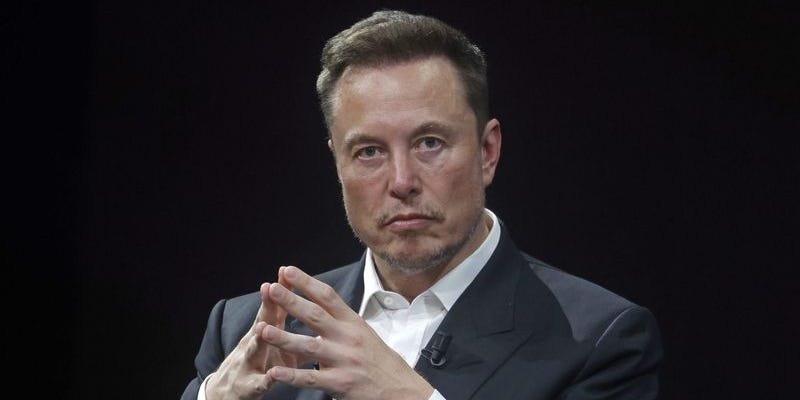
OpenAI is turning to the court of public opinion in its battle with Elon Musk

OpenAI is turning to the court of public opinion as it wages a legal battle with Elon Musk.

While Musk and OpenAI prepare to head to a high-stakes jury trial in April, the two are duking it out online over what exactly happened when Musk split ways with the AI startup he helped cofound.

Musk has been using recently unsealed court documents to attack his rival in posts on his social media platform, X. On Friday, OpenAI published a blog titled “The truth Elon left out.”

The blog, which provided commentary alongside excerpts from several court documents, alleges that Musk wanted “full control” of OpenAI, “since he’d been burned by not having it in the past,” and that OpenAI’s leadership was surprised when Musk suggested having his kids control AGI or artificial general intelligence during conversations about succession planning.

The statements are aimed at the heart of Musk’s lawsuit against OpenAI.

Musk is suing OpenAI’s key leaders, including CEO Sam Altman and President Greg Brockman, over allegations that the AI company misled him by shifting away from its core mission to remain a nonprofit. Musk said he donated $38 million to OpenAI when it was a nonprofit.

The startup, since its 2015 founding, operated as a nonprofit-controlled organization with a for-profit operating arm. It completed its transition to a for-profit public benefit corporation in October 2025.

Representatives for Musk and OpenAI did not immediately respond to requests for comment from Business Insider.

Last Tuesday, more than 100 documents related to the suit were unsealed, including diary entries from Brockman, which were obtained during the discovery process.

In one of the entries that was highlighted, Brockman appeared to write about his misgivings about pushing Musk out of OpenAI and committing to a nonprofit-only entity.

“Cannot say that we are committed to the non-profit,” the entry from the court documents said. “Don’t want to say that we’re committed. If three months later we’re doing b-corp then it was a lie.”

It was Brockman’s diary entries that US District Judge Yvonne Gonzalez Rogers cited in a recent ruling, in which she determined Musk had enough evidence that he’d been misled to take the case to trial.


Source link

The-memes-are-flying-about-the-Netflix-and-Paramount-bidding.jpeg

The memes are flying about the Netflix and Paramount bidding battle for Warner Bros. Discovery

The Hollywood bidding war between Paramount Skydance and Netflix has created a meme frenzy.

The two media giants are in an all-out battle for Warner Bros. Discovery after it accepted Netflix’s offer to acquire its studio and streaming businesses for an equity value of $72 billion. David Ellison’s Paramount launched a hostile $30-per-share bid for all of WBD on Monday.

Warner Bros. Discovery owns the Warner Bros. film studio, HBO, the HBO Max streaming service, and TV networks such as CNN, TNT, and TruTV. It confirmed receipt of Paramount’s unsolicited offer on Monday.

Both entities have made their cases on why they’d be the best owner for WBD. Although internet comedians don’t have a say in where the deals land, it hasn’t stopped them from weighing in with viral jokes about the dueling companies and their quest to acquire WBD.

Some social media users are poking fun at the back-and-forth with memes about how far each company is willing to go to gain WBD’s favor. One post compared the battle for the best offer to a scene from the HBO business drama “Succession,” a title Netflix would own if the deal goes through.

The Instagram meme account Litquidity used parody images that appeared to be AI-created of two business leaders speaking at the DealBook Summit to mock how each company is trying to prove its offer is better.

Some people seem to be using humor to cope with the idea of more consolidation in Hollywood. They are pushing back on both offers with memes about stopping the looming acquisition completely.

“I’m putting together a team to fight the Netflix Warner Bros merger,” one X user captioned a compilation video of various actors and famous filmmakers.

Others speculated on what the movie-watching experience could be like under Warner Bros. Discovery’s new ownership. One TikTok video showed a man sitting down to watch a movie, only for the intros to include a confusing mix of studios, backers such as Saudi Arabia’s Public Investment Fund, and even a DJ, being played before the movie began.

In the midst of all the jokes, Netflix argues that its offer would be better for consumers and creators, while Ellison says Paramount is more likely to win regulatory approval and offers Hollywood more certainty.

What all of this means in the long run is unclear so far. It could lead to job cuts in the entertainment industry as the giants consolidate their power. The trends of streaming services getting pricier and fewer movies hitting theaters could also continue, as companies release less content, Business Insider previously reported.

Either way — as with many serious big business deals — consumers and industry insiders are finding ways to laugh through it.


Source link

YouTube-TV-is-planning-to-launch-a-cheaper-skinny-sports.jpeg

YouTube TV is planning to launch a cheaper ‘skinny’ sports bundle following its battle with Disney

YouTube TV will unveil new prices soon. But this time, it will be good news for sports fans.

YouTube is launching a set of cheaper, slimmed-down versions of its popular live TV service in 2026, which it’s calling “YouTube TV Plans,” the video giant announced on Wednesday. One of the new plans will be a sports bundle that provides access to ESPN Unlimited, FS1, and NBC Sports Network.

While YouTube TV isn’t yet revealing pricing for these 10 or so genre-specific packages, they’ll cost less than the Google-owned service’s typical rate, which is $83 a month.

“Our goal is to let you tailor your subscription with more options,” said Christian Oestlien, YouTube’s head of subscriptions, in a statement. “Whether you stick with our main YouTube TV plan with 100+ channels, focus on sports, combine sports and news, or select a plan centered on family or entertainment content, subscribers will be able to easily choose the plan that works best for them.”

YouTube TV secured the rights to form these so-called “skinny bundles” after hard-fought negotiations with Disney, Comcast’s NBC, and Fox. YouTube TV’s battle with Disney was especially intense, as it left subscribers without ESPN and ABC for 15 days.

Justin Connolly, YouTube’s global head of media and sports, said at a media event on Tuesday night that YouTube worked with its partners on “ingesting the entirety of the sports programming” in its service, so that YouTube TV can be a one-stop shop for sports fans. Besides aggregating live games, Connolly said YouTube is being fan-friendly by aiming to “meet the consumer where they are” on price.

YouTube TV’s price has steadily increased since it launched in 2017 at $35, though it’s also added more channels. Last December, YouTube TV’s monthly price rose by $10.

Other TV providers have launched sports-focused skinny bundles, with some tradeoffs.

Fubo’s $55.99 a month Sports + News bundle includes all of ESPN and Fox’s channels, plus CBS and the NFL Network, but it doesn’t have NBC or Warner Bros. Discovery’s networks like TNT or TruTV. It also doesn’t have the news networks CNN and MS Now (formerly MSNBC), though it has Fox News.

Sling TV’s Orange & Blue bundle goes for $60.99 and has ESPN, Fox with cable sidekick FS1, WBD’s channels like TNT and CNN, and the NFL Network. It also carries local channels like NBC and ABC in certain markets. But Sling doesn’t have a deal with CBS, plus its main bundle doesn’t include specialty sports networks like the SEC Network, the Big Ten Network, or NBA TV. Sling offers a Sports Extra add-on for $15 a month on its main plan, bringing the total to $76.

DirecTV’s MySports package costs $69.99 but is more comprehensive, with the full suites of ESPN, Fox, and WBD, plus all four major local broadcast networks: ABC, CBS, NBC, and Fox (with possible exceptions in certain markets). It also carries the flagship networks for four major US sports: the NFL, NBA, MLB, and NHL.

Sports fans could complement those skinny bundles by buying a digital antenna or by using streaming services like Peacock or Paramount+ that give access to NBC and CBS, respectively.

ESPN also offers a subscription to its entire suite for $29.99 a month, or a bundle with competing streamer Fox One for $39.99 a month.

YouTube said its new sports plan will have ESPN’s full suite of programming plus sports channels from Fox and NBC, with the option to add on NFL Sunday Ticket and RedZone for more money. Otherwise, it’s unclear exactly which channels this bundle will have.

As YouTube TV’s sports bundle enters the market, sports fans have more choices than ever. The challenge for them now is finding the right plan.


Source link