
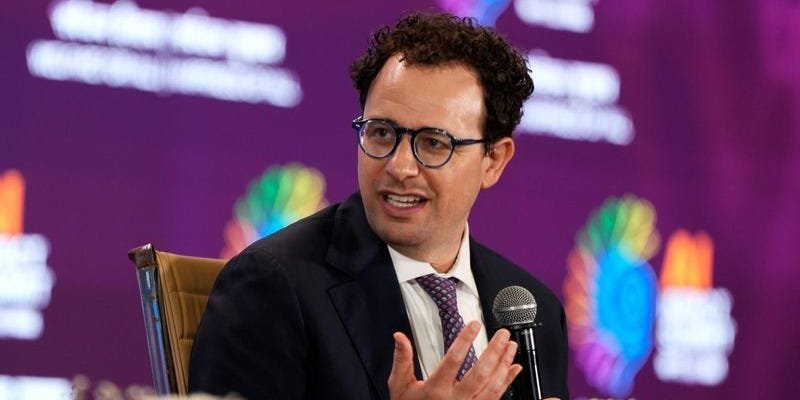
Anthropics-Claude-for-Word-is-another-challenge-to-Microsofts-software.jpeg

Anthropic’s Claude for Word is another challenge to Microsoft’s software empire, and a bid to appeal to lawyers

Anthropic launched a beta version of Claude for Word, another challenge to Microsoft’s software empire and a bid to appeal more to the legal profession.

The AI startup, having pushed Claude into Excel and PowerPoint earlier this year, said its latest add-in for Word is “designed for professionals who work extensively with documents, particularly in legal review, financial memo drafting, and iterative editing.”

On Saturday, Anthropic said Claude for Word would allow users to ask questions about their documents and get answers with clickable section citations.

Other features include the ability to edit selected text while preserving surrounding styles, numbering, and formatting, while a “tracked changes mode” would allow users to accept or reject every edit as a revision, Anthropic explained.

Claude could also work through comment threads, editing the anchored text and replying with what it changed, according to the release.

Anthropic gave examples of prompts lawyers could try when reviewing a legal contract while using Claude for Word.

  • “Summarize the key commercial terms: parties, term, governing law, and anything off-market.”
  • “Flag provisions that deviate from standard market position, ranked by severity.”
  • “Make the indemnification mutual and insert our standard fallback language.”
  • “Work through all five reviewer comments as tracked changes.”
  • “What did the counterparty change, and which revisions are dealbreakers?”

It’s currently available only to Team and Enterprise plans.

With this and other recent launches, Anthropic is making clear it no longer wants to be known primarily as a tool for developers. It wants Claude embedded across the enterprise, supporting finance teams, HR departments, analysts, and executives alike.


Source link

James Faris headshot

Warner Bros. Discovery says it thinks Paramount’s new bid could be superior to Netflix’s offer

After 10 tries, David Ellison’s Paramount Skydance has finally made a proposal that Warner Bros. Discovery’s board is excited about.

Paramount is prepared to pay $31 per share for all of WBD, including its TV networks like CNN and TruTV, up from $30 per share in its previous public offers, WBD told shareholders on Tuesday afternoon.

WBD’s board said Paramount’s offer “could reasonably be expected” to lead to a superior proposal to Netflix’s. However, WBD added that its board had “not made a determination” yet as to whether Paramount’s latest bid is actually better.

If WBD’s board determines that Paramount’s bid is better, then Netflix would have four days to submit a sweetened offer, if it wants. Netflix has offered $27.75 per share for WBD’s streaming and studio assets, and doesn’t want its cable channels. While Netflix could stand pat, doing so could put its dream of buying HBO at risk.

WBD hadn’t been impressed with Paramount’s prior offers, raising issues about everything from its equity backstop to its initial hesitation to cover costs like a breakup fee to Netflix. Paramount patched up those perceived holes by putting a guarantee from billionaire Larry Ellison, the father of Paramount’s CEO, and agreeing to reimburse WBD’s payout to Netflix if the board switched deals.

Paramount’s new offer also includes a so-called “ticking fee,” which will pay WBD shareholders $0.25 per share for each quarter that Paramount’s deal for WBD doesn’t close, starting on September 30. Previously, the ticking fee was slated to start in January 2027.

Paramount has long believed its offers for WBD were better than Netflix’s, reasoning that WBD’s cable channels don’t have much value after accounting for how much debt they’re expected to carry.

Netflix has sold its deal for WBD’s studio and HBO assets as simpler and better for Hollywood. The streaming juggernaut argued that it would “protect and create jobs in America” compared to Paramount, which has promised investors $6 billion in savings if it buys WBD. Netflix has said its deal could create $2 billion to $3 billion in synergies.

WBD warned last week that an employee exodus was possible if it took Paramount’s offer, since staffers could fear mass job cuts.

Another pivotal factor in the fight for Warner Bros. is the regulatory process, both in the US and abroad.

President Donald Trump has sent mixed signals about Netflix’s planned acquisition of Warner Bros., saying that its market share “could be a problem” before pledging to stay out of the process and leaving the antitrust decision up to the US Department of Justice.

A White House spokesperson told Business Insider last week that the president “has great relationships with all parties in this potential transaction and remains neutral in this process with no preference for either bidder.”

Days later, Trump said Netflix should take Susan Rice off its board “or pay the consequences.” Rice, a White House official under Obama and Biden, had gone on a podcast and criticized Trump and the corporations that she believes “take a knee” to him. Netflix co-CEO Ted Sarandos downplayed Trump’s complaint, saying that the company’s Warner Bros. bid is “not a political deal.”

If Netflix decides to increase its offer, WBD shareholders will be in a win-win situation.


Source link

Netflix-strengthens-its-Warner-Bros-bid-as-Paramounts-David-Ellison.jpeg

Netflix strengthens its Warner Bros. bid as Paramount’s David Ellison tries to wreck its deal

Netflix is breaking open its piggy bank to keep Paramount Skydance CEO David Ellison from crashing its Warner Bros. deal.

The streaming giant just sweetened its offer for the Warner Bros. studio and HBO by offering all-cash, matching a key feature of Paramount’s hostile bid. Warner Bros.’ board of directors has approved the all-cash bid, and the companies said they expect Warner shareholders to vote on the transaction by April.

“Our revised all-cash agreement will enable an expedited timeline to a stockholder vote and provide greater financial certainty,” Netflix co-CEO Ted Sarandos said in a statement announcing the news.

“Today’s revised merger agreement brings us even closer to combining two of the greatest storytelling companies in the world,” David Zaslav, president and CEO of Warner Bros. Discovery, said in a statement on Tuesday.

While Netflix isn’t raising its bid from $27.75 per share, converting $4.50 per share in stock to cash takes away a variable for Warner Bros. Discovery shareholders. Netflix shares are down 13% since the Warner Bros. deal was made public and have fallen 28% since late October.

Paramount believes its all-cash offer of $30 per share for all of WBD is superior to Netflix’s winning bid for WBD’s key assets, which include its studio, HBO, and HBO Max, but not its TV networks. Ellison has made eight bids for WBD, all of which have been rejected. Paramount is now suing WBD while fighting for spots on its board.

A key remaining point of difference between the two bids hinges on the perceived value of WBD’s networks. Paramount is looking to buy them, while Netflix is not.

If WBD’s cable channels, such as CNN, TNT, and HGTV, are valued at less than $2.25 per share, or $5.9 billion, then Paramount’s proposal appears, at first glance, to be more appealing than Netflix’s. However, WBD has said that it must knock off $1.79 per share from Paramount’s bid to account for costs it would incur by changing course, like a $2.8 billion breakup fee to Netflix. That would mean WBD’s cable networks only need to be worth $0.46 per share for Netflix’s bid to be financially superior in the board’s eyes.

Paramount has argued that the WBD cable networks it wants to buy are worth $0 per share, or only as much as the debt they’re expected to carry. Ellison and company acknowledged “the theoretical possibility” that those TV assets could be worth $0.50 per share.

Most media analysts have a rosier view of WBD’s cable business, valuing its channels anywhere from the low single digits to $3.51 per share. Even a glass-half-empty view based on the valuation of new cable company Versant would put WBD’s networks at $1.20 per share as of last week, a Business Insider analysis found.

Netflix’s updated all-cash offer helps solidify WBD’s decision to choose it, after accounting for the added costs from Paramount’s bid.

Unless WBD shareholders band against its board of directors, Paramount may face pressure to sweeten its offer by raising its bid.


Source link

Judge-rejects-bid-to-overturn-Trumps-100000-H-1B-visa-application.jpeg

Judge rejects bid to overturn Trump’s $100,000 H-1B visa application fee

A federal judge cleared the way for the Trump administration to slap a $100,000 fee on new H-1B visa applications.

US District Judge Beryl Howell in Washington, DC, ruled Tuesday that the steep increase is lawful, handing the administration a win as it pushes to curb immigration and steer hiring toward US workers.

The US Chamber of Commerce and Association of American Universities, which challenged the policy in court, can appeal the decision.

This is a developing story; please check back for more.


Source link

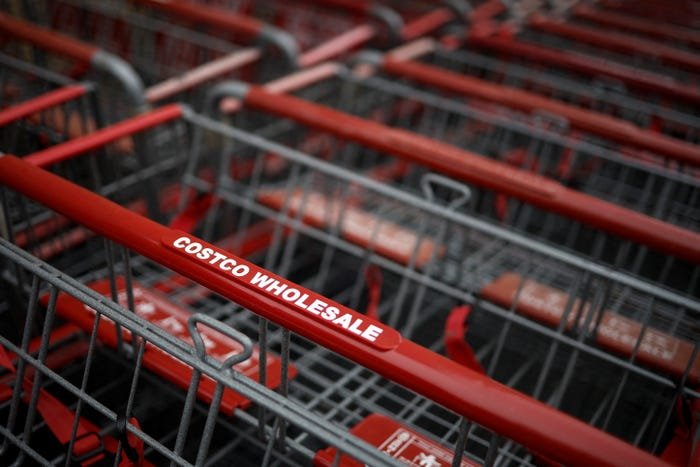
Shopping carts are seen at the Costco store ahead of Black Friday in Arlington

Costco sues Trump’s tariff in bid to secure refund before Supreme Court ruling


Benoit Tessier/REUTERS

  • Costco filed a lawsuit to recover tariff payments imposed by the Trump administration.
  • The retailer challenged tariffs enacted under the International Emergency Economic Powers Act.
  • Costco is seeking a full refund of duties paid.

Costco is suing the government to recover tariff money.

The wholesale retailer has filed a lawsuit against the United States, the US Customs and Border Protection agency, and Rodney S. Scott, the Commissioner of US Customs and Border Protection.

The suit asks the US Court of International Trade to strike down tariffs imposed by President Donald Trump by executive order under the International Emergency Economic Powers Act.

In a complaint submitted Friday, November 28, the retailer said it is seeking a “full refund” of duties it paid after Trump used the emergency-powers law to levy what he described as “reciprocal” tariffs.

The complaint cited a previous lawsuit, VOS Selections, Inc. vs. Trump, filed against the Trump administration, for which the US Supreme Court heard arguments in early November.

“This separate action is necessary, however, because even if the IEEPA duties and underlying executive orders are held unlawful by the Supreme Court, importers that have paid IEEPA duties, including Plaintiff, are not guaranteed a refund for those unlawfully collected tariffs in the absence of their own judgment and judicial relief,” the complaint reads.

Costco, the White House, and the US Customs and Border Protection agency did not immediately respond to requests for comment.

This is a developing story. Check back for updates.


Source link