Big-Techs-new-reality-Data-centers-are-a-war-target.jpeg

Big Tech’s new reality: Data centers are a war target

As Anthropic and the Pentagon clashed over how the military should use AI, another new reality of warfare emerged several thousand miles away: data centers are now targets.

This week, Amazon said that three of its data centers in the Middle East — two in the United Arab Emirates and one in Bahrain — had been damaged by drone strikes during the US-Iran war.

Amazon Web Services, its cloud division, evacuated staff and closed access to at least one data center due to “structural damage” and flooding caused by the Sunday attacks, according to an internal document reviewed by Business Insider.

The two UAE data centers were “directly struck,” while the Bahrain site was damaged by a drone strike “in close proximity,” Amazon said Monday.

On Wednesday, Iran’s Islamic Revolutionary Guard Corps took responsibility for strategically targeting one of the Amazon sites due to the company’s support for the US military activities, Iran’s state media said. Business Insider could not independently verify this information.

It is the first time that Big Tech data centers have been directly targeted by military strikes, and it brings a new threat to the doorstep of companies that have invested heavily in the region to keep pace with the AI boom.

The Middle East has around 4.5 gigawatts of data center capacity, with an additional 1.7 GW in the pipeline, DC Byte, a data center intelligence company, told Business Insider. Most of the planned capacity right now is for Saudi Arabia and the UAE, the firm added. 1 GW is roughly equivalent to the power needed to run the homes of a midsize city like San Francisco.

The IRGC also claimed responsibility for targeting a Microsoft site in the Middle East.

A Microsoft spokesperson said the company had no indication of any attack and that its data centers in the region were operating as normal.

Neither Google nor Microsoft’s data centers have shown any outages in the region this week, according to their service pages.

As of Friday, service at the damaged Amazon data centers remains offline or heavily disrupted. The company has recommended that customers “enact their disaster recovery plans.”

The outages underscored how dependent much of the world’s technology is on data centers. Mudassir Sheikha, CEO of the Dubai-based ride-hailing and food delivery app Careem, said earlier this week that some of its services were “impacted by an external AWS UAE outage” and had since been restored. Various banking apps also saw disruptions throughout the week.

An Amazon spokesperson pointed to the AWS Service Health Dashboard for the latest updates. A Google spokesperson did not respond to a request for comment.

Defending data centers

Data centers are typically designed to be resilient, with workloads often distributed across different regions to limit the impact of a single location being knocked offline.

However, as the AI boom clashes against turmoil in the Middle East, the billions of dollars being poured into data centers come with more risk as a new warfare strategy emerges.

“Data centers have become the new infrastructure for economies,” said James Lewis, senior advisor at the Center for Strategic and International Studies. “If you think about how people are going to build infrastructure, before it was railroads and steam engines. Now it’s data centers and fiber optics.”

The outages experienced by some services this week further highlighted how data centers could be considered a key infrastructure target in warfare.

Lewis cited the Russia-Ukraine war as another recent example in which data became central to the conflict, as Ukraine took steps to prevent Russia from accessing data stored on the country’s servers.

“The thing that has changed now in the Gulf is that people need to think about ‘how do we defend them?'” said Lewis.

Data centers emit a big heat signature that makes them difficult to hide, Lewis said.

“You’re not going to be able to hide them. The question is, can you harden them? Can you defend them? That’s what people haven’t thought about because we didn’t have to before,” he added.

Saudi Arabia is moving quickly to expand its data center capacity and position itself as a major global player in AI. The country last year launched Humain, a new company designed to build a full-stack AI ecosystem from data centers up to the models. Humain has also struck partnerships with Nvidia and AMD to build out data centers with their chips.

Meanwhile, tech giants are pledging to invest more in the region. In November, Microsoft said it plans to have invested $7.9 billion in the UAE by 2029, while Amazon pledged more than $5 billion as part of a strategic partnership with Humain last year.





Source link

McDonalds-CEO-is-getting-roasted-for-his-Big-Arch-review.jpeg

McDonald’s CEO is getting roasted for his “Big Arch” review. Think you could do better? Take this quiz!

  • The McDonald’s CEO is getting roasted for an awkward taste test of the new “Big Arch” burger.”
  • Do you think you could really do so much better, huh, tough guy?
  • Take our fun quiz to see if you really CAN do a better job as McDonald’s CEO.

Poor Chris Kempczinski. What should’ve been a joyous occasion — the launch of the new “Big Arch” burger — has turned into a public drubbing for the McDonald’s CEO.

An Instagram video Kempczinski posted, where he takes a bite of the Big Arch, has been roundly mocked — with people saying his small bite of the burger showed he didn’t really like McDonald’s food, which he also referred to as “product.”

The memes flowed like ketchup.

To make matters worse, other fast-food CEOs piled on, posting their own versions of the video and enthusiastically tasting their own burgers.

When you’ve got a bunch of adults performatively chomping down burgers in an effort to roast you … let’s just say things probably aren’t working out the way you’d hoped.

McDonald’s hasn’t returned my requests for comment. I’ve been asking to interview Kempczinski. I’ve been watching his Instagram Reels for months now, fascinated by how the McDonald’s CEO talks directly to his audience.

So, you think you could do a better job at McDonald’s?

It turns out, enjoying a burger is easy. Running a company is hard. McDonald’s stock is up more than 6% so far this year, far outpacing the broader market, which is down by more than 1.3% — but even so, lots of people on social media are saying they think they can do a better job than Kempczinski.

Oh yeah, peanut gallery?! Prove it! (Just kidding. This literally proves nothing.)

Take this quiz to answer a bunch of questions to see if you really could do a better job than the current McDonald’s CEO:


Source link

The-Iran-war-is-seeing-big-combat-and-weapons-firsts.jpeg

The Iran war is seeing big combat and weapons firsts. Here are the standouts so far.

The US and Israel’s war in Iran is producing notable combat firsts, from first uses of certain weapons to first-of-their-kind combat engagements.

The US launched Operation Epic Fury on Saturday, launching joint strikes across Iran with Israel. The massive campaign has killed dozens of Iranian officials, including Supreme Leader Ayatollah Ali Khamenei, and dealt tremendous damage to the country’s armed forces.

As of Wednesday, the US military, including ground forces, aircraft, and warships, had struck more than 2,000 targets.

Iran’s counterstrikes have sparked air defense battles across the Middle East, with US and Israeli forces, as well as American allies and partners, getting involved in shooting down Iranian missiles and drones and even combat aircraft.

America’s top general said on Monday that “this operation had several combat firsts,” though he declined to go into specifics. Here is some of what we’ve seen so far.

Weaponry firsts


Low-cost Unmanned Combat Attack System (LUCAS) drones are positioned on the tarmac at a base in the U.S. Central Command (CENTCOM) operating area, Nov. 23.

The LUCAS drones cost roughly $35,000 apiece.

US Central Command photo


The US has been launching new ballistic missiles and one-way attack drones at Iran, using the war as a proving ground for some of its experimental weapons.

On the first day of the war, US Central Command said that its Scorpion Strike task force had used one-way attack drones for the first time in combat. The task force, which was established in December, made its combat debut with the Low-Cost Unmanned Combat Attack System (LUCAS) drones made by the US defense SpektreWorks.

These drones are based on Iranian-made Shaheds, which have seen major use by Tehran in Middle East conflicts and Russia in the Ukraine war.

“These drones were originally an Iranian design. We took them back to America, made them better, and fired them right back at Iran,” Adm. Brad Cooper, the head of CENTCOM, said in a video address on Tuesday.

Other notable first uses of weapons include combat use of the relatively new Precision Strike Missile, a short-range ballistic missile that entered service over two years ago and can be fired from the M142 High Mobility Artillery Rocket System, or HIMARS. Lockheed Martin manufactures the PrSM, and each missile is estimated to cost about $1.6 million on the low end. These missiles are meant to replace older ATACMs.

Cooper called the use of the PrSM “a historic first” and “an unrivaled, deep-strike capability.”

Combat engagements


An Israeli Air Force F-35I Adir takes off for a mission during Red Flag-Nellis 23-2 at Nellis Air Force Base, Nevada, March 20, 2023.

Israel operates its own variant of the F-35 called the “Adir.”

US Air Force photo by William R. Lewis


The Iran war has also seen combat firsts, both in the air and at sea.

On Wednesday, the Israeli military said that an F-35I “Adir” shot down an Iranian Air Force Yak-130 over Tehran, marking the stealth fighter’s “first shootdown in history of a manned fighter aircraft.”

While Lockheed Martin’s F-35 Lightning II is operated by about a dozen countries and has been in service for over 10 years, it’s previously only intercepted missiles and drones in combat. Notably, British Royal Air Force F-35s scored their first combat kill against drones in this fight, which they are not offensively involved.

The shootdown of the Yak-130, a light combat aircraft, is also the first time in more than 40 years that Israeli fighters have downed a manned enemy aircraft.


A split image showing a US Navy submarine torpedoing an Iranian warship.

The M48 heavyweight torpedo directly hit the Iranian warship.

US Department of Defense


Similarly, it had been decades since a US submarine sank an enemy ship in combat. On Wednesday, however, Secretary of Defense Pete Hegseth announced that an American submarine had sunk an Iranian warship. Video from the Pentagon captured the strike on the vessel.

Gen. Dan Caine, the chairman of the Joint Chiefs of Staff, said during a press briefing that the weapon was a single M48 heavyweight torpedo.

The last time an American submarine sank an enemy vessel was during World War II.

The Iranian navy has been a primary US target in Operation Epic Fury. President Donald Trump and other officials have said one of the objectives of the war is to decimate Tehran’s naval forces.

An ongoing war


Plumes of smoke rise following reported explosions in Tehran on March 2, 2026, after Iran's supreme leader, Ayatollah Ali Khamenei, was killed on February 28, in a large US and Israeli attack, prompting a new wave of retaliatory missile strikes from Iran.

The US and Israel have carried out widespread airstrikes in Iran.

Mowj/Middle East Images/AFP via Getty Images


Trump and other US officials in Washington have provided varying objectives and timelines for Operation Epic Fury. On Wednesday, Hegseth said the war “could last eight weeks.” Trump has said the campaign is likely to go from four to five weeks, but he was prepared “to go far longer than that.”

The costs of this ongoing conflict have been debated, and there is a wide range of available estimates. Per a Center for Strategic and International Studies think tank report published Thursday, the first 100 hours of the operation were estimated to cost $3.7 billion, or $891.4 million per day, primarily driven by expenditures of expensive munitions.

Six American military personnel have been killed since Operation Epic Fury began. Other troops have suffered from shrapnel injuries and concussions.


Source link

James Faris headshot

We answered 11 big questions about the Paramount-WBD deal and what happens next

Paramount Skydance outbid Netflix for Warner Bros. Discovery, but the Hollywood-shaking agreement isn’t a done deal.

WBD had planned to sell its studio and streaming assets to Netflix. Paramount wouldn’t give up its pursuit of WBD, including its cable networks, however. After 10 offers, WBD’s board finally said Paramount’s latest bid was better, and Netflix decided to bow out.

Still, Paramount and its CEO, David Ellison, need regulatory approval in the US and abroad, which WBD CEO David Zaslav told employees could take six to 18 months, Business Insider reported.

In the meantime, everyone from actors to zealous fans of TV and movies has questions about the deal. Business Insider set out to answer them by hosting an Ask Me Anything Q&A session on the r/MediaMergers subreddit.

Below are some of the top questions, along with Business Insider senior reporter James Faris’ answers, based on reporting, company statements, and informed analysis. The Reddit Q&A has been edited for length and clarity.

What are the biggest risks to this deal collapsing? Also, what are the chances it will spill into next year before closing (if it does)?

The biggest risk to the Paramount-WBD deal now is regulatory. David Ellison and his father, Larry, the billionaire Oracle cofounder helping backstop the $110 billion deal, certainly aren’t backing out. And neither are WBD shareholders, since they’d lose a lot of value if they didn’t take this deal with Netflix out of the picture.

As far as the timing, WBD’s Zaslav told staffers during a town hall last Friday that the Paramount-WBD deal approval process could last six to 18 months.

Paramount has agreed to pay a so-called “ticking fee” of $0.25 per share, or about $650 million, every quarter that its deal doesn’t get regulatory approval, starting on September 30.

Is this deal going to be held up in court?

While many analysts and insiders expect the US regulatory process for this deal to be relatively painless, Paramount may face harder challenges at the state level and abroad, including in Europe.

Even if regulators don’t block the Paramount-Warner deal, they could slow it down, costing the Ellisons time and money.

What is the biggest financial risk that the Ellisons are taking on?

The biggest risk here is that the combined Paramount-WBD doesn’t grow earnings fast enough and gets crushed by the massive debt load it’s taking on. (This was also an issue faced by WBD.)

Paramount-Warner will have tens of billions in debt it must pay down, in part by cutting costs, as WBD did. However, growing earnings is also crucial, and it’s very difficult to “cut to growth,” so that’s a challenge ahead of Ellison.

Was it ever an option for Warner Bros. to remain independent after the potential split with Discovery? Alternatively, was there an attempt to sell Discovery to Paramount while Warner Bros. maintained its independence?

No, there was never a realistic plan for Warner Bros. to be independent, since it controls the highly coveted studio and HBO assets that Paramount, Netflix, and Comcast were fighting over.

WBD’s cable networks would have become their own company if Netflix had won the bidding war, since the streaming giant only wanted the studio and streaming side.

Paramount, on the other hand, wanted to buy all of WBD before it broke itself apart.

WBD was formed when Discovery CEO David Zaslav believed that joining forces with Warner Bros. would create a media powerhouse. He took on a ton of debt and promised investors billions of dollars in cost cuts and earnings growth.

WBD’s revenue declined instead of growing, and its stock sank. Zaslav then tried a different strategy by formulating a plan to split off the company’s declining cable TV assets.

As a public company, WBD had to sell itself to the bidder the board believed would deliver the highest value to shareholders. WBD was worth about $10 per share before all the split-and-sale rumors began. So when someone eventually offers to buy the company at $31 per share, the board essentially has to sell.

What are they going to name the new company? Warner Skydance ParaBros? Mount Discovery sounds like a mouthful.

Ellison hasn’t said yet, but there are four names between the two companies: Paramount, Skydance, Warner (Bros.), and Discovery.

If I were Ellison, I’d call the new company “Paramount Warner.” I get the sense they want to make Paramount a household name, and Warner is what many call the WBD assets anyway.

And if Ellison wants to keep the Skydance name alive, the official company name could be: “Paramount Warner, A Skydance Corporation.”

Do you think the studio is viable? Or will it be sold off again in a few years?

Paramount has said that it’s planning to keep Paramount Pictures and Warner Bros. Studios brands separate, with an ambitious goal of producing a combined 30 movies a year.

As to whether there will be another sale in a few years, that will likely depend on whether Paramount can successfully grow earnings while paying down the debt load it’s taking on.

That’s no easy task — just ask WBD.

Netflix has been the clear winner of the streaming wars. Does this deal change its strategy at all?

Netflix is also widely seen as a winner in this deal since it’s collecting a $2.8 billion breakup fee, while driving up the WBD purchase price for an emerging rival.

Netflix could invest that money — and the tens of billions it was planning to put into Warner Bros. — into original and licensed content.

While Paramount-WBD tries to play catch-up in the fight for engagement, Netflix is looking to extend its lead over other paid streamers. Netflix also wants to close the gap with YouTube and take attention from free streamers and social media apps like TikTok and Instagram.

And if in a few years the Paramount-WBD deal doesn’t work out, Netflix could potentially swoop in and buy assets.

Do you think Zaslav and other WB officials are annoyed that Netflix bowed out? It seemed like they wanted Netflix, but Ellison finally raised his bid.

Before WBD floated its split plan last December, the stock was trading around $10 per share. Paramount has agreed to pay more than 3x that amount.

So while the purchase price could have gone even higher if Netflix decided to bid again, WBD execs can’t complain about the hundreds of millions of dollars they’re set to rake in.

Both studios have a lot of movies that are in development. What are the risks to those movies? Are TV shows more at risk compared to movies?

In the near term, not much, since this deal won’t close anytime soon.

The bigger question is whether Paramount-WBD will spend as much on content as company leaders have said they would.

What’s going to happen to the studio lots? Will they work from both or consolidate to one campus?

Ellison highlighted the combined “real estate footprint” as one of the five main areas of cost savings in the WBD deal, so offices will definitely get consolidated.

As for the lots, that’s still an open question. If one studio lot goes up for sale, would Netflix be a buyer?

What kind of involvement does Saudi Arabia have? Will there be any concerns about the content side?

My colleague Peter Kafka has been asking that question. Saudi Arabia, Abu Dhabi, and Qatar were financial backers in earlier versions of Paramount’s bid, but Paramount won’t say whether they’re still involved.


Source link

5-big-takeaways-from-Sam-Altmans-Saturday-night-AMA-on.jpeg

5 big takeaways from Sam Altman’s Saturday night AMA on OpenAI’s Pentagon deal

  • Sam Altman went on X on Saturday night and told users to ask him anything about OpenAI’s Pentagon deal.
  • Altman on Friday night announced that OpenAI will work with the Pentagon and let it use its AI models.
  • Here are five big takeaways from Altman’s AMA session.

Sam Altman hopped onto X on Saturday night and told users to ask him anything about OpenAI’s agreement with the Pentagon.

Altman, late on Friday, announced that his company had finalized a deal with the Department of War to use its AI models. OpenAI’s deal came after Anthropic refused an ultimatum regarding the terms of use of its frontier model, Claude, for deployment in mass domestic surveillance and fully autonomous weapons.

Here are 5 big takeaways from Altman’s AMA.

The OpenAI-Pentagon deal was ‘rushed,’ and Altman knows the ‘optics’ don’t look good

The Pentagon deal was done quickly in “an attempt to de-escalate the situation,” Altman wrote on X.

He added in a separate post that the deal had been “rushed.”

Still, the “optics don’t look good” for OpenAI, he wrote.

“If we are right and this does lead to a de-escalation between the DoW and the industry, we will look like geniuses, and a company that took on a lot of pain to do things to help the industry,” he wrote.

“If not, we will continue to be characterized as rushed and uncareful,” he wrote.

Altman added that he sees “promising signs” for where this will all land for OpenAI.

OpenAI took the Pentagon deal because it ‘got comfortable’ with the ‘contract language’

Altman was asked why the Department of War went with OpenAI over Anthropic. He said he wouldn’t speak for his competitor, but did speculate on why OpenAI got the contract inked first.

“First, I saw reporting that they were extremely close on a deal, and for much of the time both sides really wanted to reach one,” Altman wrote. “I have seen what happens in tense negotiations when things get stressed and deteriorate super fast, and I could believe that was a large part of what happened here.”

He added that OpenAI and the Department of War “got comfortable with the contractual language” as well.

“I think Anthropic may have wanted more operational control than we did,” he added.

OpenAI has 3 redlines, but it’s open to changing them as tech evolves

Altman said that OpenAI has “three redlines.” But those redlines could change — and there could be more of them put in place — as the technology evolves, and “new risks” come into play.

“But a really important point: we are not elected. We have a democratic process where we do elect our leaders,” Altman wrote. “We have expertise with the technology and understand its limitations, but I think you should be terrified of a private company deciding on what is and isn’t ethical in the most important areas.”

“Seems fine for us to decide how ChatGPT should respond to a controversial question,” he added. “But I really don’t want us to decide what to do if a nuke is coming towards the US.”

Altman says Anthropic is on a ‘dangerous’ path

Altman said OpenAI had been talking to the Department of War for “many months” about non-classified work, before “things shifted into high gear on the classified side.”

“We found the DoW to be flexible on what we needed, and we want to support them in their very important mission,” he wrote.

“I think the current path things are on is dangerous for Anthropic, healthy competition, and the US,” Altman wrote on X as well. “We negotiated to make sure similar terms would be offered to all other AI labs.”

He also asked for “some empathy” for the Department of War, given its “extremely important mission.”

And, in Altman’s words:

Our industry tells them “The technology we are building is going to be the high order bit in geopolitical conflict. China is rushing ahead. You are very behind.”

And then we say

“But we won’t help you, and we think you are kind of evil.”

I don’t think I’d react great in that situation.

I do not believe unelected leaders of private companies should have as much power as our democratically elected government. But I do think we need to help them.

Altman says AI can help counter big security threats on two fronts

Altman says AI could come in useful on two fronts. Firstly, the US’s “ability to defend against major cyber attacks,” particularly, an attack that might take down the country’s electrical grid.

Secondly, biosecurity is an area where AI could help.

“I do not think we are currently set up well enough to detect and respond to a novel pandemic threat,” Altman said.


Source link

Ellen Thomas Business Insider

President Donald Trump pitched a power fix that Big Tech has a head start in

The AI data center boom has triggered a dramatic spike in electricity costs, and President Donald Trump has a plan to stop it.

To do this, Trump said at Tuesday’s State of the Union address that he issued a mandate for data centers to build their own power plants.

Trump said he’d “negotiated” a ratepayer protection pledge with major technology companies and billed it as a unique solution to Big Tech’s mounting power demand that would also protect American consumers from higher electricity bills.

“They can build their own power plants as part of their factory,” Trump said.

Many data center sites have already started building their own power plants. The vast majority of this buildout will initially run on fossil fuels, despite tech giants’ clean energy commitments.

When reached for comment on Wednesday morning, a White House spokesperson gave the following statement: “Major Tech companies will join President Trump at the White House next week to formally sign the Rate Payer Protection Pledge that he announced during his historic State of the Union address. Under this bold initiative, these massive companies will build, bring, or buy their own power supply for new AI data centers, ensuring that Americans’ electricity bills will not increase as demand grows. President Trump is committed to ensuring American AI dominance while simultaneously lowering costs for working families.”

A spokesperson for Amazon confirmed to Business Insider that it will attend the White House next week.

“The Ratepayer Protection Pledge is an important step. We appreciate the Administration’s work to ensure that data centers don’t contribute to higher electricity prices for consumers,” Microsoft vice chair and president Brad Smith wrote in an e-mailed statement.

A spokesperson for Anthropic referred Business Insider to a post on X made last night by Sarah Heck, the company’s head of external affairs.

“American families shouldn’t pick up the tab for AI. In support of the @WhiteHouse ratepayer protection pledge, Anthropic has committed to covering 100% of electricity price increases that consumers face from data centers,” Heck wrote.

Microsoft, Anthropic, and OpenAI have previously announced commitments to covering the costs of electricity consumption at their data centers, though details on those plans remain scant.

Big Tech is building its own power plants

In the last year, on-site power plants fueled mostly by natural gas have emerged as a key strategy for data center developers looking to stay ahead in the AI race. Meanwhile, US power demand has reached record highs.

Utilities in the US last year asked state regulators to approve $31 billion in rate increases, more than double the amount sought in 2024, according to research from PowerLines, a nonprofit advocate for utility customers. Many of those requests occurred in places experiencing heavy data center development, such as Virginia, Texas, Utah, and North Carolina.

Trump has framed data center developers building their own power plants as part of his broader promise to ensure that Big Tech pays for the infrastructure needed to power AI ambitions. For developers, building an on-site power plant can bypass long wait times for a grid connection.

Elon Musk’s xAI is the most prominent example of this. Musk has drawn intense scrutiny in Tennessee and Mississippi, where he has deployed unpermitted mobile generators to quickly get his data centers up and running.

Musk brought his first mobile generators to Memphis in 2024. In the US, dozens of data centers — about 30% of all planned data center capacity in the nation — plan to build their own power plants, according to a report issued this month from Cleanview, a data visualization software company that tracks clean energy and data center projects. Nearly all of that planned capacity — 90% — was added in 2025, Cleanview found.

In a review of permit documents, corporate filings, press releases, and local news stories, Cleanview identified 46 data center projects, many of them already under construction, that plan to draw power “behind the meter” by building on-site, private power plants that don’t need a grid connection or service from the local utility to run.

These include Meta’s plans to build an on-site natural gas plant for its data center in New Albany, Ohio, as well as Oracle and OpenAI’s plans to power their Project Jupiter data center site in New Mexico with two massive natural gas-fired systems.

While Big Tech companies often tout their commitments to clean energy, Cleanview’s review of behind-the-meter permit documents found that natural gas powered 75% of all equipment listed.

Tech companies have said they want to power AI with clean technology, such as small modular nuclear reactors and geothermal energy. Much of it is still years away from being deployed at scale.

Texas is becoming the top state for new data centers

Cleanview found that more than one-third of the behind-the-meter buildout is happening in Texas, which could soon overtake Virginia as the data center capital of the world.

Business Insider has reported on Oracle and OpenAI’s plan to power Stargate data centers in Texas with on-site natural gas plants, as well as Fermi America’s pitch to build the world’s largest combined data center and power plant in the state’s Panhandle region.

After Texas, the top five states with the most planned behind-the-meter capacity are New Mexico, Pennsylvania, Utah, and Wyoming. West Virginia, Tennessee, Ohio, Virginia, and North Carolina also have significant behind-the-meter projects.

Have a tip for this reporter? Contact Ellen Thomas at ethomas@insider.com or on Signal at 929-524-6964.


Source link

Shield-AI-cofounder-says-the-need-to-arm-the-V-BAT.jpeg

Shield AI cofounder says the need to arm the V-BAT drone is a big misconception

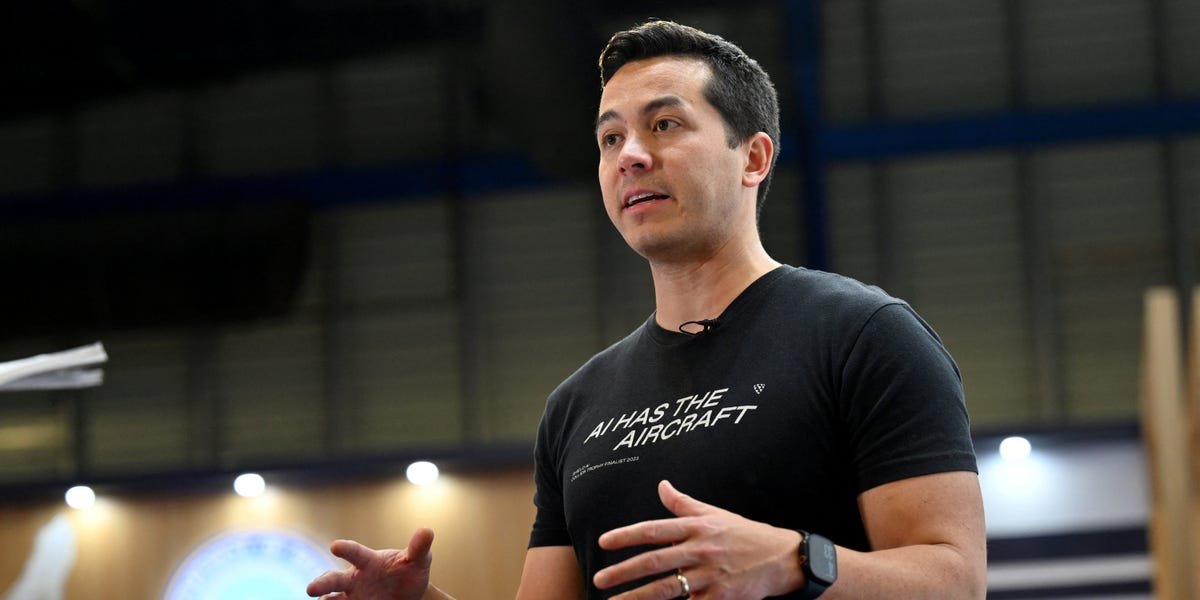
Brandon Tseng, Shield AI’s cofounder, said there’s a common misconception about his company’s signature software-powered drone: People say it needs to be armed.

The more experienced militaries who work with Shield AI, however, know they don’t need that capability in modern war, Tseng told Business Insider.

“Who doesn’t ask for that? The US military doesn’t ask for that because we understand joint fires. The Ukrainians don’t ask for it anymore, either,” said the former Navy SEAL, who is Shield AI’s president.

The V-BAT, a vertical takeoff and landing drone that uses artificial intelligence to fly in jammed environments, has primarily been used for intelligence and reconnaissance missions in high-profile conflict zones such as Ukraine. Shield AI said the V-BAT flew over 200 missions there in 2025.

The drone is still meant to be a multi-mission platform, Tseng said, and Shield AI has been exploring ways to mount weapons on it. The firm announced a partnership last month with South Korean arms manufacturer LIG Nex1 to equip the V-BAT with six-pound guided missiles.

“But at the end of the day, look: I describe V-BAT as a mini predator, reaper drone,” Tseng said. “That’s the mission it’s doing, which is: It’s finding targets. And it’s hard to find targets, you have to be out there for a long period of time.”


A South Korean Navy V-BAT flies through the sky in September 2025.

The V-Bat is being primarily used for ISR missions, but there are also options for the AI-powered drone to be equipped with weapons.

Kim Hong-Ji/REUTERS


To be fair, the MQ-9 Reaper is also commonly equipped with missiles.

However, Tseng said sophisticated militaries already have a vast array of other weapons that can turn the V-BAT’s intel into a precision strike.

“If you have been in these combat zones, the US allies who fought closely with us in Afghanistan, they do not ask for organic fires on board the V-Bat,” Tseng said. “Because everybody is so used to just saying: ‘Okay, I have a targeting package. What fires asset do I have lined up? Is it a one-way attack drone? Is it HIMARS? Is it artillery? Is it an SM-6? SM-3?”

“Doesn’t matter. You can find weapons,” he added. “The weapons are available. You need, actually, more intelligence.”

V-BAT’s early use in Ukraine

This was a framework that Ukraine still needed to improve when the V-BAT began spotting targets there in early 2024, Tseng said. The drone is meant to fly for over 13 hours and be easily deployable, requiring a two-person launch crew and no runway.

Tseng said that while Ukraine excelled in tactical drone warfare, its troops weren’t used to having a long-range asset that could spot targets for regular strategic attacks as the US military did.

“The strategic effects would happen, but they would be rare,” he said. “They’d be very, very deliberately planned operations, very expensive operations, things like what they did to the Russian runways with sending quadcopters deep into Russia via trucks.”

Ukrainian drone teams would use the V-BAT to find important targets, such as Russian S-300 and S-400 air defense systems, only to realize they hadn’t linked up with the right teams to strike them, Tseng said.

“We’d say: ‘Why didn’t you guys have these weapons lined up?’ They’d say: ‘Oh, well, we didn’t think to coordinate,'” Tseng said.

Since then, Kyiv’s forces have been using intelligence from V-BATs to carry out strikes with systems such as one-way attack drones or US-made HIMARS, Tseng said.

“There was a lot of learning over the past year for the Ukrainians,” he added.


Source link

Big-Tech-wants-more-data-centers-Residents-in-this-New.jpeg

Big Tech wants more data centers. Residents in this New Jersey city said not here.

Like a modern-day Paul Revere, Ben Dziobek’s voice rang across the night as he ran toward a crowd waiting outside New Brunswick City Hall on Wednesday.

The news? Members of the city council struck down potential plans to build a data center.

“They canceled it! They canceled it!” Dziobek shouts in footage shared by New Jersey’s Climate Revolution Action Network. Loud cheers followed, and then a chant: “The people, united, will never be defeated!”

The New Brunswick City Council had just decided to remove data centers from the list of permitted uses in a plan to redevelop several parcels of land. While no data center had yet been proposed, even the possibility that a data center could someday end up there raised alarm among city residents.

“The city administration is asking the council to amend the redevelopment plan to remove data centers as a permitted use, and to reinsert the requirement for inclusion of a park on the site that’s provided in the prior redevelopment,” New Brunswick’s city planner Daniel Dominguez said at the meeting.

Large, warehouse-style data centers have become a flash point for many communities across America as Big Tech and other AI companies look to power the large language models and chatbots they say are going to change the world. Those data centers, however, can be a drain on water resources and power grids, increase pollution, and decrease the quality of life.

An investigation by Business Insider published last year found that over 1,200 data centers had been approved for construction across the US by the end of 2024. These data centers, the report found, could consume as much power as entire US states and guzzle enormous amounts of water daily in drought-stricken regions.

In New Brunswick, those environmental concerns were top of mind.

“Community members cited concerns over environmental impact, energy consumption, water usage, noise pollution, and the broader implications of allowing large‐scale artificial intelligence and data infrastructure to expand into residential and public community spaces,” the Climate Revolution Action Network, a local environmental activist group that helped organize opposition to the redevelopment plan, said in a press release.

On Wednesday, residents and environmental advocates attended a New Brunswick City Council meeting to discuss the proposal.

During the meeting, Dominguez said the inclusion of a potential data center in the redevelopment plan was intended to “diversify the commercial development site,” but that it was “not critical to the project.”

Attendees cheered after the city council ultimately voted to nix the data center.

“I’d like to thank the council for deciding to scrap what many people did not want in their neighborhoods,” one attendee said. “We don’t want these kinds of centers in here that are going to take resources from the community.”

New Brunswick is one among many communities across the country fighting potential data center developments.

A large group of residents opposing a proposed data center in Clarmore, Oklahoma, turned out for a council meeting to discuss the project last week. Police arrested one of them for speaking for 30 seconds over their allotted three minutes. In San Marcos, Texas, hundreds of residents showed up at City Hall on Tuesday to protest a data center. The city council eventually scrapped that plan after a nearly 9-hour debate, according to local reports.


Source link

charles

$20 billion Perplexity is making a big bet on ditching ads

Perplexity is going full steam ahead with subscriptions and business sales and plans to focus more on monetization than it has in the past, executives said at a roundtable with reporters on Monday.

The AI search startup, based in San Francisco, is the latest to publicly distance itself from putting ads in chatbot answers, with one executive saying it isn’t exploring any ad deals at the moment. That’s a contrast to OpenAI, which is going all in on ads, while arch-rival Anthropic has publicly touted the opposite.

One Perplexity executive said the startup is increasingly targeting large businesses. The company has only five people on its enterprise sales team and plans to ramp that up, the executive added. It also wants to serve high-powered users such as finance professionals, doctors, and CEOs.

The focus on selling to businesses positions Perplexity more directly as a competitor to startups like Glean, which lets employees search internal files and data more efficiently with AI.

The move comes amid some VC skepticism about Perplexity’s prospects, with Silicon Valley investors voting it the company they’d most like to bet against in an informal poll at an AI conference last year, amid back-to-back funding rounds and talks of a wider AI bubble.

Perplexity will focus more on revenue and revenue retention than on other metrics, such as the number of questions it answers, the executive said. Perplexity also pledged to keep allowing people to use the product for free, with rate limits.

At the roundtable, the company declined to share specific financials and shared that revenue grew 4.7 times last year. Perplexity generated over $150 million in annual recurring revenue by mid-last year, its head of communications Jesse Dwyer told Business Insider in August. It hit $200 million in ARR in October, Alex Heath of Sources reported.

The news comes after several months of the AI startup lying low, as Perplexity said in a press invite. The company’s leaders said it was busy building and not focusing on AI-related drama.

Perplexity had announced in 2024 that it would start experimenting with ads. That effort stalled, with the top ads leader, Taz Patel, quietly leaving last year. One consistent issue with ads in AI-generated answers is that users won’t believe them, the Perplexity executive said.

Perplexity also launched a product for enterprises in 2024 that uses internal and external data to generate research reports, among other features.


Source link

We-sold-our-house-in-Utah-to-rent-in-Denver.jpeg

We sold our house in Utah to rent in Denver. The move was a big financial risk, but it was worth it.

Sometimes, a decision doesn’t make sense on paper, but it just feels right to your soul. That’s what my family’s big move was like.

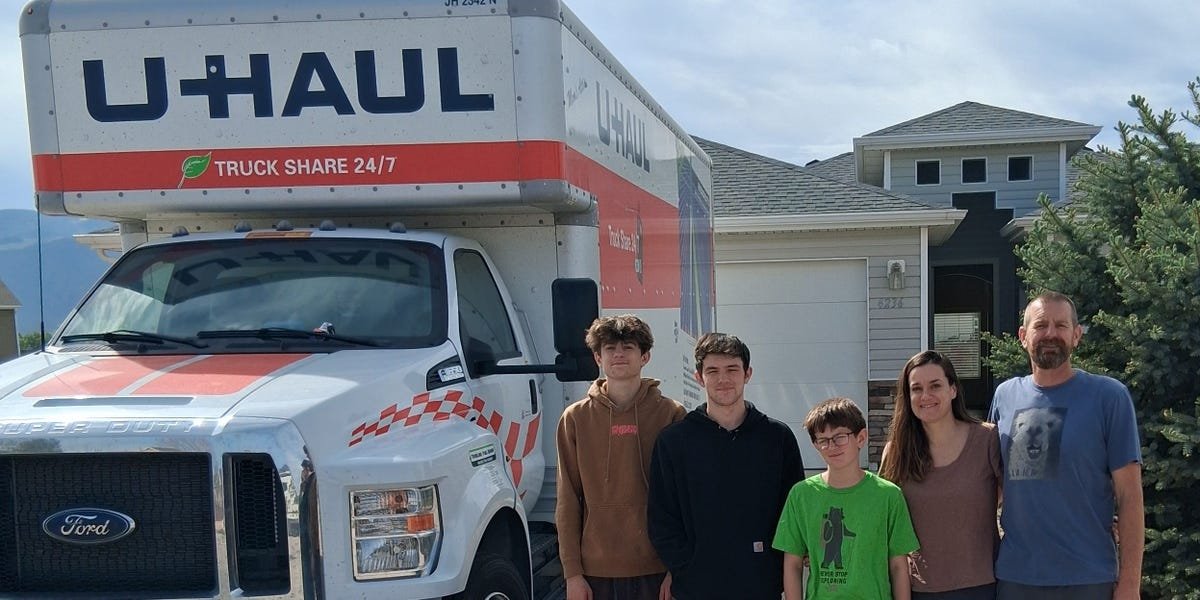
Last year, our family of five sold our affordable home in rural southern Utah to move into a more expensive rental in a Denver suburb.

We had wanted a change for a long time, and the timing finally felt right. We could’ve stayed where we were “safe” financially, but all our family members were struggling in different ways.

I couldn’t shake the feeling that nothing would really get better until we were brave enough to make a big change — so we did.

Moving from Utah to Denver was a difficult financial decision

One of the hardest parts to accept about moving was leaving our extended family and a house that we had lived in for 13 years.

Even more difficult was that our house in Utah was affordable. We were privileged to buy a house when prices were reasonable, and mortgage rates were low. We would have moved a long time ago, but we felt stuck in a home we had outgrown because it was cheap.

We knew that if we sold our house, we would be paying a lot more elsewhere. But the decision still felt right for our family.

We figured Denver was worth the price increase

We chose a Denver suburb because we love the outdoors and also miss the opportunities that a city provides. We have friends in the area, so we knew we would have a community once we arrived.


Katy Anderson's kids in nature in denver

The author’s kids enjoy Denver’s nature.

Courtesy of Katy Anderson


We chose an area known for its “small town feel.” As soon as we moved in, I immediately fell in love with the neighborhood. We are surrounded by an abundance of mature trees, and are within walking distance of wonderful trails for walking and biking.

I’ve been amazed at the wildlife around us, especially considering we live in a Metro area.

Just walking the trails in our neighborhood, we’ve seen rabbits, coyotes, elk, raccoons, turkeys, and many different species of birds. We feel closer to nature here than we did in rural Utah.

After living here for a few weeks, we decided to purchase e-bikes so we could ride much farther along the trails, including to coffee shops, restaurants, city gardens, and parks.

This area also provides us with access to shopping, museums, concerts, and sporting venues. After living in a secluded town for so many years, having these amenities feels like a luxury.

We’re saving money in other ways

Our rent is high in Denver, and that has been the biggest adjustment.

Before we made the move, I was also worried about the cost of living, but I have been pleasantly surprised. Our kids even get free school lunch thanks to a statewide Healthy School Meals for All program. My kids have all commented that the food is of better quality. They actually want to eat the school lunches here.

We are paying much less for gas in Colorado, as we are driving substantially less. In Utah, we lived on the outskirts of town and had to drive 15 to 20 minutes to get to work or to the nearest grocery store.

When we moved to Colorado, we also immediately ended most of our subscriptions and streaming services. We’ve cut down on our discretionary spending and are eating more family meals at home.

We also chose jobs that would help us adjust to our new housing costs

We knew we would be paying more for housing no matter where we moved, so we chose a location with ample work opportunities. My husband is a psychiatric nurse practitioner, and I have picked up a part time job in addition to my freelance writing business.

We are all making more money in Colorado than we could in Utah, where the minimum wage is still $7.25 per hour. Two of my teenage sons were amazed when they realized how much more they could earn in their new city.

Right now, we are enjoying the freedom of renting. Buying a home in this economy feels daunting, and we want to take our time exploring Colorado to see where we may want to buy if it feels right.

For now, I am grateful that my kids have a chance to experience living in a bigger city with more diversity and opportunities. Overall, I feel like we fit in here in a way that we never did in our old town, and that is priceless.


Source link