I-tried-the-signature-burgers-from-McDonalds-Wendys-and-Burger.jpeg

I tried the signature burgers from McDonald’s, Wendy’s, and Burger King. The Big Mac was my least favorite.

Updated

  • I tried the signature burgers from three fast-food chains: McDonald’s, Wendy’s, and Burger King.
  • I thought McDonald’s Big Mac was underwhelming and needed more sauce.
  • I liked the smoky flavor of Burger King’s Whopper, even though it was the priciest burger.

As a food reporter, I’ve tried and tested many burgers over the years.

But for my latest taste test, I decided to go back to basics.

While I’ve compared the biggest burgers at fast-food chains and practically every fast-food double cheeseburger, I wanted to see if the signature burgers from three of America’s most beloved chains really are classics.

I tried the McDonald’s Big Mac, the Wendy’s Dave’s Single, and the Burger King Whopper to determine which is best in terms of taste and value.

My least favorite of the signature burgers I tried was McDonald’s Big Mac.

The McDonald’s Big Mac was released in 1968.

Erin McDowell/Business Insider

Arguably the most iconic fast-food burger, the Big Mac is a staple on McDonald’s menu. Created by owner and operator Jim Delligatti of Pittsburgh in 1967, the first “Big Mac” featured a triple-decker burger and sold for 45 cents, according to McDonald’s.

The burger rolled out across the US in 1968 and quickly became the chain’s signature burger.

Today, an estimated 900 million Big Macs are sold each year around the world.

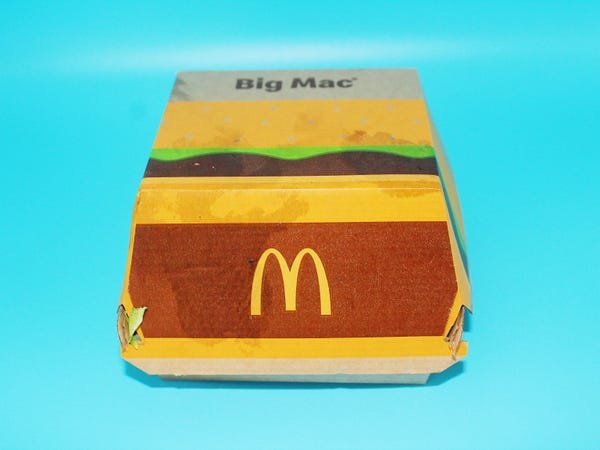
A Big Mac comes with two 1.6-ounce beef patties, pickles, shredded lettuce, chopped onions, a slice of American cheese, and layers of Big Mac sauce on a sesame-seed bun.


mcdonalds big mac

The burger came topped with lettuce, pickles, and Big Mac sauce.

Erin McDowell/Business Insider

The Big Mac cost me $8.29, excluding tax, at my local McDonald’s in Brooklyn, New York.

Right away, I wasn’t obsessed with the flavors or texture of this burger.


mcdonalds big mac

The extra bun made the burger taste dry.

Erin McDowell/Business Insider

The burger I received was mostly lettuce, which covered up the flavors of the cheese, meat, and sauce. I wanted more of a tangy flavor from ketchup, mustard, or simply more Big Mac sauce.

My second-favorite burger was the Dave’s Single from Wendy’s.


wendys daves single with cheese

Wendy’s Dave’s Single with cheese is considered its signature burger.

Erin McDowell/Business Insider

Named after Wendy’s founder, Dave Thomas, Dave’s Single is Wendy’s signature burger. It is available in multiple sizes, from a single to a triple-stacked burger.

It features one of Wendy’s signature square patties and is the chain’s take on a classic cheeseburger. 

The Dave’s Single burger comes with a quarter-pound beef patty, a slice of American cheese, lettuce, tomato, pickles, ketchup, mayo, and onions.


wendys daves single with cheese

The burger came with classic toppings like cheese, lettuce, and tomato.

Erin McDowell/Business Insider

The burger cost me $8.74, excluding tax, at my local Wendy’s in Brooklyn.

The burger was noticeably saucier than both the Whopper and the Big Mac.


wendys daves single with cheese

The burger was much saucier than the Big Mac.

Erin McDowell/Business Insider

It was practically dripping with sauces, which I didn’t necessarily mind. Some of the flavors were slightly covered up by the two condiments, but I thought the cheese was tangy and the onions cut through the sweeter elements of the burger.

There was also a generous serving of pickles and a large slice of tomato.

Overall, I thought this was a good, classic cheeseburger.


wendys daves single with cheese

The burger checked a lot of boxes.

Erin McDowell/Business Insider

However, if I had to change one thing, I might remove or ask for a half-serving of mayonnaise.

I thought it was an overall solid choice for a late-night snack.

My favorite burger was the Whopper with cheese from Burger King.


burger king whopper

The Whopper has been around since 1957.

Erin McDowell/Business Insider

Burger King’s signature burger has been around for decades. Released in 1957, just four years after the chain opened, the Whopper was 37 cents compared to Burger King’s original burger, which cost 18 cents.

Whoppers — and all Burger King burgers, for that matter — are flame-grilled, giving their burgers a distinct smoky flavor.

You can order a Whopper with or without cheese.


burger king whopper

The burger came without cheese, but I added it to my order.

Erin McDowell/Business Insider

For the sake of this experiment, I decided to order a Whopper with cheese to ensure a fair comparison with the other signature burgers. 

The Whopper cost me $9.17, excluding tax, at my local Burger King in Brooklyn.

A Whopper comes with a quarter-pound beef patty, pickles, onions, lettuce, tomato, ketchup, and mayonnaise on a sesame-seed bun.


burger king whopper

The burger came with pickles, onions, lettuce, tomato, ketchup, and mayonnaise.

Erin McDowell/Business Insider

Right away, I could tell this burger was going to pack tons of flavor. Thick layers of ketchup and mayonnaise oozed out of the sides of the burger, while the bun was large and held the other ingredients together perfectly. 

The flavorful burger was my favorite for both taste and texture.


burger king whopper

This burger impressed me with its smoky flavor and size.

Erin McDowell/Business Insider

The lettuce, tomatoes, and onions all tasted very fresh, adding a delicious crunch to the burger.

The burger patties had a smoky, savory flavor that made the sandwich taste fresh off the grill. I also thought the patty’s shape, which was larger in circumference but flatter than some of the other burgers, made the sandwich easier to eat. 

Overall, I think the burger was worth the higher price tag.

When comparing the three signature burgers, I found myself feeling like a fast-food-eating Goldilocks: One burger was too dry, one was too moist, and one was just right.


Source link

Author-of-viral-Something-Big-is-Coming-essay-says-AI.jpeg

Author of viral ‘Something Big is Coming’ essay says AI helped him write it — and that proves his point

The author of the viral essay warning about impending AI disruption says he couldn’t wait any longer to get the word out.

“Let’s say there is just a 20% chance of it happening, which is maybe realistic, maybe underselling it,” Matt Shumer, GP of Shumer Capital, said during an interview with Business Insider. “Even if there is a 20% chance of this happening, people deserve to know and have time to prepare.”

The people in tech who previously warned about AI’s impact were mostly speaking to others in the industry, he said. Shumer said he wanted something that spoke to his dad, a lawyer who is just a few years from retirement and is hopeful he can run out the clock on the potential massive change on the horizon.

He’s certainly found an audience.

His essay, titled “Something Big is Coming,” has been viewed over 60 million times on X alone, as of Wednesday evening. In the nearly 5,000-word post, Shumer wrote that AI’s disruption to people’s lives could be “much bigger” than COVID — a comparison that has drawn some pushback online. Shumer’s past controversy over an open-source model he promoted in 2024 has also come under scrutiny, after AI researchers discovered the model didn’t live up to his performance claims. He previously apologized, saying “I got ahead of myself when I announced this project.”

In his essay, Shumer also wrote that what he’s seeing in tech is likely what awaits other industries.

“I don’t know that this is coming for sure, but I think a lot of us in tech really see this progress, and it’s frankly dizzying, and there’s a good chance of this,” he said. “And the more people know, the better.”

Shumer is not alone in his fears about the future.

Anthropic CEO Dario Amodei, who is known for writing eyebrow-raising essays of his own, has said that up to half of all entry-level, white-collar jobs may be wiped out in the next one to five years. xAI CEO Elon Musk has called AI a “supersonic tsunami” that will quickly eliminate jobs that don’t involve physical labor.

Shumer said even he is unsettled about the prospects of AI. After all, he’s 26 and still near the beginning years of his career. In 2020, he cofounded OthersideAI, which later spawned HyperWrite, an AI-assisted writing tool.

“I don’t know how many more years of my career there will be if this all actually comes to pass,” he told Business Insider. “So, it’s frankly a little confusing and terrifying for someone like me.”

Part of the issue is that AI is unlikely to affect all industries in the same way or at the same time, making career advice highly dependent on a person’s specific situation.

“If you’re a nurse, you’re probably going to be fine for quite some time,” he told Business Insider, adding that junior associates at law school face significantly more risk because many of the introductory-type tasks they do are already being targeted by AI companies.

In his essay, Shumer wrote that his realization of what’s in store came after his experience with OpenAI’s GPT-5.3-Codex, which was released last week. In its release notes, OpenAI said GPT-5.3-Codex was its “first model that was instrumental in creating itself.” Shumer wrote that AI is now capable of doing his technical work.

As for the other tasks, Shumer has been quite open about how AI helped him write his viral essay about AI. He said he spent hours working with Claude to craft his message.

“It did help a lot,” he told TBPN on Wednesday, “and I think that’s kind of the point.”

It’s why Shumer’s message to everyone who turned away from AI, perhaps after a clunky experience with an early version of ChatGPT years ago, is that they should seize the opportunity to see the breadth of what the technology can do now.

“If you look back 10 years from now and this did come to pass, you’ll be very glad you did,” he told Business Insider.


Source link

Bill Ackman attends 2025 Pershing Square Foundation MIND and Cancer Prize Award Dinner at The Pool on May 22, 2025 in New York.

Bill Ackman’s hedge fund reveals big stake in Meta — ‘one of the clearest beneficiaries of AI integration’


Michael Ostuni/Patrick McMullan via Getty Images

  • Bill Ackman’s Pershing Square has invested roughly 10% of its capital in Meta.
  • The fund told investors Meta is set to be “one of the clearest beneficiaries of AI integration.”
  • Meta has been plowing cash into data center projects, which Ackman’s firm expect to pay off long-term.

Bill Ackman is betting big on Meta — saying it believes it to be “one of the clearest beneficiaries of AI integration.”

The billionaire investor’s Pershing Square hedge fund revealed Wednesday that it has invested around 10% of its capital in Meta, or approximately $2 billion, as of the end of December.

“We believe Meta’s current share price underappreciates the company’s long-term upside potential from AI and represents a deeply discounted valuation for one of the world’s greatest businesses,” the presentation said.

At around $668 per share on Wednesday afternoon, Meta’s stock price is roughly flat in 2026 so far, and down approximately 7% from one year ago.

Pershing Square also revealed it had allocated 13% of its fund to Amazon as of the end of 2025, and a 2% position in Hertz in late 2024.

Wall Street has been less than enthusiastic about some of Big Tech’s planned capital expenditure plans, but Meta’s budget-busting $135 billion forecasted spend was rewarded last month with a short-lived 8% bump the share price.

Either way, Ackman’s team says they’re very much on board with the strategy.

“We believe concerns around META’s AI-related spending initiatives are underestimating the company’s long-term upside potential from AI,” the presentation said.


Pershing's Meta investment thesis

Pershing Square’s investment thesis for its stake in Meta.

Pershing Square


The presentation also said Meta’s 3.5 billion users are increasing at a steady clip, setting the company up as the “dominant” leader in digital ads.

“Meta’s business model is one of the clearest beneficiaries of AI integration,” the presentation said.


Source link

Melia Russell smiles

Harvey makes a big chief product officer hire as legal tech competition heats up

Harvey, the $8 billion legal software startup, is becoming a default vendor in Big Law. Now, with rival startups nipping at its heels and AI model providers moving closer to legal workflows, Harvey is bringing in a new executive to help defend its lead.

The company tells Business Insider it has hired Anique Drumright as its first chief product officer. In this role, she’ll shape what Harvey builds next and how quickly it can ship. Drumright has held roles at Uber, TripActions, Loom, and, most recently, HR software startup Rippling, where she led the company’s push into IT management software.

“Her slope of learning is very high,” said Winston Weinberg, Harvey’s chief executive. He described sending Drumright a lengthy Google Doc on the state of law firm technology and the day-to-day mechanics of legal work. She came back quickly with “really good product ideas,” he said.

The C-suite hire comes at a critical moment for Harvey — and for legal tech more broadly. Law firms are pouring money into new software meant to help lawyers work faster and save costs. Clients are driving much of that spend. After seeing chatbots and virtual assistants transform their own operations, they now expect the same efficiency from outside counsel.

Those tools don’t come cheap, and recent moves by the model providers themselves have complicated the picture. Anthropic’s release last week of a contract-review tool sent ripples through the industry and led to a major sell-off of legal-research stocks. It raised a pointed question: If a foundation model can review contracts, on top of handling tasks across the rest of the organization, how much specialized legal software will firms still pay for?

Harvey sits at the top of the heap for now. The startup has emerged as one of the best-known and best-funded players in legal tech, with licenses at over half of the 100 largest US law firms. The company said it ended last year with more than $190 million in annual recurring revenue. And job postings reviewed by Business Insider suggest it is pushing into mid-market and smaller firms, a long tail of potential growth beyond Big Law.

Earlier this week, Forbes reported that Harvey is raising a new round of funding that would value the company at $11 billion, citing unnamed people familiar with the deal. A Harvey spokesperson declined to comment on the report.

Harvey’s dominance comes with pressure. The company still needs to show lawyers its product can boost revenue, not just save hours. At the same time, competition is intensifying, from legal software startups like Legora and from OpenAI and Anthropic, the same companies whose technology powers Harvey’s platform.

Weinberg said Anthropic’s latest release doesn’t change Harvey’s product direction, but it does emphasize the need to move faster on shipping what makes the company distinctive. “Part of hiring Anique is to accelerate that,” he said.

If the next fight is adoption, Drumright has put in the reps. She’s spent years building products that ask people to change their habits.

At Uber, she worked in product and marketing as the ride-hailing giant scaled to billions of trips a year. Later, at Loom, she helped grow a product that nudged office workers away from meetings and long email chains, replacing them with screen-recorded video messages.

Drumright faces a similar challenge at Harvey, where the company has to convince reluctant lawyers, a famously luddite profession, to trade the familiar way of doing things for new tools. Those take time to use effectively.

“When something is new, even if it’s powerful, it’s still harder to do than the way you’ve always done it,” she said. Her job, she said, is to make those new capabilities feel intuitive.

Drumright is the daughter of two lawyers, and she has seen firsthand how low-tech legal work can be. She remembers her mother siting on the couch, preparing for a deposition by speaking into a tape recorder.

Drumright starts on Tuesday. Her first weeks at Harvey will be spent on a listening tour, meeting lawyers using the product and legal teams deciding whether to buy it. “Legal is a very specific domain,” she said, but the work starts with understanding how lawyers actually work today, and designing products that don’t slow them down.

Have a tip? Contact this reporter via email at mrussell@businessinsider.com or Signal at @MeliaRussell.01. Use a personal email address and a non-work device; here’s our guide to sharing information securely.


Source link

Stacked column chart

Big Tech capex growth may be far slower than it looks — thanks to this overlooked metric

Big Tech’s latest capex projections have shocked investors. Look beneath the headline numbers, though, and spending may actually be growing far more slowly.

That’s according to new research on Monday from analysts at RBC Capital Markets.

Amazon, Google, Meta, and Microsoft are expected to spend almost $600 billion this year on data centers, chips, networking, and other related gear to meet surging AI demand.

On the surface, this may look like a relentless acceleration, but RBC’s analysis suggests these growth numbers are being flattered by an unusual culprit: runaway memory prices.

The RBC analysts found that soaring prices for data center memory chips — including DRAM, high-bandwidth memory (HBM), and NAND flash — could account for about 45% of the dollar growth in cloud capital expenditures for 2026. Crucially, most of that increase isn’t coming from companies buying dramatically more hardware, but from paying much more for the same components, the analysts said.

RBC estimates that data center memory spending across the top 10 hyperscalers will jump from about $107 billion in 2025 to roughly $237 billion in 2026. That $130 billion increase would represent about 45% of total capex growth at those companies. Even more striking, around three-quarters of the memory spend increase — roughly $98 billion — is attributable purely to higher prices, not higher unit volumes.

The price shock is severe. TrendForce projections cited by RBC show DRAM prices more than doubling in 2026, while NAND prices are expected to rise more than 85%. Memory has become one of the most constrained inputs in AI infrastructure, as advanced GPUs require large amounts of high-performance DRAM and HBM, while AI data centers consume massive quantities of flash storage.

When RBC strips memory out of the equation, Big Tech’s spending surge looks meaningfully different. Excluding memory costs, capex growth is projected to drop to about 40% in 2026, down from roughly 80% growth in 2025. That’s still a strong expansion, but far less explosive than the raw capex totals imply.

The analysts described this as “a notable deceleration,” while adding that “it’s not necessarily cause for alarm.”

RBC argued that underlying AI investment remains robust, but warned that memory pricing is now the biggest wild card for capex trends heading into 2027.

In effect, Big Tech may be spending vastly more on some equipment — without building proportionally more — as the AI arms race collides with an overheated memory market.

Sign up for Business Insider’s Tech Memo newsletter here. Reach out to me via email at abarr@businessinsider.com.


Source link

Americans-arent-flocking-to-Florida-like-they-used-to-Higher.jpeg

Americans aren’t flocking to Florida like they used to. Higher prices are a big reason.

Kimberly Jones was born and raised in Miami, and planned to live her whole life there. It’s where she met her husband, raised her children, and built a four-decade career in logistics.

But in 2025, Jones did something she never expected: She and her husband left Plantation, Florida — nearly 20 minutes west of Fort Lauderdale — for a small rural town about an hour outside Charlotte, North Carolina.

“It was not an easy decision,” Jones, 60, told Business Insider. “Affordability was part of it, but we were also looking forward to having a slower pace of life. I lived in South Florida my entire life — and it’s not anything like what it used to be.”

Jones said Southern Florida’s population growth has made the area increasingly unrecognizable — and, for her, unlivable — pointing to hyper-development in residential construction and the gridlocked traffic she calls “ridiculous.”

“If there’s a corner available, they will build a high-rise on it,” she said. “It’s turning into an overly congested, expensive city. I used to spend two and a half hours a day in the car just going to and from work.”

People are still moving to Florida, but they’re not flocking to it like they used to. Net domestic migration — or the number of people moving into the state from elsewhere in the country minus those moving out to other parts of the US — has been steadily cooling in recent years.

There are a few likely reasons behind the cooler estimates in the Sunshine State. For some, the tax benefits of living in the state don’t outweigh the increase in cost of living. It’s more expensive to buy a home than a few years ago, and property insurance has been higher than in other states.

High housing costs have made Florida less attractive

In recent years, Florida has drawn an influx of newcomers chasing its affordability, driven in large part by its wide range of relatively lower-cost housing and lack of state income tax. Others are lured by its business-friendly tax environment and strong job market.

But the surge of newcomers has created a host of challenges for native and longtime residents who have watched home prices and rents climb, especially in popular cities like Miami and Orlando. It’s prompted some to move to less expensive cities and suburbs elsewhere in the state, or to leave Florida entirely.

“Affordability often drives a lot of domestic moves,” Jed Kolko, senior fellow at the Peterson Institute for International Economics, told Business Insider. “People tend to move toward less expensive places. In recent years, Florida’s gotten a lot more expensive, so Florida doesn’t look as affordable compared to other places as it did even just a few years ago.”

In December 2020, Florida’s median home-sale price was $298,100; by December 2025, the most recent month with available data, it had climbed to $412,100, Redfin data showed. In addition to higher home prices and rents squeezing residents, home and flood insurance costs have increased, as more frequent and severe natural disasters push homeowners’ premiums higher.


Homes flooded in Florida

Homes flooded in Florida.

Bilanol/Getty Images


Take Debra Pamplin, who moved from Florida back to the Midwest after 11 years. In 2013, Pamplin moved from her hometown of Missouri to Jacksonville, Florida. During her time there, though, she soured on the area’s traffic, high insurance costs, uncomfortable heat and humidity, and mosquitoes. Pamplin has valued living in the Midwest much more.

“I’d often have to cut spending in other parts of my life just to cover my high monthly insurance costs,” she said in a 2024 Business Insider story. “Now that I’m out of Florida, my monthly insurance expenses are lower, giving me breathing room to spend my money on more fun stuff.”

Florida hasn’t completely lost its appeal

Mariya Letdin, an associate professor of real estate at Florida State University, told Business Insider that even as net migration slows, Florida is “still a popular destination,” but she expects its population will continue to grow slowly.

Aside from slower growth, the profile of who’s moving to Florida is shifting, too.

Michael Martirena, a real estate agent with Compass in South Florida, told Business Insider he’s seen a change in the clients he works with, which he attributes in part to higher housing costs.

“Let’s go back three years ago, pre-pandemic, everyone was coming down here. It didn’t matter what socioeconomic class people were from; they just wanted to come to Florida.” Now, he said, he’s working with more buyers from abroad, as well as wealthy American buyers.

Hamilton Lombard, a demographic researcher based in Virginia, said immigrants moving elsewhere within the US could also be a factor as to why Florida’s domestic migration has weakened. Census data showed that non-citizens who moved between states in the past year from Florida increased from about 30,000 in 2022 to 53,500 in 2024, the latest year available.

Florida’s net international migration has also been cooling, but remains positive, meaning more people are immigrating to Florida from other countries than leaving for destinations outside the US.

“International and affluent buyers still continue to come down to Florida, whether it’s for tax purposes or geopolitical reasons or what’s going on in their states,” Martirena said, adding that a lot of his clientele comes from countries like Dubai, Madrid, and London.


Source link

Brad Karp stepped down as chairman of Paul Weiss

Brad Karp steps down as chair of Big Law firm Paul Weiss after Epstein scrutiny


John Lamparski/Getty Images

  • Brad Karp stepped down as chairman of Big Law firm Paul Weiss on Wednesday amid scrutiny over Epstein ties.
  • Scott Barshay was named the new chairman of the global firm, which has more than 1,000 attorneys.
  • Karp is among the elite names to appear in 3 million documents released by the Justice Department last week.

Brad Karp stepped down as chairman of Big Law firm Paul Weiss on Wednesday amid scrutiny over his ties to the late sex offender Jeffrey Epstein.

Scott Barshay was named the new chairman of the global firm, which has more than 1,000 attorneys, “effective immediately,” the firm said in a news release.

“Leading Paul, Weiss for the past 18 years has been the honor of my professional life,” Karp was quoted as saying in the release. “Recent reporting has created a distraction and has placed a focus on me that is not in the best interests of the firm.”

The shakeup comes two days after Paul Weiss said in a statement, as reported by The New York Times, that Karp “attended two group dinners in New York City” with Epstein and “had a small number of social interactions by email, all of which he regrets.”

Karp is among the elite names to appear in 3 million documents released by the Justice Department last week from its investigation into Epstein, who killed himself in jail in 2019 while awaiting trial on sex-trafficking charges.

He has been at Paul Weiss for four decades and has been chair of the firm since 2008. “Mr. Karp will continue to focus his full-time attention to client service at the firm,” the release said.

This is a developing story. Check back for updates.


Source link

A-GoFundMe-for-laid-off-Washington-Post-staffers-crossed-130K-in.jpeg

A GoFundMe for laid-off Washington Post staffers crossed $130K in a few hours and drew a big donation from Kara Swisher

Money is pouring in for workers impacted by Wednesday’s layoffs at The Washington Post.

As of writing, over 1,000 supporters had donated more than $130,000 combined to a GoFundMe page set up for let-go journalists.

The fundraising push, launched just a few hours after company executives began cutting workers, was set up by Post reporter Rachel Siegel and the newsroom’s union. Its top donor, tech journalist and former Post employee Kara Swisher, gave $10,000.

Swisher, who recently made a push to buy the Post from its billionaire owner, Amazon founder Jeff Bezos, wrote on Threads that she had the means to “donate a decent chunk of dough to these hardworking employees,” and urged others to follow.

Other top donors appeared to be former Washington Post staffers, such as Eugene Robinson and Fred Barbash.

The Post’s haul, and the speed at which it drew in six figures, make it an outlier among media layoff fundraisers. Laid-off staffers at Vox Media pulled in about $7,000 in their January GoFundMe, while Teen Vogue got about $41,000 after November layoffs.

“Post Guild members have come together to support their colleagues with this GoFundMe,” said a spokesperson for the Washington Baltimore News Guild, which represents the paper’s union. The spokesperson blamed “inexcusable business decisions of top Post leadership” for the cuts.

“The Washington Post is taking a number of difficult but decisive actions today for our future, in what amounts to a significant restructuring across the company,” a Post spokesperson said in a statement on the layoffs. “These steps are designed to strengthen our footing and sharpen our focus on delivering the distinctive journalism that sets The Post apart and, most importantly, engages our customers.”

The Post’s layoffs, which its newsroom union said impacted hundreds of workers, were designed to trim costs and refocus its efforts around a smaller set of coverage areas, executive editor Matt Murray told employees over Zoom on Wednesday morning.

The company is shutting down its podcast, “Post Reports,” and letting go of journalists focused on sports, books, and foreign affairs. It’s restructuring its D.C. metro coverage, and investing in areas like politics and national security that “demonstrate authority, distinctiveness, and impact,” Murray wrote in a memo to staff, viewed by Business Insider.

“Today is about positioning ourselves to become more essential to people’s lives in what has become a more crowded, competitive, and complicated media landscape,” Murray told staffers during the call. “For too long, we’ve operated with a structure that’s too rooted in the days when we were a quasi-monopoly local newspaper.”


Source link

Unsubscribe-and-opt-out-A-new-Big-Tech-boycott-to.jpeg

‘Unsubscribe’ and ‘opt out’: A new Big Tech boycott to protest ICE starts February 1

Economic boycotts are a familiar tool of protest. The problem is they often place the greatest strain on the smallest businesses.

That was the case during Friday’s nationwide general strike, which was designed to pressure the Trump administration to dial back its aggressive anti-immigration policies.

For many small business owners, the shutdown created a dilemma. Supporting the cause often means losing a day’s revenue and risking their ability to keep staff employed. Across social media, owners voiced solidarity alongside an apology for staying open.

There may, however, be another way, according to Scott Galloway, a marketing professor at New York University famous for his critiques of Big Tech.

Instead of a blanket shutdown, Galloway is calling for Americans to focus on major tech companies by unsubscribing from — or opting out of — services like OpenAI’s ChatGPT, Amazon’s Prime Video, and Microsoft Office.

A targeted boycott starting on Sunday and lasting the entire month of February could move markets, he says, which would, in turn, affect the CEOs who have the ear of President Donald Trump.

“We’re proposing something quieter and less cinematic than a protest that will run all day on cable TV, but much more disturbing to the Trump administration. A one-day slowdown is irritating. A one-month slump is terrifying,” he wrote in a blog post announcing the boycott.

Major tech CEOs have sought favor with the president during his second term. Many of them donated to his inauguration, for starters.

AI executives, like OpenAI CEO Sam Altman and Meta CEO Mark Zuckerberg, also accepted an invitation to a White House dinner with Trump in September, where the leaders took turns lauding the president. Apple CEO Tim Cook and Amazon CEO Andy Jassy attended the White House premiere of the documentary about first lady Melania Trump at the height of January’s anti-ICE protests in Minneapolis.

Supporting the AI industry in its competition with China is a major pillar of Trump’s economic agenda.

“These are the leaders who have his ear,” Galloway writes. “A modest reduction in their companies’ growth could have a substantial impact on valuations priced to perfection. Small changes in consumer behavior — starting on the first day of February — could have an enormous ripple effect, one that extends all the way to the White House.”

The anti-ICE movement

Regular protests against the tactics of ICE and Border Patrol personnel have gripped the country for months. Thousands marched through Minneapolis again on Saturday. Tensions rose dramatically in January after the killings of Renee Good and Alex Pretti in Minneapolis, both at the hands of federal immigration agents.

In both instances, protesters recorded videos and posted them to social media for the world to see, leaving little room for the Trump administration to spin the events in its favor.

While those videos and the subsequent protests — as well as the attempted nationwide shutdown — have spread awareness, they have so far done little to substantively shift the administration’s immigration policies.

The Department of Homeland Security demoted a key Border Patrol official last week and promised more changes. At the same time, however, the acting director of ICE expanded the power agents have to carry out warrantless searches, according to an internal memo seen by The New York Times.

“Real change always comes from the American people, not from our political parties. But power doesn’t fear protests nearly as much as economic withdrawals,” Galloway writes. “Getting off your couch, taking to the streets, and building community is important, but the most radical act in a capitalist society isn’t marching, it’s not spending.”


Source link

China-focused-hedge-funds-surged-in-2025-Heres-who-won-big.jpeg

China-focused hedge funds surged in 2025. Here’s who won big.

At the start of 2025, alarms were blaring about the risk of investing in China.

A new protectionist administration was taking over in the US at the same time China’s domestic real estate market was teetering. A possible US ban on TikTok, the popular social media app, imperiled ByteDance, one of the country’s biggest tech companies. American companies seemed to have surged ahead of Chinese rivals in artificial intelligence development.

Twelve months later, and many of the biggest fears appear to be overblown. The Chinese government has focused on stimulating the economy, leading public companies to significantly increase their buybacks. ByteDance sold a majority stake in its US TikTok operations and is now more valuable than ever, with HSG, the venture capital firm formerly known as Sequoia China, valuing the company at between $350 billion and $370 billion recently. And China’s AI scene, led by startup DeepSeek, is keeping pace with Western peers, and Nvidia will be permitted to sell its powerful H200 chips to Chinese companies, the US government said Tuesday.

Hedge funds willing to invest in the country last year were rewarded. Bridgewater, which manages $92 billion across all its strategies, generated a 34.2% return in its China Total Returns fund, a person close to the manager told Business Insider. Tekne Capital, managed by Beeneet Kothari, a onetime lieutenant of billionaire Stanley Druckenmiller, was up more than 50% last year, a person close to the manager said.

Kothari’s $1.5 billion firm is an investor in Chinese companies such as DiDi Global, recruiting firm Kanzhun, and data-center builder GDS, the person said. Kothari told Business Insider in an interview last year that the headwinds facing the country made strong companies very cheap.

According to HSBC’s Hedge Weekly report, funds based in China and investing in the country performed well. $3.4 billion Pinpoint’s China-focused strategy returned more than 24%, while its multistrategy offering, which invests across Asia, was up 11.6%. George Jiang’s long-running Golden China fund made close to 33%, and Epimelis Capital, run by Hutchin Hill and Goldman Sachs veteran Fei Sun, made 35% in its China-centric strategy.

The average China-focused fund was up close to 18%, according to Hedge Fund Research, outpacing the industry average of 10.7%.

Going into 2026, investors will be watching how the volatile relationship between the US and China evolves, especially around trade agreements connected to chips, as well as any indication that China might invade Taiwan.

ByteDance will also be a focus for funds — Tiger Global and Coatue are both backers — as the social media giant continues to grow.


Source link