
OpenAI-could-generate-25-billion-in-annual-ad-revenue-by.jpeg

OpenAI could generate $25 billion in annual ad revenue by 2030, and that should worry Google, top tech analyst says

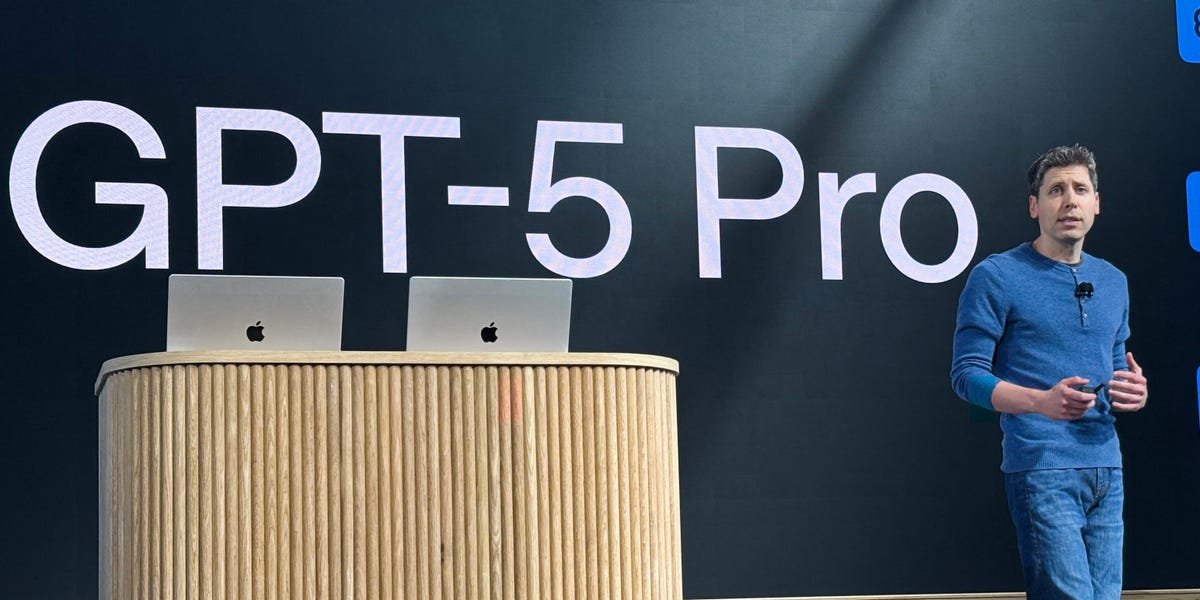
Advertising could become a $25 billion business for OpenAI — and pose a threat to Google, according to new estimates on Monday from a top tech analyst.

Evercore ISI’s Mark Mahaney sees the startup generating that level of annual ad revenue by 2030 if it executes well on rolling out this new business.

OpenAI said on Friday that free and Go users of ChatGPT would start seeing ads “in the coming weeks.” OpenAI also laid out its advertising principles, such as clearly labeling them and not sharing user conversations with advertisers.

“A path to generating several billion dollars in ad revenue in 2026, going to $25B+ by 2030, seems reasonable,” Mahaney wrote in a note to investors.

That’s based on the likely scale of ChatGPT by that time, the proven monetization of high-intent performance marketing platforms, and the current size of this market, the analyst added.

OpenAI’s revenue is growing fast already. CFO Sarah Friar said in a recent blog post that the startup’s annualized revenue topped $20 billion in 2025, up from $2 billion in 2023. However, there are big question marks over OpenAI’s losses and whether it can become profitable in the future.

Advertising could be one way for OpenAI to boost its top and bottom lines.

Mahaney noted that Google’s Search and YouTube businesses likely generated close to $300 billion in ad revenue in 2025, with Meta generating an additional $180 billion. These are highly profitable operations, with operating profit margins of 40%, according to the analyst.

ChatGPT has almost 1 billion weekly average users, many of whom share valuable details with the chatbot, such as what they want and need. Advertisers are willing to pay up for access to this treasure trove. This is the type of intent-based information that forms the backbone of the massive digital ad businesses run by Google and Meta.

OpenAI has said that initial test ads will appear at the bottom of ChatGPT answers and be relevant to the user’s conversation with the chatbot. That approach might not be too intrusive for users, while still being attractive to advertisers, Mahaney said.

“OpenAI’s move directly challenges this core revenue stream by offering an alternative, highly engaging platform for users to discover products and services,” Mahaney wrote. “If ChatGPT can successfully integrate ads that are helpful rather than intrusive, it could siphon off valuable commercial queries that traditionally go to Google.”

The analyst also warned that if OpenAI can develop a “conversational” ad format, where users research and discuss potential purchases within ChatGPT, that could prompt advertisers to shift some of their marketing budgets because this is “high-intent engagement.”

Even if ChatGPT goes all-in on ads, though, don’t expect the chatbot to take Google’s share of the market overnight, Mahaney added.

OpenAI will still have to compete with the tech ecosystem that Google has spent years creating, such as its Chrome web browser, as well as web users’ habit of Googling stuff when they need an answer, Mahaney wrote.


Source link

What-is-Manus-the-Chinese-founded-AI-startup-Meta-is-buying.jpeg

What is Manus, the Chinese-founded AI startup Meta is buying for over $2 billion?

Manus is back in the spotlight.

The Chinese-founded artificial intelligence startup is being acquired by Meta in a deal reported to be worth more than $2 billion — one of the most high-profile instances of a US tech giant buying an Asian AI company.

Manus grabbed headlines in March when it unveiled an AI agent designed to autonomously execute tasks like résumé screening and stock analysis.

The startup was founded in China and moved its headquarters to Singapore in mid-2025.

What does Manus do?

Launched in March by the Chinese AI product studio Butterfly Effect, Manus has been pitched by its creators as the world’s first “general” AI agent — a system designed to carry out tasks independently.

Since its launch, the startup has continued to expand what the agent can do, rolling out features that allow users to use Manus for design work, slide creation, and completing tasks directly through a web browser.

Manus can independently execute complex tasks, such as market research, coding, and data analysis, Meta said when it announced the acquisition on Monday.

Business Insider tested the tool in its early stages in March and found it ambitious but uneven in execution, including instances where it hallucinated data.

Earlier this month, Manus said it had surpassed $100 million in annual recurring revenue, with its total revenue run rate — including usage-based fees and other income streams — exceeding $125 million.

The company in April raised $75 million in funding led by Benchmark, at a valuation of about $500 million, Bloomberg reported. Manus said in an update this month that it now employs about 105 people across Singapore, Tokyo, and San Francisco, and plans to open a Paris office soon.

Who are its founders?

Manus was founded by Xiao Hong, a Chinese entrepreneur and software engineer who is also the CEO of Butterfly Effect.

Known as “Red” in China’s tech circles, Xiao was born in 1992 and studied software engineering at Huazhong University of Science and Technology in central China.

After graduating, Xiao founded Nightingale Technology in 2015, where he developed enterprise productivity tools, including the Yi Ban assistant for WeChat, which gained millions of users in China.

In 2022, he launched Butterfly Effect and rolled out Monica, an AI-powered browser extension that aggregates multiple large language models. Following the acquisition, Xiao will take on a vice president role at Meta.

Xiao was joined at Manus by co-founder Ji Yichao, also known as “Peak Ji,” who was chief scientist at Butterfly Effect. Ji leads technical and infrastructure development at Manus.

The 32-year-old Ji was the public face of Manus at launch, introducing the AI agent in its debut video in March. Ji has a long track record of building consumer technology products, and was named to MIT Technology Review’s Innovators Under 35 list this year.

The founding team also includes Zhang Tao, who leads product at Manus. He was head of global product at ByteDance from 2022 to 2023 and has held multiple product roles, including serving as a product manager at Tencent, according to his LinkedIn profile.

Why did Meta buy Manus?

Meta said the acquisition is part of its effort to scale general-purpose AI agents across its apps and services.

The company said in its announcement on Monday that it plans to keep Manus running as a stand-alone product while integrating its technology into Meta’s wider AI offerings.

Manus said the deal would not be disruptive for its customers and that it would continue to sell and operate its subscription service. The company will also continue to operate from Singapore.

“Joining Meta allows us to build on a stronger, more sustainable foundation without changing how Manus works or how decisions are made,” said Xiao.

Buying Manus could give Meta an AI revenue boost and give it a distribution advantage, Business Insider’s Hugh Langley wrote.

What about Manus’ ties to China?

Manus’s links to China have drawn scrutiny.

In May, Sen. John Cornyn questioned US investment in Manus in a post on X. He asked whether American capital should back AI companies with ties to China as competition with Beijing intensifies.

In a statement to Business Insider on Tuesday, a Meta spokesperson said the deal would fully sever Manus’s remaining ties to China.

“There will be no continuing Chinese ownership interests in Manus AI following the transaction, and Manus AI will discontinue its services and operations in China,” the spokesperson told Business Insider. This includes shutting down the AI assistant, Monica, and relocating relevant employees.

Manus employees who join Meta will not have access to customer data, and Meta will continue to geo-block access to its AI models, the spokesperson added.


Source link

Paramount-wanted-to-use-24-billion-in-Middle-Eastern-money.jpeg

Paramount wanted to use $24 billion in Middle Eastern money to help buy WBD. That’s not why Netflix won.

Larry and David Ellison, who own Paramount, want to use $24 billion in Middle Eastern money to finance their bid for Warner Bros. Discovery. Is that a problem for WBD?

You might think so — especially since $10 billion of that came from the Saudi government. That’s the same government that US intelligence said killed a Washington Post journalist in 2018. The kind of partner you might think a major American media conglomerate would want to keep at arm’s length.

But that’s not a problem WBD raises in its newest communication to shareholders, where it urges them to take the deal offered by Netflix instead.

What actually worries WBD about the Ellisons’ bid isn’t the Ellisons’ particular partners. It’s that the Ellisons had partners.

In a regulatory filing that tells the backstory of the proposed WBD sale, WBD execs and their reps repeatedly told the Ellisons they wanted a firm commitment that Larry Ellison — currently the world’s 5th-richest man, with an estimated net worth of $243 billion — would guarantee the deal himself.

Instead, WBD argues, the Ellisons never gave them the assurances they wanted.

The filing does bring up the fact that money from Middle Eastern sovereign wealth funds would likely complicate regulatory issues for a proposed Ellison/Paramount deal. (Ditto for a proposed $1 billion investment from China’s Tencent, which the Ellisons later took out of their proposal.) But those are presented as technical hurdles. Not moral or patriotic dealbreakers.

And they’re just part of a laundry list of complaints WBD makes about the Ellisons. Among them: A December 2 tweet from New York Post reporter Charlie Gasparino, which WBD said violated a confidentiality agreement Paramount had signed.

And when it comes to the main pitch WBD is making to investors, all of that stuff disappears. It just boils down to “we did our homework, and the Netflix deal is better.”

That’s not shocking: If you’re a WBD investor, you are (supposedly) only interested in getting the maximum value for shares. And WBD’s filing argues that Netflix is the one that can pay the most.

Now we’re waiting to see what the Ellisons do next: Many observers believe they’ll return with yet another, higher bid. Will this one have Gulf money, too?


Source link

Trump-sues-the-BBC-for-5-billion-alleging-defamation-over.jpeg

Trump sues the BBC for $5 billion, alleging defamation over January 6 documentary

President Donald Trump sued the BBC for defamation.

On Monday night, Trump’s lawyers filed a civil complaint in a federal court in Florida and are seeking at least $5 billion in damages from the British broadcaster.

The lawsuit claims that the BBC has defamed Trump in a Panorama documentary that aired about a week before the 2024 election. The complaint alleges the program presented a “false, defamatory, deceptive, disparaging, inflammatory, and malicious depiction” of Trump.

The suit’s allegations focus on how the documentary was edited with regard to footage of Trump’s January 6, 2021, speech near the White House.

The White House and BBC did not immediately respond to requests for comment.

This is a developing story; please check back for updates.


Source link

Elon-Musk-just-hit-Sam-Altman-with-an-800-billion.jpeg

Elon Musk just hit Sam Altman with an $800 billion counterpunch

If Elon Musk and Sam Altman like each other, they hide it well.

In the latest turn in the rivalry, the two are battling over the top spot on the list of the world’s most valuable private companies.

While the two cofounded OpenAI together back in 2015, the partnership has frayed spectacularly since.

Musk left OpenAI in 2018 and later founded rival startup, xAI. Musk or his company, xAI, has filed lawsuits against OpenAI.

OpenAI held a secondary share sale in October that valued it at $500 billion, taking the lead from Musk’s SpaceX by a cool $100 billion.

Not one to cede ground to a rival, Musk is now planning his own secondary share sale at SpaceX, according to an internal letter to employees seen by multiple outlets. It would value the company at a whopping $800 billion. If that happens soon, it means Musk would have only let Altman hold the mantle for a couple of months.

Musk also confirmed on X this week that the company is exploring a blockbuster initial public offering, which might be the only way OpenAI can regain its lead as a private company. OpenAI this year restructured its business, which would allow it to also pursue its own eye-watering IPO in the future.

While this valuation battle between the two billionaires is maybe cringeworthy theater for the average earner, it underscores a significant shift: investors are pouring unprecedented money into technologies once viewed as speculative science projects.

SpaceX, which aims to make life multi-planetary and colonize Mars, and OpenAI, which seeks to develop a theoretical AI that can reason like humans, are two of the most visible examples, but they are part of a broader surge in frontier-tech valuations. AI, robotics, and defense tech startups have all notched multibillion-dollar valuations in the past year — bubble be damned.


Source link

Shopify-experienced-instability-for-hours-on-one-of-the-busiest.jpeg

Shopify experienced instability for hours on one of the busiest shopping days of the year. Last year, it handled $11.5 billion between Black Friday and Cyber Monday.

It was a tough day for one of the nation’s largest transaction platforms to experience instability.

Shopify suffered an outage on Cyber Monday, freezing some merchants out of their accounts and point-of-sale systems during one of the busiest shopping days of the year.

The financial impact is still unclear. A spokesperson directed Business Insider to the company’s status page.

Many small business owners posted on social media to tell shoppers that their shipping labels could not be generated and that they may experience issues during checkout.

Outage tracker Downdetector showed a spike of roughly 4,000 problem reports at 11 a.m. ET, with thousands more pouring in around 1:15 p.m. ET.

The Canadian e-commerce transaction giant said early afternoon on its status page that some sellers were “experiencing issues” with Shopify admin, Point of Sales, Mobile, and Shopify Support.

By mid-afternoon, Shopify reported that services were recovering after engineers fixed an issue with the company’s login authentication flow, though pockets of disruption remained.

“We are seeing signs of recovery for admin and POS login issues now,” Shopify said in a 2:31 p.m. ET update, adding that teams were still monitoring the situation.

By 3:38 p.m. ET, Shopify said in its most recent status update that its Help Center is still “experiencing longer than normal wait times.”

As of 9 p.m. ET, Point of Sale, API & Mobile, and Support are still considered to have “degraded performance.”

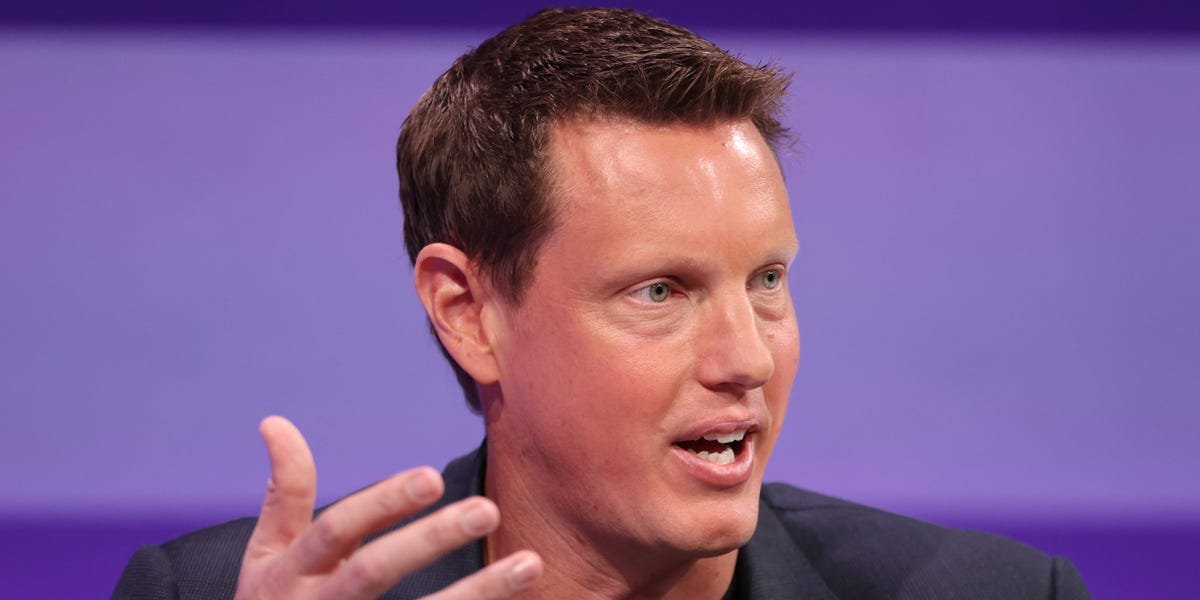
Shopify powers more than 10% of US e-commerce sales. The company’s President, Harley Finkelstein, said in a press release on Saturday that the platform processed $6.2 billion in gross merchandise volume on Black Friday, up 25% year over year, led by cosmetics, activewear, fitness, and nutrition.

Shopify’s stock closed 5.8% down on Monday.


Source link