Russian-billionaire-says-12-hour-days-and-6-day-workweeks-could-help.jpeg

Russian billionaire says 12-hour days and 6-day workweeks could help save the economy

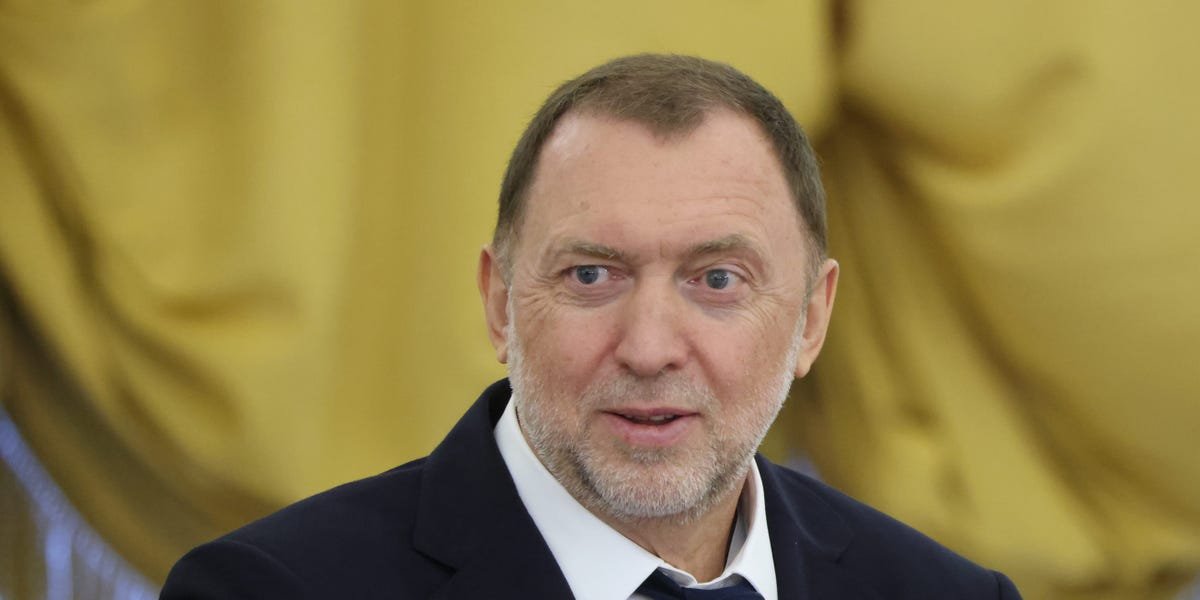
Russians should consider working 12-hour days, six days a week, as the country grapples with a deeper economic shift, Russian billionaire Oleg Deripaska said on Monday.

Referring to what he described as a changed global reality, Deripaska framed the country’s slowing economy as more than a typical downturn driven by interest rates or monetary policy.

“This crisis is deeper. It is caused by a difficult transformation: from the global opportunities we once had to regional ones, with all sorts of restrictions,” Deripaska wrote in a Telegram post.

He argued that Russia should tap into what he described as its only real resource — a “national characteristic.”

“In difficult moments, we know how to pull ourselves together and work more,” wrote Deripaska, the founder of Rusal, a major aluminum producer.

Longer working hours, he suggested, could help the economy adjust more quickly to changing global conditions.

“The sooner we switch to this new schedule — from 8 a.m. to 8 p.m., including Saturdays — the faster we will complete this transformation,” the industrial magnate wrote.

His comments come as Russia’s economy navigates a shifting landscape shaped by geopolitical tensions and changing trade flows.

Russia, a major energy exporter, has been benefiting from a surge in prices, with crude markets jolted by escalating tensions in the Middle East and disruptions to key supply routes.

Oil and gas revenues have historically accounted for more than a third of Russia’s federal budget, which has been under pressure from sweeping sanctions in recent years. Official estimates showed Russia’s economy grew 1% in 2025 — down sharply from 4.3% growth in 2024.

Disruptions to tanker traffic through the Strait of Hormuz — a critical global oil chokepoint — alongside a limited US sanctions waiver on some Russian shipments, have reshaped trade flows as countries scramble for supplies.

However, Deripaska had warned earlier this month that the conflict in the Middle East could weigh on global — and Russian — growth despite higher oil prices.

Benchmark crude oil futures are over 70% higher this year and trading above $100 per barrel.


Source link

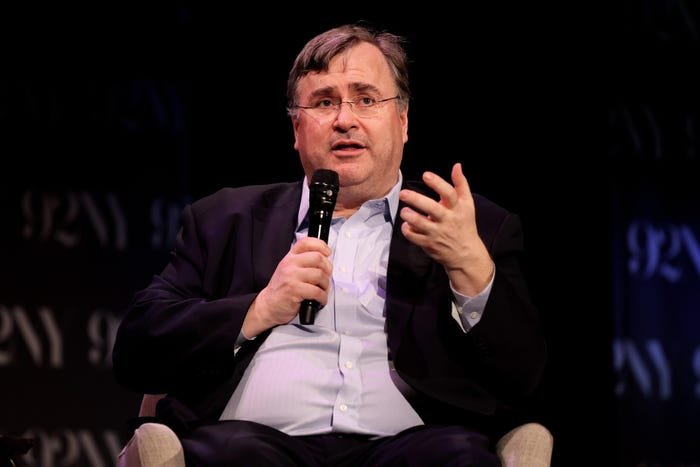
LinkedIn co-founder Reid Hoffman

LinkedIn billionaire Reid Hoffman reveals he had more meetings with Epstein


Dominik Bindl/Getty Images

  • LinkedIn cofounder Reid Hoffman said he met with Jeffrey Epstein for fundraising purposes.
  • Hoffman previously said his last meeting with Epstein was in 2015.
  • Now he says there were six more meetings, from 2016 to 2018.

Reid Hoffman says he had more meetings with Jeffrey Epstein than he originally thought.

The billionaire LinkedIn cofounder previously maintained that the last time he met with Epstein was in 2015, and that he only knew Epstein via fundraising efforts for the MIT Media Lab.

This week, as the latest tranche of Epstein-related documents from the Justice Department continues to make headlines, Hoffman revised his accounting.

“I was mistaken, as according to calendar entries I have become aware there were additional fundraising meetings in 2016 and 2018,” Hoffman wrote in a post on X on Tuesday night.

Hoffman listed six additional meetings, including various Skype calls and in-person meetings in Cambridge and Palo Alto. The most recent meeting Hoffman listed was a Skype call in March 2018.

“I have done multiple calendar searches, and if I find any other meetings, I will continue to share them,” Hoffman wrote. “The victims of Epstein’s abhorrent and vile actions deserve all the information they are seeking, and I continue to call on President Trump to deliver that for them.”

Hoffman said that those meetings had also been scheduled as part of his fundraising relationship with the MIT Media Lab.

Hoffman has also said he visited Epstein’s private island, Little Saint James, in the US Virgin Islands. In December, he told a podcast host that he stayed on the island for one night on a trip connected to fundraising activities.

“Note to self: Google before going,” Hoffman said on the podcast.

Hoffman’s appearance in the Epstein files has helped reignite the billionaire’s feud with Elon Musk.


Source link

Meet-the-billionaire-owners-behind-every-NFL-team.jpeg

Meet the billionaire owners behind every NFL team

The New York Giants were founded in 1925 by Tim Mara and have been part of the Mara family ever since.

Team ownership was passed to Tim’s sons, Jack and Wellington Mara, in 1959, and now the team is run by principal owner, CEO, and president John Mara, who took over in 2005 after his father, Wellington’s, death. John Mara had been with the organization since 1991.

However, while John Mara is listed as the team’s principal owner, he’s actually shared ownership with Steve Tisch since 2005.

Steve Tisch’s father, Preston Robert Tisch, purchased a 50% stake in the Giants in 1991, and after his death, Steve became chairman and executive vice president.

Together, Mara and Tisch helped plan and build MetLife Stadium, and the team has won two Super Bowls (2008 and 2012) under their leadership. However, the team has struggled in recent years, winning just four games last season.

Still, the Giants are the fourth most valuable team in sports, worth $10.1 billion. Tisch has an estimated net worth of $1.6 billion, Forbes reported, while Mara reportedly has an estimated net worth of $500 million.

Tisch was not named in the 2025 report card; Mara was given a C+ ownership ranking by the NFLPA.


Source link

Bob-Igers-longtime-billionaire-nemesis-Nelson-Peltz-is-unimpressed-with.jpeg

Bob Iger’s longtime billionaire nemesis, Nelson Peltz, is unimpressed with Disney’s new CEO

Close to two years after losing a proxy fight to longtime Disney boss Bob Iger, billionaire investor Nelson Peltz is still a skeptic.

Activist investor and Trian Partners founder Nelson Peltz said at a Florida event on Tuesday that Disney picked Josh D’Amaro as its new CEO because “Iger needs a reason to stay on.”

By Peltz’s telling, D’Amaro’s lack of entertainment experience — he has run the parks and experiences side of the Mouse House since 2020 — will give Iger an excuse to stick around.

Peltz said to expect an announcement from Iger saying, “Josh doesn’t know anything about the movie business, the entertainment business; therefore, I’m going to stay on and guide him.”

“Poor Josh,” Peltz said, with a laugh.

D’Amaro’s appointment as CEO was approved by Disney’s board in a unanimous vote led by former Morgan Stanley CEO James Gorman, who managed his own succession at the bank.

D’Amaro “demonstrated a strong vision for the company’s future and a deep understanding of what makes Disney unique in an ever-changing marketplace,” Gorman said in a statement, and the division he leads was more than 70% of the company’s operating income last quarter. Iger, meanwhile, called D’Amaro the “right person to become our next CEO.”

Iger will remain at the company in a senior advisor role until the end of the year. This is Iger’s second retirement from Disney. He previously tapped Bob Chapek, who’d also run Disney’s experiences business before becoming CEO in early 2020. Iger returned from retirement in 2022 after Chapek’s bumpy, tumultuous tenure.

Peltz waged a proxy battle with Disney to gain board seats in early 2024, while criticizing its streaming division’s losses, unstable stock, and uncertain succession plans. He sold his Disney shares after shareholders voted to support Iger.

Peltz said D’Amaro has his work cut out for him when he takes over on March 18.

“I hope he’s given the opportunity to do it,” Peltz said.


Source link

YouTube-billionaire-MrBeast-says-hes-actually-cash-poor-I-have.jpeg

YouTube billionaire MrBeast says he’s actually cash poor: ‘I have negative money’

If you’re reading this, you probably have more money on hand than YouTube billionaire MrBeast.

The world’s biggest YouTuber, whose real name is Jimmy Donaldson, has said he owns more than half of his business, which was valued at $5 billion in its latest funding round. But a hefty net worth doesn’t always translate to cash.

“I have negative money right now,” Donaldson said in a Wall Street Journal video interview published in early January. “I’m borrowing money right now — that’s how little money I have.”

Donaldson also said that “technically, everyone watching this video has more money than me,” though the self-made billionaire suspected that some people wouldn’t believe him.

“It’s funny talking about my personal finances, because no one ever believes anything I say,” Donaldson said.

MrBeast made a similar point last summer when he said he had to borrow money from his mom for his wedding, adding that he had “very little money” since he tries to “reinvest everything.”

“I’m so busy working, I don’t really think about my personal bank account,” Donaldson told the WSJ.

Donaldson’s lack of dollars may come as a surprise to fans who have watched him hand out wads of cash to strangers and stand on a pyramid of money. However, MrBeast’s company, Beast Industries, is still a startup, and cash flow can be a problem for executives at young companies that aren’t publicly traded and have fewer lanes to liquidate their stock.

A lack of cash on hand hasn’t stopped Donaldson from splurging occasionally. The YouTuber said he once rented a private jet for about $150,000 to visit his then-girlfriend (now-fiancée), Thea Booysen, in the United Kingdom.

Donaldson is known to drop millions of dollars on YouTube videos, too, which former staffers said he would sometimes kill entirely if they didn’t meet his quality standards. The YouTuber said that despite Amazon paying him for his Prime Video show, “Beast Games,” he overspent and ended up losing tens of millions of dollars on the first season.

His company, Beast Industries, has made a push over the last year to reduce unnecessary spending, following a loss of over $100 million in its media division in 2024.

Donaldson has made personal finance a growing portion of his brand.

He’s looking to start Beast Financial, a banking and financial advisory venture. The YouTuber also said he wants to launch a YouTube channel featuring personal finance videos to help educate his viewers on how to handle money.

Financial content “just feels like a nice fit for us because we do so much with money,” Donaldson told creator Jon Youshaei.


Source link

Business-leaders-from-Palmer-Luckey-to-David-Sacks-react-to.jpeg

Business leaders from Palmer Luckey to David Sacks react to California’s proposed billionaire tax

  • Bill Ackman, Palmer Luckey, Garry Tan, and more are sharing their opinions on a California wealth tax proposal.
  • State labor groups proposed a 5% tax for California residents whose assets exceed $1 billion.
  • Ackman called for a “fairer tax system”; Tan wrote that he would consider opening Y Combinator programs in other cities.

Some of the biggest names in business are speaking up about California’s billionaire tax proposal.

The measure proposed a one-time 5% tax for California residents whose assets exceed $1 billion. If the proposal receives enough signatures, it would appear on the state ballot in November.

If the proposal passes, the tax would apply retroactively to all California residents as of January 1, 2026.

Proposed by the Service Employees International Union-United Healthcare Workers West labor union, the bill attempts to fill a projected multibillion-dollar state budget deficit.

California is home to some of the biggest companies — in both value and prestige — in the US. The state boasts Hollywood and Silicon Valley, although some of the industries’ key players have relocated.

In a letter to Gov. Gavin Newsom obtained by Business Insider, attorney Alex Spiro wrote that his clients would “permanently relocate” if the tax becomes law. Spiro has previously represented billionaires and celebrities.

Here’s how several business leaders and politicians have reacted to the tax proposal:

Bill Ackman

Bill Ackman wrote in favor of a “fairer tax system,” but not a wealth tax.

PATRICK T. FALLON/AFP via Getty Images

The billionaire CEO of Pershing Square Holdings wrote Monday on X that he was “opposed to wealth taxes because they effectively represent an expropriation of private property,” which can have “unintended and negative consequences.”

However, he said he’s in favor of a “fairer tax system.”

For example, Ackman wrote that an individual who had amassed a billion dollars or more in wealth could pay no personal income tax by living off loans secured by stock in their company. A change in the tax code could fix that problem, he wrote.

“One shouldn’t be able to live and spend like a billionaire and pay no tax,” Ackman wrote.

As for California’s “budget problems,” Ackman wrote that the issue wasn’t a lack of tax revenue — it was about “how the money is being spent.”

David Sacks


White House crypto czar David Sacks is pictured.

David Sacks analogized California’s tax increases to a frog in boiling water.

Chip Somodevilla/Getty Images

The White House AI and crypto czar took aim at California’s government in an X post on Sunday.

Red states like Texas and Florida don’t employ state income taxes, let alone wealth taxes, Sacks wrote. “Democrats steal everything, then blame job creators for their ‘greed,'” he wrote.

Sacks said in an October episode of the “All-In” podcast, which he cohosts, that a wealth tax “always backfires,” because tax benefits are outweighed by wealthy residents leaving.

Sacks threatened to leave the state, analogizing steady tax increases to boiling a frog on the podcast.

“I’m going to have to jump out of the pot with this,” he said.

Ro Khanna


Representative Ro Khanna is pictured.

Ro Khanna said Nvidia would be built all over again in California, even with the wealth tax.

Tom Williams/CQ-Roll Call, Inc via Getty Images

The Congressman for California’s 17th district, which covers much of Silicon Valley, said that the proposal was “good for American innovation.”

After receiving thousands of comments on a Friday post bidding a sarcastic goodbye to those threatening to leave the state, Khanna explained his support in a seven-paragraph X post on Saturday.

He wrote that Nvidia would be built all over again, even with the wealth tax.

“Jensen [Huang] wasn’t thinking I won’t start this company because I may have to one day pay a 1% tax on my billions,” Khanna wrote. “He built here because the talent is here.”

Khanna argued that innovation would be further stifled by the “political dysfunction and social unrest” that comes with wide wealth gaps.

In a statement to Business Insider, Sarah Drory, a spokesperson for Rep. Khanna, wrote that the representative has “always supported a modest wealth tax on billionaires to deal with staggering inequality and to make sure people have healthcare.”

“He has advocated for common sense workarounds for startup founders whose companies are not profitable and who have illiquid stock,” Drory wrote.

Palmer Luckey


Palmer Luckey is pictured.

Palmer Luckey wrote that the wealth tax would force startups to pivot to profit.

PATRICK T. FALLON/AFP via Getty Images

The Oculus founder and Anduril cofounder wrote in a Sunday X post that the tax would force founders to “sell huge chunks of our companies.”

Luckey wrote that he made money from Oculus — which he sold to Facebook in 2014 — and paid millions in taxes on it. Then he used the “remainder” to start Anduril, he wrote.

“Now me and my cofounders have to somehow come up with billions of dollars in cash,” Luckey wrote.

Luckey also wrote that the policy made no provision for companies that funnel revenue back to research and development, rather than paying cash incomes sizable enough to cover the tax.

“You are effectively forcing companies to immediately pivot into profit obsession over mission or long-term sustainability,” he wrote.

Garry Tan


Y Combinator CEO Garry Tan is pictured.

Garry Tan wrote that the wealth tax would “kill little tech in California.”

Seb Daly/Web Summit via Getty Images

The CEO of startup accelerator Y Combinator wrote in a Saturday X post that the tax would “kill little tech in California.”

Unicorn startup founders become a “paper billionaire” — as in, having cash on hand — around the $5 billion valuation point, Tan wrote.

The proposed tax is on unrealized gains, meaning founders would be put on the line even before their wealth is liquid, Tan wrote.

If the tax passed, Tan wrote that Y Combinator would consider opening Austin or Cambridge programs.

Bernie Sanders


Senator Bernie Sanders is pictured.

Bernie Sanders wrote in support of wealth taxes on X.

Heather Diehl/Getty Images

The Vermont senator has long been a proponent of taxes on the wealthy, introducing a bill in 2019 that aimed to halve the wealth of billionaires over a 15-year period.

While Sanders didn’t explicitly comment on the California proposal, he posted Monday on X broadly supporting wealth taxes.

“We can respect innovation & entrepreneurship, but we cannot respect the extraordinary greed that now exists,” Sanders wrote. “We need a wealth tax.”

Elon Musk


Elon Musk at the US-Saudi Investment Forum at the John F. Kennedy Center for the Performing Arts in Washington, DC, on November 19, 2025.

Elon Musk wrote that he was a “maker,” not a “taker.”

BRENDAN SMIALOWSKI/AFP via Getty Images

The Tesla CEO reposted another user’s X post that commented on the tax, saying that his stocks weren’t wealth.

Musk wrote in his Tuesday post that his “wealth” was mostly tied up in Tesla and SpaceX shares.

“This means my ‘wealth’ can only increase due to producing more products and services for the public,” he wrote.

While not directly commenting on the California tax, Musk wrote that he was a “maker,” unlike “taker” politicians like Sanders.

Musk said in 2020 that he had moved from California to Texas.

Gavin Newsom


California governor Gavin Newsom is pictured.

Gavin Newsom said that California had to stay competitive with other states.

David Dee Delgado/Getty Images for The New York Times

The governor of California has spoken against the wealth tax. At The New York Times’ Dealbook conference in December, Newsom said that California had to stay competitive with other states.

“People of that status, they already have two or three homes outside the state,” he said. “You’ve got to be pragmatic about it.”

If the tax passes as a ballot measure, Newsom would not have the ability to veto it.


Source link

Chinas-economic-slump-isnt-stopping-a-billionaire-boom-in-AI.jpeg

China’s economic slump isn’t stopping a billionaire boom in AI chips

China’s deepening property crisis has crushed household wealth and dented the fortunes of some of its biggest tycoons — but a new class of AI-era billionaires is rising fast.

This year, the standout winners are coming from China’s red-hot AI chip sector.

On Wednesday, shares of MetaX Integrated Circuits Shanghai — a GPU startup founded by former AMD executives — skyrocketed as much as 755% on their first day of trading on the Shanghai Stock Exchange’s tech-focused STAR Market, before closing up about 700%.

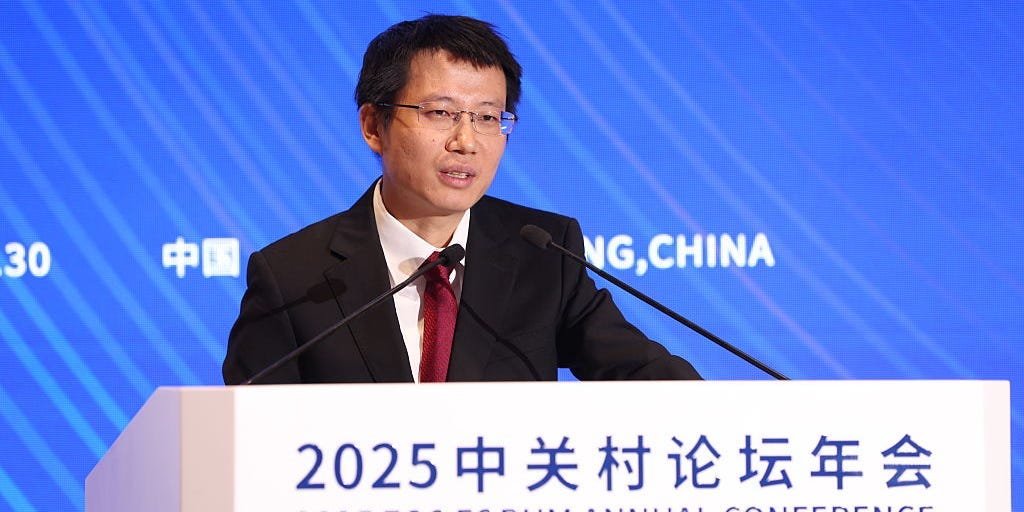
The surge catapulted its chairman and cofounder, Chen Weiliang, into one of China’s fastest-rising tech moguls. Chen’s stake in MetaX is worth about $6.5 billion, according to the Bloomberg Billionaires Index.

Other early insiders also saw eye-popping paper gains.

MetaX’s other two cofounders and co-chief technology officers, Peng Li and Yang Jian, hold stakes worth hundreds of millions of dollars after the blockbuster debut, according to Bloomberg’s calculations.

China’s AI rush

Chen’s rise follows that of another GPU entrepreneur, Zhang Jianzhong, the founder and CEO of Moore Threads Technology.

Earlier this month, Zhang’s net worth jumped to $4.3 billion after his company’s successful IPO, continuing a wave of investor enthusiasm for homegrown semiconductor players.

The richest figure in China’s AI chip scene is Chen Tianshi, a cofounder and CEO of Cambricon Technologies — a company retail traders have dubbed “China’s Nvidia.”

Cambricon’s Chen is now worth $22.5 billion, making him the country’s 16th-richest individual on Bloomberg’s list. He is the 115th richest person in the world.

These new fortunes reflect a sharp shift in investor sentiment.

Chinese AI and semiconductor stocks have been on a tear since the breakout of the China-made DeepSeek-R1 AI model released in January. The model helped spark a rally in local tech names and pushed the Hang Seng Tech Index up more than 20% so far this year.

Washington’s tightening export controls on advanced Nvidia chips also contributed to the boom.

Such restrictions on high-end AI processors have choked China’s access to cutting-edge US hardware and pushed Beijing to lean harder on domestic suppliers.

Still, China’s new AI billionaires remain far from the top of the country’s wealth rankings. The upper tier is still dominated by long-established tycoons.

In the top spot is Zhong Shanshan, the low-key bottled-water magnate behind Nongfu Spring, with a fortune of $68.1 billion, per Bloomberg.

Pony Ma, a cofounder and CEO of Tencent, ranks second with $66.5 billion — a fortune up 38% this year, on the heels of Tencent’s AI-induced rally — while ByteDance cofounder Zhang Yiming comes in third with $65.2 billion.


Source link