
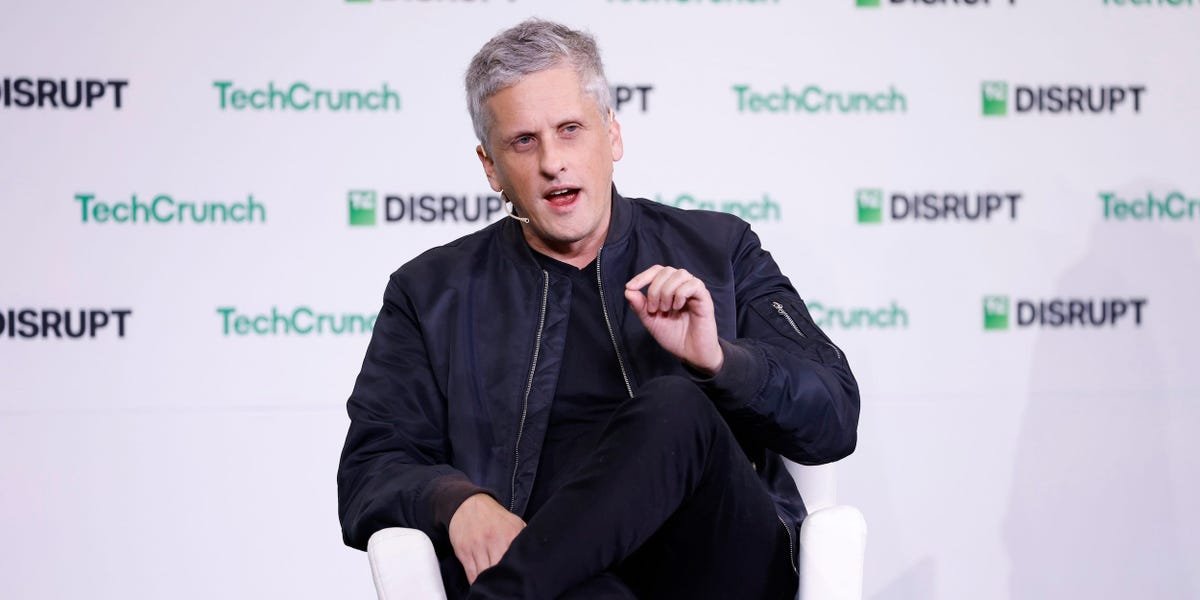
Box CEO Aaron Levie says tech companies won’t be the last to see AI budget balloon.
“This will of course start in engineering, where we already know developers can run multiple agents in parallel, or have projects going over night,” Levie wrote on X. “But this eventually hit the rest of knowledge work as well.”
As examples, Levie cited legal and sales as two areas that could become big token users.
Tokens determine how AI is measured and how its consumption is priced. They are units of text, a word or part of a word — essentially the building blocks of Large Language Models, which power popular chatbots like OpenAI’s ChatGPT, Anthropic’s Claude, or xAI’s Grok. Importantly, tokens are not a flat fee, and AI companies tend to charge more for using the most advanced models and asking more complicated questions.
Levie’s post was in response to Nvidia CEO Jensen Huang’s view that he would be “deeply alarmed” if an engineer being paid $500,000 didn’t use AI tokens equivalent to at least half of that salary.
“That $500,000 engineer at the end of the year, I’m going to ask them how much did you spend in tokens? If that person said $5,000, I will go ape something else,” Huang said during an episode of the “All-In Podcast” published on Thursday.
Levie said, “This underlying concept and trend is going to be very real, because workers who properly leverage AI are only going to consume more of it.
“Their compute budgets are just going to monotonically go up over time,” he wrote.
It won’t just be workers either, Levie said. Agents, which can run during all hours, are likely to be the biggest token consumers.
“These aren’t chatbot workflows answering a simple question, but agents that are running and processing through incredible amounts of data at scale, and generating all new forms of information,” he wrote.
Not everyone will be thrilled with their AI compute budgets. Venture capitalist Chamath Palihapitiya said he had to tell 8090, his startup software company, to stop using Cursor, a popular AI coding tool, after seeing just how much the firm was spending on tokens.
“Our costs have more than tripled since November of 25,” Palihapitiya said a previous episode of the “All-In Podcast.” “Between the inference cost that we pay AWS, which is ginormous, between our cost with Cursor, between Anthropic, we are just spending millions.”
Levie said companies “will have to figure out how they budget for this.”
“It likely won’t be an IT budget item over time, but ultimately owned and allocated by the business,” he wrote. “Maybe the CFO is ultimately the head of AI :-).”
