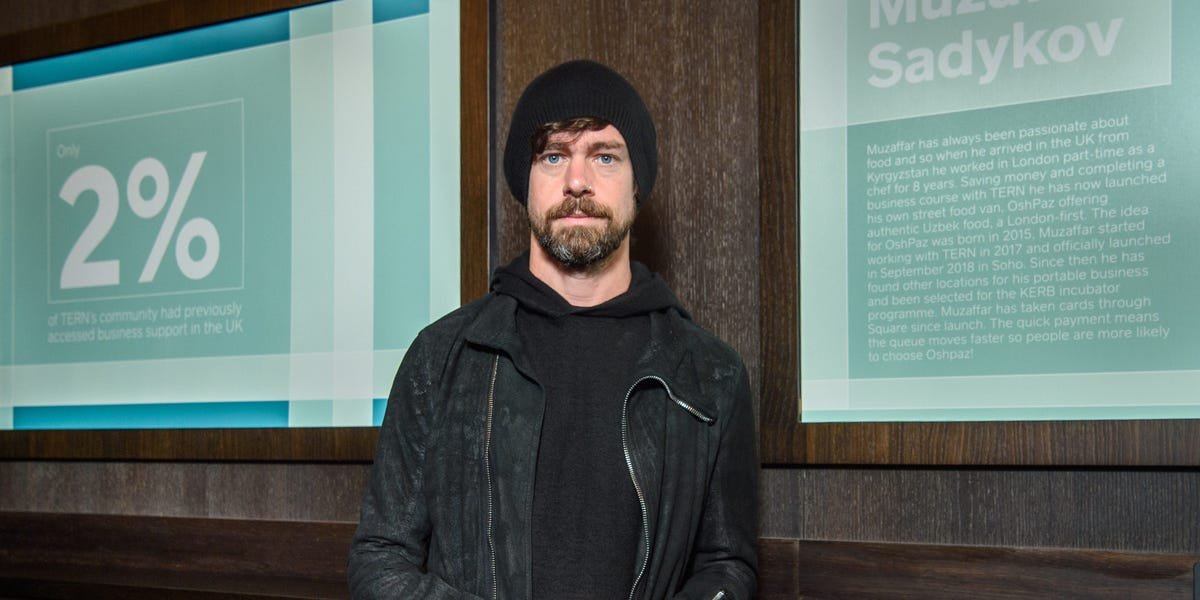
Jack Dorsey took a “hard, clear action” when he laid off over 4,000 employees. A select few say they’ve been let back in.
Block has rehired at least four laid-off employees, according to LinkedIn posts from affected workers and their colleagues. The employees span multiple departments, from engineering to recruiting. Some said they were rehired soon after the February layoffs, while others said they rejoined later in March.
These are small numbers, and there is no sign of any large scale rehiring of laid-off employees at Block. It’s a sign, though, that companies can sometimes decide they’ve cut too deeply after mass layoffs. Dorsey acknowledged the risk of this in his initial message to staff about the layoffs, which impacted roughly 40% of employees.
“I accept that we may have gotten some of them wrong, and we’ve built in flexibility to account for that, and do the right thing for our customers,” Dorsey wrote.
Four days after Dorsey’s announcement, Andrew Harvard, a Block design engineer, posted that Block leadership had told him that his layoff was due to a “clerical error.”
“They offered me the opportunity to return, and I’ve accepted,” Harvard wrote.
Block did not respond to requests for comment.
Matt Morris, a recruiter for the company, called the week after his layoff a “whirlwind” in a since-deleted post. After his manager advocated for him “all the way to the CEO,” Block decided to bring Morris back on, he wrote.
Creative strategy lead Chane Rennie recently posted that he was “relieved” to share that Block had brought him back.
Richard Hesse came to Block through its acquisition of Weebly, where he was the director of network operations. While he wasn’t affected by the layoffs, he wrote in a LinkedIn post that his entire team was.
“Block’s unprecedented layoffs this week have shown me that the company does not possess the same levels of loyalty that I do,” he wrote. “I still have a job, but the company’s current ghost ship status and disloyalty is troubling.”
Hesse initially wrote that he planned to leave Block “unless they give me a solid contract to stay and rehire my teams.”
Block seems to have done just that. In a later post, Hesse wrote that Block had rehired some of his colleagues.
“While my teams were not returned to full levels, I’ll have enough to continue on,” he wrote.
“I’m also thankful to have sincere, strong leaders who are willing to listen to my concerns and rectify the situation,” he added. “I’ve spoken with them personally and extended my gratitude.”
Do you work at Block? Contact the reporter from a non-work email and device at hchandonnet@insider.com, or on Signal at henrychand.30
This as-told-to essay is based on a conversation with Isaac Casanova, who has worked at Block for nearly three years as a senior software engineer. It has been edited for length and clarity.
I wasn’t even looking at my computer at the time. One of my good friends started spam calling me. I picked up the phone, and he told me to check my email.
I read the email from Jack Dorsey, and I was like, whoa, I guess I don’t have a role anymore.
We were well aware that rolling layoffs were underway. Most people assumed it would be capped at 1,000. I didn’t feel like anything big like that was coming. For it all to happen at once like that is obviously a shock.
I never got a low rating. In my conversations with folks, I was doing fine. That’s why it’s characterized as a layoff, not a performance thing. This is just a change in business direction.
Every time Lee Chong Ming publishes a story, you’ll get an alert straight to your inbox!
Stay connected to Lee Chong Ming and get more of their work as it publishes.
Check your ego — the industry is tough
I’m managing my expectations as I look for work.
It seems like companies are tighter with headcount and more picky about who they want.
There are definitely fewer positions. Companies are doing more with less. These agents are automating some tasks and are slowly improving at understanding concepts.
The compensation is definitely lower. We’re hearing across the industry that stock grants are lower than they used to be. Refresher grants are lower. Bonuses — if they exist.
Once you get in, it’s stack-ranked performance management. Your output is compared to your peers from day one. It’s definitely tougher.
You’ve got to check your ego. That might be the part people struggle with more than their technical ability.
Separate your identity from your job
At the end of the day, companies are beholden to shareholders.
Jack’s memo came across as what someone in that position making a tough decision would say. A call was made, and it had to be communicated. I don’t have any negative feelings about anybody that I worked with or at the company.
The biggest expense of running an organization is employees. The higher you are — senior engineer, engineering manager, head of product — the more expensive you are.
You need to remember that and evaluate your relationship with work. Many people in these positions tie their identity to their jobs. Those are the people most affected when these things happen.
You try not to take it personally. You see it as a new opportunity. There’s a human aspect — you just lost your job, and it kind of sucks for a bit — but you can’t let it hold you down. You can’t let it define you. These things happen, and you need to adjust.
The good thing about when these things happen is the network of people that you’ve met. Build the network so that when things like this happen, you can maneuver.
Be flexible — AI is changing the role
You could tell on the inside that things were changing.
A couple of years ago, I was doing most of the coding by hand. That slowly turned into using interfaces like Cursor, Claude Code, Goose, and ChatGPT. You’d slowly read things internally like, “Let’s speed up.” You were expected to speed up because the agents could make you more productive.
You’d have conversations with some of your colleagues and be like, “I haven’t opened my IDE in a month.” As a software engineer, that’s definitely a shift.
AI turns you from a person who just turns out code into more of an experimenter — a builder.
Software engineering, for a long time, was so by the letter, by the design, by the spec. Exact and precise, but slow.
Now we have these tools, the industry expects you to move fast. You can shift your mindset from that rigid engineering, step-by-step, to more of an exploratory “attack the problem, solve it, refine it later.”
Don’t get too trapped in the domain that you’re working in. Block tended to hire specialists who could also generalize when needed. So, be flexible. Using these tools allows you to get context in areas that you might not have had the opportunity to work in.
Do you have a story to share about tech layoffs? Contact this reporter at cmlee@businessinsider.com or on Signal at cmlee.81.
In the months before Block CEO Jack Dorsey laid off 40% of staff on Thursday, workers were embracing AI tools in what one called an almost “celebratory” way.
Dorsey and other company leaders had made no secret of their interest in AI, but the company was profitable, and some workers couldn’t imagine the technology fully replacing humans at scale any time soon, they told Business Insider.
Still, there were pockets of unease. Block, the parent company of financial tech firms including Cash App and Square, had executed a series of smaller performance-based cuts in previous months. At least one employee said he’d had a nagging feeling that the AI tools he was using had gotten really good.
“I had a hunch that, at some point, the company would cut people because of AI. I just didn’t think it would be right now,” Ivan Ureña-Valdes, a data analyst who was laid off after four years at Block, told Business Insider.
When Dorsey dropped the hammer via a memo posted on X, he said AI was the reason 4,000 workers were losing their jobs.
“A significantly smaller team using the tools we’re building can do more and do it better,” Dorsey told analysts on Block’s earnings call on Thursday following the news.
Two hours after the layoff announcement, Dorsey logged onto a video call with the calendar title “gratitude,” sporting a baseball cap that said “love” to address the staff.
As he spoke with employees about Block’s layoffs and his reasoning for the deep cuts, some sent comments thanking him for the opportunity to work at the company. One asked if his hat was appropriate given the context. Dorsey answered that it was about gratitude.
Throughout the meeting, he was flooded with waves of emojis from muted participants, three attendees told Business Insider. Popular reactions were the thumbs-down, thinking face, and crying-laughing emojis, two people said. Dorsey explained the cuts in his trademark monotone and said he was doing what’s best for the company.
Business Insider spoke to seven former Block employees about the internal push to use AI in the last year; many said they were happy to oblige. Some were laid off on Thursday; others lost their jobs in recent performance-based cuts. Though they adopted AI tools to varying degrees, they view the technology as unable, at the moment, to do all the jobs of the thousands of workers who were let go. So it came as a shock to see half the company chopped in one fell swoop.
While some in the tech world expressed skepticism that AI was the true impetus for the cuts, suggesting that Dorsey had bloated Block’s ranks, others saw it as the first wave in a coming tsunami of job cuts across the industry. The alarm over a potential white-collar jobs apocalypse has gotten louder in recent months. Amazon CEO Andy Jassy has signaled that AI could lead to white-collar job cuts at the company. Last year, Salesforce made cuts to its customer support team, thanks to the use of AI agents, CEO Marc Benioff said.
Block’s layoffs are so large in scope and more pointedly attributed to AI than most that they added fuel to a fear sweeping the white-collar world: AI is coming for your job, and learning to use it isn’t enough to save you.
“I’ve seen a lot of public commentary about this layoff and how workers need to be using AI to protect our jobs,” said one nontechnical worker laid off on Thursday. “I was actively building with AI and know that many of my impacted colleagues were doing the same.”
Jack Dorsey ‘loves AI’
Dorsey has planted a flag in painting Block as an AI-forward company. He said on Thursday’s earnings call that Block was “one of the first to harness agentic capabilities.” And in July, Dorsey made headlines for using an internal coding tool called Goose to vibecode a “weekend project” that led to the messaging app Bitchat.
Investors appeared to favor Dorsey’s narrative of cutting costs with AI: After being down roughly 16% year to date before the layoffs, Block’s stock ended Friday up nearly 17% on the day.
“Jack loves AI and was constantly pushing us to use it,” Ureña-Valdes said. “I got to use these tools as much as possible every single day.”
He said he’d “felt the rumblings of AI disruption for a while” because he was using it in his work and noticed the tools were getting better.
One former software engineer said that Block had many internal AI demos and that her coworkers’ feelings about AI were “mostly celebratory.”
Another former software engineer let go during performance cuts earlier in February said the company had warned that output expectations for engineers would increase. He said the company’s head of engineering voiced productivity expectations that left them worried quality would suffer. After this week’s layoffs, his team shrank from eight engineers to one.
One employee laid off on Thursday said she had embraced AI at Block, but saw that it required human oversight. The day before the layoffs, she said, she caught errors in a company chatbot. She said the cuts surprised her manager, who was spared from the layoffs. The two sat together and cried it out.
AI is not ‘layoff insurance’
Several researchers and former Block employees say they’re skeptical about AI’s actual role in the layoffs.
“Block must have uncovered a secret sauce, perhaps within the software development process, to claim all of these jobs are AI-related,” said Jason Schloetzer, a business professor at Georgetown’s McDonough School of Business. “From the dozens of executives across industries that I’ve spoken with about AI deployment, they certainly aren’t seeing these types of gains outside of the software development process.”
On Thursday’s earnings call, Dorsey said there has been a marked improvement in AI’s capabilities and that “Block wanted to get ahead of this shift rather than be forced into it reactively.”
“The models just got an order of magnitude more capable and more intelligent,” Dorsey said. “And it’s really shown a path forward in terms of us being able to apply it to nearly every single thing that we do.”
Some former Block employees, as well as others in the industry, said pandemic overhiring, rather than AI, spurred the layoffs — a common refrain for Big Tech in recent years.
“Over the course of my time at Block, leadership did repeatedly signal the need for a ‘smaller Block,'” the laid-off nontechnical worker, who worked at Block for two years, said.
Companies like Block are conducting layoffs “with a chainsaw, not a scalpel,” said Chris Kaufman, a leadership consultant in Detroit.
“They’re not conducting audits of who took an AI course,” Kaufman said. “They’re making macro decisions about cost structure and organizational design. That’s usually just looking at headcount and salary across the board.”
Being AI savvy, Kaufman said, “can increase productivity, but I don’t think it is any way layoff insurance.”
Danielle Bell, a business communications professor at Northwestern University, said it’s obvious the workforce — both inside Block and out — is worried about AI. “If this is the new reality that we’re in, executives need to be more honest with themselves, with stakeholders, with the board, Wall Street, and particularly employees about what AI is here to do.”
Whatever the reason, one of the engineers cut on Thursday said there was a feeling in the air that something was coming. This engineer said she noticed that performance reviews were moved up from their February start. She thought she was safe after the earlier performance-based cuts — until she was laid off on Thursday.
“People were tense, even after good news would come through,” she said. “Lots of rumors flying around the office in person.”
Jack Dorsey is taking responsibility for a key mistake behind Block’s sweeping job cuts.
“Yes we over-hired during COVID,” the Block cofounder and CEO wrote Friday on X, responding to criticism that the company’s recent layoffs reflected managerial incompetence.
The admission comes a day after Dorsey announced he was slashing nearly half of Block’s workforce — reducing head count from more than 10,000 employees to just under 6,000 in one of the most dramatic single-round layoffs in recent tech history.
In his latest X post, Dorsey said the overhiring stemmed in part from a structural misstep. He had built “2 separate company structures (square & cash app) rather than 1,” he wrote, a setup the company corrected in mid-2024, he said.
That duplication inflated head count as Block expanded aggressively during the pandemic.
But Dorsey said critics were oversimplifying the situation. Over the past several years, Block also took on significant operational complexity, expanding into lending, banking, and buy-now, pay-later products, he said.
Block is now targeting more than $2 million in gross profit per employee — roughly four times its pre-COVID efficiency, which Dorsey said remained flat at about $500,000 per person from 2019 through 2024.
“We have and do run an efficient company… better than most,” he wrote.
As of Friday, Block’s share price is roughly $54, virtually flat compared to its price in 2018, seven years ago.
The stock spiked from less than $75 pre-COVID to over $275 in early 2021, before dropping sharply at the end of that year. Since early 2022, the stock has traded at below $100 per share.
In the original memo announcing the cuts, Dorsey said he chose to make one large reduction rather than conduct repeated rounds of layoffs, which he called “destructive to morale.”
He said that the business itself is strong, with gross profit growing and profitability improving.
Instead, he pointed to what he described as a fundamental shift in how companies operate to justify the layoffs.
Intelligence tools and smaller, flatter teams are enabling “a new way of working,” he wrote, one that changes what it means to build and run a company.
Several other tech companies — including Amazon, eBay, Meta, and Workday — have also announced cuts in recent months, often citing AI-driven efficiency gains and organizational streamlining.
Last September, Micha Kaufman, the CEO and founder of Fiverr, announced a 30% workforce cut, citing the need to help turn Fiverr into a leaner, faster “AI-first company.”
“If you don’t ensure that you sharpen your knives, you’re going to be left behind. It’s that simple,” Kaufman told Business Insider last May.
This as-told-to essay is based on a conversation with Ivan Ureña-Valdes, who has worked at Block for nearly four years as a data analyst. It has been edited for length and clarity.
When I got an email from Jack Dorsey, I was in the middle of interviewing someone for a role at Block.
It was pretty strange because, in the past, with layoffs, I knew people had their access cut almost immediately.
A coworker messaged me: “Hey, are you okay?” My heart started racing. I knew from that message it meant that I was probably getting laid off.
I felt really bad because I was in the middle of interviewing someone. I had to tell them, “I was actually just let go from the company. I probably won’t be able to submit your feedback in time. Please reach out to your recruiter.”
Every time Lee Chong Ming publishes a story, you’ll get an alert straight to your inbox!
Stay connected to Lee Chong Ming and get more of their work as it publishes.
I’m the sole provider for my family. It was tough.
I had a hunch that AI would lead to cuts at some point
We knew there were many performance cuts happening around right now, and those have largely finished. I had no idea this cut was coming.
For 4,000-plus people to be cut without anybody knowing, that tells me decisions were made very high up.
I’ve survived three rounds of layoffs, some companywide, some engineering organization-wide. I knew I wasn’t being let go for performance-related reasons. I was in the middle of working on two large projects, probably the largest projects I’d worked on since joining the company.
I had a hunch that, at some point, the company would cut people because of AI. I just didn’t think it would be right now.
Working at Block, I saw how AI was automating tasks away
I appreciate Jack for his honesty. It’s much fairer of him to come straight out and say why it happened — that it’s because of AI and the vision he sees.
I’m honestly grateful for the generous severance and benefits. It definitely helps make the rough situation a bit easier.
I’ve felt the rumblings of AI disruption for a while now, especially since Anthropic launched Opus 4.5 late last year.
Jack loves AI and was constantly pushing us to use it. I got to use these tools as much as possible every single day.
I could see in my own work very quickly how much of it was already being automated. So much of the data analyst world is finding the right dataset, writing something that will allow you to pull the data set that you want, and then generating output. Every single one of those steps is significantly faster and easier because of AI.
It was definitely a “whoa” moment when I realized just how powerful things had gotten.
AI will continue to replace jobs
I 100% think that more disruption and more of these types of cuts will probably come at other companies, which is unfortunate.
I’m much more pessimistic about all of it than many other people probably are.
Given that we live in the US, where growth is everything, it’s inevitable that AI will continue to replace people wherever it’s financially beneficial to do so.
I’m optimistic that I can find a job in the general data field, whether it’s something I’m extremely passionate about or pays as much as I did before. It will be difficult to find something that matches the environment I was working in because I had developed really strong ties with my coworkers. The pay was fair within the data analytics or business intelligence world, and the role was remote.
There are incredible companies out there doing great work, though I am nervous about the industry as a whole and the competitiveness as I search for that perfect next role. Some people are getting really, really high salaries at AI companies, while tons of people at Block are getting laid off.
Do you have a story to share about tech layoffs? Contact this reporter at cmlee@businessinsider.com or on Signal at cmlee.81.
This story is available exclusively to Business Insider
subscribers. Become an Insider
and start reading now. Have an account? .
Jack Dorsey announced major layoffs at Block, cutting nearly half of its workforce.
Dorsey said AI was behind the cuts, and the company’s stock rose over 20% in after-hours trading.
Tech and VC leaders have reacted to Block’s layoffs, with some calling it a sign of what’s to come.
Jack Dorsey’s announcement on Thursday that Block was slashing its workforce nearly in half sent shockwaves through the tech world.
Dorsey, Block’s CEO and cofounder, said AI was rapidly changing work at the financial services company, which owns Square, Cash App, and Afterpay.
“A significantly smaller team using the tools we’re building can do more and do it better,” he said on Thursday’s earnings call, shortly after the reduction in force was shared on X.
“I had two options: cut gradually over months or years as this shift plays out, or be honest about where we are and act on it now,” he wrote in a memo. “I chose the latter.”
Block’s stock was up over 20% in after-hours trading following the announcement. Shares were down more than 16% in the last year as of market close on Thursday.
Leaders in tech and venture capital quickly reacted to the news, with some saying it could be the first of what’s to come as AI fundamentally transforms companies and the nature of work. Others were more skeptical of AI’s role.
Here’s what smart people are saying about the job cuts at Block.
Balaji Srinivasan
“This is the first AI cut,” tech investor Balaji Srinivasan said on X. “And it will send shockwaves.”
The Silicon Valley venture capitalist said the Block cuts were a “signal to everyone in tech: get good now. Become indispensable. Work nights and weekends. Learn the AI tools and raise your game. Or you might not make the cut, as an employee or as a company.”
Aakash Gupta
“Block is the canary in the coal mine,” Aakash Gupta, host of “The Growth Podcast,” said on X. “And they’re not alone.”
Gupta said Dorsey “said the quiet part out loud: intelligence tools paired with smaller teams have already changed what it means to run a company.”
“Block went from 10,000 to 6,000 while growing revenue and raising guidance. Every CEO running a company with more than a few thousand employees is doing this math tonight,” he added. “The canary just stopped singing.”
Ben Carlson
Ben Carlson, a financial analyst and director at Ritholtz Wealth Management, expressed skepticism that the cuts were purely driven by AI innovation, sharing a chart that shows Block’s share price is down sharply from its high point in 2021.
“Maybe Block laying off a ton of employees is a sign that AI is gonna destroy everything,” he wrote on X. “Or maybe the stock is down 80% from the highs and they overhired and AI is a convenient excuse.”
Jason Calacanis
Jason Calacanis, angel investor and co-host of the “All-In” podcast, praised Dorsey for the cuts.
“Leadership is hard, but this feels like (another) visionary move,” he said on X. “Have never sold a share, since being a private investor in square.”
Jessica Verrilli
“Feels inevitable this is about to ripple through every public company,” Jessica Verrilli, cofounder of VC firm Adverb Ventures, said on X. “We’ve gotta find a way to make everyone an owner w/ some exposure to the upside as the # of employees falls off a cliff.”
Shaun Maguire
“Respect to @jack for doing the hard thing,” Shaun Maguire, partner at Sequoia Capital, wrote on X. “While doing it intentionally and owning the decision.”
Clara Shih
“Square is just the beginning,” Clara Shih, a startup investor and senior advisor at Meta, said in an X post. “Every CEO faces the same decision today that manufacturing CEOs did in 2000: do a big layoff or your competitor will, pass on cost savings to customers and investors, and beat you.”
“In 2000, jobs were lost to Shenzhen. In 2026, jobs will be lost to AI,” she added.
Matt Shumer
Matt Shumer, an AI CEO who wrote the viral “Something Big is Happening” essay earlier this month, said this is “one of the first major examples of AI driving layoffs, but certainly not the last.”
“If you’re saying ‘this won’t happen to me’, re-evaluate your thoughts. Now,” he said on X. “It may be the most important thing you do.”
Block CEO Jack Dorsey issued a warning about the impact of AI on employment, particularly for other companies
After announcing he’s cutting about 40% of Block’s 11,000 employees, Dorsey outlined Block’s next phase as a “smaller, faster, intelligence-native company” in his opening remarks during the company’s earnings call on Thursday.
“I don’t think we’re early to this realization. I think most companies are late,” he said.
AI, he said, is dramatically accelerating work inside Block.
“A significantly smaller team using the tools we’re building can do more and do it better. And intelligence tool capabilities are compounding faster every single week,” Dorsey said
Dorsey pointed to a sharp jump in AI capabilities late last year, surpassing Block’s own internal tool, Goose, which it uses to speed up coding and other repetitive work.
“Something happened in December last year where the models just got an order of magnitude more capable and more intelligent,” he said.
Dorsey predicted more companies will follow suit, using AI to drive efficiency gains. Block, he said, is moving ahead of a trend that “all companies will eventually” embrace.
The Bay Area tech company, which owns Square, Cash App, and Tidal, had “a lot of duplication” that needed to be streamlined, Dorsey said.
Block CFO Amrita Ahuja said that at Block, engineering work that would have taken weeks now takes a fraction of the time thanks to AI coding tools.
Output per engineer is up by more than 40% since September, she added.
Although Block is shedding over 4,000 people from its 10,000-strong workforce, it’s expanding in one area — senior engineering talent focused on AI, Ahuja said.
President Donald Trump is threatening to block the opening of the Gordie Howe International Bridge, a long-awaited new border crossing between Windsor, Ontario, and Detroit, Michigan.
In a Truth Social post on Monday, Trump said he would not allow the bridge to open until the US is “fully compensated for everything we have given them,” adding that Canada must treat the United States with what he described as “fairness and respect.”
“We will start negotiations, IMMEDIATELY. With all that we have given them, we should own, perhaps, at least one half of this asset,” Trump added.
The Gordie Howe International Bridge is expected to be completed in early 2026 and has been under construction since 2018. The $6.4 billion project is entirely funded by Canada’s Federal government, and will feature six lanes and a pedestrian and cycling path.
The University of Windsor’s Cross-Border Institute estimated in a 2021 study that the new route will save about 850,000 hours a year for trucks, which would mean billions of dollars in savings over the bridge’s lifetime. The study also found that the Windsor-Detroit corridor is the largest pathway for trade between the US and Canada.
Trump’s remarks mark the latest escalation in tensions with Canada, a key US trading partner, as the president steps up his criticism of the country.
In recent weeks, Trump has threatened to slap a 100% tariff on Canadian goods if Ottawa moves forward with a trade deal with China.
He also bristled at comments made by Canadian Prime Minister Mark Carney at the World Economic Forum in Davos, which were widely seen as an implicit rebuke of Trump’s foreign and economic policies. In January, Trump also warned that he could impose a 50% tariff on aircraft manufactured in Canada and revoke certification for newly produced planes.
The White House and the Ontario Premier’s office did not immediately respond to a request for comment.