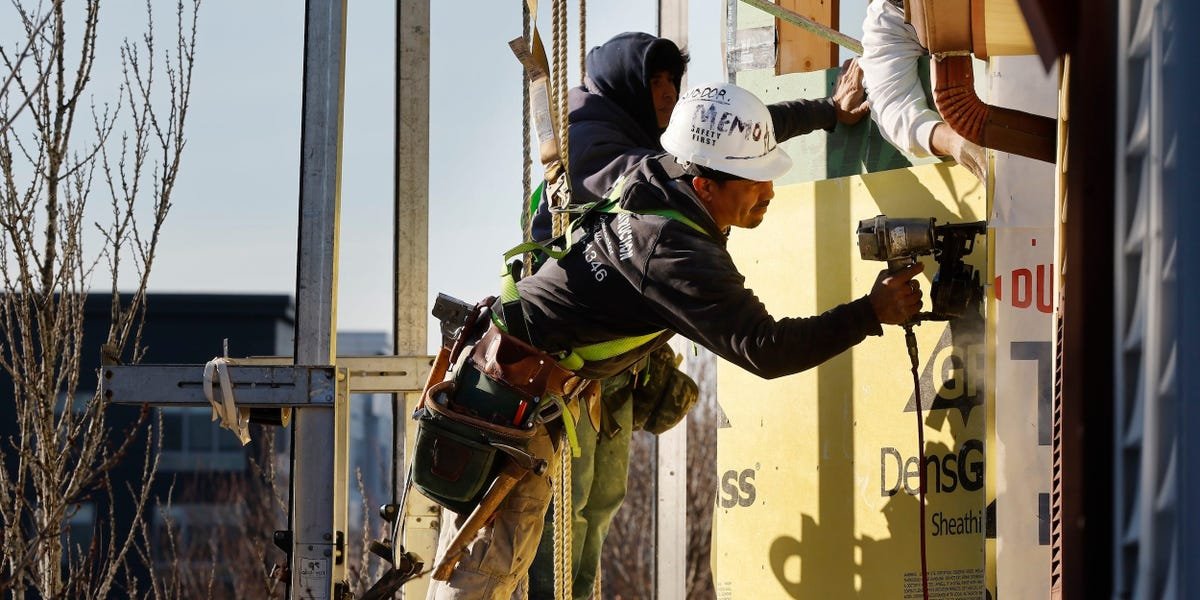
Artificial intelligence may be disrupting office jobs first, but blue-collar workers shouldn’t assume they’re immune.
Fred Voccola, CEO of Simpro Group — which builds software for use by tradespeople — said that early AI adoption has largely focused on white-collar roles, but he believes the same forces will increasingly reshape physical work, from electricians to construction crews.
“The hammer will strike first and hardest in the white-collar world,” he said in an interview with Business Insider in London this week. “White collar work is already being disrupted.”
He pointed to one of his own companies, whose content marketing team head count was cut from 17 to 2 people in one year, while still producing more content due to AI.
For now, he said, skilled trades remain relatively insulated because their work is hands-on and harder to automate, but that advantage won’t last.
“I think the trades, if I am an electrician or a plumber or an HVAC person, I’m among the most protected, but that protection lasts only for a limited amount of time,” he said.
“I think that there will be fewer jobs in the blue collar industry as well, every industry in the world, over time, if we’re talking 10 years, 100%, it’s gonna impact everyone,” he added.
‘Quicker, faster, cheaper, and safer’
The next phase of disruption, Voccola said, will come from a mix of AI-powered software and robotics, including tools his own company is developing.
“We have robotic technology,” Voccola said, pointing to use cases such as cabling, inspections, and rescue efforts, where robots could increasingly support human workers.
“This is something that’s coming out of our lab, probably end of this calendar year,” he added.
That shift is already reshaping parts of the labor market, with companies like Instawork using gig workers to generate the real-world data needed to train robots.
Some manufacturers like Aquant and Gecko Robotics are deploying AI-powered robotics and sensors to detect equipment failures before they happen, helping avoid costly breakdowns and improve efficiency.
Voccola pointed to more use cases where he believes machines could outperform humans, including wiring data centers, inspecting infrastructure, and navigating tight or hazardous environments.
“Cabling, going through — instead of digging up all the infrastructure plumbing — sending little nanobots and robotics to see where the problems are, a lot of discovery of things, a lot of electrical testing. These are things that robots can do quicker, faster, cheaper, and safer,” he said.
A Simpro spokesperson told Business Insider the company is “actively working on the technologies discussed,” but declined to share further details.
“This isn’t about replacing experienced technicians, but about helping them get more done, more efficiently,” the spokesperson added.
Still, Voccola said he expects robotics to move into the mainstream within 2 to 3 years and to take over at least 50% of trades tasks within 10 years.
Even so, he acknowledged the uncertainty ahead. The speed and scale of AI-driven change, he said, is unlike anything seen before — and raises difficult questions about the future of work.
“I think it’s scary,” he said.
Blue-collar isn’t immune
Voccola’s outlook contrasts with a growing view among tech leaders and researchers that blue-collar work may be more resilient and more valuable in the age of AI.
A recent Harris Poll released in February found that 76% of Americans believe jobs that rely on hands-on experience are less likely to be replaced by AI.
Some of the most prominent voices in tech have echoed that sentiment.
Elon Musk has said jobs involving physical labor will “exist for a much longer time” than digital roles, while Nvidia CEO Jensen Huang has said that the AI boom could increase demand for skilled tradespeople building the infrastructure behind it.
That demand is already emerging. Meta president Dina Powell McCormick recently said the US will need hundreds of thousands of electricians in the coming years to build out AI infrastructure.
Voccola didn’t dispute that demand may rise in the short term, but he said, over time, the same forces reshaping office work will extend to the physical world — and no job category will be fully insulated.