

Ukraines-Patriot-crews-are-breaking-from-the-norm-fighting-Russian.jpeg

Ukraine’s Patriot crews are breaking from the norm, fighting Russian threats with fewer missiles

Ukrainian soldiers operating US-made Patriot air defense systems are deviating from traditional engagement practices and firing fewer interceptors in battles against incoming Russian missiles.

The commander of a Ukrainian Patriot unit said that standard air defense doctrine calls for firing between two and four interceptors at each incoming Russian cruise or ballistic missile; however, his forces are launching just one per threat amid strained stockpiles.

The commander, identified as Oleksandr in a video released over the weekend by the Ukrainian military’s Air Command West, said that Kyiv’s forces are trying to use as few interceptors as possible. He said that they need more to effectively counter Russian attacks. It’s unclear how widely this single-shot approach is practiced among the Ukrainian Patriot crews.

Launching more than one interceptor in an engagement, though costly, isn’t necessarily wasteful; rather, it is intentional risk management, prioritizing the kill over conservation. But Ukraine doesn’t have that luxury. In a high-intensity fight, the US and its allies might not either.

Yehor Cherniev, the deputy chairman of the Ukrainian parliamentary committee on national security, defense, and intelligence, said Ukraine has faced low Patriot interceptor stockpiles, forcing it to use as few as possible to engage Russian missiles.

To conserve essential interceptors, Ukraine had to learn to make the most of its capabilities, Cherniev told Business Insider. “This is the operation of the Patriot system in manual mode, without relying on automation.”


A Patriot system received by Ukraine is seen on the Day of Ukrainian Air Force on August 4, 2024.

A Western-supplied Patriot launcher at an undisclosed location in Ukraine. 

Vitalii Nosach/Global Images Ukraine via Getty Images


The American-made MIM-104 Patriot surface-to-air missile battery is the most advanced air defense system that Ukraine possesses. NATO countries have supplied Kyiv with PAC-2 and newer PAC-3 interceptors, the latter of which is estimated to cost nearly $4 million apiece.

Russian cruise and ballistic missiles that make it past the Patriots and other air defense systems have struck civil infrastructure or residential areas to deadly effect. Kyiv has repeatedly lobbied NATO states for more interceptors to replenish depleted stockpiles. The weapons are in high demand globally, though.

Some Russian bombardments include hundreds of missiles and drones, posing challenges for Ukraine’s stretched air defenders and underscoring the need for more advanced interceptors.

Mykhailo Fedorov, Ukraine’s defense minister, said on Tuesday that Germany will provide Kyiv with funding for “several hundred” Patriot interceptors as part of a new 4 billion Euro ($4.7 billion) arms package.

During the Iran war, Ukrainian President Volodymyr Zelenskyy said Kyiv would be willing to send intercerptor drones to Middle Eastern states in exchange for their vaunted Patriot interceptors.


A soldier walks past Patriot air defense systems installed at the military hub for Ukraine at the Rzeszów-Jasionka airport, in Jasionka, south-east Poland, on March 6, 2025.

The American-made Patriot system makes up the top echelon of Ukraine’s air defense network. 

Sergei Gapon/AFP via Getty Images


The US Army, the primary operator of the Patriot system, is learning from Ukraine’s experience that it is crucial to keep the batteries hidden and mobile and sufficiently stockpile interceptors, American officials told Business Insider previously.

Though Ukraine’s situation isn’t ideal, its ability to use fewer interceptors against Russian missiles could be another lesson for the US and its NATO allies concerned about their own interceptor stockpiles in the event of a major war against a near-peer adversary.

Cherniev said that NATO states don’t need to break protocol at this point since they have sufficient stockpiles and aren’t routinely attacked by massive bombardments of ballistic missiles; however, he said, this could change in the event of a large-scale war.

In the Middle East, the US and allied forces have intercepted thousands of Iranian ballistic missiles and drones over five weeks of sustained fighting. The pace and intensity of those engagements have fueled concerns about whether interceptor stockpiles can hold up in a prolonged or future conflict.

Cherniev said NATO forces may eventually be forced to start saving interceptors. “It’s better if they learn how to do this in advance from Ukrainian officers and make changes to their protocols now.”



Source link

OpenAI-Meta-and-Apples-latest-battle-Breaking-your-phone-addiction.jpeg

OpenAI, Meta, and Apple’s latest battle: Breaking your phone addiction

The average American picks up their phone more than 200 times a day. Teens are pinged with some 250 notifications a day — during school, after school, and overnight. The apps meant to prevent you from checking apps have done little to stop the problem. Now, some of the tech companies that helped create our screen dependence are trying to disrupt it.

Later this year, OpenAI plans to debut a small, screenless device that Sam Altman describes as more “peaceful” than a smartphone. Apple, the Oz of screentime, is developing smart glasses, a pin, and AirPods with more AI built in, according to a Tuesday report from Bloomberg, with the rumored pendants featuring microphones and cameras to be the “eyes and ears” of the iPhone. Meta has teased its fully augmented reality Orion glasses since 2024. While that device doesn’t have a release date, the company last year sold some 7 million pairs of its smart glasses, which is the start of the post-smartphone future Mark Zuckerberg has predicted. Eventual smart specs could be more screen all-the-time than screenless, but they also rely on AI to make the experience much more hands-free than swiping and scrolling on a phone.

Could AI be what finally breaks our phone addiction?

Since 2007, no device out of Silicon Valley has captured universal imagination the way Steve Jobs did when he put your iPod, your phone, and the internet together on a 3.5-inch screen. Competitors have tried for a decade-plus to get people to shift us from the iPhone to smart glasses, and largely failed. The awe around smartphones has turned to derision, as excessive screen time is linked to disrupted sleep, anxiety, and fractured attention. Now, developers are hoping the AI boom can give us the next big thing.

Beating the smartphone would mean replacing a device that 91% of American adults now carry — a device for which millions of apps have been developed and people now depend on in lieu of wallets and cameras and health monitors. New AI devices can’t just copy what smartphones do, says Ramon Llamas, a research director at a technology intelligence firm IDC: They have to show they have a solution to an everyday problem. If they don’t, Llama says, “these things are just gonna really end up as solutions looking for a problem to solve.”


Critiques of screen time can be as blunt and smoothbrained as what the critics say excessive screen time makes you. A seven-hour daily log may seem like a staggering amount of dependence, but what did the person spend those seven hours doing? Doomscrolling late into the night, or FaceTiming with a far-away friend? With AI wearables, there’s the risk of becoming dependent on the device for different reasons.

“The screen may not be there, but what’s getting filled in the back is already this problem of AI companionship,” says Olivia Gambelin, an AI ethicist and author of the book “Responsible AI.” An AI device designed to do something very specific — like listen to a meeting and then send follow-up emails or messages related to action points discussed — could save people time and keep them from writing tedious emails and Slack messages from their desk. But that same device listening in to personal conversations with family and friends could compromise a relationship, and erode the positive effects that texting a friend to check-in can have on both people (already, my friends are tiring of AI summaries on the iPhone that summarize our group text and become an intermediary into our threads of gossip and jokes in the name of efficiency). Wearing microphones and cameras to social interactions and into businesses is likely to really weird out some of the people around you. More people are entering into romantic, dependent relationships with AI companions, and a swell of loud dissenters are criticizing the technology for taking jobs and attempting to replicate human relationships.

But OpenAI is betting that it can package its technology in a device in a way that calms the user. “When I use current devices or most applications, I feel like I am walking through Times Square in New York and constantly just dealing with all the little indignities along the way,” Altman said in November. OpenAI’s device, he said, would be less Time Square, more “sitting in the most beautiful cabin by a lake and in the mountains and sort of just enjoying the peace and calm.” That’s because the AI device would learn “contextual awareness of your whole life,” and when best to send you alerts.

The screen itself may not be the problem; it’s what’s summoning us to the screen.

Other AI wearables have failed by falling short of that goal. Humane AI sold a wearable pin, priced at $700 plus a monthly fee to connect it, but pulled it from the market a year ago. It failed perhaps because it tried too hard to replace our phones — it didn’t interact with them, but provided a shoddy replacement. Novelty wasn’t a factor that could outshine usability. The AI Friend pendant, which can’t search the internet or help with tasks outside of sending reminders and acts instead as an eavesdropping sycophant around its user’s neck, was mocked relentlessly and sold just a few thousand devices after it hit the market last year.

Companies trying to make AI hardware should focus on “transformative features,” Jason Low, research director at Omdia, tells me in an email. AI wearables must be more than “marginally more convenient,” should integrate with our existing products, and have a clear, stated value. For example, glasses that provide real-time language translation or devices for fitness and health tracking offer features our smartphones can’t do as well. The Oura ring continues to grow in popularity, particularly among women after starting out as a niche tech bro buy, for the novel insights it can offer; the company announced last fall it has sold 5.5 million rings since 2015, with more than 2.5 million sold between June 2024 and September 2025. “These devices often deliver a more polished user experience compared to general-purpose, do-it-all AI devices,” Low says.

Llamas tells me that the AI functions of a wearable have to be “contextual, personalized, and actionable,” like reminding the wearer to send birthday flowers or responding accurately to being asked to direct the user to the nearest Starbucks. A first attempt device shouldn’t try to replace the smartphone, but to integrate with the Apple or Google ecosystems, he says. Apple and OpenAI did not respond to requests for comment about their rumored products for this story.

If anything has hyped Silicon Valley like the iPhone, it’s been AI. But three years after the mainstream adoption of ChatGPT, the value generative AI in the white collar workforce has yet to be fully realized. That could make a product for consumers a hard sell, too. “Some of the overwhelm that’s coming with AI that I see in general users is you can use it for everything, or it’s promoted that way, which is actually quite stifling,” Gambelin says.

In our quest to find a peaceful equilibrium with tech, the screen itself may not be the problem; it’s what’s summoning us to the screen. Its bright colors, games, and infinite scroll give quick dopamine hits that entice us to stay glued to it. But much of what pings my phone throughout the day are useless notifications trying to get me to reopen one of the dozens of apps — a markdown moment on a clothing thrifting app, a like on the Instagram story I’ve posted of my dog from my best friend, and ironically, a report of how much time I’ve already logged. There’s a relentless business model at play to keep us on these apps. No screens would mean no infinite scroll through TikTok, no Candy Crush — but app developers and companies may need to find new ways to reach people if wearables caught on, and an always-there AI device and companion might not be as peaceful as Altman describes. Our collective screen time is a problem, but the AI wearable will have to surprise us all with something novel to be useful.


Amanda Hoover is a senior correspondent at Business Insider covering the tech industry. She writes about the biggest tech companies and trends.

Business Insider’s Discourse stories provide perspectives on the day’s most pressing issues, informed by analysis, reporting, and expertise.


Source link

One-fitness-supplement-can-help-you-build-muscle-and-maybe.jpeg

One fitness supplement can help you build muscle and maybe boost longevity without breaking the bank, according to experts

Stop wasting your time and money on subpar supplements.

One ingredient should be your first priority for building muscle, burning fat, and aging gracefully, according to exercise science pros.

Creatine is a combo of amino acids that provides energy to muscles and other tissues, like the brain. Our bodies produce it naturally, but growing research suggests supplementing with store-bought pills and powders is a smart idea.

It’s long been the uncontested king in the fitness supplement world for fueling gains, personal trainers, dietitians, and researchers told Business Insider. Now, even more studies suggest it has benefits beyond the gym, helping bolster the brain to support mental and cognitive health.

For less than 50 cents a serving, it’s the gold standard of evidence-based health hacks, with an impressive resume of potential perks.

Want to start taking creatine? Here’s how it works, and the best way to use it for peak performance, according to top researchers.

Creatine helps fuel more reps, leading to better gains

Long a staple of the sports world and bodybuilding community alike, creatine has been extensively studied as a fitness supplement for decades. It first caught on in the ’90s thanks to Olympians who swore by it for elite athletic competition.

Since then, researchers have consistently found that it’s safe to use and offers a small but significant boost to performance.

It works by providing extra fuel in the body’s energy cycle. That translates to better gains or faster fat burning if you’re working out, since you can power through more work that you might otherwise.

That makes it a standout performer in the supplement aisle. Creatine has much stronger evidence and broader benefits than products like pre-workouts, which can vary in ingredients and often don’t disclose what’s actually included.

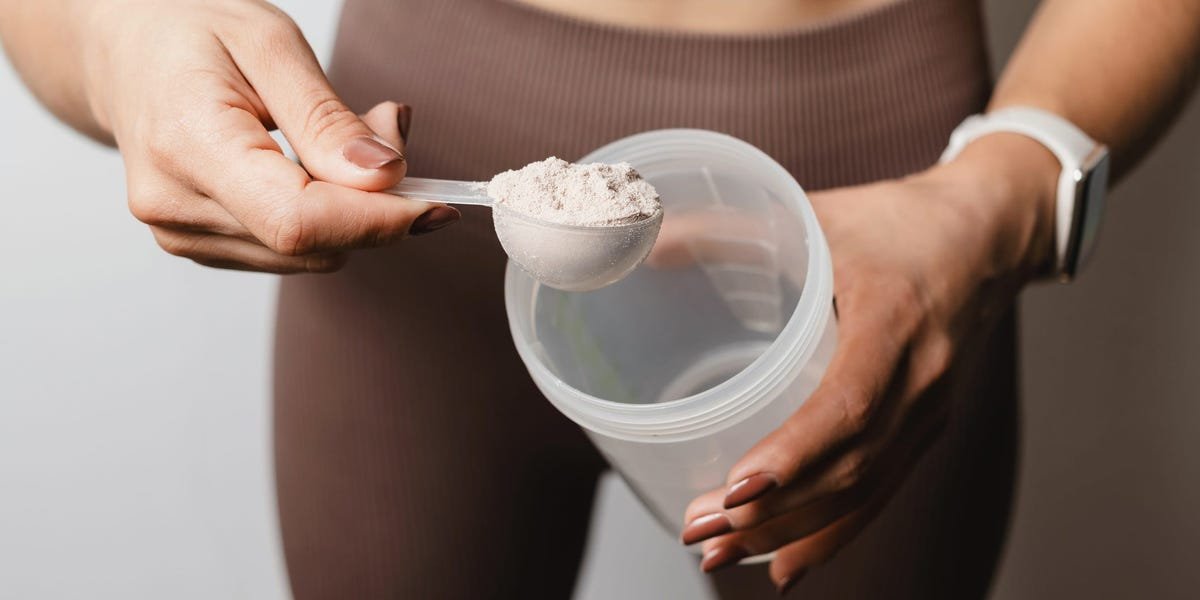
It’s also distinct from protein shakes and powders, which offer the same nutritional benefits as food, but in a more convenient format. There is some creatine in foods like meat and fish, but it’s much harder to get than protein — you’d have to eat more than two pounds of steak to get the amount of creatine in a single scoop of supplement powder.

Other supplements are less evidence-based, less reliable, and can have more risks, particularly when bought online via grey-market websites.

The only supplement that comes close to challenging creatine in terms of wide-ranging benefit and extensive research is caffeine. While caffeine can boost workouts and is relatively safe in moderate doses, it can have serious side effects in large amounts, so you’re better off having a coffee than a concentrated supplement.

The best type of creatine to choose for muscle gains and fat loss

Not all creatine on the market is the same. The most well-researched form is creatine monohydrate, which sports nutritionists consider reliably effective and safe. If you’re worried it causes hair loss or kidney damage, don’t be: these are myths that have been debunked in reputable studies.

Creatine can have side effects like digestive upset, which is typically mild, temporary, and linked to higher doses.

It’s also safe for your wallet. Even with past shortages, creatine monohydrate tends to be the cheapest form, especially if you buy it pure instead of mixed into complicated pre- or post-workout blends.

To take creatine, researchers typically recommend a dose of between 3 to 5 grams a day (people with larger bodies need more). However, emerging studies suggest the brain can benefit from higher doses. Scott Forbes, a sports science researcher and professor at Brandon University, said he recommends around 10 grams a day for cognitive health.

Still, despite all the potential benefits of creatine, it’s not a panacea. No supplement, no matter how well-researched, can match the benefits of healthy lifestyle factors such as nutrition, sleep, and consistent exercise. Trainers recommend starting with high-value habits such as these first before trying supplements.

Once you’re nailing your workouts, diet, and recovery, creatine may be just the thing to give your routine an extra edge.


Source link